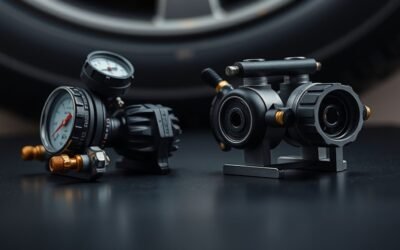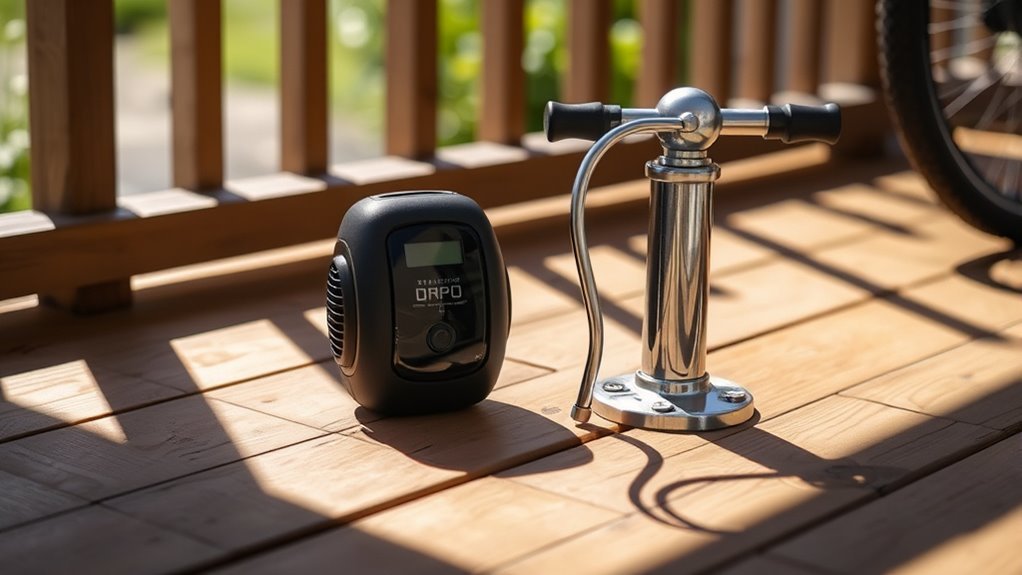
When choosing between a tire inflator and a bike pump, consider speed, control, and your needs. Tire inflators excel in rapid inflation, ideal for emergencies, while bike pumps offer precision for serious cyclists. Inflators inflate tires quickly, perfect for casual use. On the other hand, bike pumps give you better control over tire pressure, ensuring peak performance. Each tool has its strengths in different scenarios, and there’s much more to uncover about their unique features and benefits.
Understanding Tire Inflators and Bike Pumps

When it comes to inflating tires, understanding the differences between tire inflators and bike pumps is essential for choosing the right tool for your needs. Tire inflators, especially electric pumps, provide rapid inflation, allowing you to go from flat to 80 PSI in under a minute. They often feature built-in digital gauges for precise tire pressure settings, which is a significant advantage for high-pressure applications. In contrast, manual bike pumps require more effort and time, making them less efficient. While mini bike pumps are portable, they lack the convenience of electric inflators. For casual riders seeking ease, electric inflators are liberating, while serious cyclists might prefer the reliability of manual pumps that don’t depend on batteries.
Speed Comparison: Which Inflates Tires Faster?
How quickly can you get back on the road after a flat tire? Speed is essential, and when comparing inflation tools, floor pumps consistently outperform electric mini-inflators. For instance, a floor pump inflates a mountain bike tire to 65 psi in just 40 seconds, while an electric model takes about 1 minute and 10 seconds. For road bike tires rated at 120 psi, the floor pump finishes in 16 seconds versus the inflator’s 33 seconds.
| Tire Type | Floor Pump Speed | Electric Inflator Speed |
|---|---|---|
| Mountain Bike | 40 seconds | 1 minute 10 seconds |
| Road Bike | 16 seconds | 33 seconds |
Ultimately, the choice between convenience and speed hinges on your cycling needs.
Control and Precision: How to Choose the Right Pressure
When choosing a pump, consider the importance of gauge accuracy and PSI settings flexibility for your specific needs. Electric mini-inflators, with their digital gauges, allow you to set and monitor pressure levels with impressive precision, while manual pumps may fall short in this regard. For serious cyclists, having that control over pressure can make all the difference in performance and ride quality.
Digital Gauge Accuracy
While selecting the right inflator, digital gauge accuracy plays an essential role in ensuring you achieve the ideal tire pressure for your bike. With electric inflators featuring digital gauges, you can often pre-set your desired pressure to within 1 psi, enhancing precision. Some models even offer accurate readings to the tenths of a psi, which is vital for high-pressure cycling, like road biking. This digital capability eliminates guesswork, ensuring you maintain the best performance across various cycling disciplines. When choosing your inflator, focus on models with proven accurate readings in testing. Having a reliable digital gauge not only simplifies the inflation process but also empowers you to ride with confidence, knowing your tires are perfectly inflated.
PSI Settings Flexibility
Accurate tire pressure is essential for ideal bike performance, and PSI settings flexibility further enhances your control over this aspect. Electric pumps often offer digital gauges that can set and display desired PSI, allowing you to inflate to an exact pressure within 1 psi. In contrast, many manual pumps lack gauges, making precise inflation challenging.
Consider these factors when choosing your pump:
- Electric pumps provide automatic shut-off at set PSI.
- Fast inflation times, often under a minute.
- Digital displays for easy reading.
- Better suited for high-pressure road bikes.
- Manual pumps require experience and feel for pressure.
With the right pump, you can liberate your cycling experience through precise PSI settings, ensuring peak performance on every ride.
Ideal Scenarios for Using Tire Inflators
When you find yourself with a flat tire, a tire inflator shines as the go-to tool for rapid inflation, often getting you back on the road in under a minute. If you’re a serious cyclist who values precision, electric inflators allow you to set your desired pressure with pinpoint accuracy. In both emergency scenarios and routine checks, these devices offer unmatched convenience and efficiency.
Quick Tire Inflation Needs
For those moments when you need to get back on the road quickly, tire inflators prove invaluable. They provide rapid inflation, allowing you to fix a flat or check tire pressure in no time. Here are some ideal scenarios for using tire inflators:
- Roadside emergencies: Inflate tires from flat to 80 PSI in under a minute.
- Pre-ride checks: Verify your tires are ready for long rides without hassle.
- Portable solutions: Battery-powered models like the Cycplus AS2 are lightweight and easy to carry.
- High-volume tires: Easily achieve the required PSI without physical exertion.
- Quick fixes: CO2 cartridges offer fast inflation for urgent situations, but consider sustainability.
Embrace the efficiency of electric air and make your rides smoother!
Precision Pressure Adjustments
Precision in tire pressure can greatly enhance your riding experience, and tire inflators are designed to deliver just that. With built-in digital gauges, electric tire inflators allow for precision pressure adjustments to within 1 psi, essential for high-pressure road cycling. Their ability to inflate tires quickly—often to 80 psi in under a minute—makes them perfect for pre-ride checks. Plus, the automatic shut-off feature guarantees you won’t exceed your desired pressure. Unlike manual pumps, they excel in tight situations, providing accurate control in various scenarios.
| Feature | Tire Inflators | Manual Pumps |
|---|---|---|
| Precision Adjustments | Yes (1 psi) | Limited |
| Speed of Inflation | Fast (under 1 min) | Slower |
| Compact Design | Yes | Bulky |
When Is a Bike Pump Most Effective?
While you might think any pump could do the job, a bike pump truly shines when it comes to inflating road bike tires to high pressures. It’s your go-to tool for ensuring ideal tire pressure, especially in competitive scenarios. Here’s when you’ll find a bike pump most effective:
A bike pump is essential for quickly achieving high tire pressures and precise adjustments, especially in competitive cycling.
- Inflating to high PSI quickly (about 16 seconds to 120 PSI)
- Providing reliable inflation without batteries
- Allowing precise adjustments to within a tenth of a PSI
- Handling various valve types with ease
- Being durable and versatile for different cycling needs
Understanding Portability and Convenience

When you’re out on a ride, the choice between a tire inflator and a bike pump often comes down to portability and convenience. Mini-inflators are compact and lightweight, easily fitting into your bike bag, while manual pumps can be bulkier. Electric pumps offer speed and built-in digital gauges, enhancing your experience with precise pressure settings. However, they tend to be denser due to battery components, which can limit their portability. Cordless inflators shine in awkward positions, making on-the-go inflation a breeze, unlike traditional floor pumps that require a stable base. Yet, remember that electric pumps need charging and may falter in remote areas, while manual pumps remain reliable, ensuring you’re always prepared for any adventure.
How Do Electric Pumps Compare to Manual Ones on Price?
How much should you expect to spend on tire inflators compared to bike pumps? When considering your budget, electric pumps generally range from $50 to over $120, while manual pumps, especially mini versions, are often more affordable. High-quality floor pumps can be a one-time investment, costing between $30 to $90 and offering long-term reliability.
- Electric pumps provide speed and convenience.
- Budget electric models, like Air Bank, offer decent performance.
- Manual pumps don’t require batteries, making them cost-effective.
- The most expensive electric pump may not always be the best choice.
- Consider your needs and usage frequency when deciding.
Ultimately, weigh the price against features to choose the best option for you.
What Are the Pros and Cons of Tire Inflators and Bike Pumps?
Choosing between tire inflators and bike pumps involves weighing several pros and cons that can greatly impact your cycling experience. Tire inflators, especially electric models, offer quick inflation, reaching up to 80 PSI in under a minute, and often come with digital gauges for precise pressure settings. However, they can be heavier and pricier, ranging from $50 to over $120. On the other hand, manual bike pumps are reliable, always ready to use without batteries, and typically more affordable, making them a solid choice for budget-conscious cyclists. While they require physical effort and take more time, some riders appreciate the simplicity and control they provide. Ultimately, your choice hinges on your priorities—speed, convenience, or reliability.
Frequently Asked Questions
Is a CO2 Bike Tire Inflator Better Than a Pump?
A CO2 bike tire inflator’s efficiency and inflation speed give it a weight advantage and unbeatable portability benefits. For quick, on-the-go repairs, you’ll find it’s often better than a traditional pump.
Can You Use a Car Tire Inflator for a Bike?
You can use a car tire inflator for a bike, but be cautious. Compatibility issues, pressure regulation challenges, and portability factors make it less ideal. Dedicated bike pumps are often better for various usage scenarios.
Is an Air Pump Better Than a Tire Inflator?
An air pump often shines brightly with advantages like portability, making it easy to carry. While tire inflators inflate faster, they come with drawbacks—weight and reliance on power. Choose based on your needs for liberation!
Is It Worth Buying a Tire Inflator?
Yes, buying a tire inflator’s worth it. You’ll enjoy tire inflator benefits like speed and convenience factors, while the portability comparison shows it’s a practical long-term investment for hassle-free maintenance and quick fixes on rides.
Conclusion
In choosing between a tire inflator and a bike pump, consider your specific needs. For instance, if you’re on a long road trip and a flat tire strikes, a tire inflator’s speed can save you time and hassle. On the other hand, if you’re a cyclist prepping for a race, the precision of a bike pump lets you fine-tune your tire pressure. Evaluate your scenarios—speed, control, and portability matter, so pick the tool that fits your lifestyle best.