PSI stands for pounds per square inch, the unit used to measure the air pressure inside your tires. It may look like a small number on a gauge, but tire PSI affects how your vehicle steers, brakes, rides, wears tires, and uses fuel. The safest pressure is not the number printed on the tire sidewall. It is the vehicle manufacturer’s recommended cold tire pressure, usually listed on the driver-side door jamb sticker or in your owner’s manual.
Quick Answer
PSI means pounds per square inch. For tires, it tells you how much air pressure is inside the tire. Most passenger vehicles are often around 30–35 PSI, but the correct number for your car is the cold tire pressure on the driver-side door placard or owner’s manual, not the tire sidewall maximum.
Key Takeaways
- PSI measures tire air pressure, and the correct PSI helps your tires carry the vehicle safely.
- Always use the tire pressure listed on your vehicle’s placard or owner’s manual, not the maximum PSI molded into the tire sidewall.
- Check pressure when tires are cold, ideally before driving or after the vehicle has been parked for at least three hours.
- Temperature changes matter: tire pressure changes by about 1 PSI for every 10°F shift in air temperature.
- Underinflation can reduce fuel economy, increase tire heat, worsen handling, and shorten tire life.
At a Glance
| Time Required | 5–10 minutes |
| Difficulty | Easy |
| Tools Needed | Tire pressure gauge and air compressor |
| Cost | Usually free if you already have a gauge; low-cost gauges are widely available |
What Is PSI and Why It Matters for Tire Safety
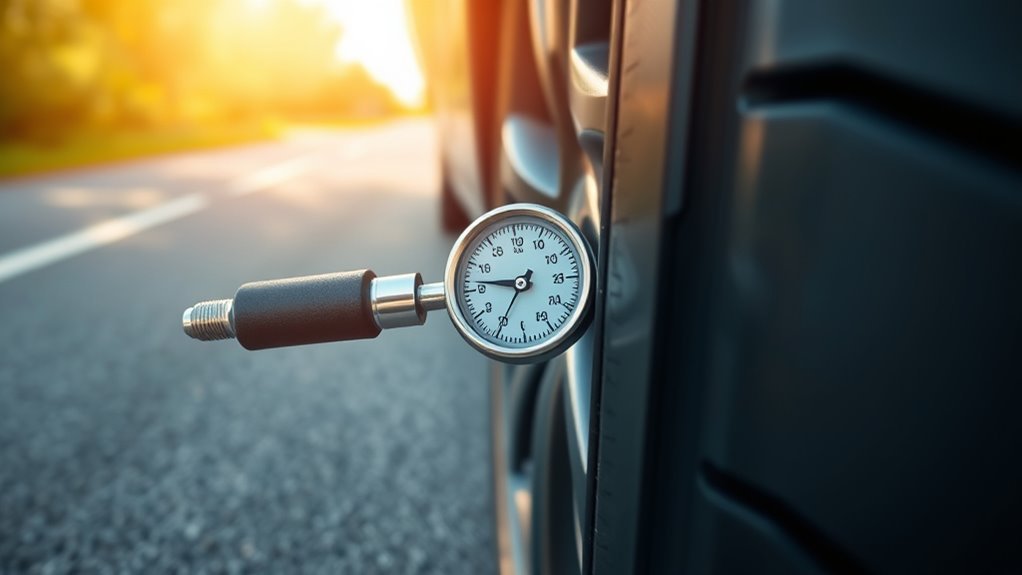
PSI means pounds per square inch. In tire care, it tells you how much air pressure is inside the tire. That air pressure supports the vehicle’s weight, helps the tire keep its correct shape, and affects how much rubber contacts the road.
The right PSI helps your vehicle brake, steer, and handle predictably. Low tire pressure can increase heat buildup and rolling resistance, while too much pressure can reduce the tire’s contact patch and make the ride harsher. According to the National Highway Traffic Safety Administration, the proper tire pressure is the vehicle manufacturer’s recommended cold inflation pressure, usually shown on the tire information placard or certification label.
Warning: Do not use the maximum PSI printed on the tire sidewall as your everyday target pressure. That number is the tire’s maximum pressure rating, not the recommended pressure for your specific vehicle.
How Temperature Changes Affect Tire Pressure (PSI)
Tire pressure changes as air temperature changes. A common rule of thumb is that tire pressure changes by about 1 PSI for every 10°F change in temperature. When the weather gets colder, pressure drops. When temperatures rise, pressure increases.
- A 30°F temperature drop can lower tire pressure by roughly 3 PSI.
- Cold mornings can trigger a low tire pressure warning light, even if the tire does not have a puncture.
- Hot weather or highway driving can raise the reading, which is why cold-tire checks are more accurate.
AAA and Bridgestone both note this temperature-pressure relationship, with Bridgestone explaining that tire pressure changes by approximately 1 PSI for every 10°F shift in ambient temperature. You can review Bridgestone’s tire inflation guidance here: Proper Tire Inflation & Tire Pressure Information.
Note: A warm tire can read several PSI higher than a cold tire. If you check pressure after driving, do not bleed air just because the reading is above the placard number. Recheck when the tires are cold.
The Effects of Underinflation on Tire Performance
Underinflation means the tire has less air pressure than the vehicle manufacturer recommends. This makes the tire flex more as it rolls, which can increase heat, reduce fuel economy, and wear the tire unevenly.
Underinflated tires may cause:
- Reduced fuel economy: FuelEconomy.gov says under-inflated tires can lower gas mileage by about 0.2% for every 1 PSI drop in the average pressure of all tires.
- Slower handling response: A soft tire can feel less precise when turning, braking, or changing lanes.
- Extra heat buildup: Excessive flexing can increase tire temperature, especially at highway speeds.
- Uneven tread wear: Low pressure often wears the outer shoulders faster than the center.
- Higher risk of tire failure: NHTSA identifies underinflated tires and overloaded vehicles as major causes of tire failure.
Keeping tires inflated to the proper pressure can improve gas mileage by 0.6% on average and up to 3% in some cases, according to FuelEconomy.gov.
The Dangers of Overinflation: Key Considerations

Overinflation means the tire has more air pressure than recommended for the vehicle. A slightly high reading after driving is normal because heat raises pressure. The problem is setting a cold tire above the recommended PSI or inflating to the sidewall maximum when your vehicle calls for less.
Overinflated tires can lead to:
- A harsher ride: The tire becomes stiffer and absorbs less road impact.
- Reduced traction: Too much pressure can reduce the tire’s contact patch.
- Uneven center wear: The middle of the tread may wear faster than the edges.
- More impact damage risk: A very stiff tire can be more vulnerable to pothole and road-hazard damage.
The safest approach is simple: set pressure to the vehicle placard number when the tires are cold, then recheck regularly.
Finding the Recommended PSI for Your Tires
The correct PSI for your vehicle is usually easy to find. Look for the tire information placard first, then check the owner’s manual if needed. The recommended pressure may be different for front and rear tires, and some vehicles list separate values for normal loading and heavy loading.
[Products Worth Considering]
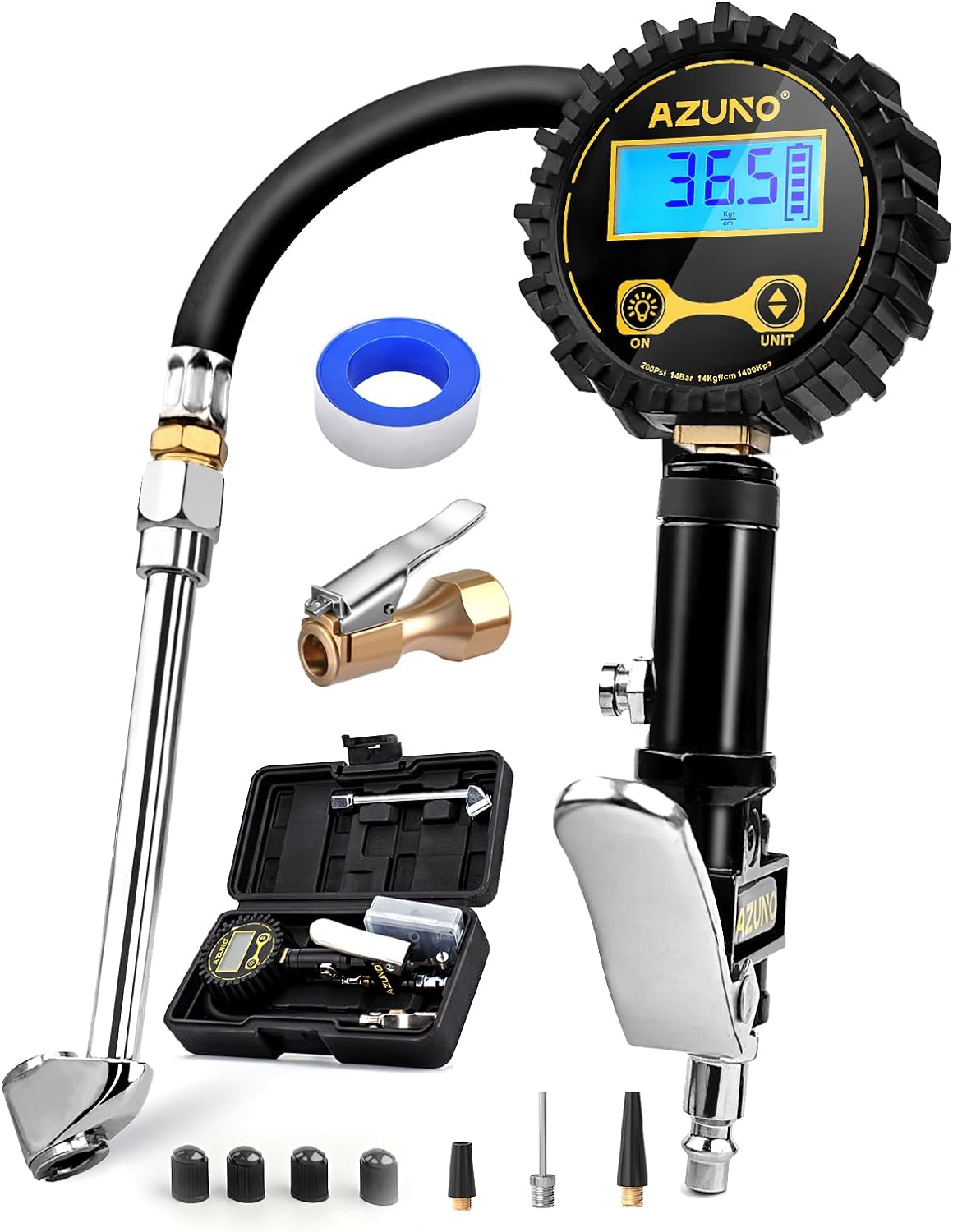
This digital tire inflator delivers accurate, easy-to-read pressure measurements with a bright backlit LCD and precise 0.1 resolution for confident inflation. Designed for single-handed use, it makes it simple to inflate or deflate tires while staying organized in the included portable carrying box. Built for a wide range of vehicles, it is a practical air compressor accessory for cars, trucks, SUVs, motorcycles, and more.
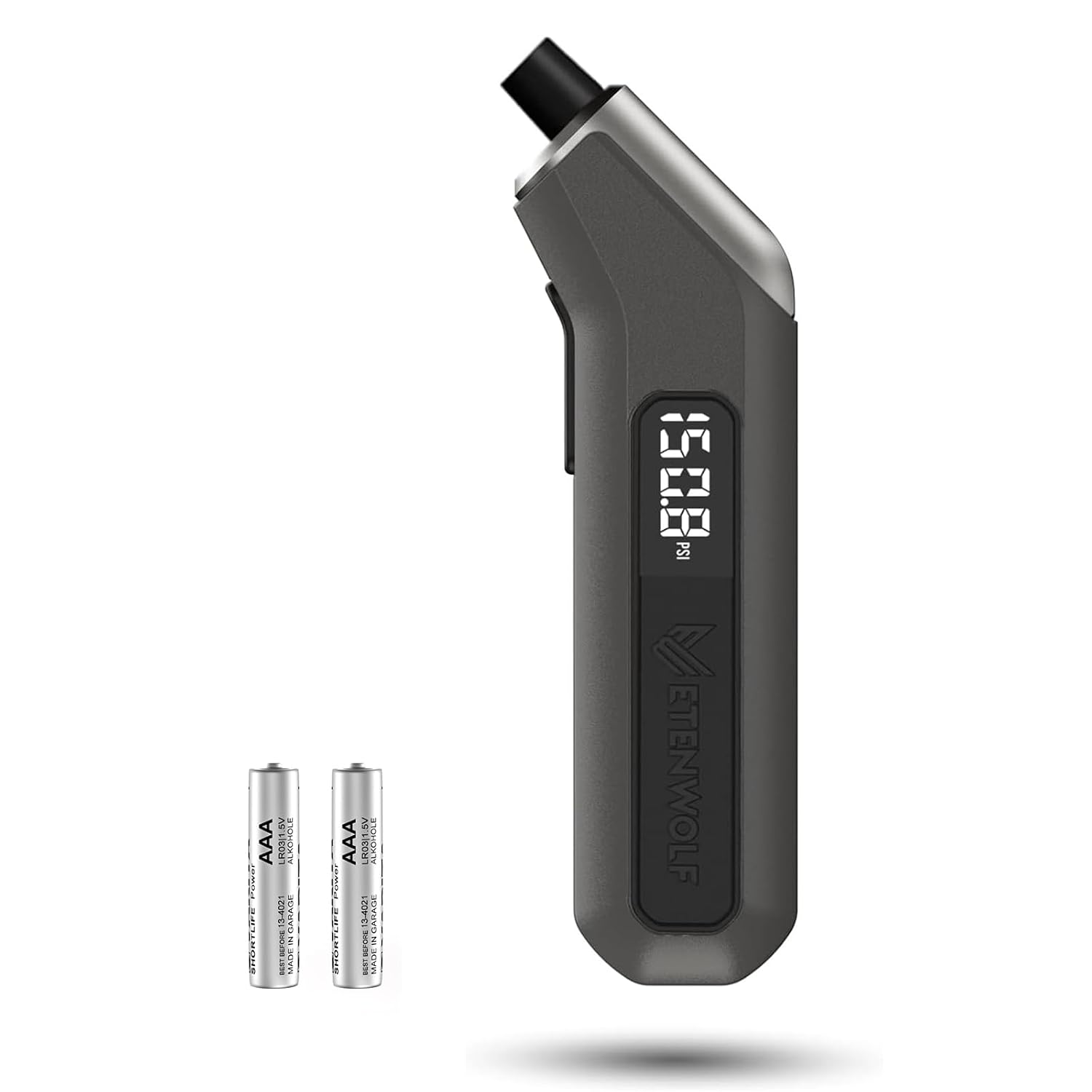
The ETENWOLF T300 digital tire pressure gauge delivers precise readings for cars, RVs, trucks, bikes, and heavy-duty vehicles with a wide measuring range and consistent accuracy. It is built to perform in extreme temperatures, includes a bright LED light for low-visibility use, and uses replaceable AAA batteries for convenient long-term operation. Durable enough to withstand rugged use, it is a practical tool for maintaining proper tire pressure across a variety of vehicles.

AUTOBOO windshield wiper blades are designed to deliver smooth, streak-free visibility in a wide range of weather conditions. The bracketless, aerodynamic design helps reduce noise and wind drag while the memory spring steel construction maintains even pressure for consistent windshield contact. Built for quick installation on compatible U/J hook wiper arms, these blades offer reliable performance and quiet operation.
Locate Manufacturer’s Recommendations
Start with the manufacturer’s recommended cold tire pressure. This number was selected for your vehicle’s weight, suspension, handling, tire size, and load capacity. It is usually shown in PSI in the United States and may also list kPa.
You can usually find it in three places:
- The tire information sticker on the driver-side door jamb.
- The vehicle owner’s manual.
- The fuel door or glove box on some older vehicles.
Check Door Jamb Sticker
Open the driver’s door and look for a sticker on the door jamb or door edge. This placard normally lists the recommended cold tire pressure for the front tires, rear tires, and sometimes the spare tire. It may also list the original tire size and vehicle load limits.
If your front and rear tire pressures are different, follow the placard exactly. Do not make all four tires the same unless the placard says they should be the same.
Consult Owner’s Manual
Your owner’s manual can provide extra details, including pressure recommendations for heavy loads, towing, spare tires, tire rotation, and tire size changes. If your vehicle has aftermarket wheels or a different tire size, ask a tire professional for the correct pressure instead of guessing.
How to Check and Adjust Tire Pressure
Checking tire pressure is simple, but timing matters. NHTSA recommends checking cold tire pressure, meaning the vehicle has not been driven for at least three hours or has only been driven a very short distance at low speed.
- Find the recommended PSI. Use the driver-side door placard or owner’s manual.
- Check tires when cold. Morning is often the easiest time.
- Remove the valve cap. Keep it somewhere safe so it does not roll away.
- Press the gauge firmly onto the valve stem. A brief hiss is normal, but a long hiss means the gauge is not sealed correctly.
- Read the PSI. Compare the gauge reading to the placard number.
- Add air if low. Use an air compressor and add air in short bursts.
- Release air if the cold pressure is too high. Press the valve pin briefly, then recheck.
- Reinstall the valve cap. The cap helps keep dirt and moisture out of the valve.
- Repeat for all tires, including the spare if your vehicle has one.
Pro Tip: Keep a small digital or dial tire pressure gauge in your glove box. Gas-station gauges can be convenient, but they may be dropped, worn, or inaccurate.
[Products Worth Considering]

Keep your vehicle neat with this versatile car trash can designed to hang easily from a headrest and fit a wide range of vehicles. Its waterproof, leak-proof lining helps contain spills, while the large capacity and extra pockets make it useful for storing small essentials or keeping drinks and snacks cool on the go. When not in use, it folds flat for convenient storage.

This mud flaps kit helps protect your Toyota Camry’s lower body panels from snow, salt, sand, rocks, and road debris thrown up by the wheels. Designed for SE and XSE Sport models, it offers a direct-fit install with included mounting hardware for a cleaner, more finished look. Built from durable ABS thermoplastic, it is made to handle harsh driving conditions while helping keep your vehicle cleaner.
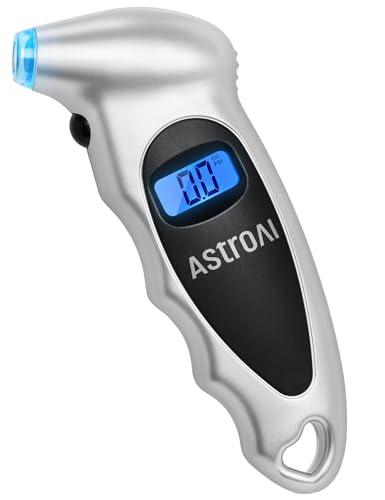
Accurate, Dependable Readings: Factory‑calibrated to ±1 PSI, so you can confidently match your vehicle’s recommended PSI (check the door jamb sticker). Ideal for monthly checks and road trips — consistent results every time, cold or warm.
Different Tire Pressure Measurement Units
PSI is the most common tire pressure unit in the United States, but you may also see BAR or kPa, especially on European vehicles, tire gauges, or owner’s manuals.
- PSI: Pounds per square inch.
- BAR: A metric pressure unit. 1 BAR is about 14.5 PSI.
- kPa: Kilopascal. 1 PSI is about 6.895 kPa.
Common conversions:
- 32 PSI = about 221 kPa = about 2.2 BAR
- 35 PSI = about 241 kPa = about 2.4 BAR
- 40 PSI = about 276 kPa = about 2.8 BAR
If your vehicle placard lists both PSI and kPa, use the unit that matches your gauge.
How Frequently Should You Check Your Tire Pressure?

Check tire pressure at least once a month and before long trips. You should also check it when the seasons change, after a sharp temperature swing, after hitting a pothole, or when your tire pressure monitoring system light comes on.
A good routine is:
- Monthly: Check all four tires when cold.
- Before road trips: Check pressure and inspect tread, sidewalls, and valve stems.
- During cold weather: Recheck after major temperature drops.
- After warning lights: Use a gauge even if the tire looks normal.
TPMS Warning Lights: What They Do and Don’t Tell You
A tire pressure monitoring system, or TPMS, warns you when tire pressure is significantly low. Federal Motor Vehicle Safety Standard No. 138 requires TPMS systems to warn drivers about significant under-inflation and the safety problems that can result. You can review the current rule at eCFR 49 CFR § 571.138.
TPMS is helpful, but it is not a replacement for a tire gauge. The light may not come on for small pressure losses, and it may not monitor a spare tire. If the TPMS light turns on, check pressure with a gauge as soon as it is safe.
Common Mistakes to Avoid When Checking Tire Pressure
Checking tire pressure is easy, but a few common mistakes can lead to incorrect readings or poor tire performance.
| Mistake | Why It Matters | Better Approach |
|---|---|---|
| Checking after driving | Warm tires read higher than cold tires. | Check before driving or after the vehicle has been parked for at least three hours. |
| Using the tire sidewall maximum | The sidewall number is not the vehicle’s recommended pressure. | Use the door placard or owner’s manual. |
| Ignoring front/rear differences | Some vehicles need different front and rear PSI. | Match each axle to the placard. |
| Trusting looks alone | A tire can be low without looking flat. | Use a gauge. |
| Forgetting the spare tire | Many spare tires are not monitored by TPMS. | Check the spare according to the owner’s manual. |
Tips for Maintaining Optimal Tire Pressure Year-Round
Maintaining tire pressure is not a one-time job. Tires naturally lose air over time, and temperature changes can make pressure rise or fall even when there is no leak.
- Check monthly. A regular schedule catches slow pressure loss before it becomes a bigger issue.
- Check before long trips. Highway speeds, cargo, and heat make proper pressure even more important.
- Adjust after seasonal temperature changes. A tire set correctly in summer may be low in winter.
- Inspect valve stems and caps. Cracked stems or missing caps can contribute to air loss or contamination.
- Watch for repeated pressure loss. If one tire keeps dropping, have it inspected for a puncture, bead leak, valve leak, or wheel damage.
- Consider load conditions. Heavy cargo, towing, or extra passengers may require different pressure guidance from the owner’s manual.
[Products Worth Considering]

HIGH ACCURACY: Every ETENWOLF's pencil tire gauge is calibrated to ANSI B40.1 Grade B, it is accurate to 2% of span in the middle 50% of range and 3% of span in the lower and upper 25% of range. Each ETENWOLF pencil tire pressure gauge is manually calibrated and has its unique calibration number printed on the pencil

【Reliable Quality】:This car tire valve stem cap is made of stainless steel and plastic, with a built-in copper core. It is sturdy and wear-resistant, not easy to deform, corrosion-resistant, and heat-resistant.

Primary Purpose: These caps serve primarily to monitor the pressure levels of car tires, ensuring their proper functioning. By preventing tire wear and blowouts caused by low pressure, they help extend tire lifespan. Moreover, they keep you informed about tire pressure at all times.
Understanding the Relationship Between PSI and Fuel Efficiency
Tire PSI affects fuel efficiency because low pressure increases rolling resistance. When tires are underinflated, the engine has to work harder to move the vehicle. That extra resistance can use more fuel.
According to FuelEconomy.gov, keeping tires inflated to the proper pressure can improve gas mileage by 0.6% on average and up to 3% in some cases. The same source says under-inflated tires can lower gas mileage by about 0.2% for every 1 PSI drop in the average pressure of all tires.
The fuel savings may look small per mile, but proper inflation also supports safer handling, longer tire life, and more consistent braking.
When to Get Professional Help
Some tire pressure problems need more than an air compressor. Have the tire inspected by a qualified tire shop or mechanic if:
- One tire keeps losing pressure faster than the others.
- You see a nail, screw, cut, crack, or bulge.
- The valve stem leaks or looks damaged.
- The TPMS light stays on after you inflate the tires correctly.
- The vehicle pulls, vibrates, or handles differently after a pressure correction.
Do not drive on a tire with visible sidewall damage or a bulge. Install the spare if it is safe to do so, or call roadside assistance.
Frequently Asked Questions
Should my tires be 32 or 35 PSI?
Use the PSI listed on your vehicle’s driver-side door placard or owner’s manual. Many passenger vehicles fall somewhere around 30–35 PSI, but 32 PSI and 35 PSI are not interchangeable unless your vehicle’s placard says so.
What does 30 PSI mean?
30 PSI means the tire has 30 pounds of air pressure per square inch. Whether 30 PSI is correct depends on your vehicle. Check the tire information placard or owner’s manual for the recommended cold pressure.
Is 40 PSI too much air pressure in tires?
40 PSI may be correct for some vehicles and too high for others. If your door placard says 32 or 35 PSI cold, then setting the tires to 40 PSI cold would usually be overinflation. Always follow the vehicle’s recommended pressure.
Does more PSI mean more power?
No. More PSI does not add engine power. Proper tire pressure can reduce rolling resistance and help the vehicle operate efficiently, but overinflating tires can reduce traction, comfort, and tire life.
Should I lower tire pressure when the tires are hot?
Usually, no. Tire pressure rises naturally as tires warm up from driving. If the tires were set correctly when cold, do not bleed air from hot tires just because the reading is higher than the placard number.
Why does my tire pressure light come on in cold weather?
Cold air lowers tire pressure. A drop of about 10°F can reduce tire pressure by roughly 1 PSI, so a cold morning can trigger the TPMS light even if the tire does not have a puncture. Check the tires with a gauge and inflate them to the recommended cold pressure.
Conclusion
PSI is a small number with a big effect on tire safety, fuel economy, handling, and tire life. The best tire pressure is the manufacturer’s recommended cold PSI on your vehicle’s door placard or owner’s manual. Check it at least once a month, before long trips, and after major temperature swings. Proper inflation takes only a few minutes, but it helps your tires perform the way they were designed to.
Sources
- National Highway Traffic Safety Administration: TireWise Tire Safety — backs cold tire pressure, placard guidance, and tire safety recommendations.
- FuelEconomy.gov: Gas Mileage Tips — backs fuel-economy impact of proper tire inflation.
- eCFR 49 CFR § 571.138: Tire Pressure Monitoring Systems — backs TPMS purpose and significant under-inflation warning requirements.
- AAA Club Alliance: How Temperature Changes Affect Tire Pressure — backs the temperature-pressure rule of thumb.
- Bridgestone Americas: Proper Tire Inflation & Tire Pressure Information — backs tire inflation and temperature-change guidance.