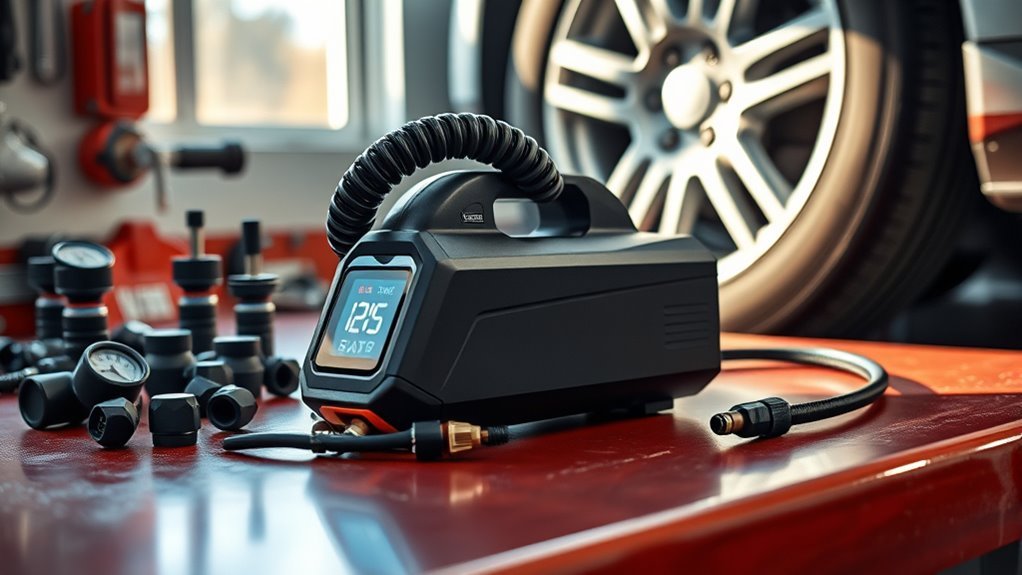
A tire inflator lasts longer when you treat it like a small compressor, not a disposable emergency gadget. The biggest lifespan boosters are simple: keep the cord and hose undamaged, follow the duty cycle, let the motor cool, keep dirt out of the chuck and vents, verify pressure with a reliable gauge, and store the unit dry.
Quick Answer
To make a tire inflator last longer, inspect the power cord, plug, hose, chuck, and seals before use; clean dirt from the nozzle and vents; follow the manufacturer’s duty cycle; let the motor cool between tires; avoid overinflation; and store it in a cool, dry case.
Key Takeaways
- Heat is the main enemy of a portable tire inflator, so always follow the duty cycle and cool-down time in your manual.
- Use the vehicle’s recommended cold tire pressure, not the maximum PSI printed on the tire sidewall.
- Keep the hose, chuck, adapters, and vents clean so the motor does not work harder than necessary.
- Replace damaged external parts, such as a cracked hose, worn chuck, or blown plug fuse, before they cause bigger problems.
- Do not open a sealed inflator unless the manual says it is user-serviceable.
At a Glance
| Time Required | 5 minutes after each use; 10–15 minutes for a monthly check |
| Difficulty | Easy |
| Tools Needed | Soft cloth, soft-bristled brush, tire pressure gauge, owner’s manual, and compatible replacement fuse or seals if required |
| Cost | Usually $0–$10 unless a hose, chuck, fuse, battery, or adapter needs replacement |
The Importance of Regular Inspections for Your Tire Inflator

Regular inspections catch small problems before they turn into slow inflation, inaccurate readings, blown fuses, or a dead compressor. Before each use, look over the power cord, 12V plug or battery pack, air hose, chuck, adapters, pressure gauge, and vents.
Start with the cord. Do not use the inflator if the insulation is cut, melted, frayed, or stiff from heat damage. Check the 12V plug for bent contacts, dirt, or corrosion. If your inflator uses a replaceable fuse in the plug, keep the correct fuse size on hand and follow the manual when replacing it.
Next, inspect the hose and chuck. A cracked hose, loose fitting, or worn valve connector can make the motor run longer than necessary. That extra run time creates heat, and heat shortens the life of small portable compressors.
Note: If the tire is flat because of a puncture, sidewall damage, bent rim, or bad valve stem, the inflator may run continuously without solving the problem. Stop and inspect the tire instead of forcing the inflator to keep working.
Use the Right Tire Pressure and Check the Gauge
A tire inflator is only helpful if it is used with the correct pressure target. The correct PSI is the vehicle manufacturer’s recommended cold tire pressure, usually listed on the driver-side door placard or in the owner’s manual. The National Highway Traffic Safety Administration also advises checking tire pressure when tires are cold, meaning the vehicle has not been driven for at least three hours.
Do not inflate to the maximum pressure molded into the tire sidewall unless your vehicle manual specifically calls for it. That sidewall number is the tire’s maximum rating, not the normal pressure for your vehicle.
Built-in inflator gauges are convenient, but they can drift or read differently under vibration. Confirm the final pressure with a separate tire pressure gauge, especially before long trips, towing, or carrying heavy loads.
A good habit is to check tire pressure at least once a month and before long trips. That routine protects the tires and also prevents the inflator from being overworked during emergencies.
Safe Use Habits That Prevent Early Failure
The fastest way to shorten a tire inflator’s life is to run it too long without a break. Portable units are small, and many rely on airflow around the housing to keep the motor and compressor head from overheating.
Check the duty cycle in your manual. Some compact 12V models are designed for short bursts, while heavier units publish duty-cycle ratings or maximum run times. For example, one Slime 12V inflator manual tells users not to run that model continuously for more than 10 minutes and to let it cool for about 25 minutes between uses. By contrast, larger portable compressors such as VIAIR units list model-specific duty-cycle ratings, so the correct limit depends on the inflator you own.
Warning: If your 12V inflator works best with the vehicle engine running, use it only outdoors or in a well-ventilated area. Never run a vehicle inside a closed garage to power an inflator, and never operate the inflator near gasoline, solvent vapors, or other combustible materials.
For safer operation and longer life, follow these habits:
- Place the inflator on a hard, clean, stable surface so the vents stay open.
- Do not hold a hot inflator in your hand while it is running.
- Do not block the intake, output, or cooling vents.
- Do not leave the inflator unattended while it is running.
- Inflate in short cycles and pause between tires if the housing feels hot.
- Unplug the inflator before cleaning, storing, or inspecting the plug.
Cleaning Techniques to Enhance Tire Inflator Performance
Keeping your tire inflator clean helps protect the motor, vents, chuck, adapters, and gauge. Dirt in the chuck can cause a poor seal at the valve stem, while dust around vents can reduce cooling airflow.
Regular Surface Cleaning
After each use, unplug the inflator and let it cool. Wipe the housing with a soft, dry cloth. If the exterior is muddy or oily, use a lightly damp cloth with mild soap, then dry the unit completely before storing it.
Do not spray the inflator with water, use harsh solvents, or let moisture enter the vents, gauge, battery slot, or 12V plug. Portable inflators may look rugged, but many are not designed to be washed like shop tools.
Vent and Connector Cleaning
Use a soft-bristled brush to remove dust from vents, adapter storage areas, and the chuck. If the 12V plug or receptacle has debris, clean it only when unplugged and use a non-conductive tool. Do not use your fingers, metal picks, or wet cleaners inside electrical contacts.
Pro Tip: Keep a small microfiber cloth and a pencil-style tire gauge in the inflator case. You will be more likely to clean the chuck, verify pressure, and store the unit correctly after each use.
Hose, Nozzle, and Seal Care
The hose and chuck do the hard work of sealing against the tire valve while the compressor builds pressure. If that connection leaks, the inflator runs longer, gets hotter, and wears faster.
Inspect the hose for cuts, cracks, flattened spots, melted areas, or leaks at the fittings. Check the chuck for bent locking levers, stripped threads, missing washers, or dirt that prevents a full seal. If your inflator includes ball needles, raft adapters, or extension hoses, keep them clean and stored in their clips or pouch so they do not damage the main hose.
If you suspect a leak at the chuck or hose fitting, apply a small amount of soapy water to the connection while air is flowing through the hose. Bubbles can reveal a leak. Keep water away from the motor housing, plug, battery, and display, and dry the connection afterward.
[Products Worth Considering]
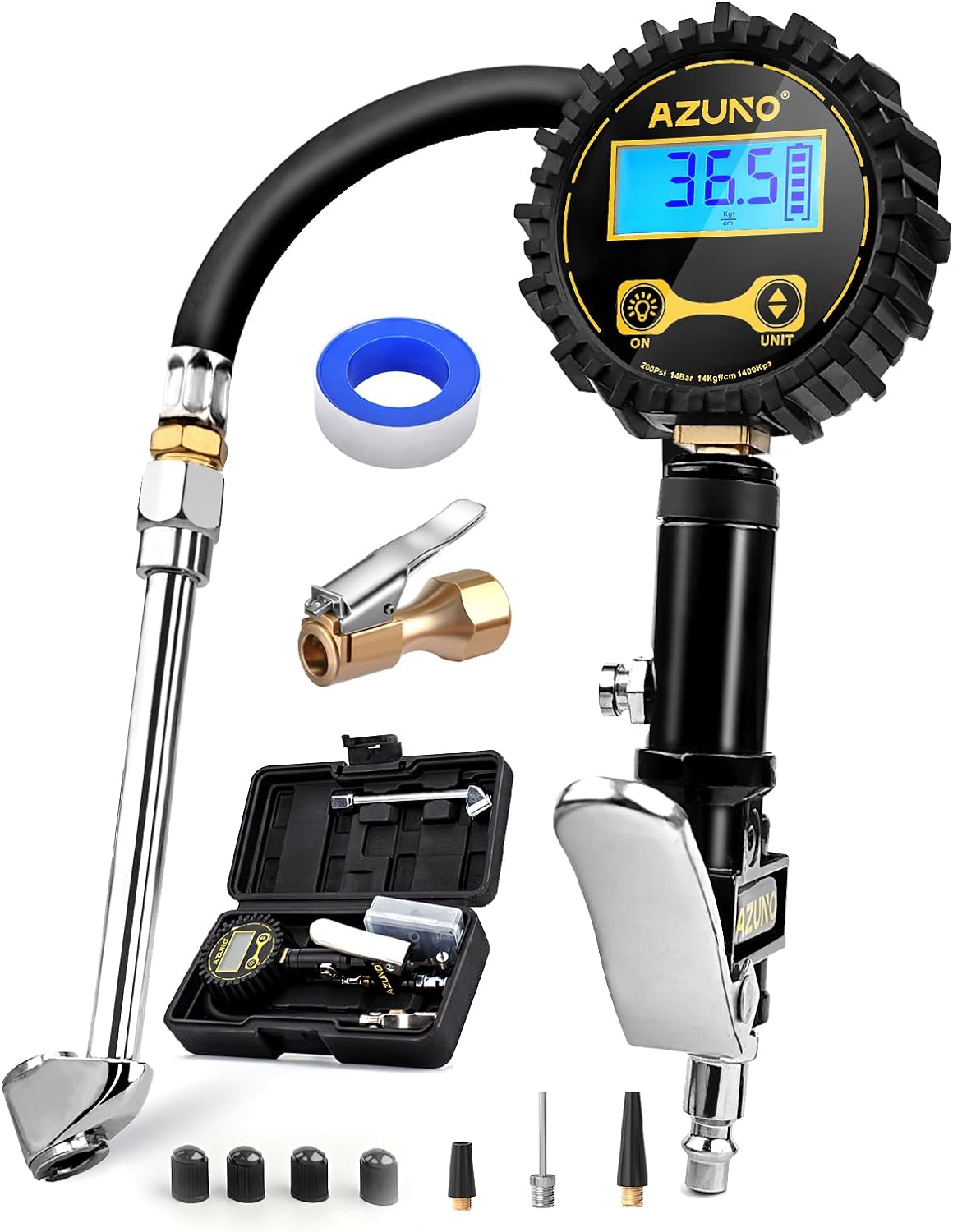
This digital tire inflator delivers accurate, easy-to-read pressure measurements with a bright backlit LCD and precise 0.1 resolution for confident inflation. Designed for single-handed use, it makes it simple to inflate or deflate tires while staying organized in the included portable carrying box. Built for a wide range of vehicles, it is a practical air compressor accessory for cars, trucks, SUVs, motorcycles, and more.

This portable tire inflator delivers fast, reliable inflation with a high-pressure pump, digital pressure gauge, and automatic shut-off for safer use. Dual power support lets you run it from the built-in battery or a 12V car outlet, while the LED light and USB output make it a practical emergency tool for roadside and outdoor situations.

This portable tire inflator delivers fast, convenient inflation for cars, bikes, motorcycles, and balls with dual power options from a rechargeable battery or a 12V car cord. Its digital LCD pressure gauge and automatic shutoff help prevent over-inflation, while multiple preset modes and a custom setting make it easy to use for different inflation tasks. Built-in flashlight and USB power ports add extra emergency utility on the road.
How to Maintain O-Rings and Seals for Optimal Function
Some inflator chucks, threaded fittings, and adapters use small rubber seals or O-rings. These parts should be clean, flexible, and seated correctly. If a seal looks cracked, flattened, swollen, sticky, or missing, replace it with the correct size and material.
Do not assume every O-ring needs lubricant every time. Use only a lubricant that is compatible with the seal material and recommended for the part. O-ring guidance from seal manufacturers such as Apple Rubber emphasizes matching lubricant choice to the application and elastomer. When lubricant is appropriate, a thin film is enough.
If your manual says the inflator has no user-serviceable internal parts, do not open the case to reach internal seals. Replace external accessories or contact the manufacturer instead.
Why Proper Maintenance Is Crucial for Tire Inflation
Proper maintenance protects three things: the inflator, the tire, and you. A dirty chuck can leak. A blocked vent can overheat the motor. A damaged cord can create an electrical hazard. A gauge that reads wrong can leave a tire underinflated or overinflated.
The maintenance routine is simple, but it should be consistent:
| Maintenance Task | Why It Matters | How Often |
|---|---|---|
| Inspect cord, plug, hose, and chuck | Prevents leaks, poor electrical contact, and unsafe operation | Before each use |
| Wipe exterior and clean chuck | Keeps dirt out of the valve connection and storage clips | After each use |
| Brush dust from vents | Helps the motor cool properly | Monthly or after dusty use |
| Verify pressure with a separate gauge | Reduces the risk of underinflation or overinflation | Monthly and before trips |
| Review manual for duty cycle and fuse rating | Prevents overheating and incorrect fuse replacement | When new and annually |
Troubleshooting Common Tire Inflator Issues

When a tire inflator acts up, start with the simple checks before assuming the compressor is dead.
[Products Worth Considering]

The JACO ElitePro Digital Tire Pressure Gauge delivers shop-grade accuracy with a clear digital readout, making it easy to maintain proper tire pressure for safer driving and better performance. Built with rugged brass and steel components, a protective guard, and a flexible air hose, it is designed for reliable use across cars, trucks, motorcycles, bikes, RVs, and trailers. The lock-on display, built-in bleeder valve, and bright backlit screen add convenience in any lighting condition.

This digital tire pressure gauge delivers highly accurate readings with a bright backlit LCD for easy use in any lighting condition. Designed for cars, trucks, SUVs, and motorcycles, it offers multiple unit options, ergonomic handling, and dependable AAA battery power for everyday checks and roadside confidence.

【Powerful Inflation】Delivers up to 150 PSI on CUSTOM MODE, inflating a 195/65 R15 tire from 30–36 PSI in under 1 minute—fast, reliable performance for roadside emergencies.
Inflator Does Not Turn On
- Confirm the 12V plug, wall plug, or battery pack is fully seated.
- Check the vehicle accessory outlet with another device if possible.
- Inspect the inflator plug fuse if your model uses one.
- Check the vehicle’s outlet fuse if the manual says the outlet must meet a certain amp rating.
- Look for dirt or corrosion on the plug terminals.
Inflator Runs but Does Not Inflate
- Make sure the chuck is locked firmly onto the valve stem.
- Listen for air escaping at the chuck, hose, or fitting.
- Check the tire valve stem for damage.
- Inspect the tire for punctures, sidewall damage, or bead separation.
- Stop if the tire will not hold air; the tire may need repair before inflation will work.
Inflator Runs Slowly or Gets Hot
- Turn it off and let it cool according to the manual.
- Check whether the vents are blocked by dust, carpet, grass, or the storage bag.
- Confirm the battery or vehicle voltage is strong enough.
- Inflate one tire at a time and pause between tires.
- Do not exceed the inflator’s pressure rating or duty cycle.
Best Practices for Storing Your Tire Inflator
Storage matters because tire inflators are often kept in trunks, garages, cargo bins, or emergency kits for months at a time. A good storage routine keeps the hose from kinking, protects the gauge, and prevents dirt from entering the chuck.
Before storage, let the inflator cool completely. Wipe it clean and dry. Coil the cord and hose loosely, following the built-in cord-management slots if your model has them. Avoid sharp bends near fittings because that is where hoses often crack first.
Store the inflator in its original bag, protective case, or a dedicated compartment. Keep adapters, ball needles, spare fuses, and the tire gauge together so you are not searching during an emergency.
Choose a cool, dry place when possible. Avoid long-term exposure to direct sunlight, standing water, heavy cargo, or extreme heat. If you store it in a vehicle, check it seasonally to make sure the cord, hose, and plastic housing have not become brittle.
[Products Worth Considering]

High grade EVA condition:This hard portable case is made of high quality EVA to provide durable and a long-lasting performance

Tire Inflator Case Fits: Portable air compressor case is specially tailored for AstroAI L7/ for Powools/ for LOLSSA/ for Convtoya 150 PSI air pump for car tires and provides excellent protection. Electric air pump container external size: 6.88*3.35*2.95 inches, internal size: 6.69*2.95*1.77 inches (L*W*H). Note: For sale is air compressor box only, not include machine and accessories.
Special Care for Rechargeable Tire Inflators
Rechargeable tire inflators need the same hose and chuck maintenance as 12V models, plus battery care. Keep the battery contacts clean and dry, avoid storing the unit fully drained for long periods, and recharge it before road trips.
Do not leave a cordless inflator on a hot dashboard or in direct sun while charging. If the battery becomes swollen, unusually hot, cracked, or unable to hold a charge, stop using it and follow the manufacturer’s disposal or replacement guidance.
How to Spot When Your Tire Inflator Needs Professional Help
Some problems can be fixed by replacing a fuse, hose, chuck, adapter, or external seal. Other problems mean it is time to contact the manufacturer or replace the unit.
Get professional help or stop using the inflator if you notice:
- burning smell, smoke, sparks, or melted plastic;
- a frayed cord or damaged plug;
- grinding noises or heavy vibration;
- a gauge that gives wildly inconsistent readings;
- a housing that becomes dangerously hot very quickly;
- air leaking from inside the case;
- a battery that swells, cracks, or overheats;
- repeated blown fuses even with the correct replacement fuse.
Do not open a sealed inflator to repair internal wiring, motor parts, or compressor parts unless the manual clearly says those parts are user-serviceable. Many portable inflators are designed for external maintenance only.
Extending Your Tire Inflator’s Lifespan With Simple Tips

The best way to extend your tire inflator’s lifespan is to reduce unnecessary run time. That means keeping tires maintained monthly, inflating when the tire only needs a few PSI, and avoiding situations where the inflator must run nonstop on a badly leaking or fully flat tire.
Use this simple routine:
- Read the manual once and note the duty cycle, maximum PSI, power requirement, and fuse rating.
- Before each use, inspect the cord, plug, hose, chuck, and seals.
- Place the inflator on a hard, clean surface with clear airflow around the vents.
- Inflate to the vehicle’s recommended cold tire pressure.
- Verify the final pressure with a separate gauge.
- Let the inflator cool between tires when needed.
- Wipe the unit clean and dry before storage.
- Coil the hose and cord loosely to prevent kinks.
- Store it in a case with adapters and spare fuses.
These small habits make the inflator more reliable when you need it most and reduce the chance of early failure from heat, dirt, leaks, or rough storage.
Frequently Asked Questions
How do I make a tire inflator last longer?
Follow the manual’s duty cycle, keep the vents clear, let the unit cool between tires, inspect the cord and hose before use, clean the chuck after use, and store the inflator in a dry case. Most early problems come from overheating, dirty connections, damaged hoses, or poor storage.
Can a tire inflator overheat?
Yes. Many portable inflators are not designed to run continuously for long periods. If the housing gets hot, the motor slows, or the manual’s run time has been reached, turn it off and let it cool before continuing.
Should I lubricate the O-rings on my tire inflator?
Only lubricate external O-rings or seals if the manual allows it and the lubricant is compatible with the seal material. Use a very thin film. Do not open the inflator case to lubricate internal parts unless the manufacturer says those parts are user-serviceable.
Why does my inflator run but not add air?
The most common causes are a loose chuck, a leaking hose, a damaged valve stem, or a tire leak. Make sure the connector is locked onto the valve stem, listen for air escaping, and inspect the tire before letting the inflator run for a long time.
What is the most common maintenance for a portable tire inflator?
The most common maintenance is external: checking the cord, plug, fuse, hose, chuck, adapters, vents, and gauge. Many portable inflators do not require oil changes, and some are sold as maintenance-free, so follow the specific manual for your model.
How should I maintain tires so the inflator does not work as hard?
Check tire pressure at least monthly and before long trips, using the cold PSI listed on the vehicle placard or in the owner’s manual. Keeping tires close to the correct pressure means the inflator only needs to top them off instead of running for a long time.
Conclusion
Your tire inflator will last longer when you keep it clean, dry, cool, and properly connected. Inspect the cord and hose, protect the chuck and seals, follow the duty cycle, use the right PSI, and store the unit in a case instead of loose under heavy cargo. A few minutes of care after each use can prevent overheating, leaks, inaccurate inflation, and premature failure.
Sources
- National Highway Traffic Safety Administration TireWise — backs correct tire pressure, cold tire checks, and tire-pressure safety.
- Slime 12V Standard Tire Inflator Instruction Manual — backs duty-cycle, cool-down, ventilation, gauge, and troubleshooting guidance for one common 12V inflator type.
- VIAIR 400P Portable Compressor Specs — backs model-specific duty-cycle and pressure-rating guidance.
- VIAIR 450P RVS Portable Compressor Specs — shows that duty cycle and runtime vary by inflator model.
- Apple Rubber O-Ring Lubricant Guide — backs using lubricant that is compatible with the seal material and application.