If your tire inflator gauge shows wrong readings, it could be due to mechanical wear, improper calibration, or temperature fluctuations affecting performance. To verify accuracy, compare it against a known reliable gauge or have it professionally checked. Regular calibration and maintenance will help guarantee consistent results. Check for dirt in the nozzle and store your gauge in a stable environment. Continue exploring to discover best practices for keeping your gauge in peak condition.
Common Causes of Inaccurate Tire Inflator Gauge Readings

When using a tire inflator gauge, you might find that inaccurate readings can often be attributed to several common factors. Mechanical gauges typically have an accuracy range of ±2–5%, meaning a reading at 100 psi could vary by ±3 psi, complicating low-pressure measurements. Age-related wear, manufacturing defects, and exposure to extreme temperatures can lead to calibration issues, resulting in inconsistent tire pressure readings. Additionally, the gauge’s mechanism may temporarily lower the reading as air fills the pump hose and gauge chamber, particularly in high-volume tires. To improve reliability, regularly calibrate your gauge against a known standard and opt for a reliable tire pressure gauge. This proactive approach guarantees your tire pressure readings remain accurate and dependable.
Impact of Temperature on Tire Pressure Readings
Inaccurate tire inflator gauge readings can also stem from temperature variations, which greatly impact tire pressure. As the temperature fluctuates, tire pressure can increase by approximately 1 psi for every 10°F rise. If you’re using a gauge without thermal compensation, you might get misleading readings about your tires’ true pressure. For instance, the Etenwolf digital tire gauge incorporates an AI chip that adjusts for temperature changes, guaranteeing accurate measurements across an operating range of -4°F to 130°F. This capability is essential for maintaining peak tire performance and safety. Regularly monitoring tire pressure in relation to temperature guarantees you stay informed and can adjust accordingly, promoting a liberated driving experience.
How to Verify Your Tire Pressure Gauge Accuracy
To guarantee your tire pressure gauge provides accurate readings, it’s essential to verify its performance regularly. Start by comparing your tire gauge with a known accurate gauge, like a digital model, to identify discrepancies. Regular calibration against a standard guarantees continued accuracy; document any significant deviations from multiple checks. Testing your gauge under varying temperature conditions can also reveal its reliability, as temperature fluctuations may affect readings. Consider utilizing a mechanic’s services for free pressure checks, confirming your gauge’s performance with professional equipment. To enhance reliability, consistently use the same gauge for tire pressure checks, allowing you to track any changes in air pressure readings over time. This methodical approach will help maintain the accuracy of your psi gauges.
Signs Your Tire Pressure Gauge Needs Replacement
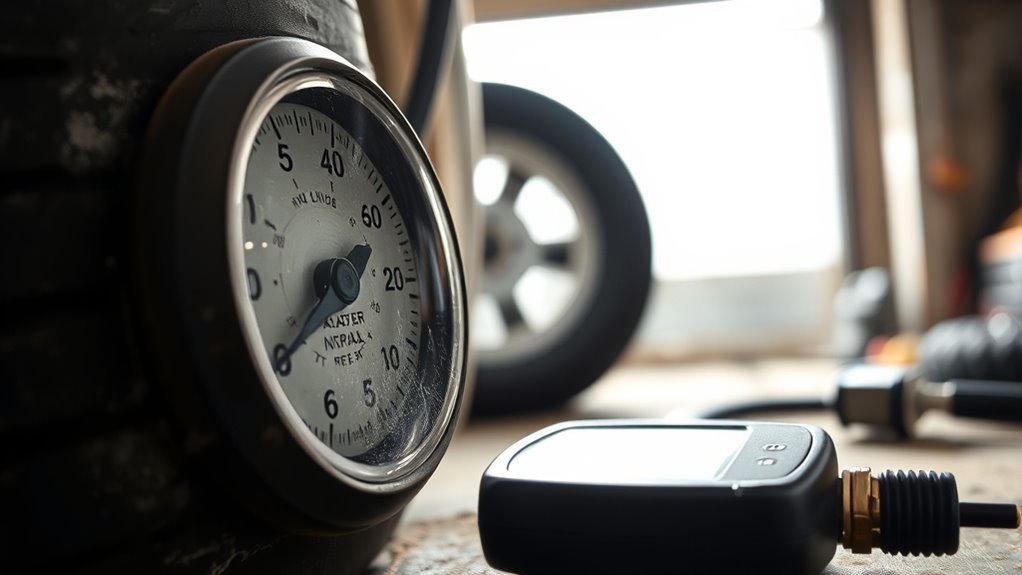
If you’ve noticed consistent discrepancies in your tire pressure gauge readings, it’s essential to reflect on a replacement. Inaccurate measurements can seriously compromise your safety and vehicle performance. If your gauge regularly displays different readings than a reliable standard, it’s time to think about upgrading to a more reliable model, such as the Etenwolf digital tire gauge. Additionally, if your gauge shows erratic results across varying weather conditions, you may find that advanced models perform better under extreme temperatures. Obstructions or damage to the nozzle can also lead to inaccuracies; if cleaning doesn’t resolve the issue, replacement is necessary. Trusting a faulty gauge can lead to underinflated tires, affecting handling and increasing the risk of tire failure.
Best Practices for Maintaining Tire Pressure Gauge Accuracy
Maintaining the accuracy of your tire pressure gauge is essential for ensuring ideal vehicle performance and safety. To achieve this, regularly calibrate your gauge against a known standard. This helps correct any discrepancies so you can trust what your gauge reads. Store your gauge in a temperature-controlled environment to prevent fluctuations that can impact tire air pressure readings. Always use the same gauge; different models may yield varying results, leading to confusion, especially when dealing with low pressure. Inspect the nozzle for dirt or debris that can obstruct accurate readings. Finally, follow the manufacturer’s maintenance guidelines and replace any gauges that consistently show inaccuracies, ensuring reliable performance and safety on the road.
Frequently Asked Questions
Why Is My Tire Pressure Sensor Reading Incorrectly?
Your tire pressure sensor might read incorrectly due to tire pressure fluctuations, environmental temperature effects, sensor malfunction causes, or improper installation issues. Regular checks can help identify these problems and guarantee accurate readings.
How to Reset a Portable Tire Inflator?
Ever wonder how to reset your portable tire inflator? Unplug it, wait 30 seconds, then plug it back in. Check power sources, follow inflator troubleshooting tips, and practice correct inflation techniques for proper maintenance.
Why Is My Pressure Gauge Not Reading Correctly?
Your pressure gauge might not read correctly due to gauge malfunction reasons, environmental effects, or user error factors. Regular maintenance, including calibration and cleaning, can greatly improve accuracy and reliability for your tire pressure measurements.
How to Recalibrate a Tire Pressure Gauge?
To recalibrate your tire pressure gauge, check its accuracy against a reliable standard. Use gauge calibration methods to identify common gauge errors, ensuring you maintain tire pressure importance for safe driving and peak performance.
Conclusion
Inaccurate tire inflator gauge readings can lead to unsafe driving conditions, but verifying your gauge’s accuracy is straightforward. Coincidentally, a slight temperature change can greatly impact readings, making regular checks essential. If you notice fluctuating pressures or signs of wear, it’s time to think about a replacement. By maintaining your gauge properly, you guarantee peak tire performance and safety. Remember, a well-calibrated gauge not only saves you time but also enhances your vehicle’s efficiency and longevity.