Timing belts and timing chains do the same core job: they keep the crankshaft and camshaft synchronized so the engine’s valves open and close at the right moment. The difference is how they are built, how they wear, how much they usually cost to service, and what kind of maintenance they need over time.
Quick Answer
Timing belts are usually rubber-based, quieter, and replaced at a set mileage or age interval. Timing chains are metal, oil-lubricated, and often last longer, but they can still wear if oil maintenance is poor. Always follow your owner’s manual because intervals vary by engine.
Key Takeaways
- A timing belt is typically a toothed rubber-composite belt that must be replaced on schedule.
- A timing chain is metal and runs inside the engine, where it depends on clean engine oil and proper tension.
- Many timing belts are replaced somewhere around 40,000 to 100,000 miles or after a set number of years, but the correct interval is always vehicle-specific.
- Timing chains often last longer than belts, but worn guides, tensioners, sludge, or low oil can still cause chain failure.
- If your vehicle uses an interference engine, a broken belt or badly stretched chain can allow pistons and valves to collide.
Understanding Timing Systems: Belts vs. Chains
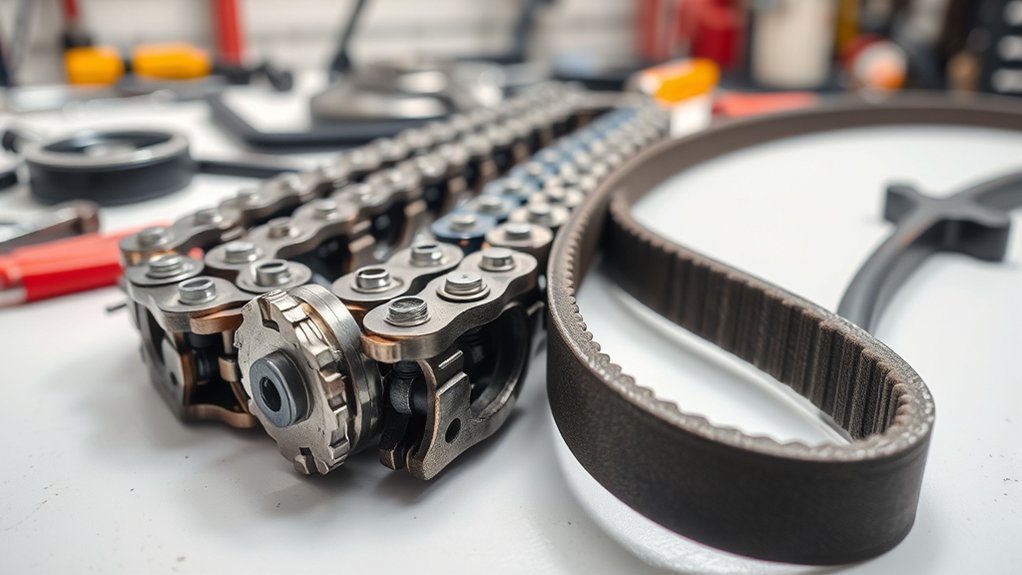
The timing system links the crankshaft, which moves the pistons, with the camshaft, which controls valve opening and closing. When everything is timed correctly, the intake and exhaust valves move in step with the pistons during the combustion cycle.
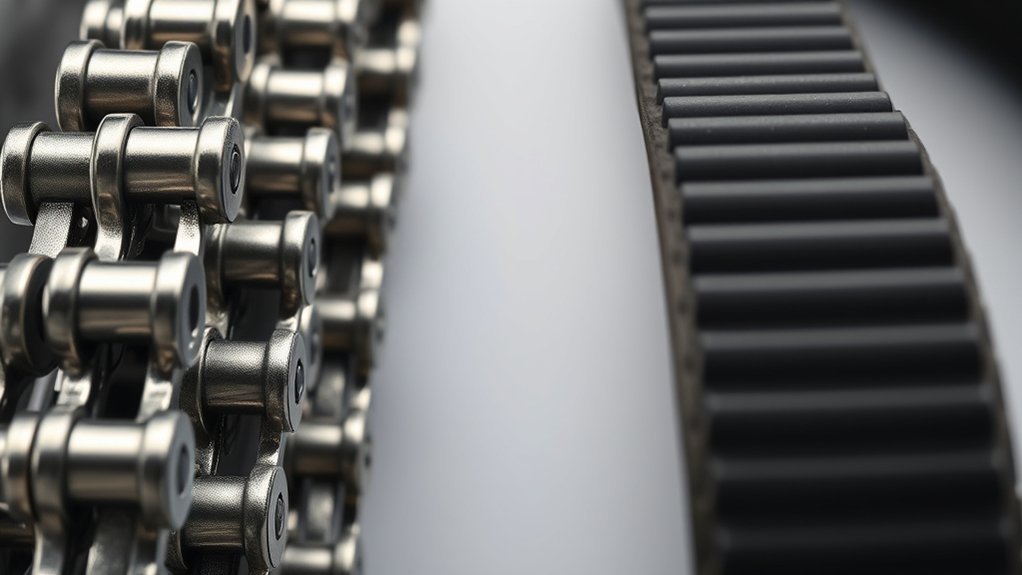
A timing belt is usually made from reinforced rubber or a rubber-like composite with teeth molded into it. A timing chain is made from metal links and is normally housed inside the engine, where it is lubricated by engine oil.
According to The AA’s cam belt guide, timing belts, also called cam belts, synchronize the crankshaft and camshaft and must be replaced at the vehicle manufacturer’s recommended interval. That interval can vary widely, so the owner’s manual matters more than any generic mileage number.
Warning: Do not ignore timing-system symptoms. If a belt breaks or a chain jumps timing, some engines can suffer bent valves, damaged pistons, or complete engine failure. If you hear unusual noises or notice misfires, stop driving when safe and have the vehicle inspected.
Timing Belt vs. Timing Chain Comparison
| Feature | Timing Belt | Timing Chain |
|---|---|---|
| Material | Reinforced rubber or composite | Metal links |
| Typical location | Usually outside the oil-filled engine area, behind covers | Inside the engine, lubricated by engine oil |
| Maintenance style | Scheduled replacement by mileage or age | Oil maintenance, inspection if symptoms appear |
| Noise | Usually quieter | Can be slightly noisier, especially if worn |
| Failure pattern | Can crack, lose teeth, fray, or snap | Can stretch, rattle, jump timing, or wear guides/tensioners |
| Cost pattern | Often cheaper than chain work, but labor can still be high | Often more expensive because access is deeper inside the engine |
[Products Worth Considering]

This ignition coil and spark plug set is designed to restore reliable starting, smooth acceleration, and consistent engine performance for a wide range of GM vehicles. It fits many Chevy, Buick, and Cadillac models and is built with quality materials to support long service life and dependable operation. Always verify OE numbers and vehicle fitment before purchasing.

This ignition coil and spark plug set is designed to restore reliable starting, smooth acceleration, and consistent engine performance for a wide range of Kia and Hyundai vehicles. Built with quality materials and compatible with multiple OE reference numbers, it helps address common symptoms like shaking, sluggish response, and hard starts. It is a practical replacement solution for drivers looking to refresh worn ignition components and improve drivability.

This ignition coil and spark plug set is designed to restore smooth starting, stronger acceleration, and more reliable engine performance for a wide range of Toyota, Scion, Lexus, and Pontiac models. Built with quality materials and engineered to match OE fitment, it helps address common misfire, shaking, and fuel economy issues when your ignition system is worn. It is an ideal replacement choice for drivers looking to refresh their tune-up with dependable components.
Key Features of Timing Belts: What You Need to Know
Timing belts are designed to be strong, light, and quiet. Their rubber-composite construction helps reduce noise, but rubber ages from heat, time, oil contamination, and normal use. That is why timing belts are treated as scheduled maintenance items.
Material Composition and Strength
A timing belt has molded teeth that mesh with the crankshaft and camshaft sprockets. The reinforced rubber body gives it flexibility, while internal fibers add strength. This design works well, but it does not last forever.
Visible cracking, fraying, missing teeth, oil contamination, or a rubbing sound near the belt cover are signs that the belt needs immediate attention. Some belts fail with little warning, so relying only on symptoms is risky.
Replacement Frequency and Costs
Timing-belt intervals vary by make, model, engine, and driving conditions. AAA Club Alliance notes that many manufacturers recommend replacement somewhere between 60,000 and 100,000 miles, while The AA gives a broader range of about 40,000 to 100,000 miles or 4+ years depending on the vehicle.
Gates, a major timing-belt manufacturer, advises replacing a timing belt at the recommended interval or every 72 months, whichever comes first, in its Timing Belt Replacement Interval Guide. That does not replace your owner’s manual, but it is a useful reminder that age matters even when mileage is low.
Pro Tip: If your timing belt is being replaced, ask whether the quote includes the belt, tensioner, idler pulleys, seals, and water pump if the water pump is driven by the belt. Replacing related parts during the same job can save labor later.
Understanding Timing Chains: Unique Characteristics
Timing chains are built from metal and are usually mounted inside the engine. They are stronger than rubber belts and often last much longer, but they are not magic or maintenance-free. A chain still depends on clean oil, proper oil pressure, healthy guides, and a working tensioner.
- Durable construction: Metal links are more resistant to age-related cracking than rubber belts.
- Oil-dependent operation: Chains rely on clean engine oil for lubrication and tensioner performance.
- Wear warning signs: Rattling on startup, metallic noise, misfires, rough running, or cam/crank correlation codes can point to timing-chain wear.
- Complex replacement: Chain service often requires removing timing covers, guides, tensioners, and other engine components.
- Long service life: Many chains last the life of the vehicle, but sludge, low oil, poor service history, or weak tensioner design can shorten that life.
RepairPal’s timing-chain replacement guide describes chain service as a complex repair involving the timing cover, chain tensioner, chain, and guide rails. That is one reason chain replacement is usually more expensive than belt replacement.
How Timing Belts and Chains Function in an Engine
Both systems control the relationship between piston movement and valve movement. If the crankshaft and camshaft lose synchronization, the engine may run poorly, misfire, lose power, fail to start, or suffer internal damage.
Timing System Synchronization
The crankshaft converts piston movement into rotation. The camshaft opens and closes the intake and exhaust valves. The timing belt or chain keeps those parts moving together at the correct ratio.
- The crankshaft moves the pistons up and down.
- The camshaft controls valve movement.
- The timing belt or chain keeps both shafts synchronized.
- The tensioner keeps the belt or chain tight enough to stay aligned.
- Guides, pulleys, and sprockets help the system track correctly.
Valve Timing Regulation
Valve timing is critical because each cylinder needs air, fuel, compression, ignition, and exhaust flow at the right moment. Even a small timing error can cause rough running or poor performance. A larger error can stop the engine from starting or allow internal parts to collide.
Note: In an interference engine, the valves and pistons occupy some of the same space at different times. If timing is lost, they can hit each other. In a non-interference engine, damage may be less severe, but a broken belt or slipped chain can still leave the vehicle stranded.
Lifespan Comparison: How Long Do Timing Belts and Chains Really Last?
A timing belt has a defined service life. Depending on the vehicle, that may be based on mileage, time, or both. A low-mileage car can still need a belt because rubber ages even when the car is not driven much.
A timing chain usually has no regular replacement interval on many engines. Instead, it is expected to last a long time as long as the oil is changed on schedule and the engine does not suffer from oil starvation, sludge, worn guides, or tensioner problems.
The best timing-system interval is not a universal number. It is the interval in your owner’s manual for your exact engine.
Wet belts deserve special attention. A wet belt is a rubber-composite belt that runs inside the engine oil. The AA notes that wet belts, unlike traditional dry cam belts, run internally in oil and can be affected by using the wrong oil grade. Ford’s online owner manual for one 1.0L EcoBoost example lists replacement of the timing and oil pump belt at 100,000 miles or 6 years, whichever comes first. Treat that as an example, not a rule for every Ford or every wet-belt engine.
Cost Comparison: Replacing Belts vs. Chains
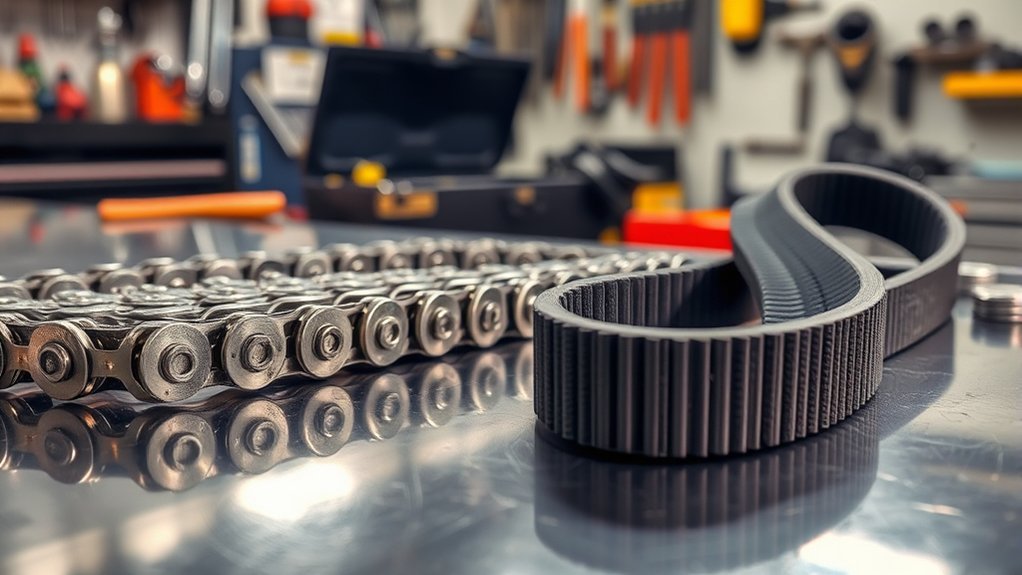
Timing-belt replacement is often less expensive than timing-chain replacement, but both jobs can be labor-heavy. The final price depends on the engine layout, parts included, labor rate, whether the water pump is replaced, and how much disassembly is required.
| Cost Factor | Timing Belt | Timing Chain |
|---|---|---|
| Typical repair pattern | Scheduled service before failure | Usually repaired after symptoms or diagnosis |
| Parts often included | Belt, tensioner, idlers, sometimes water pump | Chain, guides, tensioner, seals, timing cover parts |
| Labor access | Moderate to difficult, depending on engine bay | Often deeper engine disassembly |
| Example cost guidance | The AA says UK cam-belt jobs can start around £250 and exceed £1,000 on some vehicles | RepairPal estimates U.S. timing-chain replacement at $2,074 to $2,701 on average |
Because costs vary so much, the safest approach is to request a written quote for your exact registration, VIN, engine code, and mileage. Ask whether the quote includes related parts and fresh coolant if the water pump is replaced.
[Products Worth Considering]
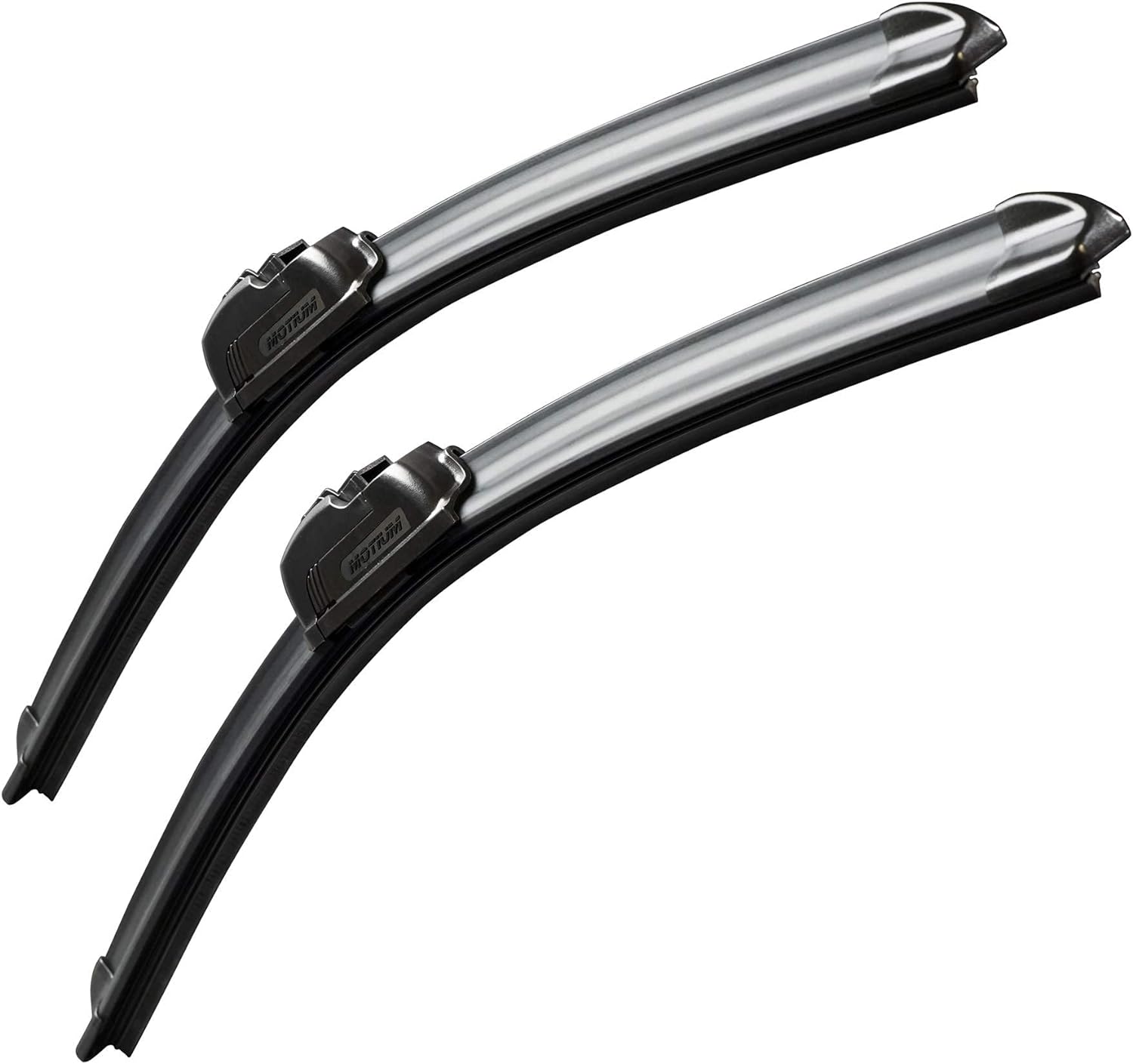
These MOTIUM windshield wiper blades deliver clear, streak-free wiping for improved visibility in rain, snow, and extreme heat. Designed for quiet, smooth operation and easy installation, they include both driver and passenger blades for a quick replacement solution that helps keep driving safer in all seasons.
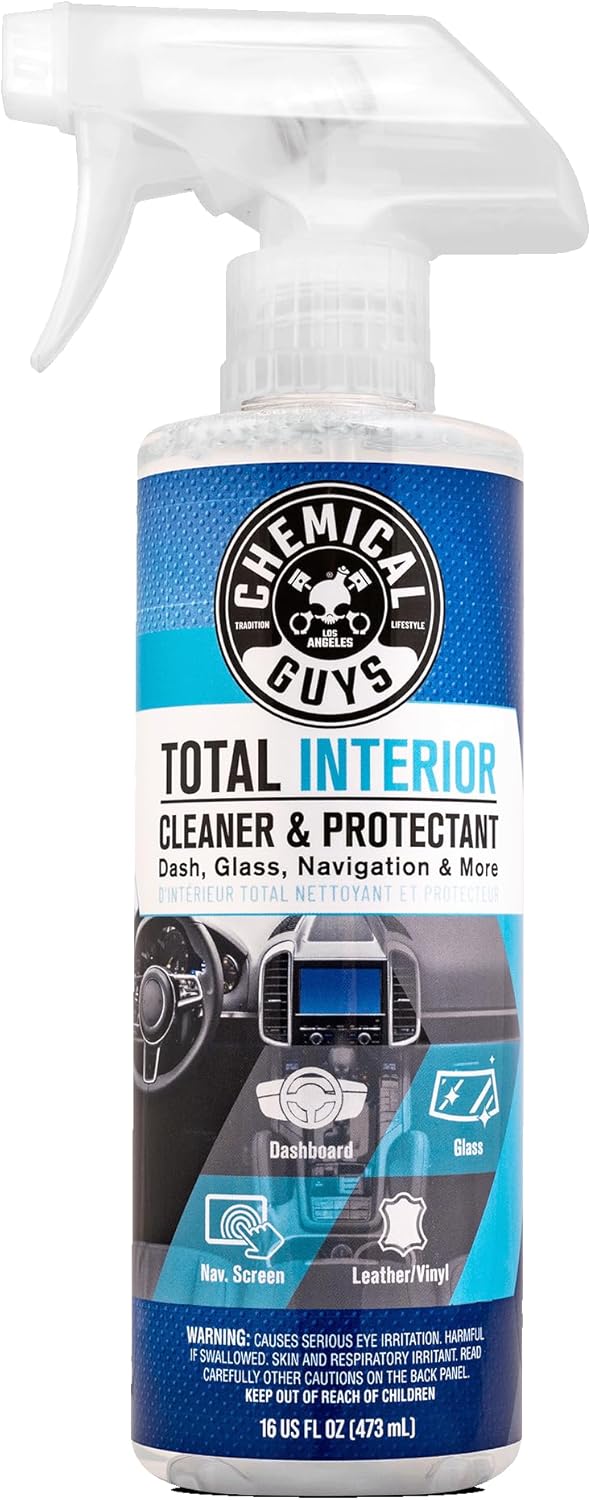
Chemical Guys Total Interior Cleaner, Protectant & Car Detailer is an all-in-one solution for cleaning and protecting your vehicle's interior surfaces. It safely lifts dirt, dust, body oils, and grime from leather, vinyl, plastic, rubber, glass, dashboards, door panels, seats, trim, and screens while leaving a fresh, natural-looking finish. Designed for quick spray-and-wipe use, it helps resist everyday wear and keeps interiors looking clean, streak-free, and factory fresh.
Timing Belts vs. Timing Chains: Why Do Different Cars Make Different Choices?
Manufacturers choose belts or chains based on packaging, cost, noise, weight, friction, service strategy, and engine design. Neither option is automatically “better” in every situation.
- Noise and refinement: Belts are usually quieter, which can help comfort-focused vehicles.
- Manufacturing cost: Belts can be cheaper to produce and package.
- Long-term service strategy: Chains can reduce scheduled belt-replacement needs but may be costly if they fail.
- Engine layout: Some compact engine designs favor belts, chains, or wet belts for packaging reasons.
- Performance and durability goals: Chains are common in engines designed for long service life, higher loads, or internal packaging.
Some Honda engines still use timing belts, especially certain V6 models, while many Honda four-cylinder engines use chains. That is why model-specific maintenance information matters more than brand-level assumptions.
Common Issues With Timing Belts and Chains to Watch For
Timing-system symptoms should never be ignored. Some issues are minor at first, but they can quickly become expensive if the engine jumps timing.
| Symptom | More Common With | What It May Mean |
|---|---|---|
| Cracking, fraying, missing belt teeth | Timing belt | Belt is aged, contaminated, or near failure |
| Rubbing or squealing near timing cover | Timing belt | Belt, tensioner, pulley, or cover contact issue |
| Rattle on cold start | Timing chain | Possible chain stretch, weak tensioner, or worn guides |
| Misfire, rough running, poor power | Both | Valve timing may be off |
| Check engine light with cam/crank correlation code | Both | Timing alignment problem needs diagnosis |
| No-start after cranking | Both | Belt may have broken or chain may have jumped/broken |
If you are buying a used car with a timing belt, ask for proof of the last belt service, including date, mileage, and parts replaced. If there is no proof and the vehicle is near or past the interval, budget for replacement.
How to Maintain Your Timing System for Longevity
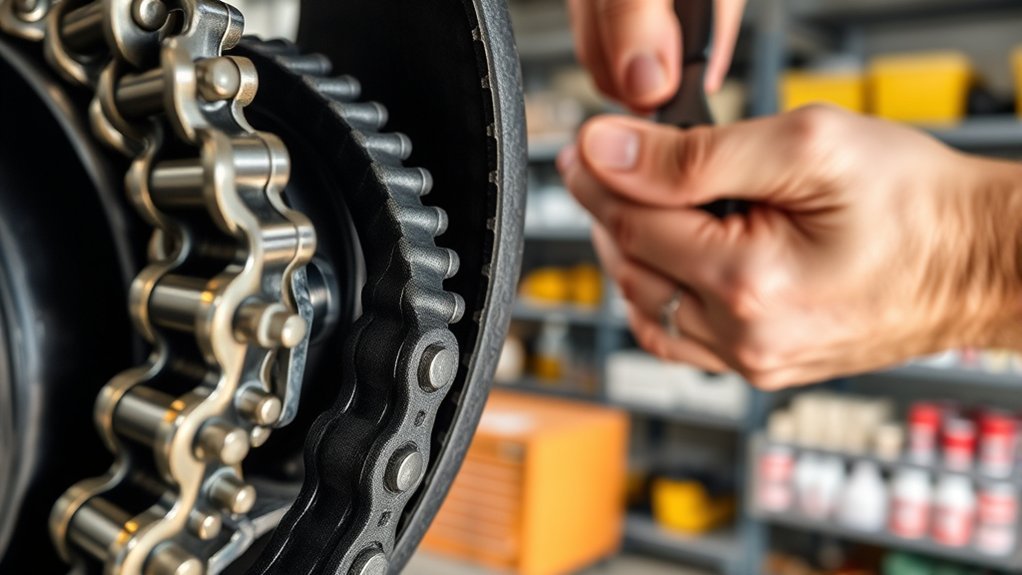
The best maintenance plan depends on whether your vehicle uses a dry timing belt, wet timing belt, or timing chain.
- Check your owner’s manual: Follow the exact mileage and age interval for your engine.
- Replace belts on time: Do not wait for a belt to look damaged; many are hidden behind covers and may fail without obvious warning.
- Use the correct oil: Timing chains and wet belts depend on the correct engine oil grade and service interval.
- Do not ignore oil leaks: Oil contamination can damage belts, and low oil can harm chain tensioners.
- Listen for unusual noises: Rattles, rubbing, or metallic noises deserve prompt diagnosis.
- Replace related parts: Tensioners, idlers, guide rails, seals, and water pumps can be just as important as the belt or chain itself.
- Use a qualified mechanic: Timing work requires precise alignment. One tooth off can cause poor running or engine damage.
Warning: Timing-belt and timing-chain replacement are precision jobs. Unless you have the correct locking tools, service data, and experience, this is usually professional work rather than a beginner DIY repair.
Frequently Asked Questions
Why do some Hondas still use timing belts?
Some Honda engines use timing belts because belts can be quiet, compact, efficient, and cost-effective for a specific engine design. Other Honda engines use timing chains. The correct answer depends on the exact model, engine, and year, so check the owner’s manual or Maintenance Minder information.
Is a timing chain always better than a timing belt?
No. A timing chain often lasts longer, but it can be more expensive to repair and depends heavily on oil maintenance. A timing belt has a scheduled replacement interval, but that predictability can make long-term maintenance easier to plan.
How do I know if my car has a timing belt or timing chain?
Check the owner’s manual, manufacturer maintenance schedule, service records, or a parts catalog using your exact VIN or engine code. Do not rely only on the brand name because the same manufacturer may use belts in some engines and chains in others.
Can a timing chain last the life of the car?
It can on many engines, especially with regular oil changes and the correct oil specification. However, timing chains can still stretch, guides can wear, and tensioners can fail. Startup rattle, rough running, or cam/crank correlation fault codes should be checked promptly.
Should I replace the water pump with the timing belt?
Often, yes, if the water pump is driven by the timing belt or is difficult to access without removing the belt. Replacing it during the same job can prevent paying similar labor twice. Ask your mechanic whether the water pump, tensioner, idlers, and seals are included in the quote.
What happens if a timing belt breaks while driving?
The engine will usually stop immediately. In an interference engine, pistons and valves may collide, causing major internal damage. In a non-interference engine, the damage may be less severe, but the vehicle will still be disabled and need repair.
Conclusion
Timing belts and timing chains both keep your engine’s internal parts moving in sync, but they have different maintenance needs. A belt is usually quieter and replaced on a schedule. A chain is stronger and often longer-lasting, but it depends on clean oil and healthy tensioners and guides. The smartest move is simple: identify which system your exact engine uses, follow the manufacturer’s schedule, and investigate noises or performance changes early.
Sources
- The AA — What is a cam belt and when should you replace it? — timing-belt function, intervals, symptoms, wet belts, and failure risks.
- AAA Club Alliance — When Should Timing Belts Be Replaced? — common 60,000 to 100,000-mile replacement guidance and owner’s manual advice.
- Gates — Timing Belt Replacement Interval Guide — replacement at recommended interval or 72 months guidance.
- RepairPal — Timing Chain Replacement Cost Estimate — timing-chain replacement cost and repair complexity.
- Ford Owner Manual — Scheduled Maintenance — example of a 1.0L engine timing and oil pump belt replacement interval.