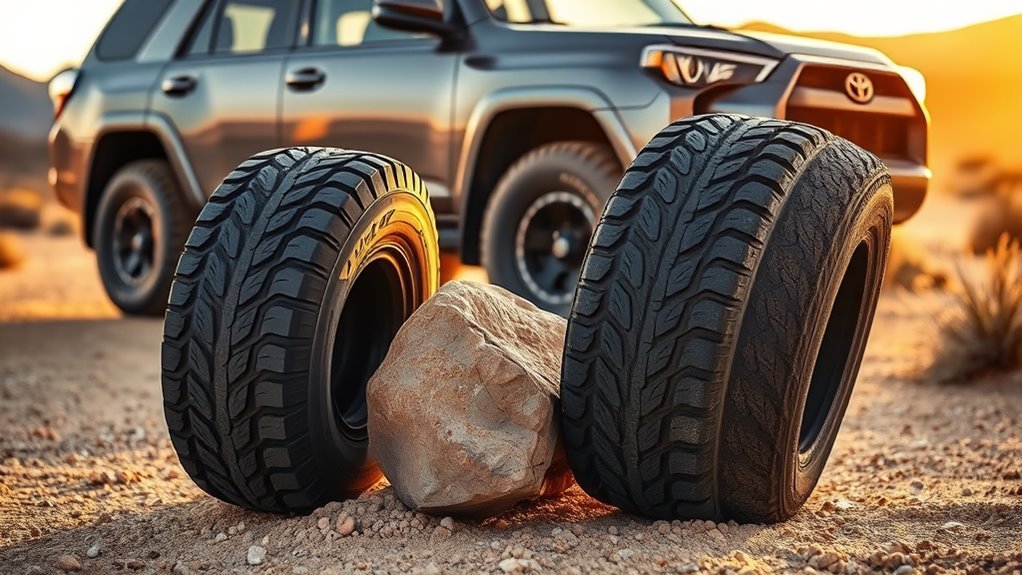
For most 4Runners, 4Runner load range C vs E comes down to how you use the truck: Load Range C (6-ply rating, typically 50 psi max) gives a lighter, smoother ride and is plenty for daily driving and moderate trails. Load Range E (10-ply rating, typically 80 psi max) adds sidewall strength and load capacity for heavy overland builds, frequent towing, and sharp rocky terrain, at the cost of weight and a firmer ride. Either way, don’t run LT tires at the sidewall maximum; set pressure from the tire maker’s load and inflation chart.
Quick Answer: Should Your 4Runner Run Load Range C or E?
| Your use | Better fit |
|---|---|
| Daily driving, road trips, light trails | Load Range C (or factory P-metric) |
| Moderate off-road, occasional light towing | Load Range C |
| Heavy overland build (bumpers, rack, drawers) | Load Range E |
| Regular towing near the 4Runner’s rating | Load Range E (or D) |
| Sharp rock, shale, or remote trips far from help | Load Range E |
4Runner Load Range C vs E: Key Differences
| Spec | Load Range C | Load Range D | Load Range E |
|---|---|---|---|
| Ply rating (equivalent) | 6-ply | 8-ply | 10-ply |
| Typical max inflation | 50 psi | 65 psi | 80 psi |
| Example load index (LT265/70R17) | 112 = 2,469 lb | Varies | 121 = 3,195 lb |
| Tire weight | Lighter | Middle | Heavier |
| Ride | Softer | Middle | Firmer |
“Ply rating” is an equivalent strength rating; modern tires don’t literally have 6 or 10 plies. The load index on the sidewall (the number before the speed letter) tells you the actual maximum load at the maximum pressure, so always check the exact tire you’re buying.
Load Capacity and Tire Pressure on a 4Runner
A tire only carries its full rated load at its maximum pressure. At lower pressure, both C and E tires carry less, which is why the tire maker’s load/inflation table matters.
- Factory tires: 4Runners come with P-metric tires, and the recommended pressure is on the door-jamb placard. See how to read the 4Runner door jamb tire placard.
- Switching to LT tires: an LT tire at the same pressure carries less than the P-metric tire it replaces, so you usually need somewhat higher pressure to match the factory load capacity. Use the tire maker’s chart for your size.
- Don’t run 80 psi on an E tire unless you’re carrying a load that needs it. On an unladen 4Runner that would make the ride harsh and wear the center of the tread.
- Do a chalk test (a chalk line across the tread, then a short drive) to fine-tune pressure for even contact.
A 4Runner is light enough that a correctly inflated Load Range C tire has a large safety margin for normal use. Check your actual loaded weight with our 4Runner payload calculator guide before deciding you need E.
Towing and Payload: When E Makes Sense
Tire load range does not raise the 4Runner’s tow rating or GVWR; those come from Toyota and are on the door placard and in the owner’s manual. What E tires add is extra margin and sidewall stability when the truck is heavily loaded.
- Frequent towing close to the 4Runner’s rating: E or D gives a stiffer, more stable sidewall.
- Permanent heavy accessories (steel bumpers, winch, rooftop tent, drawers): E helps carry the constant weight.
- Occasional small trailer: a properly inflated C tire is usually fine.
Ride Quality, Handling, and Fuel Economy
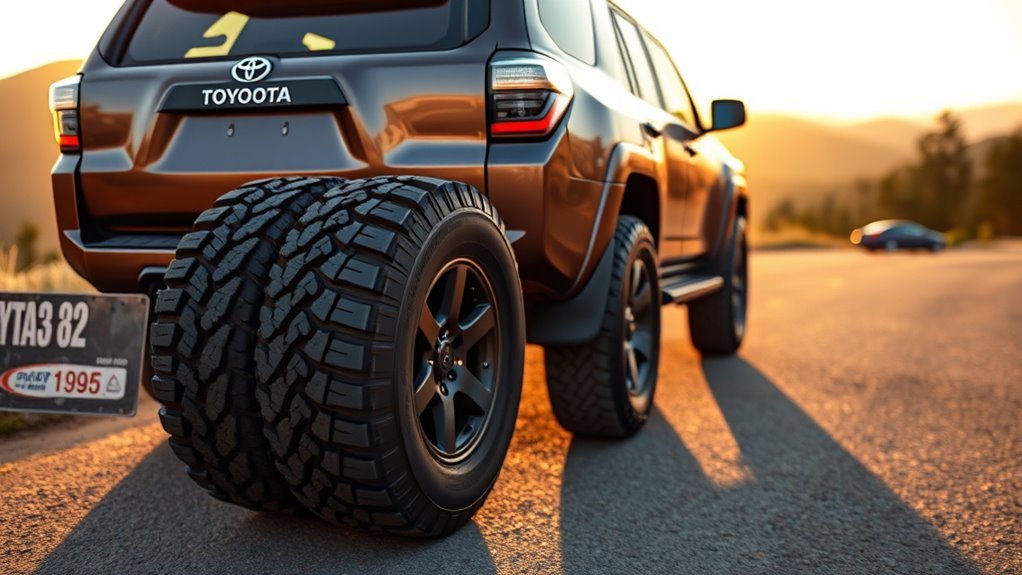
E-rated tires are heavier and stiffer, so they usually ride firmer and add unsprung and rotating weight. That can slightly dull acceleration and braking feel and may reduce fuel economy.
C-rated tires flex more, which feels smoother on washboard roads and around town. The difference is most noticeable on a stock 4Runner with no extra weight.
Off-Road Durability and Airing Down
- Load Range E: thicker sidewalls resist cuts and punctures on sharp rock and shale better.
- Load Range C: more flexible, so it builds a bigger footprint at a given trail pressure and rides better on rough tracks.
- Airing down: how low you go depends on tire, load, wheel, and terrain. Drive slowly while aired down, and reinflate before returning to pavement.
Tread type matters as much as load range off-road; see 4Runner all-terrain vs mud-terrain tires. If your trail use involves lockers, our center diff lock vs rear locker guide explains when to use each.
Fitment Checklist for 4Runner LT Tires
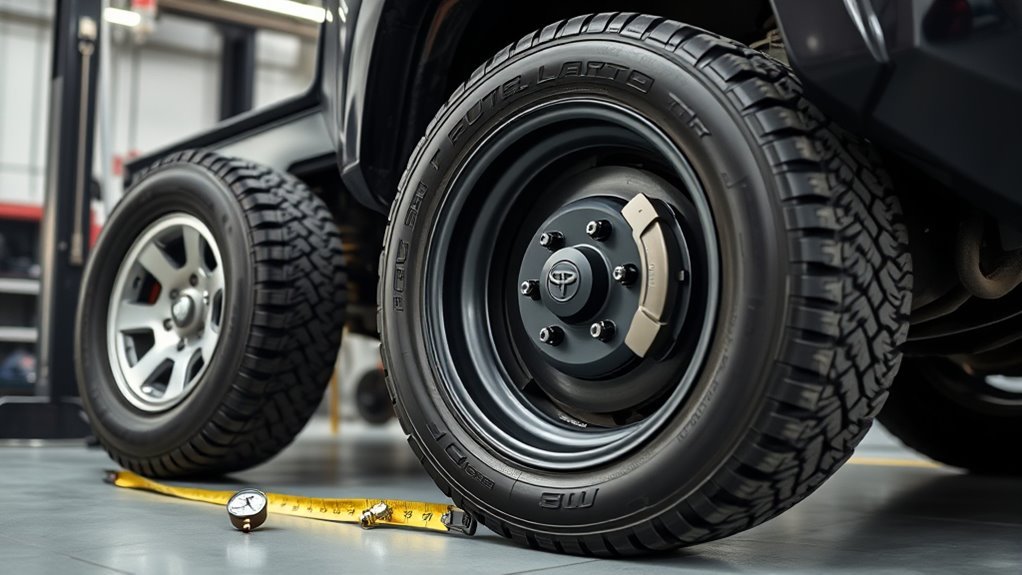
- Confirm the size fits your wheel diameter and width, and check clearance at full steering lock and suspension compression.
- Check the sidewall load index and load range, not just the size.
- Make sure the wheel’s own load rating is high enough for the tire’s intended load.
- Be aware that a much larger tire changes speedometer accuracy.
- Set pressure from the tire maker’s load/inflation chart; record your chosen road and trail pressures.
- Rotate on a regular schedule. The patterns in our Land Cruiser tire rotation guide apply to the 4Runner too, including five-tire rotation with a full-size spare.
Bottom Line
Load Range C is the right choice for most 4Runners: lighter, smoother, and plenty strong for daily use and moderate trails. Step up to Load Range E for heavy builds, frequent towing, or sharp rocky terrain, and set pressure from the tire maker’s chart rather than the sidewall maximum.
Frequently Asked Questions
What PSI should Load Range E tires run on a 4Runner?
There is no single number. Load Range E tires are typically rated to 80 psi, but that is the maximum for maximum load. Use the tire maker's load and inflation chart to find the pressure that carries your 4Runner's actual weight, then fine-tune with a chalk test.
Is Load Range C enough for a 4Runner?
For most owners, yes. A correctly inflated Load Range C tire has plenty of capacity for a 4Runner used for daily driving, road trips, and moderate trails.
What does Load Range E mean on a tire?
Load Range E is a light truck (LT) rating equivalent to a 10-ply construction, typically with an 80 psi maximum inflation. It carries more load and has stronger sidewalls than Load Range C.
Do Load Range E tires ride rougher?
Usually, yes. They are stiffer and heavier, so most drivers notice a firmer ride, especially on an unloaded 4Runner or when the tires are overinflated.
Do E-rated tires increase my 4Runner's towing capacity?
No. Towing capacity and GVWR are set by Toyota. E-rated tires only add load margin and sidewall stability within those limits.