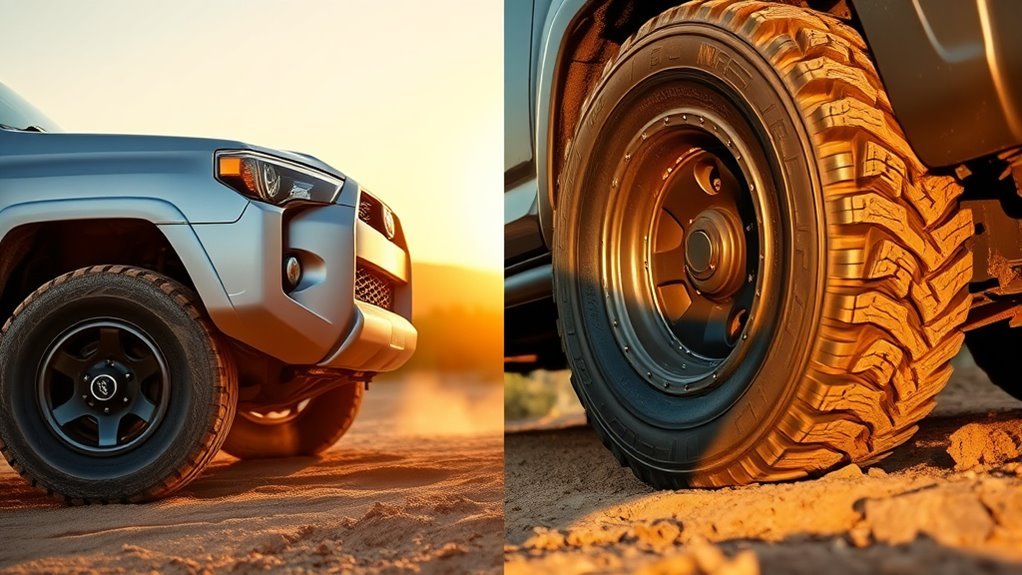
For your 4Runner, pick A/Ts if you want quieter highway manners, better fuel economy (about 1–2 MPG), and longer tread life for mixed use; choose M/Ts when you need uncompromising mud, sand and rock traction, thicker sidewalls and puncture resistance at the cost of noise, higher rolling resistance and faster wear. Fitment (265/70R17 or 285/70R17), load ratings and pressures matter. Keep driving style and service intervals in mind to optimize whichever you choose, and more specifics follow.
Quick Decision: A/T or M/T for Your 4Runner?
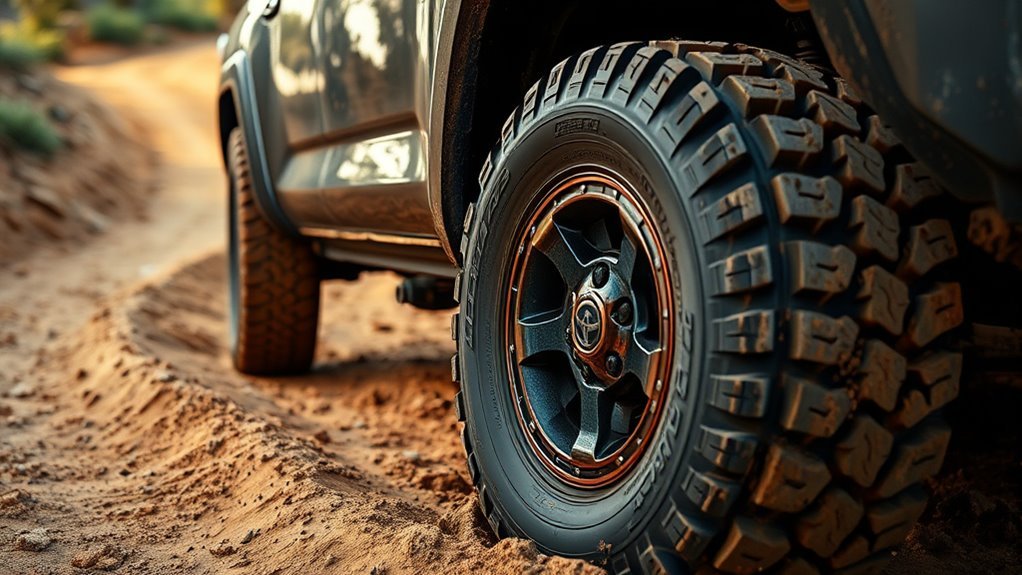
Wondering which tire fits your 4Runner best? You’ll weigh capability against everyday practicality. A/T advantages are clear: balanced performance for daily driving and moderate off-road use, quieter highway manners, lighter construction, and lower rolling resistance that saves about 1–2 MPG. They typically exceed 50,000 miles, so you’ll spend less per mile and keep range and comfort for long trips.
Contrast that with M/T limitations: designed for extreme off-road traction with aggressive treads, they excel in mud and rugged terrain but generate significant road noise, heavier weight, and higher rolling resistance. Expect shorter tread life—around 40,000 miles—and a measurable drag on fuel economy and handling on pavement.
Decide by mission: if liberation means exploring remote, technical trails, accept M/T trade-offs. If freedom includes highway range, lower cost per mile, and versatile daily use, choose A/T for a pragmatic, liberated drive.
[Products Worth Considering]

These off-road traction boards are designed to help vehicles recover from mud, sand, and snow with reliable grip and easier ramp-up. Their double-sided diamond construction, cross-shaped teeth, and contoured ramps improve traction while the durable polypropylene build stays flexible in harsh conditions. Convenient mounting points, ergonomic handles, and a visible leash make them practical to carry, store, and retrieve when recovery is needed.
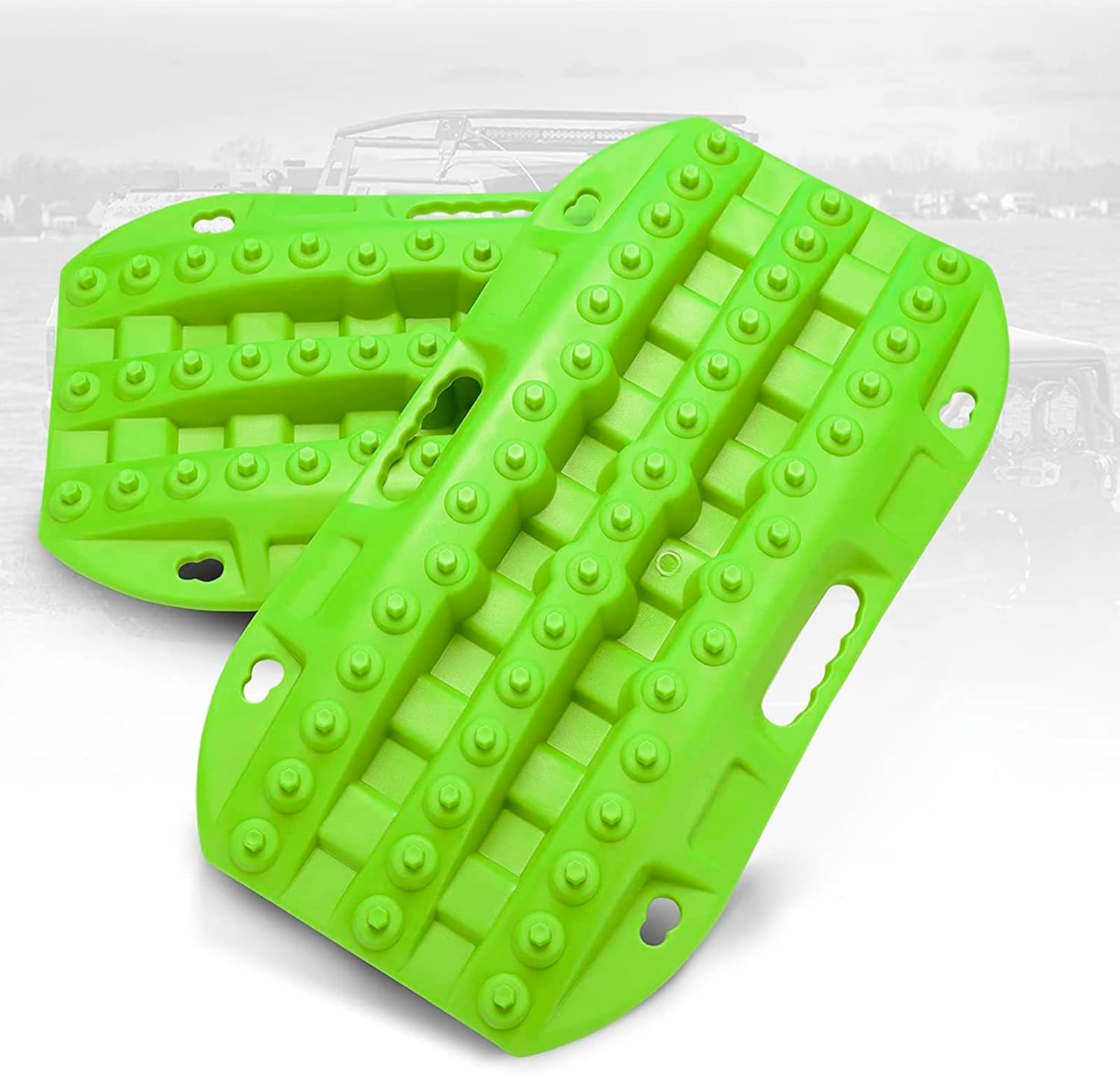
These short recovery traction boards are designed to help ATVs, UTVs, and other off-road vehicles regain grip in mud, sand, and snow. Built with strengthened teeth and a durable polypropylene construction, they provide reliable traction, easy handling, and year-round performance in tough conditions. Their nested, space-saving design and integrated shovels make them practical for carrying and using on remote adventures.

These X-BULL recovery traction tracks help drivers get unstuck from sand, snow, mud, or ice with a stable U-shaped elastic design and a wavy ramp that makes tire entry easier. Built from reinforced nylon, they are flexible, impact-resistant, and designed to perform in extreme temperatures while providing reliable emergency traction for a wide range of vehicles.
Tread Design: How A/T and M/T Behave on Pavement
Although both A/T and M/T tires are built for off-road use, their tread designs behave very differently on pavement: you’ll notice the contrast immediately in noise, ride quality, and efficiency. A/T tread patterns use moderate voids and shallower blocks, so you get quieter pavement performance, smoother handling, and lower rolling resistance that typically nets 1–2 MPG better fuel economy. The harder rubber compound on A/Ts also resists abrasion, delivering longer tread life—commonly over 50,000 miles—and more even wear when you commute or tour. M/T tread patterns, by contrast, are aggressive with deep lugs and wider voids; they bite off-road but transmit substantial road noise and a harsher ride on asphalt. Their softer compound flexes and wears faster on pavement, often yielding around 40,000 miles and uneven wear if you’re using them primarily on roads. Choose A/Ts if you prioritize daily comfort and efficiency; pick M/Ts only if liberated off‑road capability outweighs pavement compromises.
Off‑Road: A/T vs M/T on Dirt, Rocks, Mud, Sand, Snow
When you take your 4Runner off pavement, the choice between A/T and M/T shows up immediately in traction, self-cleaning, and sidewall protection: you get balanced dirt performance with A/Ts and aggressive control with M/Ts. A/Ts use tighter tread blocks and a harder compound, giving predictable dirt performance, decent snow handling, and longer life; they suit explorers who want reliability and less noise en route. M/Ts deploy large voids and siped lugs that eject mud and grip on loose sand and rock faces, so sand traction and rock climbing improve markedly; expect louder road noise and faster wear on pavement. For muddy ruts and jagged trails, M/Ts’ thicker sidewalls resist punctures and sustain control. On light snow and mixed trails, A/Ts deliver efficient snow handling with less sacrifice. Choose A/T if you value endurance and versatility; choose M/T if you demand uncompromised off-road purchase and armored confidence in extreme terrain.
Recommended 4Runner Setups: Sizes, Spacers, and Fitment Tips
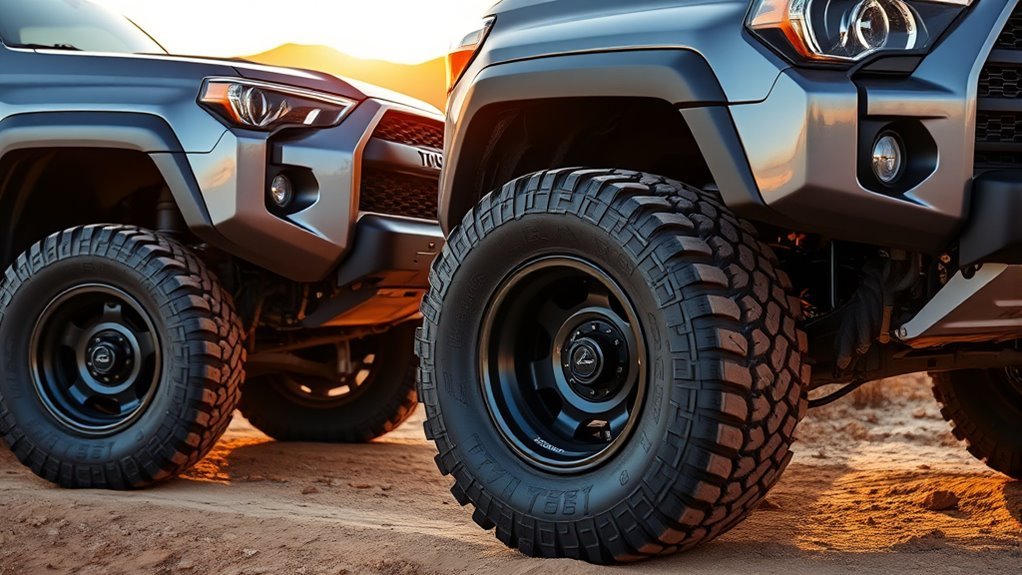
Having settled on A/Ts for balanced use or M/Ts for extreme grip, you’ll next decide how big to go and how to fit them without inducing rubbing or handling issues. Choose common upgrades like 265/70R17 or 285/70R17 to balance clearance and on-road behavior. Check tire load ratings against vehicle specs and account for heavier wheels or cargo. Test full articulation to confirm no contact with fenders or suspension. Spacers can buy track width and clearance; but spacer advantages come with trade-offs — avoid large spacers to preserve integrity and predictable handling.
| Size | Fitment Check | Notes |
|---|---|---|
| 265/70R17 | Fender + articulation clearance | Best compromise |
| 285/70R17 | Likely tighter; trim may be needed | More off-road capability |
| Spacer (5–15mm) | Wheel centering & caliper clearance | Small use only |
| Spacer (>15mm) | Increased scrub radius risk | Not recommended |
Maintain recommended pressures, monitor wear, and prioritize secure mounting and alignment for liberated, confident driving.
Noise, Comfort & Daily Drivability
If you prioritize highway comfort and everyday drivability, A/T tires give a clear advantage: they run quieter, produce less vibration, and typically return better fuel economy (about 1–2 MPG) than M/Ts, which trade noise and rolling comfort for aggressive off-road bite. You’ll notice lower road noise and improved ride quality in daily use, making commutes feel less fatiguing and more liberating.
- Road noise: A/T tread patterns reduce harmonic peaks at speed; M/Ts generate strong mid–high frequency rumble.
- Ride quality: A/Ts present lower rolling resistance and fewer vibrations; M/Ts transmit harshness from aggressive lugs.
- Daily comfort & tire performance: A/Ts optimize highway manners and fuel efficiency, whereas M/Ts compromise daily comfort for off-road capability.
Choose based on mission: if liberation means predictable, quiet highway miles and efficient daily comfort, A/Ts align with that priority; if you need extreme terrain traction, accept higher noise and rougher ride.
[Products Worth Considering]

BUNKER INDUST off-road traction boards help vehicles regain grip in mud, sand, and snow with a double-sided diamond array and cross-shaped teeth for improved bite and stability. Built from upgraded automotive-grade polypropylene, they resist UV damage, cold-weather brittleness, and wheel-spin heat while remaining flexible enough to handle demanding recovery situations. Contoured ramps, ergonomic handles, and multiple mounting points make them practical to use, store, and retrieve when adventure turns into recovery.

This tire inflator attachment combines accurate pressure reading and easy inflation in one heavy-duty tool for maintaining tire pressure with less hassle. A longer hose and 360-degree swivel air chuck help create a secure seal while giving you better control during use. Designed for universal compressor compatibility, it measures, inflates, and deflates without batteries.
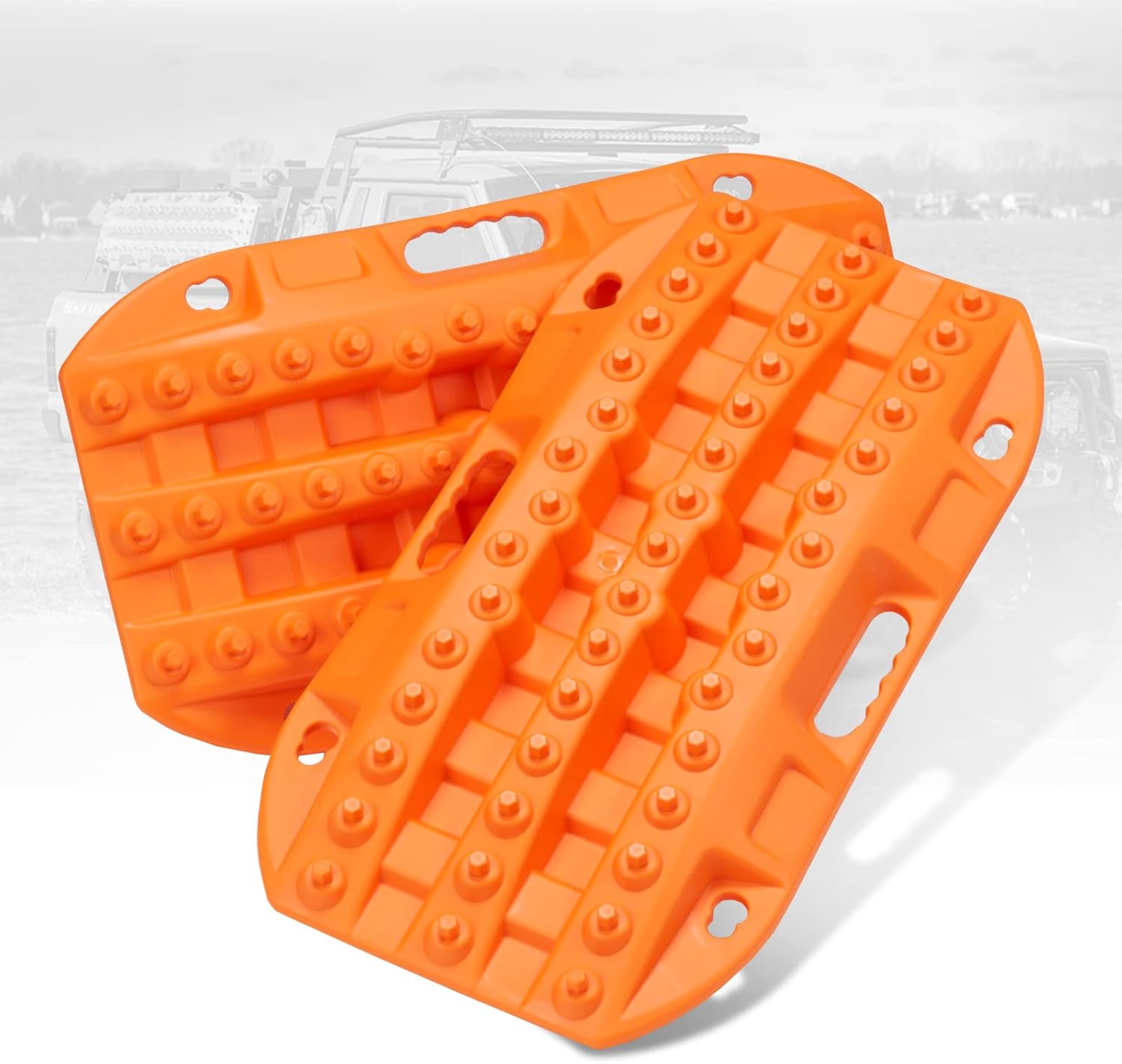
These short off-road traction boards are designed to help ATV and UTV drivers recover from mud, sand, and snow with added convenience and portability. Built with strengthened teeth and a stable bottom channel design, they help prevent wheel slip and improve traction in tough terrain. Made from durable automotive-grade polypropylene, they are lightweight, easy to clean, and suited for year-round use in extreme temperatures. Built-in shovels, ergonomic handles, and nesting storage make them practical for compact vehicle setups.
Longevity, Warranties & Maintenance Costs
Although both tire types get you down the road, A/Ts generally outlast M/Ts on pavement: you can expect 50,000+ miles from most A/Ts versus roughly 40,000 miles for M/Ts because their harder compounds resist wear better. You’ll see this in measurable tire performance: A/Ts maintain consistent rolling resistance and predictable tread wear, so you replace less often and preserve range. M/Ts sacrifice compound longevity for aggressive bite, accelerating pavement wear and increasing maintenance cycles.
Warranties reflect that trade-off. A/Ts commonly include up to 50,000-mile treadwear warranties; M/Ts rarely offer tread guarantees, so you shoulder lifecycle risk. Maintenance costs follow suit: A/Ts lower total cost through fewer replacements, improved fuel efficiency, and reduced repair frequency. M/T users report more sidewall cuts and punctures, driving additional repair expenses. Choose based on mission: if you want freedom with fewer interruptions and clearer cost projection, A/Ts are the pragmatic choice; M/Ts demand acceptance of higher upkeep.
Durability & Sidewall Protection for Towing and Overlanding
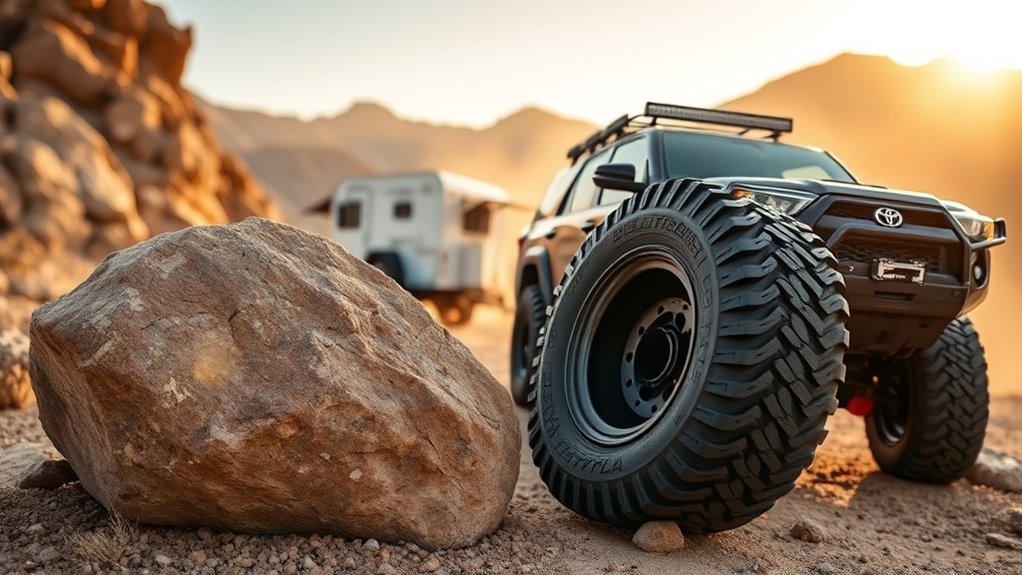
When you’re towing heavy loads or mounting long overland trips, tire durability and sidewall protection become mission-critical. You’ll weigh tire construction and towing capacity against terrain and mission profile. A/T tires use harder compounds and balanced carcass designs that extend life beyond 50,000 miles, giving consistent load-bearing performance and fewer replacements during long campaigns. M/T tires add thicker sidewalls and reinforcement for puncture resistance in extreme terrain, but their aggressive design accelerates wear to roughly 40,000 miles, which can erode towing reliability over time.
- A/T: durable carcass, moderate sidewall reinforcement, optimized for towing capacity and comfort.
- M/T: heavy-duty sidewalls, superior puncture resistance, faster tread wear under sustained highway/tow use.
- Trade-off: choose A/T for sustained overlanding with towing; choose M/T when terrain demands ultimate sidewall protection.
You’ll select based on liberated priorities: mission endurance and fewer service stops (A/T) versus uncompromising off-road strength (M/T).
Fuel Economy & Real‑World MPG Impact
Across typical mixed-use driving, A/T tires will usually net you about 1–2 MPG better than comparable M/Ts because they’re lighter and have lower rolling resistance. You’ll notice the weight and aggressive tread of M/Ts raise rolling resistance, increasing fuel consumption on daily paved routes. If you prioritize liberation from frequent fuel stops, A/Ts are the rational choice for mixed and highway miles.
Quantify trade-offs: expect modest real-world savings that compound over long distances; switching from M/T to A/T on mainly paved driving cuts operating cost. Maintain correct tire pressure and adopt efficient driving habits — steady speeds, minimal braking — to preserve the MPG advantage. For towing or heavy off-road use, M/Ts still offer protection and traction, but you accept reduced fuel economy. Make decisions by matching tire selection to typical terrain and mission profile: choose A/Ts for economy and range, M/Ts when protection and extreme traction outweigh fuel penalties.
Frequently Asked Questions
Should I Get All-Terrain or Mud-Terrain Tires?
Get all-terrain tires if you value tire performance and varied driving conditions; they’re quieter, more efficient, longer-lasting. Choose mud-terrain only if you demand maximum off-road bite and puncture resistance despite higher noise and wear.
Are Mud-Terrain Tires Good for Everyday Driving?
Like a blunt tool, mud-terrain tires aren’t ideal for everyday driving; they’ll sacrifice durability performance and fuel economy, offering superior muddy traction comparison but harsher noise, quicker wear, and compromised wet/ice handling for liberated drivers.
Do All-Terrain Tires Get Better Gas Mileage Than Mud Tires?
Yes — you’ll get better gas mileage with A/Ts because their tread patterns and lighter construction reduce rolling resistance; comparing terrain performance, they balance on-road efficiency and off-road capability, unlike heavier, drag-inducing M/Ts.
What Are the Disadvantages of Mud Tires?
You’ll face reduced traction performance on wet/icy roads, higher noise level on pavement, faster and uneven wear, harder balancing, increased rolling resistance lowering MPG, and compromised handling—tradeoffs that limit freedom for efficient, quiet driving.
Conclusion
You’re choosing between A/T and M/T like it’s life or death, but it isn’t—though the right tire can feel that dramatic. A/Ts give you quieter, more efficient daily miles and predictable grip on mixed trails; M/Ts tear through mud and brutal terrain at the cost of fuel, comfort, and tread life. Match tire type to your mission, pick proper size and spacers, and you’ll stop dramatizing every rut and actually enjoy driving your 4Runner.
[Products Worth Considering]

Protect your vehicle’s original carpet with custom-fit all-weather floor mats designed to help trap dirt, mud, snow, slush, and spills before they reach your interior. A ribbed channel surface, perimeter lip, and nib backing work together to help keep debris contained and the mats securely in place, while the front mats include a molded vehicle logo for a factory-correct look.

This universal wheel alignment tool helps you perform precise toe alignment at home with professional-grade accuracy and easy DIY operation. Its no-caliper-removal design simplifies setup, while the heavy-duty stainless steel construction and compact detachable form make it durable, stable, and easy to store. It is suitable for a wide range of vehicles, including cars, trucks, SUVs, ATVs, and UTVs.

These Nilight LED spot pods deliver focused white light for improved visibility on roads, trails, and job sites. The adjustable mounting brackets let you aim the beam where you need it, while the durable aluminum housing and IP67 waterproof design help them perform in tough outdoor conditions. Ideal for trucks, ATVs, UTVs, boats, and other universal-fit vehicles.