The 2025 Toyota 4Runner’s full-time 4WD system gives you H4F, H4L, and L4L, but those modes are not fitted to every 4Runner. The safest setting depends on surface grip: H4F for normal pavement, H4L for loose or slippery surfaces, and L4L for slow, difficult terrain. This guide follows Toyota’s 2025 operating instructions and explains the shift limits, indicator lights, traction systems, and common mistakes.
Quick Answer
On a 2025 4Runner equipped with full-time 4WD, leave it in H4F for normal paved driving. Select H4L only on slippery or loose surfaces that let the tires slip. Use L4L for steep, slow, technical terrain. Shift H4F to H4L below 62 mph; shift H4L to L4L while stopped in Neutral.
Key Takeaways
- H4F is the normal setting: Use it on dry, hard-surfaced roads for the quietest ride, least wear, and better economy than the locked modes.
- H4L locks the center differential: Use it only where the tires can slip, such as loose trails, ice, or snow-covered roads.
- L4L adds low range: Use it for steep climbs or descents, deep snow, sand, mud, and slow technical sections.
- Know the shift rules: H4F and H4L shifts require less than 62 mph; H4L and L4L shifts require a complete stop, the brake held, and Neutral.
- Wait for the lights: A flashing indicator means the transfer case or center lock has not completed the change.
Quick Guide: 2025 4Runner Full-Time 4WD at a Glance
At a Glance
| Time Required | Usually 5 to 30 seconds once the correct conditions are met |
| Difficulty | Easy, but the stop, speed, and Neutral rules are safety-critical |
| Tools Needed | None |
| Cost | $0 |
| Mode | Center Differential | Best Use | Main Indicator |
|---|---|---|---|
| H4F | Unlocked | Normal paved-road driving | Center-lock light off |
| H4L | Locked | Loose, icy, snowy, or off-road surfaces that permit tire slip | Center-lock light on |
| L4L | Locked, with low range | Steep grades, deep snow, sand, mud, and slow technical terrain | 4LO and center-lock lights on |
Warning: This guide applies only to 2025 4Runners equipped with the H4F, H4L, and L4L full-time 4WD control. A part-time 4WD 4Runner uses different positions, commonly 2H, 4H, and 4L. Check the labels on your transfer-case control and your owner’s manual before shifting.
Which 2025 4Runner Models Have Full-Time 4WD?
Toyota lists the 2025 4Runner with 2WD, part-time 4WD, or full-time 4WD, depending on grade and configuration. Toyota’s U.S. launch information identifies Limited and Platinum as the grades associated with full-time 4WD and an electronic locking center differential. Limited equipment can vary by powertrain and build, while Platinum uses this setup as standard equipment.
Do not assume that every hybrid or every off-road trim uses H4F, H4L, and L4L. TRD Off-Road, TRD Pro, and Trailhunter models use other off-road hardware, including an available or standard rear differential lock, but their transfer-case controls may follow the part-time 4WD layout. Confirm your exact system by checking:
- The labels printed around the transfer-case selector.
- The window sticker or vehicle specification sheet.
- The 4WD section of the owner’s manual linked to your VIN.
Note: Equipment descriptions can differ by market and configuration. The controls in your vehicle and the manual assigned to its VIN take priority over a general online guide.
[Products Worth Considering]

This center console organizer tray is designed for a precise fit in the Toyota RAV4 2026, helping turn deep console space into practical everyday storage. It keeps small essentials like phones, cards, coins, and sunglasses neatly organized and easy to reach while reducing movement and noise with a non-slip mat. Built from durable ABS and made for simple tool-free installation, it offers a clean, convenient upgrade for your interior.
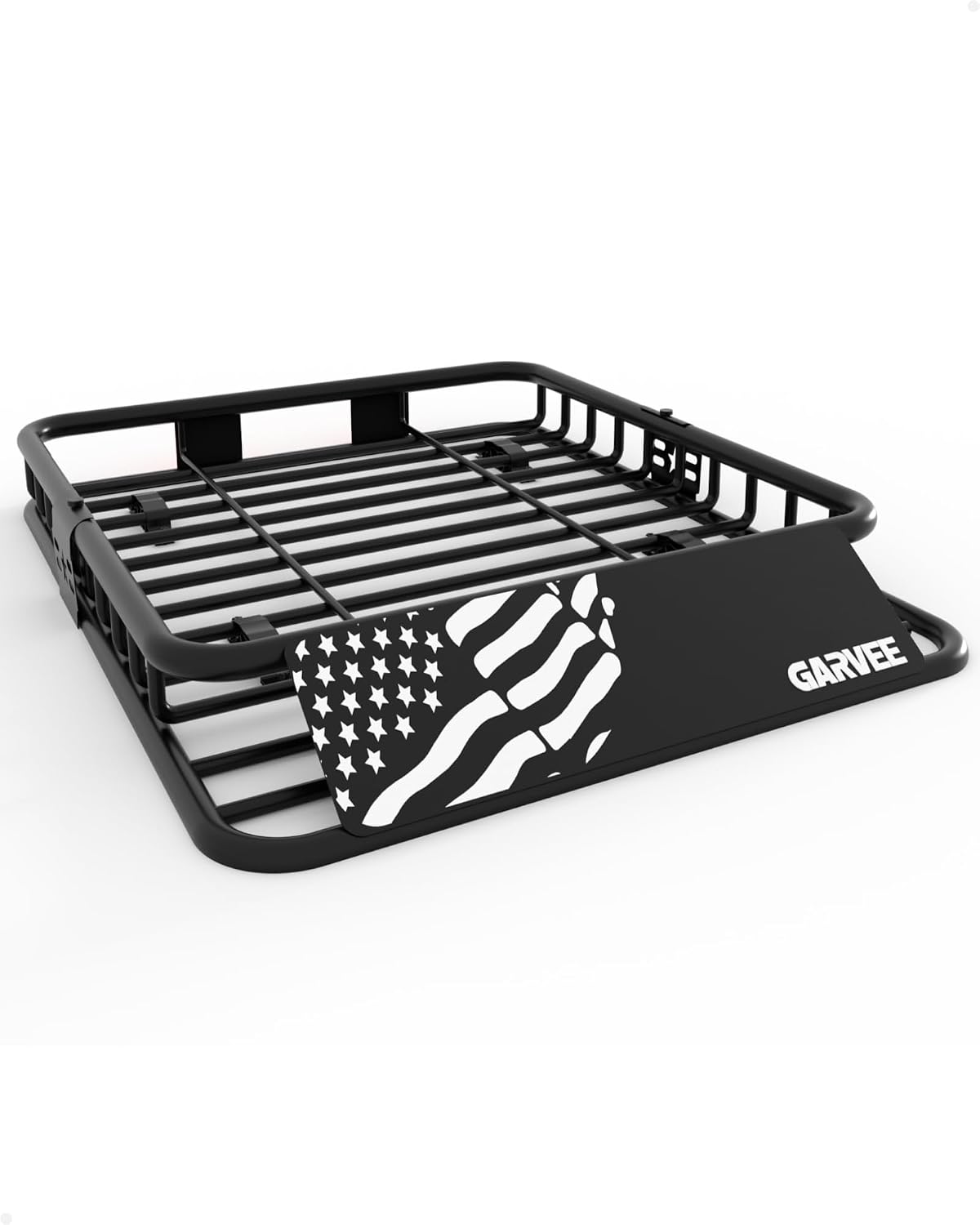
This universal roof rack cargo basket adds extra storage space for road trips, camping, and everyday hauling while keeping gear secure on the roof. Built with powder-coated steel and a wind deflector, it helps protect cargo from the elements and reduce drag. The universal U-bolt mounting design makes installation quick and compatible with many vehicles that have crossbars.

Adam's Advanced Graphene Ceramic Coating delivers long-lasting protection for your vehicle with a durable 10H-rated surface that helps defend against weather, chemicals, UV exposure, and everyday grime. Its patented UV tracing technology makes application easier and more precise, while the slick, high-gloss finish enhances depth of color and repels water for easier maintenance.
What “Full-Time 4WD” Means on the 2025 4Runner
Full-time 4WD keeps the front and rear axles driven during normal use. In H4F, the center differential remains unlocked, so the front and rear axles can rotate at different average speeds while you turn. That difference is important on pavement because the front and rear tires travel different distances through a corner.
In H4L and L4L, the center differential is locked. Locking couples the front and rear sides of the driveline more tightly and limits their speed difference. This can improve progress when one axle has less grip, but it can also create driveline windup on dry, high-traction pavement.
A locked center differential does not guarantee identical torque at all four wheels. Wheel torque still depends on axle differentials, brake-based traction control, tire grip, and available equipment. Toyota describes the 2025 system as using an electronic locking center differential; the official 2025 material reviewed for this guide does not specify a Torsen unit or a fixed 40:60 torque split.
H4F allows normal cornering on pavement. H4L and L4L lock the center differential for surfaces where tire slip can release driveline stress.
H4F: When to Use High-Speed 4WD With the Center Differential Unlocked
Use H4F as the normal setting for dry, hard-surfaced roads. Toyota’s manual describes it as the position that provides greater economy, the quietest ride, and the least wear compared with the locked transfer modes. H4F keeps all four wheels driven while allowing the center differential to accommodate normal front-to-rear speed differences.
Smooth On-Road Driving
H4F is the correct everyday mode for city streets, highways, parking lots, and other firm surfaces. It helps prevent the binding, tire scrub, heavy steering, and driveline stress that can occur when a center differential remains locked on high-grip pavement.
For ordinary rain or patchy winter conditions on paved roads, H4F remains the safer default unless the road is consistently slippery enough to permit tire slip. Full-time 4WD can help the vehicle move, but it does not shorten braking distance or overcome limited tire grip.
Best for Fuel Economy and Drivetrain Wear
Among the three full-time 4WD transfer positions, H4F is Toyota’s recommended normal-road setting. The unlocked center differential reduces unnecessary driveline resistance during turns, which supports quieter operation, less wear, and better economy than driving with the center differential locked.
The 62 mph figure is not a maximum operating speed for H4F. It is the maximum vehicle speed Toyota gives for shifting between H4F and H4L. Always obey posted limits and reduce speed for weather, visibility, tires, and road conditions.
H4L: When to Use High-Speed 4WD With the Center Differential Locked
Use H4L when you need high-range gearing but the surface is loose or slippery enough for the tires to slide. Suitable examples include snow-covered roads, ice, loose gravel, dirt tracks, and moderate off-road trails. H4L locks the center differential, which prevents the front and rear sides of the driveline from freely rotating at different average speeds.
When to Engage H4L
- Make sure the surface is consistently loose or slippery, not mainly dry pavement.
- Reduce vehicle speed to less than 62 mph.
- Make sure the wheels are not slipping or spinning.
- Push and turn the transfer-case control to H4L.
- Wait for the center differential lock indicator to stop flashing and remain on.
H4L can improve control and forward progress, but it does not create equal torque at every wheel and it does not replace safe speed, suitable tires, or careful steering.
Surface Types Suited to H4L
| Surface | Recommended Approach | Why |
|---|---|---|
| Continuous ice or packed snow | H4L may be appropriate | The surface permits tire slip and center locking can help maintain progress. |
| Loose gravel or dirt | Use H4L when added traction is needed | Loose material can release driveline stress during turns. |
| Moderate off-road trail | H4L for higher-speed trail sections | It adds center locking without low-range gearing. |
| Dry pavement or a high-grip parking lot | Stay in H4F | A locked center differential can bind during turns. |
Shifting Speed Limits
Toyota allows shifts between H4F and H4L below 62 mph (100 km/h). This is a shift-condition limit, not a recommendation to travel near that speed on snow, ice, gravel, or a trail. Select a much lower speed whenever grip, visibility, or stopping distance is reduced.
Warning: Never shift from H4F to H4L while the wheels are slipping or spinning. Regain control, stop the wheelspin, and then make the shift. Do not use H4L on dry, high-traction pavement.
L4L: Low-Range 4WD and When to Engage It

L4L combines low-range gearing with a locked center differential. Use it when you need maximum low-speed pulling force and precise control, such as climbing or descending steep hills, crossing deep ruts, moving through deep snow, or pulling through sand and mud.
Low range multiplies torque through the transfer case and lets the vehicle travel slowly with less throttle. It can also provide stronger engine braking on descents. L4L is not a normal road mode, and its low gearing changes throttle response, steering feel, and available speed.
To engage L4L, stop completely, keep the brake pedal depressed, shift the transmission to Neutral, then push and turn the transfer-case control from H4L to L4L. Wait until both the 4LO and center differential lock indicators remain steadily illuminated. Toyota states that VSC turns off automatically in L4L.
Warning: Do not select L4L on dry pavement. Do not move the shifter to Park until the transfer-case change is complete and the indicator has stopped flashing. During an incomplete transfer shift, the driveline can temporarily disengage and the vehicle may roll even with the transmission in Park.
How to Shift the 2025 4Runner Between H4F, H4L, and L4L
Use the following procedures only on a 2025 4Runner fitted with the full-time 4WD selector. Keep the steering steady, avoid wheelspin, and wait for each indicator to confirm the selected position.
H4F to H4L
- Reduce speed to less than 62 mph.
- Make sure the wheels are not slipping or spinning.
- Push and turn the control to H4L.
- Wait for the center differential lock indicator to stop flashing and stay on.
H4L to H4F
- Reduce speed to less than 62 mph.
- Push and turn the control to H4F.
- Wait for the center differential lock indicator to go off.
H4L to L4L
- Stop the vehicle completely and keep the brake pedal depressed.
- Shift the transmission to Neutral.
- Push and turn the control to L4L.
- Wait for the 4LO and center differential lock indicators to stay on.
L4L Back to H4L or H4F
- Stop completely and continue holding the brake.
- Shift the transmission to Neutral.
- Select H4L and wait for the 4LO indicator to go off. The center-lock indicator should remain on in H4L.
- When conditions permit, select H4F below 62 mph and wait for the center-lock indicator to go off.
Pro Tip: A small amount of driveline load can delay engagement. Keep the wheels straight and follow the dashboard instructions. If the center-lock light keeps flashing, Toyota advises driving straight while gently accelerating or decelerating, or moving in reverse, after checking that the path is clear.
Dashboard Indicators, Error Signs, and Shift Troubleshooting
The indicator lights are part of the shift procedure, not just reminders. Do not assume a mode is active until the correct light stops flashing and becomes steady.
| What You See or Hear | What It Means | What to Do |
|---|---|---|
| Center-lock light steady | Center differential is locked | Confirm that H4L or L4L is suitable for the surface. |
| 4LO light steady | Low range is engaged | Proceed slowly and avoid high-grip pavement. |
| Center-lock light flashing | Locking or unlocking is incomplete | Drive straight while gently accelerating or decelerating, or reverse when safe. |
| 4LO light flashing | Low-range engagement is incomplete | Shift to Drive or Reverse, move slowly, then stop and check again. |
| 4LO flashing with a buzzer | Vehicle may be moving or transmission may not be in Neutral | Stop fully, hold the brake, select Neutral, and wait. |
| Center-lock light flashing with a buzzer | Wheel slip or spin prevented complete locking | Stop the wheelspin and operate the control again if needed. |
| Either light flashing rapidly | Possible 4WD-system malfunction | Stop forcing shifts and have a Toyota dealer inspect the vehicle. |
Very cold transmission fluid can temporarily block a shift between H4L and L4L. Follow the multi-information display, warm the vehicle, and try again. Do not force the selector.
How VSC, TRAC, A-TRAC, and MTS Behave in Each 4Runner Mode
The transfer-case position and the electronic traction systems perform different jobs. The transfer case selects high or low range and locks or unlocks the center differential. VSC, TRAC, A-TRAC, and Multi-Terrain Select use braking, power control, or calibration changes to help manage wheelspin and vehicle motion.
| Mode or System | What to Expect |
|---|---|
| H4F | Normal high-range operation with the center differential unlocked. VSC and traction control remain available under their normal operating conditions. |
| H4L | High range with the center differential locked. Electronic traction systems continue to work according to vehicle conditions and selected equipment. |
| L4L | Low range with the center differential locked. Toyota states that VSC turns off automatically in this position. |
| A-TRAC | Uses brake and engine-control intervention to limit wheelspin and help direct usable drive force to tires with grip. |
| Multi-Terrain Select | On equipped models, changes traction calibration for terrain such as Mud, Dirt, and Sand. Toyota says it can function in both 4WD-High and 4WD-Low. |
Crawl Control and Downhill Assist Control are available off-road aids on certain configurations. They can manage low-speed throttle or braking, but they are not standard on every full-time 4WD 4Runner. Check your controls and manual before relying on them.
Choose the transfer-case mode first, then use available terrain aids as support. No electronic system can replace tire grip, safe speed, or a suitable driving line.
Practical Driving Tips: Snow, Gravel, Mud, and Technical Trails
- Plowed or patchy winter pavement: Stay in H4F so the center differential can absorb speed differences during turns. Slow down and increase following distance.
- Continuous ice or packed snow: H4L may help when the whole surface permits tire slip. Avoid abrupt throttle, steering, and braking.
- Loose gravel and dirt: Use H4L when you need more consistent front-to-rear drive. Return to H4F when you reach firm pavement.
- Deep snow, mud, or sand: Use L4L for slow pulling and finer throttle control. Keep wheelspin low because spinning tires can dig the vehicle deeper.
- Steep or technical trails: Select L4L before the obstacle, use a steady line, and let low gearing control speed. Do not change transfer positions in the middle of uncontrolled wheelspin.
Four-wheel drive mainly helps you accelerate and maintain progress. Your tires still determine much of your steering and braking grip. The National Highway Traffic Safety Administration’s winter-driving guidance recommends slowing down, increasing following distance, and checking tire pressure and condition before travel.
[Products Worth Considering]

This premium leather seat gap filler helps stop dropped items from disappearing between your seat and console while adding convenient storage to your cabin. Its universal fit is designed for most sedans, SUVs, and trucks, and the slim profile helps preserve legroom while keeping essentials close at hand. Built-in card slots and cable management make it a practical upgrade for everyday driving.

This windshield sun shade is designed to fit Toyota RAV4 models from 2019 to 2025 and RAV4 Prime models from 2021 to 2024. It helps block UV rays, reduce interior heat buildup, and protect your dashboard, seats, and steering wheel from sun damage. The accordion-folding design makes it easy to set up, store, and carry, while the durable triple-laminate construction adds long-lasting performance.

【Vehicle Fitment】Compatible with Toyota 4Runner 2004-2009 V6 4.0L(4000CC 1GRFE 24-VALVE), 2014-2019 V6 4.0L(4WD or RWD), Tacoma 2002 L4 2.4L/L4 2.7L/V6 3.4L(4700CC 2UZFE 32-VALVE DOHC), 2005-2010 L4 2.7L(2700CC 16-VALVE 2TRFE / 4000CC 24-VALVE 1GRFE), 2011-2015 L4 2.7L/V6 4.0L(4WD, M/T RWD, RWD), 2016 V6 3.5L (4WD, RWD, M/T 4WD), Tundra 2000-2001 2003-2006 V8 4.7L (4700CC 2UZFE 32-VALVE DOHC)
Full-Time 4WD vs. Part-Time 4WD vs. AWD
| System | Normal Road Use | Low Range or Lock |
|---|---|---|
| 2025 4Runner full-time 4WD | H4F can remain selected on dry pavement. | H4L locks the center differential; L4L adds low range. |
| 2025 4Runner part-time 4WD | Normally uses 2H on dry pavement. | 4H and 4L are for surfaces that permit tire slip. |
| Typical AWD | Designed for automatic all-weather road use. | Many systems lack a true low range or manually locking center differential, although designs vary. |
The practical difference is control. The 4Runner’s full-time system gives you a pavement-safe unlocked mode plus driver-selected center locking and low range. A part-time system requires you to leave 4WD disengaged on dry pavement, while many AWD systems make most decisions automatically and focus more on road use.
[Products Worth Considering]

Toyota 4Runner Adventure Apparel design. Officially Licensed Toyota Apparel for Women - Men - Boys - Girls - Toddler; Toyota Motor T-Shirts; Toyota Trucks T-Shirts; Cars; Adventure; Racing; Off-Road; Outdoor; Logo; 4Runner;

Vehicle Fitment: Front 66-5134 Axle Shaft for Toyota 1995-2000 Tacoma 4WD (w/ Automatic Disconnect Differential), 2001-2004 Tacoma 4WD, 1996-2002 4Runner 4WD.

Kit Includes: 1 Idler Arm & Bracket Assembly; 1 Pitman Arm; 2 Front Inner Tie Rods; 2 Front Lower Ball Joints; 2 Front Outer Tie Rods; 2 Front Upper Ball Joints
Common 4Runner Full-Time 4WD Mistakes to Avoid
- Using H4L on dry pavement: This can cause tire scrub, heavy steering, binding, and driveline stress.
- Treating 62 mph as a safe snow speed: It is only the transfer-case shift threshold. Conditions may require a far lower speed.
- Shifting while the wheels spin: Toyota warns against selecting H4L during wheel slip or wheelspin.
- Skipping Neutral for low range: H4L to L4L and L4L to H4L require a complete stop, the brake held, and Neutral.
- Ignoring a flashing light: A flashing indicator means the command is not complete.
- Selecting Park too soon: An incomplete transfer shift can leave the vehicle able to roll.
- Assuming all off-road aids are included: MTS, Crawl Control, Downhill Assist, and differential locks vary by trim and equipment.
Frequently Asked Questions
How does full-time 4WD work on the 2025 Toyota 4Runner?
On equipped models, all four wheels are driven in H4F while an unlocked center differential allows normal front-to-rear speed differences during turns. H4L locks the center differential, and L4L adds low-range gearing for difficult, low-speed terrain.
What is the difference between AWD and full-time 4WD?
Both can drive all four wheels on pavement. The 4Runner’s full-time 4WD adds driver-selectable center locking and low range. Many AWD systems operate more automatically and do not include a true low-range transfer case, although AWD designs vary.
Does every 2025 Toyota 4Runner have H4F, H4L, and L4L?
No. Toyota offered the 2025 4Runner with 2WD, part-time 4WD, and full-time 4WD. The H4F, H4L, and L4L layout applies to equipped full-time 4WD Limited and Platinum configurations. Check your selector labels and VIN-specific manual.
Can I leave the 4Runner in H4F on dry pavement?
Yes. Toyota identifies H4F as the normal position for dry, hard-surfaced roads. It keeps four-wheel drive active while leaving the center differential unlocked for smooth cornering.
Can I use H4L on dry pavement?
No. H4L is for surfaces that allow the tires to slip, such as off-road tracks, ice, or snow-covered roads. Using the locked center differential on dry pavement can cause binding and driveline stress.
Is 62 mph the maximum speed in H4F or H4L?
Toyota gives 62 mph as the maximum speed for shifting between H4F and H4L. It is not a safe-speed recommendation for slippery roads. Drive much slower whenever traction, visibility, or stopping distance is limited.
What should I do if the 4LO or center-lock light keeps flashing?
First confirm that the vehicle meets the required speed, stop, brake, and Neutral conditions. Follow the dashboard message. A center-lock light may complete after gentle straight-line movement or reversing. Rapid flashing can indicate a malfunction that needs Toyota dealer inspection.
Conclusion
Use H4F as the normal paved-road setting. Choose H4L only when the surface is loose or slippery enough to permit tire slip, and select L4L for steep, slow, demanding terrain. Follow Toyota’s speed, stop, brake, and Neutral rules, then wait for the dashboard indicators to confirm every change. VSC, A-TRAC, MTS, Crawl Control, and Downhill Assist can support you, but their availability and behavior depend on mode and equipment. Correct tires, safe speed, and careful judgment still matter most.
Sources
- Toyota USA Newsroom: The All-New 2025 Toyota 4Runner — full-time 4WD availability, center differential, grades, and available off-road systems.
- Toyota USA Newsroom: 2025 Toyota 4Runner Refines Adventure Ready Heritage — transfer-case choices, A-TRAC, Multi-Terrain Select, Crawl Control, and Downhill Assist Control.
- Toyota 2025 4Runner Interactive Owner’s Manual — H4F, H4L, and L4L use, shift procedures, indicators, warnings, and low-temperature operation.
- NHTSA Winter Weather Driving Tips — speed, following distance, tire, and vehicle-preparation guidance for snow and ice.