Last updated: September 16, 2026
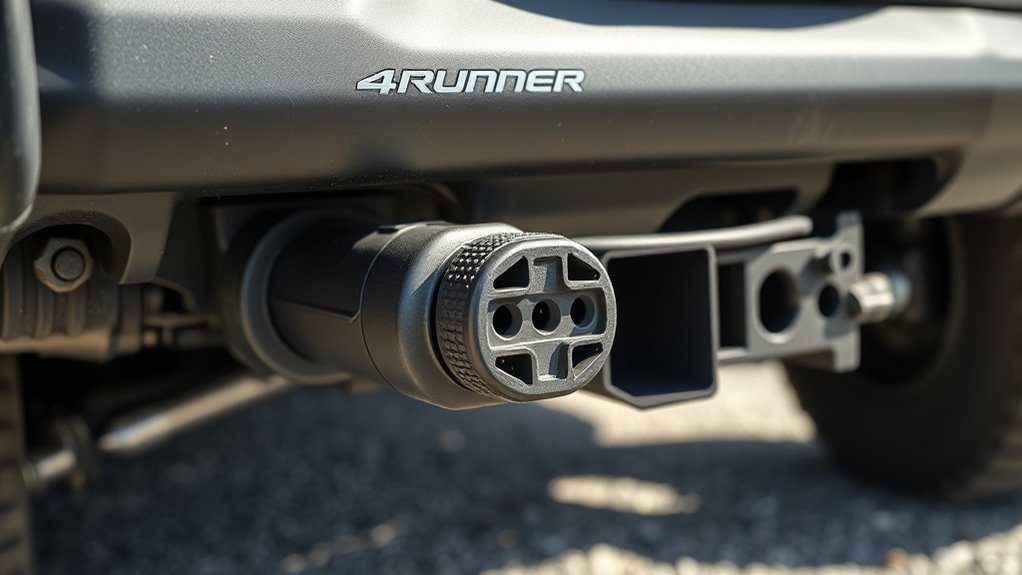
For 2001–2002 Toyota 4Runner trailer wiring, first determine whether the truck has the factory tow socket behind the rear bumper. If that socket is present, the CURT 55245 is a direct 4-way replacement lead. It plugs into the OEM socket at wiring location S6 and does not require cutting or splicing. If the truck does not have that OEM socket, use a vehicle-specific taillight T-connector such as the CURT 55341, which connects behind the rear interior trim and includes a taillight converter. Confirm which connector your 4Runner has before ordering parts. This guide shows both paths, the standard 4-flat wire functions, the 25A TOWING fuse to check, and a safe multimeter test sequence.
Which Trailer Wiring Harness Does Your 4Runner Need?
| What You Find | Harness Path | Converter Detail |
|---|---|---|
| An OEM tow socket behind the rear bumper at location S6 | CURT 55245 plugs directly into the factory socket | The 55245 is an output connector and lead. It does not contain a converter. |
| No OEM tow socket behind the bumper | CURT 55341 T-connects at the rear taillight wiring behind the driver- and passenger-side trim panels | The 55341 includes a taillight converter and a separate white ground wire. |
Do not order the 55245 only because the vehicle has a hitch. The truck must have the matching OEM tow socket. Conversely, the 55341 follows a different installation path and is not a simple replacement lead for the bumper-mounted factory socket.
[Products Worth Considering]

This 26-piece terminal removal tool kit is designed to help you depin and service automotive wire connectors with greater speed and accuracy. It supports a wide range of connector types used in cars, trucks, motorcycles, and other equipment, while the organized case keeps each tool easy to find and carry. Built for reliable, damage-free terminal removal, it is a practical choice for professional electrical work and DIY wiring repairs.

This custom-fit 4-pin trailer wiring harness adds reliable towing light connectivity for compatible Toyota RAV4 and RAV4 Prime models, with plug-and-play installation into the vehicle's rear wiring. It powers trailer tail lights, brake lights, and turn signals, while the included dust cover helps protect the connector when not in use. Built with durable bonded wire and corrosion-resistant terminals, it is designed for dependable performance on everyday towing setups.

This complete Deutsch connector kit provides a versatile assortment of sealed DT-style connectors for reliable automotive and industrial wiring repairs. Built with waterproof, dustproof, and corrosion-resistant materials, it helps maintain secure electrical connections in harsh, high-vibration environments. The included pin removal tool, contacts, seal plugs, and storage case make installation, servicing, and organization simple and efficient.
What Does the Factory 4-Flat Do on a 2001–2002 4Runner?
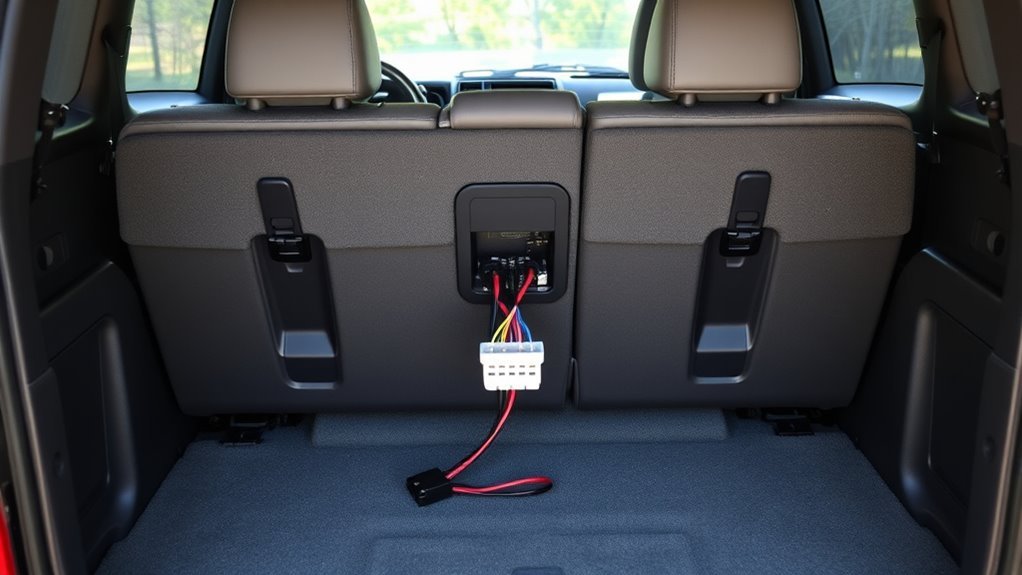
On a 2001–2002 Toyota 4Runner with the OEM tow socket, the CURT 55245 provides a standard vehicle-side 4-way flat connector. It carries the trailer’s running lights, left stop/turn light, right stop/turn light, and ground through the vehicle’s existing tow wiring. CURT lists the 2001 and 2002 Toyota 4Runner as compatible applications and requires the OEM tow package or factory socket for this installation.
A 4-flat handles basic trailer lighting only. It does not provide a dedicated electric-brake circuit, 12-volt auxiliary power, or a reverse-light circuit. Plugging a simple 4-to-7 adapter into it changes the connector shape but does not create those missing circuits. A trailer that requires electric brakes or auxiliary power needs a properly wired 7-way installation and any required brake controller. For receiver sizing and connector basics across other model years, see our 4Runner hitch receiver size and class guide.
Where Is the 2001–2002 4Runner Factory Tow Connector?
For the CURT 55245 installation, look behind the rear bumper at wiring location S6. The connector may be protected by a black cover. If so, remove the cover’s 10 mm bolts temporarily to expose the tow plug. The manufacturer’s 55245 installation sheet shows the connection area and routing direction.
Before connecting the new lead, inspect the socket and nearby wiring:
- Check the housing and locking tab for cracks or heat damage.
- Look inside the terminals for green or white corrosion, bent contacts, water, or road debris.
- Inspect the loom for chafing, melted insulation, crushed sections, and previous splices.
- Confirm that the socket is firmly mounted and that the connector can lock fully into place.
- If all trailer-light functions are dead, inspect the 25A TOWING fuse in the engine-room junction block and any inline fuses in the tow harness.
Do not identify the Toyota’s upstream circuits only by insulation color. At the standard 4-flat output, white is ground, brown is running lights, yellow is left stop/turn, and green is right stop/turn. Upstream vehicle wiring can use different colors, especially if it has been repaired or modified, so confirm circuits by function.
How Do You Install the CURT 55245 Without Splicing?
Quick verdict: Use CURT 55245 only when the matching factory tow socket is present behind the bumper. The harness connects to that socket, routes toward the center of the hitch area, and provides a protected 4-way flat output. CURT backs the connector with a limited one-year warranty.
- Park on level ground, set the parking brake, switch the ignition and exterior lights off, and keep the trailer disconnected.
- Look behind the rear bumper for the factory tow plug at location S6.
- If a black protective cover hides the connector, remove its 10 mm bolts and move the cover aside.
- Inspect both connector halves. Clean away loose debris and stop if the terminals are badly corroded, bent, melted, or wet.
- Push the CURT harness connector into the OEM socket until the locking tab is fully engaged.
- Route the 4-flat toward the center of the vehicle. Keep it away from the exhaust, sharp metal edges, suspension movement, and pinch points.
- Secure the lead so it cannot drag on the road or contact the spare tire, exhaust, or moving parts.
- Reinstall any cover removed during access and fit the supplied dust cover over the 4-flat when it is not in use.
- Test all four circuits at the vehicle socket before connecting the trailer.
CURT’s 55245 procedure does not call for battery disconnection for the plug-in connection. If you cut, splice, repair damaged conductors, or work on powered wiring, follow the applicable service procedure and isolate power as required.
[Products Worth Considering]

This 12-piece automotive electrical disconnect pliers kit is designed to help you safely remove push-tab style connectors from sensors, ignition coils, fuel injectors, and wiring harnesses. Built from carbon steel with ergonomic red handles, it provides dependable grip, control, and durability for working in tight engine bay spaces without damaging clips or wires. The varied tool designs and angled tips make it a versatile choice for both DIY repairs and professional automotive electrical work.

This brake switch stopper helps restore proper brake light operation by providing a precise pedal stopping point, reducing issues where brake lights stay on. Made from durable nylon, it is designed for easy installation and dependable fitment across many Toyota, Lexus, and Scion models. The multi-pack supply makes it convenient to replace worn stoppers and keep spares on hand for future maintenance.
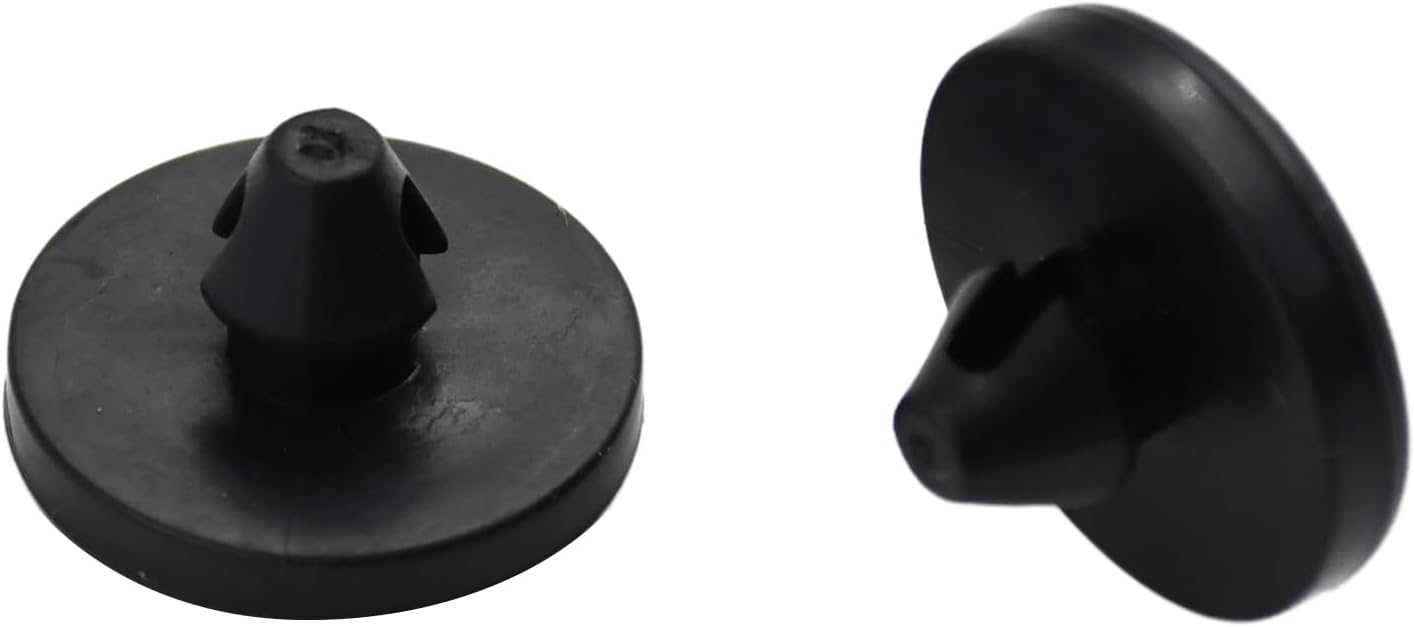
This brake switch stopper set helps restore proper brake pedal and brake light switch operation on a wide range of Toyota, Lexus, and Scion vehicles. Designed as a direct replacement part, it supports reliable pedal contact and can help fix worn or missing stoppers that affect brake light function. The package includes two stoppers for convenient replacement or spare use.
How Do You Test the 4-Flat for Shorts, Dead Blinkers, or Converter Failure?
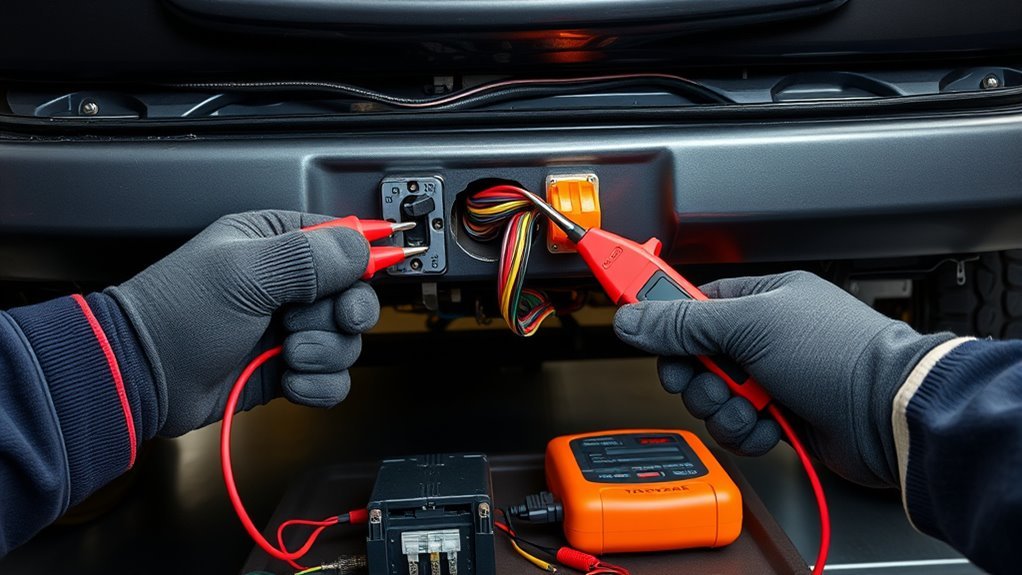
Disconnect the trailer first. Testing the vehicle socket by itself separates a vehicle-side fault from a trailer-side short, damaged lamp, or poor trailer ground. Set a digital multimeter to DC volts on a range that can read approximately 12 volts. Connect the black probe to the 4-flat ground contact or a clean, unpainted chassis ground, then test the powered contacts with the red probe.
| 4-Flat Circuit | Vehicle Control | Expected Result |
|---|---|---|
| White: ground | Vehicle and lights off; use continuity or resistance mode | Low resistance between the ground contact and a clean chassis ground |
| Brown: running lights | Parking lights or headlights on | Approximately battery voltage |
| Yellow: left stop/turn | Left turn signal on | Voltage pulses on and off with the flasher |
| Green: right stop/turn | Right turn signal on | Voltage pulses on and off with the flasher |
| Yellow and green | Brake pedal applied | Both stop/turn circuits show approximately battery voltage |
For the 2001–2002 4Runner tow harness covered by Toyota TSB AX006-02, Toyota lists a maximum rated current of 7.8A for the tail circuit and 4.5A for each stop/turn circuit. Those figures apply to the applicable Toyota tow-harness system; they are not a universal converter rating.
For CURT 55341, the current installation sheet states 6.0A total for the tail/running circuit and 3.0A per side for signal circuits. CURT’s current 55341 product page lists 7.5A for the tail-light circuit and 3.0A for turn/brake circuits. Because those two current CURT references differ on the tail-light figure, use the lower published 6.0A limit or confirm the current rating with CURT if the trailer load approaches it. Do not transfer either rating to a different converter or harness.
| Symptom | Next Checks |
|---|---|
| No trailer-light output on any circuit | Disconnect the trailer; check the 25A TOWING fuse, inline tow-harness fuses, socket seating, corrosion, ground path, and the upstream tow converter or wiring. |
| Running lights work, but neither stop/turn circuit works | Test yellow and green directly at the vehicle socket. If both are dead there, continue upstream toward the fuse, connector, and converter. If they work at the socket, inspect the trailer plug, ground, and lamp wiring. |
| Only the left or right side fails | Test the affected yellow or green circuit at the vehicle socket. Inspect that terminal for corrosion or looseness, then trace the corresponding trailer wire and lamp ground. |
| Voltage appears with no trailer attached, but the lights are dim or fail under load | Check the vehicle and trailer grounds, loose terminals, corroded splices, and damaged wiring that creates excessive resistance. |
| The TOWING fuse blows | Disconnect the trailer before installing the correct replacement fuse. If the fuse then holds, inspect the trailer for a short or overload. If it blows with the trailer disconnected, inspect the vehicle tow harness. Never install a higher-rated fuse. |
[Products Worth Considering]
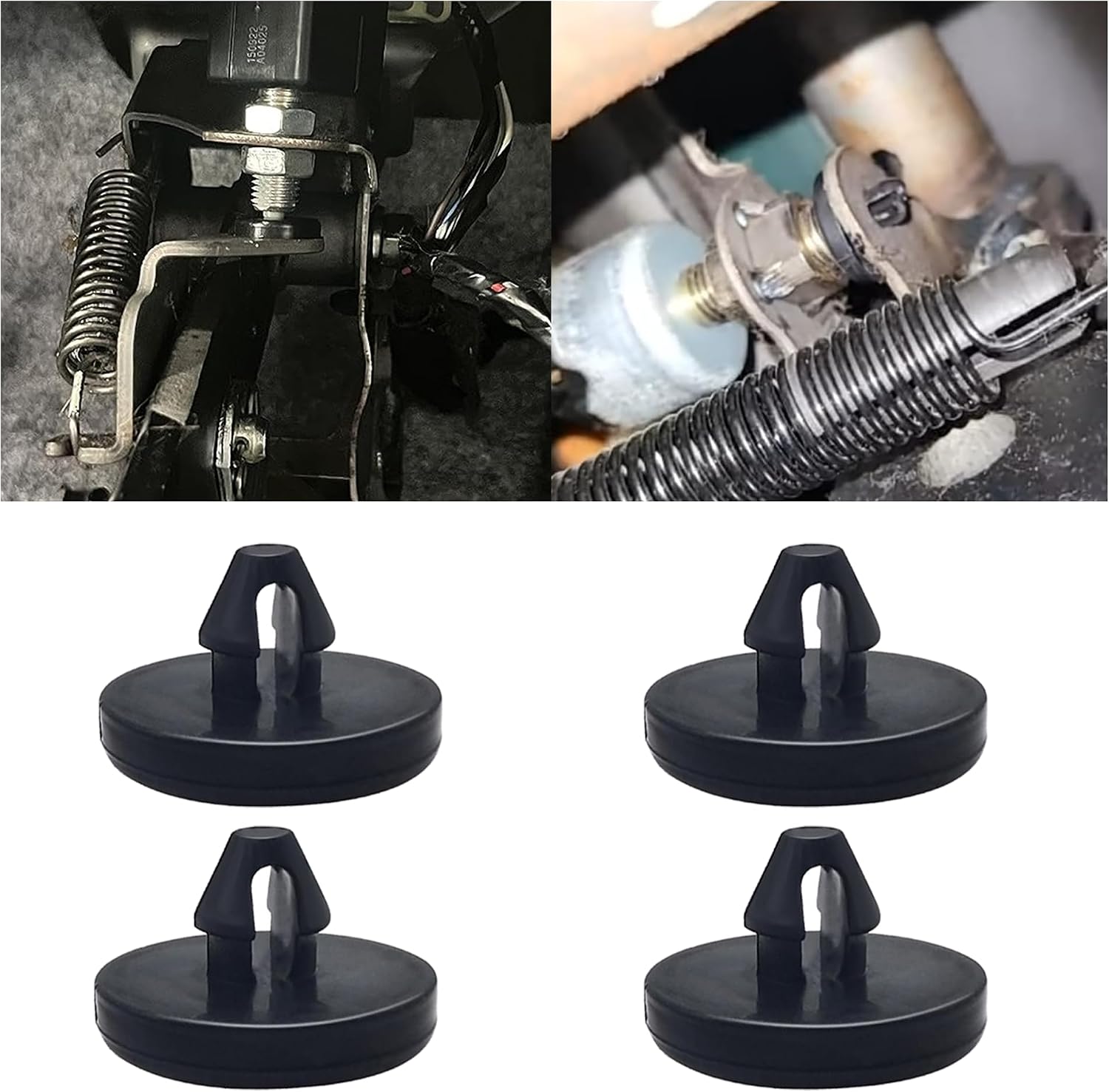
This brake pedal stop pad set is designed as an OEM replacement for compatible Toyota, Lexus, and Scion models, helping restore proper brake light switch function when the brake light stays on. Made from durable nylon, these compact stoppers are built for reliable long-term use and quick, tool-free installation. The set includes multiple pieces for convenient replacement and sharing.

This automotive test light combines a bright LED voltage display with quick polarity indication for fast, accurate circuit checks in a wide range of vehicle systems. It helps diagnose battery, charging, lighting, and fuse issues with a sharp stainless probe, long spring wire, and easy-to-use alligator clip for efficient troubleshooting.

This 41-piece terminal pin removal tool kit is designed to simplify connector repair, wire harness work, and terminal extraction for automotive, household, and industrial applications. Heat-treated tools help resist bending during repeated use, while comfortable rubber-textured handles improve grip and control. The included blow-molded case keeps everything organized for easy storage and transport.
When Should You Replace the Harness or Converter?
Replace parts only after testing identifies which part of the circuit has failed. The CURT 55245 is a connector lead for a working OEM tow socket; it does not replace the factory or accessory converter farther upstream. Installing a new 55245 will not restore output if the socket receives no signal from the vehicle.
If the truck has no factory tow socket, the CURT 55341 follows a different path. Its connectors install between the rear taillight assemblies and the vehicle wiring, its white wire grounds to clean bare metal, and its converter mounts inside the vehicle near the taillight area. Follow the current 55341 installation instructions rather than the 55245 procedure.
| Condition | Correct Next Step |
|---|---|
| OEM tow socket is present and has correct input, but the old 4-flat lead is missing or damaged | Install CURT 55245 or another verified OEM-socket replacement connector. |
| No OEM tow socket is present | Use a verified taillight T-connector such as CURT 55341 and follow its interior installation instructions. |
| The OEM socket has no output after the correct fuses, connections, and grounds are checked | Diagnose the upstream tow harness and converter before buying another bumper lead. |
| The trailer needs electric brakes, auxiliary power, or reverse lights | Install the additional circuits required for a functional 7-way system. A connector-shape adapter alone is not enough. |
Frequently Asked Questions
Does CURT 55245 Fit a 2001 or 2002 Toyota 4Runner?
Yes, CURT lists both model years as compatible, but the 55245 requires the matching OEM tow socket. Inspect behind the rear bumper before ordering. A hitch by itself does not prove that the factory electrical connector is present.
Does CURT 55245 Have a Converter?
No. CURT 55245 is an OEM-socket replacement 4-flat lead and does not contain a taillight converter. The vehicle’s upstream tow wiring and converter must already be supplying the factory socket, so replacing the 55245 will not repair a dead upstream circuit.
Where Is the Factory Tow Plug on a 2001–2002 4Runner?
For the CURT 55245 installation, the tow plug is at wiring location S6 behind the rear bumper. On some vehicles, a black protective cover held by 10 mm bolts conceals the connector.
What If My 4Runner Does Not Have the Factory Tow Plug?
Use a vehicle-specific taillight T-connector such as CURT 55341. It connects behind the driver- and passenger-side rear trim panels, includes a converter, and uses a separate chassis ground.
How Do You Wire a 4-Prong Trailer Connector?
On a standard 4-way flat connector, white is ground, brown supplies the running and marker lights, yellow supplies the left turn and brake light, and green supplies the right turn and brake light. Verify old or modified wiring by function rather than trusting its colors.
What Is a Wiring Harness for a Tow Hitch?
A tow-hitch wiring harness carries the vehicle’s lighting signals to the trailer connector. A vehicle-specific harness can connect without cutting factory wires, while a converter-equipped harness combines separate vehicle brake and turn signals into the shared stop/turn circuits used by a standard trailer 4-flat.
Which Fuse Powers the 2001–2002 4Runner Trailer Lights?
Toyota TSB AX006-02 identifies a 25A TOWING fuse in the engine-room junction block for the applicable 2001–2002 4Runner tow harness. The harness design may also contain inline fuses. For broader fuse-panel identification across 4Runner generations, see our Toyota 4Runner fuse box location and diagram guide. Replace a blown fuse only with the specified rating and repair the short if it blows again.
Can a 4-Flat Operate Electric Trailer Brakes?
No. A standard 4-flat carries running lights, left stop/turn, right stop/turn, and ground. Electric trailer brakes require an additional brake-output circuit and normally a compatible brake controller.
Conclusion
First, determine whether the 2001–2002 4Runner has the OEM tow socket behind the bumper. Use CURT 55245 for that factory-socket path or a taillight T-connector such as CURT 55341 when the socket is absent. If the lights do not work, disconnect the trailer, check the 25A TOWING and inline fuses, verify the ground, and test brown, yellow, and green at the vehicle socket. Replace a lead or converter only after the tests identify the failed side of the circuit.
Sources
- CURT 55245 product specifications and fitment
- CURT 55245 installation instructions
- CURT 55341 product specifications and fitment
- CURT 55341 installation and circuit-rating instructions
- Toyota TSB AX006-02 trailer wire harness reference