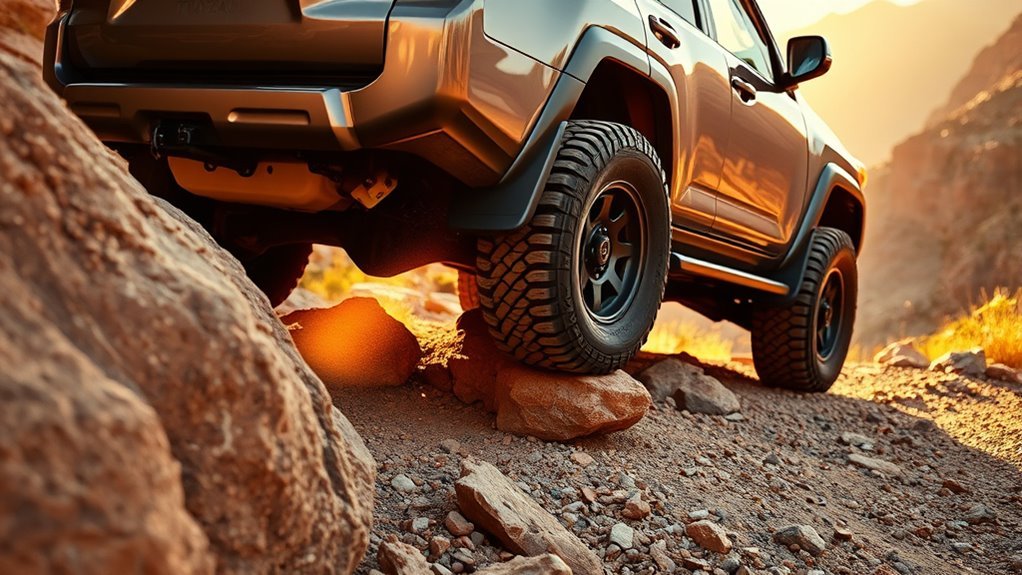
A center diff lock and a rear locker solve different problems. The 4Runner center diff lock vs rear locker difference is simple: the center diff lock (full-time 4WD models like the Limited) locks the front and rear axles together so both get equal drive, while the rear locker (TRD Off-Road, TRD Pro, Trailhunter) locks the two rear wheels together so a lifted or slipping rear wheel can’t steal all the power. Use the center lock on loose or slippery off-road surfaces, add the rear locker only for low-speed obstacles where a rear wheel is spinning, and never use either on dry pavement.
Quick Answer: Which One Does Your 4Runner Have?
| Generation / trim | 4WD type | Center diff lock | Rear locker |
|---|---|---|---|
| 5th gen (2010–2024) SR5, TRD Sport and similar 4WD | Part-time | No center diff (4H locks front and rear together) | No |
| 5th gen Trail / TRD Off-Road, TRD Pro | Part-time | No center diff | Yes, electronic |
| 5th gen Limited | Full-time | Yes (Torsen limited-slip center diff with lock) | No |
| 6th gen (2025+) TRD Off-Road, TRD Pro, Trailhunter | 4WD | Check owner’s manual | Yes, electronic |
| 6th gen Limited, Platinum | Full-time | Yes (Toyota lists it on Platinum and on i-FORCE MAX Limited) | No |
Special editions and older generations vary, so check your window sticker or the 4WD section of your owner’s manual. If you see a “REAR DIFF LOCK” switch, you have a rear locker; a “CENTER DIFF LOCK” button or indicator means full-time 4WD.
How the Center Diff Lock Works on Full-Time 4WD 4Runners
Full-time 4WD sends power to both axles all the time through a center differential. That differential lets the front and rear axles turn at slightly different speeds in corners, so the truck can stay in 4WD on pavement without binding.
The downside is that an open or limited-slip center diff can send power toward the axle with less grip. Locking it ties the front and rear driveshafts together so both axles always turn at the same speed, which helps on snow, sand, mud, and loose climbs.
- Use it: on loose or slippery off-road surfaces, deep snow, sand, and steep loose climbs.
- Don’t use it: on dry, grippy pavement, where it causes driveline binding and tire scrub.
- Low range: on 5th-gen Limited models, low range is used with the center diff locked.
On part-time 4WD 4Runners there is no center diff at all. Shifting into 4H mechanically locks front and rear together, which is why part-time 4WD should stay in 2WD on dry pavement. Our 4Runner 4WD system types guide covers the differences in more depth.
How the Rear Locker Works
A normal (open) rear differential lets the two rear wheels turn at different speeds, which you need for turning. The catch is that if one rear wheel lifts or hits ice, it can spin while the other gets almost no power.
The electronic rear locker forces both rear wheels to turn together. Even with one wheel in the air, the other keeps pushing.
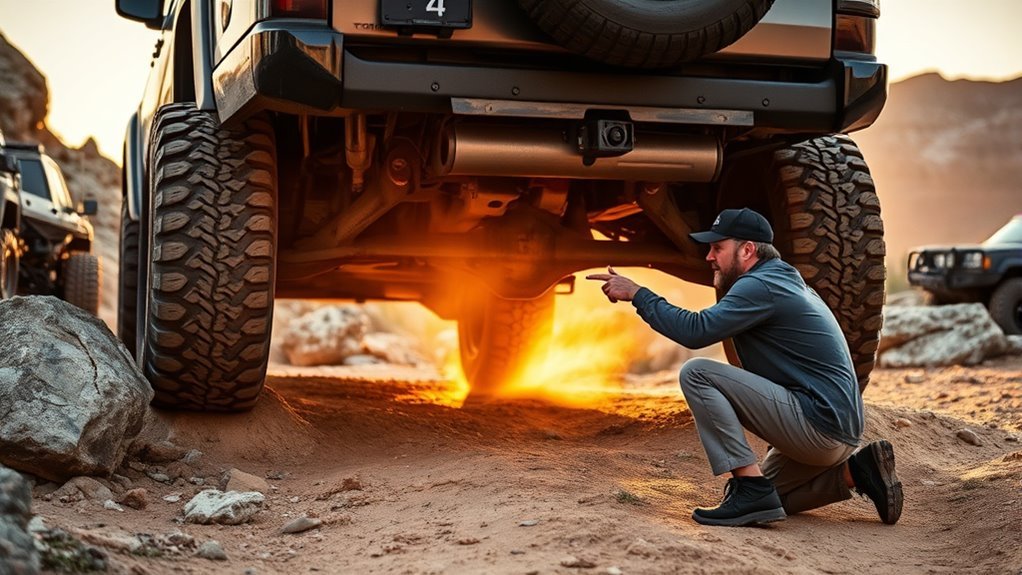
- Use it: at crawling speed on ledges, ruts, cross-axle articulation, and deep mud where a rear wheel spins.
- Don’t use it: on pavement, at speed, or when you need to turn sharply on high-grip surfaces.
- On 5th-gen models, the rear locker works only in 4LO. Check your owner’s manual for 6th-gen engagement rules.
With the rear axle locked, the truck tends to push straight ahead and resist turning. Some traction and stability functions are also reduced or switched off while it is engaged, so watch the dash indicators.
4Runner Center Diff Lock vs Rear Locker by Terrain
| Situation | Full-time 4WD (Limited) | Part-time with rear locker (TRD Off-Road/Pro) |
|---|---|---|
| Dry pavement | Center diff unlocked | 2WD, locker off |
| Wet or snowy roads | Center diff unlocked (lock only in deep snow) | 4H only if the surface is truly slippery |
| Gravel or dirt roads | Center lock as needed | 4H |
| Sand or deep snow | Center lock (4H or 4L) | 4H or 4L; locker rarely needed |
| Rocky ledges, wheel lifting | Center lock, 4L, rely on traction control | 4L plus rear locker |
| Deep ruts and mud | Center lock, 4L | 4L, add rear locker if a rear wheel spins |
Models without a rear locker rely on electronic brake-based traction control (A-TRAC on many 4WD 4Runners) to slow a spinning wheel. For how that compares, see 4Runner A-TRAC vs rear locker.
How to Engage a Locker Safely (Step by Step)
- Stop or slow to a crawl on the approach to the obstacle.
- Select the right range. Full-time models: press the center diff lock. Rear-locker models: shift to 4LO first.
- Engage the rear locker (if equipped) and wait for its indicator to stop flashing and stay solid. Rolling slowly forward or back can help it engage.
- Drive through with steady, light throttle. Expect heavier steering and more push in turns.
- Disengage as soon as you’re through, then return to 4H or 2WD once you reach firmer ground.
Common Mistakes and Risks
- Leaving it locked on pavement: causes binding, tire wear, and strain on driveline parts. See 4WD on dry pavement risks.
- Locking the rear on off-camber slopes: the rear can slide sideways more easily; consider unlocking and choosing a different line.
- Using lockers instead of line choice: pick a line that keeps tires on the ground first; lockers are the backup.
- Hammering the throttle while locked: shock loads with a locked axle are hard on axles and CV joints.
Off-road traction also depends heavily on tires and air pressure. If you’re upgrading, our guide to 4Runner load range C vs E tires explains the trade-offs.
Bottom Line
The center diff lock makes the front and rear axles share power equally; the rear locker makes both rear wheels turn together. Use the center lock for loose surfaces, the rear locker for slow technical obstacles, and keep both off on dry pavement.
Frequently Asked Questions
What is the difference between a center diff lock and a rear locker on a 4Runner?
The center diff lock, found on full-time 4WD models like the Limited, locks the front and rear axles together. The rear locker, found on TRD Off-Road, TRD Pro, and Trailhunter models, locks the left and right rear wheels together so one spinning wheel cannot take all the power.
Does the 4Runner Limited have a rear locker?
No. The 5th-generation Limited uses full-time 4WD with a Torsen limited-slip center differential that can be locked, but it does not have a rear differential locker. Toyota lists the rear locker on TRD Off-Road, TRD Pro, and Trailhunter models.
Can I use the rear locker in 4H?
On 5th-generation 4Runners, the rear locker works only in 4LO. Check your owner's manual for the engagement rules on 2025 and newer models.
Can I drive on pavement with the center diff locked?
Avoid it on dry, grippy pavement because it causes driveline binding and tire scrub. It is fine on snow, ice, or loose surfaces where the tires can slip slightly.
When should I not use a diff lock?
Do not use a diff lock on dry pavement, at higher speeds, or when you need to make sharp turns on a high-grip surface. Be cautious with a locked rear axle on off-camber slopes.