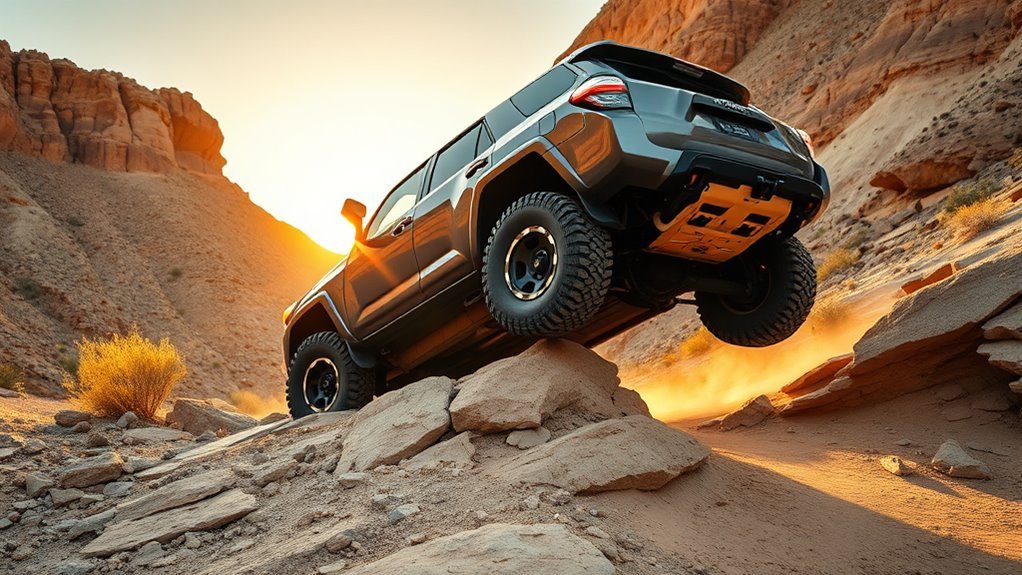
Choosing between 4Runner A-TRAC vs rear locker is mainly about the kind of wheel slip you are trying to solve. A-TRAC uses brake-based traction control to manage individual spinning wheels, while the rear differential locker mechanically couples the two rear wheels for stronger low-speed traction when one rear tire cannot grip.
Quick Answer
On a 4Runner, use A-TRAC for low-speed situations where individual wheels are slipping but steering freedom still matters. Use the rear locker when one rear wheel keeps spinning and you need both rear wheels mechanically coupled. Both are low-range tools on relevant 4Runner systems; the locker is limited to 5 mph (8 km/h).
Last checked: October 5, 2026. Dates and figures were verified against official sources.
Key Takeaways
- A-TRAC is electronic and brake-based; a rear locker physically makes the two rear axle shafts turn together.
- Toyota’s fifth-generation procedure requires L4 or L4L before activating A-TRAC. Toyota’s 2025 technical guide also lists A-TRAC as a 4WD-LO feature.
- Stop rear-wheel spin before engaging the locker and stay at or below 5 mph (8 km/h) while it is locked.
- System interaction changed by generation, so advice about using A-TRAC and the rear locker together should not be applied blindly to every 4Runner.
Quick Decision Flow: Pick A-TRAC, Rear Locker, or Both
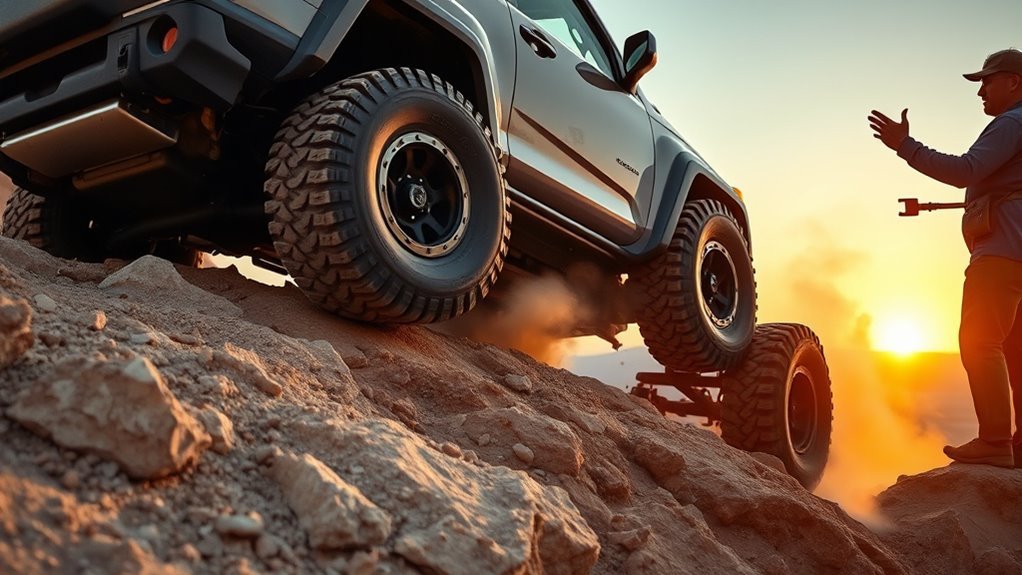
Start with A-TRAC when you are in the required low-range setting and one or more tires are slipping on uneven terrain. Move to the rear locker when a rear wheel continues to spin and mechanically coupling the rear axle is the better solution.
| Choice | How It Works | Best Fit | Main Limitation |
|---|---|---|---|
| A-TRAC | Uses brake intervention to reduce wheelspin and help send usable drive force to tires with grip. | Uneven rocks, ruts, loose climbs, and cross-axle situations. | Brake-based operation can build heat during prolonged intervention. |
| Rear locker | Locks the rear differential so both rear wheels rotate together. | A rear wheel spinning in a ditch, deep rut, loose ledge, or similarly difficult obstacle. | Turning becomes harder; Toyota limits locked operation to 5 mph (8 km/h). |
| Both | Combines electronic slip control with a mechanically locked rear axle where the vehicle permits it. | Very slow technical obstacles where A-TRAC alone is not enough. | Exact behavior differs between generations. |
The simplest strategy is therefore progressive: choose a good line, use low range and A-TRAC where appropriate, then add the rear locker only when rear-axle wheelspin shows that you need it. That keeps steering easier and avoids locking the rear axle unnecessarily.
[Products Worth Considering]

These off-road traction boards are designed to help vehicles recover from mud, sand, and snow with reliable grip and easier ramp-up. Their double-sided diamond construction, cross-shaped teeth, and contoured ramps improve traction while the durable polypropylene build stays flexible in harsh conditions. Convenient mounting points, ergonomic handles, and a visible leash make them practical to carry, store, and retrieve when recovery is needed.

This proportional trailer brake controller provides smooth, responsive braking by automatically matching your tow vehicle’s stopping force for safer trailer control. The bright LED digital display makes it easy to monitor voltage output in real time, while adjustable braking and sync settings help tailor performance to different trailers and road conditions. Designed for quick installation and broad compatibility, it supports 1 to 4 axle trailers for dependable towing confidence.

This universal brake bleeder kit makes one-person brake and clutch line bleeding simple by using compressed air to create stable vacuum-assisted fluid flow. Its extra-large 3L tank helps complete full-system flushes with fewer interruptions, while the included refill bottle, flexible hose, and universal adapter support clean, efficient use on standard and ABS brake systems.
Mechanical and Electrical Differences: A-TRAC vs Rear Locker
A-TRAC and the rear locker can both keep a 4Runner moving, but they solve traction loss in very different ways. A-TRAC controls slip electronically through the braking system, while the rear locker changes the mechanical relationship between the two rear wheels.
With an open rear differential, one wheel can spin much faster than the other. A-TRAC responds to wheelspin with selective braking, which helps create resistance at the spinning wheel and makes more usable drive force available at wheels that still have traction.
The rear locker removes that rear differential action while locked. Both rear wheels are forced to rotate together, so a lightly loaded or slipping rear tire cannot simply spin while the opposite rear wheel receives little useful torque.
That mechanical connection is powerful, but it also explains why a locker changes steering behavior. The inside and outside rear tires normally travel different distances in a turn. Locking them together forces them toward the same rotational speed, so the tires must slip or the driveline takes additional load.
4Runner Model-Year Differences You Need to Know
The biggest source of bad A-TRAC advice is treating every 4Runner generation as though its controls work the same way. Toyota changed the 4Runner substantially for the 2025 model year, so separate fifth-generation instructions from 2025-and-newer guidance.
2010–2024 Fifth-Generation 4Runner
On the fifth-generation procedure documented in Toyota’s 2022 4Runner Quick Reference Guide, A-TRAC is a low-range feature. Part-time 4WD models are stopped, shifted to Neutral, placed in L4, and then the A-TRAC switch is pressed. Full-time 4WD models use L4L.
This means the common claim that fifth-generation A-TRAC is a normal 4HI traction mode is incorrect. Toyota also states in fifth-generation owner-manual material that when the rear differential is locked, A-TRAC operates only below 4 mph (6 km/h).
2025–2026 Sixth-Generation 4Runner
Toyota’s 2025 4Runner Sales Consultant Guide still identifies Active Traction Control as a 4WD LO feature. The same guide says Multi-Terrain Select on equipped models now works in both 4WD HI and 4WD LO.
That distinction matters: the feature Toyota expanded into both ranges is Multi-Terrain Select, not A-TRAC. The sixth-generation 2025 4Runner Owner’s Manual also shows that the rear differential lock automatically unlocks if the part-time 4WD selector is moved to 2H or 4H.
Current equipment varies by grade. Toyota’s 2026 4Runner information lists an electronic locking rear differential on key off-road grades while continuing to list A-TRAC on four-wheel-drive models.
When to Pick A-TRAC: Uneven Terrain and Individual Wheelspin
Use A-TRAC when you are moving slowly in the correct low-range setting and individual tires keep losing traction. It is especially useful where the suspension is articulated and one wheel becomes lightly loaded while the other tires still have grip.
Controlled Low-Speed Traction
A-TRAC can help when a 4Runner starts or accelerates on a slippery or uneven off-road surface. Instead of mechanically locking an axle, it responds to spinning wheels through brake control.
Use smooth throttle and give the system time to work. Repeatedly stabbing the accelerator can create more wheelspin before the brake-based system has a chance to manage it.
Low-Speed Momentum
A-TRAC is useful when you want to preserve some differential action while controlling wheelspin. That makes it a strong first choice for technical ruts, uneven rock, or loose climbing where the tires do not all carry equal load.
You may hear brake-system operation or feel vibration while the system is working. Toyota describes those sensations as normal system behavior on fifth-generation A-TRAC-equipped vehicles.
When to Pick the Rear Locker: When One Rear Wheel Keeps Spinning
Use the rear differential lock when one rear tire is spinning and low range alone or electronic traction management is not enough. Toyota describes the system as a traction aid for wheelspin in a ditch or on a slippery or rugged surface.
| Situation | Why the Locker Can Help |
|---|---|
| Deep rut | Keeps both rear wheels driving when one becomes lightly loaded |
| Rock ledge | Prevents one rear tire from taking most of the wheelspin |
| Slippery ditch | Couples the rear wheels when one cannot grip |
| Loose technical climb | Provides consistent rear-axle drive at very low speed |
| Uneven axle load | Keeps the loaded rear tire contributing even if the other slips |
Warning: Stop the wheels from spinning before engaging the rear locker. Toyota warns not to exceed 5 mph (8 km/h) with the rear differential locked and not to keep driving with the lock engaged after it is no longer needed.
Engage the locker before applying more throttle, confirm that its indicator shows the lock has completed, and use gentle power. Unlock it after you clear the obstacle so normal differential action returns.
Terrain Guide: Mud, Sand, Rock, Snow, and Ruts
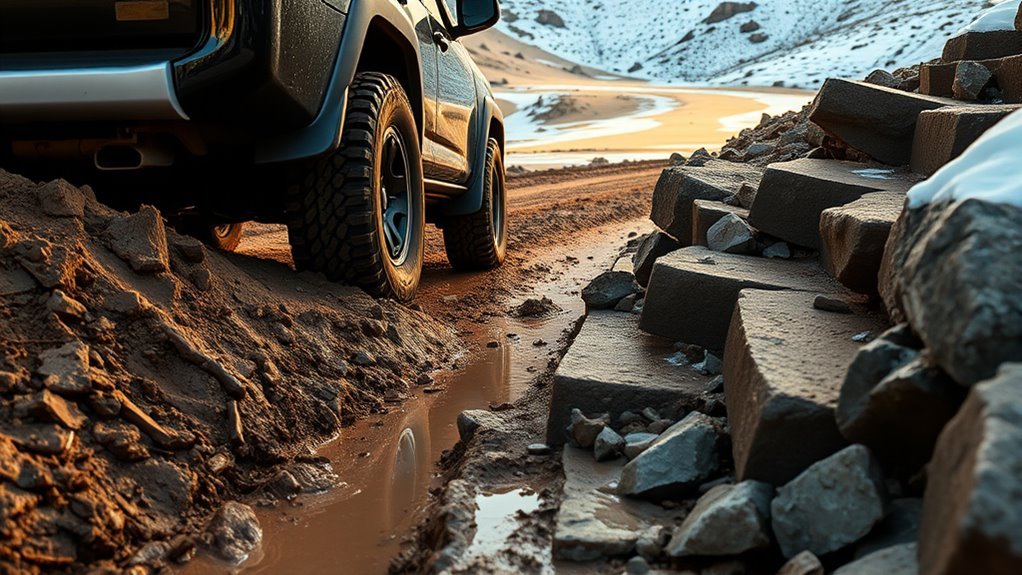
Terrain alone does not determine whether A-TRAC or the rear locker is better. The deciding factor is usually how the tires are losing traction: scattered individual wheelspin favors electronic control, while persistent rear-wheel spin may justify locking the rear differential.
| Terrain | A-TRAC | Rear Locker |
|---|---|---|
| Mud | Useful at low speed when individual wheels repeatedly slip but others retain grip. | Use when a rear wheel is spinning and you need both rear tires driving together. |
| Sand | Can help in low-range technical sections, but soft sand may also require preserving momentum. | Not an automatic first choice; reserve it for low-speed rear-wheel spin or a stuck condition. |
| Rock | Excellent for cross-axle wheel lift and uneven grip. | Useful when a rear tire unloads and continues to spin during a slow climb. |
| Deep snow | Use only within its low-range operating conditions; it is not the same as ordinary 4H snow-road traction control. | Can help at very low speed if one rear wheel spins, but keep steering inputs small. |
| Ruts | Usually the better first traction aid as individual tires load and unload. | Add it if rear-wheel spin persists and the obstacle can be taken mostly straight. |
For snow or loose sand at ordinary trail or road speeds, remember that neither system replaces correct transfer-case selection. On 2025-and-newer equipped 4Runners, Multi-Terrain Select can operate in 4WD HI as well as 4WD LO, which is different from A-TRAC’s low-range role.
Using Both: When and How to Combine A-TRAC With a Locker
Using A-TRAC and the rear locker together can be useful on some fifth-generation 4Runners, but the exact interaction is model-specific. Toyota’s fifth-generation manuals state that A-TRAC remains active with the rear differential locked only while vehicle speed is below 4 mph (6 km/h).
| Condition | A-TRAC Role | Rear Locker Role |
|---|---|---|
| Loose incline | Controls individual wheelspin | Couples both rear wheels if rear slip persists |
| Rock ledge | Helps manage changing tire load | Keeps both rear tires driving together |
| Deep ruts | Manages intermittent wheel lift and slip | Provides fixed rear-axle drive |
| High-grip pavement | Not an appropriate low-range use case | Do not use the locker |
On 2025–2026 models, do not assume fifth-generation combination behavior carries over unchanged. Toyota’s current manual states that ABS, brake assist, VSC, Downhill Assist Control, and TRAC do not operate while the rear differential is locked.
For that reason, think of the locker as a short-duration traction tool rather than a mode to leave engaged throughout a trail. Use it only when the rear axle actually needs mechanical locking.
Safe Engagement Rules: 4H, 4L, Speed, and Steering Limits
A-TRAC and the rear locker are not substitutes for choosing the correct transfer-case range. For the systems covered here, low range is the key setting: fifth-generation A-TRAC requires L4/L4L, and the 2025 technical guide lists current A-TRAC operation in 4WD LO.
Speed Limits for Engagement
Do not confuse the speed at which a 4Runner may shift between transfer-case modes with the speed at which you should use a traction aid. They are separate specifications.
The important rear-locker number is clear: Toyota says do not drive over 5 mph (8 km/h) while the rear differential is locked. Toyota also tells the driver to stop wheelspin before locking the differential.
On applicable fifth-generation vehicles, A-TRAC with the rear differential locked is available only below 4 mph (6 km/h). These limits make the combination a crawling tool, not something for normal trail speed.
Steering and Turning Constraints
A-TRAC preserves normal differential action because it does not mechanically tie the rear axle shafts together. That generally makes it the better first choice when you still need significant steering movement.
The rear locker is different. With both rear wheels forced to rotate together, turning requires tire scrub or slip. Keep steering gentle while locked and unlock the differential when the obstacle no longer requires it.
What Can Go Wrong: Binding, Brake Heat, and Driveline Shock
Misusing either system can create avoidable stress. The main concerns are driveline wind-up with a locked differential on a high-grip surface, brake heat from prolonged brake-based traction control, and shock loading when a rapidly spinning tire suddenly finds traction.
- Locker binding: A locked rear differential resists the different wheel speeds required in a turn. High-grip surfaces leave less opportunity for the tires to slip and release that difference.
- A-TRAC brake heat: Because A-TRAC uses brake intervention, long periods of heavy operation can heat the brakes. Fifth-generation Toyota guidance says the system can temporarily stop operating if brake-system temperature becomes too high.
- Sudden traction: Avoid excessive throttle and wheelspin. If a spinning tire suddenly hooks up, the driveline receives an abrupt change in load.
- Leaving the locker on: Toyota specifically instructs drivers to unlock the rear differential after the vehicle moves out of the condition that required it.
Driver Technique & Quick Checklist to Amplify Effectiveness
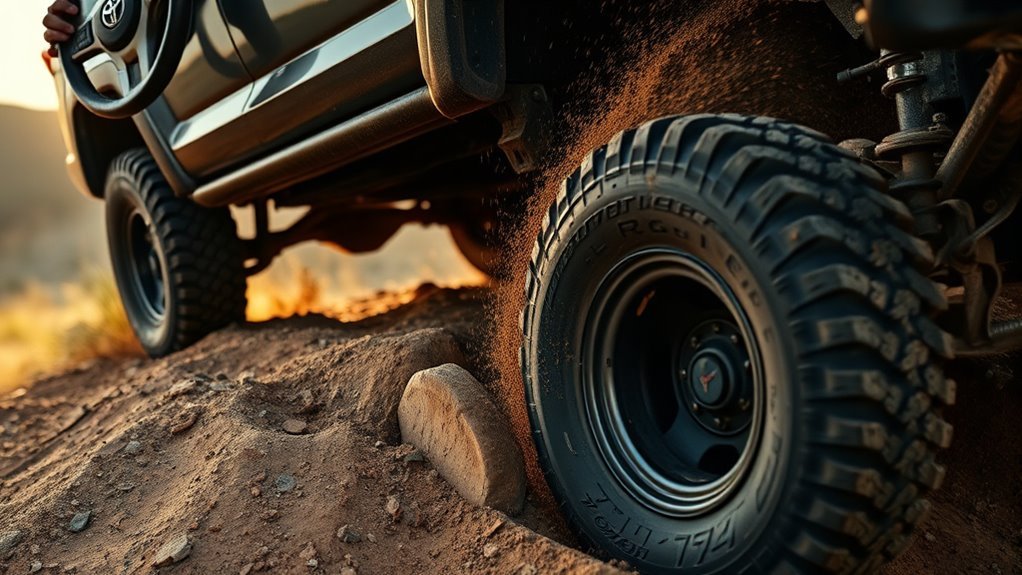
The best traction aid cannot make up for a poor line or uncontrolled throttle. Read the obstacle first, keep speed low, and use only as much traction assistance as the situation requires.
Before a technical obstacle:
- Choose a line that keeps as many tires loaded as possible.
- Select the proper low-range mode before the obstacle.
- Use smooth throttle rather than creating unnecessary wheelspin.
- Try A-TRAC first when individual tires are slipping and your model supports it in that setting.
- If one rear tire continues to spin, stop the wheelspin before engaging the rear locker.
- Confirm the locker indicator shows full engagement before relying on it.
- Stay below 5 mph (8 km/h) with the rear differential locked.
- Unlock the rear differential as soon as the obstacle is cleared.
Pro Tip: If the 4Runner is not moving, more throttle is not always the answer. Stop, reassess the tire placement, and move the vehicle a few inches onto a better line before escalating from A-TRAC to the rear locker.
Frequently Asked Questions
When should I use my 4Runner rear diff lock?
Use the rear differential lock when one rear wheel is spinning in a ditch or on a slippery, rugged surface and normal low-range traction is not enough. Stop wheelspin before engaging it, drive gently, stay at or below 5 mph (8 km/h), and unlock it after clearing the obstacle.
Is A-TRAC better than the rear locker?
Neither is always better. A-TRAC is usually the more flexible first choice when individual wheels are slipping because it keeps normal differential action, while the rear locker is stronger when one rear wheel continues spinning and both rear tires need to rotate together.
Does A-TRAC work in 4HI on a 4Runner?
Toyota’s fifth-generation A-TRAC procedure requires L4 or L4L, not 4HI. Toyota’s 2025 technical guide also lists A-TRAC as a 4WD-LO feature. Multi-Terrain Select is the feature Toyota expanded to both 4WD HI and 4WD LO on equipped 2025-and-newer models.
Can I use A-TRAC and the rear locker together?
On applicable fifth-generation 4Runners, Toyota states that A-TRAC remains active with the rear differential locked only below 4 mph (6 km/h). Do not assume that exact interaction applies to 2025-and-newer models because Toyota changed the traction-control and locker logic with the redesign.
How fast can I drive with the 4Runner rear locker engaged?
Do not drive over 5 mph (8 km/h) with the rear differential locked. The locker is intended for very slow traction problems, not routine trail driving, and Toyota instructs drivers to unlock it once the vehicle has moved out of the condition that required it.
When should I avoid using the rear locker?
Avoid using the rear locker for normal driving, high-speed travel, or situations that do not involve the low-speed wheelspin Toyota specifies. It also makes tight turning harder, so disengage it once mechanical rear-axle locking is no longer needed.
Conclusion
For most technical situations, start with proper low range, a good line, and A-TRAC when your 4Runner’s system supports it. Use the rear locker when a rear wheel continues to spin and you need a true mechanical lock, then disengage it as soon as the obstacle is behind you.
The main rule is to follow the procedure for your exact generation. Fifth-generation and 2025-and-newer 4Runners do not use every traction feature in exactly the same way.
Sources
- Toyota 2022 4Runner Quick Reference Guide: Fifth-generation A-TRAC purpose and L4/L4L activation procedure.
- Toyota 2025 4Runner Owner’s Manual: Rear differential lock operation, automatic unlocking, disabled systems, and 5 mph limit.
- Toyota 2025 4Runner Sales Consultant Guide: Sixth-generation A-TRAC in 4WD LO, Multi-Terrain Select operation, and rear-locker equipment.
- Toyota 2026 4Runner Product Information: Current 4WD, A-TRAC, Multi-Terrain Select, and electronic rear-locker availability.