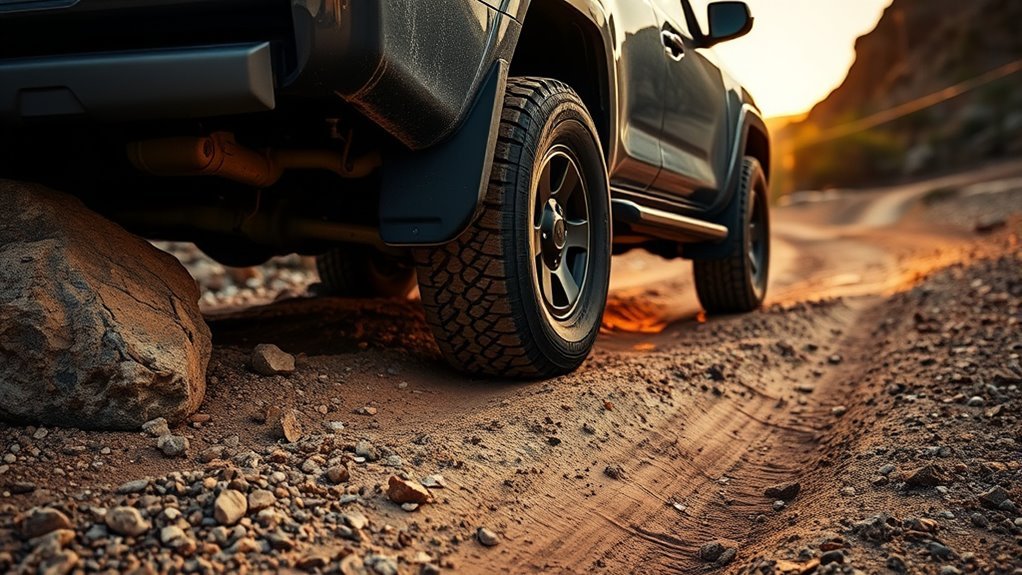
If you’re comparing 4Runner A-TRAC vs rear locker, the key difference is simple: A-TRAC manages wheelspin with the brakes, while the rear locker mechanically ties the two rear wheels together. Multi-Terrain Select (MTS) adds another layer by adjusting engine power and traction-control behavior for specific surfaces. The right choice depends on terrain, transfer-case range, and how much traction you actually need.
Quick Answer
Use A-TRAC first for low-speed off-road wheelspin when brake-based traction control can keep the truck moving. Use MTS to match engine and traction-control behavior to the surface. Engage the rear locker only for a difficult low-speed obstacle or wheelspin that 4LO alone cannot solve, and unlock it as soon as traction returns.
Key Takeaways
- Manual A-TRAC operation requires low range: L4 on part-time 4WD models or L4L on full-time 4WD models.
- When the rear differential is locked, Toyota says A-TRAC remains active only below 4 mph (6 km/h).
- Toyota limits rear-locker speed to 5 mph (8 km/h) and tells you to unlock it as soon as the vehicle gets moving again.
- MTS is not just a softer throttle map. It coordinates engine power and active traction control according to the selected terrain mode.
How A-TRAC and the Rear Locker Work on a 5th-Gen 4Runner
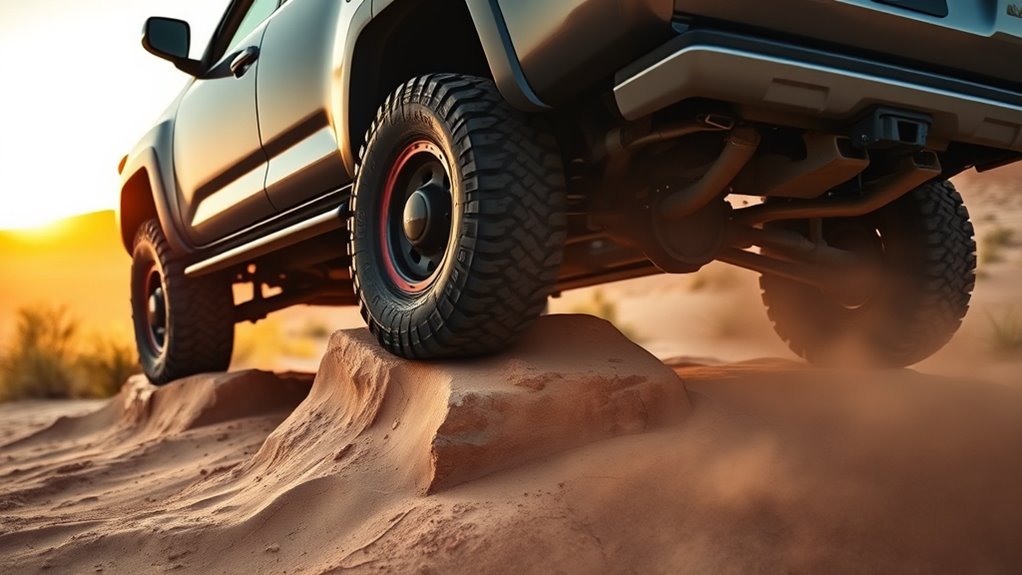
A-TRAC and the rear differential locker solve wheelspin in different ways. A-TRAC uses selective brake intervention to control a spinning wheel, while the locker mechanically forces the left and right rear wheels to rotate at the same speed.
That difference matters on the trail. A-TRAC can react independently as traction changes from wheel to wheel, so you retain more normal steering behavior. The rear locker is more direct: when a difficult obstacle unloads one rear tire, both rear wheels remain mechanically linked.
Toyota’s 2024 4Runner brochure also shows that equipment varies by trim. A-TRAC is available more broadly on 4WD models, while MTS and the electronic rear locker are associated with the more off-road-focused TRD configurations.
| System | What It Does | Operating Conditions | Best Use |
|---|---|---|---|
| A-TRAC | Brakes spinning wheels to help maintain usable traction. | Manual operation in L4 or L4L. With the rear locker engaged, active only below 4 mph (6 km/h). | Uneven, slippery, low-speed terrain where traction changes from wheel to wheel. |
| MTS | Adjusts engine power and A-TRAC operation for the selected terrain. | Mud & Sand can use H4 or L4; Loose Rock, Mogul, and Rock require L4 on the 2024 system. | Matching wheel-slip and power-control strategy to the surface. |
| Rear locker | Locks both rear wheels to the same rotational speed. | L4, wheels stopped before engagement, and no more than 5 mph (8 km/h) while locked. | Deep ruts, wheel lift, or severe low-speed wheelspin when 4LO alone is not enough. |
Note: Control layout and feature availability vary by 5th-gen model year and trim. The operating limits and procedures in this guide are anchored to Toyota’s 2024 4Runner documentation, so use your exact model-year owner’s manual if its controls differ.
Quick Decision Guide: Which to Use – A-TRAC, MTS, or Locker?
Start with the least restrictive system that can solve the traction problem. MTS is useful for choosing the terrain strategy, A-TRAC handles changing wheelspin, and the rear locker is the more specialized tool for severe low-speed traction loss.
[Products Worth Considering]

This proportional trailer brake controller provides smooth, responsive braking by automatically matching your tow vehicle’s stopping force for safer trailer control. The bright LED digital display makes it easy to monitor voltage output in real time, while adjustable braking and sync settings help tailor performance to different trailers and road conditions. Designed for quick installation and broad compatibility, it supports 1 to 4 axle trailers for dependable towing confidence.
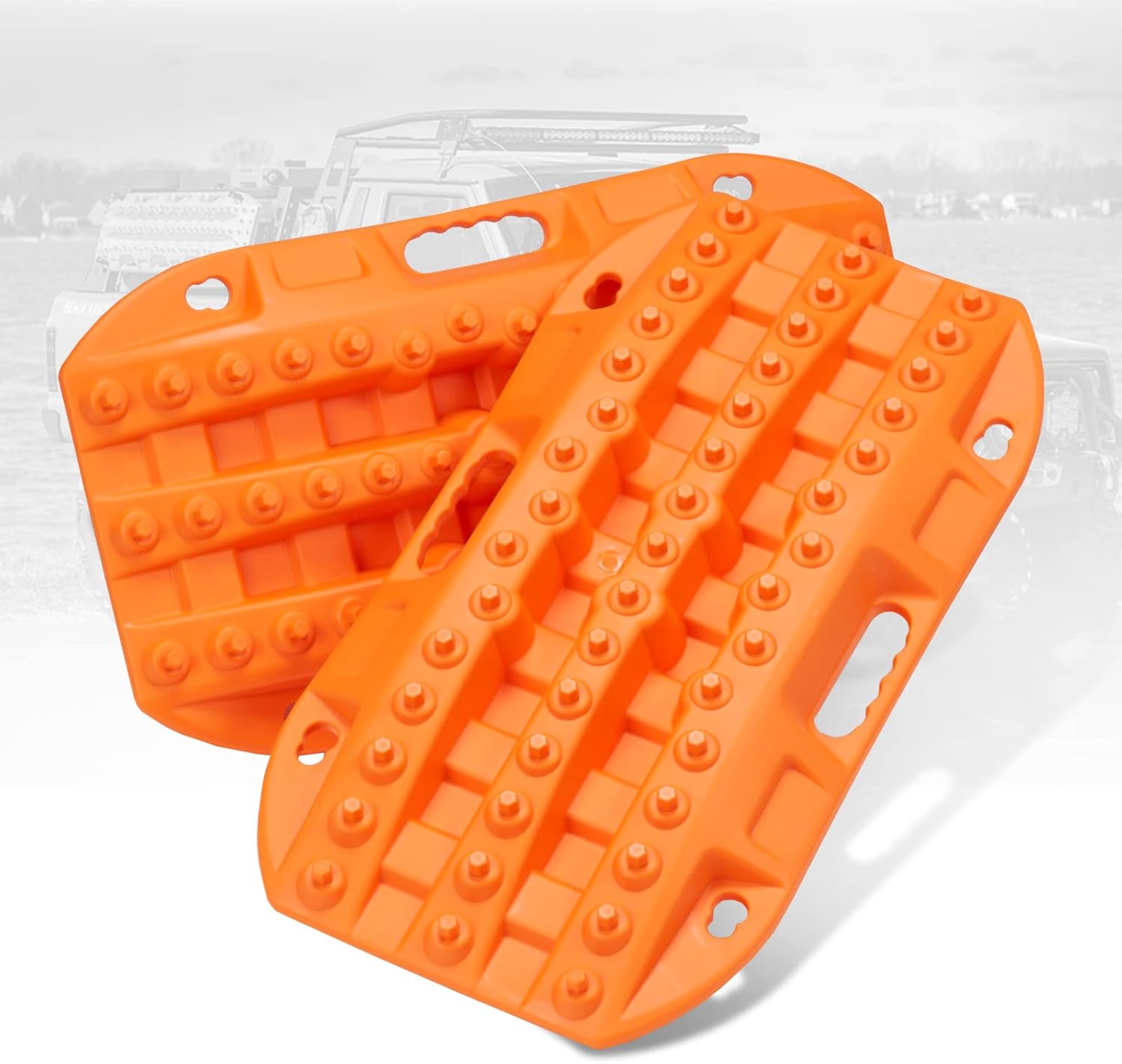
These short off-road traction boards are designed to help ATV and UTV drivers recover from mud, sand, and snow with added convenience and portability. Built with strengthened teeth and a stable bottom channel design, they help prevent wheel slip and improve traction in tough terrain. Made from durable automotive-grade polypropylene, they are lightweight, easy to clean, and suited for year-round use in extreme temperatures. Built-in shovels, ergonomic handles, and nesting storage make them practical for compact vehicle setups.

BUNKER INDUST off-road traction boards help vehicles regain grip in mud, sand, and snow with a double-sided diamond array and cross-shaped teeth for improved bite and stability. Built from upgraded automotive-grade polypropylene, they resist UV damage, cold-weather brittleness, and wheel-spin heat while remaining flexible enough to handle demanding recovery situations. Contoured ramps, ergonomic handles, and multiple mounting points make them practical to use, store, and retrieve when adventure turns into recovery.
Low-Speed Maximum Traction
For most technical trail situations, try low range and A-TRAC before locking the rear differential. Toyota itself instructs drivers to shift into L4 first and see whether that is sufficient before adding the locker.
If one rear wheel is spinning in a ditch, over a large obstacle, or on a rugged surface and the truck still cannot move, the locker becomes useful. It removes the rear differential’s ability to let one wheel rotate faster than the other, so both rear wheels stay synchronized.
Do not treat the locker as a general-purpose traction mode. Steering effort increases, tight turns can cause tire scrub, and Toyota places a strict low-speed limit on its use.
Controlled Throttle Assistance
Good throttle control matters no matter which system is active. Apply power smoothly enough for the tires and electronic systems to respond instead of using abrupt throttle that creates unnecessary wheelspin.
- Changing or loose terrain: choose the appropriate MTS mode if your 4Runner has it.
- Uneven low-speed climb: use L4 and allow A-TRAC to manage wheelspin.
- Rear wheel lifted or severe rear-axle wheelspin: stop and engage the locker only if low range is not enough.
- Once you are moving again: unlock the rear differential instead of leaving it engaged for the rest of the trail.
Tradeoffs: A-TRAC, MTS, and Rear Locker – Traction, Handling, Stress
A-TRAC offers the best balance when you need additional traction without mechanically locking the rear axle. The rear locker offers stronger rear-axle coupling, but it also changes steering behavior and disables several driver-assistance functions while engaged.
A-TRAC: Because it works through the brakes, it can respond to individual wheelspin while allowing the differential to function normally. Heavy or prolonged intervention can heat the brake system; Toyota notes that A-TRAC can temporarily stop operating if the brakes overheat and will return after the system cools.
MTS: Multi-Terrain Select does not create a mechanical lock. Instead, it changes engine-power and active-traction-control behavior to suit different surfaces. That makes it useful before the trail becomes difficult enough to require the rear locker.
Rear locker: Locking the axle gives predictable rear-wheel coupling when traction is highly uneven. The trade-off is reduced cornering freedom. Toyota also states that ABS, Multi-Terrain ABS, brake assist, VSC, and hill-start assist control do not operate while the rear differential is locked.
How A-TRAC, MTS & the Electronic Rear Locker Interact in Real Use
The three systems are related, but they do not simply stack into one unrestricted maximum-traction mode. MTS coordinates engine power and active traction control, while the rear locker changes the rear axle mechanically and brings its own speed and driver-assistance limits.
One especially important correction is that engaging the rear locker does not completely disable A-TRAC. Toyota’s 2024 manual states that A-TRAC remains active while the rear differential is locked, but only below 4 mph (6 km/h). That makes the combination a very-low-speed technique rather than a normal trail-driving setting.
Toyota’s 2024 4Runner capability overview describes MTS as a system that adjusts wheel-slip control to match the terrain, while the electronic locker is intended to provide added traction on difficult off-road sections.
When Systems Work Together
Use the systems as a progression rather than turning everything on immediately. That approach preserves steering control and keeps the locker reserved for obstacles that genuinely need it.
- Loose or changing trail: choose the suitable MTS mode if equipped.
- Technical climb: use L4 and let A-TRAC manage individual wheelspin.
- Deep rut or wheel lift: if low range still cannot move the vehicle, stop before engaging the rear locker.
- After clearing the obstacle: unlock the differential as soon as normal movement returns.
Locking Differential Behavior
A locked rear differential forces the left and right rear wheels to turn at the same speed. This is valuable when one rear tire has little or no usable grip, because that tire cannot simply spin independently while the other rear wheel remains stationary.
The same mechanical connection becomes a disadvantage during turns on firm ground. The inside and outside tires naturally need to travel different distances, so keeping the axle locked can cause tire scrub, heavier steering, and unnecessary load on driveline components.
That is why Toyota describes the rear locker as a system for wheelspin in a ditch or on slippery or rugged terrain, not as a setting to leave on continuously.
Choosing Mode By Terrain
Choose the setting according to both the surface and the traction problem. MTS is the terrain-selection tool, A-TRAC manages wheelspin in low range, and the locker is the last step when the rear axle needs a mechanical lock.
| Terrain or Situation | Good Starting Point | When to Add the Locker |
|---|---|---|
| Mud or sand | MTS Mud & Sand in H4 or L4, depending on the terrain. | Only for severe low-speed wheelspin where L4 is insufficient. |
| Loose rock | L4 with Loose Rock MTS; A-TRAC assists through the traction-control strategy. | When severe rear-wheel traction loss stops progress. |
| Moguls or cross-axle terrain | L4 with Mogul MTS or A-TRAC. | Useful if a rear wheel is unloaded and brake-based control is not enough. |
| Rock crawling | L4 with Rock MTS or A-TRAC and smooth throttle. | For a specific obstacle requiring both rear wheels to stay synchronized. |
| Steep descent | Use low range and controlled braking; DAC or Crawl Control may handle downhill speed on equipped models. | The locker is not a substitute for downhill speed control. |
How to Engage A-TRAC, MTS, and the Rear Locker Safely
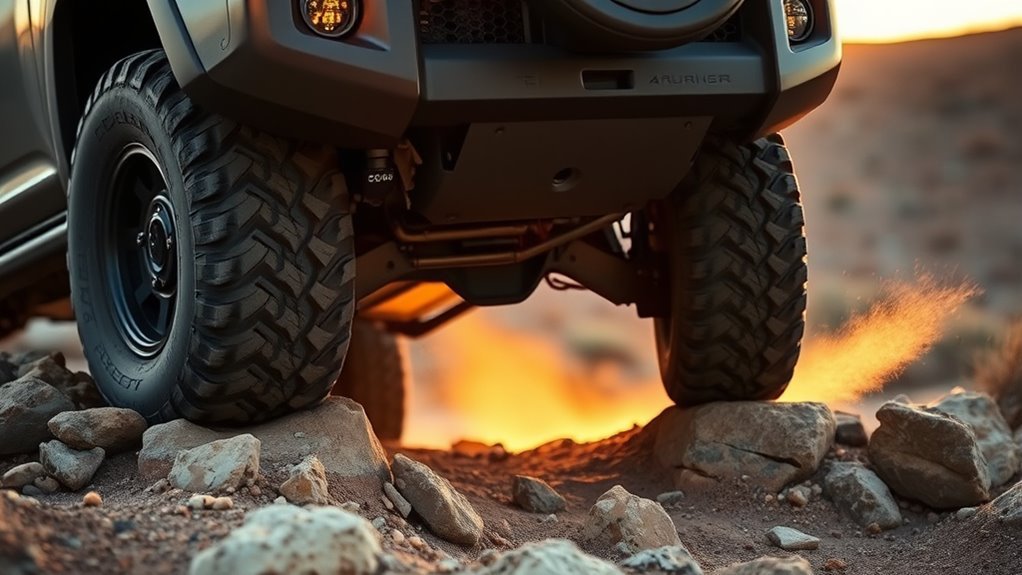
Use Toyota’s engagement sequence rather than pressing traction switches while the tires are spinning. The 2024 4Runner Owner’s Manual gives separate procedures for A-TRAC, MTS, and the electronic rear differential lock.
Warning: Do not engage the rear differential lock while the wheels are spinning. Toyota warns that this can make the vehicle move unexpectedly and can damage lock components. Do not exceed 5 mph (8 km/h) while the rear differential is locked.
How to Engage A-TRAC
A-TRAC is a low-range off-road traction function on the 5th-gen system. The transfer-case position must be correct before you switch it on manually.
- Bring the vehicle to a complete stop.
- Shift the transmission to N.
- On part-time 4WD models, shift the transfer case to L4. On full-time 4WD models, select L4L.
- Press the A-TRAC switch.
- Accelerate smoothly and let the system control wheelspin.
If the brake system becomes too hot, A-TRAC can temporarily stop operating and alert you. Stop in a safe place and allow the system to recover rather than repeatedly forcing the same obstacle.
How to Use Multi-Terrain Select
MTS must meet its operating conditions before the desired mode will activate. On the 2024 system, Toyota specifies approximately 7 mph (12 km/h) or less for activation.
- Choose H4 or L4 according to the terrain and MTS mode.
- Use Mud & Sand with H4 or L4.
- Use Loose Rock, Mogul, or Rock only in L4.
- Select the terrain mode with the MTS control.
- Confirm the selected mode indicator remains on instead of flashing.
Crawl Control cannot be operating while you activate MTS. If a mode will not engage, first confirm vehicle speed, transfer-case position, and whether another incompatible system is active.
How to Engage the Rear Locker
The rear locker is intended for a specific obstacle after low range alone has not provided enough traction. Engage it only after the wheels have stopped spinning.
- Stop the 4Runner and shift the transmission to N.
- Shift the transfer case into L4.
- Make sure the wheels have completely stopped spinning.
- Press the rear differential lock switch.
- Gently press the accelerator if necessary while the mechanism completes engagement.
- Wait until the rear differential lock indicator stops flashing and stays on.
- Proceed slowly and stay below 5 mph (8 km/h).
- Unlock the differential as soon as the vehicle is moving again and the extra traction is no longer needed.
Pro Tip: Before reaching for the locker, try the obstacle in L4 with smooth throttle and A-TRAC. Toyota’s own rear-locker procedure tells you to see whether low range is sufficient first.
Setup, Tires & Mods That Change Traction Outcomes
A-TRAC, MTS, and the rear locker can only work with the grip and wheel travel available to them. Tires, suspension condition, clearance, and driver technique still determine how much traction the vehicle can use.
- Tires: Appropriate all-terrain or mud-terrain tires can improve mechanical grip before any electronic system intervenes. Tread condition and suitable pressure also matter.
- Tire size: Larger tires can add ground clearance, but poor fitment can cause rubbing and may affect gearing, braking, and drivability. Verify fitment and load requirements before changing size.
- Suspension: A sensible lift can improve obstacle clearance and approach angles, but it does not make A-TRAC or the locker inherently stronger.
- Skid plates: Underbody protection does not increase traction, but it can protect vulnerable components when you choose a technical line over rocks.
- Maintenance: Keep tires, brakes, differential fluids, and 4WD components in good condition so the traction systems can perform as designed.
Start with tires and driving technique before assuming a lift or larger tire is the answer. More modification can also introduce new fitment and driveline compromises.
[Products Worth Considering]

This flexible oil funnel is designed to make fluid changes cleaner and easier by guiding oil around obstacles like skid plates and crossmembers. Its shape-retaining core and silicone body can be molded for custom positioning, while the heat-resistant, leak-proof design helps prevent spills during draining and filter removal. Reusable and easy to clean, it works well for cars, trucks, motorcycles, and other hard-to-reach fluid fill or drain applications.

This universal brake bleeder kit makes one-person brake and clutch line bleeding simple by using compressed air to create stable vacuum-assisted fluid flow. Its extra-large 3L tank helps complete full-system flushes with fewer interruptions, while the included refill bottle, flexible hose, and universal adapter support clean, efficient use on standard and ABS brake systems.

This metal key fob cover is designed to help protect compatible Toyota smart keys from daily wear, including drops, bumps, scratches, dust, and water. Made from zinc alloy with silicone and PET materials, it offers a premium feel while maintaining full signal function. It also adds a stylish, luxury look to your key, but may increase the key's weight and size.
Quick Flowchart: Pick the Right System for Common Off-Road Challenges
The simplest way to choose is to escalate only when the current setting cannot maintain progress. This keeps steering more natural and avoids unnecessary use of the locker.
- Is the trail loose but still manageable? Use the appropriate 4WD range and MTS mode if equipped.
- Are individual wheels spinning on a slow, uneven obstacle? Use L4 and A-TRAC.
- Is one rear wheel severely unloaded or spinning while progress stops? Stop the wheels and consider the rear locker.
- Did the locker get you moving? Unlock it once the difficult section is cleared.
- Are you descending instead of climbing? Use low range and the appropriate downhill-control method rather than treating the locker as a braking system.
In short, think MTS for terrain strategy, A-TRAC for changing wheelspin, and the rear locker for a specific severe low-speed traction problem.
[Products Worth Considering]

This TPMS sensor training tool is designed for Ford, Lincoln, and Mercury vehicles with compatible tire pressure sensors, helping activate sensors after tire rotations or sensor replacement. It supports relearning and warning light reset workflows with a simple one-button operation, making tire pressure maintenance easier and faster. Built for reliable use and broad vehicle compatibility, it is a practical accessory for TPMS service and sensor activation.
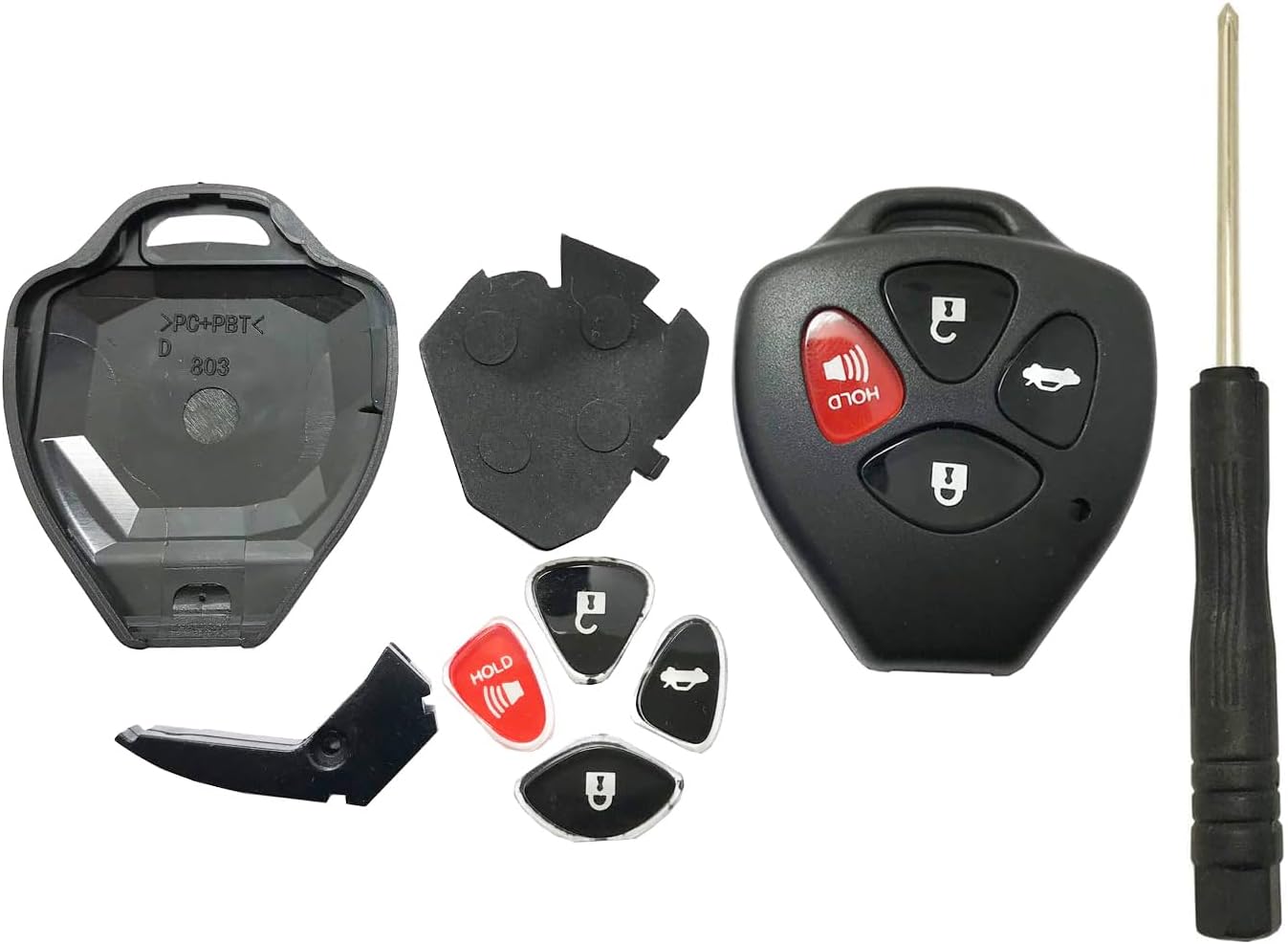
This replacement key fob shell is designed to restore the look and function of your original Toyota or Scion remote housing without replacing the electronics. It lets you transfer your existing internal components and use your old blade, making it a convenient solution for worn, cracked, or damaged key cases. Built for a precise fit on select models, it helps you refresh your key fob quickly and easily.

This brake bleeder hose kit helps remove old brake fluid and air from motorcycle brake and clutch systems quickly and efficiently. Its one-way check valve prevents air from being drawn back into the system, while the easy-to-connect clips make bleeding simple for routine maintenance. Built for reliable use, it is a practical tool for keeping motorcycle braking performance responsive.
Frequently Asked Questions
Is traction control better than diff lock?
Neither is universally better. A-TRAC is more flexible because it manages individual wheelspin while preserving normal differential action and steering. A rear differential lock is more specialized and gives stronger rear-axle coupling when traction is extremely uneven. Use A-TRAC first, then the locker when the obstacle truly needs it.
Can you use A-TRAC and the rear locker at the same time?
Yes, but only at very low speed. The 2024 4Runner owner’s manual says A-TRAC remains active only below 4 mph (6 km/h) when the rear differential is locked. ABS, Multi-Terrain ABS, brake assist, VSC, and hill-start assist control do not operate while the rear differential is locked.
Does A-TRAC work in 4HI on a 5th-gen 4Runner?
Not through the manual A-TRAC mode described in Toyota’s 2024 4Runner owner’s manual. On part-time 4WD models, Toyota tells you to stop, shift to N, select L4, then press A-TRAC. Full-time 4WD models use L4L. Normal higher-range driving still has other traction and stability functions.
Can Multi-Terrain Select work in 4HI?
Yes, but only in the appropriate mode. On the 2024 4Runner, Mud & Sand can operate with H4 or L4. Loose Rock, Mogul, and Rock require L4. Toyota also specifies a vehicle speed of about 7 mph (12 km/h) or less when activating Multi-Terrain Select.
Conclusion
For most slow off-road traction problems, start with the correct 4WD range and A-TRAC or the appropriate MTS mode. Save the rear locker for severe wheelspin, wheel lift, or an obstacle that low range cannot clear, then disengage it once you are moving normally again. That sequence gives you traction without using the most restrictive setting longer than necessary.
Sources
- Toyota 2024 4Runner Owner’s Manual: A-TRAC operating range, rear differential lock procedure and speed limit, MTS operating conditions, and system interactions.
- Toyota 2024 4Runner Brochure: traction-system descriptions and trim-level feature availability.
- Toyota 2024 4Runner Rugged Capability: Toyota’s description of Multi-Terrain Select, Crawl Control, and electronic rear differential lock capability.