Whether 4WD can damage a Toyota 4Runner on dry pavement depends on which 4WD system and mode your 4Runner has. Part-time 4WD in 4H should normally be reserved for surfaces where the tires can slip, while a full-time 4WD 4Runner can drive on dry pavement in its normal unlocked-center H4F mode. The practical test is surface grip, not simply whether “4WD” is active: if the front and rear axles are locked together, high-traction pavement can create driveline wind-up during turns.
Scope: This guide focuses on 2010–2026 U.S.-market Toyota 4Runners. Earlier generations used additional 4WD arrangements, so confirm the selector labels and operating instructions in the owner’s manual for your exact model year.
Last updated: September 16, 2026 — 2026 drivetrain availability and transfer-mode guidance rechecked against current Toyota documentation.
Quick Answer
Do not normally use part-time 4H or a locked center differential on dry, high-traction pavement. Both can create driveline wind-up because the front and rear axles cannot freely compensate for different turning speeds. A 4Runner with full-time 4WD in H4F, however, is designed for normal dry-road driving with the center differential unlocked. If you accidentally used part-time 4H briefly, that does not automatically mean damage occurred.
Key Takeaways
- Part-time 4WD: use 2H/H2 for normal dry pavement and 4H/H4 where the surface permits tire slip, such as snow, ice, loose gravel, mud, or dirt.
- Full-time 4WD: H4F with the center differential unlocked is suitable for normal dry pavement.
- Center differential locked: H4L/L4L is not intended for ordinary dry, high-traction pavement.
- Rain alone is not the deciding factor: a wet paved road may still provide enough grip to make locked part-time 4H inappropriate.
- A brief accidental drive in part-time 4H does not automatically mean the drivetrain is damaged, but binding, hopping, persistent noise, or vibration deserves attention.
- Always follow the instructions for your exact model year and drivetrain because selector labels, shift procedures, and allowable shift speeds differ.
Will 4WD on Dry Pavement Damage My 4Runner? Short Answer

If your 4Runner uses part-time 4WD, driving in 4H on dry, high-traction pavement can cause driveline wind-up, especially while turning. In this type of system, the transfer case couples the front and rear drivetrains closely enough that the small speed difference they need during a turn has to be absorbed by tire scrub or driveline flex. On loose surfaces, the tires can slip slightly and release that stress. On dry pavement, they may not.
The answer is different for a full-time 4WD 4Runner. Toyota’s full-time system uses a center differential so the front and rear axles can rotate at different speeds. In its normal H4F mode, the center differential is not locked, and Toyota specifies that mode for normal driving on dry hard-surfaced roads.
Warning: Do not assume that a speed such as 50 or 62 mph makes part-time 4H safe on dry pavement. Those figures appear in Toyota instructions for certain shift operations. They do not change the type of road surface on which part-time 4H should be used.
How 4Runner 4WD, Center Differentials, and Drive Modes Work
A vehicle needs its left and right wheels to rotate at different speeds while turning, which is why each axle has a differential. A full-time 4WD vehicle also needs to accommodate a speed difference between the front and rear axles. A center differential provides that function. For a broader explanation of the hardware differences, see our part-time vs. full-time 4WD guide.
A part-time 4WD transfer case works differently. In 4H, the front and rear drivetrains are coupled for added traction. That is useful when the surface allows enough tire slip to release drivetrain stress, but it is not the preferred configuration for ordinary dry-road cornering.
A full-time 4WD 4Runner uses a center differential. With that differential unlocked in H4F, the vehicle can compensate for different front and rear axle speeds while turning. Locking the center differential reduces that freedom and is intended for slippery, loose, or difficult terrain rather than routine dry pavement. For more detail on the locked mode, see our guide to when to use the 4Runner center differential lock.
Note: Toyota’s official 4Runner transfer-case terminology does not generally use “Auto 4WD” as a substitute for H4F. Some newer 4Runners have an AUTO setting within Multi-Terrain Select, but that is a terrain-control setting and should not be confused with a generic automatic AWD mode.
Center Differential Lock vs. Rear Differential Lock
These two locks do different jobs. A center differential lock changes how the front and rear axles are coupled. A rear differential lock ties the left and right rear wheels together for difficult low-traction situations. Locking the rear differential does not turn a part-time transfer case into a pavement-safe full-time 4WD system.
Which 2010–2026 4Runner 4WD Modes Are Safe on Dry Pavement?
Toyota has sold the 4Runner with more than one drivetrain arrangement, so model year and trim matter. The following comparison covers the systems most relevant to fifth- and sixth-generation U.S.-market 4Runners.
| 4Runner configuration | Normal dry-pavement mode | 4WD mode on dry pavement? |
|---|---|---|
| 2010–2024 part-time 4WD | H2 | H4 is intended for surfaces where the tires can slip; use H2 for normal dry roads. |
| 2010–2024 Limited full-time 4WD | H4F | Yes in H4F with the center differential unlocked. Avoid locked H4L on ordinary dry pavement. |
| 2025–2026 part-time 4WD | 2H | 4H is specified for surfaces that permit tire slip, such as off-road, icy, or snow-covered roads. |
| 2025–2026 full-time 4WD (Limited/Platinum where equipped) | H4F | Yes in H4F. H4L locks the center differential and is for surfaces that permit tire slip. |
Toyota’s 2024 4Runner documentation identifies the Limited’s full-time 4WD system with a Torsen limited-slip center differential, while other 4WD configurations use part-time 4WD. For the sixth generation, Toyota’s 2026 4Runner brochure again lists both part-time and full-time 4WD configurations.
Current 2026 owner guidance makes the operating distinction explicit: part-time 2H is the normal mode for dry hard-surfaced roads, while 4H is for surfaces that permit tire slip. On full-time models, H4F is the normal dry-road mode, while H4L locks the center differential for low-traction surfaces. Because equipment varies by trim, powertrain, market, and model year, confirm the selector labels in your vehicle and check the Toyota owner’s manual for your exact 4Runner.
When Dry Pavement Causes Binding, Wear, or Damage
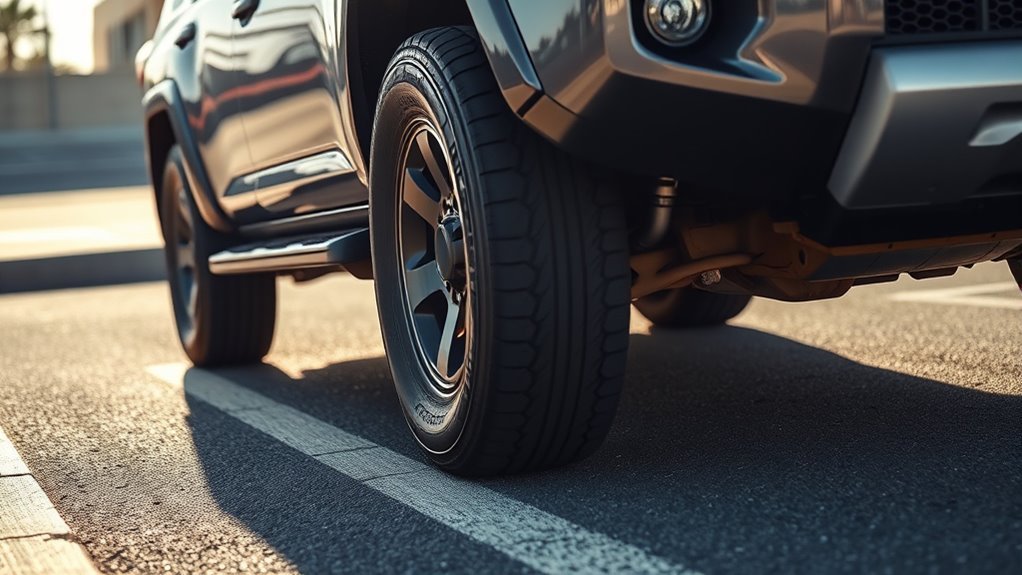
Driveline wind-up becomes most noticeable when a part-time 4WD vehicle or a vehicle with its center differential locked makes a turn on a high-traction surface. The front and rear axles travel slightly different distances through the turn. If the transfer system does not allow that difference, torsional load builds until the tires scrub or the drivetrain releases the load.
Binding During Tight Turns
Common signs of wind-up can include a hopping or “crow-hop” feeling, steering resistance, tire scrub, or a vehicle that feels reluctant to complete a tight turn. The effect is usually strongest in parking-lot turns or other situations with a large steering angle.
- Sharp turns create a larger front-to-rear speed difference than nearly straight driving.
- Dry pavement gives the tires less opportunity to slip and release accumulated load.
- A part-time 4WD system in 4H can therefore feel noticeably tighter than it does on gravel, snow, mud, or another low-traction surface.
- A full-time system in H4F avoids this type of locked front-to-rear binding because the center differential can compensate for the speed difference.
- A full-time system with the center differential locked can bind for the same basic reason as part-time 4WD.
Long-Term Drivetrain Wear
Repeatedly forcing a driveline to absorb wind-up can add unnecessary load to the transfer case, shafts, joints, differentials, tires, and related components. That does not mean every accidental mile in 4H causes measurable permanent damage. Actual risk depends on distance, steering angle, traction, load, tire circumference, vehicle condition, and how much binding occurred.
A short accidental drive that involved mostly straight travel and produced no binding, noise, vibration, warning light, or shifting problem is less concerning than repeated tight turns in part-time 4H on dry pavement. There is no universal “safe number of miles,” however, so the correct approach is to return to the proper mode as soon as practical.
The important question is not simply “Was 4WD on?” It is “Was the drivetrain locked in a way that prevented the front and rear axles from compensating during turns?”
When to Engage 4WD and How to Avoid Problems
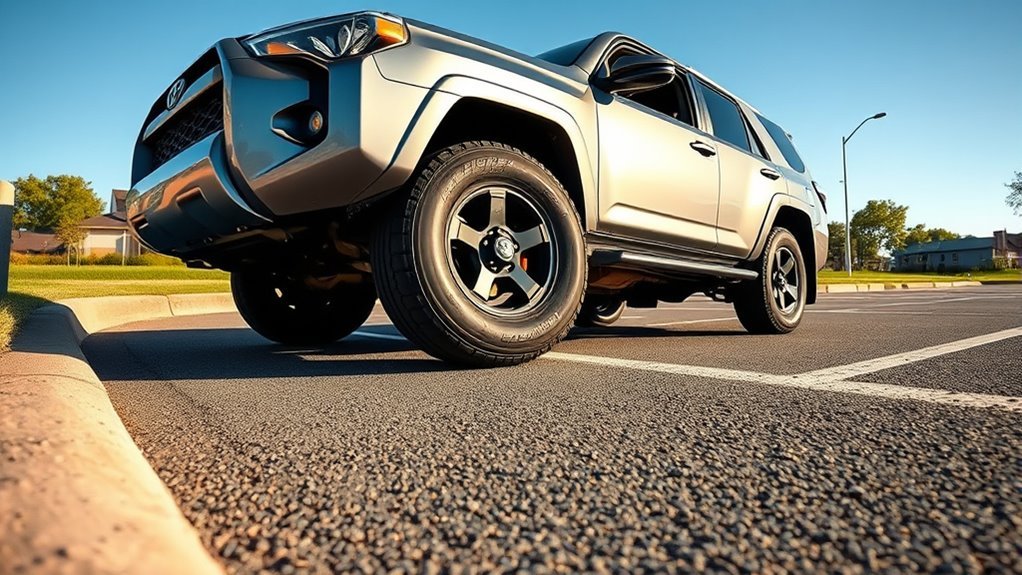
For a part-time 4WD 4Runner, use 4H when additional traction is needed and the road or trail can permit some tire slip. Typical examples include snow, ice, loose gravel, sand, mud, and unpaved surfaces.
- Use 2H/H2 for ordinary dry-road driving on part-time 4WD models.
- Use 4H/H4 when conditions are slippery or loose enough to permit tire slip.
- Use 4L/L4 according to the owner’s manual for low-speed situations that require maximum traction or control.
- On a full-time 4WD model, use H4F for normal road driving and reserve H4L/L4L for conditions that justify locking the center differential.
- Follow the exact engagement procedure and shift-speed limits in your model-year manual.
Some fifth-generation 4Runners have different H2-to-H4 engagement limits depending on selector type. Newer sixth-generation part-time systems specify a speed below 62 mph (100 km/h) for the 2H-to-4H shift. These are shift-procedure limits; they should not be interpreted as permission to use part-time 4H on dry pavement.
Toyota also recommends exercising the 4WD system on relevant models. Current and previous manuals state that the vehicle should be driven in four-wheel drive for at least 10 miles (16 km) each month to help ensure lubrication of the front-drive components. On a part-time system, follow the surface-use instructions in your exact owner’s manual rather than treating the monthly recommendation as permission for extended locked-4WD driving on dry pavement.
Pro Tip: If your 4Runner has full-time 4WD, look at the actual selector position instead of relying on the dashboard’s general “4WD” description. H4F and H4L may both drive all four wheels, but H4F leaves the center differential free while H4L locks it.
[Products Worth Considering]

Engineered for Seamless Compatibility with 4WD Models: Designed as a direct-fit replacement for 4Runner (2003–2018 4.0L/4.7L) and GX460 (2010–2017 4.6L V8), this actuator assembly ensures flawless integration into 4WD systems. Restores proper shift motor functionality for vehicles with Four Wheel Drive, eliminating hesitation or failure in 4x4 engagement.


Toyota Lexus Transfer & Differential Service Gasket Kit
What About Rain, Wet Pavement, and Patchy Snow?
Rain by itself does not automatically make part-time 4H appropriate. Toyota’s operating guidance is based on whether the surface permits enough tire slip, not simply whether the pavement is wet. Ordinary wet asphalt can still provide substantial traction, so a part-time 4Runner should normally remain in 2H unless conditions are genuinely slippery enough to justify 4H.
Patchy winter roads require the same judgment. If a road alternates between snow or ice and long stretches of clean, high-grip pavement, a locked part-time drivetrain may repeatedly move between low-traction and high-traction surfaces. Use the correct mode for the actual conditions and follow your owner’s manual. A full-time 4Runner in H4F is different because its unlocked center differential is designed to accommodate front-to-rear speed differences on normal pavement.
A useful rule is: judge the surface, not the weather label. Snow-covered roads, loose gravel, mud, sand, and similar surfaces can allow the tire slip a part-time system needs. Dry pavement—and many merely wet paved roads—may not.
What to Do If You Accidentally Used 4H on Dry Pavement
If you realize a part-time 4WD 4Runner is in 4H on dry pavement, there is usually no reason to panic. Correct the mode promptly and pay attention to how the vehicle behaves.
- Reduce steering angle. Straighten the wheels as much as practical so the front and rear axles are not fighting a tight turn.
- Reduce speed smoothly. Avoid hard acceleration, abrupt braking, or another sharp turn.
- Return to 2H/H2 according to the shift procedure for your specific model year.
- Confirm the indicator changes. If the 4WD indicator continues flashing, follow the owner’s manual procedure rather than repeatedly forcing the control.
- Listen and feel afterward. Persistent binding, abnormal vibration, repeated clunks, grinding, leaks, or difficulty shifting the transfer case deserves professional inspection.
Toyota manuals commonly instruct the driver to move straight ahead while gently accelerating or decelerating, or in some cases to reverse, when a transfer-mode change has not completed. Use the procedure written for your vehicle rather than improvising.
How to Check for Drivetrain Stress and Maintenance Steps
Symptoms after an accidental dry-pavement 4WD event should be treated as clues, not as a diagnosis. A clicking noise does not automatically prove a damaged CV joint, and uneven tire wear does not by itself prove transfer-case binding.
| Symptom | What it may mean | What to do |
|---|---|---|
| Hopping or steering resistance in a tight turn | Possible driveline wind-up in part-time 4H or with the center differential locked | Straighten the wheels and return to the correct road mode. |
| 4WD indicator keeps flashing | Transfer-mode change may not have completed | Follow the manual’s completion procedure; seek service if the warning persists. |
| Persistent vibration or grinding after returning to normal mode | Could indicate a drivetrain, tire, bearing, shaft, or other mechanical problem | Have the vehicle inspected rather than assuming the cause. |
| New fluid leak | Possible seal, housing, or unrelated fluid-system issue | Identify the fluid and arrange inspection promptly. |
| No unusual symptoms after a brief mistake | No clear evidence of immediate damage | Resume correct operation and normal maintenance; investigate if symptoms later appear. |
Routine drivetrain care also matters. Keep all four tires at the specified pressure, avoid large differences in tire size or wear, maintain transfer-case and differential fluids according to Toyota’s maintenance guidance, and address leaks or unusual noises before they become larger problems.
[Products Worth Considering]

Specifically approved for use in GM automatic four-wheel drive vehicles with transfer cases

Can You Use 4Runner 4H on Snow, Ice, or the Freeway?
Part-time 4H is useful on a freeway when the road is genuinely snow-covered, icy, or otherwise slippery enough to justify it. Do not choose 4H merely because you are traveling at highway speed. Road condition and the transfer system matter more than the road’s classification.
Four-wheel drive can help the vehicle accelerate by sending power through more tires, but it cannot create unlimited grip. The National Highway Traffic Safety Administration advises drivers to slow down and increase following distance because controlling and stopping a vehicle is harder on snow and ice. The National Weather Service likewise warns that trucks and SUVs with four-wheel drive can still lose traction in winter conditions.
Tire condition and tire type are therefore just as important as the 4WD selector. Even an advanced 4WD system cannot overcome inadequate grip during braking or cornering.
Sources
- Toyota 2026 4Runner Brochure — current part-time/full-time 4WD configurations and drivetrain availability.
- Toyota 2024 4Runner Brochure — fifth-generation part-time 4WD and Limited full-time 4WD configurations.
- Toyota Manuals and Warranties — model-year-specific transfer-mode descriptions, road-surface guidance, shift procedures, and maintenance instructions.
- Toyota USA Newsroom — 2026 4Runner — current drivetrain, grade, and full-time/part-time 4WD information.
- NHTSA Winter Weather Driving Tips — snow/ice braking, following-distance, and vehicle-control guidance.
- National Weather Service Winter Driving Guidance — warning that four-wheel-drive trucks and SUVs can still lose traction on snow and ice.
Frequently Asked Questions
What 4WD system should not be driven on dry pavement?
Part-time 4WD in 4H and a full-time 4WD system with its center differential locked should generally not be used for normal dry-pavement driving. Both configurations restrict the front-to-rear speed difference needed during turns. Full-time H4F with the center differential unlocked is different and is intended for normal road use.
Can you use 4-wheel drive on icy roads?
Yes. Ice and snow are conditions where part-time 4H can provide useful additional drive traction because the surface can permit tire slip. However, 4WD does not eliminate the risk of sliding and does not shorten stopping distance by itself. Reduce speed, leave extra following distance, and use suitable tires.
When shouldn’t you use 4-wheel drive?
On a part-time 4Runner, avoid 4H for normal dry, high-traction pavement. On a full-time 4Runner, avoid locking the center differential for ordinary dry-road driving. Always follow the transfer-mode descriptions in the owner’s manual for your exact model year.
Can I drive my 4Runner in 4 High on the freeway?
A part-time 4WD 4Runner can use 4H on a freeway when snow, ice, or another surface that permits tire slip justifies it. Do not use part-time 4H on a dry freeway simply because your speed is within a transfer-case shift limit. A full-time 4WD model in H4F is designed for normal paved-road driving.
Can I use 4H in heavy rain?
Do not select part-time 4H only because it is raining. The important question is whether the road surface permits enough tire slip for the locked front-to-rear drivetrain. Ordinary wet pavement can still provide substantial grip, so use 2H unless conditions genuinely justify part-time 4H. A full-time 4Runner in H4F can remain in its normal unlocked mode on wet or dry pavement.
Did I damage my 4Runner by accidentally driving in 4H on dry pavement?
Not necessarily. A short accidental period in part-time 4H does not prove damage occurred, particularly if you drove mostly straight and noticed no binding or abnormal symptoms. Return to the correct mode and monitor for persistent hopping, vibration, grinding, leaks, warning indicators, or difficulty shifting the transfer case.
Is full-time 4WD safe on dry pavement in a 4Runner?
Yes, when the system is in its normal H4F mode with the center differential unlocked. Toyota specifies H4F for normal dry hard-surfaced roads. Do not confuse H4F with H4L, which locks the center differential and is intended for surfaces that permit tire slip.
Conclusion
Using 4WD on dry pavement does not have one universal answer for every Toyota 4Runner. On the 2010–2026 U.S.-market systems covered here, part-time 4H and a locked center differential can create driveline wind-up on high-traction pavement and should normally be reserved for surfaces that allow tire slip. By contrast, a full-time 4WD 4Runner in H4F is designed for ordinary dry-road driving because its center differential can accommodate front-to-rear speed differences.
If you accidentally drove a part-time 4Runner in 4H on dry pavement, return to the correct mode, avoid tight turns while the system is still engaged, and watch for persistent abnormal symptoms. A brief mistake does not automatically mean expensive damage occurred. Most importantly, check the Toyota owner’s manual for your exact year and drivetrain rather than relying on a generic 4WD rule.