The Toyota 4Runner has used several different four-wheel-drive layouts over its six generations, so the correct way to use 4WD depends on the model year, trim, and transfer case. Some 4Runners use selectable part-time 4WD with 2H, 4H, and 4L, while others use full-time 4WD with a lockable center differential. This guide explains the differences, the major traction systems, and when each mode makes sense.
Quick Answer
Part-time 4WD 4Runners normally use 2H on dry pavement, 4H on loose or slippery surfaces, and 4L for slow, demanding off-road driving. Full-time 4WD models can drive all four wheels continuously on pavement because their center differential allows front and rear axles to rotate at different speeds. Exact controls and shift limits vary by model year.
Key Takeaways
- Part-time 4WD should normally stay in 2H on dry, high-traction pavement; use 4H or 4L only where the tires can slip enough to relieve driveline wind-up.
- Full-time 4WD can remain engaged on dry pavement because a center differential permits different front and rear axle speeds.
- Center differential lock and rear differential lock are different. The first links the front and rear sides of the drivetrain more directly; the second locks the two rear axle shafts together.
- The fifth-generation 4Runner ran from 2010–2024. The sixth generation began with the 2025 model year.
- Always use the Owner’s Manual for your exact year and drivetrain before shifting modes because switch designs, allowable speeds, and engagement procedures vary.
What This Guide Covers
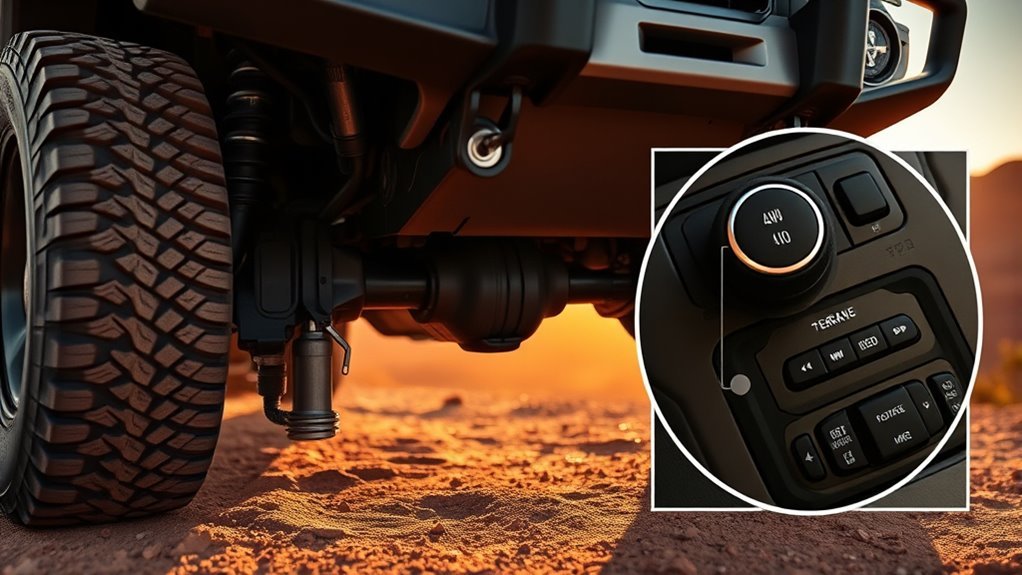
This guide covers the two main 4Runner 4WD architectures—part-time 4WD and full-time 4WD—along with the transfer case, center differential, A-TRAC, Multi-Terrain Select, locking rear differential, and related traction systems. It also explains how the hardware changed across generations and what is available on the current sixth-generation 4Runner.
The most important point is that not every 4Runner works the same way. A fifth-generation Limited with full-time 4WD does not use its transfer case exactly like a fifth-generation TRD Off-Road with part-time 4WD, and the sixth-generation 2025–2026 models introduce another set of hardware and controls. Toyota’s current lineup is available in 2WD, part-time 4WD, and full-time 4WD configurations. Toyota’s 2026 4Runner information provides the current configuration overview.
Warning: Do not use a generic internet speed limit or shift sequence for every 4Runner. The procedure for engaging 4H, 4L, or a center differential lock varies by model year and transfer-case design. Follow the Owner’s Manual for your exact vehicle, and never attempt a shift while the wheels are spinning.
Full-Time vs Part-Time 4Runner 4WD
The main difference is what happens between the front and rear axles. A part-time 4WD system normally drives the rear wheels in 2H. When 4H or 4L is selected, the transfer case connects the front and rear driveline more directly. That improves traction on loose surfaces but can create driveline wind-up if the system is used on dry pavement where the tires cannot slip.
A full-time 4WD system includes a center differential that allows the front and rear axles to rotate at different average speeds while still driving all four wheels. This is why a full-time system can normally remain engaged during ordinary paved-road driving. On equipped 4Runners, the center differential can also be locked when additional traction is required.
| Feature | Part-Time 4WD | Full-Time 4WD |
| Normal paved-road mode | Usually 2H | All four wheels driven continuously |
| Center differential | Normally no open/unlocked center differential in 4H | Yes, allowing front/rear speed difference |
| Dry pavement in normal 4WD mode | Avoid 4H/4L unless the manual specifically permits the selected mode | Designed for normal paved-road use with center differential unlocked |
| Low range | Available on applicable 4WD models | Available on applicable 4Runner full-time systems |
| Best fit | Drivers who want deliberate control for trails, snow, mud, and loose terrain | Drivers who want four-wheel traction without manually switching between 2H and 4H during normal mixed-condition driving |
Neither layout is automatically “better.” Full-time 4WD is convenient on changing paved-road conditions, while part-time 4WD is simple and effective when the driver intentionally selects the appropriate mode for the surface.
Core 4Runner 4WD Components: Transfer Case, Torsen, A-TRAC, MTS and Lockers
Transfer Case
The transfer case sends drive to the front and rear axles on 4WD models. A two-speed transfer case also provides low-range gearing, reducing vehicle speed while increasing torque multiplication for steep grades, rocks, deep mud, sand, and other demanding low-speed situations.
Torsen Center Differential
On fifth-generation Limited 4WD models, Toyota used a Torsen limited-slip center differential with a locking feature. Toyota described the fifth-generation system as normally using a rear-biased 40:60 front/rear torque split and automatically changing the split in response to traction conditions. Toyota’s 2024 4Runner specifications document this fifth-generation configuration.
A center differential should not be confused with a rear differential. The center differential manages the relationship between the front and rear driveline. The rear differential manages the difference in wheel speed between the left and right rear wheels.
A-TRAC
Active Traction Control (A-TRAC) uses the braking system to control wheelspin and help send usable drive force toward wheels that still have traction. Its availability and operating conditions vary by generation and trim, so it should be treated as a traction aid rather than a replacement for the correct transfer-case mode.
Multi-Terrain Select
Multi-Terrain Select (MTS) adjusts vehicle control strategies for different loose or uneven surfaces. On equipped sixth-generation 4Runners, Toyota states that MTS can operate in both 4WD High and 4WD Low, with selectable terrain settings such as Mud, Dirt, and Sand. Earlier-generation systems can work differently, so do not assume current instructions apply to an older 4Runner.
Electronic Locking Rear Differential
The electronic locking rear differential is different from the center lock. When engaged under the permitted conditions, it locks the left and right sides of the rear axle together to improve traction when one rear wheel would otherwise spin. Toyota lists an electronic locking rear differential as standard on current TRD Off-Road, TRD Pro, and Trailhunter grades.
CRAWL Control and Stabilizer Disconnect Mechanism
Equipped off-road trims may also include CRAWL Control, which manages very low-speed propulsion and braking so the driver can concentrate more on steering. Sixth-generation TRD Pro and Trailhunter models also use Toyota’s Stabilizer Disconnect Mechanism (SDM), which increases suspension articulation for difficult terrain.
Pro Tip: Think of the systems as layers. First choose the correct transfer-case mode for the surface. Then use MTS, A-TRAC, CRAWL Control, or a differential lock only when your vehicle is equipped with it and the conditions call for it.
4Runner 4WD by Generation: 1st–6th
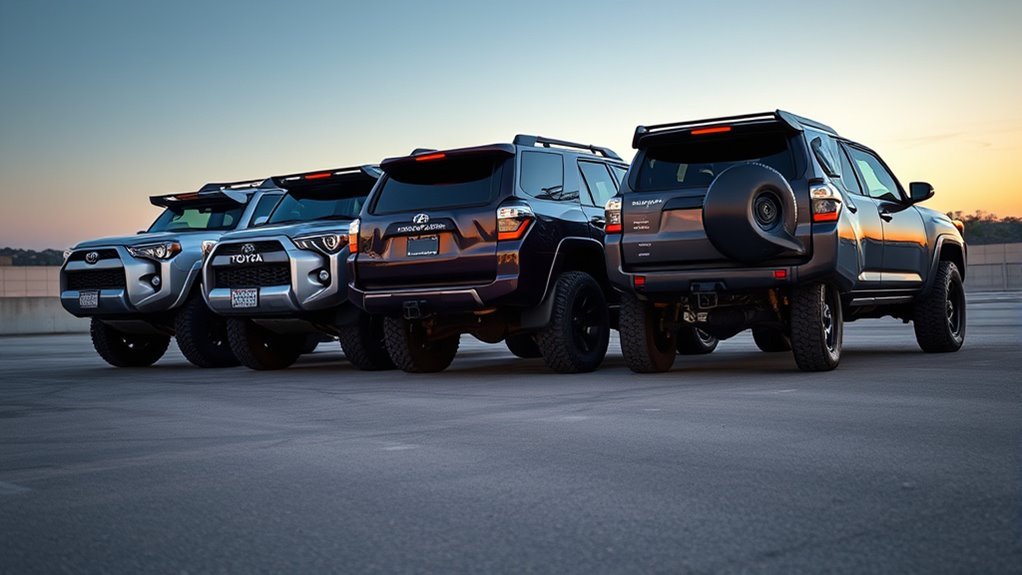
Toyota introduced the 4Runner for 1984, and its four-wheel-drive technology has become progressively more sophisticated. Toyota’s historical material confirms the following generation timeline:
- First generation, 1984–1989: The original 4Runner was closely related to Toyota’s pickup and established the model’s truck-based 4WD identity.
- Second generation, 1990–1995: The 4Runner became a more conventional four-door SUV while retaining its truck-based architecture. Exact transfer-case equipment varied by year and specification.
- Third generation, 1996–2002: Toyota redesigned the chassis and expanded the drivetrain range. By the 2001 model period, Toyota’s historical account notes the addition of Multi-Mode 4WD and a 2WD/4WD selector.
- Fourth generation, 2003–2009: Toyota introduced additional torque-management technology, including Torsen-based hardware, while continuing to develop traction-control and hill-assist systems.
- Fifth generation, 2010–2024: Part-time 4WD remained available on off-road-oriented versions, while Limited 4WD used a full-time system with a lockable Torsen center differential.
- Sixth generation, 2025–present: The 4Runner moved to Toyota’s TNGA-F platform and is offered in 2WD, part-time 4WD, and full-time 4WD configurations. The generation also introduced Trailhunter and Platinum grades and expanded current off-road electronics.
For additional historical context, see Toyota’s fifth- and sixth-generation 4Runner history and its 40-year 4Runner history.
When to Use 2H, 4H, 4L, Center Lock and Full-Time 4WD
| Mode | Typical Use | Important Limitation |
| 2H | Normal dry paved roads on part-time 4WD models | Rear-wheel drive only; less traction assistance from the front axle |
| 4H | Snow, ice, gravel, dirt, mud, or other surfaces that allow tire slip | On part-time systems, avoid prolonged use on dry high-traction pavement |
| 4L | Steep climbs or descents, rocks, deep ruts, deep mud/sand, recovery and very slow trail work | Low-speed use only; follow the exact engagement sequence in the Owner’s Manual |
| Full-Time 4WD | Normal driving on dry, wet, snowy, or mixed paved surfaces | Leave the center differential unlocked for ordinary high-traction pavement unless the manual directs otherwise |
| Center Differential Lock | Loose, slippery, uneven, or low-traction conditions where more direct front/rear coupling is useful | Do not treat the locked mode like ordinary full-time 4WD on dry pavement |
| Rear Differential Lock | Low-speed situations where one rear wheel has little or no traction | Use only under the vehicle’s permitted conditions; steering behavior changes when the axle is locked |
The 4Runner is sometimes casually described as having “AWD,” but Toyota identifies these systems as four-wheel drive. A full-time 4WD 4Runner performs some of the same everyday traction functions people associate with AWD, but it also retains truck-style features such as a two-speed transfer case and, on applicable models, a locking center differential.
Note: Four-wheel drive helps the vehicle accelerate and maintain traction, but it does not repeal the limits of tire grip. Four-wheel drive does not automatically shorten braking distance on snow or ice. Tires, speed, visibility, and road conditions remain critical.
Real-World Tips: Engaging 4WD and Avoiding Driveline Binding
The safest approach is to select 4WD before you are already stuck or spinning the tires. Sudden mode changes while wheels are spinning at different speeds can load the transfer case and driveline.
- Check the surface first. On a part-time system, use 4H where snow, ice, gravel, dirt, sand, mud, or another loose surface allows some tire slip.
- Do not use one universal engagement-speed rule. Toyota has used different transfer-case controls and procedures across 4Runner generations. Follow the manual for your exact year.
- For 4L, follow the required stop/neutral/brake procedure. Many 4Runner systems require the vehicle to be stopped with the transmission in Neutral before low range can engage.
- Do not shift while wheels are spinning. Regain control and stop the wheelspin before changing transfer-case or differential-lock settings.
- Use gentle steering when a differential is locked. A locked driveline resists normal speed differences between the connected wheels or axles.
- Wait for the indicator to confirm engagement. A flashing 4WD or differential-lock indicator usually means the requested mode has not completed its shift.
If the system refuses to complete a shift, first follow the Owner’s Manual procedure rather than repeatedly forcing the control. Depending on the model, a small amount of straight-line vehicle movement may help gears or locking mechanisms align, but the exact procedure is vehicle-specific.
Current 2025–2026 4Runner 4WD Systems
The sixth-generation 4Runner began with the 2025 model year. For 2026, Toyota offers nine grades: SR5, TRD Sport, TRD Sport Premium, TRD Off-Road, TRD Off-Road Premium, Limited, Platinum, TRD Pro, and Trailhunter.
Toyota offers the current 4Runner in 2WD, part-time 4WD, and full-time 4WD configurations. All i-FORCE MAX models use 4WD. Toyota lists a full-time 4WD system with a locking center differential on relevant Limited configurations, while Platinum receives full-time 4WD as part of its standard drivetrain configuration. Because equipment can differ by engine and grade, buyers should check the exact build sheet or window sticker rather than relying only on the trim name.
For more trail-focused use, Toyota equips the TRD Off-Road, TRD Pro, and Trailhunter with an electronic locking rear differential. Available Multi-Terrain Select can operate in both 4WD High and 4WD Low on the current generation. CRAWL Control and Downhill Assist Control provide additional low-speed assistance on equipped models.
The major 2025 change is not simply a new trim lineup: it is an entirely new sixth-generation 4Runner with updated 4WD hardware, electronic traction aids, and drivetrain choices.
[Products Worth Considering]

This dual dash cam captures detailed road footage with front and rear recording for added driving security. Built-in WiFi and app control make it easy to review, download, and manage videos from your phone, while the IPS screen provides clear on-device viewing. With loop recording, G-sensor protection, parking mode, and WDR support, it is designed to help document incidents day or night.

This 6-pack engine oil filter set is designed for Toyota applications and compatible cross-reference part numbers, helping support clean oil flow and dependable engine protection. Built from quality materials and featuring 99% multi-pass efficiency, it is made to help extend engine life and maintain performance between service intervals. The included six filters make it a practical choice for routine maintenance and multiple oil changes.

This Toyota navigation SD card provides updated North America maps and points of interest for compatible factory navigation systems. It is preloaded with recent road and location data to help drivers find destinations, services, and routes more easily across the U.S. and Canada. Designed for select Toyota models, it offers a simple plug-and-play replacement for the original navigation card.
Choosing the Right 4Runner Trim for Off-Road, Snow, or Daily Driving
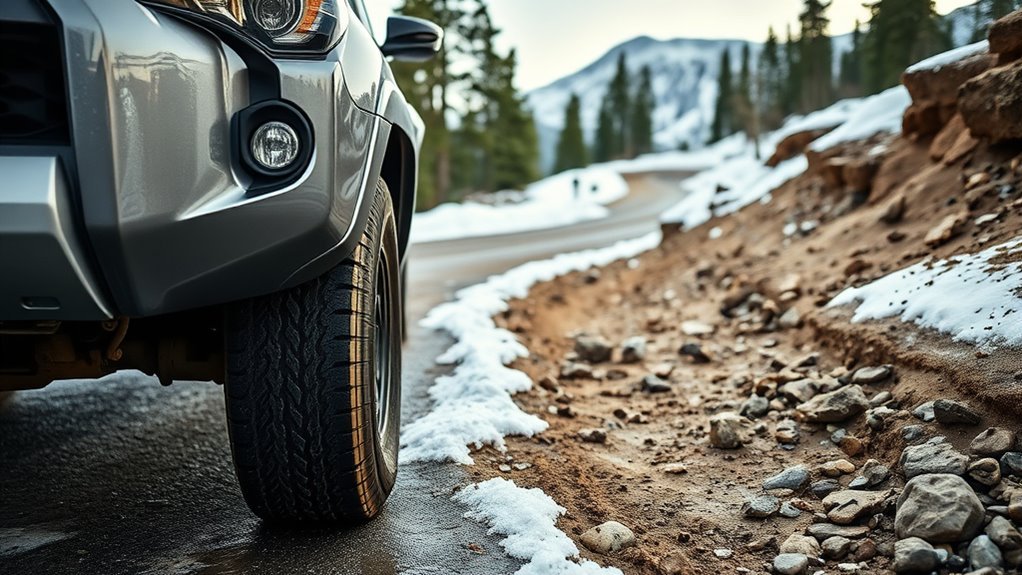
If your priority is changing winter weather and everyday paved-road driving, a full-time 4WD configuration reduces the need to switch between 2H and 4H as pavement alternates between dry and slippery. On the current lineup, Platinum is the clearest full-time-4WD luxury-oriented choice, while Limited drivetrain availability should be checked against the exact powertrain and configuration.
If your priority is technical off-road driving, TRD Off-Road, TRD Pro, and Trailhunter provide stronger factory off-road hardware, including an electronic locking rear differential. TRD Pro and Trailhunter add specialized suspension hardware, and current-generation equipped off-road trims can also use systems such as MTS and CRAWL Control.
SR5 and other configurations may be available with rear-wheel drive or part-time 4WD depending on model year and specification. On a part-time 4WD vehicle, 2H is the normal dry-road setting, while the driver deliberately selects 4H or 4L when surface conditions justify it.
For snow, remember that drivetrain type is only part of the equation. Proper winter-rated tires can make a larger difference to braking and cornering grip than the difference between two 4WD layouts.
[Products Worth Considering]

These custom-fit floor mats are designed for compatible Toyota 4Runner models and provide dependable all-weather protection for the first and second rows. Made from durable TPE material, they help guard against water, mud, dirt, and debris while offering a non-slip surface and raised edges to keep messes contained. They are easy to remove and clean, making them a practical upgrade for maintaining a clean interior.
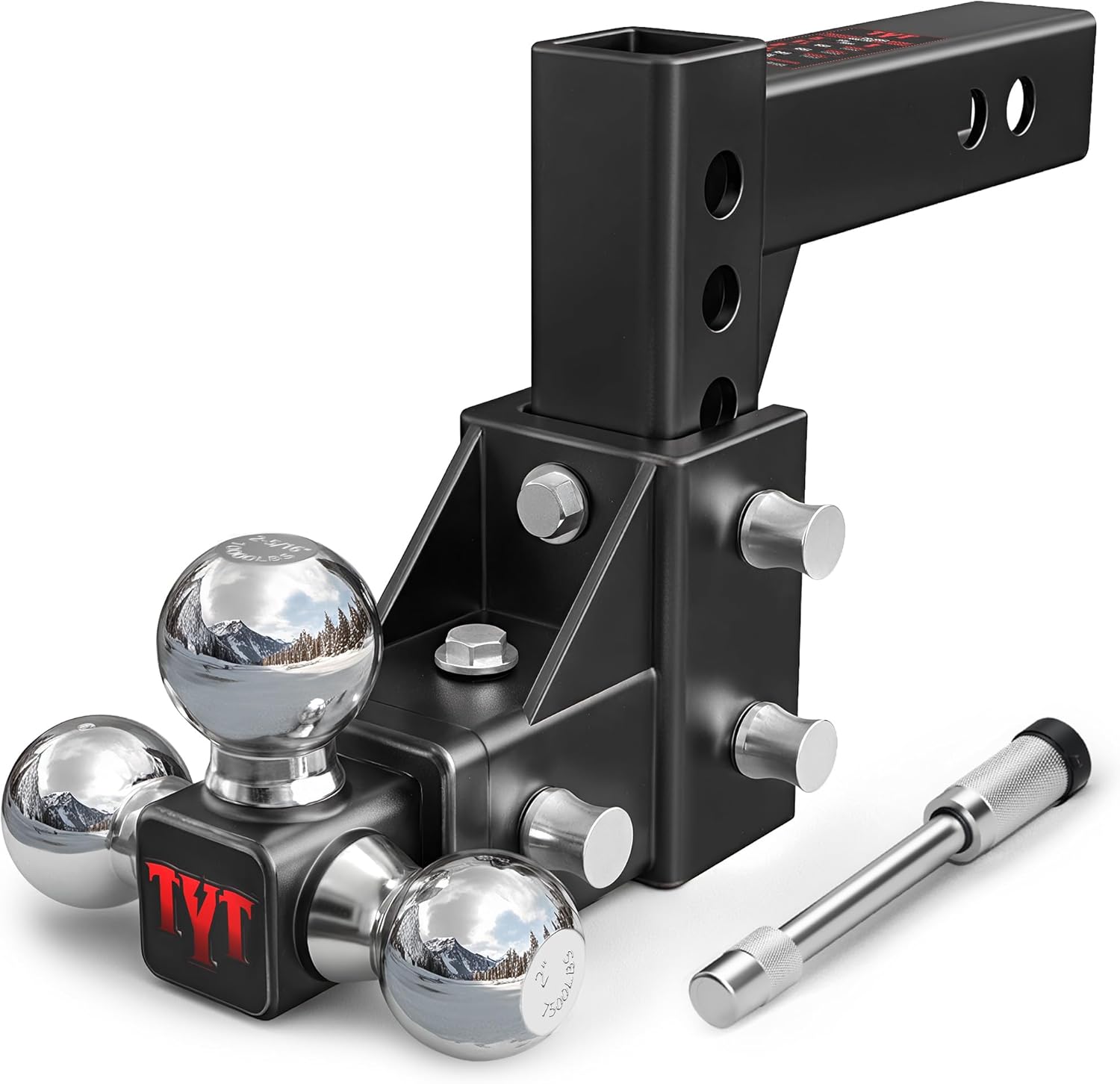
This adjustable tri-ball trailer hitch gives you three common ball sizes in one mount, making it easy to tow different trailers without swapping hardware. Its height adjustability helps create a level towing setup for better handling, while the included lock and pins add security and peace of mind. Built for a standard 2 inch receiver with strong steel construction, it is designed for dependable everyday towing.

Engineered for Seamless Compatibility with 4WD Models: Designed as a direct-fit replacement for 4Runner (2003–2018 4.0L/4.7L) and GX460 (2010–2017 4.6L V8), this actuator assembly ensures flawless integration into 4WD systems. Restores proper shift motor functionality for vehicles with Four Wheel Drive, eliminating hesitation or failure in 4x4 engagement.
4Runner 4WD Maintenance and Troubleshooting
A 4WD system depends on the transfer case, differentials, actuators, sensors, tires, and electronic controls working together. Maintenance requirements vary by model year and usage, so use Toyota’s maintenance schedule for fluid inspection or replacement intervals rather than applying a generic mileage interval to every 4Runner.
[Products Worth Considering]

Specifically approved for use in GM automatic four-wheel drive vehicles with transfer cases

Genuine OEM Product: Toyota factory-engineered Transfer Gear Oil LF 75W specifically formulated and tested to meet Toyota's strict standards

Keep All Four Tires Closely Matched
Tire circumference matters on a four-wheel-drive vehicle. Toyota’s current 4Runner guidance warns 4WD owners against mixing tires of different makes, models, tread patterns, or materially different treadwear and calls for the specified tire size. See Toyota’s 2025 4Runner Owner’s Manual tire guidance.
If the 4WD Indicator Keeps Flashing
A flashing indicator generally means the commanded change has not finished. Do not assume the vehicle is fully in the requested mode. Follow the exact Owner’s Manual procedure, make sure the transmission and vehicle speed meet the required conditions, and avoid forcing the switch repeatedly.
If the Vehicle Binds or Hops While Turning
If a part-time 4WD system or locked center differential is being used on dry pavement, driveline wind-up can cause tight steering, tire scrub, hopping, or resistance while turning. Move to an appropriate low-traction surface and disengage the locked/part-time mode according to the manual. Persistent binding after the correct mode is selected should be inspected.
Watch for Leaks, Noise and Delayed Engagement
Grinding, clunks, fluid leakage around the transfer case or differentials, repeated failure to engage, warning messages, or unusual vibration deserve diagnosis rather than continued experimentation with the controls. These symptoms can have several causes, from an actuator or sensor problem to mechanical wear.
Frequently Asked Questions
Can I Retrofit a Center-Locking Differential Into an Older 4Runner?
It is not a simple bolt-on upgrade in most cases. A lockable center differential is part of the transfer-case and drivetrain architecture, and a conversion can require compatible transfer-case hardware, driveshafts, wiring, control modules, sensors, and programming. A model-specific aftermarket rear locker is a different modification and is often more practical. Have a Toyota/drivetrain specialist evaluate compatibility before modifying the system.
How Does 4WD Affect Fuel Economy in Highway Driving?
Four-wheel-drive hardware adds weight and drivetrain losses compared with an otherwise similar 2WD configuration. On a part-time 4WD model, use 2H for normal dry pavement as directed by Toyota rather than selecting 4H in an attempt to gain unnecessary traction. A full-time 4WD model is designed to remain in full-time 4WD during normal highway driving.
Are There Common Transfer Case Failure Signs to Watch For?
Possible warning signs include fluid leaks, grinding or abnormal mechanical noise, repeated failure to engage or disengage a mode, warning messages, flashing indicators that do not clear after the correct procedure, or binding that remains after the drivetrain is returned to its proper road mode. These symptoms should be diagnosed rather than ignored.
Can I Install Aftermarket AWD or 4WD Electronic Controllers Safely?
Only use a controller specifically engineered and validated for your exact 4Runner drivetrain. Modern 4WD control interacts with ABS, stability control, traction control, transmission logic, sensors, and drivetrain actuators. An incompatible controller can create faults or unpredictable system behavior. Avoid universal modules that cannot document vehicle-specific compatibility.
Does Tire Size Mismatch Damage the 4Runner Drivetrain?
Different tire diameters can force different wheel or axle speeds and can interfere with drivetrain and stability-control operation. Toyota advises 4WD owners to use the specified tire size and avoid mixing different makes, models, tread patterns, or significantly different treadwear. When replacing tires, keep all four as closely matched as Toyota specifies.
Can I Use 4H on Dry Pavement?
Not on a conventional part-time 4WD system unless the Owner’s Manual specifically permits the selected mode. High-traction pavement can prevent the tires from relieving the front/rear speed difference, causing driveline wind-up. A full-time 4WD system is different because its unlocked center differential permits normal front/rear speed variation.
Is Full-Time 4WD the Same as AWD?
They can behave similarly during normal paved-road driving because both can drive all four wheels continuously, but Toyota calls the 4Runner system full-time 4WD. The 4Runner’s truck-based system can also include low-range gearing and a lockable center differential, features that many crossover AWD systems do not have.
Sources
- Toyota USA Newsroom — 2026 Toyota 4Runner — current drivetrains, grades, locking rear differential, MTS, CRAWL Control, and full-time/part-time 4WD information.
- Toyota USA Newsroom — Fifth and Sixth Generation 4Runner History — generation dates and transition to the sixth-generation model.
- Toyota USA Newsroom — Forty Years of 4Runner History — historical drivetrain and traction-system development.
- Toyota USA Newsroom — 2024 4Runner Rugged Capability — fifth-generation Limited Torsen full-time 4WD and off-road system details.
- Toyota 2025 4Runner Owner’s Manual — Winter Driving Tips — tire-size and tire-matching guidance for 4WD vehicles.
Conclusion
The 4Runner’s 4WD system makes much more sense once you separate part-time 4WD, full-time 4WD, the center differential lock, and the rear differential lock. Use 2H for normal dry roads on part-time models, select 4H when the surface allows tire slip, and reserve 4L for slow, demanding conditions. Full-time 4WD can remain active during ordinary paved-road driving with its center differential unlocked.
Most importantly, match the advice to the exact 4Runner. The fifth generation ended with the 2024 model year, and the 2025–2026 sixth-generation models use updated drivetrains and traction systems. Check the Owner’s Manual before engaging low range or a differential lock, keep all four tires properly matched, and choose the 4WD mode for the surface rather than simply selecting the most aggressive setting available.