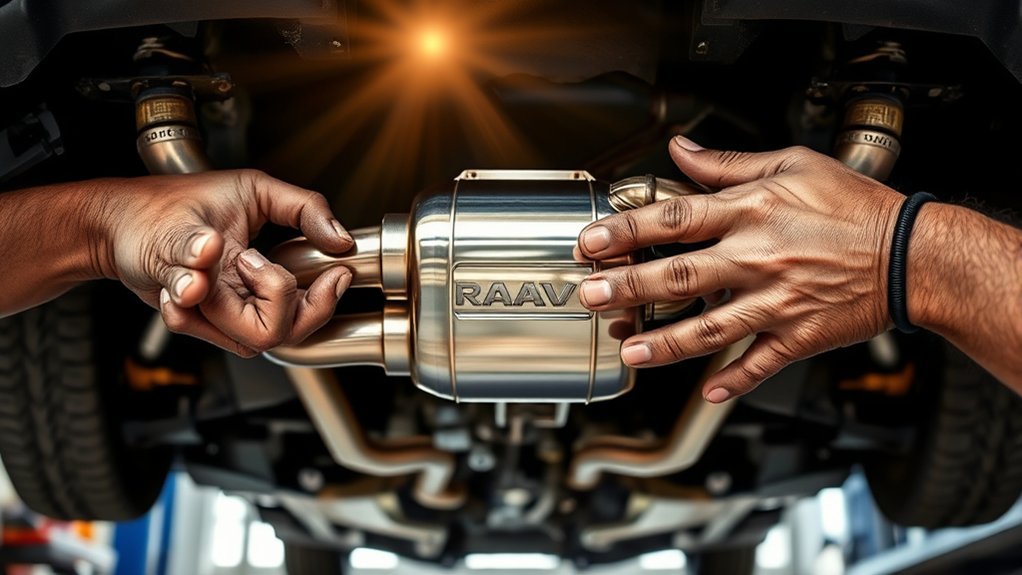
If your RAV4 shows a P0420 code, the computer is saying the Bank 1 catalytic converter is not cleaning exhaust gases as efficiently as expected. That does not automatically mean the catalytic converter is bad. Exhaust leaks, sensor issues, wiring faults, misfires, oil burning, or fuel-control problems can all make the catalyst monitor fail, so diagnose the system before buying expensive parts.
Quick Answer
A RAV4 P0420 code means “Catalyst System Efficiency Below Threshold — Bank 1.” Start by checking for exhaust leaks, related misfire or fuel-trim codes, damaged wiring, and front/rear sensor data. If the engine runs correctly, sensors test properly, and no leaks are found, the catalytic converter may need replacement.
Key Takeaways
- P0420 is an emissions-efficiency code, not a direct command to replace the catalytic converter.
- Fix misfires, rich/lean running, oil burning, and exhaust leaks first, or the code can return even with a new converter.
- Many Toyota RAV4 models use an upstream air/fuel ratio sensor, so do not judge every sensor by old narrowband oxygen-sensor voltage rules.
- Check federal or state emissions warranty coverage before paying for a catalytic converter replacement.
At a Glance
| Time Required | 30 minutes for basic checks; 1–3 hours for leak or flange repair |
| Difficulty | Beginner for scanning; intermediate for exhaust repairs |
| Tools Needed | OBD-II scanner, flashlight, gloves, jack stands or lift, sockets, penetrating oil, torque wrench, smoke machine or soapy water for leak checks |
| Cost | Low for gaskets or leak repair; moderate for sensors; high for catalytic converter replacement |
Warning: Exhaust parts can stay hot long after driving. Let the vehicle cool fully, support it with rated jack stands, work in a ventilated area, and never crawl under a vehicle held only by a jack.
Understanding the P0420 Code
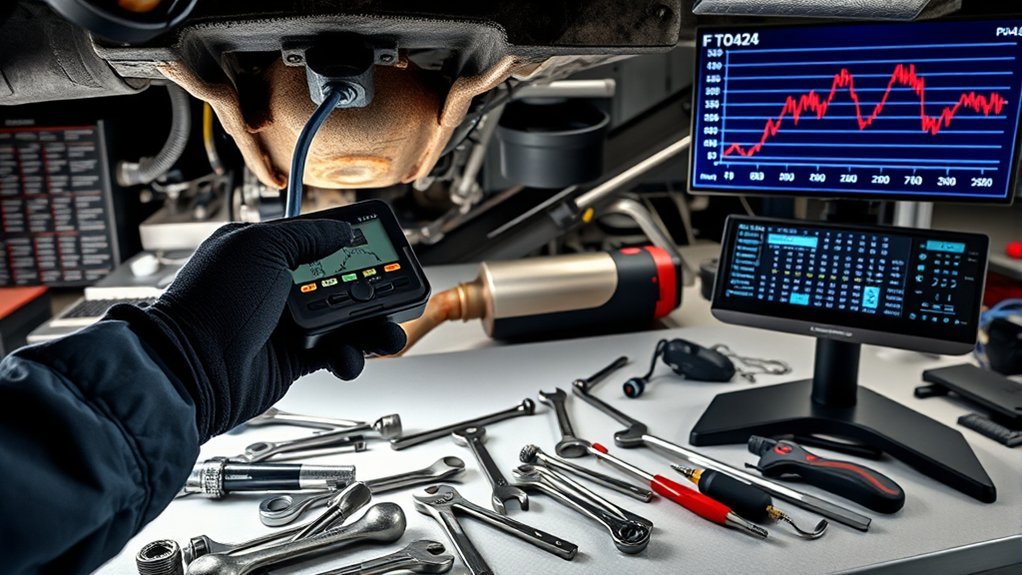
The technical meaning of P0420 is Catalyst System Efficiency Below Threshold — Bank 1. On a four-cylinder RAV4, Bank 1 is the only cylinder bank. On V6 Toyota engines, Bank 1 is the side of the engine that contains cylinder number one.
Your RAV4’s onboard diagnostics system monitors emissions-related parts, including the catalyst and oxygen-sensing system. In simple terms, the engine computer compares what is happening before and after the catalytic converter. A healthy converter stores oxygen and smooths exhaust changes. When the downstream signal starts looking too similar to the upstream signal, the computer may decide the catalyst is not doing enough work and store P0420.
That comparison is why a P0420 diagnosis should be done in order. A lazy sensor, a wiring problem, an exhaust leak, a fuel mixture problem, or a converter damaged by misfires can all point the computer toward the same code.
Common Symptoms of a RAV4 P0420 Code
Many RAV4 owners notice no drivability issue at first. The most common symptom is simply the check engine light. Depending on the cause, you may also notice:
- Reduced fuel economy
- A sulfur or rotten-egg exhaust smell
- Rattling from a broken catalyst substrate
- Loss of power if the converter is restricted
- Failed emissions inspection or incomplete readiness monitors
- Related codes such as P0136, P0137, P0171, P0172, P0300, or other misfire and fuel-trim codes
Note: Clearing the code without fixing the cause may turn the light off temporarily, but the catalyst monitor will usually run again after several drive cycles and the code can return.
Identifying Causes Behind the P0420 Code
The catalytic converter is only one possible cause. Before replacing it, check the full system that affects catalyst performance.
1. Exhaust Leaks Before or Near the Converter
Small leaks at the manifold, flex pipe, flange, gasket, donut seal, or weld can pull fresh air into the exhaust stream. That extra oxygen can confuse the downstream sensor and make the catalyst look less efficient than it is. Leaks can also reduce heat in the converter, which can keep it from working properly.
2. A Worn, Contaminated, or Damaged Catalytic Converter
A converter can fail from age, high mileage, overheating, impact damage, oil contamination, coolant contamination, or long-term rich running. If the ceramic substrate is melted, cracked, or rattling, sealing leaks will not restore it.
3. Oxygen Sensor, Air/Fuel Ratio Sensor, or Wiring Problems
Many Toyota RAV4 models use an upstream air/fuel ratio sensor instead of a simple narrowband oxygen sensor. That means old rules like “the front sensor should switch between 0.1 and 0.9 volts” do not apply to every RAV4. Use a scan tool and the correct service information for your model year and engine.
The downstream sensor still plays a major role in the catalyst monitor. A slow, biased, contaminated, or poorly connected downstream sensor can trigger false efficiency readings.
4. Engine Problems That Damage the Converter
A catalytic converter is downstream from the engine, so engine problems often ruin the converter before the converter gets blamed. Look for:
- Misfires
- Leaking fuel injectors
- Rich or lean fuel trims
- Oil consumption
- Coolant entering the combustion chamber
- Vacuum leaks
- Faulty mass airflow sensor readings
| Possible Cause | What You May Notice | Best First Check |
|---|---|---|
| Exhaust leak | Ticking, hissing, soot marks, smell near engine bay | Cold-start inspection and smoke test |
| Bad downstream sensor | Sensor code, strange live data, no response to throttle changes | Live data, wiring, connector, heater circuit |
| Engine running rich or lean | Fuel-trim codes, poor economy, rough idle | Short-term and long-term fuel trims |
| Failed converter | Repeated P0420 after all other faults are fixed | Sensor pattern, backpressure, temperature, physical inspection |
How to Diagnose a RAV4 P0420 Code the Right Way
Use this order to avoid replacing good parts.
- Confirm the code. Scan the vehicle and write down all stored, pending, and permanent codes. Save freeze-frame data before clearing anything.
- Handle misfire and fuel-trim codes first. P0300-series misfires, P0171 lean codes, and P0172 rich codes can damage or mislead the catalyst monitor.
- Inspect the exhaust system cold. Look for soot trails, rust holes, cracked flanges, loose bolts, missing springs, damaged flex sections, and worn gaskets.
- Check wiring and connectors. Inspect the upstream air/fuel ratio sensor, downstream oxygen sensor, sensor wiring, and harness clips near hot exhaust parts.
- Review live scan-tool data. The downstream sensor should normally be steadier than the upstream signal once the engine is hot and in closed loop. If the downstream signal closely mirrors the upstream signal after other problems are ruled out, catalyst efficiency is suspect.
- Check fuel trims. Large positive or negative fuel trims can show a mixture problem that should be fixed before judging the converter.
- Test for restriction if power is low. A clogged converter can cause poor acceleration and high backpressure.
- Repair faults, then complete a drive cycle. After repairs, the catalyst monitor must run again before you know whether the fix worked.
Pro Tip: Do not replace the catalytic converter until the engine is running correctly. A new converter can fail quickly if misfires, rich running, oil burning, or coolant contamination are still present.
How to Diagnose Exhaust Leaks Related to P0420?
Exhaust leaks are one of the cheapest problems to fix, so check them early.
- Start with a visual inspection. Look around the exhaust manifold, flange joints, flex pipe, converter inlet, converter outlet, and downstream sensor bung. Black soot often marks a leak.
- Listen during a cold start. A leak is usually louder when the metal is cold. Listen for ticking or hissing before the exhaust expands with heat.
- Use a smoke machine if available. A smoke test can reveal small leaks that are hard to hear.
- Check gasket and donut areas. Worn exhaust donuts, crushed gaskets, weak springs, or uneven flanges can leak even when the bolts feel tight.
- Recheck after repair. Start the engine and verify the leak is gone before clearing codes.
A mechanic’s stethoscope can help locate noises, but do not touch hot exhaust parts or moving engine components. If you use soapy water, apply it only when the exhaust is cool enough to do so safely.
Tools You Need for Exhaust System Repairs
Basic exhaust work is simple in theory, but rusted hardware can make it difficult. Gather the right tools before you begin.
[Products Worth Considering]

This complete ignition kit includes six direct replacement coil packs and six pre-gapped iridium spark plugs designed for select Toyota and Lexus 3.5L V6 vehicles. It can help address misfires, rough idle, hard starting, hesitation, and check engine light issues caused by worn ignition components while supporting smooth, reliable engine performance. Built for easy installation and backed by testing, warranty coverage, and technical support, it is a convenient tune-up solution.

Walker exhaust pipe flange gasket is designed to help complete exhaust repairs with a reliable seal for compatible vehicles. Built to work with OE exhaust components and Walker replacement parts, it features heat-deflecting construction, durable materials, and slotted bolt holes where applicable for easier installation. Engineered and tested for real-world performance, it supports long-lasting exhaust system service.

This oxygen O2 sensor set is designed for select Toyota Camry and RAV4 models with 2.4L engines, providing upstream and downstream replacement coverage in one package. Built to OEM specifications for plug-and-play installation, it helps improve fuel efficiency, support accurate air-fuel monitoring, and restore reliable engine performance. The stainless steel and heat-resistant construction is made for long-lasting durability and stable operation.
Essential Hand Tools
- OBD-II scanner with live data
- Safety glasses and heat-resistant gloves
- Wheel chocks, jack, and rated jack stands or a lift
- Metric socket set, ratchet, extensions, and wrenches
- Breaker bar or impact wrench
- Torque wrench
- Penetrating oil
- Wire brush or gasket scraper
- Replacement gaskets, donut seals, springs, and bolts matched to your exact RAV4 year, engine, and emissions label
Heating Equipment Options
Heat can help loosen rusted exhaust fasteners, but it also adds fire and burn risk. A small propane or MAP-Pro torch may help on stubborn nuts. An induction heater is safer around fuel lines and underbody materials when available. Avoid heating near fuel, oil, plastic shields, wiring, or undercoating.
| Tool | Best Use | Caution |
|---|---|---|
| Propane or MAP-Pro torch | Loosening rusted nuts and bolts | Keep flame away from fuel, wiring, plastic, and undercoating |
| Induction heater | Controlled heating of metal fasteners | Still creates very hot metal; wear gloves |
| Penetrating oil | Pre-soaking corroded hardware | Flammable; clean excess before using heat |
Step-by-Step Guide to Repairing Exhaust Flanges
A leaking flange or donut seal can trigger a P0420 code by affecting sensor readings and converter temperature. Here is a safe repair flow.
- Let the exhaust cool completely. This prevents burns and reduces fire risk.
- Raise and support the vehicle safely. Use level ground, wheel chocks, and rated jack stands.
- Soak the fasteners. Apply penetrating oil and give it time to work.
- Remove the flange hardware. Use hand tools first. If bolts are badly rusted, use controlled heat or cut-off tools only if you can do so safely.
- Inspect both flange faces. Look for warping, deep rust scaling, cracks, and broken studs.
- Clean the mating surfaces. Remove old gasket material and rust without gouging the metal.
- Install the correct gasket or donut seal. Match the part to your VIN, engine, drivetrain, and emissions label. Do not assume one part fits every RAV4.
- Tighten evenly. Alternate sides so the flange seats flat. Use the factory torque specification when available.
- Start the engine and check for leaks. Listen and inspect before road testing.
- Clear codes only after the repair is verified. Then drive until readiness monitors complete.
Note: Exhaust sealants are not a substitute for a missing gasket, cracked pipe, broken flange, or wrong converter. Use sealant only where the product maker allows it and only as a support to a proper mechanical repair.
Why Proper Sealing Is Crucial for Exhaust Longevity
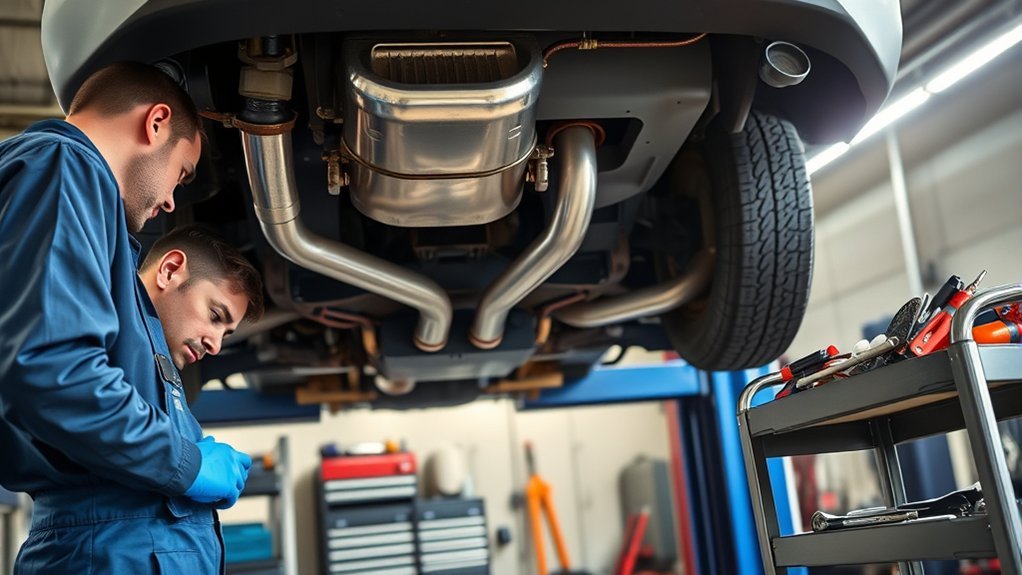
A tight exhaust system helps the catalytic converter reach and hold the heat it needs to work. It also keeps outside oxygen from entering near the sensors. When a flange, gasket, flex pipe, or sensor bung leaks, the computer may see confusing data and flag P0420 even if the converter is not the original problem.
Proper sealing also protects nearby parts. Hot exhaust escaping from a small leak can damage wiring, plastic shields, underbody coatings, and sensor connectors. That is why a cheap gasket repair can sometimes prevent a much larger emissions repair later.
Affordable Fixes for Catalytic Converter Issues
Not every P0420 repair requires a converter. Try these lower-cost checks first:
- Repair exhaust leaks. Replace failed gaskets, donut seals, springs, bolts, or cracked flex sections.
- Fix engine performance problems. Misfires, rich running, lean running, and oil burning must be handled before judging catalyst health.
- Clean or repair electrical connectors. Corroded sensor connectors or melted wiring can create false readings.
- Replace a confirmed bad sensor. Do this only after testing the sensor and wiring, not just because P0420 appeared.
- Use the correct fuel and maintenance schedule. Delayed spark plug replacement, dirty intake sensors, and neglected oil leaks can shorten catalyst life.
Catalytic-converter cleaners are not a reliable fix for a melted, cracked, missing, or heavily contaminated converter. They may help only in limited cases where light deposits are the issue, and they will not repair a mechanical failure.
[Products Worth Considering]

FOXWELL NT201 is an easy-to-use OBD2 scanner designed to help drivers quickly read and clear check engine codes, view live engine data, and check emissions readiness. Its color screen, one-key I/M readiness test, and broad compatibility with most gasoline vehicles since 1996 make it a practical tool for everyday diagnostics and maintenance. With plug-and-play operation and lifetime free updates, it offers a simple way to understand vehicle issues without expensive shop visits.

This 4-piece automotive electrical disconnect pliers set helps safely remove stubborn push-tab connectors from mass air flow sensors, fuel injectors, and ignition coils without damaging delicate tabs. It includes straight and 60-degree angled pliers, a hose clamp plier, and a dual-ended terminal pin remover to handle a wide range of under-hood wiring tasks. Organized in a rugged storage case, it is built for mechanics and DIYers who need reliable access to tight engine bay spaces.

This set of four ignition coils is designed to restore smooth engine performance and reliable starting for compatible Toyota, Scion, and Lexus applications. Built to meet or exceed OE specifications, these coil packs help reduce misfires, hesitation, and check engine light issues while supporting stronger ignition output. The direct-fit design makes installation straightforward, and the package includes a warranty for added peace of mind.
When Catalytic Converter Replacement Is the Right Fix
Replacement becomes more likely when:
- The exhaust system has no leaks.
- The engine has no active misfire, fuel-trim, oil-burning, or coolant-loss problem.
- The upstream and downstream sensors and wiring test correctly.
- The downstream sensor pattern still shows poor oxygen storage after the vehicle is fully warm.
- The converter rattles, is physically damaged, or shows signs of overheating.
- Backpressure is excessive and engine power is reduced.
If the converter failed because of misfires, rich running, oil consumption, or coolant contamination, replace or repair the root cause first. Otherwise, the new converter can fail and the P0420 code can return.
[Products Worth Considering]

This ignition coil pack and pre-gapped spark plug set is designed for select 3.5L V6 Toyota and Lexus models, helping restore smooth engine performance and reliable starting. Built to meet or exceed OEM specifications, it can help fix common issues like misfires, rough idle, poor fuel economy, and reduced power. The complete 6-piece set offers a convenient replacement solution for compatible vehicles.

The TOPDON VeriDiag X800 BT is a wireless bidirectional automotive diagnostic scanner designed for full-system troubleshooting, active testing, and advanced service resets. It supports broad vehicle coverage, live data viewing, AutoVIN identification, and lifetime free updates to help DIYers and professionals diagnose issues faster and with greater confidence.

The KZYEE KS40 helps diagnose weak spark plugs, ignition coil problems, and misfires by simulating real engine conditions under load. With adjustable RPM testing and dual-port comparison, it makes it easier to spot hidden ignition faults quickly and accurately. Its enclosed spark-proof design supports safer testing for both professionals and DIY users across a wide range of 12V gasoline engines.
Legal, Warranty, and Emissions Considerations
Before paying for a converter, check warranty and emissions rules. Under federal emissions warranty regulations, specified major emission-control components such as catalytic converters have longer coverage than many other parts. Toyota warranty guides also list emissions coverage details by model year, state, and component. If your RAV4 is still within the applicable time and mileage limits, contact a Toyota dealer before authorizing an out-of-pocket replacement.
Replacement converters also have to be legal for the vehicle and location where they are installed. In California, the California Air Resources Board says aftermarket catalytic converters must have an Executive Order exemption and must match the vehicle’s make, model, model year, engine size, and emissions information. Other states may follow California-style emissions rules, so verify local requirements before buying a part online.
Warning: Do not remove, hollow out, or bypass a catalytic converter. It can violate emissions laws, cause inspection failure, create exhaust odor, and trigger more engine codes.
Signs Your Repair Was Successful and Maintenance Tips
A successful repair is more than the check engine light turning off for one trip. Look for these signs:
- The check engine light stays off after several complete drive cycles.
- The catalyst monitor completes without resetting P0420.
- No pending P0420 code returns.
- Fuel trims stay within a normal range for your engine.
- No exhaust leaks are heard or seen after the repair.
- The vehicle passes emissions inspection if required in your area.
To prevent repeat P0420 problems, fix misfires quickly, repair oil or coolant consumption problems, use the correct spark plugs, inspect exhaust hangers and flanges during oil changes, and avoid driving for long periods with the check engine light flashing. A flashing light usually means an active misfire that can overheat and damage the catalytic converter.
Frequently Asked Questions
Is it worth fixing a P0420 code on an older Toyota RAV4?
Yes, it is usually worth diagnosing. A P0420 code can cause emissions-test failure, reduced fuel economy, and possible converter damage if the root cause is an engine problem. On an older RAV4, start with lower-cost checks such as exhaust leaks, misfires, fuel trims, and sensor wiring before replacing the catalytic converter.
What does a catalyst efficiency code mean?
A catalyst efficiency code means the computer believes the catalytic converter is not reducing emissions well enough on the monitored bank. It does not prove the converter is bad by itself. Sensor data, leaks, fuel mixture, and engine condition must be checked before the converter is condemned.
Can I drive my RAV4 with a P0420 code?
You can often drive short-term if the vehicle runs normally and the check engine light is steady. Do not ignore rough running, power loss, strong exhaust smells, overheating, or a flashing check engine light. Those symptoms can point to problems that may damage the converter or make the vehicle unsafe.
Can a bad oxygen sensor cause P0420?
Yes. A slow, biased, contaminated, or disconnected downstream oxygen sensor can cause incorrect catalyst readings. On many Toyota models, the upstream sensor may be an air/fuel ratio sensor, so use the correct scan-tool data and service specifications instead of guessing from generic voltage rules.
Will a catalytic converter cleaner fix P0420?
Usually not if the converter is melted, cracked, restricted, or contaminated by oil or coolant. A cleaner may help only in mild deposit-related cases. If the engine has a misfire, rich condition, oil burning, or exhaust leak, fix that first or the code will likely return.
How do I know if the catalytic converter is bad or if it is just an exhaust leak?
Check for leaks first because they are cheaper and can mimic a bad converter. Look for soot marks, ticking sounds, loose flanges, cracked flex pipes, and worn donut seals. If the exhaust is sealed, the engine runs correctly, and sensor data still shows poor catalyst oxygen storage, the converter becomes more suspect.
Conclusion
A RAV4 P0420 code is a warning about catalyst efficiency, but the smartest fix is a step-by-step diagnosis. Check for exhaust leaks, misfires, fuel-control problems, sensor faults, and wiring damage before replacing the catalytic converter. When the exhaust is sealed, the engine is healthy, and the sensors test correctly, a worn converter becomes the likely repair. Fix the cause, verify the monitor completes, and your RAV4 will have a much better chance of staying code-free.
Sources
- eCFR — 40 CFR § 85.2103 Emission warranty — federal emissions warranty periods and major emission-control components.
- Toyota 2025 RAV4 Warranty & Maintenance Guide — Toyota emissions warranty and replacement-parts guidance.
- California Air Resources Board — Aftermarket Catalytic Converters — California aftermarket catalytic converter requirements and Executive Order information.
- U.S. EPA — On-Board Diagnostic Regulations and Requirements — OBD monitoring of catalyst and oxygen-sensor systems.
- U.S. EPA — Vehicle and Engine Tampering Policy — emissions-control tampering and replacement-parts policy background.