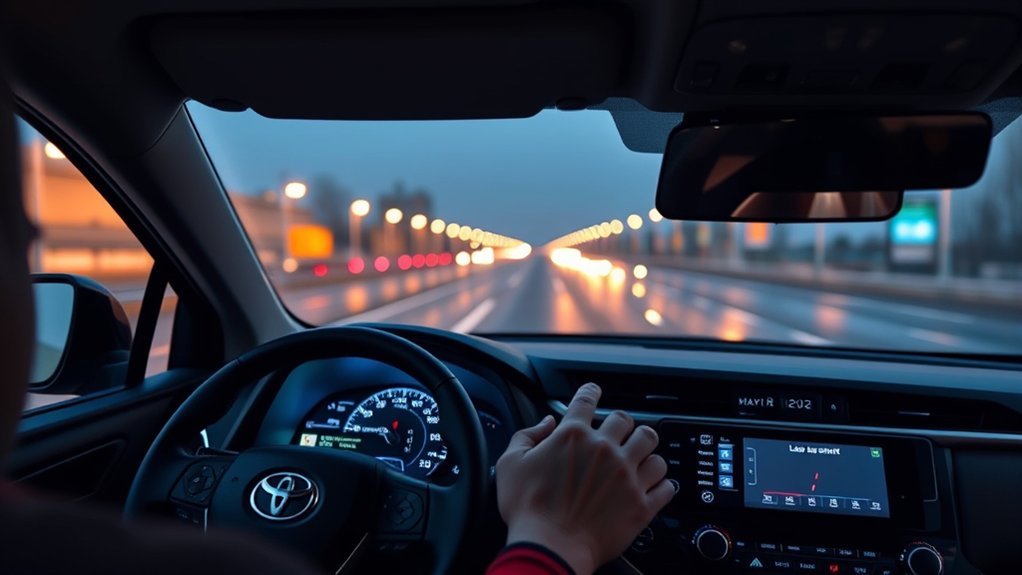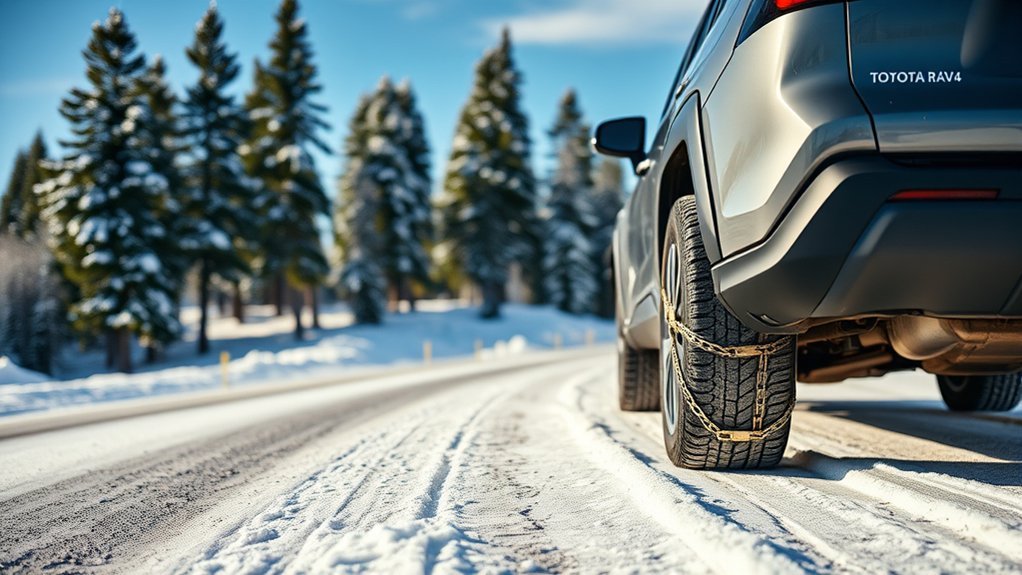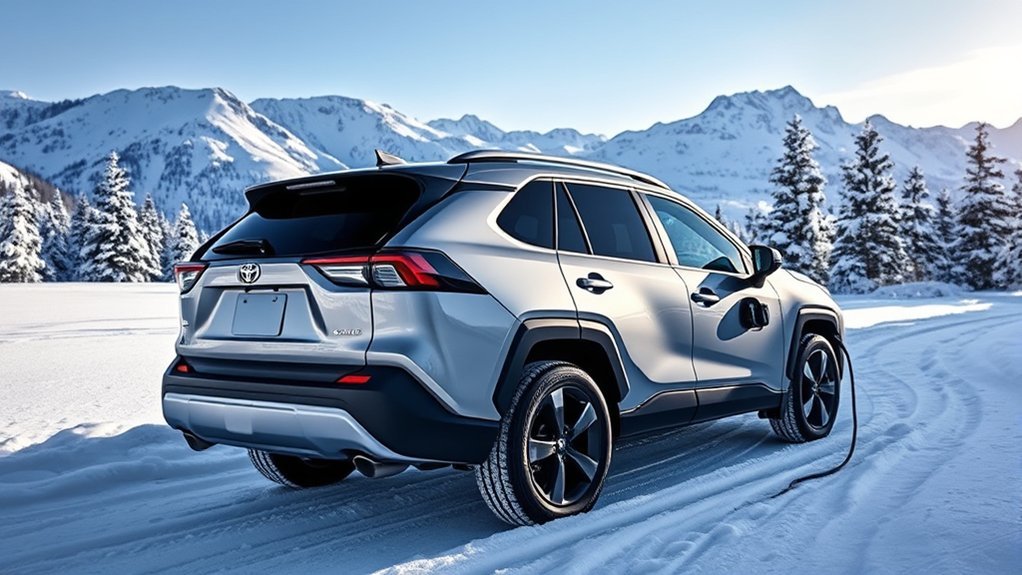
Cold weather can reduce your Toyota RAV4 Prime’s electric range, but the loss is not random. It usually comes from colder battery chemistry, denser air, lower tire pressure, winter road conditions, and the energy needed to heat the cabin. With the right charging, heating, and drive-mode habits, you can keep more of your EV range during winter.
Quick Answer
A 2021–2025 RAV4 Prime, now called the RAV4 Plug-in Hybrid for 2025, is rated for about 42 miles of electric range, but winter driving can noticeably reduce that number. In freezing weather, many drivers should plan for less EV range, especially on short trips with cabin heat, defrost, snow, or highway speeds.
Key Takeaways
- The EPA lists the 2021–2024 RAV4 Prime at 42 miles of all-electric range and 94 MPGe combined when using gas and electricity.
- Cold weather hurts EV range mainly because the battery is less efficient and the heater, defroster, fans, tires, and winter roads use more energy.
- Preconditioning while plugged in is one of the best winter range habits because it warms the cabin before the battery has to do all the work.
- Use heated seats and the heated steering wheel first, then add cabin heat as needed for comfort and safety.
- For 2026, Toyota lists the redesigned RAV4 Plug-in Hybrid with a manufacturer-estimated 52-mile all-electric range, so winter expectations will differ by model year.
At a Glance
| Best Habit | Precondition while plugged in before leaving |
| Best Heat Saver | Use heated seats and steering wheel before raising cabin heat |
| Biggest Range Drains | Cabin heat, defrost, snow tires, low tire pressure, slush, and high speeds |
| Winter Planning Range | Plan conservatively; actual range varies by temperature, route, heater use, speed, and model year |
How Cold Weather Affects Your RAV4 Prime’s EV Range
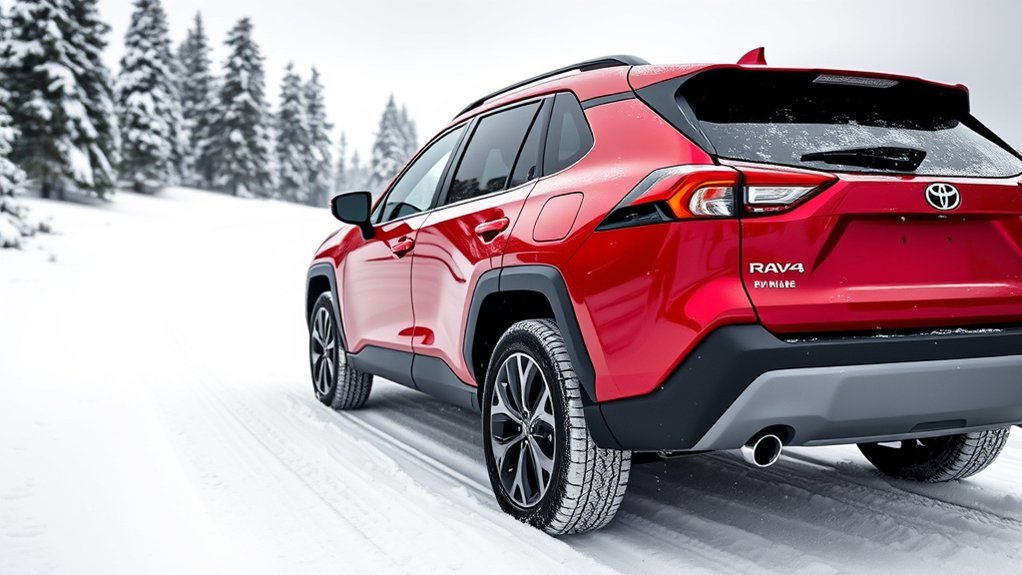
The RAV4 Prime is efficient, but it cannot avoid normal winter physics. The U.S. Department of Energy and EPA fuel economy database lists the 2021–2024 Toyota RAV4 Prime 4WD at 42 miles of all-electric range, 94 MPGe combined on gas and electricity, and 38 MPG combined when operating as a hybrid. Those numbers are test estimates, not a promise for every winter drive.
When temperatures fall, your real-world EV range may drop because the high-voltage battery is colder, the cabin heater uses energy, air is denser, tires lose pressure, and snow or slush adds rolling resistance. The official FuelEconomy.gov cold-weather guide says EV range can drop significantly in cold conditions and that cabin heating is a major part of the extra energy use.
Cold weather does not “damage” your normal RAV4 Prime range permanently. It temporarily reduces efficiency while the vehicle, battery, tires, roads, and cabin heating system deal with winter conditions.
For many owners, the biggest drop appears on short winter trips. A five-mile errand in 15°F weather can use a lot of energy warming the cabin, clearing glass, and bringing the vehicle up to temperature. On a longer trip, that initial warm-up load is spread over more miles, so the loss may feel less dramatic.
Why 2025 and 2026 Model-Year Range Expectations Are Different
For 2025, Toyota changed the RAV4 Prime name to RAV4 Plug-in Hybrid. Toyota said the 2025 model kept the same plug-in hybrid idea, with a manufacturer-estimated 42 miles of all-electric range and 38 MPG combined in hybrid mode.
For 2026, the redesigned Toyota RAV4 Plug-in Hybrid moves to a new generation with a manufacturer-estimated 52-mile all-electric range. That means winter range advice still applies, but the starting point is different. A 2021–2025 vehicle and a 2026 vehicle should not be judged by the exact same electric-mile expectation.
Note: If you are reading owner reports online, check the model year. “RAV4 Prime” often refers to 2021–2024 models, while Toyota uses “RAV4 Plug-in Hybrid” for newer U.S. naming.
What Range Should You Expect in Winter?
There is no single winter range number that fits every RAV4 Prime. A mild 35°F day with preconditioning and heated seats may stay close to normal. A 5°F day with snow, defrost, high fan speed, roof cargo, and highway driving can cut range much more.
| Winter Condition | Likely Effect | Best Response |
|---|---|---|
| Around freezing | Moderate EV range loss, especially with cabin heat | Precondition, use seat heat, check tire pressure |
| Below 20°F | Bigger heater load and lower battery efficiency | Plan extra margin and use HV mode when it fits the trip |
| Snow, slush, or icy roads | More rolling resistance and traction loss | Slow down, keep tires properly inflated, avoid unnecessary roof drag |
| Short errands | Warm-up energy takes a larger share of the trip | Combine trips and preheat while plugged in |
Some owners may see winter EV estimates in the 25–35 mile range on older 42-mile-rated models, while others will do better. Treat the dashboard estimate as a planning guide, not a fixed promise. It adjusts based on recent driving, climate use, temperature, and battery state.
[Products Worth Considering]

Masoll’s TPMS sensor set includes four advanced sensors and a relearn tool to help GM vehicle owners replace factory tire pressure sensors at home. Designed for broad compatibility with GM vehicles after 2006, it supports dual-frequency operation for easier fitment across Chevy, GMC, Buick, Cadillac, Pontiac, and select trucks. With low power use, high accuracy, and DIY installation, it offers a convenient way to clear TPMS warnings and restore proper tire pressure monitoring.

The S ZEVZO ET03 is a powerful 12V jump starter designed to revive gas and diesel vehicles quickly, including cars, trucks, motorcycles, lawnmowers, and boats. It also doubles as a portable power bank with USB charging ports, a bright LED flashlight, and an LCD display for added convenience during roadside emergencies. Built with multiple safety protections and included carrying case, it offers dependable backup power whenever you need it.

MaxxHaul 50515 car ramps provide a stable, elevated platform for performing vehicle repairs and maintenance beneath your car. Built from heavy-duty plastic with rubber stops and a ridged surface, they help keep tires securely positioned during use. Their compact ramp design offers dependable access and support for everyday garage work.
Tips for Maximizing Electric Range in Cold Conditions
The goal is not to freeze yourself just to save a few miles. The goal is to use heat and electricity smarter so the RAV4 Prime can spend more energy moving the vehicle and less energy warming it from scratch.
[Products Worth Considering]

EcoNour Car Windshield Sun Shade helps block harmful UV rays and reduce heat buildup to keep your vehicle’s interior cooler and better protected. Its reinforced overlapping design provides a more secure fit, while the pop-open, foldable construction makes it quick to install and easy to store. Designed for a range of compact vehicles, it offers dependable everyday sun protection for your dashboard, seats, and cabin.
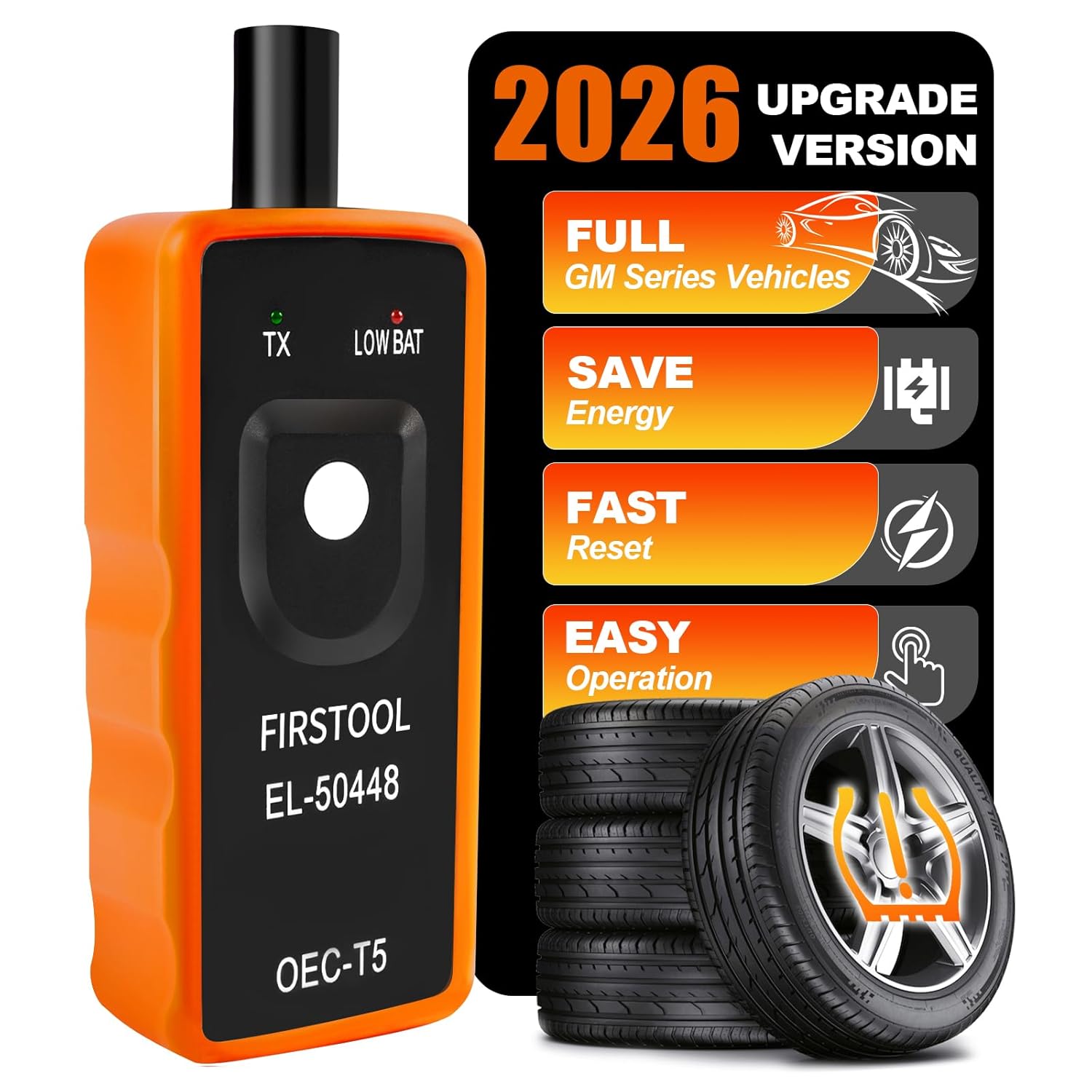
This EL-50448 TPMS relearn tool helps quickly activate and reset tire pressure sensors so your vehicle’s monitoring system stays accurate after tire rotations, sensor replacement, or seasonal tire changes. Designed for many GM-related vehicles and compatible with common 315 and 433 MHz TPMS systems, it offers simple one-button operation and reliable performance for clearing warning lights and relearning sensor positions.

Custom Fit for Toyota RAV 4 Hybrid Models: Custom fit for Toyota RAV4( Only Hybrid) 2019 2020 2021 2022 2023 2024 2025 LE/XLE/XLE Premium/Limited. Achieves a perfect 1:1 fit. No more sliding or bunching. Crafted from FREESOO premium faux leather with a soft-touch feel and an OEM-style interior upgrade. Please note: Not fit for Gasoline/Prime/PHEV/Adventure/TRD-Off Road
Precondition While Plugged In
Preconditioning warms the cabin before you drive. When the vehicle is still connected to the charger, more of that energy can come from the wall instead of from the traction battery. This is especially helpful before morning commutes, school runs, and short errands.
- Set your departure time or start climate control before leaving, when available.
- Keep the charging cable connected until you are ready to go.
- Clear snow and ice before driving so the defroster does not have to do all the work.
- Park in a garage when possible to give the battery and cabin a warmer starting point.
Use Efficient Heating Strategies
Cabin heat warms a large air volume and cold interior surfaces. Heated seats and a heated steering wheel warm your body directly, so they can keep you comfortable with a lower cabin temperature setting.
- Use heated seats and the heated steering wheel early.
- Set the cabin temperature to a comfortable, not excessive, level.
- Use defrost when safety requires it, then reduce it once the glass is clear.
- Use Eco climate settings when they provide enough comfort and visibility.
Warning: Never reduce heat or defrost so much that windows fog or ice over. Clear visibility matters more than saving electric range.
Optimize Your Charging Routine
For the best winter experience, start cold-weather trips with a full charge when you know you will need EV range. A consistent overnight charging schedule also makes preconditioning easier because the vehicle is plugged in right before departure.
- Charge overnight before cold morning drives.
- Schedule charging so the battery finishes near your departure time when practical.
- Keep the charge port area clear of snow and ice.
- Use a Level 2 charger if available for faster recovery between winter trips.
Pro Tip: If your commute is close to your winter EV range limit, precondition every morning while plugged in and save HV mode for the faster or colder part of the route.
How the RAV4 Prime’s Heating System Affects Performance
The RAV4 Prime uses electric energy for EV driving, but winter heat can change how the system behaves. In very cold conditions, the gasoline engine may run for heat, powertrain protection, windshield clearing, or system needs. That does not mean something is wrong; it means the plug-in hybrid system is choosing reliability, comfort, emissions control, or visibility over pure EV operation.
Heat Pump and Cabin Heat Efficiency
A heat pump can be more efficient than simple electric resistance heating in many conditions because it moves heat instead of only creating heat. The U.S. Department of Energy notes that heat pumps can warm an EV cabin more efficiently than electric resistance heating in most conditions. However, as temperatures drop, every heating system has to work harder.
That is why preconditioning matters so much. Instead of asking the battery to heat a cold cabin after you unplug, you can warm the vehicle before the drive begins.
Defroster Use and EV Mode
Front defrost is a safety feature, and it may demand more heat and airflow than normal cabin warming. If the windshield is fogging or icing, use the defroster first. Once the glass is clear, switching back to a lower fan speed or a less aggressive climate setting can help preserve range.
Toyota’s owner information also notes that different plug-in hybrid modes are designed for different driving situations. For example, Toyota advises using EV mode and AUTO EV/HV mode mainly in city driving and HV mode on highways or freeways to help conserve fuel and electricity.
Best Driving Modes for Your RAV4 Prime in Winter
The best winter mode depends on the trip. EV mode is useful when your route is short and you can finish comfortably on battery power. HV mode can make sense on long highway stretches, very cold drives, or when you want to preserve battery for lower-speed city driving later.
- EV Mode: Best for short local trips, errands, and commutes that fit within the available battery range.
- AUTO EV/HV Mode: A good default for mixed routes because the vehicle can decide when to blend electric and hybrid operation.
- HV Mode: Useful for highway driving, long winter trips, steep grades, towing, or when cabin heat demand is high.
- Trail or traction-focused settings: Use them only when road conditions call for extra traction control support; they are not range-saving modes.
For a winter commute, a smart pattern is often EV or AUTO EV/HV for slower city roads, then HV for sustained highway speeds, then EV again near the destination if battery remains. This helps avoid burning through electric miles quickly at high speed in cold air.
Real Stories From RAV4 Prime Owners
Owner reports are useful because they show how much range can vary in real life. Drivers in mild winter climates may still see strong EV range. Drivers in the Upper Midwest, Canada, New England, or mountain regions often report bigger drops when temperatures fall well below freezing.
Common owner patterns include:
- Short trips showing the steepest loss because the cabin and battery start cold every time.
- Better results when the vehicle is garaged overnight.
- More engine starts when front defrost or high cabin heat is used.
- Improved comfort and range when heated seats are used instead of maximum cabin heat.
- More stable winter range after checking tire pressure regularly.
The key is to compare similar conditions. A 30-mile EV result in 10°F weather with snow tires and defrost may be normal for one driver, while another driver in 38°F weather on dry roads may see much more.
Why Preconditioning Your RAV4 Prime Is Important
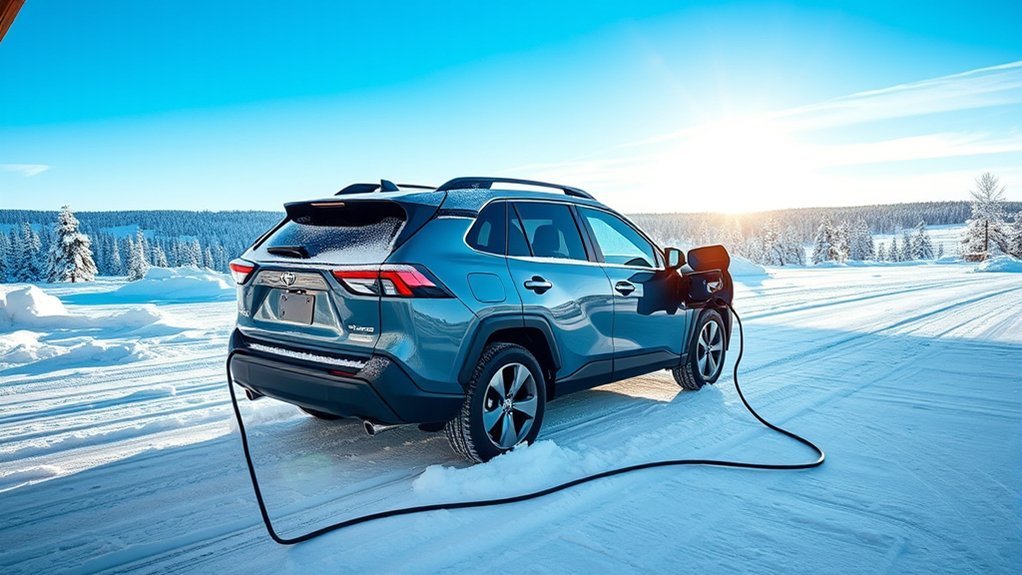
Preconditioning is one of the simplest ways to improve winter comfort and preserve electric range. It warms the cabin before you drive, which reduces the need for heavy heat use during the first few miles.
It also makes the vehicle nicer to live with. Instead of getting into a freezing cabin, scraping interior fog, and immediately using high fan speed, you can start with a warmer cabin and a calmer climate setting.
- Better comfort: The cabin is warmer before you sit down.
- Less early-trip energy demand: The first few miles are not spent heating everything from ice-cold.
- Cleaner glass: Starting with a warmer cabin can reduce fogging.
- More predictable range: Your trip begins with fewer sudden heater spikes.
[Products Worth Considering]

Perfect adaptation: 360° fully fits the front windshield protective cover of the car - customized for your car. Thickened design, without displacement in strong wind...
Understanding Battery Efficiency in Low Temperatures
Lithium-ion batteries work best in moderate temperatures. In the cold, chemical reactions inside the battery slow down, available power can be limited, and the vehicle may use energy to manage battery and cabin temperature. This is normal behavior for plug-in hybrids and electric vehicles.
Cold also affects the rest of the vehicle. Tire pressure drops as temperatures fall, winter tires can add rolling resistance, and thick fluids or cold driveline parts can reduce efficiency. On the road, snow, slush, and standing water make the vehicle work harder.
That is why winter range loss is usually a mix of several small penalties rather than one single problem.
Maintenance Tips for Winter Driving
Winter maintenance has a direct effect on range, safety, and comfort. Before deep winter hits, give the RAV4 Prime a simple cold-weather check.
- Check tire pressure often: Cold air lowers tire pressure, which increases rolling resistance and can reduce range.
- Inspect tread depth: Good tires matter more than EV range on icy or snowy roads.
- Use the correct washer fluid: Choose winter-rated fluid that will not freeze in the reservoir or lines.
- Keep the windshield clean: A clean windshield fogs less and clears faster.
- Clear snow from the roof and hood: Extra snow adds weight, drag, and visibility risk.
- Protect the charge port: Brush away snow before opening the door and avoid forcing frozen parts.
- Remove unused roof racks or cargo boxes: Extra wind resistance hurts highway efficiency.
Note: Toyota’s owner manual should always be the final authority for fluids, tire pressures, warnings, charging guidance, and model-year-specific controls.
Essential Accessories for Your RAV4 Prime in Cold Weather
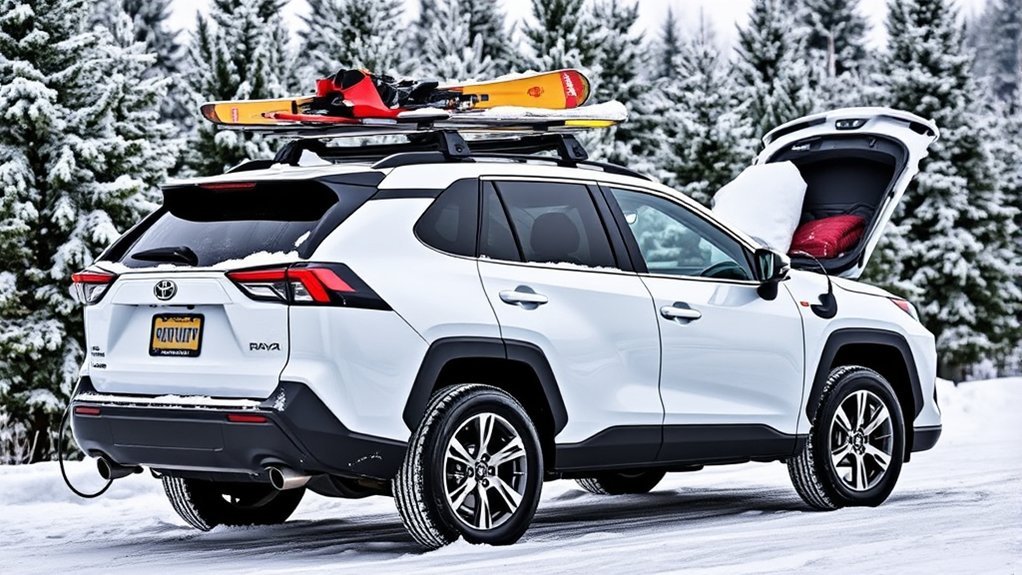
The right winter accessories make the RAV4 Prime easier to use and safer in bad weather. Focus on items that improve traction, visibility, charging access, and emergency readiness.
- Quality winter tires: The biggest safety upgrade for regular snow and ice driving.
- All-weather floor mats: Help protect the cabin from salt, slush, and water.
- Snow brush and ice scraper: Essential for clearing glass, lights, sensors, and roof snow.
- Portable tire inflator and pressure gauge: Useful when pressure drops during cold snaps.
- Winter washer fluid: Helps prevent frozen washer lines and streaky glass.
- Charging-port care items: A soft brush and towel can help keep the area clear of snow and ice.
- Emergency kit: Include gloves, blanket, flashlight, phone charger, snacks, water, and a small shovel.
A block heater may be helpful in extremely cold regions for engine starts and comfort, but availability and installation vary. Use only parts and installation methods that fit your specific model and Toyota guidance.
Preparing Your RAV4 Prime for Winter Adventures
For longer winter drives, think beyond the dashboard EV estimate. Plan your route around weather, charging access, fuel, road conditions, and a larger safety margin than you would use in summer.
- Start with a full charge and enough gasoline for unexpected detours.
- Precondition before departure while plugged in.
- Use HV mode strategically for long highway sections.
- Save some battery for slow traffic, towns, parking areas, or electric-only zones when useful.
- Check weather, road closures, and charging availability before leaving.
- Carry winter emergency supplies, especially on rural or mountain routes.
For ski trips, cabin weekends, and long cold-weather highway drives, the RAV4 Prime’s plug-in hybrid setup is a major advantage. You can use EV range when it is efficient and still rely on hybrid operation when cold, distance, or terrain makes pure EV driving less practical.
Common Winter Range Mistakes to Avoid
Most winter range problems come from habits that are easy to fix. Avoid these common mistakes:
- Leaving without preconditioning: This makes the battery handle the full cabin warm-up load.
- Running maximum heat for the whole trip: Once comfortable, lower the temperature or fan speed.
- Ignoring tire pressure: Underinflated tires hurt range and handling.
- Using roof racks all winter when not needed: Extra drag is especially costly at highway speeds.
- Expecting the EPA number in every condition: EPA estimates are useful for comparison, but winter driving is harder.
- Trying to force EV mode at all costs: In some conditions, HV mode is the smarter and smoother choice.
Frequently Asked Questions
What is the EV range of the RAV4 Prime in winter?
For 2021–2025 models rated around 42 electric miles, winter range can be noticeably lower. Many drivers should plan conservatively in freezing weather, especially on short trips with heat, defrost, snow, or highway speeds. Your exact number depends on temperature, tires, route, speed, cabin heat, and whether you precondition.
How much does cold weather reduce EV range?
Cold weather can reduce EV range by a small amount in mild conditions or by much more in severe conditions. FuelEconomy.gov notes that EV range can drop significantly in cold weather, especially when cabin heat is used. In a RAV4 Prime, the practical loss depends heavily on heater use, trip length, road conditions, and driving speed.
How far can the RAV4 Prime go on electric power?
The EPA lists the 2021–2024 RAV4 Prime at 42 miles of all-electric range. Toyota listed the 2025 RAV4 Plug-in Hybrid at a manufacturer-estimated 42 miles, while the redesigned 2026 RAV4 Plug-in Hybrid is listed by Toyota at a manufacturer-estimated 52 miles. Real-world winter range may be lower.
Should I use EV mode or HV mode in winter?
Use EV mode for short local trips when you have enough battery and do not need heavy heat. Use AUTO EV/HV for mixed driving. Use HV mode for long highway stretches, steep grades, towing, very cold conditions, or when you want to save battery for later city driving.
Does using the defroster reduce electric range?
Yes, defrost can reduce electric range because it uses heat and fan power, and the vehicle may run the gasoline engine in some conditions. Use defrost whenever visibility requires it, then lower the setting once the windshield is clear.
Does preconditioning really help the RAV4 Prime in winter?
Yes. Preconditioning while plugged in can improve comfort and help preserve EV range because the cabin is warmed before the trip begins. It is especially useful before short drives, where warm-up energy can take a large share of the total trip energy.
Conclusion
Winter will reduce your RAV4 Prime’s electric range, but it does not have to ruin the ownership experience. The biggest wins are simple: charge before cold trips, precondition while plugged in, use heated seats and the heated steering wheel, keep tires properly inflated, and choose EV, AUTO EV/HV, or HV mode based on the route instead of forcing one mode all the time.
If you drive a 2021–2025 RAV4 Prime or RAV4 Plug-in Hybrid, use the 42-mile rating as a fair-weather benchmark and plan extra margin in freezing conditions. If you drive the newer 2026 RAV4 Plug-in Hybrid, start from Toyota’s higher 52-mile manufacturer estimate but still expect winter conditions to affect real-world range.
Sources
- FuelEconomy.gov — Toyota RAV4 Prime fuel economy and electric range — EPA/DOE figures for 2021–2024 RAV4 Prime range, MPGe, MPG, and total range.
- FuelEconomy.gov — Fuel Economy in Cold Weather — Cold-weather effects on EVs, hybrids, tire pressure, cabin heat, and winter efficiency.
- U.S. Department of Energy — Winterizing Your Electric Vehicle — Heat pump, winter EV, and charging-port guidance.
- Toyota USA Newsroom — 2025 RAV4 Plug-in Hybrid name change — Toyota’s 2025 naming update, 42-mile manufacturer-estimated EV range, and 38 MPG hybrid-mode estimate.
- Toyota USA Newsroom — 2026 RAV4 Plug-in Hybrid — Toyota’s redesigned 2026 RAV4 Plug-in Hybrid and manufacturer-estimated 52-mile all-electric range.