If you drive a 2019–2025 gas Toyota RAV4, the Direct Shift 8-speed automatic is a big part of why the SUV feels more responsive than many compact crossovers while still returning strong fuel economy. Toyota pairs the 2.5-liter gas engine with a Direct Shift 8-speed electronically controlled automatic transmission, while RAV4 Hybrid and Plug-in Hybrid models use a different hybrid transaxle/CVT setup. That distinction matters because the gas RAV4’s 8-speed uses real stepped gears, broader torque-converter lock-up, and low-loss internal parts to improve efficiency and driving feel.
Quick Answer
The gas Toyota RAV4’s 8-speed automatic improves efficiency by using closer gear ratios, a wider lock-up range, reduced internal friction, and low-loss clutch friction plates. In the 2025 RAV4 LE FWD, this setup helps achieve an EPA rating of 27 city / 35 highway / 30 combined mpg.
Key Takeaways
- The 8-speed automatic applies to gas RAV4 models, not RAV4 Hybrid or Plug-in Hybrid models.
- Toyota says its Direct Shift-8AT reduces clutch lost torque by about 50% versus a conventional 6-speed automatic.
- Direct lock-up in gears 2 through 8 helps reduce torque-converter power loss during normal driving.
- Eco, Normal, and Sport modes change throttle response and shift behavior, but they do not change the basic hardware.
- For long-term ownership, follow the Toyota maintenance guide and inspect transmission/transaxle fluid for leaks or service needs at the recommended intervals.
What This Guide Covers: Quick Takeaways

This guide explains how the RAV4’s gas-model 8-speed automatic works, why it helps fuel economy, how the drive modes change the feel from behind the wheel, and what owners should know about long-term maintenance. It also clears up a common confusion: not every RAV4 uses this transmission. Gas models use the Direct Shift 8-speed automatic, while hybrid versions use Toyota’s hybrid transmission system.
The main benefit is simple: the transmission gives the engine more usable gear choices, keeps engine speed closer to the efficient range, and reduces wasted energy through improved friction materials and broader lock-up control. Toyota’s own Direct Shift-8AT technical release notes that the design uses lower-friction gear surfaces, optimized clutch friction material, a compact package, and a widened lock-up range to improve efficiency and response.
| Area | What It Means for Drivers |
|---|---|
| 8 forward gears | Better balance of low-speed response and highway cruising efficiency |
| Low-loss clutch friction plates | Less internal drag when clutches are disengaged |
| Wider lock-up range | More direct power transfer and less torque-converter slip |
| Eco / Normal / Sport modes | Different throttle and shift behavior for economy or responsiveness |
| Compact transverse layout | Fits the front-drive-based RAV4 platform without sacrificing cabin space |
Note: For the redesigned 2026 RAV4, Toyota lists Hybrid Electric Vehicle and Plug-in Hybrid Electric Vehicle powertrains, not a carryover gas-only 8-speed model. This guide is most relevant to 2019–2025 gas RAV4 models.
RAV4 Direct Shift 8-Speed: Design and Operation
The RAV4’s gas-model automatic is designed for a transverse, front-drive-based SUV layout. In plain English, that means the engine and transmission sit sideways under the hood, and the transmission must be compact enough to fit beside the engine while still handling daily driving, highway cruising, and available all-wheel drive.
Compact Transverse Packaging
Because space is limited in a compact SUV engine bay, the Direct Shift 8-speed uses a tight transaxle layout that packages the torque converter, gearsets, shafts, clutches, and hydraulic controls into a compact unit. Toyota describes the Direct Shift-8AT as more compact and lighter than comparable older transmissions, with a lower center of gravity that can help both efficiency and vehicle stability.
For the driver, the packaging benefit is mostly invisible but important. You get an SUV with normal passenger and cargo space, available AWD hardware, and a transmission that can still offer eight usable ratios instead of a simpler 6-speed layout.
Multi-Step Shift Logic
The 8-speed automatic does not simply climb from first to eighth in a fixed pattern every time. It uses electronic control logic to choose gears based on speed, throttle input, load, road grade, traction needs, fluid temperature, and selected drive mode. In light driving, it shifts early to keep engine rpm down. Under heavier throttle, it holds lower gears longer so the engine can stay in a stronger part of its power band.
In the RAV4 owner’s manual, Toyota also describes an S mode with selectable shift ranges, allowing the driver to choose from displayed ranges S1 through S8. A lower range gives stronger acceleration and engine braking, while a higher range allows quieter, more efficient cruising.
Pro Tip: Use S mode for long downhill grades when you want more engine braking, but return to D for normal daily driving because Toyota recommends D for the best balance of fuel efficiency and smoothness.
Low-Loss Torque Plates
A major efficiency improvement comes from low-loss clutch friction plates. Toyota states that optimizing the friction plate segment shape reduced lost torque by about 50% compared with a conventional 6-speed automatic. That does not mean the whole transmission wastes 50% less energy in every condition; it means a specific clutch-drag loss was reduced during clutch rotation.
That detail matters because automatic transmissions have several sources of energy loss, including fluid drag, gear mesh friction, clutch drag, hydraulic pump load, and torque-converter slip. Reducing one major internal loss helps the RAV4 transfer more engine output to the wheels instead of wasting it as heat.
Toyota says the Direct Shift-8AT’s optimized clutch friction material reduced clutch lost torque by approximately 50% compared with a conventional 6-speed transmission.
Fuel-Economy Benefits of the 8-Speed
The RAV4’s 8-speed automatic helps fuel economy in three main ways: it gives the engine more ratios to choose from, reduces torque-converter slip through broader lock-up operation, and lowers internal friction where possible. On the 2025 RAV4 LE FWD gas model, the EPA lists the 2.5-liter engine with an Automatic (S8) transmission at 27 mpg city, 35 mpg highway, and 30 mpg combined.
| Feature | Efficiency Benefit |
|---|---|
| Close ratio spread | Helps keep the engine near an efficient rpm range |
| Taller upper gears | Lowers engine speed during steady highway cruising |
| Direct lock-up in gears 2–8 | Reduces power loss from torque-converter slip |
| Low-friction gear processing | Reduces mechanical losses where gear teeth engage |
| Optimized clutch friction plates | Cuts clutch drag when disengaged |
Direct lock-up is especially useful. Toyota notes that on gas RAV4 AWD systems, the direct shift automatic transmission uses direct lock-up in gears two through eight to help reduce power loss from the torque converter while executing smooth shifts. That gives the transmission a more connected feel once the vehicle is moving.
Driving Modes: How They Affect Performance and Fuel Economy

The gas RAV4 includes Eco, Normal, and Sport drive modes. These modes do not change the physical gears inside the transmission. Instead, they change how quickly the vehicle responds to throttle input and how the transmission chooses its shift points.
Eco Mode Trade-Offs
Eco Mode is tuned to save fuel. It softens throttle response and encourages earlier upshifts when conditions allow. That can help reduce fuel use in traffic, suburbs, and relaxed highway driving, but it can also make the RAV4 feel less eager when you need quick acceleration.
Use Eco Mode when you are cruising, commuting, or trying to stretch a tank of fuel. Avoid relying on it when merging into fast traffic, climbing steep hills with passengers or cargo, or passing on a two-lane road where quicker response matters.
Normal Mode Balance
Normal Mode is the best default for most drivers. It keeps throttle response predictable, allows the transmission to shift smoothly, and avoids the dulled feel of Eco Mode or the higher-rpm behavior of Sport Mode. If you do not want to think about drive modes, Normal is the right setting for daily use.
Sport Mode Responsiveness
Sport Mode makes the RAV4 feel sharper by holding lower gears longer and responding more quickly to throttle input. You may notice stronger midrange pull, quicker downshifts, and less hesitation when accelerating out of a turn or merging onto a highway.
The trade-off is fuel economy. Because Sport Mode keeps the engine at higher rpm more often, it can burn more fuel than Normal or Eco in the same conditions. Use it when you want more response, then switch back to Normal or Eco when the road settles down.
Warning: Do not force repeated aggressive downshifts when the transmission is cold or overheated. Toyota’s manual notes that protective logic may automatically select a higher shift range when fluid temperature is high.
Key Performance Traits: Shift Speed, Lock-Up Range, Responsiveness
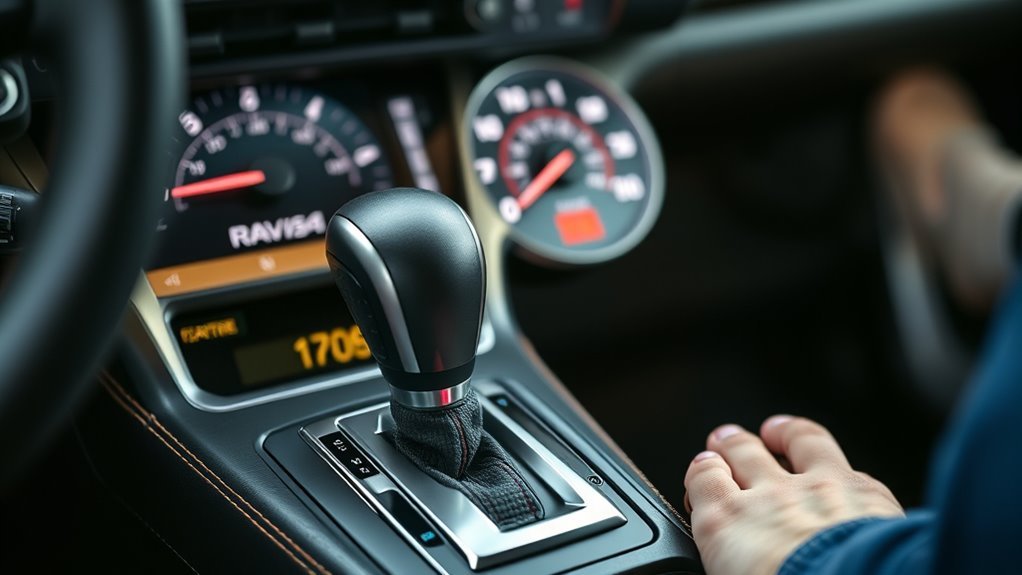
The RAV4’s 8-speed automatic is not a performance transmission in the sports-car sense, but it is tuned to make a compact SUV feel more direct and less strained. The lower gears help the RAV4 get moving without excessive engine revving, while the upper gears lower rpm once the SUV is cruising.
| Trait | Effect | Driver Benefit |
|---|---|---|
| Wider lock-up range | Less torque-converter slip | More direct power delivery |
| Eight forward gears | Smaller rpm drops between gears | Smoother acceleration |
| Taller cruising gears | Lower highway rpm | Better fuel efficiency and less engine noise |
| Electronic shift control | Gear choice adapts to load and throttle | Better response in mixed driving |
| S mode ranges | Allows driver-selected engine braking or acceleration force | More control on grades and winding roads |
Compared with older 4-speed and 6-speed automatics, the 8-speed gives the control system more flexibility. Compared with many CVTs, it gives a more familiar stepped-shift feel, which some drivers prefer because acceleration sounds and feels more predictable.
Which RAV4 Models Use the 8-Speed Automatic?
The Direct Shift 8-speed automatic applies to gas-powered RAV4 models, especially the fifth-generation 2019–2025 RAV4 with the 2.5-liter Dynamic Force four-cylinder engine. For 2025, Toyota lists gas grades including LE, XLE, XLE Premium, and Limited, each available with front-wheel drive or all-wheel drive depending on grade.
RAV4 Hybrid and RAV4 Plug-in Hybrid models are different. Toyota says the 2025 RAV4 Hybrid combines a 2.5-liter engine with two motor generators and a continuously variable transmission. The Plug-in Hybrid uses a more powerful gas/electric setup. These hybrid transmissions may show simulated shift ranges, but they are not the same hardware as the gas RAV4’s 8-speed automatic.
| RAV4 Type | Transmission / Drive System | Best For |
|---|---|---|
| 2019–2025 gas RAV4 | Direct Shift 8-speed automatic | Traditional shift feel, simple gas powertrain, strong highway efficiency |
| RAV4 Hybrid | Toyota hybrid transaxle / CVT-type operation | Higher city efficiency and standard electric AWD on many model years |
| RAV4 Plug-in Hybrid / former Prime | Plug-in hybrid transaxle | EV-only driving range plus strong acceleration |
| 2026 RAV4 | HEV or PHEV powertrains | New-generation hybrid-focused lineup |
[Products Worth Considering]

The AICEL TPMS Relearn Tool helps quickly reset and relearn tire pressure sensors on compatible GM vehicles after tire rotation, sensor replacement, or warning light issues. Designed for easy handheld use, it works with most cars, SUVs, and pickup trucks and can save time by eliminating unnecessary trips to the auto store. Its durable ABS housing and simple activation process make it a practical tool for keeping the tire pressure monitoring system operating properly.
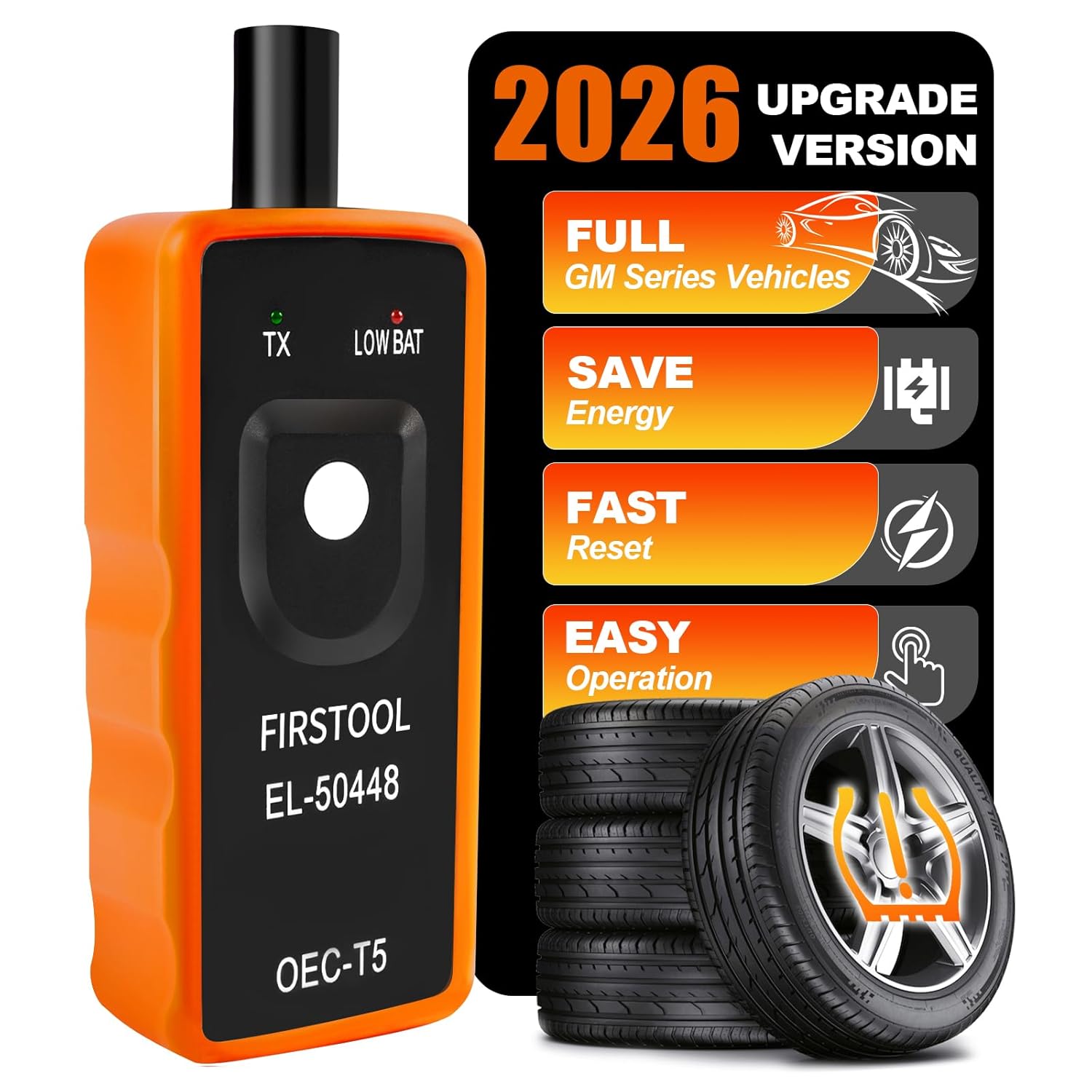
This EL-50448 TPMS relearn tool helps quickly activate and reset tire pressure sensors so your vehicle’s monitoring system stays accurate after tire rotations, sensor replacement, or seasonal tire changes. Designed for many GM-related vehicles and compatible with common 315 and 433 MHz TPMS systems, it offers simple one-button operation and reliable performance for clearing warning lights and relearning sensor positions.

The ANCEL AD410 PRO combines engine diagnostics and 12V battery testing in one easy-to-use tool, helping you read and clear check engine codes while checking battery health, cranking, and charging performance. It also provides live data, freeze frame details, and I/M readiness checks to help you diagnose issues faster and prepare for emissions testing. With plug-and-play operation, a clear screen, and broad vehicle compatibility, it is a practical solution for home mechanics and everyday drivers.
Reliability & Maintenance Expectations for Long-Term Ownership
The RAV4’s 8-speed automatic is designed for low-maintenance daily use, but “low maintenance” does not mean “ignore it forever.” The most important step is to follow the Toyota owner’s manual and warranty/maintenance guide for your exact model year, powertrain, and driving conditions.
At routine service visits, pay attention to fluid leaks, delayed engagement, hard shifts, whining noises, warning lights, or a sudden change in shift quality. Toyota maintenance schedules commonly include inspections for leaks where applicable, including transmission/transaxle fluid. If you tow, drive in heavy traffic, use mountain roads, or spend time off pavement, ask a Toyota-qualified technician whether your driving pattern qualifies as severe service.
Note: Modern Toyota automatics may not have a traditional dipstick. Checking fluid level and temperature correctly can require service procedures and scan-tool data, so guessing or overfilling can create problems.
Maintenance Signs to Watch
- Delayed engagement: The vehicle takes longer than normal to move after shifting into Drive or Reverse.
- Harsh shift shock: Gear changes feel unusually abrupt compared with the vehicle’s normal behavior.
- Gear hunting: The transmission repeatedly shifts up and down on mild grades or steady throttle.
- Whine or grinding noise: Any new transmission-area noise should be inspected quickly.
- Fluid leaks: Red, amber, or dark fluid under the vehicle can indicate a seal, cooler line, or service issue.
- Warning lights: A check-engine or transmission-related warning should be scanned before further diagnosis.
Keep all maintenance records. Good records help with resale value, warranty conversations, and future troubleshooting if a shifting concern appears.
How the RAV4 8-Speed Compares to CVTs and Other 8ATs
A stepped 8-speed automatic and a CVT both aim to keep the engine efficient, but they feel different. The RAV4 gas model’s 8-speed gives defined shifts, direct lock-up behavior, and a familiar relationship between engine sound and road speed. A CVT or hybrid transaxle can be smoother and more efficient in some situations, especially city driving, but it may feel less direct to drivers who prefer traditional gear changes.
| Transmission Type | Strengths | Trade-Offs |
|---|---|---|
| RAV4 gas 8-speed automatic | Defined shifts, strong highway efficiency, direct feel | Less efficient in city driving than many hybrid setups |
| RAV4 Hybrid CVT-type transaxle | Excellent low-speed efficiency, smooth electric assist | Different engine sound and less traditional shift feel |
| Older 6-speed automatic | Simple, familiar operation | Fewer ratios and less flexibility for efficiency tuning |
| Other modern 8ATs | Similar ratio count and highway benefits | Shift quality depends heavily on calibration and vehicle application |
For most buyers, the choice is less about which transmission is “best” in theory and more about which powertrain fits the way they drive. Choose the gas RAV4 if you want a conventional automatic feel and simpler fueling routine. Choose the Hybrid or Plug-in Hybrid if fuel economy, electric assist, or EV-only driving matter more.
[Products Worth Considering]

The ANCEL AD410 helps drivers quickly read and clear engine-related fault codes, view live data, and understand why the check engine light is on before heading to a repair shop. With built-in code definitions, readiness checks, and support for common OBD2 functions, it makes basic diagnostics straightforward for beginners and DIY users. Powered directly from the vehicle and easy to use with no app required, it offers practical value for everyday vehicle troubleshooting.

The BLCKTEC 440 Bluetooth OBD2 scanner helps drivers and DIY mechanics quickly read and clear trouble codes, monitor live data, and check emissions readiness with confidence. Its color display, graphing capabilities, and battery and charging system testing make it a versatile diagnostic tool for OBD-compliant vehicles. Designed for plug-and-play convenience, it runs directly from your vehicle and includes support for report sharing and ongoing updates.

U140E U140F Automatic Transmission Overhual Kit with O-Ring Seals 4 Speed FWD/4WD For TOYOTA CAMRY 3.0L 2002-2003, for TOYOTA HARRIER 3.0L 2000-2003, for TOYOTA KLUGER V 3.0L 2000-2003, for TOYOTA HIGHLANDER 2.4L 3.0L 2001-2007, for TOYOTA WINDOM 2.5L 3.0L 2000-2002, for TOYOTA RAV4 2.0L 2.4L 2000-2008 etc.
How to Get the Best Fuel Economy from the 8-Speed RAV4
The transmission can only do part of the work. Driving style, tires, cargo weight, weather, terrain, and maintenance all affect real-world mpg. To help the 8-speed automatic operate efficiently, keep throttle inputs smooth and give the transmission time to upshift rather than constantly forcing kickdowns.
- Use Eco Mode in steady traffic: It helps soften throttle response and encourage efficient shifting.
- Hold a steady speed: Repeated acceleration and braking wastes fuel and keeps the transmission busy.
- Avoid unnecessary cargo: Extra weight makes the transmission work harder in lower gears.
- Keep tires properly inflated: Low tire pressure increases rolling resistance.
- Use roof racks only when needed: Added drag hurts highway fuel economy.
- Service warning signs early: Slipping, harsh shifts, or leaks can reduce efficiency and lead to costlier repairs.
[Products Worth Considering]
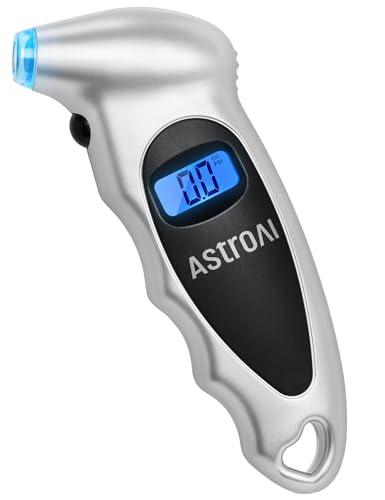
Accurate, Dependable Readings: Factory‑calibrated to ±1 PSI, so you can confidently match your vehicle’s recommended PSI (check the door jamb sticker). Ideal for monthly checks and road trips — consistent results every time, cold or warm.

PROCESS LEVEL ACCURACY: Each ETENWOLF’s digital tire pressure gauge is calibrated manually to ANSI B40.7 Grade 2A(plus-minus 1 PSI).Presta valve adapter not included, if used for bicycles, it must be purchased separately

PROCESS LEVEL ACCURACY: This heavy duty tire pressure gauge is calibrated manually to ANSI B40.1 Grade A (±1% of span)
Frequently Asked Questions
Is an 8-speed automatic better than a CVT?
It depends on what you value. An 8-speed automatic usually feels more direct because it has defined gear changes and torque-converter lock-up. A CVT or hybrid transaxle can be smoother and more efficient in city driving. For the RAV4, gas models use the 8-speed automatic, while Hybrid and Plug-in Hybrid models use Toyota’s hybrid transmission system.
What is Toyota Direct Shift 8-speed?
Toyota Direct Shift 8-speed is a modern 8-speed automatic transmission family developed to improve efficiency, response, and packaging. Toyota says the design uses lower-friction gear surfaces, optimized clutch friction material, a compact layout, and a wider lock-up range to improve fuel economy and driving feel.
How do you use an 8-speed automatic transmission in a RAV4?
For normal driving, shift into D and let the transmission manage gear changes. Use Eco Mode for relaxed fuel-saving driving, Normal Mode for daily use, Sport Mode for quicker response, and S mode when you want stronger engine braking or more control on grades. Avoid aggressive shifting when the transmission is cold or overheated.
Do all Toyota RAV4 models have the 8-speed automatic?
No. Gas-powered 2019–2025 RAV4 models use the Direct Shift 8-speed automatic. RAV4 Hybrid and Plug-in Hybrid models use Toyota’s hybrid transmission system instead. For 2026, Toyota lists the redesigned RAV4 with HEV and PHEV powertrains.
Does Sport Mode damage the RAV4 transmission?
Sport Mode is a normal factory drive mode and should not damage the transmission when used responsibly. It may hold gears longer and increase engine rpm, so fuel economy can drop. If you notice harsh shifting, warning lights, overheating, or unusual noises, stop relying on aggressive driving and have the vehicle inspected.
Conclusion
The gas RAV4’s Direct Shift 8-speed automatic blends efficiency and responsiveness by using more ratios, lower internal losses, broader lock-up control, and smart shift logic. It is not the same system used in RAV4 Hybrid or Plug-in Hybrid models, and that distinction is important when comparing fuel economy, maintenance, and driving feel. For the best ownership experience, use the drive modes intentionally, follow Toyota’s maintenance guidance, and address leaks or shifting changes early.
Sources
- Toyota Global: Direct Shift-8AT and Direct Shift-10AT — supports low-loss clutch plate, lock-up range, compact design, and efficiency claims.
- Toyota USA Newsroom: 2025 Toyota RAV4 — supports gas RAV4 grades, Direct Shift 8-speed ECT-i, drive modes, and hybrid/CVT distinction.
- FuelEconomy.gov: 2025 Toyota RAV4 — supports EPA fuel-economy rating for the 2025 gas RAV4 with Automatic (S8).
- Toyota Owners: 2025 RAV4 Automatic Transmission — supports S mode operation, shift ranges, and transmission protection behavior.
- Toyota USA Newsroom: 2026 Toyota RAV4 — supports the redesigned 2026 RAV4 HEV/PHEV powertrain lineup.