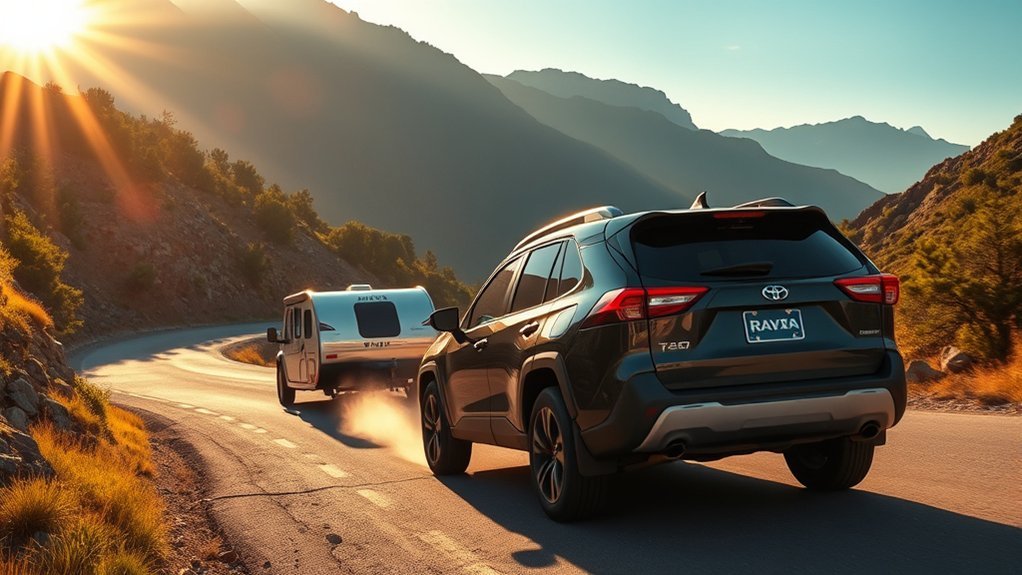
Towing with a Toyota RAV4 Hybrid in mountain heat can be safe, but only when you treat the published tow rating as the starting point—not the whole plan. Steep grades, thin air, high pavement temperatures, passenger weight, cargo, and trailer balance all reduce your real-world margin, so the safest setup is a light, well-balanced trailer and a patient driving style.
Quick Answer
For mountain towing in hot weather, keep a RAV4 Hybrid trailer well below the vehicle’s exact rated limit, verify the rating in your owner’s manual, load the trailer correctly, use trailer brakes when required, and slow down before steep climbs or descents. Watch temperature warnings, brake feel, tire pressure, and trailer sway.
Key Takeaways
- Check your exact RAV4 Hybrid model year, trim, drivetrain, hitch, GVWR, GCWR, GAWR, and Trailer Weight Rating before choosing a trailer.
- For older RAV4 Hybrid models rated at 1,750 lbs, a loaded trailer around 1,200–1,400 lbs gives a better safety margin in heat and mountains.
- Use the tongue-weight range in your owner’s manual or trailer documentation, then confirm it does not exceed the hitch, rear axle, or payload limits.
- Do not ride the brakes downhill. Use a lower drive range or manual mode where equipped, brake firmly in short intervals, and stop if the brakes smell hot or fade.
- Inspect tires, fluids, lights, chains, brakes, hitch hardware, and trailer wiring before the trip and again after mountain towing.
At a Glance
| Time Required | 30–60 minutes for pre-trip checks; longer if weighing the trailer at a scale |
| Difficulty | Moderate; mountain towing needs extra planning and slower driving |
| Tools Needed | Owner’s manual, tire pressure gauge, torque wrench, trailer scale or public scale, flashlight, gloves, coolant/oil check supplies, and an optional OBD temperature monitor |
| Cost | Usually free for checks; $20–$50 for a scale visit or gauge; more if you need trailer brakes, wiring, a hitch, or service |
Understand Your RAV4 Hybrid Towing Capacity and Limits
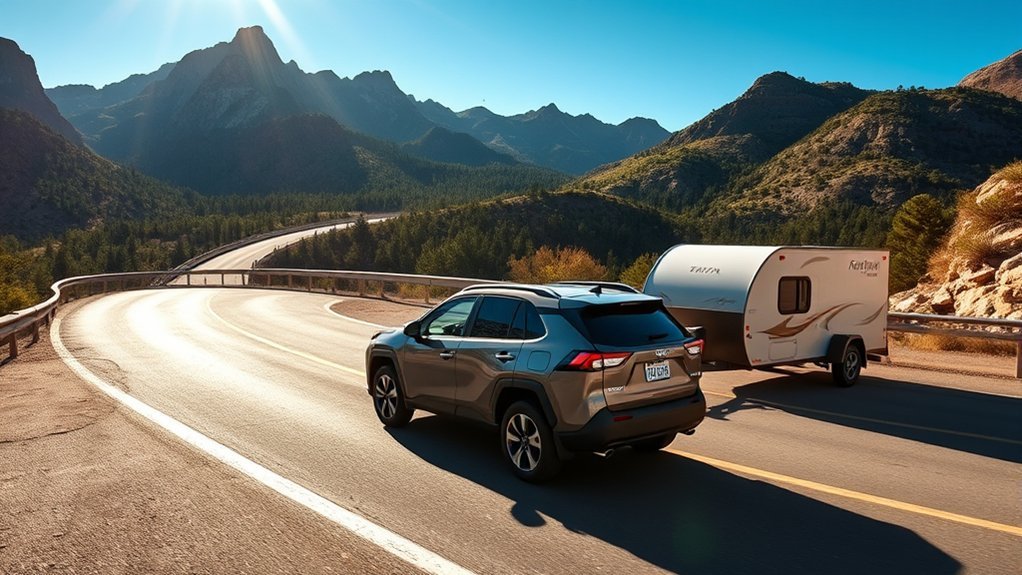
Start with your exact vehicle, not a general number from a forum or brochure. Toyota’s trailer-towing guidance says towing can affect handling, braking, durability, performance, and fuel economy, and the vehicle and trailer must not be overloaded. You can review the official Toyota RAV4 Hybrid trailer towing manual section before you hook up.
Many 2019–2025 RAV4 Hybrid models are rated up to 1,750 lbs when properly equipped. For the redesigned 2026 RAV4, Toyota lists 1,750 lbs for some FWD hybrid configurations and up to 3,500 lbs for some AWD configurations, so model year and drivetrain matter. Do not assume every RAV4 Hybrid has the same rating.
Warning: The tow rating is not the same as your safe mountain towing weight. Passengers, cargo, accessories, hitch weight, roof loads, and trailer tongue weight all count against vehicle limits. Never exceed the GVWR, GAWR, GCWR, hitch rating, tire rating, or trailer rating.
For hot-weather mountain trips, a practical target is to stay below the maximum rating. If your RAV4 Hybrid is rated at 1,750 lbs, a loaded trailer around 1,200–1,400 lbs gives more room for climbing, cooling, braking, and correcting mistakes. If your exact RAV4 is rated higher, you still need to weigh the trailer and confirm payload and axle limits.
Know the Weight Terms Before You Tow
- TWR: Trailer Weight Rating, the maximum gross trailer weight your RAV4 can tow when properly equipped.
- Gross trailer weight: The trailer plus everything loaded inside it, including water, propane, batteries, food, camping gear, and cargo.
- Tongue weight: The downward force the trailer puts on the hitch ball.
- GVWR: The maximum loaded weight of the RAV4 itself.
- GAWR: The maximum weight allowed on each axle.
- GCWR: The maximum combined weight of the loaded RAV4 and loaded trailer.
Do not rely on a trailer’s “dry weight.” Dry weight often excludes batteries, propane, water, dealer-installed options, food, luggage, and camping supplies. A small trailer can gain several hundred pounds once it is ready for a real trip.
Select Lightweight Trailers for Mountain Conditions
Selecting lightweight trailers for mountain conditions helps your RAV4 Hybrid handle steep climbs, tight curves, and long descents with less stress. For a RAV4 Hybrid rated at 1,750 lbs, look for trailers that stay comfortably under the limit after they are fully loaded.
- Micro campers: Often a good fit when the loaded weight stays around 1,200–1,400 lbs, depending on equipment and cargo.
- Teardrop trailers: Compact, aerodynamic, and easier to manage than tall boxy campers in crosswinds.
- Small utility trailers: Useful for gear, but the cargo must be tied down and loaded forward enough for stable tongue weight.
- Small boats or personal watercraft trailers: Weigh the full setup with fuel, gear, and trailer equipment before assuming it fits.
A good mountain towing setup is not just “under the max.” It is under the max, balanced correctly, equipped with working brakes and lights, and light enough that the RAV4 can climb and descend without strain.
[Products Worth Considering]

ECOGARD XA5786 is a premium engine air filter designed to help protect your engine by trapping dust, dirt, pollen, and road particles before they enter the intake system. It supports smooth airflow for consistent engine response and fuel efficiency, and it is intended for regular replacement to help maintain reliable performance and engine longevity.

This three-piece windshield wiper set is designed for compatible Toyota RAV4 and Highlander models to help deliver clear visibility in everyday driving. The natural rubber blades feature a graphite-treated surface for quiet, smooth wiping performance and reliable weather resistance. Installation is quick and tool-free, making it easy to replace worn blades on the front and rear of your vehicle.

This 3-piece windshield wiper set is designed for Toyota RAV4 models from 2019 to 2024 and also fits select Mazda 5 vehicles. It includes front and rear blades for a complete replacement, with Teflon-coated rubber for smooth, quiet wiping and reliable all-weather performance. The easy-install design helps match the original wiper arm structure for a simple, secure fit.
Set Tongue Weight Correctly
For many conventional trailers, industry guidance commonly uses about 10–15% of loaded trailer weight on the tongue, while some Toyota manuals and hitch labels may specify a narrower range or a fixed maximum. Use the number in your RAV4 owner’s manual, trailer manual, and hitch rating first. For example, a 1,400-lb loaded trailer at 10–15% would place about 140–210 lbs on the hitch, but that number is only safe if it stays within the RAV4’s payload, rear axle, tire, and hitch limits.
Too little tongue weight can cause sway. Too much tongue weight can overload the rear axle, lighten the front tires, reduce steering control, and make headlights point upward. The only reliable way to know is to measure it with a tongue-weight scale or a public scale.
Pro Tip: Weigh the trailer exactly as you will travel: full water if you carry water, propane installed, battery installed, bikes loaded, food packed, and camping gear in place. Then weigh again after major packing changes.
Prepare Your RAV4 for Hot Weather Towing
Hot weather makes every towing mistake more expensive. Cooling systems work harder, tires heat up faster, brakes can fade sooner, and the hybrid system may reduce power if temperatures climb. Prepare before the trip instead of trying to solve problems halfway up a grade.
[Products Worth Considering]
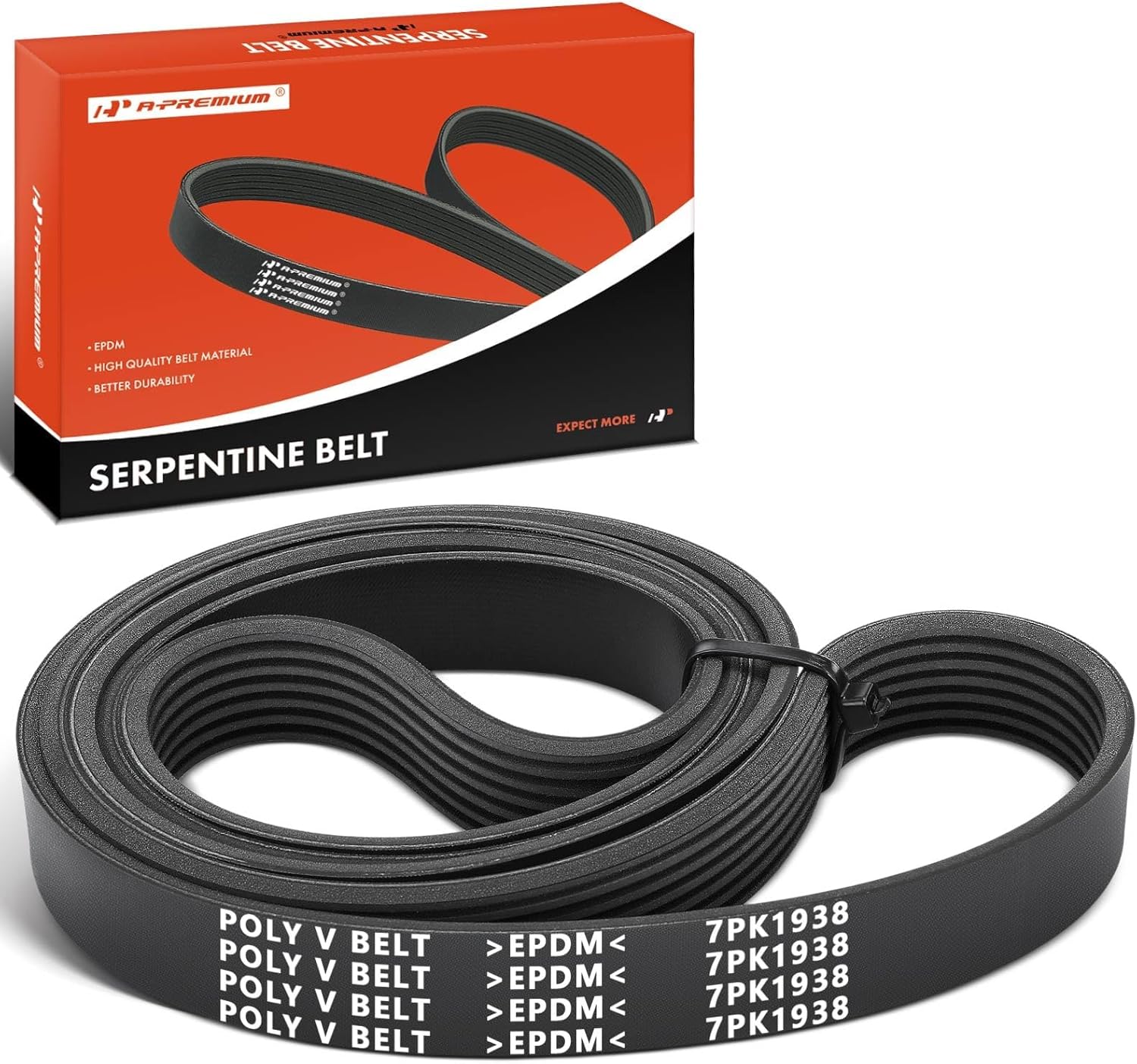
This A-Premium serpentine belt is designed to deliver dependable drive performance for compatible Toyota and Scion vehicles with exact-fit sizing for smooth operation. Built with premium EPDM and polyester cord construction, it helps resist cracking, reduce noise, and maintain stable tension in demanding engine conditions. It is a practical replacement choice for restoring reliable accessory drive performance and long-term confidence.

This Bosch Workshop Engine Air Filter is designed to help protect compatible Toyota RAV4 engines from harmful airborne particles while supporting strong performance and efficiency. It uses high-pleat construction, 98% filtration efficiency, and high-velocity cellulose media to reduce air resistance and help maintain clean airflow. The polyurethane foam seal adds reliable sealing against water and heat intrusion for dependable engine protection.
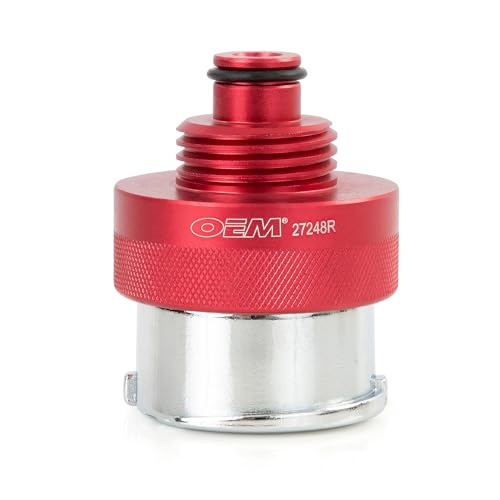
VEHICLE-SPECIFIC ADAPTER –for Scion & Toyota RAV4 – Cooling System
Monitor Fluid Levels and Cooling System Condition
Prepare your RAV4 for hot weather towing by checking the fluids and cooling system while the vehicle is cold and parked on level ground. Pay attention to:
- Engine oil: Confirm the level is correct and that the oil change interval is current.
- Engine coolant and hybrid cooling components: Check the visible reservoir levels when cold. Never remove a hot radiator or coolant cap.
- Transmission or hybrid transaxle fluid: Many RAV4 Hybrid models do not have a simple owner dipstick. Look for leaks and follow Toyota’s service schedule; have a dealer or qualified hybrid technician inspect it if needed.
- Brake fluid: Make sure the level is correct and the fluid is not overdue for service.
- Windshield washer fluid: Mountain roads often mean dust, bugs, glare, and sudden weather changes.
If your RAV4 has warning messages, low coolant, fluid leaks, worn belts or hoses, weak brakes, or overdue maintenance, fix those issues before towing. Towing magnifies small problems.
Use Proper Cooling Techniques
To keep your RAV4 Hybrid cooler while towing in heat, reduce load before the vehicle asks you to. Drive earlier in the morning or later in the evening, slow down on long grades, and avoid repeated full-throttle climbs. If you see a temperature warning, smell coolant, notice power reduction, or see any warning light, pull over safely, let the vehicle cool, and do not continue until you know what is wrong.
On steep climbs, use the lower drive range, manual mode, or downhill/engine-braking setting your specific model provides. Because RAV4 Hybrids use an electronically controlled hybrid transaxle rather than a traditional truck transmission, do not force a technique that your owner’s manual does not support. The goal is simple: keep the vehicle from hunting, overheating, or overworking the brakes.
Note: Running the air conditioner can add load, but driver alertness matters too. If the cabin is dangerously hot, use A/C. If the vehicle begins to overheat or warn you, reduce speed, reduce load, and stop safely rather than trying to “push through.”
Monitor Your RAV4 Hybrid’s Performance While Towing
Monitoring your RAV4 Hybrid’s performance while towing is vital for a safe and efficient journey. You do not need to stare at gauges, but you should react early when the vehicle feels strained.
- Watch for temperature warnings: Engine, coolant, hybrid system, and transmission-related warnings should be treated seriously.
- Listen for brake or trailer noises: Grinding, squealing, clunks, or a dragging smell mean you should stop and inspect.
- Notice power changes: Reduced power on a hot climb can mean the vehicle is protecting itself.
- Track fuel economy: Big fuel-economy drops are normal while towing, but sudden changes can point to tire pressure, brake drag, wind, or load problems.
- Check mirrors often: Watch trailer tracking, tire behavior, cargo movement, and sway.
Do not chase a fixed RPM target. Hybrid powertrains may raise engine speed under load, and some RAV4 models show a power meter rather than a traditional tachometer. Smooth throttle, moderate speed, and early cooling breaks matter more than holding one RPM number.
Plan Your Route for Safety
Planning your route for safety is essential when towing with your RAV4 Hybrid, especially in challenging terrain. Before you leave, check the forecast through the National Weather Service, review road closures, and look for long grades, high passes, construction zones, and narrow roads.
Use route planning to reduce heat and braking stress. A slightly longer route with wider shoulders, lower grades, and more pullouts is often safer than the shortest mountain route. Plan fuel stops before remote areas, and identify places where you can pull over to let the engine, hybrid system, tires, and brakes cool.
Avoid the Hardest Conditions When Possible
- Avoid the hottest part of the day when crossing long grades.
- Avoid routes with repeated steep climbs if there is a safer highway option.
- Avoid high-wind travel with tall or boxy trailers.
- Avoid rushing downhill to “make time.” Speed builds heat and reduces reaction time.
- Avoid driving after dark on unfamiliar mountain roads unless necessary.
Mountain driving also changes stopping distance. Leave more space than normal, slow before curves, and let faster traffic pass at safe turnouts. Your RAV4 may feel stable, but the trailer still adds weight, length, and momentum.
Apply Smart Towing Techniques on Steep Roads
Maneuvering steep roads while towing can be intimidating, but the right habits keep the trip controlled. Focus on speed, braking, and smooth inputs.
- Climb slowly: Build speed before the grade only when legal and safe, then hold a steady throttle without forcing full power.
- Use the correct drive range: Select the lower range, manual mode, or engine-braking setting your RAV4 provides before the road gets steep.
- Descend before you accelerate: Start downhill slowly. It is easier to keep speed down than to recover after the trailer pushes you too fast.
- Do not ride the brakes: Use short, firm braking to reduce speed, then release so the brakes can cool.
- Pull over if brakes fade: A soft pedal, burning smell, smoke, or vibration means you need a safe stop.
- Correct sway calmly: Hold the steering wheel straight, ease off the accelerator, and do not make sharp steering moves.
Warning: If the trailer begins to sway, do not try to “steer it out” with quick corrections. Sudden steering can make sway worse. Slow down smoothly, keep the wheel straight, and stop to inspect loading, tire pressure, hitch setup, and speed.
Don’t Skip Maintenance Before and After Your Trip
Before you hit the road, verifying your RAV4 is in prime shape can save you from potential headaches down the line. A thorough pre-trip checklist is vital, especially before hot-weather mountain towing.
Here’s a quick checklist to streamline your maintenance:
| Pre-Trip Checks | Post-Trip Inspections | Notes |
|---|---|---|
| Oil level and service interval | Check for leaks under the RAV4 | Inspect after the vehicle cools |
| Coolant reservoir levels | Recheck coolant level when cold | Never open a hot coolant cap |
| Tire pressure on RAV4 and trailer | Look for uneven wear or sidewall damage | Set pressure when tires are cold |
| Trailer lights, wiring, and safety chains | Inspect plugs, chains, and coupler wear | Cross safety chains under the coupler |
| Hitch ball, receiver, pin, clip, and coupler | Check for loose hardware or cracked welds | Use the correct ball size and rating |
| Trailer brakes if equipped or required | Check brake feel and heat signs | Service before the next trip if fading occurred |
| Loaded trailer weight and tongue weight | Note what worked and what felt unstable | Reweigh after major cargo changes |
After your trip, a post-trip inspection is equally important. Identify any wear, leaks, tire damage, brake heat, or loose towing equipment that may have appeared during the climb or descent. Prioritizing maintenance keeps your RAV4 reliable for future adventures.
When to Stop Towing and Get Help
Some warning signs are not worth testing. Stop in a safe place and get professional help if you notice any of the following:
- Engine, hybrid system, brake, coolant, or transmission warning messages
- Coolant smell, steam, visible leaks, or repeated overheating
- Brake pedal fade, smoke, strong burning smell, or pulling while braking
- Trailer sway that returns after you slow down
- Uneven trailer tire heat, bulges, cracks, or repeated pressure loss
- Hitch, coupler, chain, wiring, or trailer-frame damage
Getting off the road early is cheaper than damaging the hybrid system, brakes, tires, or trailer. It also protects everyone else sharing the mountain road.
Frequently Asked Questions
Is the Toyota RAV4 Hybrid good for mountain driving?
Yes, the RAV4 Hybrid can be a good mountain vehicle because its hybrid system and available all-wheel drive help with traction and everyday climbing. Towing is different, though. AWD does not increase braking ability or automatically increase your tow rating, so you still need a light trailer, correct loading, and slower speeds.
How do you keep a RAV4 Hybrid engine cool while towing?
Keep the trailer light, drive during cooler hours, use moderate speed, avoid repeated full-throttle climbs, make sure coolant and oil levels are correct, and stop if any temperature warning appears. Do not open a hot cooling system. Let the vehicle cool safely before inspecting anything.
What trailer weight is safest for a RAV4 Hybrid in mountains?
For a RAV4 Hybrid rated at 1,750 lbs, a loaded trailer around 1,200–1,400 lbs is a more comfortable mountain target than towing at the maximum. If your exact RAV4 is rated higher, verify the rating in the owner’s manual and still check payload, axle ratings, hitch rating, tire rating, brakes, and GCWR.
Do I need trailer brakes with a RAV4 Hybrid?
Use trailer brakes whenever your owner’s manual, state law, or trailer setup requires them. Toyota’s towing guidance says trailer service brakes are required when gross trailer weight is over the vehicle’s unbraked trailer weight rating. For 2026 RAV4 models, Toyota also notes sway control requirements for heavier trailers, so confirm the exact rule for your model year.
Can a RAV4 Hybrid tow a teardrop camper?
Often, yes, but only if the camper’s loaded weight, tongue weight, hitch setup, brakes, and cargo stay within your RAV4’s exact limits. Many teardrop campers look light when empty but become much heavier after adding water, propane, batteries, food, and gear.
Conclusion
In the grand adventure of towing with your RAV4 Hybrid, knowledge is your compass. Confirm your exact tow rating, choose a lightweight trailer, measure tongue weight, prepare for heat, and drive mountain grades with patience. Keep a close eye on your vehicle’s warnings, braking feel, tires, and trailer behavior, then inspect everything again after the trip. With the right setup, your towing experience can feel as enjoyable as the scenic mountain view ahead.
Sources
- Toyota Owners: 2026 RAV4 Hybrid Trailer Towing — trailer towing cautions, TWR, GCWR, brakes, sway control, and weight-limit definitions
- Toyota 2026 RAV4 Sales Consultant Guide — 2026 RAV4 powertrain and towing-capacity details by configuration
- Toyota USA Newsroom: 2026 RAV4 Arrives This Winter — current RAV4 Hybrid and Plug-in Hybrid lineup context
- NHTSA: Towing a Trailer — towing safety basics, loading, weight distribution, pre-departure checks, and driving tips
- National Weather Service — official weather forecasts for heat, wind, storms, and mountain travel planning