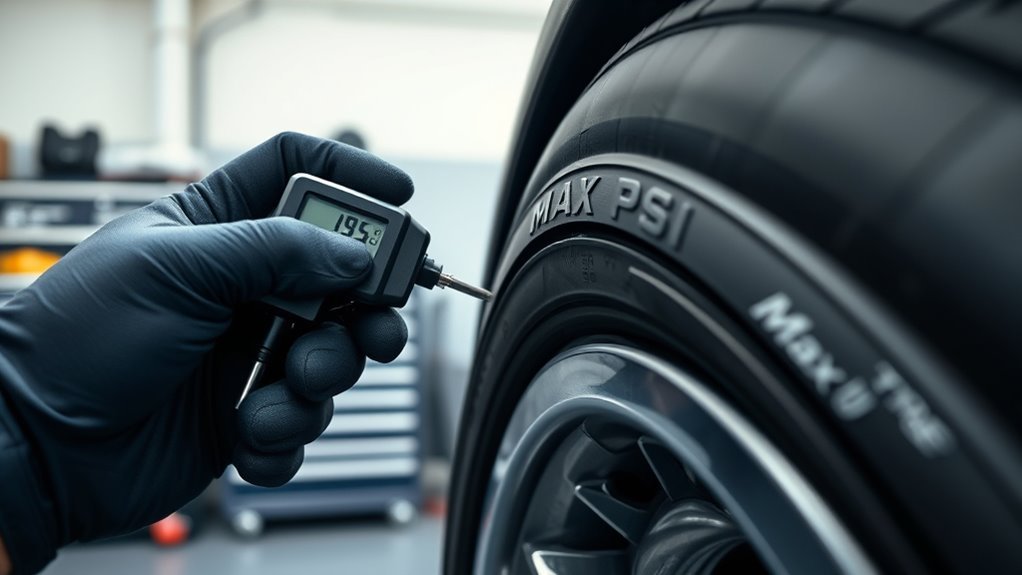
Max PSI indicates the highest cold tire pressure your tires can handle safely. It’s not your ideal driving pressure, which usually falls between 32 to 36 PSI. Regularly inflating to max PSI can lead to decreased traction, longer braking distances, and a rough ride. On the flip side, underinflation increases the risk of blowouts and reduces fuel efficiency. Understanding how to balance tire pressure is key for safety and performance, and there’s more to contemplate beyond just max PSI.
Understanding Max PSI: What It Means for Your Vehicle
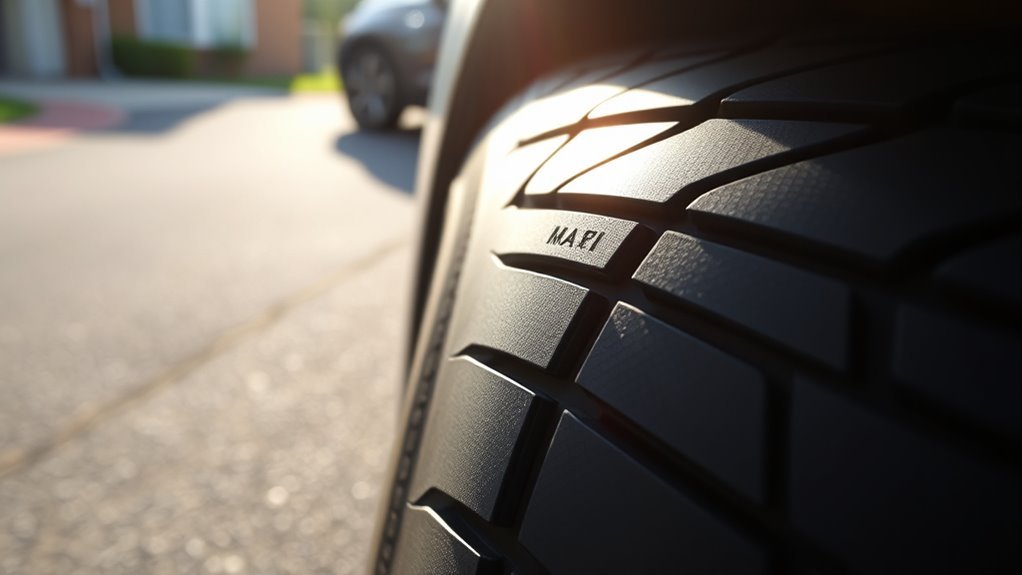
Have you ever wondered what Max PSI really means for your vehicle? Max PSI, found on your tire sidewall, indicates the maximum cold tire pressure your tire can handle under load. It’s important to recognize that this isn’t your recommended pressure for daily driving; that typically ranges from 32 to 36 PSI. Sticking to the recommended pressure enhances handling, ensuring safe travel while prolonging tire longevity. When ambient temperature rises, tire pressure increases by about 2% for every 10°F, so keep an eye on those readings. Exceeding Max PSI can impair handling and elevate the risk of blowouts by reducing your tire’s contact patch with the road. Understanding these distinctions is key to maintaining performance and safety.
The Downsides of Regularly Inflating Tires to Max PSI
While it might seem beneficial to inflate your tires to Max PSI for ideal performance, regularly doing so can lead to several significant downsides. Overinflation decreases your tires’ contact patch with the road, which reduces traction and increases braking distances, especially in wet conditions. This can jeopardize safety during critical moments. Furthermore, consistently inflating to Max PSI heightens the risk of tire blowouts and leads to uneven tread wear, ultimately shortening tire longevity. You’ll also experience a bumpier ride, compromising comfort for you and your passengers. Additionally, impaired vehicle handling can make maneuvering sharp turns challenging. Instead, aim for the recommended tire pressure range of 32 to 36 PSI to enhance safety, fuel efficiency, and overall driving experience.
Dangers of Driving With Underinflated Tires
Driving with underinflated tires poses serious risks that can affect your safety and wallet. When your tires are below the recommended pressure, they generate excessive heat, increasing the likelihood of tire blowouts. Fuel efficiency can drop by 3% for every 1 PSI under, leading to higher fuel costs over time. You may also experience compromised handling and longer braking distances, heightening the risk of accidents, especially in poor weather. Tire pressure monitoring systems help by alerting you when pressure falls below 25% of the recommended level, but regular checks are vital. Additionally, underinflated tires cause uneven tread wear, greatly shortening their lifespan and resulting in costly replacements. Prioritize safety by maintaining proper tire pressure.
How Tire Pressure Affects Safety and Performance

Maintaining the correct tire pressure is essential for ensuring your vehicle’s safety and performance on the road. Here’s how it impacts your driving experience:
Maintaining proper tire pressure is crucial for your vehicle’s safety, performance, and overall driving experience.
- Safety: Under-inflated tires increase stopping distances and reduce traction, while over-inflation can lead to sliding, especially in wet conditions.
- Performance: Proper tire pressure enhances handling and stability, providing a smoother ride.
- Fuel Efficiency: Under-inflated tires raise rolling resistance, resulting in higher fuel consumption and costs.
- Tire Longevity: Regularly checking tire pressure with a TPMS helps keep your tires within the manufacturer’s recommended range, extending their lifespan.
When Should You Use Max PSI?
When should you consider using max PSI for your tires? You might find it beneficial when carrying heavy loads, as increasing tire pressure to near max PSI can enhance handling and stability. On highways, this slight increase helps reduce tire deformation, boosting tire performance and fuel efficiency. In cold weather, adjusting closer to max PSI can maintain ideal traction on slippery surfaces. However, it’s vital not to exceed the manufacturer’s recommended tire pressure, even in these situations, to guarantee safe travel and avoid performance issues. Regularly using max PSI isn’t advisable; sticking to the manufacturer’s recommendations for everyday driving guarantees your tires perform safely and effectively.
Frequently Asked Questions
When a Tire Says Max PSI, What Does That Mean?
When a tire says max PSI, it indicates the highest safe pressure for load capacity. Proper inflation enhances driving performance, fuel efficiency, and tire lifespan while minimizing safety concerns like uneven tire wear and temperature effects.
Is 40 PSI Too Much Air Pressure in Tires?
Yes, 40 PSI’s too high for most vehicles. Over-inflation compromises safety, diminishes driving performance, and accelerates tire wear. Check tire pressure regularly, especially when air temperature changes, to guarantee maximum fuel efficiency and handling.
What Is the 3% Tire Rule?
The 3% Tire Rule suggests monitoring tire pressure closely, as temperature effects can alter inflation levels. Regular adjustments guarantee safe driving, peak performance, reduced tire wear, and longevity, enhancing your overall tire maintenance strategy.
What Is the 5 PSI Rule?
Think of your tires as a pressure balloon. The 5 PSI rule guarantees ideal inflation, enhancing tire performance, safety standards, and fuel efficiency. Regularly checking helps maintain pressure, combat temperature effects, and manage wear patterns effectively.
Conclusion
In the world of tires, max PSI is like a double-edged sword. While it can offer peak performance, pumping your tires to the limit can lead to a bouncy ride, risking blowouts on rough roads. Picture yourself cruising smoothly, knowing your tires are perfectly inflated—not too soft, not too hard. Striking that balance not only enhances your vehicle’s safety but also boosts fuel efficiency. So, keep an eye on your tire pressure, and enjoy the journey ahead!