Toyota Camry Winter Storage Checklist
Last updated: September 16, 2026. Hybrid-storage guidance, model-year cautions, internal links, and source references were rechecked.
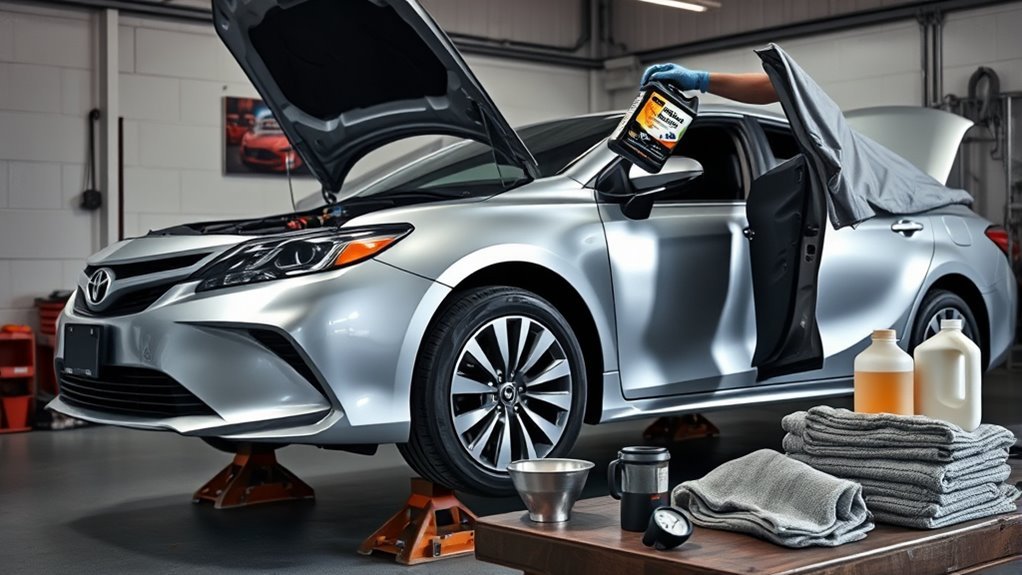
Toyota Camry winter storage should protect the fuel system, 12-volt battery, tires, brakes, paint, interior, and, on Hybrid models, the high-voltage traction battery. For storage lasting about a month or longer, clean and dry the car, stabilize the fuel, protect the 12-volt battery, set the tires to the door-jamb pressure, control moisture and pests, and keep a restart checklist in the vehicle. If you plan to keep driving instead of storing the car, use the Toyota Camry winter-driving prep checklist.
Quick Answer
To winterize a Toyota Camry for storage, use a dry, secure, ventilated location; wash and fully dry the car; fill the fuel tank and add stabilizer according to its label; check required fluids; protect the 12-volt battery; set cold tire pressure from the door-jamb placard; control moisture and pests; and keep a restart checklist in the car. For a Camry Hybrid parked long term, Toyota says to drive it at least once every few months for at least 30 minutes or 10 miles (16 km).
Key Takeaways
- Fresh fuel plus a stabilizer used according to its label helps protect gasoline during seasonal storage.
- A compatible smart battery maintainer is usually the simplest 12-volt battery solution when secure power is available; disconnect the battery only when the model-specific procedure permits it.
- Set tires to the cold pressure on the driver’s door-jamb placard and use wheel chocks when appropriate.
- Do not apply undercoating over rust, exhaust parts, brake parts, sensors, drain holes, dirt, or wet metal.
- For a Camry Hybrid stored for a long period, Toyota says to drive the vehicle at least once every few months for at least 30 minutes or 10 miles (16 km).
At a Glance
| Time Required | Varies; allow additional drying time after exterior washing or interior cleaning |
| Difficulty | Easy to moderate; use a technician for lifting, fluid service, or battery work if unsure |
| Tools Needed | Tire gauge, air compressor, fuel stabilizer, compatible battery maintainer, wheel chocks, microfiber towels, breathable cover, and optional tire cradles |
| Model-Year Note | U.S.-market 2025-and-newer Camrys are hybrid-only; older Camrys may be gasoline or hybrid, so confirm procedures in the manual for the exact model year |
Winterize Your Camry: Immediate Checklist Before You Start
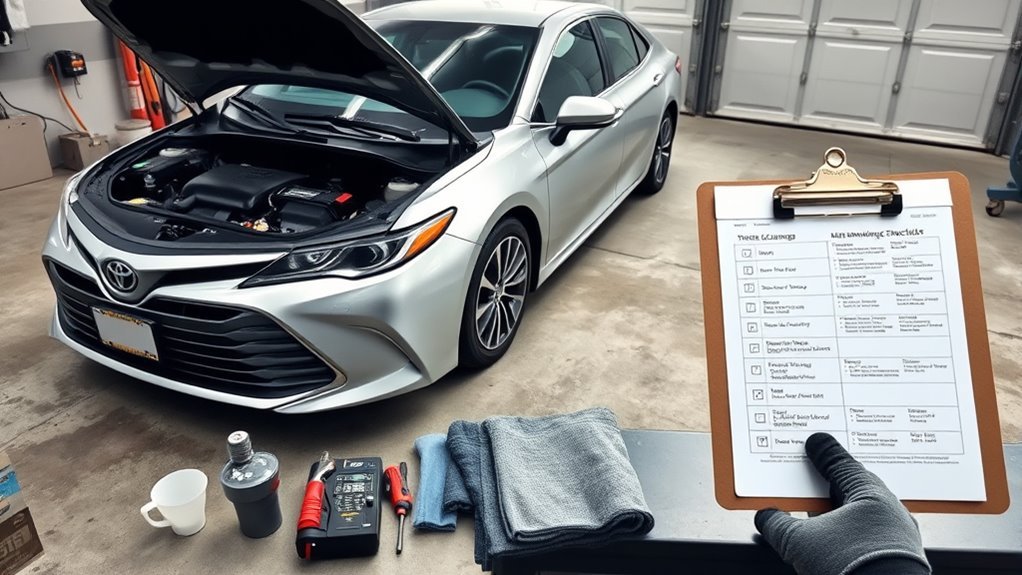
Before you begin winter storage, choose a location that is dry, secure, and ventilated. A garage is usually the simplest option, but a covered, well-drained parking space with a fitted, breathable automotive cover is better than leaving the Camry exposed to snow, rain, salt, and winter grime.
Use this pre-check before you touch fluids, tires, or the battery:
- Remove trash, food, receipts, gym bags, and anything that can trap moisture or attract pests.
- Check for active leaks under the engine, cooling system, brake system, transmission area, and fuel tank.
- Confirm the Toyota Camry tire pressure on the driver’s door-jamb placard.
- Review your owner’s manual or Toyota’s Camry owner manual library for your exact model year.
- Decide whether this is roughly one month of storage or a full seasonal layup. Longer storage makes battery maintenance, fuel protection, moisture control, pest checks, and tire care more important.
Keep a written checklist in the glove box that records what you actually did: fuel stabilizer added, battery maintained or disconnected, tire pressure set, pest covers installed, and any special parking-brake procedure used. That note prevents missed steps when the Camry returns to service.
Warning: Never run a gasoline or hybrid Camry in a closed garage. If the vehicle needs to run or be driven, keep the exhaust completely clear and move the car outdoors whenever possible.
Fluids & Engine: Oil, Coolant, Fuel Stabilizer for Storage
Start with fresh gasoline. Fill the fuel tank, add a fuel stabilizer according to the product label, and follow the stabilizer manufacturer’s instructions for circulating treated fuel through the system. Do not invent a fixed idling time or mileage when the product specifies its own procedure.
Next, check the engine oil. If the oil change is due or nearly due, service the oil and filter before storage instead of carrying overdue maintenance through the winter. Use the oil viscosity and specification listed for your exact Camry model year.
Check coolant level only when the engine is cold. Use the coolant specification listed by Toyota for the vehicle rather than choosing coolant only by color. If the coolant is low, contaminated, rusty, or of unknown type, have the cooling system inspected instead of repeatedly topping it off.
A reliable storage setup is simple: correct fluids, stabilized fuel, a protected 12-volt battery, dry interior, correctly inflated tires, no active leaks, and a written restart checklist.
- Brake fluid: Check the reservoir level. If it is unexpectedly low, inspect for worn brake components or a leak rather than treating a top-off as the repair.
- Transmission fluid: Do not drain it simply because the car is being stored. Follow the maintenance schedule for the exact model year.
- Washer fluid: Use washer fluid rated for the temperatures the vehicle will experience.
Note: A Camry Hybrid can start and stop its gasoline engine automatically while the READY indicator is on. Treat a READY vehicle as capable of moving and producing exhaust even when the engine is momentarily silent.
[Products Worth Considering]

This smart automatic battery charger and maintainer helps keep automotive batteries charged and ready by delivering a full charge before switching to float mode for long-term maintenance. It supports 6V and 12V batteries with broad compatibility for lead-acid, AGM, gel, and lithium types, while built-in safety features like reverse polarity detection and spark-proof connection help ensure reliable use. Compact construction, included connection cables, and indicator lights make it a convenient choice for cars, SUVs, trucks, and storage maintenance.

This coolant electric water pump is designed as a replacement for select Toyota vehicles, helping maintain proper engine cooling performance and reliable temperature control. Built to OE specifications, it offers fitment support for compatible Avalon, Camry, and RAV4 models with 2.5L L4 engines. It also includes cross-reference part numbers for easier matching and comes with after-sales support for covered defects.

The NOCO GENIUS5 is an all-in-one battery charging and maintenance solution for 6V and 12V lead-acid and lithium batteries. It features temperature compensation, dead-battery recovery, desulfation, and safe long-term maintenance to help extend battery life and performance. Compact and versatile, it works with a wide range of vehicles and comes with mounting accessories and a warranty.
Battery Care: Disconnect, Store, or Use a Trickle Charger
The 12-volt battery is one of the components most likely to cause trouble after a long period of inactivity. If the battery is already weak, slow to power the car, damaged, or repeatedly discharged, test it before storage instead of expecting storage preparation to correct the problem.
| Action | Best For | What to Know |
|---|---|---|
| Use a compatible smart battery maintainer | Secure storage with reliable power | Maintains the 12-volt battery without repeated manual charging when the maintainer matches the battery type |
| Disconnect the negative terminal | Models whose manual permits battery disconnection | Reduces parasitic drain but may disable security, remote functions, memory settings, or require system initialization |
| Remove the 12-volt battery | Only when the model-specific procedure calls for removal or a qualified technician recommends it | Do not improvise removal on a Hybrid or unfamiliar battery installation |
| Inspect battery condition during storage | Any storage plan | Helps catch discharge, corrosion, swelling, leakage, or maintainer problems before restart day |
If your Camry’s manual permits disconnecting the 12-volt battery, turn the vehicle completely off, keep the smart key away from the car, and follow the model-specific terminal procedure. After reconnection, some settings or electronic systems may require initialization.
Use a smart maintainer designed for the installed battery chemistry. Do not assume every Camry uses the same battery type, location, vent arrangement, or charging procedure. For additional diagnosis, see the Toyota Camry battery-drain guide.
[Products Worth Considering]

The OEMTOOLS coolant vacuum refill kit helps quickly refill a vehicle’s cooling system while removing trapped air that can lead to overheating and engine damage. It also performs vacuum leak tests to help confirm system integrity and reduce the chance of repeat repairs. With multiple bushings, adapters, and a tapered cone seal, it is designed for flexible use on many radiator and coolant bottle necks.
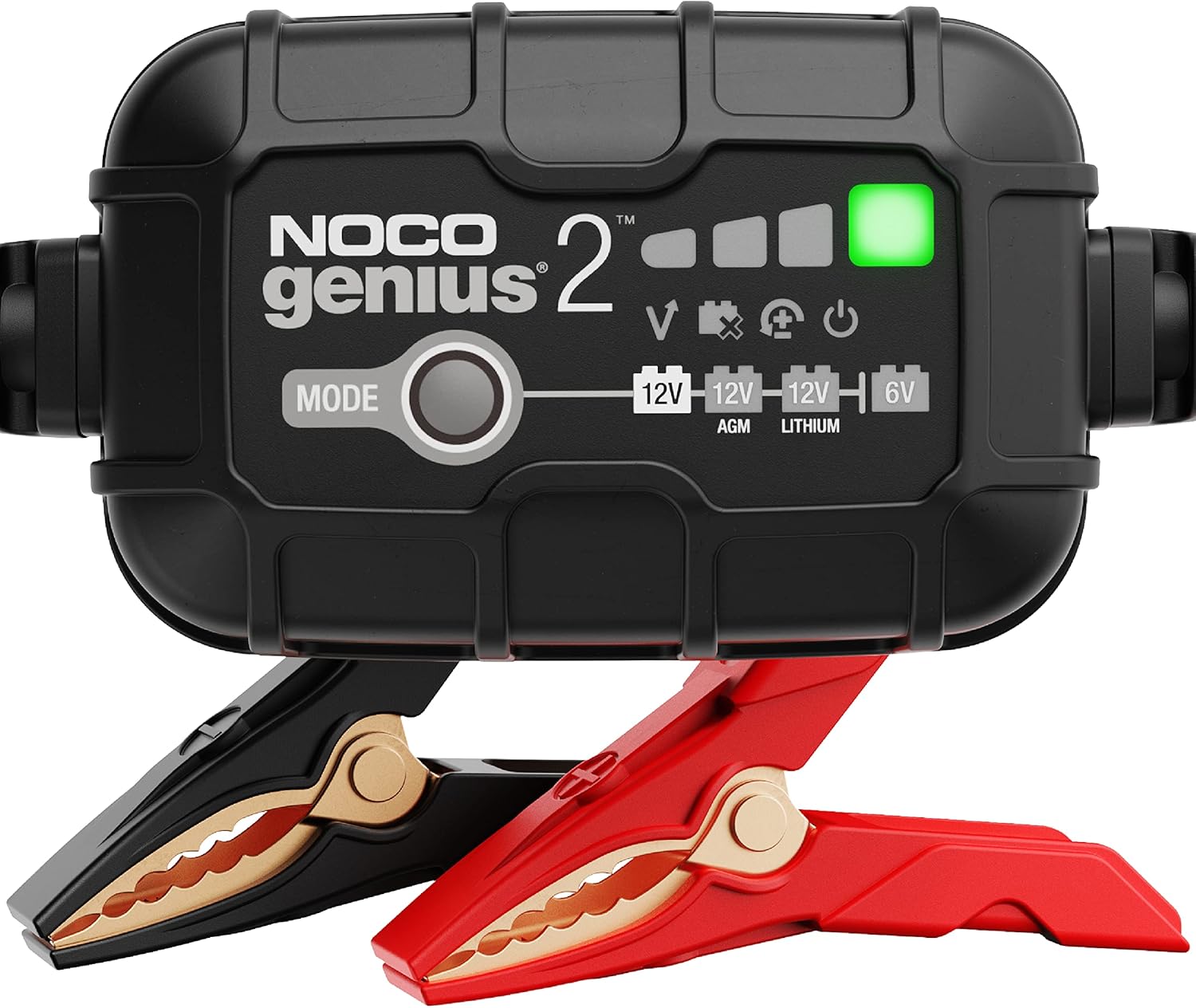
The NOCO GENIUS2 is a compact, all-in-one smart charger that automatically charges, maintains, and restores 6V and 12V lead-acid and lithium batteries. It features temperature compensation, overcharge protection, pulse desulfation, and Force Mode for reviving deeply discharged batteries, making it ideal for long-term battery care across many vehicle types. Designed for safe indefinite connection, it helps extend battery life and keep batteries ready to go.

The NOCO GENIUS1 is an all-in-one smart charger, maintainer, trickle charger, and desulfator designed to help restore and keep batteries ready for use. It supports 6V and 12V lead-acid and lithium batteries, uses temperature compensation for safer charging, and can recover deeply discharged batteries with advanced charging modes. Compact and easy to leave connected, it is built for cars, motorcycles, ATVs, boats, and other vehicles that need reliable battery care.
Hybrid Camry Storage: What Changes?
A Camry Hybrid has two separate battery systems: a 12-volt auxiliary battery and a high-voltage hybrid traction battery. The 12-volt battery still needs storage protection, but the traction battery follows Toyota’s Hybrid-specific guidance. In the U.S., the 2025-and-newer Camry lineup is hybrid-only, so this section applies to every U.S.-market Camry from the 2025 model year onward.
Toyota’s current Camry Hybrid manual says that a vehicle left parked for a long time should be driven at least once every few months for at least 30 minutes or 10 miles (16 km). The traction battery slowly discharges while the car sits. If it becomes fully discharged and the hybrid system cannot start, Toyota says to contact a dealer. Do not substitute a brief stationary startup for the driving instruction in the manual.
Pro Tip: Do not follow generic EV storage advice for a regular Camry Hybrid. A non-plug-in Camry Hybrid does not provide the same user-controlled storage state-of-charge settings used by many plug-in or battery-electric vehicles.
Tires & Suspension: Inflate, Jack Options, Prevent Flat Spots
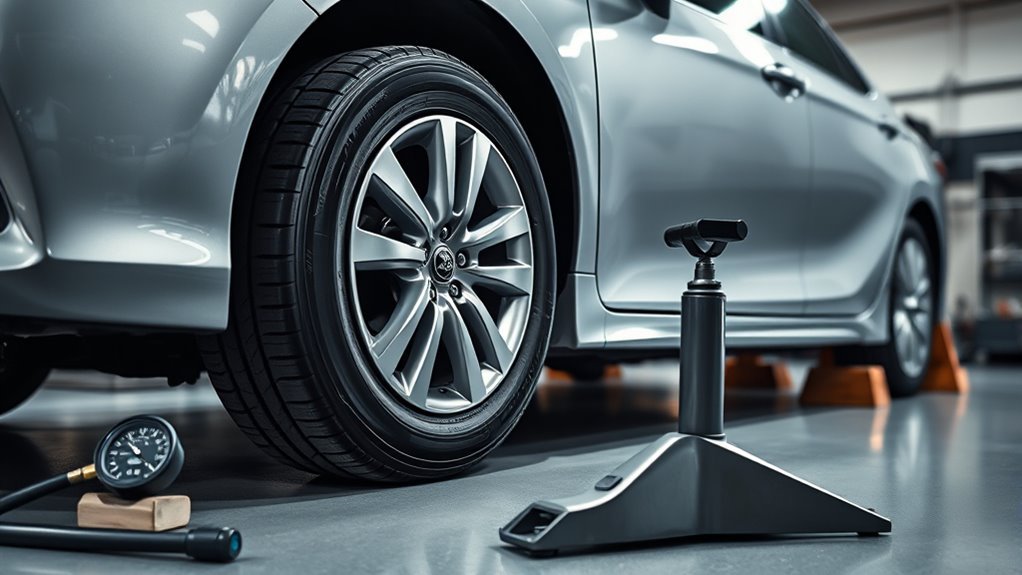
You can leave a Camry on its tires during normal seasonal storage, but do not leave the tires underinflated. Inflate them to the manufacturer-recommended cold pressure on the driver’s door-jamb placard, not the maximum pressure printed on the tire sidewall. Recheck pressure before the car returns to normal driving.
For longer storage, reduce flat-spot risk with sensible, model-safe steps:
- Park on clean, dry pavement and consider tire cradles, rubber mats, plywood, or firm foam pads designed to spread the contact area.
- If the vehicle can be safely driven during storage, doing so moves the tire contact patch and also satisfies Toyota’s periodic-driving guidance for a long-stored Camry Hybrid.
- Do not place the Camry on jack stands solely for storage unless you know the exact Toyota lift and support points and can support the vehicle safely.
- Keep the transmission in Park and use properly positioned wheel chocks when the parking-brake procedure for your model permits it.
Many long-term storage guides advise leaving the parking brake released to reduce the possibility of sticking or freezing, especially in cold or damp conditions. However, Camry parking-brake hardware and electronic automatic modes vary by model year. Check the exact owner’s manual before changing the normal parking procedure. If your manual permits leaving the parking brake released, secure the vehicle in Park on level ground and use wheel chocks. Never rely on a jack alone to support a vehicle.
[Products Worth Considering]

The NOCO GENIUS10 is an all-in-one smart charger, maintainer, trickle charger, and desulfator designed to keep 6V and 12V batteries performing at their best. It supports lead-acid and lithium batteries, charges deeply discharged batteries, and uses temperature compensation for safer, more accurate charging in changing conditions. Compact and versatile, it is ideal for a wide range of vehicles and long-term battery maintenance.
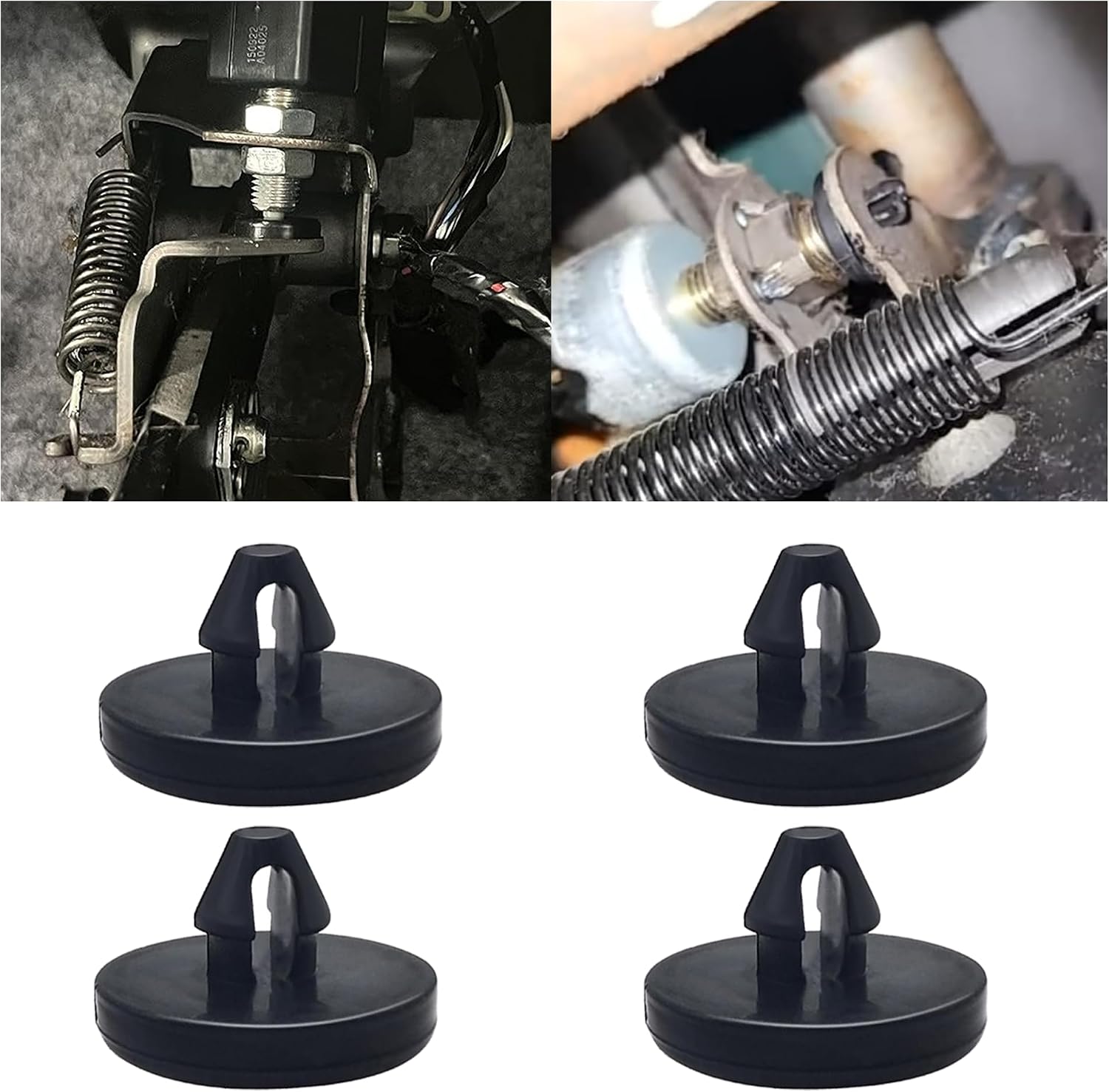
This brake pedal stop pad set is designed as an OEM replacement for compatible Toyota, Lexus, and Scion models, helping restore proper brake light switch function when the brake light stays on. Made from durable nylon, these compact stoppers are built for reliable long-term use and quick, tool-free installation. The set includes multiple pieces for convenient replacement and sharing.

Armor All Extreme Wheel and Tire Cleaner is a powerful spray designed to cut through stubborn dirt, grease, tar, and brake dust on wheels and tires. It is safe for use on factory and aftermarket finishes, including alloy, steel, chrome, and plastic wheel trims, while its fast-acting formula works in just seconds. The deep-cleansing action helps reach hard-to-clean areas and leaves wheels looking clean and shiny.
Wash, Undercoat, and Cover: Exterior and Interior Protection
Salt, mud, bug residue, bird droppings, and road film can damage paint or accelerate corrosion while a Camry sits. Wash the exterior thoroughly, including wheel wells, rocker panels, lower door edges, and areas underneath where winter grime collects. Dry the car fully before covering it. For a deeper corrosion check, see the Camry undercarriage rust-protection guide.
Be careful with undercoating. A rubberized coating can trap moisture if sprayed over rust, damp metal, dirt, seams, brake parts, exhaust parts, sensors, or drain holes. If the underside already has significant corrosion, inspect and prepare the metal correctly instead of sealing the problem beneath a thick coating.
Inside, vacuum the cabin, wipe hard surfaces, clean glass, remove perishables, and dry carpets and mats completely. Steam-cleaning can help with grime, but the cabin must be fully dry before the vehicle is closed and covered for storage.
Use a breathable, fitted automotive cover. Indoors, a soft breathable cover can keep dust off the paint. Outdoors, use a weather-resistant cover designed to release trapped moisture. Avoid a loose plastic tarp that can hold condensation or rub against the paint in wind.
Storage Setup: Pests, Security, and Monthly Checks
Set the Camry in a cool, dry, well-ventilated space. Keep the floor under the car clean so new leaks are easy to identify. In a damp storage area, manage humidity before closing the vehicle for the season.
Rodents can damage wiring, insulation, and air-intake areas. Reduce the risk before storage:
- Remove food, wrappers, pet food, bird seed, cardboard, and other nesting or food sources from the storage area.
- If you use removable pest covers over external exhaust or intake openings, keep them visible and easy to remove; do not push material deep into the vehicle’s ducts or exhaust.
- Leave a bright reminder tag on the steering wheel stating that all pest covers must be removed before starting the vehicle.
- Inspect periodically for droppings, nests, chewed insulation, unusual smells, moisture, or new leaks.
- Check local insurance, registration, and parking requirements if the car will be stored away from your property.
During storage, inspect the car when practical. Look for moisture, leaks, tire-pressure loss, pest activity, battery problems, or a cover that has shifted. Address a developing problem before it sits unnoticed for the rest of the season.
Post-Storage Restart Checklist
When storage ends, reverse the checklist methodically. Do not drive away immediately just because the car powers on or the engine starts.
- Remove the car cover and inspect the paint, glass, tires, and underbody.
- Remove every exhaust, intake, or external pest cover used during storage.
- Check for nests, droppings, chewed wiring, damaged insulation, or debris in the engine bay.
- Check engine oil, coolant, brake fluid, washer fluid, and the ground underneath for visible leaks.
- Reconnect the 12-volt battery according to the model-specific procedure or disconnect the maintainer.
- Set all tires to the cold pressure shown on the door-jamb placard.
- Start or place the vehicle in READY only in a properly ventilated area and watch for warning lights or messages.
- Test headlights, brake lights, turn signals, wipers, horn, HVAC, and backup camera.
- Press the brake pedal before moving. Light rotor surface rust can cause temporary noise after storage, but abnormal pedal feel needs inspection.
- Take a short, low-speed test drive, then recheck for leaks, smells, persistent warning lights, brake problems, or tire vibration.
If the brake pedal feels abnormally soft, a warning light remains on, the Hybrid system will not enter READY mode, the car has a serious vibration, or you find damaged wiring or a fluid leak, stop and have the problem diagnosed before normal driving.
Frequently Asked Questions
How do you winterize a Toyota Camry for storage?
Wash and fully dry the car, clean the cabin, fill the fuel tank, add stabilizer according to its label, check required fluids, protect the 12-volt battery, set the tires to the door-jamb pressure, control moisture and pests, use a breathable cover, and keep a restart checklist inside the vehicle.
How long can a Camry sit without being driven?
A short period of inactivity mainly requires a healthy battery, correct tire pressure, and proper fluids. For seasonal storage of roughly a month or longer, add fuel protection, 12-volt battery maintenance, moisture and pest control, and tire care. Camry Hybrid owners should also follow Toyota’s periodic-driving guidance.
How do you store a Toyota Camry Hybrid for three months?
Prepare the 12-volt battery, fuel, tires, fluids, interior, and exterior as you would for seasonal storage. For the traction battery, Toyota says to drive a long-stored Camry Hybrid at least once every few months for at least 30 minutes or 10 miles (16 km). If the Hybrid system cannot start because the traction battery is fully discharged, contact a Toyota dealer.
Should I disconnect the Camry battery or use a trickle charger?
A compatible smart battery maintainer is usually the simplest option when the car is stored securely with reliable power. Disconnect the negative 12-volt terminal only when the procedure for your exact Camry permits it, because disconnection can affect security, electronic functions, memory settings, or system initialization.
What should I put under the tires when storing my car?
Start with a clean, dry, level surface and set the tires to the cold pressure on the driver’s door-jamb placard. Tire cradles, rubber mats, plywood, or firm foam pads can be used to spread the contact area during seasonal storage. Use wheel chocks when appropriate.
Should I start my Camry during winter storage?
Do not briefly start a stored Camry simply to idle it for a few minutes. For a long-stored Camry Hybrid, follow Toyota’s specific instruction to drive the vehicle at least once every few months for at least 30 minutes or 10 miles (16 km). Always keep the exhaust clear and never run the vehicle in a closed garage.
Should the gas tank be full or empty for winter storage?
For seasonal storage, fill the gasoline tank with fresh fuel and add a compatible fuel stabilizer according to its label. Follow the stabilizer manufacturer’s directions for circulating the treated fuel before parking the Camry.
Should I leave the parking brake on during Camry winter storage?
Check the owner’s manual for your exact Camry because mechanical and electronic parking-brake procedures vary by model year. Long-term storage guidance often favors leaving the brake released to reduce sticking or freezing, but only do so when the vehicle’s procedure permits it; keep the transmission in Park on level ground and use proper wheel chocks.
Conclusion
A Toyota Camry comes out of winter storage in better condition when you protect the systems most affected by inactivity: fuel, fluids, the 12-volt battery, tires, brakes, paint, interior moisture, and pests. Camry Hybrid owners also need to follow Toyota’s periodic-driving guidance for the traction battery. Record every storage step, remove every pest cover before startup, inspect the vehicle carefully, and make the first drive short and slow enough to catch a problem before normal road use.
Sources
- Toyota Support: Long-term vehicle storage preparation — Toyota owner-support resource for preparing a vehicle for extended storage.
- Toyota Support: Hybrid battery storage care — Toyota owner-support resource covering Hybrid storage.
- Toyota Owners: Camry Hybrid Owner’s Manual — model-specific reference for Hybrid operation, maintenance, battery care, warnings, fluids, and storage-related precautions.
- AAA: Tips for parking and storing your car for extended periods — general fuel, parking-brake, tire, and battery storage recommendations.
- NHTSA: Toyota Long-Term Vehicle Storage Guidelines — Toyota technical bulletin covering vehicle inspection and long-term storage procedures.
- Toyota USA Newsroom: 2025 Camry Goes Exclusively Hybrid — Toyota confirmation that the U.S.-market 2025 Camry lineup moved to an exclusively hybrid powertrain.