

Last updated: July 31, 2026 — 2026 model-year scope, factory 5,000-mile exceptions, oil-level guidance, and schema reviewed.
How this guide was checked: Interval and oil-grade claims were reviewed against Toyota’s 2025 and 2026 U.S. warranty/maintenance guides and model-specific owner information.
Your Toyota Camry’s oil change interval depends on its model year and operating conditions. For the U.S.-market 2026 Camry, Toyota calls for replacing the engine oil and filter after 12 months or more than 10,000 miles, whichever comes first. The factory interval drops to 5,000 miles or six months when the car is mainly driven on dirt or dusty roads, or repeatedly makes trips shorter than five miles below freezing. Other model years use their own maintenance guides, so do not apply one Camry schedule to every generation.
Quick Answer
Most newer Camrys use a 10,000-mile or 12-month oil-and-filter interval under normal use. A 5,000-mile or six-month interval applies when your exact Toyota guide lists your driving under special operating conditions. The separate 5,000-mile maintenance visit often includes tire rotation and inspections, so a reminder at 5,000 miles does not automatically mean the oil is due.
Key Takeaways
- Use the warranty and maintenance guide for your exact model year; Toyota’s oil-change exceptions have changed between model years.
- For the 2026 Camry, normal oil service is due by 10,000 miles or 12 months, while the factory 5,000-mile exception is tied to specified dirt/dust or repeated sub-five-mile freezing-weather use.
- The 2025 Camry Hybrid specifies SAE 0W-8; 0W-16 is a temporary substitute only when 0W-8 is unavailable.
- Toyota’s 2025 guide says to check the engine-oil level once a month, replace the filter with the oil, and keep maintenance records.
How Often Should You Change the Oil in a Toyota Camry?
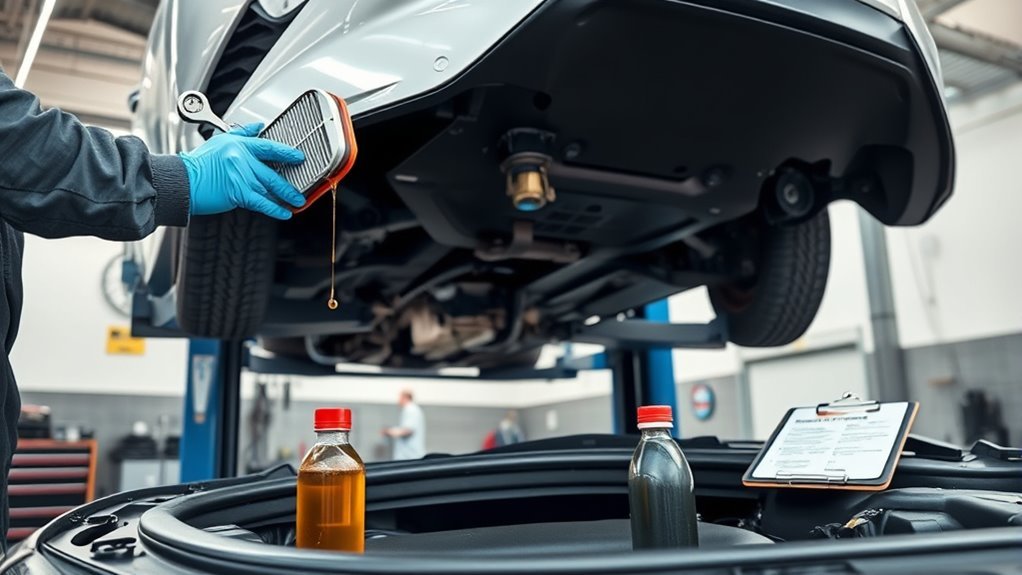
For many late-model Camrys, the direct answer is 10,000 miles or 12 months, whichever comes first, when the engine has the required oil and the car is used under the normal schedule. The 2025 and 2026 U.S. maintenance guides place oil-and-filter replacement at the 10,000-mile marks and require replacement by 12 months even if the reminder has not appeared.
The 5,000-mile maintenance schedule still matters. Toyota schedules inspections, tire rotation, fluid checks, and reminder resets at 5,000-mile or six-month intervals. Oil replacement is added at those visits only when the applicable guide requires it or when the owner chooses a more conservative interval.
Why Does the Maintenance Reminder Appear at 5,000 Miles?
The maintenance reminder is a mileage-based service prompt, not an oil-condition sensor. On Camrys with a 10,000-mile normal oil interval, the 5,000-mile visit can still include tire rotation, inspections, and fluid-level checks. Read the checklist for your current mileage before assuming the reminder means “change the oil now.”
Note: Check the dipstick at least once a month and before a long trip. A service reminder cannot detect a low oil level, leakage, or oil consumption.
Toyota Camry Oil Change Interval by Model Year
The maintenance guide supplied with the car is the controlling source. This table is a U.S.-market starting point and separates confirmed current-model guidance from older, engine-dependent specifications.
| Camry model | Oil guidance | Normal oil-and-filter interval | Factory 5,000-mile exception |
|---|---|---|---|
| 2026 Camry | Use the viscosity and specification in the 2026 Owner’s Manual; the maintenance guide directs owners to the model-specific manual. | By 10,000 miles or 12 months, whichever comes first | 5,000 miles or six months when mainly driven on dirt/dusty roads or on repeated trips under five miles below 32°F/0°C |
| 2025 Camry Hybrid | SAE 0W-8; SAE 0W-16 only as a temporary substitute if 0W-8 is unavailable | By 10,000 miles or 12 months, whichever comes first | 5,000 miles or six months when primarily driven on dirt, dusty, muddy, or melted-snow roads |
| 2018–2024 four-cylinder and hybrid | Often SAE 0W-16, but the required grade varies by engine and year | Often 10,000 miles or 12 months with the required oil | Follow that model year’s listed special operating conditions |
| 2018–2024 V6 | Often SAE 0W-20, depending on model year | Often 10,000 miles or 12 months with the required oil | Follow that model year’s listed special operating conditions |
| Older Camrys | May specify 5W-20, 5W-30, 0W-20, or another grade | Follow the original maintenance guide; many older schedules use 5,000 miles or six months | Use the shorter interval and conditions printed for that generation |
Toyota’s current model is the 2026 Camry, so the earlier wording that called the 2025 model “most current” is no longer accurate. For a 2026 car, select the 2026 Camry in Toyota’s manuals and warranties portal. For the 2025 Camry Hybrid, Toyota’s digital owner information lists SAE 0W-8 as the recommended viscosity. If SAE 0W-8 is unavailable, SAE 0W-16 may be used temporarily and replaced with SAE 0W-8 at the next oil change.
Which Oil Does a Toyota Camry Use: 0W-8, 0W-16, 0W-20, or 5W-30?
Use the oil grade printed in your Camry owner’s manual and on the oil-fill cap when applicable. The correct viscosity depends on the engine and model year, not simply the age or mileage of the vehicle.
- 0W-8: Toyota specifies this grade for the 2025 Camry Hybrid. Use 0W-16 only as the temporary substitute described in the owner’s manual.
- 0W-16: Common on many late-model four-cylinder and hybrid Camrys before 2025. Confirm the exact specification before purchase.
- 0W-20: Common on several newer Toyota engines and Camry V6 applications. The required grade and interval still come from the model-year guide.
- 5W-20 or 5W-30: Found in some older Camry manuals. Do not replace an older model’s factory schedule with a newer 10,000-mile rule unless its guide permits it.
Warning: Do not switch to a thicker oil merely because the engine has high mileage. Use a viscosity Toyota allows for that engine, or obtain a diagnosis if the engine is leaking, consuming oil, or making abnormal noise.
A high-mileage oil is acceptable only when it meets the required viscosity and performance specification. It may be formulated for older seals, but it cannot repair worn piston rings, damaged valve seals, or an active leak.
[Products Worth Considering]

ECOGARD X5608 is a premium cartridge oil filter designed for a wide range of Toyota, Lexus, and Scion vehicles. It helps protect your engine by screening out harmful contaminants and is built for use with both synthetic and conventional oils. Included O-rings support a proper housing seal for dependable maintenance between oil changes.

FOCUSFILTER 04152-YZZA1 OEM grade oil filter is designed to help protect your engine with reliable filtration and 10K mile protection. It cross references multiple OE part numbers and fits a wide range of Toyota and Lexus applications, making it a practical replacement for routine maintenance. Built for compatible vehicles including Camry, Avalon, Highlander, Tacoma, RAV4, Sienna, ES 350, and RX 350.

This 12-pack oil filter and drain plug washer set is designed for a wide range of Toyota and Scion vehicles, helping support clean oil flow and dependable engine performance. It replaces several common OE part numbers and offers an easy-fit solution for routine maintenance. Built with corrosion-resistant materials and efficient filtration, it helps keep engine contaminants out and supports longer service life.
Should You Change Camry Oil Every 5,000 or 10,000 Miles?
Use 10,000 miles or 12 months only when your model-year guide permits it, the correct oil is installed, and the oil level remains safe between services. Time and mileage are both limits, so a low-mileage car still needs service when the stated number of months arrives.
Use 5,000 miles or six months when the exact Toyota guide assigns oil replacement to your operating conditions. The definition is model-year specific:
- 2026 Camry: mainly driven on dirt or dusty roads, or repeatedly driven less than five miles in temperatures below 32°F/0°C.
- 2025 Camry: primarily driven on dirt, dusty, muddy, or melted-snow roads.
- Earlier Camrys: check the matching guide because older schedules and special-condition lists can differ.
You may still choose a conservative 5,000-mile interval for an older engine, unknown service history, repeated oil loss, or personal peace of mind. Label that choice accurately: it is an owner-selected shorter interval unless the maintenance guide or a qualified diagnosis requires it.
The practical decision is not “synthetic equals 10,000 miles.” It is: follow the exact model-year guide, use the specified oil, and shorten the interval when that guide or the engine’s condition calls for it.
Does Knoxville Driving Require a 5,000-Mile Oil Change?

Knoxville traffic, hills, and summer heat do not automatically trigger the 2026 Camry’s factory 5,000-mile oil requirement. Toyota’s 2026 oil exception is narrower: mainly dirt/dusty-road driving or repeated trips shorter than five miles below freezing. Treat local conditions as a reason to monitor the oil and vehicle closely, not as a substitute for the model-year checklist.
Stop-and-Go Traffic
Stop-and-go commuting can increase engine run time relative to miles traveled, but the 2026 Camry guide does not list ordinary city traffic by itself as a 5,000-mile oil-change trigger. Owners who prefer a conservative interval may still change at 5,000 miles, especially when service history is unknown or the engine consumes oil.
Hilly Terrain and Engine Load
Regular climbs increase engine load, yet hills alone are not listed as the 2026 factory oil exception. Check the oil monthly, investigate any falling level, and follow the shorter interval only when the guide’s conditions apply or a technician identifies a reason to shorten it.
Short Winter Trips vs. Summer Heat
The 2026 guide specifically shortens the oil interval for repeated trips under five miles when the temperature is below freezing. Summer heat alone is not listed in that oil-change footnote. Regardless of season, do not diagnose oil life from color alone, and do not continue driving with a low level or an oil-pressure warning.
Pro Tip: Keep two schedules: Toyota’s required maintenance calendar and a simple monthly oil-level check. That prevents a 10,000-mile interval from becoming 10,000 miles without looking at the dipstick.
Special Cases: Hybrids and High-Mileage Camrys
A Camry Hybrid still has a gasoline engine, engine oil, and an oil filter. Follow the hybrid model’s own guide rather than extending the interval because the engine sometimes shuts off during operation.
- 2026 Camry: Follow the 2026 maintenance guide for interval and the 2026 Owner’s Manual for oil viscosity.
- 2025 Camry Hybrid: Use SAE 0W-8, with SAE 0W-16 only as the temporary substitute Toyota describes.
- Older Camry hybrids: Many specify 0W-16 or 0W-20, depending on year. Check the oil cap and owner’s manual before buying oil.
- High-mileage Camrys: Check at least monthly and more frequently if the level has been falling. A long interval is unsafe when the engine cannot retain a safe level between services.
- Unknown service history: Start with a documented oil-and-filter change, check the level regularly, and use a conservative interval until consumption is understood.
Used-oil analysis can provide data on viscosity, fuel dilution, coolant contamination, and wear metals. It is optional, but it can help owners evaluate an extended interval or investigate a high-mileage engine without relying only on oil color.
[Products Worth Considering]

This upgraded aluminum oil filter housing cap is designed as a direct replacement for compatible Toyota and Lexus models, helping restore a secure, reliable seal for the oil filter housing. Built from durable aluminum, it offers improved strength and heat resistance over factory plastic covers, while the included gasket and plug support straightforward installation and dependable leak-free performance.

This oil filter housing cap assembly is designed as a direct replacement for a wide range of Toyota and Lexus vehicles, helping restore a secure seal for proper oil filtration. It is made for easy installation and tested for compatibility with multiple part numbers and model years. The package includes the cap, plug, and gasket for a complete replacement solution.

GENUINE OEM: Original Toyota/Lexus factory oil filter part number 90915-YZZN1, ensuring perfect fit and optimal performance for your vehicle
Signs Your Camry Needs Oil Service or Inspection Now
Do not wait for the calendar when the oil level is unsafe, a warning appears, or the engine develops a new symptom. Some signs call for an oil change; others require diagnosis rather than simply replacing the oil.
Maintenance Required Light vs. Oil Pressure Light
The Maintenance Required message is a scheduled-service reminder. Check the mileage-specific maintenance list and confirm whether the current visit includes oil replacement.
The oil-pressure warning light is different. If a red oil-pressure warning appears, safely stop the engine as soon as conditions allow. Check the oil level and obtain qualified help; continuing to drive with low oil pressure can severely damage the engine.
New Engine Noise or Roughness
Ticking, knocking, rough running, or a louder-than-normal start can have several causes. Check the dipstick first. If the level is below the safe range, add only the correct oil and look for leakage or consumption. If the warning or noise continues, avoid a long drive and have the cause diagnosed.
Low, Contaminated, or Abnormal-Looking Oil
Engine oil normally darkens, so color alone does not prove it is overdue. A low level, visible metallic debris, a strong burnt odor, or contamination that resembles coolant needs prompt attention. Do not use appearance alone to set a permanent interval; compare the condition with the maintenance schedule and a professional inspection when needed.
Maintenance to Combine With Oil Changes: Fluids and Tires
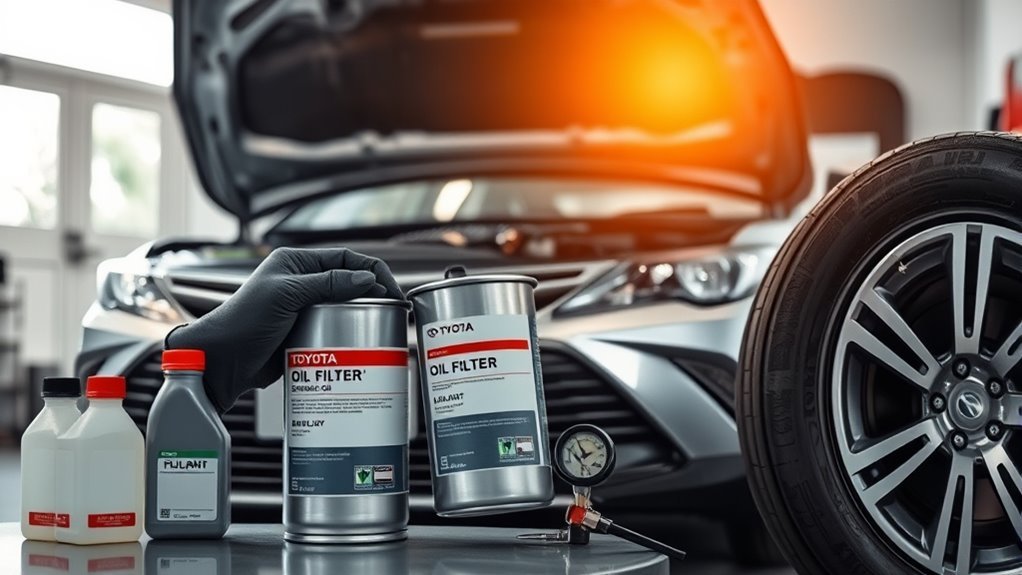
The 5,000-mile service visit is broader than an oil change. Toyota’s maintenance guides use these visits for tire rotation, fluid-level checks, brake and wiper inspections, and other mileage-specific items. Use the checklist for the exact mileage instead of treating every visit as the same package.
| Item | Check | Action |
|---|---|---|
| Engine oil | Level and signs of leakage | Check monthly; use the exact specified grade |
| Brake fluid | Level, condition, and leaks | Use only the specified fluid and investigate a falling level |
| Coolant | Reservoir level and visible leakage | Use the coolant type specified by Toyota |
| Tires | Pressure, tread depth, and uneven wear | Inflate to the door-jamb placard and rotate at the scheduled interval |
| Engine air filter | Dust, debris, and restriction | Inspect or replace at the model-year interval |
| Cabin air filter | Airflow, odor, and debris | Replace at the scheduled interval or sooner when restricted |
How to Plan Camry Oil Service: DIY, Dealer, or Independent Shop
A reliable service record should show the date, mileage, oil viscosity and specification, filter, and work performed. Reset the maintenance reminder only after completing the required checklist.
- For DIY service: Use the correct oil and filter, replace the drain-plug gasket when specified, support the vehicle safely, and tighten the drain plug and filter to the correct procedure for that engine.
- For dealer service: Ask which oil will be installed and compare it with the owner’s manual. Separate scheduled items from optional dealer recommendations.
- For independent shops: Give the shop the model-year oil specification, especially for less common grades, and request an itemized invoice.
- For warranty records: Keep receipts and notes. Toyota states that maintenance may be performed by the owner or another provider, although damage caused by improper maintenance is not covered.
Note: Toyota’s guide says dealer-recommended services beyond the scheduled log are not automatically required to maintain warranty coverage. Ask the advisor to identify the factory checklist item behind each recommendation.
[Products Worth Considering]

ADVANCED ENGINE PERFORMANCE: Keep your engine clean for up to 15,000 miles thanks to high-density synthetic blend filter media; Expanded dirt-holding capacity captures over 99% of dirt; PurolatorONE gets the job done
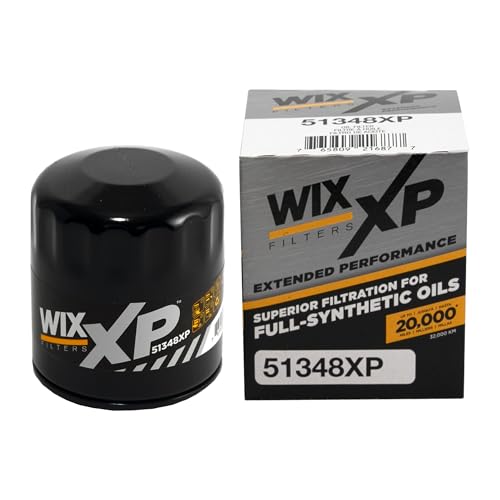
ENGINEERED FOR SYNTHETIC OILS: Superior filtration for severe conditions; Designed to handle the demands of synthetic motor oils in extreme driving conditions like towing, stop-and-go traffic, and long highway runs

Contains synthetic fibers, which help promote clean oil - to support long engine life and performance
Frequently Asked Questions
How often should a Toyota Camry get an oil change?
Many late-model Camrys use a 10,000-mile or 12-month oil-and-filter interval under normal use. Use 5,000 miles or six months only when your model-year guide lists your driving under an oil-change exception, or when you deliberately choose a shorter interval.
Why does my Camry show maintenance required at 5,000 miles?
Toyota schedules maintenance every 5,000 miles or six months. That visit can include tire rotation, inspections, fluid checks, and a reminder reset. On a Camry with a 10,000-mile normal oil interval, the 5,000-mile reminder does not automatically mean the oil is due.
Do miles or months come first for a Camry oil change?
Whichever limit arrives first. A 10,000-mile or 12-month schedule means the oil and filter are due at 12 months even when the car has traveled fewer than 10,000 miles.
Can I change my Camry oil every 5,000 miles even if Toyota allows 10,000?
Yes. A 5,000-mile interval is a conservative owner choice and may be useful for uncertain service history or an engine that loses oil. It costs more over time, but it does not conflict with a longer maximum interval.
What oil does a 2025 Toyota Camry use?
Toyota lists SAE 0W-8 for the 2025 Camry Hybrid. If 0W-8 is unavailable, SAE 0W-16 may be used temporarily, but Toyota says to return to 0W-8 at the next oil change.
Do Camry Hybrids need oil changes?
Yes. A Camry Hybrid still uses a gasoline engine, engine oil, and an oil filter. Follow the hybrid model’s own maintenance guide and oil specification.
Should I use high-mileage oil in an older Camry?
High-mileage oil can be used when it meets the viscosity and performance specification in the owner’s manual. It may be formulated for older seals, but it will not repair mechanical wear or an active leak.
Conclusion
For a late-model Camry, start with 10,000 miles or 12 months as the normal maximum only when the exact model-year guide permits it. Use 5,000 miles or six months when that guide assigns oil replacement to your operating conditions, or when you intentionally choose a conservative interval. Confirm the oil grade, check the dipstick monthly, replace the filter with the oil, and keep a record of every service.
Sources
- Toyota Owners: Manuals and Warranties — official selector for the current 2026 Camry owner’s manual and warranty/maintenance information.
- 2025 Toyota Camry Warranty & Maintenance Guide — supports the 5,000-mile maintenance cycle, 10,000-mile/12-month oil limit, monthly oil-level check, model-year special conditions, records, and provider guidance.
- 2025 Toyota Camry Hybrid Owner’s Manual: maintenance data — supports the SAE 0W-8 recommendation and temporary SAE 0W-16 substitute guidance.
- 2024 Toyota Camry Warranty & Maintenance Guide — official model-year reference for the previous Camry generation.
- Toyota Support: Synthetic oil change intervals — general Toyota guidance explaining that oil grade, engine approval, and operating conditions affect interval eligibility.



[…] Maintenance Required / Oil Maintenance […]