🔧 Expert automotive guides trusted by 250,000+ readers monthly
Toyota Camry Guide

Toyota Camry Clear Coat Failure: Quick Diagnosis

By Daxon Steele Mar 20, 2026 ⏱ 17 min read Updated: Jul 22, 2026
camry clear coat issues

Quick Answer

Toyota Camry clear coat failure is fixable at home only when the problem is light haze, oxidation, or shallow swirls on intact paint. Wash first, inspect the panel, test a mild polish in a small area, then protect the finish with wax or sealant. If the clear coat is lifting, flaking, cracked, or exposing primer, bare metal, or rust, polishing can make the damage worse. For original Blizzard Pearl (070) or Super White (040) paint peeling from a metal body panel, ask a Toyota dealer to check Customer Support Program ZKG before authorizing repaint work. Current eligibility depends on the VIN, paint code, panel material, condition, date of first use, and whether the applicable coverage period has expired.

Key Takeaways

  • Light oxidation and shallow swirl marks may improve with careful washing, a hand-applied test spot, mild polishing, and a wax or paint sealant.
  • Peeling, flaking, web-like cracking, exposed primer, bare metal, or rust usually needs professional refinishing, not more polishing.
  • Toyota’s ZKG document lists certain 2008–2017 Camry and Camry Hybrid vehicles with original Blizzard Pearl (070) or Super White (040) paint, but only an authorized Toyota dealer can confirm individual eligibility.
  • ZKG applies to a qualifying peeling condition on exterior metal body panels. Toyota’s document excludes plastic body panels such as plastic bumper covers.
  • Avoid harsh cleaners, abrasive pads, dry wiping, aggressive machine polishing, and DIY spray clear coat unless you have proper refinishing equipment, ventilation, PPE, and training.

At a Glance

Time Required 20–45 minutes for inspection; 1–2 hours for a cautious polish and protection on one or two intact panels
Difficulty Easy for inspection and washing; moderate for polishing; professional for peeling, cracking, corrosion, or spray refinishing
Tools Needed pH-balanced car soap, microfiber wash mitt, microfiber towels, bright light, painter’s tape, mild polish, foam applicator, wax or paint sealant
Best First Move Document the damage before polishing, especially if the Camry has Blizzard Pearl (070) or Super White (040) factory paint
Toyota ZKG Check Confirm the VIN, paint code, metal panel, date of first use, and current eligibility with an authorized Toyota dealer

What Does Camry Clear Coat Do, and What Are the Warning Signs?

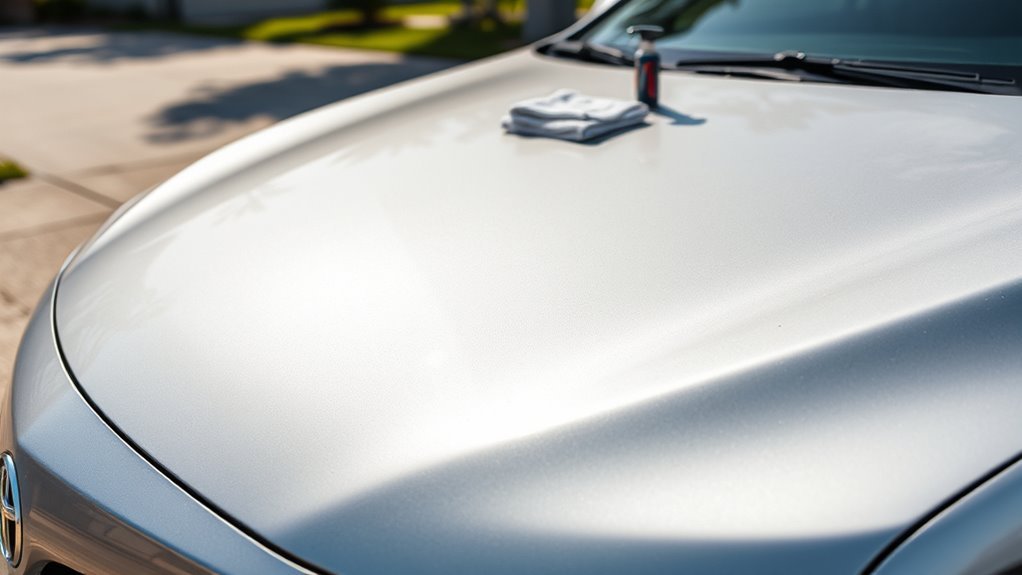
Toyota Camry clear coat maintenance showing glossy paint protection

The clear coat is not just a shine layer. It is the outer paint film that helps protect the color coat from ultraviolet light, water, mild abrasion, and common contaminants. When that layer becomes thin, oxidized, cracked, or separated from the layers below it, the paint can lose gloss quickly and become harder to save.

Watch for these warning signs:

  • Dull or cloudy finish: The surface looks gray, hazy, or flat even after washing. This may point to oxidation, product buildup, or a deteriorating surface layer.
  • Swirl marks and fine scratches: Circular scratches appear in direct sun or under a bright inspection light. Dirty towels, dry wiping, automatic brush washes, and aggressive polishing commonly produce this type of marring.
  • Peeling or flaking: Clear coat that lifts at an edge, chips away, or looks like thin plastic film is no longer bonded correctly. Stop polishing the area.
  • Chalky residue: A white or powdery appearance can indicate advanced oxidation or coating deterioration. Clean the panel before deciding which condition is present.
  • Crazing or checking: Fine web-like cracks suggest that the coating is becoming brittle or structurally damaged. Do not treat these cracks as ordinary swirl marks.

Note: A clear coat problem is not always the same as Toyota’s documented white-paint peeling condition. Toyota Customer Support Program ZKG concerns a specific adhesion failure involving original factory Blizzard Pearl (070) or Super White (040) paint on qualifying exterior metal body panels. An authorized Toyota dealer must verify the condition and current eligibility.

Is It Clear Coat Failure or Toyota White Paint Peeling?

Before choosing a repair, identify which paint layer appears to be failing. Normal clear coat trouble starts at the top surface and may show as oxidation, scratches, cloudiness, cracking, or clear film peeling. Toyota’s documented Blizzard Pearl and Super White condition is more specific. Toyota states that sunlight over time may degrade adhesion between the factory-applied primer coat layer and the base metal electrodeposition layer, causing paint to peel from an exterior metal body panel.

What You See Likely Issue Best Next Step
Hazy paint that still feels smooth Light oxidation, residue, or product buildup Wash, inspect, test a mild polish, then protect
Swirls visible in direct sun Wash scratches or shallow clear coat marring Gentle hand-polish test and a safer wash routine
Fine web-like cracks Crazing, checking, or brittle coating Stop aggressive correction and obtain a professional inspection
Clear film lifting or flaking Clear coat delamination Body-shop inspection; avoid compounding or pressure washing the edge
Paint peeling in sheets on white Toyota metal panels Possible Toyota Blizzard Pearl/Super White adhesion condition Check the paint code, panel material, VIN, and possible ZKG eligibility with a Toyota dealer
Primer, bare metal, or rust visible Paint-system failure with corrosion risk Arrange professional repair as soon as possible

What Causes Toyota Camry Clear Coat Peeling?

Clear coat can haze, crack, or lift because of weather exposure, contamination, age, previous refinishing, or maintenance damage. A deeper factory-paint adhesion problem can look similar from a distance, so the pattern, paint code, panel material, and repair history all matter.

Cause What It Does How to Reduce the Risk
UV Exposure Breaks down the paint surface over time, contributing to oxidation, gloss loss, brittleness, and chalking Park in shade, use a garage when possible, and maintain a compatible wax or sealant
Environmental Contaminants Bird droppings, sap, bug residue, and road film can stain or etch the surface Soften and remove contamination promptly with car-safe products; do not scrub dry residue
Age and Wear Heat cycles, washing, abrasion, and years of exposure reduce gloss and coating integrity Inspect regularly and reapply protection according to its label or when its cleaning, slickness, or water behavior declines
Improper Maintenance Dirty towels, abrasive pads, harsh chemicals, and repeated heavy polishing can scratch or thin the clear coat Use clean microfiber, pH-balanced soap, the least aggressive polish, and light pressure
Previous Refinish Work Poor preparation, incompatible materials, insufficient film build, or an improper repair edge can lead to early failure Tell the body shop about known previous paint work and request a written repair warranty
Paint Adhesion Condition On certain Toyota white paint, the failure may involve adhesion between deeper paint layers on a metal body panel Check the paint code and ask an authorized Toyota dealer to inspect possible ZKG eligibility

How Do You Diagnose Toyota Camry Clear Coat Failure at Home?

Start with inspection, not polishing. A clean panel helps you separate removable contamination and shallow surface defects from cracking, peeling, or deeper paint separation. Do not perform a polish test directly on an edge that is already lifting.

[Products Worth Considering]

Step 1: Wash and Dry the Panel

  1. Rinse from top to bottom with a gentle stream to remove loose dirt.
  2. Do not place a pressure-washer nozzle close to peeling paint or direct high pressure under a lifted edge.
  3. Wash with pH-balanced car soap and a clean microfiber mitt or soft sponge.
  4. Rinse thoroughly so no soap dries on the paint.
  5. Dry by blotting or gently wiping with a clean microfiber towel. Never dry-wipe dusty paint.

Step 2: Check Gloss, Texture, and Water Behavior

Look at the clean, dry panel in direct sunlight or under a bright LED light. Dull but smooth paint may have surface oxidation or residue. Roughness may indicate bonded contamination, although a brittle or gritty surface that does not clean up can also signal coating deterioration.

A change in water behavior may suggest that wax or sealant performance has declined, but beading alone does not diagnose clear coat condition. Inspect the visual defects and coating edges before choosing a repair.

Step 3: Map the Damage

Use painter’s tape beside the defect or take clear photographs of each problem area. Note whether the damage affects one spot, one panel, horizontal panels such as the hood and roof, or several body panels. Record whether the affected component is metal or plastic and whether it appears to have been repainted before.

Pro Tip: Take close-up and wide-angle photos before polishing or visiting a dealer. Include the odometer, VIN-label area, paint-code label, each affected panel, and the boundary between sound and peeling paint. These records help a Toyota dealer or body shop evaluate the pattern and progression.

Step 4: Polish Only Minor Defects

For light oxidation, fine scratches, and swirl marks on intact paint, begin with a hand-applied test spot. Use a small amount of mild polish on a soft foam applicator. Work a small area with light pressure and overlapping passes, then wipe the residue with a clean microfiber towel.

If the paint history is unknown, do not begin with aggressive machine compounding. Stop if the panel becomes hot, paint color transfers to the applicator, the defect does not improve, the surface becomes patchy, or a peeling edge begins to spread.

Do not polish flaking, cracked, or lifting paint. Abrasion cannot restore failed adhesion and may enlarge the damaged area.

Step 5: Protect the Surface

After a successful polish test, apply an automotive wax or paint sealant to clean, cool, intact paint. Follow the product’s application and reapplication directions.

Wax or sealant cannot rebuild missing clear coat or bond peeling paint back down. It can provide a sacrificial layer on sound paint and make routine washing easier.

Warning: Do not spray 2K clear coat, activated clear, or professional refinish products at home unless you have the correct controlled spray environment, ventilation, respiratory-protection program, protective clothing, equipment, and training. Automotive clearcoats and hardeners may contain isocyanates, and spraying can create hazardous airborne exposure.

When Does Clear Coat Failure Need a Body Shop?

Localized clear coat repair versus full repaint on Toyota Camry body panel

Use a body shop when the clear coat is peeling or cracked, the color coat is exposed, primer or metal is visible, corrosion has started, or the damage covers a large area. Polishing cannot glue a failed coating back down. A shop may need to remove unstable material, repair the substrate, prepare the panel, match the color, and apply new clear.

A localized problem may be repairable one panel at a time instead of requiring a complete vehicle repaint. Repair scope depends on where the failure ends and how the new color will match the surrounding finish.

I-CAR guidance says clearcoat should be applied from edge to edge of the panel being finished to maintain proper coverage and ultraviolet protection. Color may need to be blended into a nearby panel for match, but the clear layer should not simply fade out in the middle of the refinished panel.

Situation DIY or Shop? Why
Light swirls or mild haze on intact paint DIY test spot A mild hand polish and protection may improve gloss without repainting
Small etched spots from bird droppings or sap DIY first, then shop if still visible Mild polishing may help if the etch is shallow and the coating is intact
Fine cracking or crazing Shop inspection Cracking can indicate brittle or structurally deteriorated coating
Clear coat peeling at edges Shop Peeling means adhesion has failed; polishing or pressure washing may worsen it
Paint peeling on white Toyota metal panels Toyota dealer first The vehicle may need paint-code, panel-material, VIN, condition, and timing review under Toyota ZKG
Multiple panels failing Shop estimate A panel-by-panel or broader refinish plan may be needed
Bare metal or rust Shop promptly Corrosion can spread beneath surrounding paint

[Products Worth Considering]

What Changes the Cost of Clear Coat Repair?

A reliable estimate requires an in-person inspection. Avoid treating a national price range as a quote because labor rates, paint systems, previous repairs, and damage severity vary widely.

The main estimate factors are:

  • Number and size of affected panels: A single roof, hood, or fender is a different job from failure across the roof, trunk, pillars, and doors.
  • Depth of failure: Clear-only deterioration may require less substrate work than exposed primer, bare metal, corrosion, or peeling through several paint layers.
  • Paint color and finish: Pearl and metallic colors can require additional color-matching and blending work.
  • Previous paint or collision repair: Old filler, mismatched materials, poor adhesion, or excessive film thickness can change the preparation plan.
  • Trim and glass removal: Moldings, lamps, handles, badges, weatherstrips, or glass may need to be removed for a durable edge.
  • Color blending: The shop may need to blend color into an adjacent panel while clearing the refinished panel edge-to-edge.
  • Corrosion and body damage: Rust, dents, deep chips, and collision damage add separate repair steps.
  • Warranty and facility standards: Ask what preparation, materials, documentation, and written warranty are included in the estimate.

Questions to Ask Before Approving a Repair

  • Will you clear the entire refinished panel edge-to-edge?
  • Will the color be blended into adjacent panels if needed?
  • How will you handle primer, corrosion, exposed metal, or previous repair material?
  • Does the estimate include removal and reinstallation of trim, handles, lamps, moldings, or glass?
  • What warranty do you provide on peeling, gloss loss, adhesion, and color match?
  • Will the repair affect any Toyota warranty or customer-support eligibility?
  • Can I get the estimate broken down by panel, preparation, materials, labor, body repair, and blending?

How Do You Check Toyota Paint Code and Possible ZKG Coverage?

If your Camry has original white factory paint peeling from a metal body panel, contact a Toyota dealer before paying for repaint work. ZKG is not a safety recall or an open-ended repaint program. It is a Toyota customer-support program with specific paint, vehicle, panel, condition, and timing requirements.

  1. Find the paint code: Use the vehicle certification label, commonly found in the driver-side door-jamb area. Toyota paint codes are typically three characters. The ZKG colors are 070 Blizzard Pearl and 040 Super White. See the guide on how to find your Toyota Camry paint code if you need help reading the C/TR line.
  2. Check the listed model years: Toyota’s ZKG document includes 2008–2017 Camry and 2008–2017 Camry Hybrid, but a listed model year does not guarantee that an individual vehicle remains eligible.
  3. Confirm the panel material: The documented condition concerns exterior metal body panels. Toyota excludes plastic panels, including plastic bumper covers, from this program.
  4. Document the condition: Photograph the full vehicle, each affected panel, close-ups of peeling edges, the VIN, odometer, paint-code label, and any nearby dents, chips, or collision damage.
  5. Contact an authorized Toyota dealer: Ask for an inspection related to Customer Support Program ZKG. Only an authorized Toyota dealership can confirm whether the condition is covered.
  6. Ask about the date of first use and expiration: Request the exact coverage calculation for your VIN and ask whether a diagnostic fee applies if the condition is not covered.
  7. Disclose prior repairs: Tell the dealer about previous collision, paint, dent, rust, or glass work that may affect the panel or repair process.

ZKG Timing: Toyota’s original ZKG document states that primary coverage ended December 11, 2022. Secondary coverage applies for 10 years from the vehicle’s date of first use, regardless of mileage. Toyota’s 2022 post-campaign-expiration procedure does not extend that period; it addresses claims for conditions that a dealer confirmed and documented before the individual vehicle’s coverage expired.

Note: Collision damage, dents, deep scratches, deep rock chips, corrosion, or other unrelated damage may prevent the covered paint repair until those problems are corrected. ZKG does not cover the cost of repairing unrelated damage, and the owner may be responsible for that work.

[Products Worth Considering]

Easy Maintenance Routine to Prevent Future Clear Coat Loss

A gentle routine is safer than repeated aggressive correction. The goal is to remove contamination before it etches, reduce cumulative ultraviolet exposure, and avoid adding scratches during washing.

When What to Do Why It Helps
Weekly or every two weeks Wash with pH-balanced car soap, a clean microfiber mitt, and clean rinse water Removes dirt, droppings, sap, and road film before they stain or etch
After bird droppings, sap, or bugs Soften and lift the residue gently; do not scrub it while dry Reduces chemical etching and wash-induced scratches
Monthly Inspect the hood, roof, trunk, upper doors, pillars, and panel edges in bright light Catches oxidation, cracking, and peeling before the affected area becomes larger
According to the protection-product label Reapply wax or paint sealant to clean, cool, intact paint Maintains a sacrificial layer against water and light contamination
As needed on intact paint Use a clay mitt or clay bar with ample lubricant only if bonded contamination remains after washing Removes bonded contamination before polishing or sealing; never clay across peeling, cracked, or exposed edges
Long-term Park in shade, use a garage, or use a clean breathable cover when practical Reduces cumulative ultraviolet and heat exposure

Avoid dish soap, strong household degreasers, abrasive kitchen pads, dirty towels, automatic brush washes, and repeated heavy compounding. Do not direct a pressure washer at peeling edges. These practices can scratch intact paint, thin the remaining clear coat, or enlarge an existing failure.

Frequently Asked Questions

What causes clear coat to fail?

Clear coat can deteriorate because of long-term ultraviolet exposure, oxidation, harsh chemicals, bird droppings, sap, road contamination, improper washing, aggressive polishing, age, or poor previous refinishing. Once the coating starts cracking, lifting, or flaking, it normally needs professional refinishing rather than more polishing.

Why does Toyota clear coat peel?

Toyota clear coat can peel for the same reasons as paint on other vehicles, including sun exposure, contamination, age, harsh cleaning, excessive polishing, or poor previous repair. Some Toyota white-paint complaints involve a different condition. Toyota’s ZKG documents describe sunlight degrading adhesion between deeper factory paint layers on involved Blizzard Pearl (070) and Super White (040) metal body panels.

Is Toyota paint peeling a recall?

Toyota Customer Support Program ZKG is not a safety recall. It is a customer-support program for involved vehicles with original factory Blizzard Pearl (070) or Super White (040) paint and a qualifying peeling condition on an exterior metal body panel. An authorized Toyota dealer must check the VIN, paint code, panel, condition, and timing.

Is Toyota ZKG a class action lawsuit?

No. Toyota ZKG is a manufacturer customer-support program, not a class action lawsuit or safety recall. Paint lawsuits may involve different countries, models, paint codes, parties, and filing dates. Do not assume a Camry is part of a lawsuit because it may have been listed in ZKG. This is general information, not legal advice.

Can I fix peeling clear coat without repainting?

You may improve light haze, surface oxidation, and shallow swirl marks when the clear coat is still intact. You normally cannot make peeling clear coat permanent again without refinishing because the coating has lost adhesion. Waxes, wipe-on products, and polishing may change the appearance temporarily, but they do not rebuild the missing paint layer.

Should I go to Toyota or a body shop first?

If your Camry has original Blizzard Pearl (070) or Super White (040) paint peeling from an exterior metal body panel, contact an authorized Toyota dealer first and ask about ZKG inspection. For another color, a plastic panel, expired or ineligible coverage, previous repaint work, collision damage, clear-only peeling, or rust, obtain a written estimate from a reputable body shop.

Are plastic Camry bumpers covered by Toyota ZKG?

No. Toyota’s ZKG document says plastic body panels, including plastic bumper covers, are not covered. The documented condition concerns qualifying Blizzard Pearl (070) or Super White (040) paint peeling from exterior metal body panels.

How long does Toyota ZKG coverage last?

Toyota’s ZKG document states that primary coverage ended December 11, 2022. Secondary coverage applies for 10 years from the vehicle’s date of first use, regardless of mileage. The exact expiration therefore differs by vehicle. A Toyota dealer must check the VIN and date of first use. Toyota’s post-expiration procedure does not extend coverage; it applies when the dealer confirmed and documented the condition before the vehicle’s coverage expired.

Conclusion

Toyota Camry clear coat failure is easiest to manage when you identify the paint layer and stop before a mild problem becomes a larger one. Wash the panel gently, inspect it in bright light, photograph the damage, and use a small hand-polish test only on intact paint. Do not compound peeling, cracked, or exposed areas.

For original Blizzard Pearl (070) or Super White (040) paint peeling from an exterior metal body panel, check Toyota ZKG eligibility before paying for repaint work. Bring the VIN, paint code, date-of-first-use information, photographs, and repair history to an authorized Toyota dealer. For clear coat delamination, plastic-panel peeling, corrosion, previous refinishing failure, or ineligible coverage, obtain a written body-shop estimate that explains the preparation, panel scope, color blending, clear application, and warranty.

Sources

  1. NHTSA-hosted Toyota Customer Support Program ZKG document — affected model ranges, paint colors, metal-panel limitation, coverage periods, damage exclusions, and dealer-verification requirements.
  2. NHTSA-hosted Toyota ZKG post-campaign-expiration procedure — claim handling for conditions documented before individual coverage expiration.
  3. I-CAR: What does I-CAR say about blending clearcoat? — edge-to-edge clearcoat guidance for coverage and ultraviolet protection.
  4. OSHA Autobody Repair and Refinishing Hazards and Solutions — autobody refinishing hazards, isocyanate resources, PPE, overspray, and respiratory-protection references.
  5. CDC/NIOSH: Preventing Asthma and Death from Diisocyanate Exposure — occupational health risks associated with diisocyanate exposure.

Avatar photo
Daxon Steele
Daxon Steele writes about heavy-duty vehicle performance, towing capacity, payload limits, and truck capability. His content helps readers understand what their vehicles can safely handle before they tow, haul, or upgrade. Daxon focuses on clear explanations backed by practical use cases. He breaks down numbers like gross vehicle weight rating, tongue weight, towing limits, and payload capacity in a way regular drivers can understand. His goal is to help truck owners avoid common mistakes, protect their vehicles, and choose the right setup for work, travel, and daily use.

Leave a Comment

Your email address will not be published. Required fields are marked *