A musty smell in a Toyota Camry usually comes from moisture trapped in the HVAC system, a dirty cabin air filter, damp carpet, or debris sitting in the cowl, trunk, or under the seats. The fix is simple in most cases: dry the source, remove organic debris, replace the filter if it is dirty, and only use a disinfectant or evaporator cleaner that is labeled for automotive HVAC use.
Quick Answer
To remove a musty smell from a Camry, ventilate the cabin, remove trash and damp items, vacuum the carpets, inspect the cabin air filter behind the glove box, dry the AC evaporator by running the fan with the AC off, and treat the HVAC intake only with a product labeled for that use.
Key Takeaways
- A musty Camry odor is usually moisture-related, so drying the AC evaporator and carpets matters more than masking the smell.
- Check the cabin air filter before spraying anything into the vents; a damp or clogged filter can hold odor and restrict airflow.
- Use only an automotive HVAC cleaner or disinfectant whose label allows HVAC, duct, or evaporator use.
- If the smell returns quickly, look for a blocked AC drain, wet carpet, trunk water, leaves in the cowl, or a cooling-performance issue.
At a Glance
| Time Required | 20–45 minutes for basic cleaning; longer if carpets are wet |
| Difficulty | Easy to moderate |
| Tools Needed | Vacuum, microfiber towels, replacement cabin filter if needed, labeled automotive HVAC cleaner, gloves |
| Cost | Usually low for DIY filter and cleaner; higher if professional AC service is needed |
Stop Musty Smells in Your Camry Now: Quick Fix
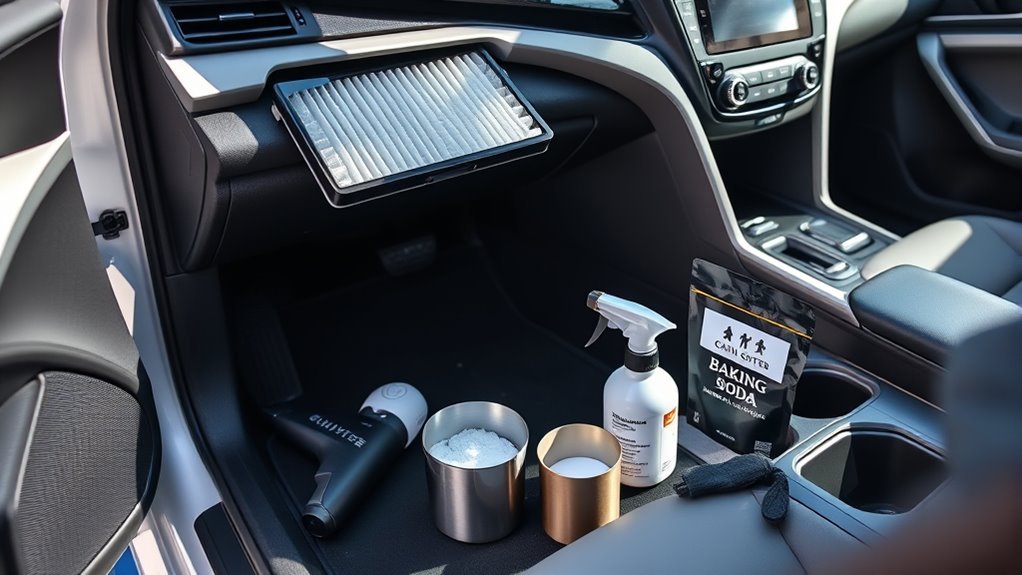
Start with airflow. Park outside or in a well-ventilated area, open the doors or crack the windows, and run the blower on fresh-air mode for a few minutes. Remove trash, food wrappers, wet floor mats, gym bags, towels, leaves, and anything else that can hold moisture or organic residue.
- Open the cabin: Crack the windows and let stale air escape before you clean.
- Vacuum thoroughly: Hit the carpets, under-seat tracks, trunk liner, rear seat gaps, and floor mat undersides.
- Check for dampness: Press a clean paper towel into the carpet, front passenger footwell, trunk spare-tire area, and floor mats. If it comes up damp, dry that area first.
- Inspect the cabin air filter: A dirty or damp filter behind the glove box can trap dust, pollen, leaves, and odor.
- Dry the HVAC system: Turn the AC compressor off a few minutes before shutting down and leave the fan running to dry the evaporator.
Warning: Do not spray bleach, ammonia, vinegar mixes, or random household cleaners into the HVAC intake. Never mix cleaning chemicals. Follow the product label, ventilate the cabin, and keep sprays away from wiring, sensors, and hot engine parts.
[Products Worth Considering]

This JADODE combo includes engine and cabin air filters designed to help keep passenger air cleaner while supporting efficient HVAC performance. The activated carbon layer helps absorb odors, exhaust fumes, and pollution, while filtration captures dirt, dust, and pollen for OE-comparable protection. It is compatible with a wide range of Toyota, Scion, Lexus, and Pontiac applications for convenient replacement maintenance.

This CF10285 cabin air filter is designed to help keep your vehicle's interior air cleaner by capturing dust, pollen, soot, and road grime. It is compatible with a wide range of Toyota, Lexus, Jaguar, Land Rover, Subaru, Scion, and Pontiac models, making it a versatile replacement choice. The activated carbon design and easy glove-box installation make it a practical upgrade for fresher driving comfort.

This cabin air filter replacement is designed to help keep your vehicle’s interior air fresher and cleaner by capturing dust, odors, and fine particles with a multi-layer filtration structure. The activated carbon layer helps reduce unwanted smells, while the extended service life makes it a practical maintenance part for many compatible Toyota, Lexus, Subaru, Scion, and Jaguar models.
Identify Common Causes of Musty Smells in a Toyota Camry
A musty odor often means moisture has stayed in one place long enough for odor-causing microbes or mildew to develop. The EPA explains that mold control starts with moisture control, and the same idea applies inside a car cabin.
| Likely Source | What You May Notice | What to Do First |
|---|---|---|
| Moist AC evaporator | Smell is strongest when the fan or AC first turns on | Dry the system with fan-only airflow and inspect the cabin filter |
| Dirty cabin air filter | Weak airflow, dusty smell, leaves or debris in the filter | Replace the filter and clean the filter housing |
| Blocked AC drain | Damp passenger carpet, no water dripping under the car after AC use | Have the drain inspected and cleared |
| Wet carpets or trunk liner | Musty smell even when HVAC is off | Dry or extract the material and find the water entry point |
| Leaves in the cowl or intake area | Odor after rain or after parking under trees | Remove leaves and debris from the windshield-base intake area |
Also check for less obvious causes: a leaking windshield seal, clogged sunroof drains if your Camry has a sunroof, a door vapor-barrier leak, spilled drinks under the seat, or a damp trunk liner around the spare tire. If the smell is sweet rather than musty, stop and have the vehicle inspected because a sweet smell can point to coolant leakage from the heater core.
Check and Replace Your Camry’s Cabin Air Filter
The cabin air filter is usually behind the glove box on many Toyota Camry model years, but the exact access method and service interval can vary. Toyota’s official 2024 Camry Warranty & Maintenance Guide lists cabin air filter replacement at scheduled maintenance points such as 20,000 miles or 24 months and 30,000 miles or 36 months, so always confirm the schedule for your exact year and trim.
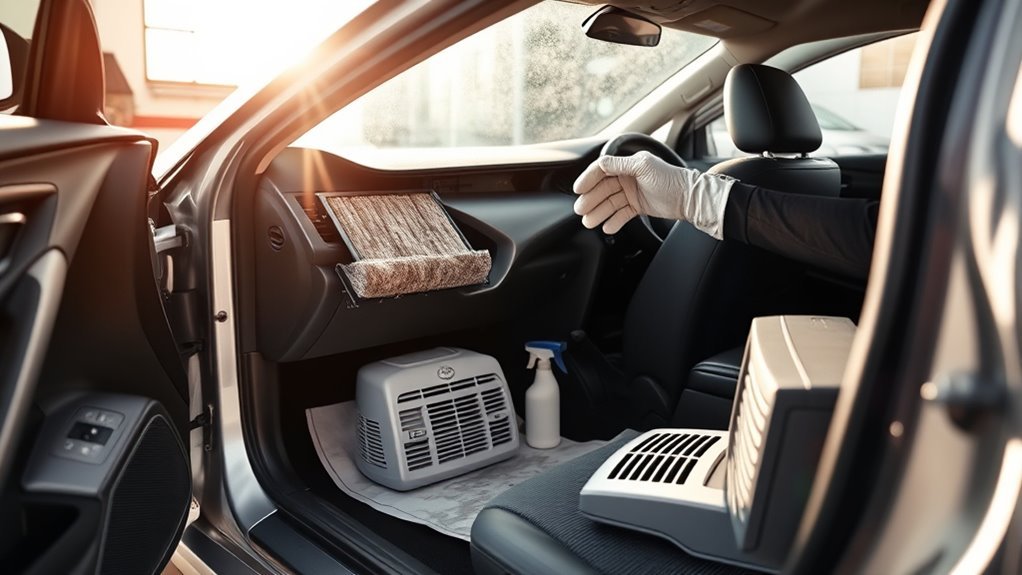
To inspect it, lower the glove box, release the stops, open the cabin filter cover, and slide out the old filter. Look for dampness, black spotting, leaves, heavy dust, or a sour smell. If the filter is dirty or wet, replace it rather than trying to perfume it.
Note: Some filters use an “UP” arrow while others use an “AIR FLOW” arrow. They do not always mean the same thing. Follow the instructions printed on the filter and the housing, and seat the filter fully so air does not bypass it.
After installing the filter, run the HVAC on fresh-air mode for a few minutes. If airflow improves and the odor fades, the filter was likely a major contributor. If the musty smell remains strong, move on to the HVAC intake and evaporator cleaning steps.
[Products Worth Considering]

ECOGARD XC10621C is a premium cabin air filter designed to help keep your vehicle’s interior air cleaner by trapping dust, pollen, pet dander, and other airborne debris. Its activated carbon layer also helps reduce common odors from traffic and outside air while supporting steady HVAC airflow for reliable climate system performance. It is engineered for a wide range of Toyota, Lexus, and Subaru applications.

This cabin air filter combines odor control and HEPA-level filtration to help keep your vehicle’s interior air fresher and cleaner. Its activated charcoal and baking soda work to neutralize odors without added scent, while multi-layer filtration captures dust, pollen, and other airborne contaminants. Designed for dependable airflow and easy installation, it’s a practical upgrade for compatible Toyota, Lexus, Subaru, and other select vehicles.

[Vehicle Fitment]: For Toyota: 4Runner (2010-2024), Avalon (2005-2018), Camry (2007-2017), Corolla (2009-2019), Corolla iM (2017-2018), Highlander (2008-2019), Land Cruiser (2008-2011,2013-2021), Matrix (2009-2014), Mirai (2016-2020), Prius (2010-2015), Prius C (2012-2019), Prius Plug-In (2012-2015), Prius V (2012-2018), RAV4 (2006-2018), Sequoia (2008-2022), Sienna (2011-2020), Tundra (2007-2021), Venza (2009-2016), Yaris (2007-2018).
How to Clean the AC Plenum and Evaporator Safely

The plenum intake sits near the base of the windshield where outside air enters the HVAC system. Cleaning this area can help when leaves, pollen, and moisture are feeding the odor. The key is to use the right product. The EPA cautions that disinfectants used in HVAC systems should be labeled for that specific use, so do not assume any household spray is safe for ducts, coils, or evaporator surfaces.
- Park in fresh air: Work outside or with the garage door fully open. Keep children and pets away from the cabin during treatment.
- Read the label first: Confirm the product is intended for automotive HVAC, evaporator, duct, or intake treatment. Follow the dwell time and ventilation directions exactly.
- Remove loose debris: Clear leaves and dirt from the windshield-base intake area before applying anything.
- Set the HVAC correctly: Most intake treatments require fresh-air mode with the blower running, but product directions vary. Follow the label over any generic instruction.
- Apply short, controlled bursts: Aim at the intake or approved access point. Do not soak electrical parts, sensors, or the cabin filter.
- Ventilate and dry: After the labeled dwell time, run the blower with windows open until chemical odor is gone.
- Install a clean filter: If the old filter was removed before treatment, replace it only after the system has aired out.
Pro Tip: If the smell comes back within a day or two, the problem is probably not just surface odor. Check for a blocked AC drain, wet carpet padding, trunk water, or debris trapped deep in the evaporator case.
[Products Worth Considering]

Source Odor Reduction for Stubborn Smells: Car Evaporator Cleaner generates dense foam that penetrates deep into evaporator fins to target dirt and common odor sources, including musty, sour, smoke, pet, and food smells. Instead of simply covering unpleasant scents, the formula works to address odor buildup at the source, supporting consistent indoor air comfort when the car AC is running. Suitable for DIY car owners, ride-hailing drivers, and used car dealers for routine interior AC maintenance
Run and Dry Your AC Properly to Prevent Mold
The AC evaporator gets cold and wet during normal AC use. If that moisture sits in the case after shutdown, the system can smell musty the next time you start the car. The habit that helps most is simple: turn the AC compressor off before the end of your drive and let the fan keep moving air.
Let the Fan Run
Two to five minutes before you park, turn off the AC button but leave the blower running on low or medium. Use fresh-air mode when conditions allow. This helps dry the evaporator and ducts before the car sits. On very humid days or after a short trip, run the fan a little longer.
Ventilate With Windows
Crack a window at the start of a drive to purge stale cabin air, especially if the car has been parked in heat or rain. For faster ventilation, open opposite windows slightly for crossflow. Once the cabin is comfortable, close the windows and run the HVAC normally.
Prevent Moisture Build-Up
Moisture control is the long-term solution. Check the cabin filter monthly during humid seasons, keep the cowl intake clear of leaves, and make sure the carpets and trunk liner stay dry. After using the AC on a warm day, it is normal to see clear water dripping under the vehicle. If you never see drainage and the passenger carpet smells damp, have the AC drain inspected.
| Action | Timing | Effect |
|---|---|---|
| Fan after AC | 2–5 minutes | Helps dry the evaporator |
| Crack windows | At startup or after cleaning | Pushes stale air out |
| Clean cowl area | Monthly or after parking under trees | Removes leaf debris before it enters the intake |
| Inspect floor and trunk | After heavy rain or spills | Finds hidden moisture early |
When to Get Professional AC Service or Odor Removal
Get professional help if the odor persists after the filter, carpets, cowl intake, and basic HVAC drying routine have been handled. A technician can inspect the evaporator case, blower area, drain tube, duct passages, and refrigerant-side performance. This matters because weak cooling, poor drainage, or a partially blocked evaporator area can keep the smell coming back.
Schedule service sooner if you notice any of these signs:
- Wet carpet on the passenger side
- No clear AC condensate dripping under the car after AC use
- Visible mold-like growth in vents
- Musty odor that returns within 24–48 hours after cleaning
- Weak airflow even with a new cabin filter
- Reduced cooling performance
- Rodent smell, nesting material, or debris in the blower area
- A sweet coolant smell, which may indicate a heater-core issue
Warning: Be cautious with ozone odor treatments. The EPA warns that ozone can be harmful when inhaled. Source removal, drying, and labeled HVAC cleaning should come before any odor-masking treatment.
Easy Maintenance Habits to Keep Your Camry Smelling Fresh

Once the smell is gone, keep moisture and debris from building up again. Small habits prevent most repeat odor problems.
- Replace the cabin filter on schedule: Use your model-year Toyota maintenance guide, and inspect sooner if you drive in dusty, humid, or high-pollen conditions.
- Dry the evaporator: Run fan-only airflow for a few minutes before shutdown after AC use.
- Keep the cowl clean: Remove leaves from the windshield-base intake area, especially after storms or fall parking.
- Vacuum often: Crumbs, dust, and pet hair hold odor and moisture.
- Dry spills immediately: Remove soaked mats and dry carpet padding fully, not just the surface.
- Use fresh-air mode regularly: Constant recirculation can trap humidity and stale air.
- Avoid heavy perfumes: Air fresheners can hide the smell temporarily but will not fix moisture, mold, or debris.
A clean-smelling Camry is not about stronger fragrance. It is about removing moisture, debris, and dirty airflow paths so the odor has nowhere to grow.
What Not to Do When Your Camry Smells Musty
Some quick fixes can make the problem worse or create a safety issue. Avoid these mistakes:
- Do not ignore wet carpet. Carpet padding can stay damp long after the top feels dry.
- Do not spray random cleaners into vents. Use only products labeled for the intended HVAC use.
- Do not install a new filter into a wet housing. Dry and clean the housing first.
- Do not rely on recirculation all the time. Fresh-air mode helps reduce stale air and moisture buildup.
- Do not mask the odor with strong fragrance. Find and remove the source.
- Do not use DIY ozone treatment in an occupied space. Ozone exposure can irritate the lungs and should not be treated as a casual air freshener.
Frequently Asked Questions
How do I remove a musty smell from a car?
Ventilate the cabin, remove damp items and trash, vacuum the carpet and trunk, check for wet floor mats, replace a dirty cabin air filter, and dry the AC evaporator by running the blower with the AC off. If the smell comes from the vents, use only a labeled automotive HVAC cleaner or have the evaporator and drain inspected.
Why does my Toyota Camry smell musty when the AC turns on?
The most common cause is moisture on the evaporator or debris in the HVAC intake. A damp cabin air filter, blocked AC drain, or leaves in the cowl can also create a musty smell when airflow starts.
Why does my car smell musty even though it looks clean?
A clean-looking cabin can still have moisture hidden under floor mats, inside carpet padding, in the trunk liner, or inside the HVAC evaporator case. Musty odor often comes from damp areas you cannot see at first glance.
Can I spray Lysol or a household disinfectant into my Camry vents?
Use caution. A product should be used only where its label allows it. For HVAC ducts, evaporators, or intake areas, choose an automotive HVAC product that is labeled for that purpose. Random household sprays may leave residue, create strong fumes, or be unsuitable for HVAC components.
How often should I replace the Toyota Camry cabin air filter?
Follow the maintenance guide for your exact model year. For example, Toyota’s 2024 Camry maintenance guide includes cabin air filter replacement at scheduled service points such as 20,000 miles or 24 months and 30,000 miles or 36 months. Inspect sooner if you drive in dusty, humid, smoky, or high-pollen conditions.
What is the Toyota smell lawsuit?
People use that phrase loosely for consumer complaints or legal claims about persistent vehicle odors, HVAC odor, mold allegations, or interior material smells. Details vary by model year and case. For your own vehicle, check your VIN for recalls or service campaigns through Toyota or the NHTSA recall lookup, and ask a qualified attorney if you need legal advice.
Conclusion
A musty Camry smell is usually fixable once you stop treating it like a fragrance problem and start treating it like a moisture problem. Ventilate the cabin, clean the carpets and trunk, replace a dirty cabin air filter, dry the evaporator after AC use, and use only HVAC-safe products when treating the plenum or ducts. If the odor returns quickly, do not keep spraying over it. Look for wet carpet, blocked drainage, poor cooling, or debris trapped deeper in the HVAC system. A few minutes of routine drying and cleaning can keep your Camry’s air crisp, clean, and comfortable on every drive.
Sources
- Toyota 2024 Camry Warranty & Maintenance Guide — cabin air filter maintenance schedule and Toyota service guidance.
- U.S. EPA: A Brief Guide to Mold, Moisture and Your Home — moisture control and mold-prevention principles.
- CDC Mold Clean Up Guidelines — ventilation and safe cleaning-product handling.
- U.S. EPA: Use of Disinfectants and Sanitizers in HVAC&R Systems — label-specific HVAC disinfectant guidance.
- U.S. EPA: Selected EPA-Registered Disinfectants — why product directions for use matter.
- U.S. EPA: Ozone Generators Sold as Air Cleaners — ozone exposure cautions.