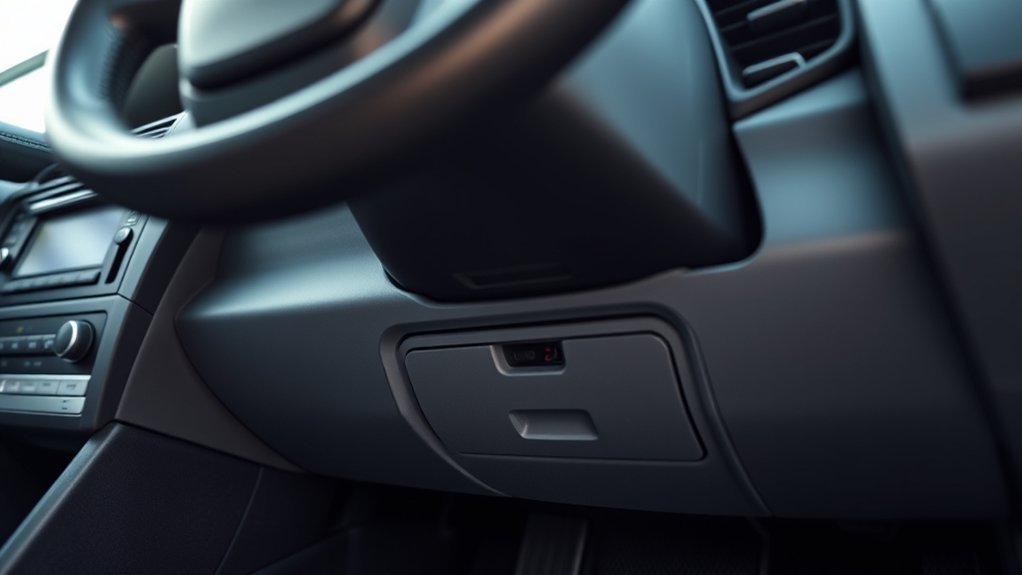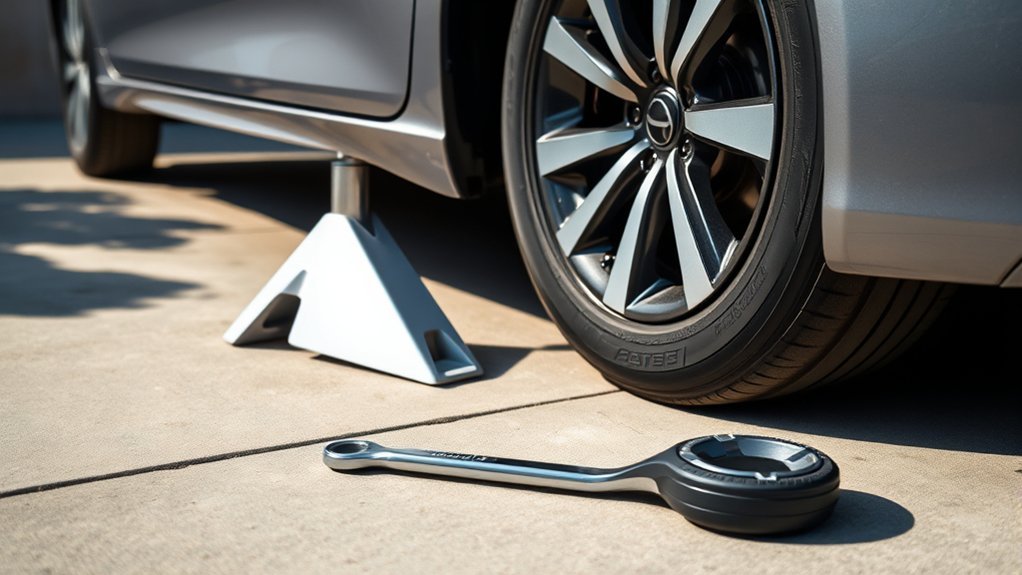
How to Use a Toyota Camry Jack and Lug Wrench
Last updated: September 16, 2026 — 2025 Camry wheel-nut torque, compact-spare pressure, spare-speed limit, and wheel-installation cautions rechecked.
To use a Toyota Camry jack and lug wrench safely, park on a hard, level surface away from traffic, turn on the hazard lights, set the parking brake, shift to Park, and stop the engine or hybrid system. Chock the wheel diagonally opposite the flat tire, loosen the lug nuts about one turn before lifting, place the factory jack only at the correct reinforced jack point, raise the car just enough to change the tire, install the spare, then lower the vehicle and tighten the wheel nuts evenly in a star pattern. For the U.S.-market 2025 Camry, Toyota lists wheel-nut torque at 76 ft-lbf (103 N·m, 10.5 kgf·m), compact-spare pressure at 60 psi (420 kPa), and a maximum compact-spare speed of 50 mph (80 km/h).
Quick Answer
Get the jack, wheel-nut wrench, and spare from the trunk; chock the wheel diagonally opposite the flat; loosen the lug nuts about one turn while the tire is still on the ground; position the jack at the reinforced Camry jack point; lift only high enough to fit the spare; hand-start the lug nuts; lower the vehicle; and tighten the nuts evenly to the correct specification.
Key Takeaways
- Loosen the lug nuts before lifting the Camry, not after the wheel is off the ground.
- Use only the jack points shown in your owner’s manual; placing the jack under the wrong spot can damage the car or make it unstable.
- For the U.S.-market 2025 Camry with factory wheel hardware, Toyota lists wheel-nut torque at 76 ft-lbf (103 N·m, 10.5 kgf·m). Confirm the specification for other model years or aftermarket wheels.
- Toyota lists the 2025 Camry compact spare at 60 psi (420 kPa) and limits compact-spare speed to 50 mph (80 km/h).
- Do not apply oil, grease, or anti-seize to the wheel bolts or wheel nuts unless the applicable manufacturer specifically instructs it.
- A compact spare is temporary. Repair or replace the regular tire as soon as possible.
At a Glance
| Time Required | About 20–30 minutes in safe conditions |
| Difficulty | Beginner, if the vehicle is on firm level ground |
| Tools Needed | Toyota jack, wheel-nut wrench, spare tire, wheel chock or sturdy wedge, flashlight, tire-pressure gauge, torque wrench if available |
| 2025 Wheel-Nut Torque | 76 ft-lbf (103 N·m, 10.5 kgf·m) |
| 2025 Compact-Spare Pressure | 60 psi (420 kPa) |
| 2025 Compact-Spare Speed | Do not exceed 50 mph (80 km/h) |
| Cost | Usually $0 if your spare and factory tools are present and usable |
[Products Worth Considering]

This wheel lock lug nut set adds an extra layer of theft protection for compatible Toyota and Lexus vehicles by securing wheels with a unique key pattern that resists common removal tools. Built to OEM-standard fitment with corrosion-resistant, triple-chrome finished construction, it is designed for direct replacement and long-lasting performance. The set includes locking nuts and a matching key for easy installation on compatible vehicles with the correct thread and cone seat specifications.
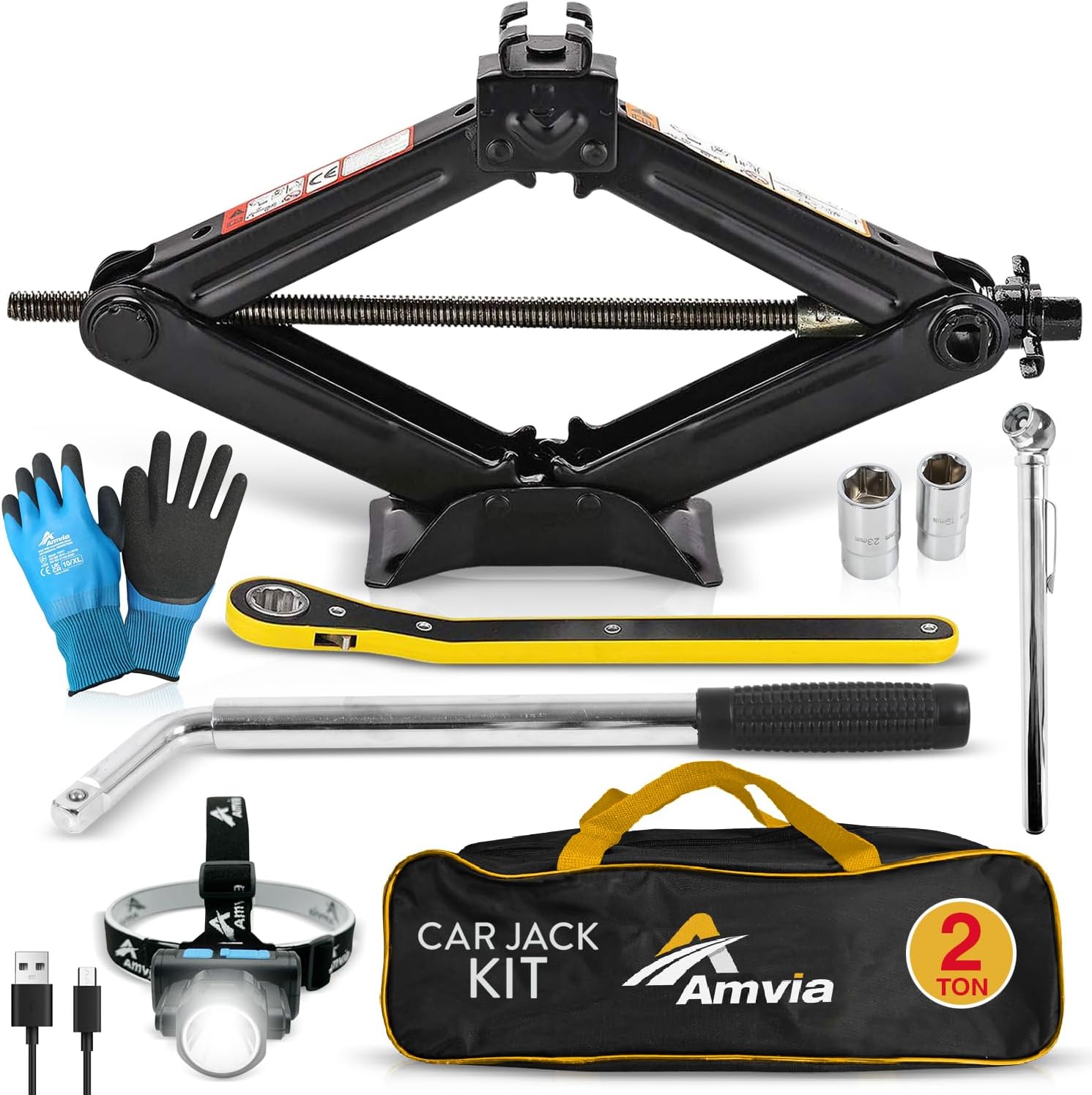
This all-in-one car jack kit is built to help drivers handle flat tire emergencies quickly and safely. It includes a 2 ton scissor jack, telescopic lug wrench, USB rechargeable LED headlamp, tire pressure gauge, gloves, and a storage bag for organized trunk storage. Designed for a wide range of vehicles, it offers a compact, portable solution for roadside tire changes day or night.
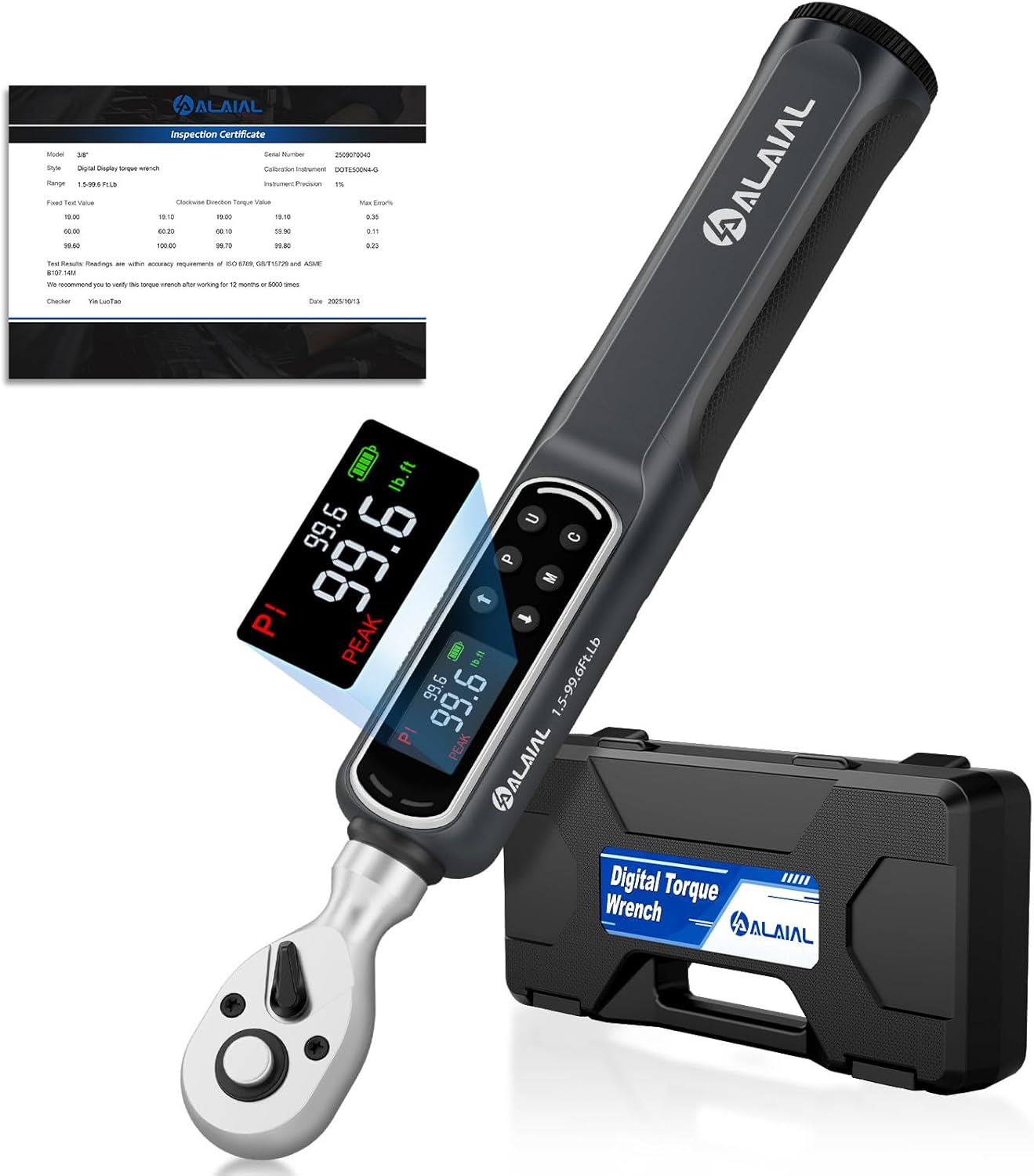
This digital torque wrench delivers precise fastening across a wide torque range with strong accuracy, making it a reliable choice for automotive, motorcycle, and general repair work. Its LED display, buzzer, and vibration alerts help prevent overtightening, while PEAK and TRACE modes plus preset memory and data logging add control and consistency for repeat jobs. Built for comfort and durability, it includes a storage case and batteries for ready-to-use convenience.
Before You Use the Jack: Safety Checklist
Before touching the jack, move the Camry as far from traffic as safely possible. Choose a hard, flat surface such as pavement or concrete. Do not jack up the vehicle on soft soil, loose gravel, a slope, ice, or uneven ground. If you cannot find a safe place, call roadside assistance instead of trying to change the tire in a dangerous spot. Do not continue driving normally on a flat tire; even a short distance can damage the tire and wheel.
Warning: The factory emergency jack is for changing a tire only. Do not crawl under the Camry or place any part of your body under the vehicle while it is supported only by the jack. If the vehicle was just driven, the wheel and brake area may also be extremely hot, so avoid touching those parts until they can be handled safely.
Use this checklist before lifting:
- Turn on the hazard lights.
- Shift the vehicle to Park.
- Set the parking brake.
- Turn off the engine or hybrid system.
- Keep passengers and bystanders safely away from the work area and traffic.
- Place a wheel chock at the tire diagonally opposite the flat tire.
- Read the flat-tire section for your exact Camry model year in the Toyota Owners manual library.
Where Can You Find Your Spare Tire Jack?

On most Toyota Camry models equipped with a spare tire, the jack, wheel-nut wrench, and spare are stored under the trunk floor or luggage-floor cover. Open the trunk, lift the floor cover or deck mat, remove the tool tray if your model has one, and take out the jack and wrench. Toyota’s flat-tire instructions for the 2025 Camry place the emergency tools and spare in the luggage-floor area, although the exact layout can vary by model year and configuration.
Before you start, check that the jack, jack handle, wheel-nut wrench, and spare tire are all present and usable. Also check the spare’s pressure. Toyota’s 2025 Camry maintenance data lists the compact spare at 60 psi (420 kPa). For other model years, follow the specification for your exact vehicle. NHTSA recommends checking the pressure of all tires, including the spare, at least monthly when cold.
Note: Some vehicles may have wheel locks or model-specific tools. If your lug nuts use a wheel-lock key, locate the key before lifting the vehicle.
[Products Worth Considering]

This cordless impact wrench delivers powerful high-torque performance for tire changes, stubborn lug nuts, and heavy-duty repairs around the garage or job site. Its brushless motor, three-speed control, LED work light, and included dual batteries provide reliable runtime, precision, and convenience for automotive and maintenance tasks. The complete kit comes with sockets, an extension bar, charger, and carry case for easy transport and storage.

This cordless impact wrench delivers high torque for fast lug nut removal, stubborn bolt loosening, and heavy-duty repair work on cars, trucks, and machinery. A brushless motor, dual 21V batteries, variable speed control, and built-in safety protections help you work efficiently with less effort. The included sockets, charger, and storage case make it a ready-to-use kit for home garages and professional jobsites.

This low-profile floor jack delivers strong lifting capacity for routine automotive maintenance, from tire changes to brake work and oil service. Its wide lift range, easy-rolling steel wheels, and single piston hydraulic pump make it practical for cars, SUVs, and light trucks. Built with durable steel and safety-focused features, it offers dependable performance and convenient storage.
Why Knowing Your Jacking Points Matters
The factory jack must lift from the reinforced side jack point near the flat tire, not from a random metal panel, suspension part, exhaust component, or plastic trim. On a Camry, use the marked reinforced area under the rocker panel shown in the owner’s manual and align the jack notch correctly. For a deeper explanation of roadside and garage lifting locations, see the Toyota Camry jack-point guide.
Using the wrong point can bend the rocker area, damage the underbody, or let the jack slip. If the jack does not sit squarely or the notch is not aligned with the specified point, lower it and reposition it before lifting again.
[Products Worth Considering]

This click torque wrench delivers accurate, repeatable tightening for automotive and home repair tasks, helping prevent over-tightening and fastener damage. Its dual-range scale, knurled non-slip grip, and durable ratchet head make it easy to use, while the included extension bar and storage case add extra convenience.

Fix-A-Flat provides a quick emergency solution for temporary flat tire repair and inflation, helping drivers get back on the road without a jack, spare tire, or tools. Its formula seals small tread punctures in seconds, is safe for tires and TPMS systems, and offers an eco-friendly alternative for roadside emergencies. Designed for standard tires, it is easy to keep in the trunk for dependable peace of mind.

The LEXIVON 1/2-inch drive click torque wrench delivers accurate, dependable tightening for automotive and mechanical jobs with pre-calibrated precision. Its dual-range scale, reversible ratchet head, and ergonomic knurled handle make it easy to set, read, and use comfortably in a variety of applications. Built with hardened chrome vanadium steel and a corrosion-resistant finish, it is designed for lasting performance and reliability.
Wheel Chock Placement
A wheel chock helps stop the Camry from rolling while one corner is lifted. Place it at the wheel diagonally opposite the flat tire. If you do not have a purpose-made chock, use only a sturdy wedge that cannot easily slide or crush.
| Flat Tire | Place the Chock |
|---|---|
| Front left | Behind the rear right tire |
| Front right | Behind the rear left tire |
| Rear left | In front of the front right tire |
| Rear right | In front of the front left tire |
Positioning the Jack Correctly
Set the jack on firm, level ground under the specified side jack point closest to the flat tire. The jack should stand straight, and its top notch should engage the reinforced point correctly. If the jack leans, sits on loose debris, or does not line up cleanly, stop and reposition it.
Raise the jack only after the lug nuts have been loosened slightly. Lift the vehicle slowly and only high enough for the flat tire to clear the ground and for the inflated spare to fit.
Pro Tip: Do not lift the vehicle higher than necessary. A compact spare is smaller than the normal road tire and leaves the Camry sitting lower after installation, so watch ground clearance as you leave the area and drive over bumps or driveway transitions.
How to Use a Toyota Camry Jack and Lug Wrench: Step by Step
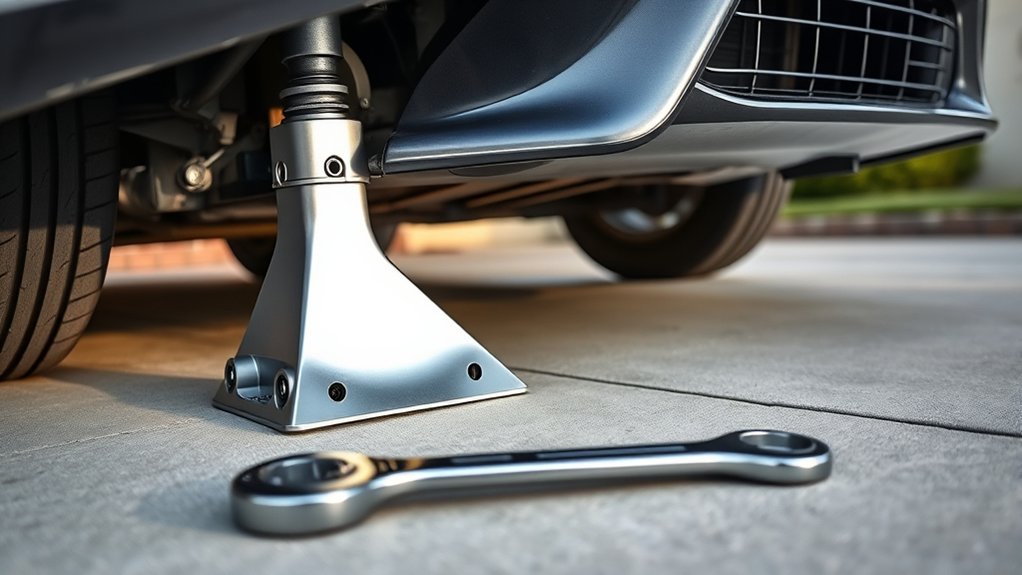
Use this sequence so the wheel stays stable while you break the lug nuts loose and the jack carries only the load it needs to carry:
- Park on hard, level ground away from traffic.
- Turn on the hazard lights, shift to Park, set the parking brake, and turn off the engine or hybrid system.
- Place a wheel chock at the tire diagonally opposite the flat tire.
- Remove the spare tire, jack, jack handle, and wheel-nut wrench from the trunk.
- Loosen each lug nut about one turn while the flat tire is still on the ground.
- Place the jack at the correct Camry jack point near the flat tire.
- Raise the vehicle slowly until the flat tire is only slightly clear of the ground.
- Check that the jack remains straight and stable before removing the wheel.
Proper Jack Placement Techniques
Proper jack placement is mainly about correct contact and a stable base. The jack must meet the reinforced point shown for your Camry rather than the floor pan, suspension arm, exhaust, or a plastic cover. Keep the jack base flat on the ground and make sure the handle has enough room to operate without striking the body.
- Use the owner’s manual diagram for your exact Camry year.
- Clear dirt, stones, and loose objects from under the jack base.
- Lift only one corner at a time with the factory emergency jack.
- Do not use the emergency jack for oil changes, brake work, or under-vehicle repairs.
Ensuring Vehicle Stability
Watch the jack and vehicle as the Camry rises. If the car shifts, the jack begins to lean, or the surface underneath starts to move or crumble, stop and lower the vehicle. Do not continue a roadside tire change when the support is unstable.
| Check | What to Confirm |
|---|---|
| Surface | Hard, flat, and stable enough to support the jack |
| Parking brake | Fully set before lifting |
| Wheel chock | Placed at the opposite diagonal tire |
| Jack alignment | Straight, centered, and contacting the specified jack point |
Removing the Tire With a Lug Wrench
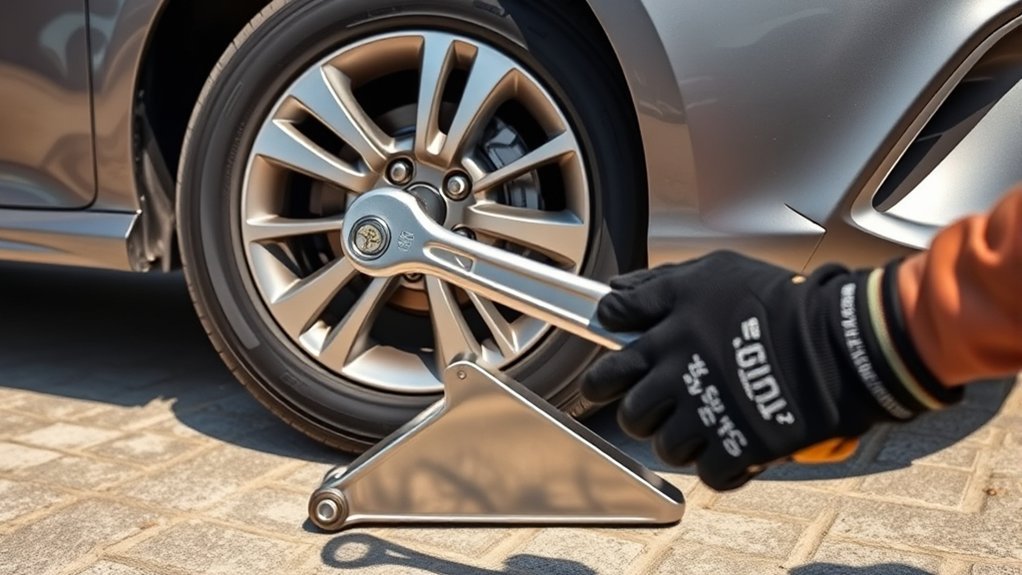
Use the wheel-nut wrench to loosen each lug nut counterclockwise while the tire is still touching the ground. Loosen them about one turn; do not remove them yet. Once the vehicle is raised and stable, remove the nuts fully and place them somewhere clean where dirt cannot contaminate the threads or seating surfaces.
Pull the flat tire straight off the hub. If it sticks, do not crawl under the vehicle, strike the car, or use force that could shift it on the jack. Gently rock the tire from the sides while keeping your body clear of the underside. When setting the removed wheel on the ground, place the wheel face upward to reduce the chance of scratching it.
Installing the Spare Tire
Before mounting the spare, remove dirt or foreign matter from the wheel contact surface if you can do so safely. Toyota warns that debris between the wheel and mounting surface can allow the wheel nuts to loosen. Do not apply oil, grease, or anti-seize to the wheel bolts or wheel nuts unless the applicable manufacturer specifically instructs it.
Align the spare with the wheel studs and push it squarely into place. Install every lug nut by hand first. Each nut should turn smoothly; if one binds or starts crooked, back it off instead of forcing it with the wrench.
Snug the lug nuts evenly in a star or crisscross pattern while the vehicle is still raised so the wheel seats evenly. Then lower the Camry completely and tighten the wheel nuts securely in the same crossing sequence. For the U.S.-market 2025 Camry with factory wheel hardware, Toyota specifies 76 ft-lbf (103 N·m, 10.5 kgf·m). Use a torque wrench for final tightening when available.
For the U.S.-market 2025 Camry with factory wheel hardware, Toyota lists wheel-nut torque at 76 ft-lbf (103 N·m, 10.5 kgf·m). Confirm the specification for a different model year or aftermarket wheel-and-lug setup.
Top Mistakes to Avoid When Changing a Tire
| Mistake | Why It Is Risky | Better Move |
|---|---|---|
| Loosening lug nuts after lifting | The wheel may spin and the car can shift on the jack. | Break them loose about one turn while the tire is on the ground. |
| Using the wrong jack point | It can damage the body or allow the jack to slip. | Use the reinforced jack point shown in the manual. |
| Skipping the wheel chock | The vehicle can roll as its weight shifts. | Chock the tire diagonally opposite the flat tire. |
| Lubricating wheel bolts or nuts | Oil or grease can produce excessive tightening force at a given torque setting. | Keep the fasteners free of oil and grease unless the applicable manufacturer specifically instructs otherwise. |
| Guessing final wheel-nut tightness | Under-tightening can allow loosening; excessive tightening can damage hardware. | Use the correct specification and a torque wrench when available. |
| Driving normally on a compact spare | Temporary spares are not designed for normal high-speed or long-term use. | For a 2025 Camry, stay at or below 50 mph (80 km/h) and replace the regular tire promptly. |
Safety Tips When Using the Lug Wrench
A wheel-nut wrench works best when it fits squarely on the nut and you apply smooth pressure. Avoid sudden jerks that can make the wrench slip. The factory Toyota wheel-nut wrench is the safest default because it is supplied for the vehicle. If you use a separate socket, confirm that it fully seats on the exact lug nuts fitted to your Camry before applying force.
Proper Stance and Grip
Stand with your feet stable and keep your balance before applying pressure. Pull smoothly when the wrench position allows it instead of bouncing or jumping on the tool. If the wrench slips, stop and reseat it fully on the lug nut.
- Keep a controlled grip when breaking a stubborn lug nut loose.
- Keep your face and knuckles away from the fender and ground.
- Use smooth pressure rather than bouncing on the wrench.
- Do not use a socket that fits loosely enough to round the lug nut.
Inspect Tool Condition
Before using the wheel-nut wrench, check for cracks, bends, heavy corrosion, or damaged ends. Make sure the jack operates smoothly and that all sections of the jack handle are present. If a factory tool is damaged or incomplete, do not rely on it for an emergency tire change.
Lowering the Vehicle Safely After Tire Change
After the spare has been seated and the lug nuts have been hand-started and snugged evenly, lower the Camry carefully to the ground. Then tighten the wheel nuts securely in a star or crisscross pattern. Toyota’s 2025 instructions call for tightening the nuts in the specified crossing order two or three times; use a torque wrench for the final 76 ft-lbf (103 N·m) specification when available.
For a five-lug wheel, the crossing pattern works like this:
- Start with one lug nut and snug it.
- Move across the wheel to a non-adjacent nut.
- Continue crossing the wheel rather than tightening neighboring nuts in a circle.
- Repeat the pattern for final tightening or torque verification.
Note: If you do not have a torque wrench on the road, tighten the lug nuts securely with the factory wrench, drive cautiously to a safe service location, and have the wheel nuts checked with a torque wrench as soon as possible.
Proper Jack and Tool Storage
After the spare is installed and the vehicle is fully lowered, crank the jack down completely. Store the jack, jack handle, wheel-nut wrench, tool tray, and flat tire securely in their proper locations. Loose tools or an unsecured wheel can become hazards during sudden braking.
Before driving away, check that the luggage-floor cover is back in place and that the flat tire and tools are secured. Turn off the hazard lights only when you are ready to re-enter traffic safely.
What to Do After Installing the Spare
A compact spare is an emergency-only tire. On the 2025 Camry, Toyota says not to drive faster than 50 mph (80 km/h) with the compact spare installed. Drive smoothly, allow extra stopping room, avoid hard acceleration, abrupt steering, and sudden braking, and repair or replace the regular tire as soon as possible. For a different model year, follow the speed and use restrictions printed on the spare and listed in that vehicle’s manual.
Check the spare’s inflation pressure before relying on it. Toyota lists the 2025 Camry compact spare at 60 psi (420 kPa), while NHTSA recommends checking spare-tire pressure at least monthly when cold. The 2025 compact spare is not equipped with the normal tire-pressure warning valve and transmitter, so do not assume the vehicle is actively monitoring the spare’s pressure. If the tire-pressure warning light remains illuminated after fitting the compact spare, follow your Camry owner’s manual for the applicable TPMS procedure.
NHTSA’s tire-safety guidance emphasizes correct inflation pressure and regular tire inspection. Inspect the damaged tire for punctures, cuts, bulges, exposed material, or other visible damage, then arrange a proper repair or replacement promptly.
When to Call Roadside Assistance
Do not attempt a tire change if the Camry is on a narrow shoulder, soft or unstable ground, a hill, ice, or a busy roadway where you cannot work safely. Call for help if the lug nuts will not loosen, the jack is missing or damaged, the spare is flat or visibly deteriorated, the wheel is severely damaged, or you cannot positively identify the correct jack point.
Frequently Asked Questions
Do I loosen lug nuts before jacking a Toyota Camry?
Yes. Loosen each lug nut about one turn while the tire is still on the ground. Do not remove the lug nuts fully until the Camry is lifted and stable at the correct jack point.
What size socket does a Toyota Camry lug nut take?
Use the factory Toyota wheel-nut wrench when possible because it is supplied for the vehicle. If you use a separate socket, confirm that it fully seats on the exact lug nuts fitted to your Camry before applying force; wheel and lug hardware can differ by model year or aftermarket setup.
How tight should Toyota Camry lug nuts be?
For the U.S.-market 2025 Camry with factory wheel hardware, Toyota lists wheel-nut torque at 76 ft-lbf, equal to 103 N·m or 10.5 kgf·m. Confirm the specification for a different model year or aftermarket wheel-and-lug setup.
Can I use the Camry jack anywhere under the car?
No. Use only the reinforced jack point specified in the owner’s manual for the wheel you are changing. Jacking from the wrong area can damage the Camry or make the vehicle unstable.
How fast can I drive on a Toyota Camry compact spare?
For the 2025 Camry, Toyota says not to exceed 50 mph (80 km/h) with the compact spare installed. For another model year, follow the speed restriction printed on the spare and listed in that Camry’s owner’s manual.
How long can I drive on a Toyota Camry spare tire?
Treat a compact spare as an emergency-only temporary tire and replace it with a standard road tire as soon as possible. Follow the use restrictions on the spare and in your exact Camry owner’s manual rather than relying on a generic mileage limit.
Conclusion
Changing a Toyota Camry tire is manageable when you follow the correct sequence: park on hard level ground, chock the vehicle, loosen the lug nuts before lifting, use the specified jack point, mount the spare carefully, lower the car, and tighten the wheel nuts evenly to the correct torque. For the U.S.-market 2025 Camry, Toyota lists 76 ft-lbf (103 N·m) wheel-nut torque, 60 psi compact-spare pressure, and a 50 mph (80 km/h) compact-spare speed limit. If the location, ground, tools, wheel hardware, or traffic conditions are unsafe, use roadside assistance rather than forcing the job.
Sources
- Toyota Owners — 2025 Camry “If you have a flat tire” — supports pre-jacking safety, tool and spare use, wheel chocking, lug-nut loosening, installation cautions, compact-spare restrictions, and wheel-change procedure.
- Toyota Owners — 2025 Camry maintenance data — supports the 76 ft-lbf (103 N·m) wheel-nut torque and 60 psi (420 kPa) compact-spare pressure.
- Toyota Owners — Manuals and Warranties — supports checking the exact owner’s manual for the Camry model year and configuration being serviced.
- NHTSA TireWise — supports monthly cold-pressure checks including the spare, tire-condition inspection, and general tire-safety guidance.