Winter salt can turn a clean Toyota Camry undercarriage into a rust problem if it sits in seams, brackets, splash-shield fasteners, brake-line clips, and suspension mounts. The safest approach is simple: inspect first, wash out salt and grime, dry the underside completely, choose the right rust inhibitor, apply it only where it belongs, and recheck it after winter driving.
Quick Answer
To protect a Camry undercarriage from winter rust, safely lift and inspect it, wash away salt with an underbody cleaner, let every seam dry, then apply a thin lanolin, oil-film, wax, or compatible rust inhibitor. Avoid brakes, exhaust, sensors, tires, belts, and hybrid orange cables. Reinspect after winter and touch up exposed areas.
Key Takeaways
- Do not undercoat dirt, road salt, wet seams, or flaky rust; cleaning and drying matter more than heavy spraying.
- Lanolin and oil-film products are forgiving for DIY winter protection because they stay soft, creep into seams, and can be touched up.
- Rubberized coatings are not a cure for rusty metal; use them only on clean, dry, properly prepared bare or primed metal.
- Call a professional if you find perforation, soft metal, cracked mounts, severe pitting, or unsafe jack points.
At a Glance
| Time Required | 1–3 hours of active work, plus drying and product set time |
| Difficulty | Moderate DIY if you can lift the car safely; professional help recommended for structural rust |
| Tools Needed | Wheel chocks, rated jack stands or ramps, inspection light, gloves, eye protection, brush, scraper, underbody washer, cleaner, masking materials, and applicator wand |
| Cost | Varies by product and tools already owned; touch-ups cost less than a full underbody treatment |
Prep the Camry: Inspection, Tools, and Product Checklist
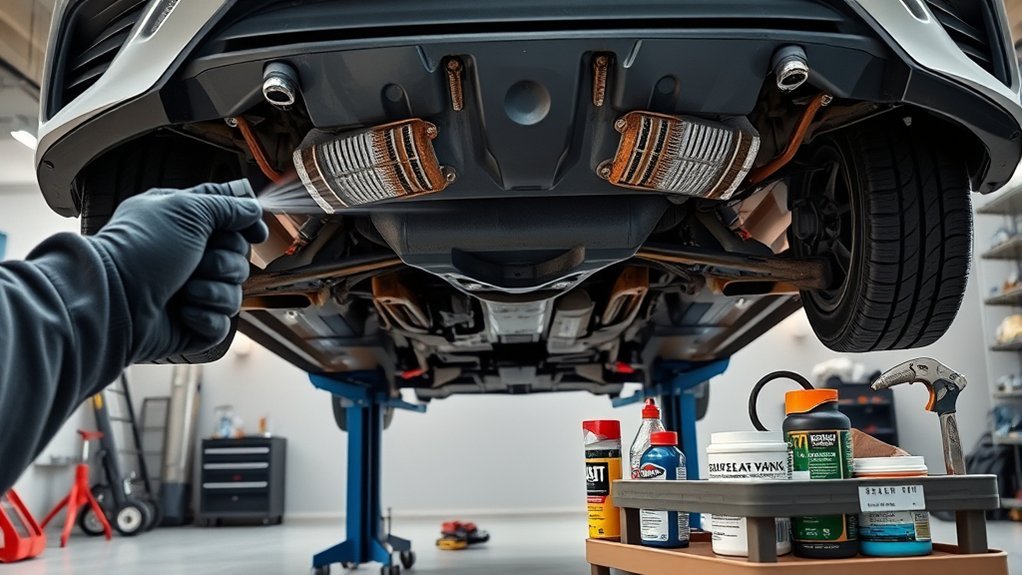
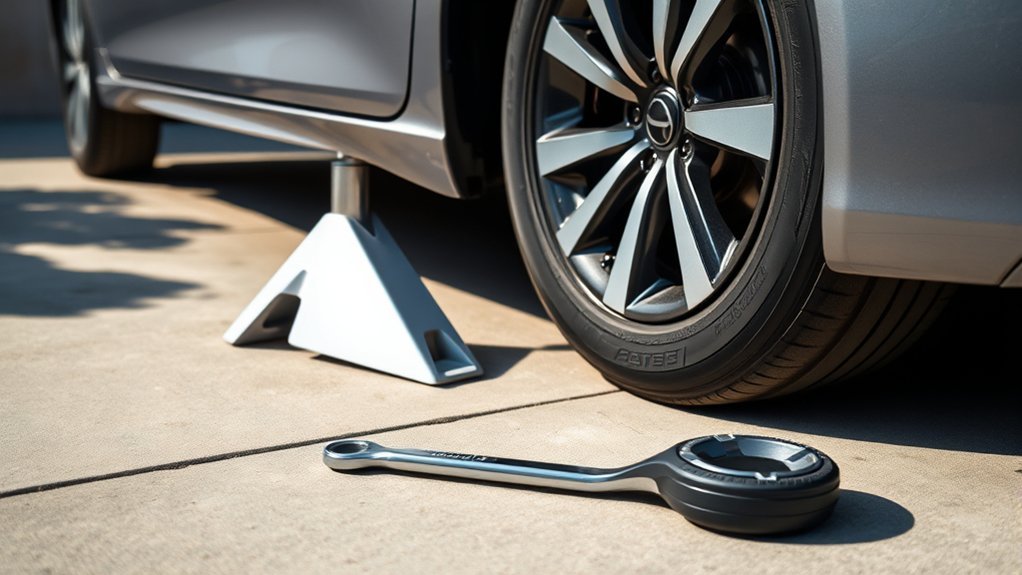
Start with a careful undercarriage inspection before winter sets in. Park on a flat surface, let the exhaust cool, set the parking brake, chock the wheels, and support the car with rated jack stands or ramps. Do not crawl under a Camry supported only by a hydraulic jack. Toyota’s owner information for the Camry also warns that improper jack placement can damage the vehicle or cause injury, so use the correct lift and support points for your model year.
Warning: If your Camry is a hybrid, do not touch, pry, spray, coat, or brush orange high-voltage cables or connectors. Toyota warns that Camry Hybrid high-voltage systems can cause severe burns, electric shock, or fatal injury. If coating or rust is near high-voltage parts, stop and use a qualified technician.
Use a bright inspection light and move slowly from the front subframe to the rear suspension. Check seams, welds, pinch welds, brackets, and mounts for brown staining, flaky rust, bubbling coating, packed mud, or trapped salt. Take photos before cleaning so you can compare the same spots later.
[Products Worth Considering]

This rear trunk lid weatherstrip is designed to fit select Toyota Camry and RAV4 models, helping restore a secure seal around the trunk area. It supports protection against dust, moisture, and road noise while offering a reliable replacement for worn or damaged factory seals. Made for straightforward installation, it provides a practical fit-and-finish upgrade for everyday driving.

This A-Premium AC expansion valve is a direct replacement designed to restore proper refrigerant flow and improve cooling performance across a wide range of compatible vehicles. Built to meet or exceed OEM quality standards, it features precision internal components for reliable operation and long-lasting durability. It is supported by an unlimited-mileage warranty for added peace of mind.

This coolant bypass valve is a direct replacement for select Toyota models, helping regulate coolant flow for stable engine temperature and dependable performance. Built from high-temperature, corrosion-resistant materials, it is designed to handle demanding driving conditions while supporting long-term durability. Its straightforward design also makes installation quick and hassle-free.
Camry Undercarriage Rust Hotspots to Check
- Front subframe, lower control arms, sway-bar brackets, and steering-area brackets
- Rocker panel seams, pinch welds, jacking points, and floor pan seams
- Brake lines, fuel lines, line clips, and small retaining brackets
- Rear subframe or suspension cradle, trailing arms, strut mounts, and spring seats
- Exhaust hangers, muffler seams, heat-shield fasteners, and splash-shield hardware
- Wheel wells, inner fender lips, plastic liner edges, and drain holes where grit collects
Gather the basics before washing: gloves, eye protection, respirator or mask rated for aerosols, creeper, inspection light, plastic scraper, nylon brush, wire brush for loose scale, rags, painter’s tape, foil or plastic masking, underbody washer, all-purpose cleaner, rust inhibitor, and an extension wand for frame rails and seams.
Sort the Rust Before You Coat
| Rust Level | What It Looks Like | Best Next Step |
|---|---|---|
| Light surface rust | Orange or brown film, metal still solid | Clean, dry, then apply a compatible rust inhibitor |
| Scaling rust | Flakes, raised edges, rough metal | Brush loose scale, evaluate thickness, then use converter or coating only if metal is still sound |
| Structural rust | Soft metal, holes, cracked brackets, crushed jack points, deep pitting, or clunks from mounts | Stop DIY undercoating and get a professional inspection before driving or lifting from that area |
Wash the Undercarriage: Pressure-Wash + Salt Shift Method
Road salt and chloride-rich deicers are a known contributor to automobile corrosion, especially in cold regions where salt collects in underbody pockets and seams. The goal is not to blast the car as hard as possible; it is to loosen salt, mud, and film without forcing water into seals, bearings, electrical connectors, or damaged coatings.
Pre-rinse the undercarriage with fresh water first. Turn the front wheels left and right to expose the control arms, inner fenders, and steering-area brackets. Pre-spray heavy grime with a compatible all-purpose cleaner, then rinse. Keep the pressure-washer wand moving, stay back from rubber boots and electrical connectors, and avoid lingering on axle seals, wheel bearings, oxygen sensors, and hybrid wiring.
If you use Salt Shift Chassis & Undercarriage Wash, follow the manufacturer’s directions instead of guessing the foam setting. Salt Shift lists 50–100 mL of product in the universal canister, a 30-second flush with the chassis flusher, and for the pressure-washer underbody blaster, a full undercarriage spray followed by a 60-second dwell and fresh-water rinse. Do not let the cleaner dry on the underbody.
Note: Wash runoff can carry salt, oil residue, and cleaner. Work where runoff is allowed by local rules, avoid storm drains when possible, and do not use harsh solvents near driveways, lawns, or waterways.
Dry Fully Before Any Rust Treatment
Do not spray rust protection onto wet seams. Let the Camry drip-dry, then use compressed air, a leaf blower, or a fan to clear pockets around brackets, pinch welds, splash shields, and rear suspension mounts. If temperatures are cold or humidity is high, let the car sit overnight in a dry garage before coating.
Pick the Right Rust Treatment for a Camry: Fluid Film, Lanolin, Wax, and Alternatives
The best Camry undercarriage rust treatment depends on how much rust is already present, how much future service access matters, and whether you want an annual touch-up or a harder coating. Match the product to the metal condition instead of spraying one product everywhere.
| Product Type | Best For | Important Limits |
|---|---|---|
| Lanolin or oil-film coating, such as Fluid Film-style products | Annual winter protection, seams, brackets, and lightly rusty but solid metal | Stays soft and may need touch-ups; Fluid Film also says it may soften some existing undercoatings, so test compatibility first |
| Lanolin protectant, such as Surface Shield-style products | Longer-lasting moisture barrier on metal parts, wiring-adjacent areas, and moving equipment parts where the label allows | It does not remove rust; loose scale still needs prep and structural rust still needs repair |
| Wax or cosmoline-style coating | Longer-term barrier protection on clean, dry, serviceable metal | Harder to remove later; follow the product’s spray-gun and cure instructions exactly |
| Rust converter | Sound metal with remaining surface rust after brushing | Not a filler or structural repair; must be dry and usually needs a compatible topcoat |
| Rubberized undercoating | Clean, dry, bare or primed metal where a flexible barrier and sound-deadening are desired | Do not use it to bury salt, moisture, flaky rust, or holes; trapped contamination can continue corroding unseen |
Pro Tip: For a winter-driven Camry, a soft lanolin or oil-film coating is usually the most forgiving DIY choice because it can creep into seams and be refreshed. Use harder coatings only after the metal is clean, dry, stable, and easy to inspect.
[Products Worth Considering]

Bendix Premium Ceramic Front Brake Pads are engineered to match original equipment fit, form, and function for a straightforward replacement. Built with durable materials to help resist wear and corrosion, they support consistent braking performance and reduced brake fade for everyday driving. These pads are a dependable choice for compatible Pontiac, Scion, Toyota, and related vehicles.
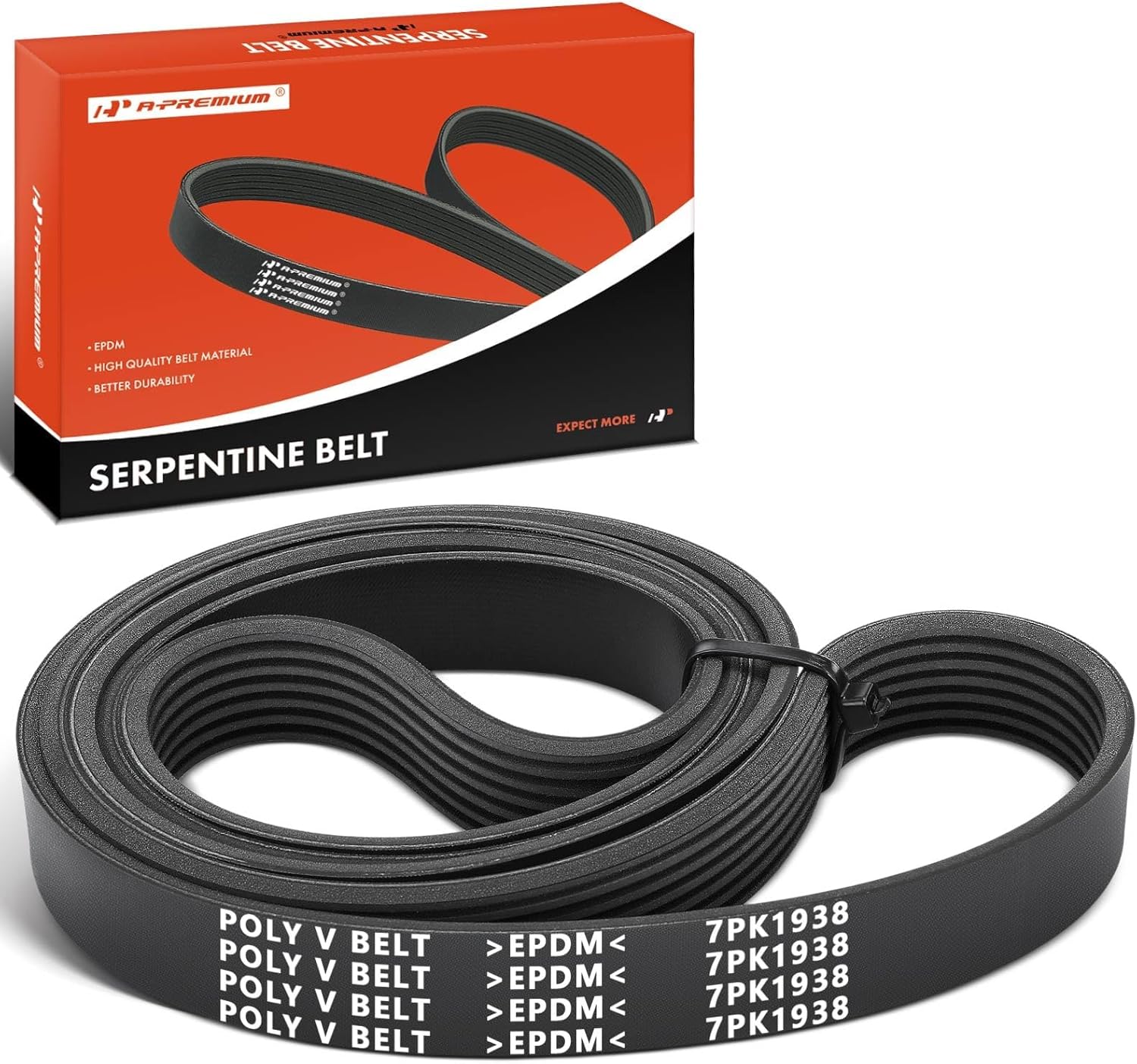
This A-Premium serpentine belt is designed to deliver dependable drive performance for compatible Toyota and Scion vehicles with exact-fit sizing for smooth operation. Built with premium EPDM and polyester cord construction, it helps resist cracking, reduce noise, and maintain stable tension in demanding engine conditions. It is a practical replacement choice for restoring reliable accessory drive performance and long-term confidence.

Easy to use spray seals and protects metal surfaces from corrosion and moisture
Apply Undercoating: Step-by-Step, Set Times, and Common Pitfalls
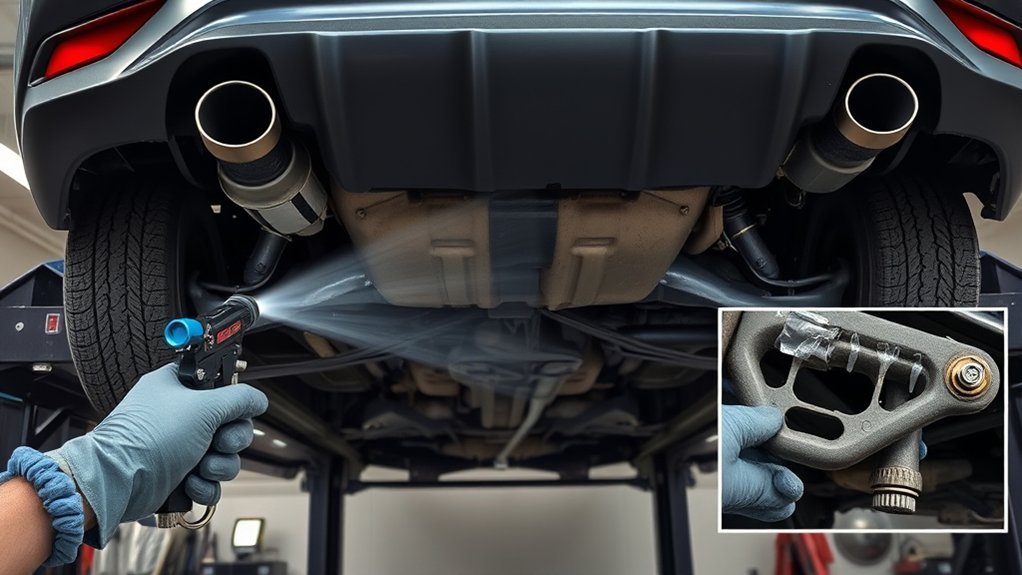
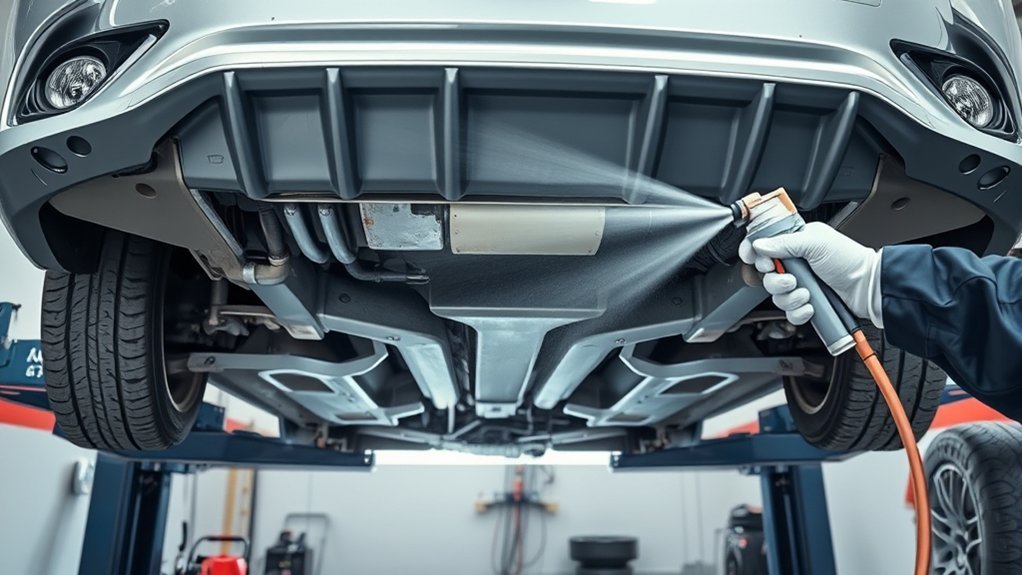
Before applying undercoating, confirm the undercarriage is clean, dry, and cool. Read the product label, shake or mix as directed, and test the spray pattern on cardboard. Use thin, controlled passes. Heavy puddles waste product, attract dirt, and can drip onto hot or moving parts.
Warning: Never spray rust coating on brake rotors, brake pads, tire tread, belts, exhaust pipes, catalytic converter, oxygen sensors, steering joints that should remain clean, rubber bushings unless the label says it is safe, or any orange hybrid high-voltage cable or connector.
[Products Worth Considering]
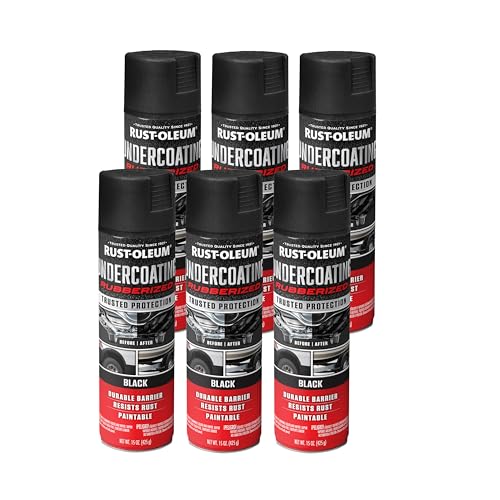
Perfect for use on bare or primed metal underbodies of cars, trucks, trailers, RVs and more

Perfect for use on bare or primed metal underbodies of cars, trucks, trailers, RVs and more

Perfect for use on bare or primed metal underbodies of cars, trucks, trailers, RVs and more
Mask Before Spraying
- Cover brake rotors, pads, calipers, parking-brake hardware, and wheel-speed sensors.
- Shield exhaust parts, catalytic converter, oxygen sensors, and hot heat shields.
- Keep coating off tire tread, belts, accessory pulleys, and drain holes.
- Protect painted exterior panels from overspray at rocker edges and wheel arches.
- On hybrids, leave high-voltage cables and connectors untouched and visible for inspection.
Spray Pattern and Coverage
- Start at the front subframe and work rearward so you do not drag your sleeves through fresh coating.
- Coat seams, brackets, fuel/brake-line clips, exposed fasteners, suspension mounts, and underbody pockets first.
- Use an extension wand for tight seams and hidden pockets, but avoid filling drain holes.
- Apply a light, even film. Multiple thin passes are better than one heavy pass.
- Wipe accidental overspray immediately from painted surfaces, exhaust, brakes, and sensors using the product’s recommended cleanup method.
- Let the coating settle, tack, or cure exactly as the label states. Lanolin and oil-film products usually remain soft; hard wax and rubberized coatings may require a true cure period.
- Recheck after a few days of sitting or after the first short drive. Look for drips, missed seams, soft buildup near heat sources, and overspray.
Common Application Mistakes
| Mistake | Why It Matters | Fix |
|---|---|---|
| Spraying over salt or mud | Seals contamination against the metal | Wash, rinse, dry, then coat |
| Coating wet seams | Moisture can continue corrosion under the film | Use air movement and wait longer before application |
| Using a thick coat | Causes drips and dirt buildup | Apply two light coats if the label allows |
| Spraying brakes or exhaust | Can reduce braking performance or create smoke and odor | Mask first and clean accidental overspray immediately |
| Burying structural rust | Hides damage that needs repair | Stop and have the car inspected by a body or frame professional |
Seasonal Checks, Touch-Ups, and When to Call a Pro
After the coating has settled or cured per label, build a simple maintenance rhythm. Inspect the Camry before winter, after heavy salt exposure, and again after the last spring wash. Focus on low points that collect salt and moisture: brake-line clips, fuel-line clips, strut mounts, weld seams, splash-shield fasteners, and rear suspension brackets.
| Task | Frequency | What to Record |
|---|---|---|
| Visual inspection | Before winter and mid-season | Photos of seams, brackets, lines, and mounts |
| Undercarriage rinse | After heavy salt exposure and post-winter | Date, cleaner used, and any salt-heavy areas |
| Touch-up coating | Annually or after severe winter driving | Product, amount used, and treated locations |
| Road-condition monitoring | Ongoing in salt-belt or coastal areas | Heavy brine/salt events and wash dates |
| Professional inspection | When structural issues appear | Shop findings, repairs, welds, or part replacements |
Call a professional if you find perforation, soft metal, severe pitting around suspension mounts, crushed or rusted jack points, loose brackets, brake-line corrosion, fuel-line corrosion, or clunks that suggest a compromised mount. Do not use undercoating as a substitute for welding, line replacement, or structural repair.
Troubleshooting After Undercoating
| Problem | Likely Cause | What to Do |
|---|---|---|
| Coating drips for days | Too much product or warm temperatures | Wipe excess from low points and use thinner coats next time |
| Burning smell or smoke | Overspray on exhaust or heat shields | Let the exhaust cool, clean affected areas, and inspect before driving again |
| Brake noise or poor braking | Possible contamination on brake parts | Do not drive normally; clean or service the brakes before use |
| Missed seams show orange rust | Insufficient wand coverage | Clean, dry, and touch up with a focused wand pass |
| Spray wand clogs | Cold product, old product, or dried residue | Warm product to label-approved temperature, clean the nozzle, and strain bulk coating if the label allows |
Frequently Asked Questions
How do you prevent rust under a car in winter?
Prevent winter undercarriage rust by rinsing away salt often, cleaning the underside before coating, drying seams fully, applying a compatible rust inhibitor, and inspecting fuel lines, brake lines, suspension mounts, pinch welds, and rocker seams throughout the season.
Is undercarriage rust protection worth it for a Toyota Camry?
Yes, it is usually worth it if your Camry sees road salt, coastal air, or brine-treated roads. The value comes from cleaning and protecting seams, brackets, fuel-line clips, brake-line clips, and suspension mounting areas before corrosion becomes expensive or structural.
Can you rubberize the underneath of your car to prevent rust?
You can use rubberized undercoating on clean, dry, bare or primed metal when the product label allows it. Do not use it over wet seams, road salt, flaky rust, holes, or structural rust because it can hide corrosion that still needs repair.
What can I put on rust underneath a car to stop it from getting worse?
For light surface rust, brush off loose scale, clean and dry the metal, then use a rust converter or a rust-inhibiting coating that matches the surface and product label. Lanolin and oil-film products can slow future corrosion, but they do not rebuild thin or perforated metal.
Should I wash the Camry undercarriage before applying Fluid Film or lanolin coating?
Yes. Wash out salt, mud, and cleaner residue first, then let the undercarriage dry completely. A soft coating applied over salt or moisture can trap contamination against seams and brackets, reducing the protection you were trying to add.
How often should I reapply undercarriage rust protection?
Inspect at least seasonally and touch up yearly if you drive on salted roads. Reapply sooner if pressure washing, gravel, snowpack, or service work removes coating from seams, brackets, brake-line clips, or suspension mounts.
Conclusion
Protecting a Camry undercarriage is not about hiding the underside under a thick black coating. It is about safe inspection, salt removal, complete drying, correct product choice, careful masking, and seasonal touch-ups. Use soft lanolin or oil-film protection where annual maintenance makes sense, reserve hard coatings for clean and properly prepared metal, and stop immediately if you find structural rust. When the metal is too thin, pitted, cracked, or unsafe to lift from, the right rust treatment is professional repair.
Sources
- Toyota Owners: 2025 Camry Hybrid floor jack positioning — supports jack-point and safe lifting guidance.
- Toyota Camry Hybrid Warranty & Maintenance Guide — supports high-voltage orange cable and hybrid safety warnings.
- U.S. EPA: Deicing Material Application and Storage — supports road salt and automobile corrosion concerns.
- Salt Shift: Chassis & Undercarriage Wash — supports underbody wash dilution, dwell, rinse, and “do not let dry” directions.
- Fluid Film: Automotive Applications — supports lanolin/oil-film undercoating behavior, annual protection language, and compatibility caveat.
- Rust-Oleum: Automotive Rubberized Undercoating — supports rubberized coating use on bare or primed underbody metal.