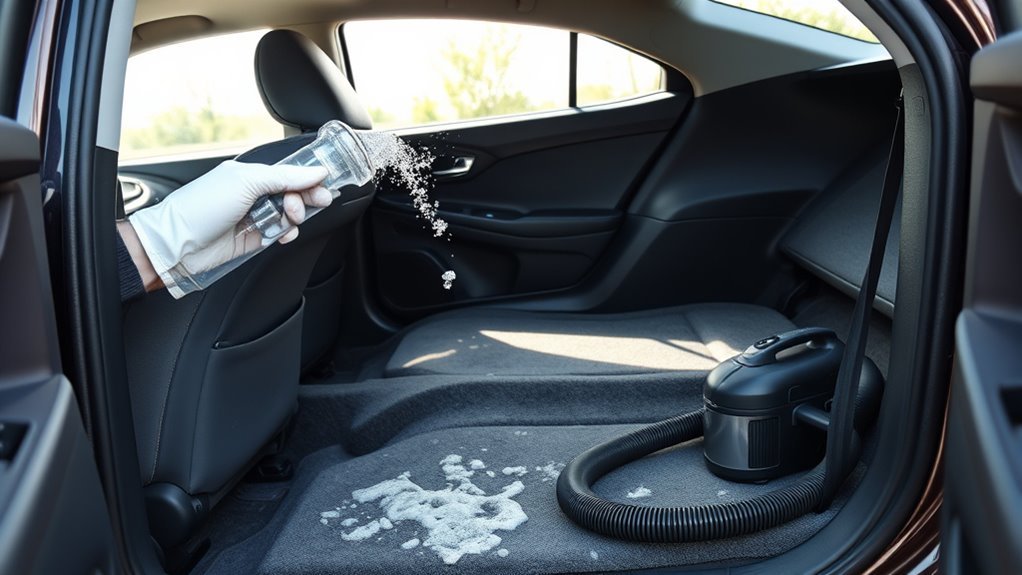
You can refresh your Toyota Camry carpets without turning the cabin into a wet mess: remove the mats, clear loose debris, vacuum slowly, spot-treat stains, use a small amount of foaming or automotive carpet cleaner, agitate gently, extract or blot out residue, and dry everything completely before reinstalling the mats. The key is controlled moisture, not soaking.
Quick Answer
To vacuum and shampoo Camry carpets, remove the mats and loose items, vacuum with crevice and brush attachments, pre-treat stains, apply a foaming automotive carpet cleaner sparingly, scrub in overlapping circles, extract or blot out residue, then dry the carpet fully with airflow before reinstalling secured floor mats.
Key Takeaways
- Vacuum first; shampooing dirty carpet before removing grit can grind debris deeper into the fibers.
- Use carpet cleaner lightly. Toyota guidance favors keeping carpet as dry as possible and letting it dry thoroughly.
- Treat oil, gum, food, and set-in stains differently instead of using one aggressive cleaner everywhere.
- Dry the carpet quickly with open doors, towels, and fans. Damp carpet can lead to odors and mold.
- After cleaning, reinstall only the correct driver-side mat and secure it with the factory retaining hooks.
At a Glance
| Time Required | 45 minutes to 3 hours, plus drying time |
| Difficulty | Easy to moderate |
| Tools Needed | Vacuum, crevice tool, brush, microfiber towels, carpet cleaner, wet/dry vacuum or extractor if available, fan or air mover |
| Cost | About $10–$40 for DIY supplies; more if renting an extractor |
Quick Result: What Vacuuming & Shampooing Your Camry Does
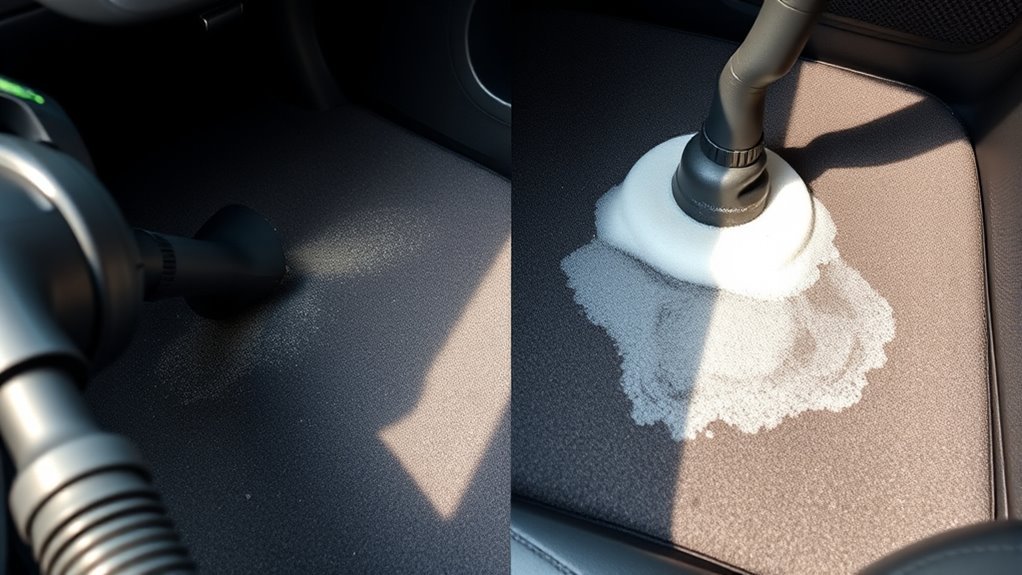
Vacuuming and shampooing your Camry removes the dirt, crumbs, pollen, and odors that make the cabin feel tired. Vacuuming pulls out loose debris first, while shampooing or foaming carpet cleaner helps lift stains and refresh the carpet fibers.
This is not just cosmetic. Clean carpets make the interior more pleasant, help reduce trapped odors, and support long-term care of the vehicle. Toyota recommends removing loose items, vacuuming carpets and mats, using suitable cleaner according to instructions, and allowing interior surfaces to dry thoroughly. Toyota’s interior-cleaning guidance also cautions that some detergents can discolor interior materials, so test cleaners first and avoid harsh products.
Work in this order: remove mats, clear debris, vacuum, spot-treat stains, clean the carpet in small sections, extract or blot excess moisture, dry completely, then reinstall the mats safely.
Warning: Do not soak the carpet, splash liquid near electrical components, or reinstall damp mats. Use controlled moisture and keep the carpet as dry as possible while cleaning.
Tools & Cleaners for Camry Carpets: Budget to Pro
You do not need a full detailing shop to clean Camry carpets well. Start with the right basic tools, then upgrade only if the carpet is heavily soiled.
| Tool or Cleaner | Best Use | Notes |
|---|---|---|
| Handheld or shop vacuum | Crumbs, sand, pet hair, daily debris | Use slow passes instead of quick swipes. |
| Crevice tool | Seat rails, seams, pedals, door sills | Essential for Camry footwells and tight edges. |
| Stiff carpet brush | Loosening embedded soil | Use firm pressure, not aggressive scraping. |
| Microfiber towels | Blotting stains and drying edges | Keep several clean towels nearby. |
| Foaming automotive carpet cleaner | General carpet shampooing | Follow label directions and test in a hidden area. |
| Wet/dry vacuum or extractor | Removing cleaner, soil, and moisture | Useful for deep cleaning, but avoid over-wetting. |
For spot work, a small amount of mild dish soap diluted in warm water can help on greasy stains, but do not flood the carpet. For the main shampoo step, use an automotive carpet or upholstery cleaner because household products may leave residue or discolor fabric.
Pro Tip: Vacuum before brushing and again after brushing. The first pass removes loose debris; the second pass captures grit that the brush lifted from the carpet base.
[Products Worth Considering]

These curved headrest hooks add convenient rear-seat storage for bags, coats, and groceries, helping keep your car interior neat and organized. Designed to fit matching headrest posts, they install quickly without removing the headrest and provide reliable support for everyday items in cars, SUVs, trucks, and more.

Custom-designed for Toyota RAV4 gasoline models from 2013 to 2018, this full-coverage interior protection set includes front and rear floor mats, a cargo liner, seat back protectors, and door sill guards. Built with odorless TPE and 3D laser fit precision, it helps block spills, dirt, pet hair, and daily wear while staying securely in place for a clean, family-friendly cabin.
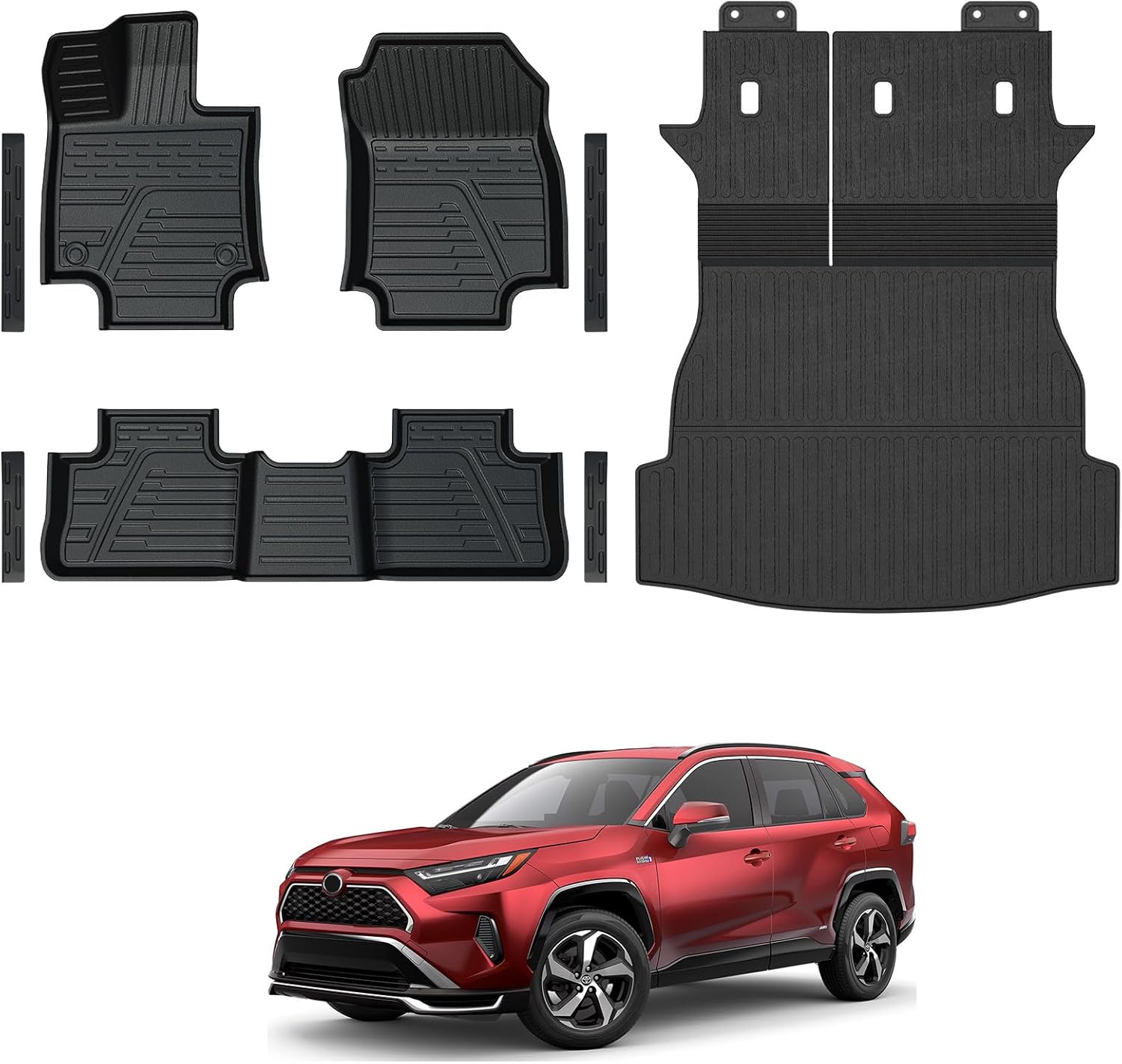
This custom-fit floor mat set is designed for 2019-2025 Toyota RAV4 models, including hybrids, delivering full interior coverage with an integrated cargo liner and backrest protection. Raised edges, secure clips, and a non-slip design help contain spills and keep the mats firmly in place, while odorless all-weather TPE construction provides durable, family-safe protection for daily driving.
Prep Checklist: Remove Mats, Open Windows, Protect Electronics, Clear Debris
Start by giving yourself full access to the floor. Pull out all floor mats, remove trash and loose items, slide the seats back and forward as needed, and open the doors or windows for ventilation.
- Remove the floor mats. Take them outside, shake them, and clean them separately.
- Clear loose debris. Pick up coins, wrappers, receipts, gravel, and anything that could clog the vacuum.
- Protect electronics. Keep liquid away from seat wiring, power-seat tracks, under-dash areas, and hybrid or electrical components. You usually do not need to disconnect the battery for normal carpet cleaning, but if you plan to work around exposed wiring or remove components, follow the owner’s manual and safe service procedures.
- Ventilate the cabin. Open doors or windows so cleaner fumes and moisture can escape.
- Check the carpet first. Look for gum, oil, coffee, salt, mud, or mildew odor before applying cleaner.
Work from the top debris zones down to the carpet and from the rear seats toward the front. This keeps clean areas from being recontaminated while you move around the cabin.
Note: If the carpet smells musty before you begin, do not mask it with fragrance. Clean the source, remove moisture, and dry the carpet completely.
Vacuum Your Camry Carpets: Tools, Attachments, Technique
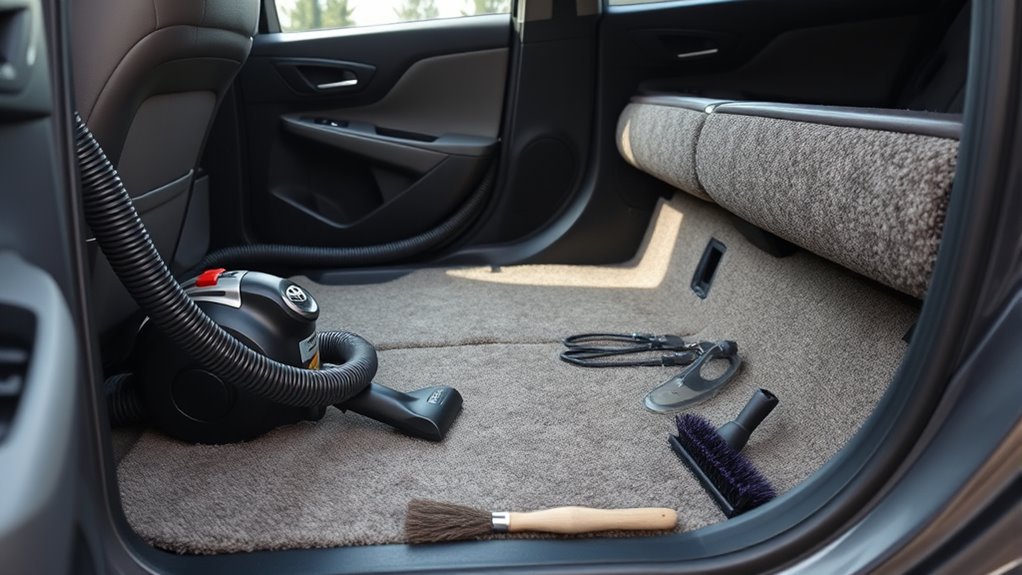
Vacuuming is the step that makes shampooing work. If you skip it, cleaner mixes with loose dirt and creates muddy residue in the carpet fibers.
- Start with open areas. Use a wide nozzle on the main footwells and rear floor area.
- Use slow overlapping passes. Move forward and backward, then side to side, to lift soil from different carpet angles.
- Brush high-traffic spots. Agitate the driver’s heel pad, under the pedals, and rear passenger footwells.
- Switch to the crevice tool. Clean seat rails, seams, door sills, console edges, and under-seat corners.
- Vacuum the mats separately. Do both sides before washing or shampooing them.
Empty the vacuum canister or bag before you start and check the filter. A clogged vacuum leaves grit behind and makes the shampoo step less effective. If your vacuum has a HEPA filter, it can help capture fine dust and allergens, but suction and technique matter more than the label on the machine.
Spot Treatment: Oil, Gum, Food Stains, and Set-In Spots
Spot-treat stains before shampooing the whole carpet. Use the least aggressive method first, and always blot instead of rubbing outward, which can spread the stain.
| Stain Type | What to Do | What to Avoid |
|---|---|---|
| Oil or grease | Apply a small amount of diluted dish soap or automotive spot cleaner, agitate lightly, then blot with microfiber. | Do not pour hot water directly into the carpet. |
| Gum | Harden with ice in a bag, lift gently with a plastic scraper, then clean the residue. | Do not use a metal blade that can cut fibers. |
| Food or drink | Blot solids and liquid first, apply carpet cleaner, scrub gently, then blot again. | Do not grind crumbs deeper with heavy scrubbing. |
| Salt or winter residue | Loosen dried residue with a brush, vacuum, then use a damp towel and cleaner sparingly. | Do not leave salty moisture in the carpet. |
| Set-in spots | Apply cleaner, let it dwell only as directed, agitate, extract or blot, and repeat if needed. | Do not mix chemicals or use bleach. |
After each spot treatment, remove as much cleaner and moisture as possible. A stain that looks better but stays wet can return as a ring or odor later.
[Products Worth Considering]

This Febreze cabin air filter uses PUREFLOW Air Filtration Technology to help reduce odors and capture fine dust, pollen, and other airborne particles inside your vehicle. Its multi-layer HEPA-level design supports cleaner cabin air while maintaining balanced HVAC airflow, and the unscented formula delivers freshness without added fragrance. It is designed for quick vehicle-specific installation and fits a wide range of Toyota, Lexus, Subaru, and related models.

This two-piece horsehair brush set is designed for gentle yet effective cleaning of leather and interior surfaces. The soft bristles help lift dirt from seams, tight spaces, upholstery, carpets, and shoes without scratching, while the two sizes support both broad cleaning and detailed polishing. A comfortable wooden handle improves grip and control for easier daily care.

Replace worn or broken rear exterior door handles with this OEM-style fit designed for a wide range of Toyota, Pontiac, and Scion vehicles. Built from reinforced plastic with a textured finish for dependable use and weather resistance, it helps restore smooth entry and a clean factory look. This handle is made for rear left or rear right installation without a keyhole and includes support backed by a warranty.
Shampoo Camry Carpets: Spray, Agitate, Extract, Dry
For most Camry carpets, a foaming cleaner or light spray-and-blot method is safer than soaking the floor. Toyota owner guidance for carpet shampooing emphasizes commercial foaming-type cleaners, rubbing in overlapping circles, wiping dirty surfaces, and keeping the carpet as dry as possible. You can use an extractor for dirty carpets, but the goal is still controlled moisture and complete drying.
Spray Evenly Over Carpets
Spray cleaner lightly and evenly over one small section at a time. Keep the nozzle moving and avoid puddles around seat mounts, pedals, wiring, and the center console. Treat the whole section evenly rather than soaking only the darkest stain.
Let the cleaner dwell only for the time listed on the product label. Longer is not always better; dried cleaner residue can attract new dirt.
Agitate Fibers Thoroughly
Use a carpet brush or microfiber towel to work the cleaner into the fibers with overlapping circles. Use firmer pressure on the driver’s footwell and lighter pressure near trim, seat wiring, and delicate edges.
If the brush starts pulling fibers, stop and switch to a softer brush or towel. The aim is to loosen grime, not rough up the carpet.
Extract and Speed Dry
Use a wet/dry vacuum, water-extraction machine, or clean microfiber towels to remove loosened soil and moisture. Make overlapping passes and spend extra time on the lowest areas of the footwells where liquid can settle.
Then dry the cabin with open doors, clean towels, and a fan or air mover. The U.S. Environmental Protection Agency notes that wet or damp items should be dried within 24–48 hours when possible to help prevent mold growth. Do not reinstall mats until the carpet is fully dry to the touch.
Controlled moisture is the difference between a clean Camry carpet and a carpet that smells damp two days later.
Deep Clean Options: Water-Injection Vacs & Steam Tips
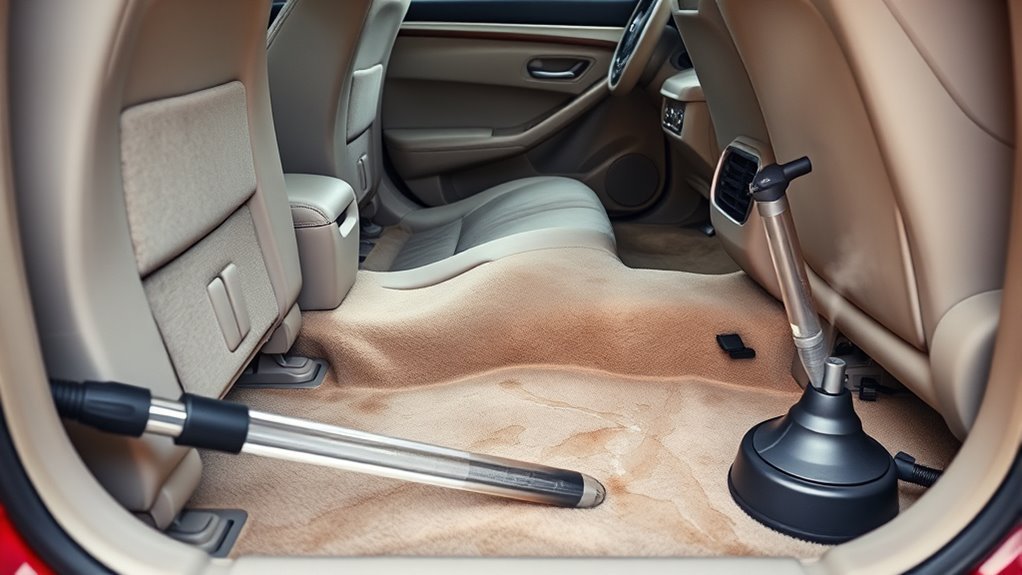
If your Camry carpets are seriously dirty, a water-injection extractor can produce a deeper clean than towels alone. The machine applies cleaning solution and pulls it back out with soil. Use it carefully: too much solution can soak the carpet backing and padding.
| Tool | Purpose |
|---|---|
| Water-injection extractor | Applies cleaner and extracts soil, residue, and moisture |
| Steam cleaner | Helps loosen select sticky residues and sanitize hard-to-clean spots |
| Technique | Use light passes, avoid saturation, extract thoroughly, and dry fast |
Steam can help with gum residue and stubborn grime, but avoid blasting steam near electrical connectors, plastic trim, adhesives, or seat components. Keep heat and moisture targeted. If the carpet has been flooded, smells strongly of mildew, or stays wet under the surface, a professional detailer or remediation specialist is the safer option.
Warning: Do not remove Camry seats just to clean carpet unless you know how to handle seat wiring, airbags, torque specs, and warning lights. Clean around the seat tracks instead.
[Products Worth Considering]

This odor control cabin air filter uses activated charcoal and baking soda to help neutralize unwanted smells while trapping dust, pollen, soot, dander, and other airborne contaminants. Designed for compatible Toyota, Lexus, Subaru, and select other vehicles, it supports cleaner cabin air and balanced HVAC airflow for everyday driving comfort. Installation is straightforward, with vehicle-specific guidance available to help make replacement quick and easy.

This auto emergency escape tool is designed specifically for vehicle rescue situations, helping drivers and passengers respond quickly during collisions, rollovers, or flooding. It combines a concealed seat belt cutter with a high-strength glass-breaking tip for fast escape support, while the compact protective design makes it easy to store in multiple vehicles for everyday preparedness.

This cordless handheld cleaner combines vacuuming, blowing, inflating, and suction in one compact tool for cars, home, electronics, and outdoor use. Its brushless motor delivers strong performance with multiple power levels, while the rechargeable battery and included accessories make cleaning, dusting, and inflating quick and convenient.
Protect & Finish: Mat Care, Protectant, Drying, Odor Control
Once the carpet is clean and dry, finish the job with mat care and odor control. Clean carpeted mats the same way you cleaned the carpet: vacuum, spot-treat, apply cleaner lightly, scrub, extract or blot, and dry completely. Rubber or all-weather mats should usually be cleaned with mild soap and water, then dried before reinstalling.
If you use fabric protectant, apply it only after the carpet and mats are clean and dry. Use light, even coats and follow the product label. Heavy protectant can leave a sticky feel and attract dust.
For odor control, use an odor neutralizer on dry carpet rather than a heavy fragrance on damp carpet. Check under seats, around seat rails, and below mats, because trapped moisture in those areas is a common source of lingering smells.
Reinstall Floor Mats Safely After Cleaning
Before driving, reinstall the mats correctly. Toyota’s Camry owner guidance says to check that the floor mat is fixed in the correct place with the retaining hooks, especially after cleaning the floor. It also warns not to use mats designed for other models or model years, not to stack mats, and not to place mats upside down. Toyota’s floor mat safety instructions also recommend fully depressing each pedal with the vehicle stopped and in Park to confirm the mat does not interfere.
- Confirm the driver-side mat is the correct mat for your Camry model year.
- Attach it to the factory retaining hooks or clips.
- Make sure the mat lies flat and is not curled at the pedals.
- Do not place one mat on top of another.
- Press each pedal fully with the vehicle stopped to confirm free movement.
How Often Should You Clean Camry Carpets?
Vacuum Camry carpets about once a month, or more often if you carry kids, pets, sports gear, beach sand, winter salt, or food. Shampoo only when the carpet has visible stains, odor, sticky residue, or seasonal buildup. Over-shampooing can leave residue and moisture, so routine vacuuming is the better maintenance habit.
A practical schedule looks like this:
- Weekly or biweekly: Shake out mats and remove visible debris.
- Monthly: Vacuum carpets, mats, seams, and under-seat areas.
- Seasonally: Spot-clean stains and salt residue.
- As needed: Shampoo high-traffic carpet sections and dry them fully.
Common Mistakes to Avoid
- Using too much water: Camry carpet is not household carpet. Keep moisture controlled.
- Skipping the vacuum step: Shampoo cannot work properly over loose grit.
- Using harsh household cleaners: Strong detergents, bleach, and solvent-heavy products can discolor or damage interior materials.
- Leaving cleaner residue behind: Residue attracts dirt and can make the carpet feel sticky.
- Reinstalling damp mats: Damp mats trap moisture and odor against the carpet.
- Ignoring mat safety: A loose driver-side mat can interfere with pedal movement.
Frequently Asked Questions
How do I shampoo the carpets in my Camry?
Vacuum first, pre-treat stains, apply a foaming automotive carpet cleaner lightly, scrub in overlapping circles, remove residue with towels or a wet/dry vacuum, and dry the carpet completely with airflow before reinstalling the mats.
Can I use a carpet extractor on Toyota Camry carpets?
Yes, but use it carefully. Make light, controlled passes and extract as much moisture as possible. Avoid soaking the carpet backing, seat wiring, or under-dash areas, and dry the cabin fully afterward.
Should I disconnect the battery before shampooing car carpets?
For normal vacuuming and light carpet cleaning, you usually do not need to disconnect the battery. Instead, keep the vehicle off, keep liquid away from electronics, and avoid soaking areas around seat wiring. If you remove components or work around electrical connectors, follow the owner’s manual or professional service guidance.
How long does Camry carpet take to dry after shampooing?
Light cleaning may dry in a few hours with open doors and a fan. Heavier extractor cleaning can take longer. The carpet and mats should be fully dry before you close the vehicle for long periods or drive with mats installed.
What is the safest cleaner for Camry carpets?
Use an automotive carpet or upholstery cleaner made for vehicle interiors. Test it in a hidden area first, follow the label, and avoid bleach, strong solvents, and products that leave heavy residue.
Conclusion
A clean Camry carpet starts with patience, not soaking. Remove the mats, vacuum slowly, brush out embedded grit, treat stains one by one, shampoo with a light hand, and extract or blot away as much moisture as possible. Dry everything fully, control odors at the source, and secure the driver-side mat with the factory hooks before driving. Done this way, your Camry interior looks better, smells fresher, and stays easier to maintain.
Sources
- Toyota: How to Clean Your Car’s Interior — supports vacuuming, cleaner selection, and thorough drying guidance.
- Toyota 2025 Camry Hybrid Owner’s Manual: Cleaning and Protecting the Vehicle Interior — supports Toyota interior-care recommendations and caution around moisture.
- Toyota 2025 Camry Hybrid Owner’s Manual: Before Driving — supports floor mat retaining-hook and pedal-interference safety checks.
- U.S. Environmental Protection Agency: Mold Course Chapter 4 — supports drying damp carpet quickly to help prevent mold growth.
- Centers for Disease Control and Prevention: Dry Off Wet Items After a Storm — supports the 24–48 hour drying window for wet items.