To use a Presta valve adapter, start by ensuring the adapter’s compatible with your pump. Unscrew the valve head to allow airflow, then securely attach the adapter to the valve. Inflate your tire carefully while monitoring the pressure. After reaching the desired PSI, remove the pump quickly to preserve air, and twist the valve head to seal. Regular maintenance of your valve is essential for peak performance, and there’s more to learn about effective tire care and troubleshooting.
Understanding Presta Valves: What You Need to Know

Although you might be familiar with the more common Schrader valve, understanding Presta valves is crucial for ideal bicycle maintenance. Presta valves are narrower and specifically designed for high-performance bicycle tires, providing a better seal and allowing higher tire pressure. To inflate a Presta valve, you’ll need to unscrew the valve head to enable airflow from your air pump. If you’re using a standard air pump, a Presta valve adapter is necessary for compatibility. After inflating, make sure you twist the valve head back tightly to prevent air loss. Regularly checking tire pressure through the Presta valve not only enhances your cycling performance but also prolongs the life of your tires, empowering you to ride freely and confidently.
Choosing the Right Adapter for Your Presta Valve
Choosing the right adapter for your Presta valve can greatly impact your tire inflation experience. To guarantee you’re good to go, make sure to take into account the following factors before purchasing:
- Compatibility: Confirm it matches your pump type, as some are designed for high-pressure use.
- Secure Locking Mechanism: Look for adapters that prevent air leaks during inflation.
- Material Quality: Opt for brass or high-quality plastic; they’re more durable than cheaper alternatives.
Step-by-Step Guide to Attaching the Adapter
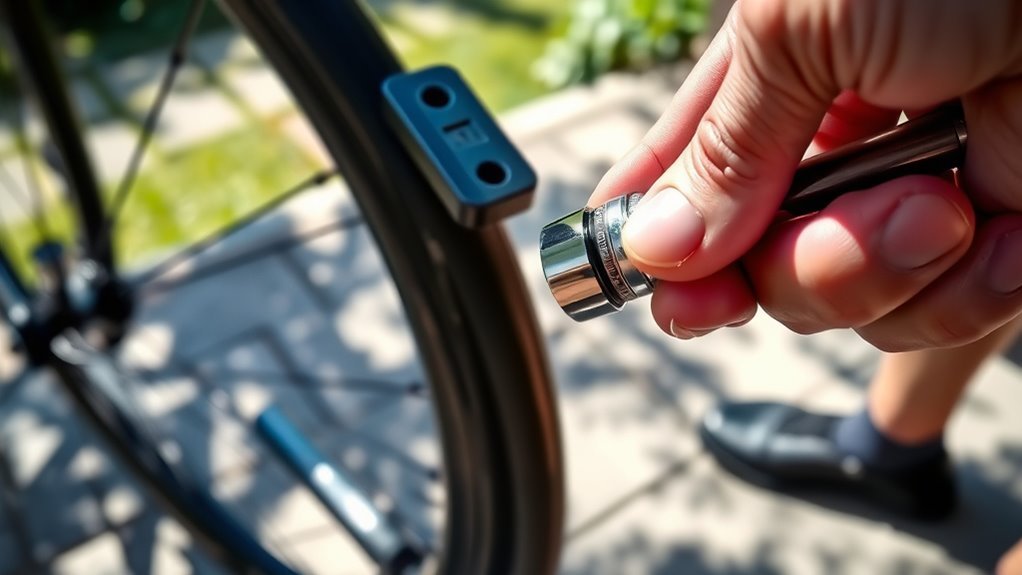
To attach your Presta valve adapter correctly, start by unscrewing the head of the Presta valve to allow air flow. Next, firmly insert the Presta valve into the adapter, ensuring it’s securely connected to prevent air leaks. Here’s a little bit of a breakdown:
| Step | Action |
|---|---|
| 1. Unscrew Presta Valve Head | Allow air flow |
| 2. Insert into Adapter | Securely connect to prevent leaks |
| 3. Monitor Pressure | Use a standard pump or inflator |
Once the adapter’s attached, you can use any standard pump. After reaching the desired pressure, hold the adapter and remove the pump carefully to avoid losing air. Finally, twist the Presta valve head back to seal it properly.
How to Inflate Your Tire Using a Pump With the Adapter
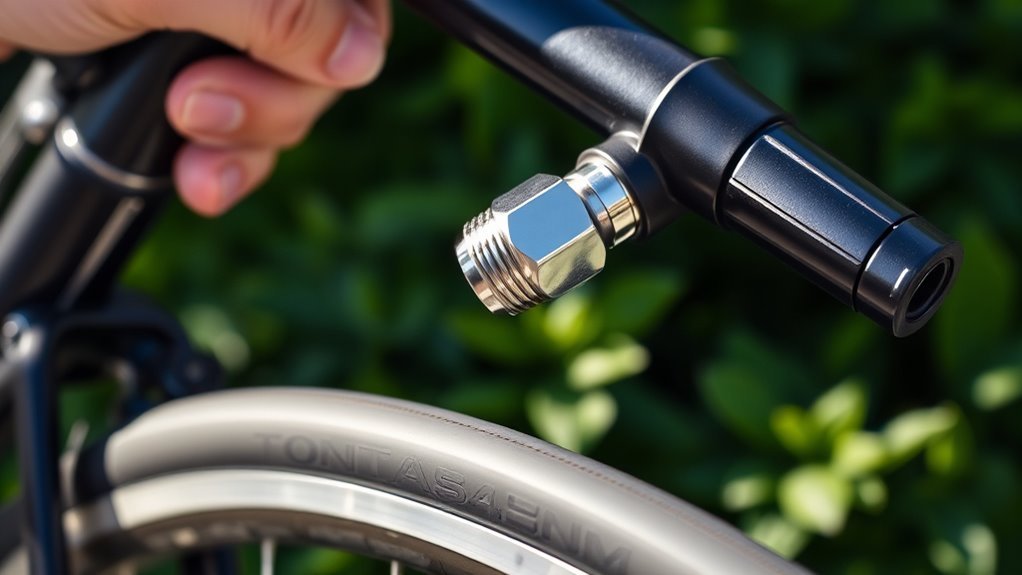
Before inflating your tire, make certain the Presta valve adapter is securely attached and the valve is unscrewed to allow air flow. While pumping, monitor the pressure closely using the pump’s gauge or a separate gauge to prevent over-inflation. Once you reach the desired pressure, quickly remove the adapter and reseal the valve to guarantee no air escapes.
Prepare The Tire Valve
Preparing your tire valve for inflation is essential to guarantee a smooth process. Start by checking your valve types—ensure you’re working with a Presta valve. Follow these steps for effective tire maintenance:
- Unscrew the head of the Presta valve to allow air flow.
- Securely attach the adapter to the valve to avoid air leaks.
- Use a pump compatible with the adapter for ideal inflation techniques.
Monitor Inflation Pressure
Monitoring inflation pressure is essential for maintaining ideal tire performance and safety. Before you begin, verify the Presta valve is unscrewed, allowing air flow. Attach the Presta valve adapter securely to the valve stem and listen for any hissing sounds to confirm no leaks. Choose a compatible pump type, and as you inflate, keep a close eye on the tire pressure. Aim for the recommended PSI, typically indicated on the tire sidewall. Inflate gradually, checking frequently to avoid over-inflation, which can cause tire damage or blowouts. Once you reach the desired pressure, carefully remove the pump and adapter, then promptly screw the Presta valve head back on to seal your tire effectively. Follow these inflation tips for best results.
Monitoring Tire Pressure During Inflation
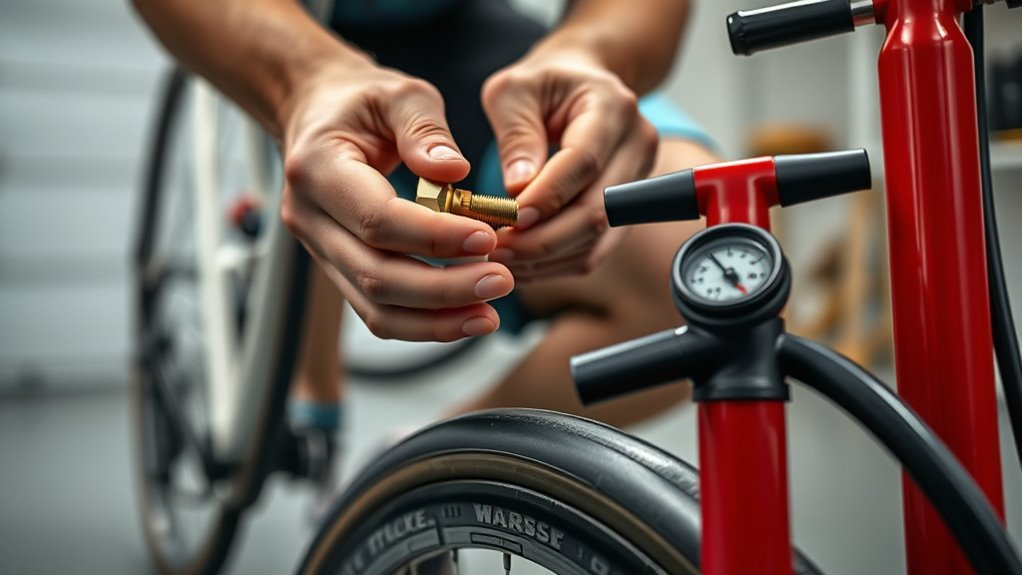
Inflating a tire with a Presta valve adapter requires careful attention to tire pressure to prevent over-inflation, which can compromise the tire’s integrity. To guarantee you’re using effective inflation techniques, monitor the pressure consistently throughout the process:
- Check the tire pressure frequently using a pressure gauge.
- Stay within the recommended range printed on the tire sidewall.
- Listen for any hissing sounds that may indicate air leaks.
If your adapter has a built-in pressure gauge, utilize it for convenience. If not, an external pressure gauge can help you track your progress. Remember, maintaining the correct tire pressure is essential for peak performance and safety. Stay vigilant to avoid exceeding the ideal psi during inflation.
Best Practices for Maintaining Your Tires
Maintaining your tires is essential for guaranteeing safety and peak performance while cycling. Regular tire inspections are vital; look for cracks, cuts, or bulges, and replace tires as needed. Always check your tire pressure with a gauge, confirming it meets the manufacturer’s recommended PSI. Improper inflation can lead to decreased performance and an increased risk of punctures. Keep the valve area clean to avoid blockages. Additionally, rotate your tires according to your bike’s specifications to promote even wear and extend their lifespan. Maintain a consistent inflation schedule, checking your tire pressure at least once a month or before long rides.
| Maintenance Task | Frequency | Purpose |
|---|---|---|
| Tire Inspection | Monthly or as needed | Identify wear and damage |
| Tire Pressure Check | Monthly | Guarantee peak inflation |
| Tire Rotation | Every 1,000 miles | Promote even wear |
Common Presta Valve Adapter Issues and How to Fix Them
When using a Presta valve adapter, you might encounter issues like leaks during inflation or compatibility problems with your pump. To prevent air loss, make sure the adapter is securely attached and properly aligned. If you notice inadequate pressure, check the pump settings and inspect the adapter for any damage that could affect performance.
Leaks During Inflation
Although using a Presta valve adapter simplifies the inflation process, leaks during inflation can be a frustrating issue. To avoid this, follow these leak prevention tips:
- Confirm the adapter is securely attached before inflating; a loose connection can cause leaks.
- Check for hissing sounds; this often indicates gaps between the adapter and valve—suggesting misalignment.
- Inspect the adapter for damage; cracks or wear can compromise the seal.
Also, make sure the valve is fully opened by unscrewing it completely. After inflation, carefully remove the adapter to prevent sudden air loss, and quickly screw the Presta valve head back on for a tight seal. By diagnosing leaks effectively, you’ll enhance your inflation experience and guarantee peak performance.
Adapter Compatibility Issues
Verifying your Presta valve adapter is compatible with your specific valve model is essential for effective inflation. Compatibility issues can arise due to different adapter types and valve sizes. Here’s a quick reference table to help you troubleshoot common problems:
| Issue | Solution | Notes |
|---|---|---|
| Loose Connection | Tighten the adapter securely | Prevents air leaks during inflation |
| Visible Damage | Inspect for wear | A compromised seal leads to leaks |
| Inconsistent Flow | Clean valve and adapter | Obstructions can impede inflation |
| No Pressure Gauge | Use a gauge-equipped adapter | Monitor pressure accurately |
| Incompatible Size | Check adapter specifications | Verify proper fitting |
Sealing Your Presta Valve After Inflation
Sealing your Presta valve properly after inflation is essential for maintaining tire pressure. Follow these steps to guarantee an effective seal:
- Carefully remove the pump or adapter to minimize air loss.
- Immediately twist the valve head clockwise to seal it.
- Check for air leaks by pressing the valve head lightly; tighten if necessary.
Incorporating these valve maintenance tips into your routine can enhance performance. Regularly inspect the valve for wear or damage, and keep it clean to support effective valve sealing methods. If you encounter issues, use inflation troubleshooting techniques to address any problems promptly. Proper sealing not only preserves tire pressure but also contributes to a smoother, more liberated ride.
Frequently Asked Questions
How Do You Inflate a Presta Valve With a Regular Pump?
To inflate a Presta valve with a regular pump, attach a Presta-to-Schrader adapter. This technique enhances your bike tire maintenance, leveraging the Presta valve advantages while ensuring effective pumping and ideal pressure for your ride.
How to Use Presta Valve Adapter With Air Compressor?
To use a Presta valve adapter with an air compressor, verify Presta valve compatibility, secure the adapter, connect the air compressor, regulate inflation pressure, and monitor closely to achieve ideal pressure without over-inflating.
Do You Need a Special Air Pump for a Presta Valve?
Yes, you need a compatible pump for Presta valves. Understand Presta valve basics and guarantee your pump’s compatibility. Master proper inflation techniques to avoid issues and achieve ideal tire pressure with your bike’s setup.
How to Use Presta Bike Pump Adapter?
When it comes to using a Presta bike pump adapter, make certain it fits snugly on the valve. Keep pump compatibility in mind, and apply proper inflation techniques to avoid leaks and maintain ideal pressure.
Conclusion
You’ve successfully navigated the treacherous waters of Presta valve inflation. You’ve officially graduated from “clueless cyclist” to “inflation aficionado.” Just remember, using an adapter doesn’t make you a magician—there’s no need for smoke and mirrors. With your newfound skills, go forth and inflate with confidence! And if you somehow still manage to deflate your tire, just remember: it’s not you, it’s the adapter. Happy cycling!