To release air from a tire safely and avoid damaging the valve, start by removing the valve cap. Use a valve core removal tool or a flathead screwdriver to gently press the valve stem’s metal pin. Monitor tire pressure with a gauge every 5 to 10 seconds, ensuring you don’t over-deflate. Once you reach your desired pressure, reinsert the valve core securely and replace the cap. Continue exploring to discover best practices for reinflation and safety.
Understanding the Need to Release Tire Air Safely

When you need to release air from a tire, understanding the reasons behind it is essential for safety and performance. Overinflated tires can cause decreased traction, harsher rides, and increased wear, which compromises your vehicle’s handling. By releasing air, you can achieve ideal tire pressure, enhancing your vehicle’s performance in various conditions, including off-road situations. To guarantee accuracy, always use a tire pressure gauge during this process. It helps you monitor the pressure and maintain it within the manufacturer’s recommended PSI range. Employing proper deflation techniques minimizes the risk of damaging the valve or tire bead, assuring safe air release. This knowledge not only prevents accidents but also extends your tire’s lifespan, keeping you liberated on the road.
Essential Tools for Deflating a Tire Without Damage
To safely deflate a tire without causing damage, you’ll need a few essential tools. A valve core removal tool is vital for quickly extracting the valve core while protecting the valve stem. A tire pressure gauge guarantees you monitor the PSI, preventing over-deflation. You can use a flathead screwdriver to gently press the Schrader valve pin, but be cautious to avoid excessive force. Tire deflator tools are designed for controlled air release, offering a convenient method to adjust tire pressure without risking valve damage. Finally, keep a portable air compressor handy for easy reinflation after deflation.
| Tool | Purpose | Notes |
|---|---|---|
| Valve Core Removal Tool | Safely removes valve core | Prevents valve stem damage |
| Tire Pressure Gauge | Monitors PSI during deflation | Avoids over-deflation |
| Flathead Screwdriver | Manually releases air | Use gently to prevent damage |
| Tire Deflator Tools | Controlled air release | Adjusts pressure effectively |
| Portable Air Compressor | Quick reinflation after deflation | Restores tire pressure easily |
Identifying the Tire Valve Stem: The First Step in Deflating Your Tire
Identifying the tire valve stem is essential before deflating your tire. This small protruding tube, typically 1–2 inches long, is positioned between the spokes of the wheel near the center of the tire. Look for the removable cap on the valve stem, which prevents dirt from entering and can be unscrewed by turning it counterclockwise. Inside, you’ll find a metal pin controlling air flow; pressing this pin allows you to release air. Verify the valve stem is clean and free from contaminants to maintain a proper seal when you adjust tire pressure. For safety, consult your vehicle’s manual or the sticker inside the driver’s door jamb for the recommended tire pressure before you proceed to deflate a tire.
Step-By-Step Process for Releasing Air From a Tire
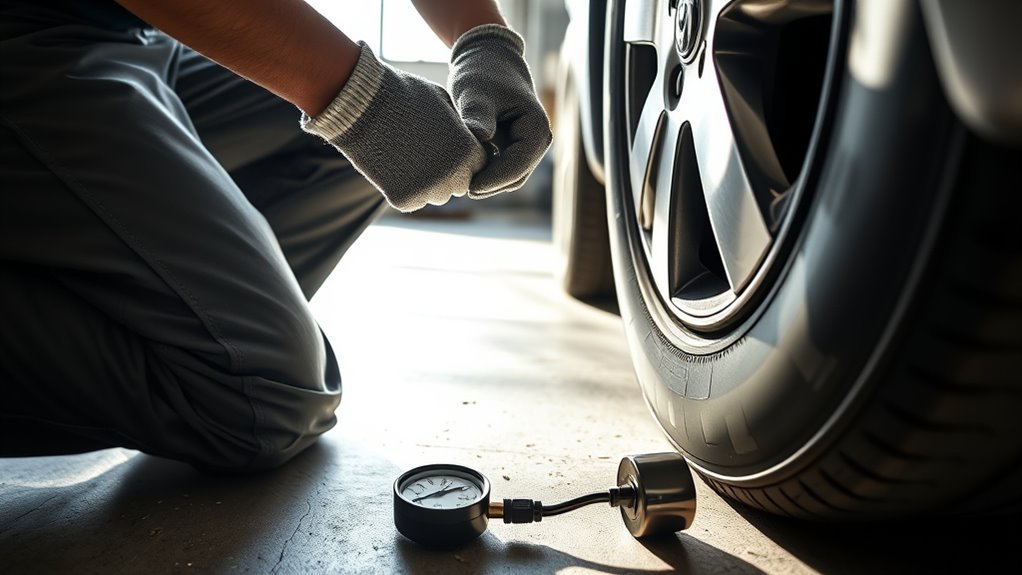
With the valve stem located and ready for use, you can now proceed to safely release air from your tire. Start by removing the valve cap and checking the current tire pressure with a gauge. To deflate, use a valve core removal tool or a flathead screwdriver to gently press the metal pin inside the valve stem. Control the air release carefully, monitoring the tire pressure every 5 to 10 seconds to avoid over-deflating. Once you reach the desired pressure, securely reinsert the valve core and replace the cap to keep dirt out. Always refer to your vehicle’s manual or the sticker inside the driver’s door for the recommended tire pressure to guarantee peak performance.
How to Keep an Eye on Tire Pressure While Deflating
Monitoring tire pressure while deflating is crucial to avoid over-deflation and guarantee peak performance. Use a tire pressure gauge to check your tire’s PSI every 5 to 10 seconds. This guarantees you achieve the recommended pressure without risking underinflation.
| Action | Frequency |
|---|---|
| Check Pressure | Every 5-10 seconds |
| Adjusting Pressure | As needed |
| Stop Deflating | At desired PSI |
| Refer to Manual | Before deflation |
| Inspect Tires | Regularly |
Both digital and analog gauges work effectively. For off-road driving, aim for a tire pressure range of 12 to 25 PSI, depending on conditions. Remember, stop once you reach the desired pressure to avoid poor handling.
Best Practices for Reinflating Your Tire After Deflation
When you’re ready to reinflate your tire, choose the right method—either a portable air compressor or a gas station air pump. Make certain to monitor the tire pressure regularly with a gauge to guarantee it aligns with the manufacturer’s recommended PSI. This careful approach helps prevent overinflation and maintains peak performance.
Choose Right Inflation Method
Choosing the right inflation method is essential for safely reinflating your tire after deflation. Use a portable air compressor or visit a gas station with an air pump. Make sure you inflate your tire to the manufacturer’s recommended PSI, found on the driver’s door jamb or in the owner’s manual. Before attaching the inflator, check that the valve stem is clean to prevent dirt from damaging it. Inflate slowly and monitor pressure frequently with a tire pressure gauge, as overinflating can cause air escapes, leading to decreased traction and increased wear. Once you reach the desired PSI, securely replace the valve cap to protect the valve from contaminants and maintain proper tire pressure.
Monitor Tire Pressure Regularly
Regularly checking your tire pressure is essential for maintaining optimal performance and safety. To guarantee your tires function efficiently, follow these best practices:
- Check tire pressure at least once a month or before long trips.
- Use a reliable gauge to accurately measure pressure during reinflation.
- Refer to your vehicle’s manual or the sticker inside the driver’s door jamb for the recommended PSI.
- Monitor pressure frequently during inflation to avoid over-inflation.
What to Avoid When Reinflating Your Tire?
To guarantee your safety while reinflating tires, it’s crucial to avoid several common pitfalls. Here’s what you should steer clear of:
| Pitfall | Consequence | Solution |
|---|---|---|
| Over-inflating the tire | Decreased traction, increased wear | Regularly check tire pressure |
| Using a gas station pump | Risk of excessive inflation | Know current tire pressure first |
| Inflating damaged tires | Serious safety risks while driving | Inspect for visible damage |
| Rapid inflation | Overheating, potential tire failure | Inflate gradually |
Consider investing in a portable air compressor for better control and convenience when managing underinflated tires. This approach enhances your safety and maintains ideal tire pressure.
Choose Between Manual and Tool-Assisted Deflation Methods

When releasing air from a tire, you can choose between manual and tool-assisted methods. Manual deflation involves pressing the Schrader valve pin with a flathead screwdriver, while tool-assisted deflation allows for quicker air release using a valve core removal tool. Select the method that best suits your needs for precision and efficiency.
Manual Deflation Techniques
Releasing air from a tire can be done effectively using manual deflation techniques, which offer a simple and straightforward approach. Follow these steps for a successful process:
- Locate the valve stem on your tire.
- Use a flathead screwdriver to gently press the metal pin inside the valve stem.
- Periodically release the valve and check the tire pressure with a gauge.
- Adjust the air release rate as necessary for precise control.
Always keep an eye on the pressure to avoid underinflation. Manual deflation allows you to maintain control over the process while ensuring you don’t damage the valve. With patience, you can achieve the desired PSI level without hassle.
Tool-Assisted Deflation Methods
Tool-assisted deflation methods can considerably speed up the process of releasing air from a tire, making them a preferred choice for many. Using a valve core removal tool allows you to quickly extract the valve core, facilitating rapid air release. This method is more efficient than manual techniques and minimizes the risk of damaging the valve. Always use a tire pressure gauge during deflation to monitor PSI levels, ensuring you don’t under-inflate. Additionally, consider tire deflator tools, which provide precise control over air pressure for accurate adjustments. Combining a valve core tool with a tire pressure gauge guarantees a safe and efficient deflation process while protecting both the valve and tire structure from damage.
Essential Safety Practices for Reinflating Your Tire After Deflation
Before you start reinflating your tire, it’s crucial to follow essential safety practices to guarantee peak performance and safety on the road. Adhering to these steps will make sure your tire pressure remains ideal:
- Check the manufacturer’s recommended PSI for your tire to avoid handling issues.
- Use a reliable air compressor, either portable or at a gas station, to inflate accurately.
- Frequently monitor the tire pressure with a gauge during inflation, making certain you don’t exceed the recommended PSI.
- After reinflating, double-check the tire pressure, inspect for any damage or leaks, and securely replace the valve stem cap to keep dirt and moisture out.
Following these practices leads to safer driving and longer tire life.
Frequently Asked Questions
How to Deflate a Tire Without Damage?
To deflate a tire without damage, use safe deflation methods like a valve core removal tool. Remember valve maintenance tips: monitor PSI regularly, and avoid excessive force to prevent harming the valve stem during tire deflation techniques.
What Is the 3% Tire Rule?
“An ounce of prevention is worth a pound of cure.” The 3% Tire Rule advises you to monitor tire pressure with an air gauge, ensuring proper tire maintenance to avoid performance issues caused by overinflation.
What Is the 25 Cent Trick on Tires?
The 25 cent trick checks tire pressure by inserting a quarter into the tread. If you see George Washington’s head, your tread’s too worn. Regular checks guarantee valve maintenance and safe air release for peak performance.
How to Manually Let Air Out of a Tire?
To manually let air out of a tire, use tire pressure tools to monitor levels. Safely handle the valve by removing the cap, pressing the pin, or utilizing manual deflation techniques for controlled air release.
Conclusion
Now that you know how to safely release air from your tire without damaging the valve, consider it a well-tuned orchestra. Each step plays an essential note in ensuring your vehicle’s performance. By following the outlined methods and safety practices, you can navigate the deflation and reinflation process like a seasoned conductor. Remember, maintaining proper tire pressure is the key to a smooth ride, so keep your tires singing in harmony with the road ahead.