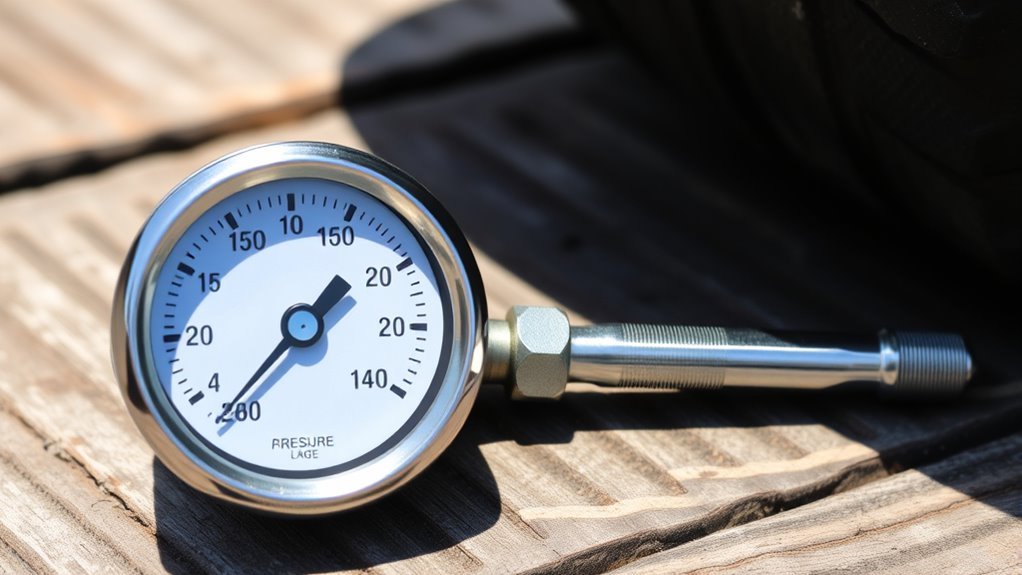
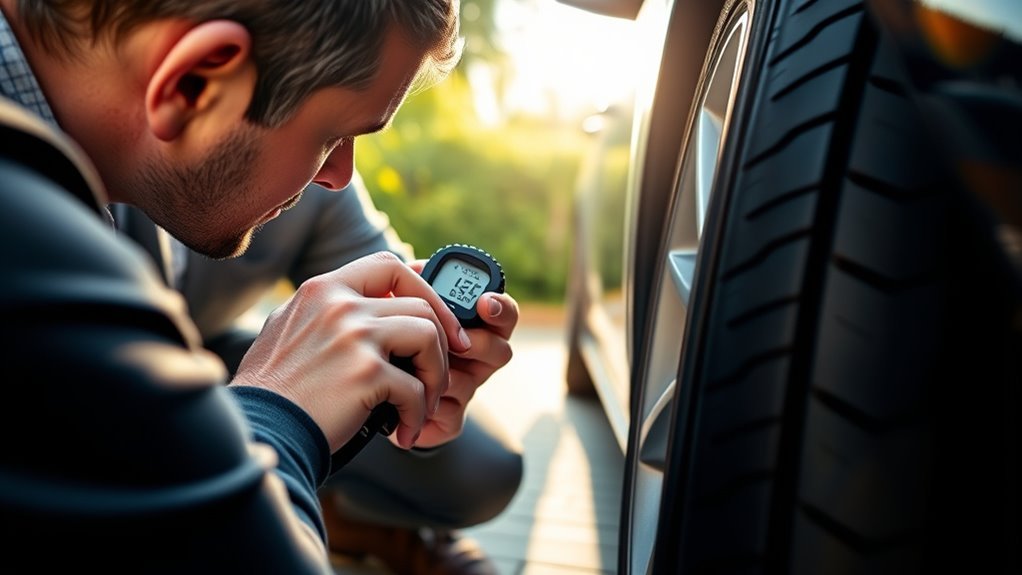
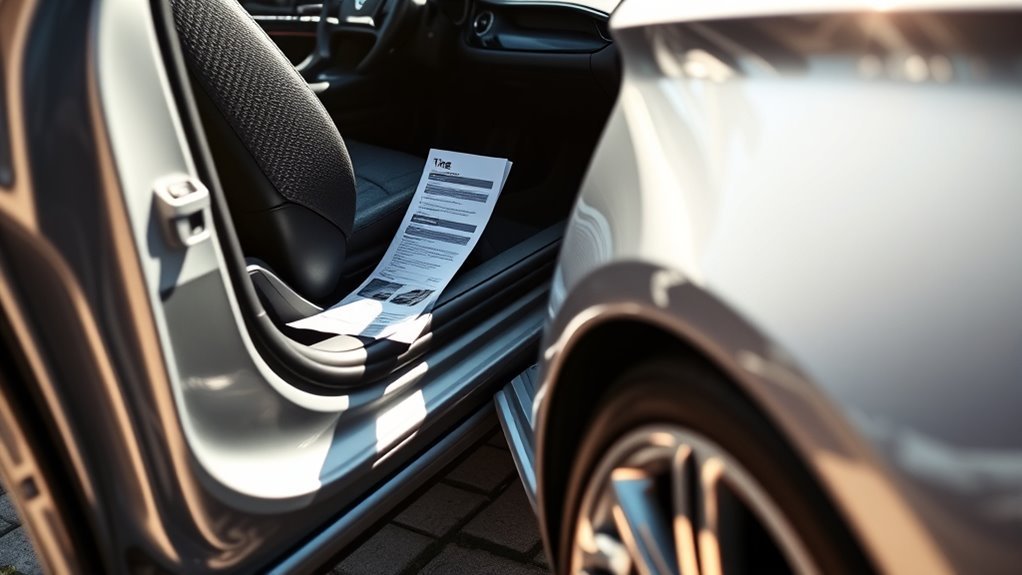
Overinflated tires can make your vehicle ride harsher, wear the center of the tread faster, and reduce the tire’s contact with the road. The safest way to prevent the problem is simple: check tire pressure when the tires are cold, use the vehicle manufacturer’s recommended PSI, and release excess air slowly if the reading is too high.
Quick Answer
To prevent overinflated tires, check each tire with a reliable gauge when the tires are cold, compare the reading with the PSI on the driver-side door placard, and add or release air in small amounts. Do not use the maximum PSI on the tire sidewall as your everyday target.
Key Takeaways
- Use the vehicle placard PSI, not the tire sidewall maximum pressure, as your normal inflation target.
- Check tire pressure when tires are cold, ideally before driving or after the vehicle has been parked for at least three hours.
- Overinflation can cause center tread wear, a harsher ride, less road contact, and greater vulnerability to pothole damage.
- Your TPMS is mainly a low-pressure warning system, so it should not replace monthly manual pressure checks.
At a Glance
| Time Required | 5–10 minutes |
| Difficulty | Easy |
| Tools Needed | Tire pressure gauge, air pump or compressor, and valve cap tool if needed |
| Cost | Usually free if you already have a gauge; basic gauges are inexpensive |
What Does Overinflation Mean for Your Tires?

Overinflation means the tire’s cold pressure is higher than the pressure recommended by your vehicle manufacturer. For most passenger vehicles, that recommendation is printed on the driver-side door placard, door post, glove box, fuel door, trunk lid, or in the owner’s manual. The federal TPMS owner’s-manual language also tells drivers to check tires monthly when cold and inflate them to the vehicle manufacturer’s placard pressure.
The maximum PSI molded into the tire sidewall is not the normal driving target. It is the tire’s maximum pressure rating for carrying its maximum load under specified conditions. Using that number as your daily target can leave the tire too stiff for your vehicle’s suspension, braking, and handling setup.
Warning: Never inflate a tire above the maximum pressure printed on the tire sidewall. If a tire is bulging, cracked, showing cords, leaking repeatedly, or damaged after a pothole impact, do not rely on pressure adjustment alone; have it inspected before driving normally.
How to Identify Overinflated Tires
You can often spot overinflation by combining a pressure reading with tire-wear and ride-quality clues. A tire gauge gives the most reliable answer; visual symptoms help confirm whether the tire has been running too hard for too long.
Visual Tire Inspection
Start by looking across the full width of the tread. Overinflated tires may wear faster down the center than along the outer edges because the center of the tread carries more of the load. Michelin identifies center tread wear as an overinflation issue and recommends checking tires when they are cold.
Also inspect for sidewall bulges, cracks, cuts, exposed cords, embedded objects, or unusual lumps. Those signs can point to tire damage, not just incorrect pressure.
Ride and Handling Clues
Overinflated tires often feel stiff because the tire cannot flex as intended over bumps. You may notice a harsher ride, extra road noise, a skittish feel over rough pavement, or reduced confidence during wet-road braking and cornering. These symptoms do not prove overinflation by themselves, but they are strong reasons to check pressure with a gauge.
| Symptom | What It May Mean | What To Do |
|---|---|---|
| Center tread wears faster than edges | Possible overinflation | Check cold PSI and adjust to placard pressure |
| Both outer edges wear faster | Possible underinflation | Check cold PSI and inspect for leaks |
| One edge wears faster | Possible alignment issue | Schedule alignment and tire inspection |
| Cupped or scalloped patches | Possible balance, suspension, or shock issue | Have the tire and suspension inspected |
Understanding the Dangers of Overinflated Tires
Overinflated tires are not just uncomfortable. When a tire has too much air for the vehicle’s recommended setting, the tread can crown toward the center. That smaller, stiffer contact area can reduce grip, increase center wear, and make the tire more vulnerable to impact damage from potholes or sharp road debris.
Proper inflation is part of tire safety because tires affect steering, stopping, traction, and load-carrying ability. NHTSA’s tire safety brochure explains that maintaining proper tire pressure, observing load limits, avoiding road hazards, and inspecting tires are key steps for avoiding tire failure such as tread separation, blowouts, and flats.
Your tire pressure monitoring system is helpful, but it is not a complete tire-care system. Federal TPMS rules focus on warning drivers when one or more tires are significantly underinflated, not when a tire is slightly or moderately overinflated. The NHTSA TPMS final rule requires detection when pressure is 25% or more below the manufacturer’s recommended inflation pressure, or a specified minimum activation pressure, whichever is higher.
Note: A TPMS light can warn you about low pressure, but it usually will not warn you that a tire is overinflated. Manual pressure checks are still necessary.
How to Safely Inflate Your Tires?
The safest tire-inflation routine is to measure first, adjust slowly, and recheck. Always aim for the recommended cold PSI listed by your vehicle manufacturer, unless your owner’s manual gives a different instruction for a specific load or tire setup.
[Products Worth Considering]

The JACO ElitePro Digital Tire Pressure Gauge delivers shop-grade accuracy with a clear digital readout, making it easy to maintain proper tire pressure for safer driving and better performance. Built with rugged brass and steel components, a protective guard, and a flexible air hose, it is designed for reliable use across cars, trucks, motorcycles, bikes, RVs, and trailers. The lock-on display, built-in bleeder valve, and bright backlit screen add convenience in any lighting condition.

The S ZEVZO ET03 is a powerful 12V jump starter designed to revive gas and diesel vehicles quickly, including cars, trucks, motorcycles, lawnmowers, and boats. It also doubles as a portable power bank with USB charging ports, a bright LED flashlight, and an LCD display for added convenience during roadside emergencies. Built with multiple safety protections and included carrying case, it offers dependable backup power whenever you need it.

The AstroAI Portable Tire Inflator delivers fast, reliable inflation with an upgraded TrueGauge display for accurate pressure readings. Its durable metal construction, compact size, and versatile compatibility make it a practical tool for cars, bikes, motorcycles, sports balls, and inflatables. Designed for convenient storage and quick roadside use, it helps keep tires properly inflated for safer driving.
Recommended PSI Guidelines
Do not use a universal PSI chart to decide whether your tire is too high or too low. A compact car, SUV, truck, EV, and performance vehicle may all need different pressures. Some vehicles also list different front and rear pressures.
| What You See | Action Needed |
|---|---|
| Cold PSI is below the placard number | Add air gradually, then recheck with a gauge |
| Cold PSI matches the placard number | No adjustment needed |
| Cold PSI is above the placard number | Release air in short bursts until it matches the placard PSI |
| Pressure is near or above the sidewall maximum | Stop inflating, release air safely, and inspect for damage or gauge error |
Using a Tire Gauge
- Find the recommended PSI on the vehicle placard or in the owner’s manual.
- Check pressure when the tires are cold. A cold tire is usually one that has not been driven on for at least three hours.
- Remove the valve cap and press the gauge squarely onto the valve stem.
- Read the PSI and compare it with the recommended front or rear tire pressure.
- If the tire is low, add air in short bursts and recheck.
- If the tire is high, press the valve pin briefly to release air, then recheck.
- Reinstall the valve cap to help keep dirt and moisture out of the valve.
Pro Tip: Keep a small digital gauge in your glove box. Gas-station gauges can be convenient, but a personal gauge gives you more consistent readings from month to month.
Tips for Optimal Tire Pressure
For the best balance of safety, ride comfort, tread life, and handling, use the vehicle manufacturer’s cold PSI recommendation as your target. Check all four tires at least once a month, and check the spare if your vehicle has one. Also check before long trips, before carrying heavy loads, and after a major temperature swing.
If your placard lists different front and rear pressures, follow those positions carefully. Do not make all four tires the same unless the placard or owner’s manual says they should be the same.
Do not bleed air from hot tires just because the reading is a few PSI higher after driving. Driving warms the tires and naturally raises pressure. If you are not sure, wait until the tires cool, then recheck and adjust to the cold PSI target.
How Temperature Affects Tire Pressure
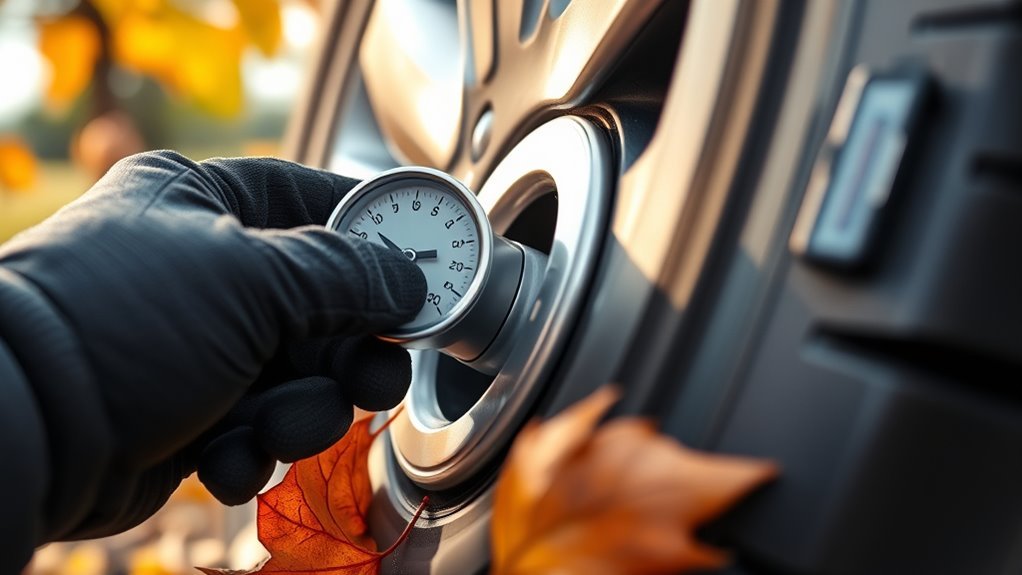
Tire pressure changes with temperature. As a rule of thumb, pressure changes by about 1 PSI for every 10°F change in ambient temperature. Bridgestone’s tire inflation guidance also recommends checking pressure when tires are cold, meaning they have not been driven for at least three hours.
This is why tire pressure often drops during cold weather and rises during hot weather or after driving. Seasonal changes do not mean you should guess. They mean you should check more often and adjust pressure when the tires are cold.
A 30°F temperature drop can lower tire pressure by roughly 3 PSI, enough to change handling, tire wear, and TPMS behavior on many vehicles.
Effective Strategies for Monitoring Tire Pressure
The easiest strategy is to connect pressure checks to a habit you already have. Check tires on the first weekend of each month, before long drives, and whenever the weather changes sharply. Write down the placard PSI in your phone so you do not have to search for it every time.
Use the same gauge whenever possible. If one tire repeatedly loses pressure faster than the others, do not keep topping it off without investigating. A slow leak, damaged valve stem, bead leak, nail, or wheel problem may be present.
Warning: If a tire loses pressure repeatedly, vibrates, has a bulge, shows exposed cords, or has sidewall damage, have it inspected before highway driving. Pressure adjustment cannot fix structural tire damage.
[Products Worth Considering]
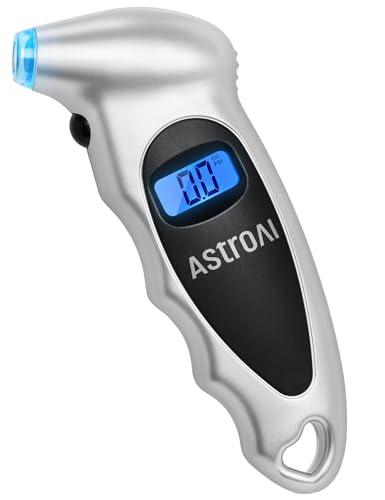
Accurate, Dependable Readings: Factory‑calibrated to ±1 PSI, so you can confidently match your vehicle’s recommended PSI (check the door jamb sticker). Ideal for monthly checks and road trips — consistent results every time, cold or warm.

RUGGED DESIGN: The stainless steel components prevent rust and corrosion while the precision-crafted nozzle seamlessly seals onto the valve stems for highly accurate readings (±2% span). We also provide 4 valve stem caps for convenient replacement.

EXPERT-GRADE CALIBRATION: Each AstroAI Tire Pressure Gauge is calibrated with professional-grade tools, ensuring quick and accurate measurement results within plus-minus 1PSI. Stay prepared for any roadside emergency and travel with peace of mind.
When to Seek Professional Tire Services?
Seek professional tire service if the same tire keeps gaining or losing pressure abnormally, if you see uneven tread wear, or if the vehicle pulls, shakes, or feels unstable. A technician can check for punctures, valve leaks, wheel damage, alignment problems, and suspension issues.
Tire rotation also matters because it helps tires wear more evenly. NHTSA recommends rotating tires every 5,000 to 8,000 miles if recommended by the vehicle manufacturer, or sooner if uneven wear appears. Always follow your owner’s manual if it gives a different interval or a special pattern for directional, staggered, AWD, or EV tire setups.
Must-Have Tools for Tire Care

A few simple tools make it much easier to avoid overinflation and catch tire problems early:
- Tire pressure gauge: Use a digital, dial, or stick gauge you trust.
- Portable air compressor: Helpful for slow, controlled inflation at home or on the road.
- Valve caps: Replace missing caps to help keep dirt and moisture out of the valve stem.
- Tread depth gauge: Helps you spot uneven wear and low tread before it becomes dangerous.
- Portable jack and lug wrench: Useful for emergencies, but only if you know the safe lift points for your vehicle.
- Tire patch kit or plug kit: Useful for temporary emergency repair in some cases, but not a replacement for professional repair when needed.
[Products Worth Considering]

3-in-1 Digital Tire Inflator with Certified Accuracy: AstroAI 3-in-1 digital tire pressure gauge with inflator combines ANSI B40.7 Grade 2A accuracy (±1 PSI) with function of inflation(an air compressor is required), tire pressure check, deflation, covers a 3-250 PSI range, and switches between PSI, BAR, KPA, KG/CM² — fits cars, trucks, SUVs, and RVs.

3-IN-1 INFLATE, CHECK, AND BLEED IN ONE TOOL - Integrated Digital Gauge, Locking Chuck, and Precision Bleed Valve Inflate, Read, and Fine-Tune Pressure in a Single Connection. Compatible With ¼" NPT Air Compressor Connections.

ACCURATE MEASUREMENTS: This heavy-duty tire pressure gauge with inflator is manually calibrated to ANSI B40.7 Grade 2A (± 1PSI). It can freely switch between 4 pressure units: PSI, BAR, KPA, and KG/CM².
Frequently Asked Questions
What are the 4 tips for maintaining a tire?
Check tire pressure monthly when tires are cold, inspect tread and sidewalls for damage, rotate tires according to your owner’s manual, and keep the vehicle aligned and balanced when wear or vibration appears.
How do you reduce overinflated tires?
Check the cold tire pressure, compare it with the placard PSI, then press the valve pin briefly to release air in small bursts. Recheck with your gauge after each release until the tire matches the recommended pressure.
What is the 3 tire rule?
There is no official tire-safety rule that says to check only three tires. For safe maintenance, check all four tires and the spare if your vehicle has one. If your vehicle lists different front and rear pressures, check each tire against the correct axle recommendation.
What is the safest way to handle a tire blowout?
Stay calm, grip the steering wheel firmly, keep the vehicle pointed straight, ease off the accelerator, and avoid hard braking. Let the vehicle slow down, signal, move to a safe location, turn on hazard lights, and call roadside assistance if needed.
Is 40 PSI too much for a tire?
It depends on the vehicle and tire. Some vehicles may specify pressures near that range, while others do not. The correct number is the cold PSI on the vehicle placard, not a universal PSI value and not the sidewall maximum.
Should you let air out of hot tires?
Usually, no. Tires heat up as you drive, and the pressure reading rises naturally. If the tire is only slightly above the placard number after driving, wait until the tires are cold and check again. Release air only when the cold pressure is above the recommended PSI or when you clearly added too much air.
Conclusion
Preventing overinflated tires comes down to a simple routine: use the vehicle placard PSI, check pressure when tires are cold, adjust slowly, and inspect tread regularly. Overinflation can cause center tread wear, a harsher ride, and reduced road contact, while damaged or repeatedly leaking tires need professional attention. A few minutes each month can improve safety, protect your tires, and make your vehicle feel more stable on the road.
Sources
- NHTSA TireWise — tire safety, tire maintenance, and consumer tire-safety information.
- 49 CFR 571.138, Tire Pressure Monitoring Systems — monthly cold-pressure check and vehicle placard pressure language.
- NHTSA TPMS Final Rule — TPMS warning requirements for significant underinflation.
- Bridgestone Tire Inflation Guidance — cold tire checks and pressure changes with temperature.
- Michelin Center Tread Wear Guidance — center wear as a symptom of overinflation.
- NHTSA Tire Safety Brochure — tire pressure, load limits, road hazards, inspections, and tire failure prevention.