
How to Maximize RAV4 Prime Electric Range
By Auto Review Nest Editorial Team · Last updated: July 31, 2026
To maximize Toyota RAV4 Prime electric range, complete charging before your main trip, precondition the cabin while plugged in, and accelerate smoothly. Keep highway speeds moderate, use only the climate control you need, maintain the cold tire pressure printed on the driver-side door-jamb label, and remove unused roof equipment or heavy cargo.
Measure the result with actual EV miles and average electric efficiency in miles per kWh on comparable trips. Treat the displayed EV range as a forecast based partly on recent use, not as a direct battery-capacity test. A temporary drop in the estimate does not by itself prove battery degradation.
Quick Answer
Charge before your main trip, precondition while connected, and select EV mode when you want to prioritize electric operation. Separately, use Eco drive mode when its softer accelerator and climate response suit the trip. Drive smoothly, limit unnecessary cabin heating or cooling, keep tires at the specified cold pressure, and remove unused roof gear. The 2021-2024 RAV4 Prime and 2025 RAV4 Plug-in Hybrid use a 42-mile published electric-range benchmark. Toyota’s current 2026 model page lists the SE at 54 EPA-estimated electric miles. Toyota’s October 2025 launch estimates listed the XSE at 52 miles, Woodland at 49 miles, and GR SPORT at 48 miles, so use the final EPA label on the specific vehicle as the controlling figure.
RAV4 Prime Electric Range by Model Year and Trim
| Model | Published Electric Range | Source Status |
|---|---|---|
| 2021-2024 RAV4 Prime | 42 miles | U.S. EPA-estimated model-line benchmark; confirm the vehicle label |
| 2025 RAV4 Plug-in Hybrid | 42 miles | Toyota manufacturer-estimated EV-only range |
| 2026 SE | 54 miles | Current Toyota model page: EPA-estimated |
| 2026 XSE | 52 miles | October 2025 Toyota launch estimate; verify the final EPA label |
| 2026 Woodland | 49 miles | October 2025 Toyota launch estimate; verify the final EPA label |
| 2026 GR SPORT | 48 miles | October 2025 Toyota launch estimate; verify the final EPA label |
These figures describe standardized EPA estimates or Toyota manufacturer estimates, not a promise for every trip. Temperature, speed, elevation, HVAC use, tires, traffic, payload, battery condition, and charging conditions can change the actual distance you cover.
Key Takeaways
- Start your main daily trip after charging has completed when you want maximum EV use.
- Precondition while plugged in so grid power handles part of the initial heating or cooling load.
- Use EV mode for trips that fit the available charge and Eco drive mode when you want gentler accelerator and climate response.
- Compare actual EV miles and miles per kWh across similar trips instead of judging battery condition from one dashboard estimate.
- Keep tire pressure, cargo weight, and roof equipment under control.
Model-name note: Toyota used the RAV4 Prime name through 2024 in North America and renamed the 2025 model RAV4 Plug-in Hybrid. Controls, onboard chargers, charging connectors, drive modes, and published range vary by model year and trim.
Evidence and setup note: This guide labels Toyota-published figures as EPA estimates or manufacturer estimates. The trip-testing method below is designed to help owners create comparable first-hand data. Before departure, confirm charging status, climate settings, cold tire pressure, roof equipment, cargo, and the planned route. Allow extra time if a tire needs adjustment or the charging equipment reports a fault.
What’s in This Article
- Quick Answer and Range by Model
- Before You Begin
- Step-by-Step Range Plan
- Five-Minute Pre-Departure Checklist
- Measure Real-World Range
- Charge Smarter
- Drive Modes and Preconditioning
- Efficient Driving Habits
- Route Planning
- HVAC and Accessories
- Tires, Weight, and Aerodynamics
- Cold and Hot Weather
- Why Displayed Range Dropped
- Why the Gas Engine Starts
- Frequently Asked Questions
- Conclusion
Before You Begin: What You’ll Need
You do not need unusual driving tricks to improve RAV4 Prime EV range. You need a consistent charging routine, the correct model-year information, and enough trip data to compare similar conditions.
- A compatible Level 1 outlet or Level 2 charging station
- The vehicle charging timer or Toyota app when supported by your model and connected-services setup
- A tire pressure gauge
- The driver-side door-jamb tire pressure label
- A navigation app that shows traffic and alternative routes
- A clear cargo area without unneeded heavy items
- A trip note for temperature, route, HVAC use, actual EV miles, and average miles per kWh
- The owner’s manual for your exact model year and trim
Use the model-year owner’s manual whenever a control, warning, onboard charger, charging connector, or drive mode differs from this guide.
[Products Worth Considering]

This custom-fit cargo net is designed for the 2026 Toyota RAV4 to help keep your trunk organized and secure during everyday driving. It helps hold groceries, tools, and smaller items in place while reducing rolling and shifting, and the heavy-duty carabiners support reliable installation. The net also offers convenient storage and easy access for SUVs and other compatible vehicles.

These SYJIIP halogen headlight bulbs are designed for Toyota RAV4 models from 2013 to 2015, offering a plug-and-play replacement with stock-size fitment for easier installation. They deliver brighter warm white light for improved night visibility while maintaining a safe beam pattern with reduced flicker and fewer CANBUS issues. The four-pack makes it convenient to refresh multiple bulbs or keep spares on hand for reliable driving performance.

This center console armrest cover is designed to fit the 2026 Toyota RAV4 for added comfort and a cleaner interior look. Made with breathable vegan leather and a thick cushioned feel, it helps reduce arm fatigue on long drives while protecting the console from pet paws, dirt, and sticky fingerprints. The band-secured design installs easily with no tools required and blends with the OEM-style interior.
Step-by-Step Range Optimization Plan
- Complete charging before your main trip. Confirm that a timer, interrupted session, or charging fault did not stop charging early.
- Precondition while plugged in. Heat or cool the cabin before unplugging so grid power handles part of the initial climate load.
- Select the appropriate powertrain and drive settings. Use EV mode for a trip that fits the available charge. Separately, use Eco drive mode when you want softer accelerator and climate response.
- Accelerate smoothly. Avoid unnecessary power spikes, especially during starts, steep climbs, and highway merges.
- Anticipate slowing traffic. Avoid accelerating toward a stop and use smooth pedal input when braking is required.
- Choose a range-friendly route. Compare speed, traffic, stops, and elevation instead of assuming the shortest route uses the least energy.
- Reduce climate demand. Use targeted seat and steering-wheel heat when equipped and practical before raising the entire cabin temperature.
- Check tires and exterior equipment. Set cold tire pressure to the door-jamb specification and remove unused roof racks, boxes, or baskets.
- Measure actual results. Repeat a familiar route under similar conditions and record actual EV miles and average miles per kWh.
- Use HV mode strategically. On a trip longer than the available EV range, you may preserve charge for a later low-speed segment where electric operation is more useful.
Five-Minute Pre-Departure Range Checklist
Use this short check before a trip when maximizing electric operation matters:
- Confirm charging finished. Check the vehicle or charging station for an interrupted session or fault.
- Finish preconditioning while connected. Complete the first heating or cooling cycle before unplugging.
- Check cold tire pressure. Use the driver-side door-jamb value, not the maximum molded into the tire sidewall.
- Remove unused roof equipment and dense cargo. Keep safety and emergency supplies.
- Select EV mode and Eco drive mode separately when appropriate. Match each setting to the route rather than treating them as the same control.
- Reset or note the trip data. Record starting range, actual EV miles, and average miles per kWh when available.
Warning: Do not use Charge mode as a routine efficiency strategy. Charge mode runs the gasoline engine to add battery charge, so it does not create free electric range. Use it only for a specific later need described in your owner’s manual.
Measure Your Real-World Range Before You Change Anything
A lower displayed range does not automatically mean the battery has lost the same amount of usable capacity. The displayed range is a forecast. Actual EV miles show what happened on a trip, while average miles per kWh helps compare driving efficiency. Energy reported by a charging station measures electricity drawn from the wall and includes charging losses. Compare at least three similar trips that begin with a completed charge before deciding that range has changed.
Build a Seven-Day Range Baseline
For one week, record the following details after trips that begin with a completed charge:
- Outside temperature and major weather conditions
- Starting displayed EV range
- Actual miles covered during EV-dominant operation
- Any gasoline-engine start and the conditions that triggered it
- Average electric efficiency in miles per kWh when the display provides it
- Route, elevation, traffic, and approximate average speed
- Cabin temperature, defrost use, and seat-heater use
- Cold tire pressure
- Roof box, rack, passengers, or heavy cargo carried
- Energy added during the next charge when the charging station reports it
Compare at least three trips on the same or a similar route. Reset the relevant trip-efficiency display before each test when your model allows it. Change one major variable at a time. For example, remove the roof box and repeat the route before changing tire type, climate settings, and driving mode together.
Which Range Metric Should You Trust?
| Metric | What It Tells You | Main Limitation |
|---|---|---|
| Displayed EV range | Forecast based partly on recent use and current conditions | Not a direct measurement of battery capacity |
| Actual EV miles | Distance achieved under the conditions of that trip | Changes with route, weather, speed, HVAC, and engine starts |
| Average miles per kWh | How efficiently the vehicle used battery energy during a comparable trip | Must be compared on similar routes and with similar settings |
| Charging-station kWh | Electricity delivered from the wall during the charging session | Includes charging losses and may not equal usable battery energy |
How to Read the Results
| Pattern | Likely Influence to Check | Next Test |
|---|---|---|
| Displayed range falls, but actual miles and miles per kWh remain similar | Forecast variation | Continue comparing actual results on the same route |
| Actual range and miles per kWh fall during a cold spell | Cabin heat, battery temperature, denser air, and tire pressure | Precondition while plugged in and recheck cold tire pressure |
| Range falls mainly on highway trips | Higher speed and aerodynamic load | Compare a legal lower-speed route with similar traffic |
| Range falls after adding a roof box | Aerodynamic drag | Remove the box and repeat the route |
| Charge finishes below the expected level | Schedule, power interruption, or charging fault | Check charging status, timer settings, and equipment messages |
| Charging takes longer than another owner’s vehicle | Different onboard charger, EVSE output, temperature, or starting charge | Identify the model-year charger and compare the same charge window |
| Actual range remains unusually low in similar mild conditions | Vehicle or battery-system diagnosis may be needed | Save the trip data and ask Toyota service to inspect the vehicle |
Charge Smarter: RAV4 Prime Level 2 and Overnight Tips
A completed charge gives you the best chance of finishing a daily route in EV operation. Schedule charging to finish near your departure when that timing fits your electricity plan and model-year instructions.
The 2.5-hour Level 2 figure does not apply to every 2021-2022 RAV4 Prime. Toyota listed a 3-kW onboard charger on the 2021 SE, while an enhanced 6.6-kW charger was available with certain XSE equipment. Toyota made a faster 6-kW AC onboard charger standard on both SE and XSE for 2023. A higher-output wall charger cannot make the vehicle accept more AC power than its onboard charger allows.
For 2025, Toyota lists about 12 hours on a standard 120V outlet and about 2.5 hours with supported Level 2 charging under ideal conditions. For 2026, charging hardware varies by trim. Toyota’s launch information says XSE and Woodland support CCS1 DC fast charging from 10% to 80% in approximately 30 minutes under ideal conditions. SE and GR SPORT use a 7-kW onboard charger with a J1772 port and have an estimated 10%-to-80% Level 2 time of about four hours.
For a broader equipment comparison, see the guide to RAV4 Prime Level 1 versus Level 2 charging. For timer setup, follow the dedicated guide on setting a RAV4 Prime charging schedule. If the vehicle will not accept a charge, use the RAV4 Prime charging troubleshooting guide. For a timer that fails even though manual charging works, see the guide to scheduled charging problems.
[Products Worth Considering]

This Toyota navigation SD card provides updated North America maps and points of interest for compatible factory navigation systems. It is preloaded with recent road and location data to help drivers find destinations, services, and routes more easily across the U.S. and Canada. Designed for select Toyota models, it offers a simple plug-and-play replacement for the original navigation card.

Upgrade your Toyota RAV4 interior with this complete LED light replacement kit designed for multiple model years and all configurations. It delivers brighter, crisp white illumination for map, dome, vanity mirror, trunk, and license plate lighting while offering easy plug-and-play installation with the included tool. Built for long life and reliable performance, it helps improve visibility and refreshes the cabin with a modern look.

Upgrade your Toyota RAV4 with bright, road-clarifying LED lighting designed for 9012/HIR2 sockets and compatible with both high and low beam applications. These plug-and-play bulbs deliver cool white illumination, quick installation, and dependable performance in challenging weather, while the built-in cooling system helps support long service life.
Overnight Charging Routine
Build a simple routine: park, plug in, check the schedule, and confirm the expected completion time. Check again if the charging station reports a fault or the vehicle was not charging when you left it.
| Vehicle and Charging Method | Toyota-Published or Model-Specific Estimate | Important Limitation |
|---|---|---|
| 2021-2025 on a standard 120V outlet | About 12 hours from an empty EV-range indication | Power supply, temperature, scheduling, and starting charge affect time |
| 2021-2022 with the standard lower-output onboard charger on Level 2 | About 4.5 hours from an empty EV-range indication | Confirm the installed onboard charger and available circuit output |
| 2021-2022 with the available enhanced 6.6-kW onboard charger | About 2.5 hours under ideal conditions | The enhanced charger was not installed on every early vehicle |
| 2023-2025 with supported Level 2 charging | About 2.5 hours under ideal conditions | EVSE output, temperature, and starting charge affect time |
| 2026 SE and GR SPORT with Level 2 | About 4 hours from 10% to 80% | Toyota launch estimate under ideal conditions |
| 2026 XSE and Woodland with supported DC fast charging | About 30 minutes from 10% to 80% | Requires a compatible CCS1 station and suitable conditions |
| Preconditioning while plugged in | Reduces initial traction-battery demand | Availability and controls vary by model and service setup |
Level 2 Charger Placement
Place the charger close enough to your regular parking position that its cable reaches without crossing a walkway or being stretched. Protect the connector from impact, standing water, and other damage as required by its instructions.
Use a dedicated circuit and charging equipment installed according to the equipment maker’s requirements and local electrical code. A qualified electrician can confirm circuit capacity, breaker size, wiring, outlet type, and placement.
Inspect the connector and cable before use. Stop charging if you find heat damage, exposed conductors, a loose outlet, or a recurring equipment fault.
Set Drive Modes and Precondition the Cabin
EV, HV, HV/EV Auto, and Charge modes manage plug-in-hybrid operation. Eco is a separate drive mode that changes accelerator and climate response. Exact controls and mode names vary, so confirm them in the manual for your model year.
EV mode prioritizes electric operation, but the gasoline engine can still start when the system requires additional power, heat, protection, or other operating support. For a more detailed route decision, see when to use EV mode or HV mode.
FuelEconomy.gov recommends preheating or precooling a plug-in vehicle while it remains connected. This lets grid electricity handle part of the comfort load before departure.
Choose EV, Eco, HV, HV/EV Auto, and Charge Modes
| Mode | Best Use | Range Consideration |
|---|---|---|
| EV mode | Trips that fit the available electric charge | Prioritizes electric operation, but engine starts remain possible |
| Eco drive mode | Softer accelerator and climate response | Can make efficient inputs easier but does not guarantee a fixed number of extra miles |
| HV mode | Longer trips or saving charge for a later segment | Uses hybrid operation instead of consuming all available EV range first |
| HV/EV Auto mode | Routes with changing power demand | Lets the vehicle select electric or combined operation as conditions require |
| Charge mode | A specific later need described in the manual | Runs the gasoline engine to add battery charge and is not a free-range strategy |
If the entire trip fits comfortably inside your available EV range, leaving the vehicle in EV operation may be the simplest strategy. On a longer mixed route, HV mode can preserve charge for slower urban driving later.
Precondition While Plugged In
Set a reasonable cabin target before departure using the vehicle timer or Toyota app when your vehicle and connected-services setup support it. Confirm that the vehicle remains connected and that charging will still finish when expected.
Preconditioning reduces the initial battery load, but it does not eliminate climate energy use after departure. Extreme temperature settings and high fan speed can still reduce actual EV miles.
Drive Habits That Support RAV4 Prime EV Operation
Smooth acceleration and steady legal speeds usually make EV use more predictable. Hard acceleration, steep climbing, and higher-speed operation increase power demand and may cause the gasoline engine to run.
FuelEconomy.gov reports that aggressive driving wastes energy and that gasoline mileage generally declines at higher speeds. Its published 50-mph guidance is a broad gasoline-vehicle rule, not a fixed RAV4 Prime EV threshold.
- Accelerate progressively instead of demanding full power from a stop.
- Hold a steady speed when traffic, weather, and safety allow.
- Look ahead for lights, traffic queues, turns, and descents.
- Avoid unnecessary acceleration before a stop.
- When slowing is required, use smooth pedal input so the system can recover some energy before friction braking increases.
- Allow the engine to run when the system requires it for safety, visibility, power, or protection.
Regenerative braking recovers only part of the energy used to accelerate. Avoiding an unnecessary acceleration-and-braking cycle is more efficient than creating one to generate additional regeneration.
Plan Routes to Maximize EV Miles and Avoid Unnecessary Hills
The shortest route does not always use the least energy. A slightly longer road with steady traffic and moderate speed can use less energy than a shorter route with repeated stops, steep grades, or sustained high speed.
Use navigation to compare traffic, road speed, stops, and elevation. Do not rely on a fixed mileage buffer for every season. Build a personal buffer from at least three recent trips on the same route.
On models equipped with Predictive Efficient Drive, Toyota says the available navigation system can learn recurring hills, stoplights, and driving patterns and adjust hybrid-battery charging and discharging. Availability and operation vary, so confirm the feature in the model-year manual rather than assuming every RAV4 Prime includes it.
For a trip longer than the available electric range, consider where electric operation provides the most value. You may choose HV mode for a sustained highway segment and preserve charge for slower traffic near the destination. If the entire trip fits inside the available charge, this extra mode management may not provide a meaningful benefit.
Reduce HVAC and Accessory Drain
Cabin heating and cooling can noticeably reduce electric range, especially during short trips. FuelEconomy.gov notes that accessory loads such as heating and air conditioning can have a larger proportional effect on hybrids, plug-in hybrids, and EVs than on conventional vehicles.
Precondition while plugged in, then use the lowest climate demand that keeps occupants comfortable and the glass clear. In cold weather, heated seats and steering-wheel heat, when equipped, can provide targeted comfort before you raise the temperature of the whole cabin.
Use targeted comfort first: precondition while plugged in, use seat and wheel heat when useful, and never reduce defrosting when clear glass is needed for safe visibility.
- Preheat or precool before unplugging.
- Use seat and steering-wheel heat before stronger cabin heat when equipped and practical.
- Set a moderate air-conditioning temperature in hot weather.
- Use defrost as long as needed to keep the glass clear.
- Turn off accessory loads that serve no current purpose.
In hot weather, park in shade when practical and vent trapped hot air before demanding maximum cooling. Do not compromise security or leave occupants or animals in a parked vehicle.
Tires, Weight, and Aero Tweaks to Squeeze Extra Range
Tire pressure, rooftop equipment, and unnecessary load affect the energy required to move the vehicle. Check tire pressure when the tires are cold and use the value printed on the driver-side door-jamb label.
FuelEconomy.gov reports that correct tire inflation improves gasoline mileage by about 0.6% on average and by as much as 3% in some cases. These are general fuel-economy findings, not guaranteed RAV4 Prime EV-range gains. Use the statistic only to show that pressure affects energy consumption; do not convert it directly into promised EV miles.
Warning: Do not overinflate tires to chase extra range. Use the vehicle’s cold-pressure specification and never exceed applicable tire limits.
FuelEconomy.gov also reports that a large rooftop cargo box can reduce gasoline fuel economy by approximately 6% to 17% during highway driving and 10% to 25% at interstate speeds. The exact EV-range effect on your RAV4 Prime will vary, but removing an unused box or basket is a practical way to reduce drag.
Remove heavy cargo when you no longer need it. Keep emergency and safety equipment, but do not carry seasonal gear, tools, or other dense items indefinitely without a purpose.
When replacement becomes necessary, choose tires that match the required size, load rating, speed rating, climate, and driving needs. Do not sacrifice wet, winter, or emergency traction solely for a possible efficiency gain.
[Products Worth Considering]

This custom-fit center console organizer adds a second level of storage to your Toyota RAV4, helping keep everyday items neatly separated and easy to reach. Its larger slot design accommodates wallets, cables, tissues, and phones with cases while non-slip mats and backing help prevent shifting and scratches. Made from durable ABS plastic with a matte finish, it is easy to clean and keeps the console tidy without blocking USB access.

This passenger storage organizer mat is designed to fit the 2026 Toyota RAV4 for a clean, factory-style look with no gaps. It helps protect the original console area from scratches and daily wear while giving you a handy place to store phones, sunglasses, wallets, coins, and cards. Made from durable silicone, it stays in place, reduces rattling, and is easy to remove and clean.
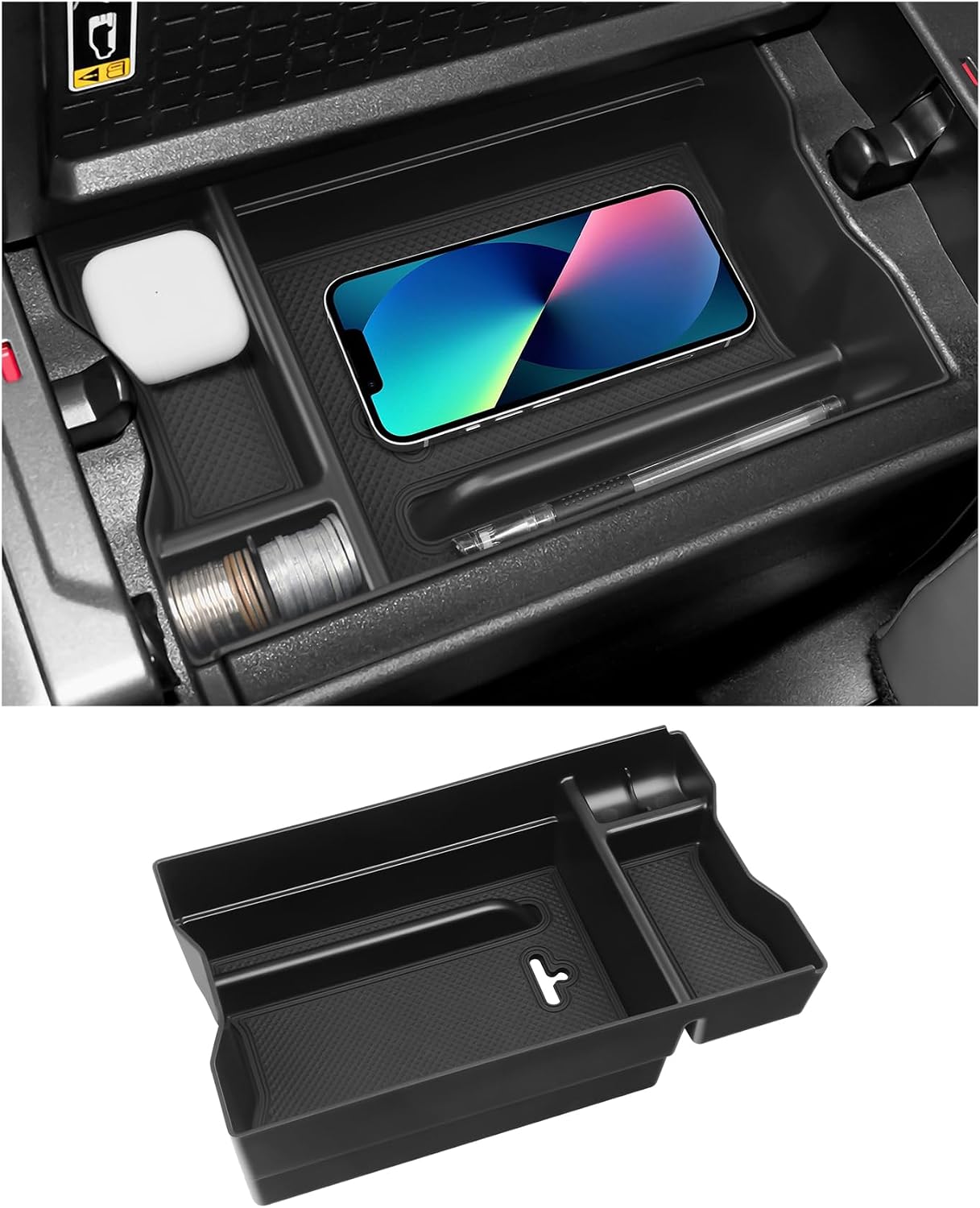
This center console organizer adds a convenient secondary storage layer to compatible Toyota RAV4 hybrid models, helping keep sunglasses, keys, coins, phones, and other small items neatly arranged. Built from durable ABS plastic with a matte finish, it fits directly into the armrest area for quick, tool-free installation and easy removal. Non-slip rubber mats help reduce sliding and noise while maximizing usable storage space inside the console.
Manage Range in Cold or Hot Weather
Cold weather can reduce RAV4 Prime EV range through increased cabin-heating demand, lower tire pressure, denser air, and temperature-related effects on the vehicle. Precondition while connected, check cold tire pressure, and use targeted heat before raising the whole-cabin setting.
FuelEconomy.gov’s cold-weather guidance recommends garage parking when available, checking tire pressure, removing unused roof equipment, preheating while plugged in, and using seat warmers instead of stronger cabin heat when practical.
Hot weather increases air-conditioning demand. Park in shade, use a sunshade, vent trapped air first, and select a reasonable cabin temperature. FuelEconomy.gov’s hot-weather guidance notes that air-conditioning effects can be proportionally larger for hybrids, plug-in hybrids, and EVs.
- Precondition before departure while the vehicle remains connected.
- Park in a garage during cold weather when one is safely available.
- Park in shade or use a sunshade during hot weather.
- Check tire pressure after major temperature changes.
- Remove unused rooftop equipment in every season.
- Compare actual EV miles and miles per kWh only under reasonably similar conditions.
A temporary winter decline does not by itself show permanent battery loss. Repeat the test in mild weather before treating the seasonal change as a battery problem.
Why Did Your Displayed RAV4 Prime EV Range Drop?
A lower displayed estimate can follow a period of cold weather, higher-speed driving, heavy HVAC use, steep routes, added roof equipment, or other high-demand conditions. The estimate alone is not a direct battery-capacity measurement.
Five-Minute Range-Loss Check
- Confirm the charge completed. Check the timer, charging station, and vehicle status.
- Compare actual EV miles and miles per kWh. Do not diagnose the vehicle from the dashboard estimate alone.
- Check recent weather and HVAC use. Strong heat, defrosting, and air conditioning can change trip results.
- Measure cold tire pressure. Correct it to the door-jamb specification when needed.
- Remove unused roof equipment and heavy cargo. Repeat a familiar route afterward.
- Review speed and elevation. Compare routes with similar traffic and weather.
- Repeat the test. Use at least three comparable trips before drawing a conclusion.
If actual EV miles and miles per kWh remain substantially lower across repeated trips in similar mild conditions, save your charging and trip records. A Toyota service department can check diagnostic codes, charging operation, battery-system data, and model-year software information.
Troubleshooting: Why the Gas Engine Starts in EV Mode
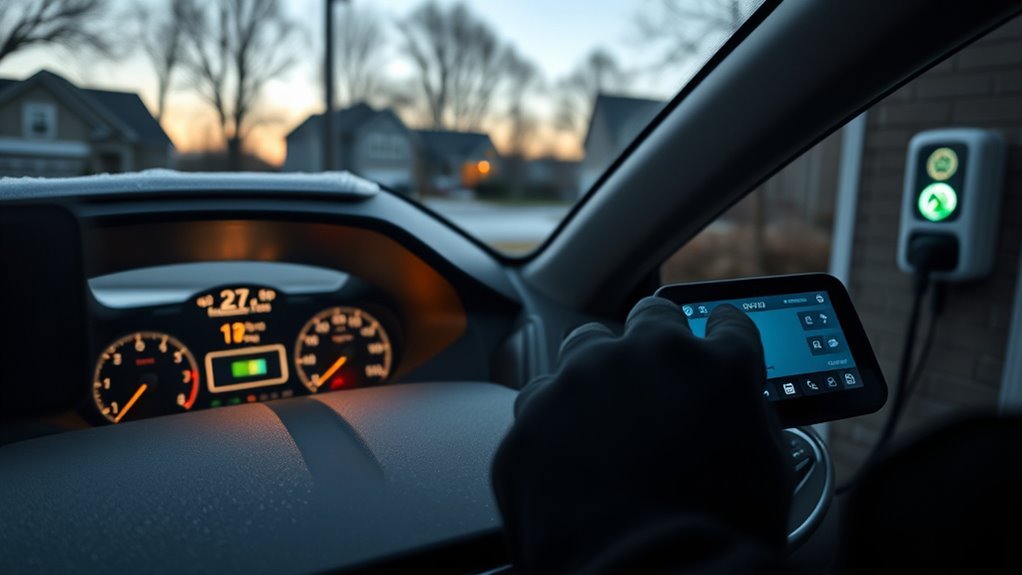
The internal combustion engine can start even when EV mode is selected. The plug-in hybrid system may use it when power demand, speed, climbing, battery conditions, heating, defrosting, or system protection make engine operation necessary.
Toyota notes that gasoline-engine operation can occur during greater power demand, steep climbing, or other conditions described in the owner’s manual. This does not automatically indicate a fault.
Common Engine-Start Situations
- The engine starts during hard acceleration or a highway merge.
- The engine starts while climbing a steep grade.
- The engine starts after strong heat or windshield defrost is selected.
- The engine starts when usable EV charge becomes low.
- The engine starts during sustained higher-speed driving.
- The engine runs for a system-management reason described in the owner’s manual.
What You Can Do
- Reduce unnecessary accelerator demand. Use progressive input when traffic permits.
- Precondition before departure. This lowers the initial cabin-heating or cooling demand.
- Try Eco drive mode. Its gentler response may make smooth inputs easier.
- Choose a less demanding route. Avoid unnecessary steep climbing or sustained high speed.
- Use HV mode intentionally on long trips. Preserve EV charge for a later segment when useful.
- Allow safety and protection events. Do not attempt to force electric-only operation against warnings or system limits.
If the engine starts repeatedly in mild weather with ample charge, light power demand, and no obvious defrost or heating request, record the conditions. Ask a Toyota technician to scan for diagnostic codes and compare the behavior with the instructions for your model year.
Frequently Asked Questions
How do you drive a RAV4 Prime most efficiently?
Begin with a completed charge, precondition while connected, and accelerate smoothly. Use steady legal speeds, anticipate stops, maintain the specified cold tire pressure, and remove unused roof equipment. Compare actual EV miles and average miles per kWh across similar trips to see which change helps.
How do you increase RAV4 Prime EV range?
Reduce energy demand before and during the trip. Precondition with grid power, use moderate climate settings, choose a route with less high-speed driving and climbing, keep tires correctly inflated, and remove unnecessary cargo or roof equipment.
Does Eco mode increase RAV4 Prime electric range?
Eco drive mode can make smooth acceleration and lower climate demand easier, but Toyota does not promise a fixed number of additional miles. EV mode and Eco drive mode are separate settings, so use each one according to the route and model-year instructions.
What is the best way to measure RAV4 Prime EV efficiency?
Compare actual EV miles and average miles per kWh over at least three similar trips that begin with a completed charge. Record temperature, route, speed, HVAC use, tire pressure, and cargo. Treat the displayed EV range as a forecast and charging-station kWh as wall energy that includes charging losses.
Why did my displayed RAV4 Prime EV range drop?
The forecast can fall after cold weather, higher-speed driving, steep routes, heavy HVAC use, lower tire pressure, or added roof equipment. A lower estimate alone does not prove battery degradation. Compare actual EV miles and miles per kWh over at least three similar, fully charged trips.
Does cold weather permanently reduce RAV4 Prime range?
A temporary cold-weather range drop does not by itself prove permanent battery loss. Heating demand, tire pressure, denser air, and battery temperature can reduce winter results. Repeat the same test in mild weather before drawing a battery-health conclusion.
Why does the gas engine start while EV mode is selected?
The engine may start when the vehicle needs more power, climbs a steep hill, travels at higher speed, uses strong heat or defrost, reaches a low state of charge, or performs a system-protection function. Consult the model-year manual if the behavior is unexpected.
Should you use EV mode on the highway?
You can use EV mode on the highway, but sustained higher speeds usually consume charge faster. On a trip longer than the available EV range, HV mode can preserve charge for slower urban driving later. If the whole trip fits inside the available charge, staying in EV operation may be simpler.
Should you charge a RAV4 Prime every night?
Charging after daily use is practical when you need maximum electric operation the next day. Follow the owner’s manual and charging-equipment instructions, and use a schedule when it helps the charge finish before departure or aligns with your electricity plan.
How far can a RAV4 Prime go on electric power?
The 2021-2024 RAV4 Prime uses a 42-mile U.S. electric-range benchmark, and Toyota listed 42 miles for the 2025 RAV4 Plug-in Hybrid. Toyota’s current 2026 page lists the SE at 54 EPA-estimated miles. Toyota’s October 2025 launch estimates listed the XSE at 52 miles, Woodland at 49 miles, and GR SPORT at 48 miles; the final EPA label on the specific vehicle controls.
How long does Level 2 charging take?
Charging time depends on model year and installed onboard charger. An early 2021-2022 vehicle with the standard lower-output charger can take about 4.5 hours, while an early vehicle with the enhanced 6.6-kW charger can take about 2.5 hours. Toyota made the faster onboard charger standard for 2023, and it lists about 2.5 hours for 2023-2025 models under ideal conditions. Its 2026 launch information lists about four hours from 10% to 80% for SE and GR SPORT.
Conclusion
The most reliable way to maximize RAV4 Prime electric range is to control the variables that increase energy demand. Complete charging, precondition while plugged in, accelerate smoothly, moderate HVAC use, keep tires at the specified cold pressure, and remove unused roof equipment.
Run the same familiar route at least three times and record temperature, HVAC use, tire pressure, roof load, actual EV miles, and average miles per kWh. Change one variable at a time. This creates a useful personal range baseline and gives a Toyota technician better evidence if a persistent problem remains.
References
- 2026 Toyota RAV4 Plug-in Hybrid — Toyota USA, accessed July 31, 2026
- The Next Adventure Begins: 2026 RAV4 Arrives This Winter — Toyota USA Newsroom, 2025
- New Name, Same Great Powertrain for the 2025 Toyota RAV4 Plug-in Hybrid — Toyota USA Newsroom, 2024
- Plug and Play With the 2024 RAV4 Prime — Toyota USA Newsroom, 2023
- What’s New for 2023 — Toyota USA Newsroom, 2022
- 2021 Toyota RAV4 Prime: Primed and Ready for Electrified Traction — Toyota USA Newsroom, 2020
- 2022 RAV4 Prime Owner’s Manual Resources — Toyota Owners
- 2024 RAV4 Prime Charging Methods — Toyota Owners
- 2024 Toyota RAV4 Prime 4WD Fuel Economy — FuelEconomy.gov, U.S. Department of Energy and EPA
- Tips for Hybrids, Plug-in Hybrids, and Electric Vehicles — FuelEconomy.gov, U.S. Department of Energy and EPA
- Driving More Efficiently — FuelEconomy.gov, U.S. Department of Energy and EPA
- Keeping Your Vehicle in Shape — FuelEconomy.gov, U.S. Department of Energy and EPA
- Fuel Economy in Cold Weather — FuelEconomy.gov, U.S. Department of Energy and EPA
- Fuel Economy in Hot Weather — FuelEconomy.gov, U.S. Department of Energy and EPA


[…] A timer alone does not prove that charging at a particular hour will extend battery life. Toyota’s schedule documentation focuses on timing, repeat days, overrides, and climate preparation. For driving and charging habits that affect usable EV miles, see the RAV4 Prime electric-range guide. […]