
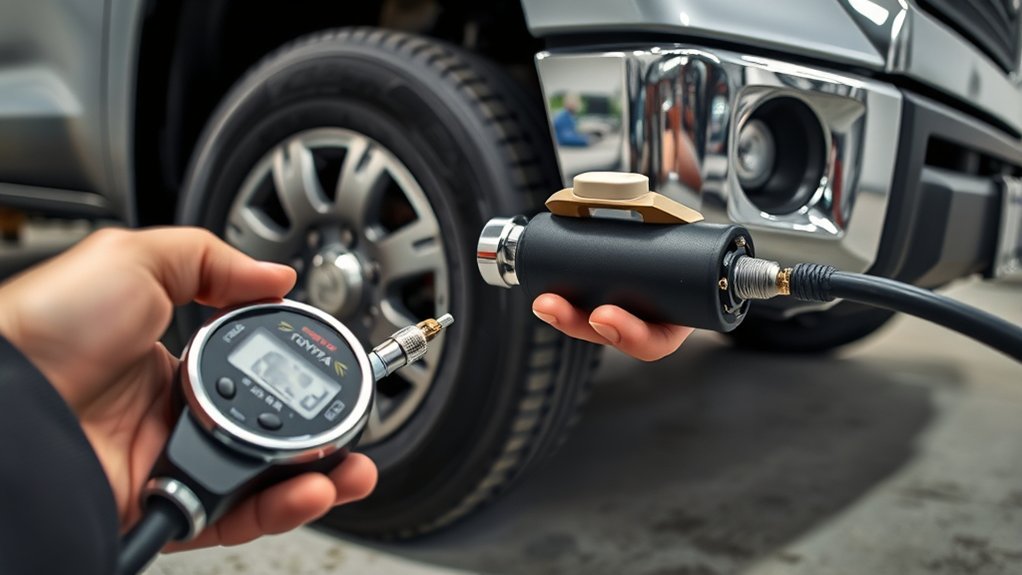
Last updated: July 16, 2026
For a Toyota Tundra TPMS reset, first check every tire when cold and inflate it to the pressure on the driver-door Tire and Loading Information label. Do not use the maximum pressure molded into the tire sidewall. A steady TPMS light usually means at least one tire is significantly underinflated. A light that flashes for about 60 to 90 seconds and then stays on points to a system malfunction. After correcting pressure, many trucks clear the warning without a manual reset. Use the physical reset switch or the TPWS menu only when your model-year owner’s manual calls for initialization.
What’s in This Article
Quick TPMS Reset: The Short Answer for Toyota Tundra Owners
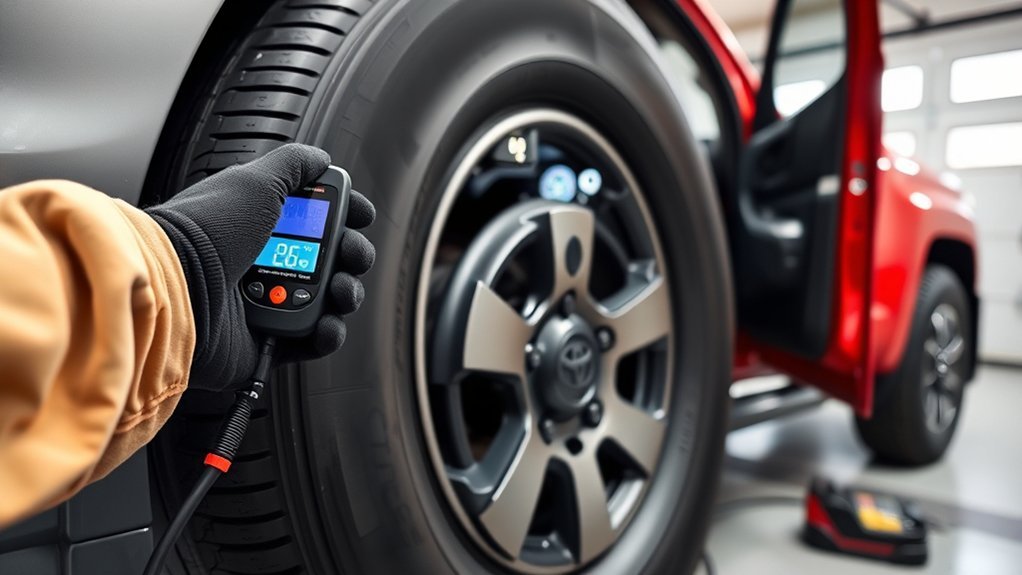
Inflate every cold tire to the driver-door placard pressure before you initialize the system. Then identify which control your truck uses. If it has a physical tire-pressure warning reset switch, turn the ignition on without starting the engine and hold the switch until the warning light blinks three times. If it uses the multi-information display, open Vehicle Settings, find the TPWS or tire-pressure menu, and follow the pressure-setting prompt. Menu names and confirmation messages can vary, so use the Toyota owner’s manual for your exact model year.
Key Takeaways
- Check pressure when the tires have been parked for at least three hours.
- Use the driver-door placard, not the tire sidewall, for the target cold PSI.
- Correct the pressure before you initialize or reset the warning system.
- A steady light usually signals low pressure; flashing followed by a steady light signals a malfunction.
- New sensor IDs may require registration with a TPMS-capable scan tool, not a simple pressure reset.
Which TPMS Action Does Your Tundra Need?
| Situation | What to Do | What Not to Assume |
|---|---|---|
| Steady TPMS light | Check all cold tire pressures and inspect for a leak | Do not reset before correcting pressure |
| Pressure adjusted or tire size changed | Initialize the system if your owner’s manual requires it | Initialization does not repair a leak |
| New TPMS sensor or wheel set | Register sensor IDs or complete the specified relearn procedure | A reset switch may not register new sensors |
| Light flashes, then stays on | Arrange TPMS diagnostics | Adding air alone may not fix a system fault |
Tools and Prerequisites: What You Need Before Checking Pressure
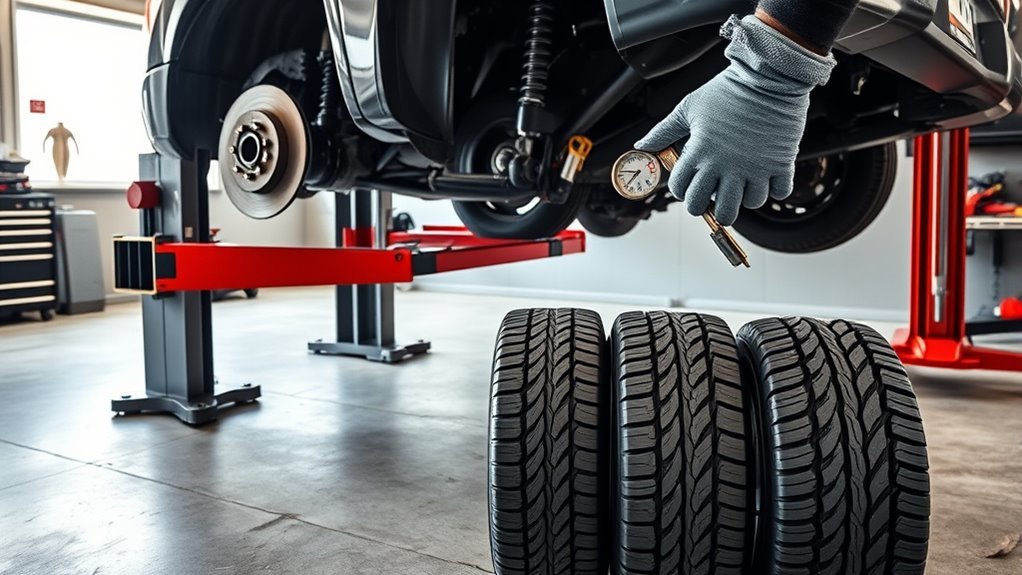
Plan for about 10 to 20 minutes if the tires only need a pressure check and a small adjustment. You may need more time if you find a puncture, leaking valve stem, damaged wheel, or sensor fault. Gather an accurate digital or analog tire pressure gauge, an air compressor or portable inflator, gloves, a flashlight, and your Tundra’s owner’s manual.
Use the recommended PSI on the Tire and Loading Information label or in the owner’s manual. NHTSA defines a cold tire as one that has not been driven for at least three hours and recommends checking every tire, including the spare, at least monthly.
Warning: Do not use the maximum PSI on the tire sidewall as your normal inflation target, and do not reset TPMS to hide a low-pressure condition.
[Products Worth Considering]
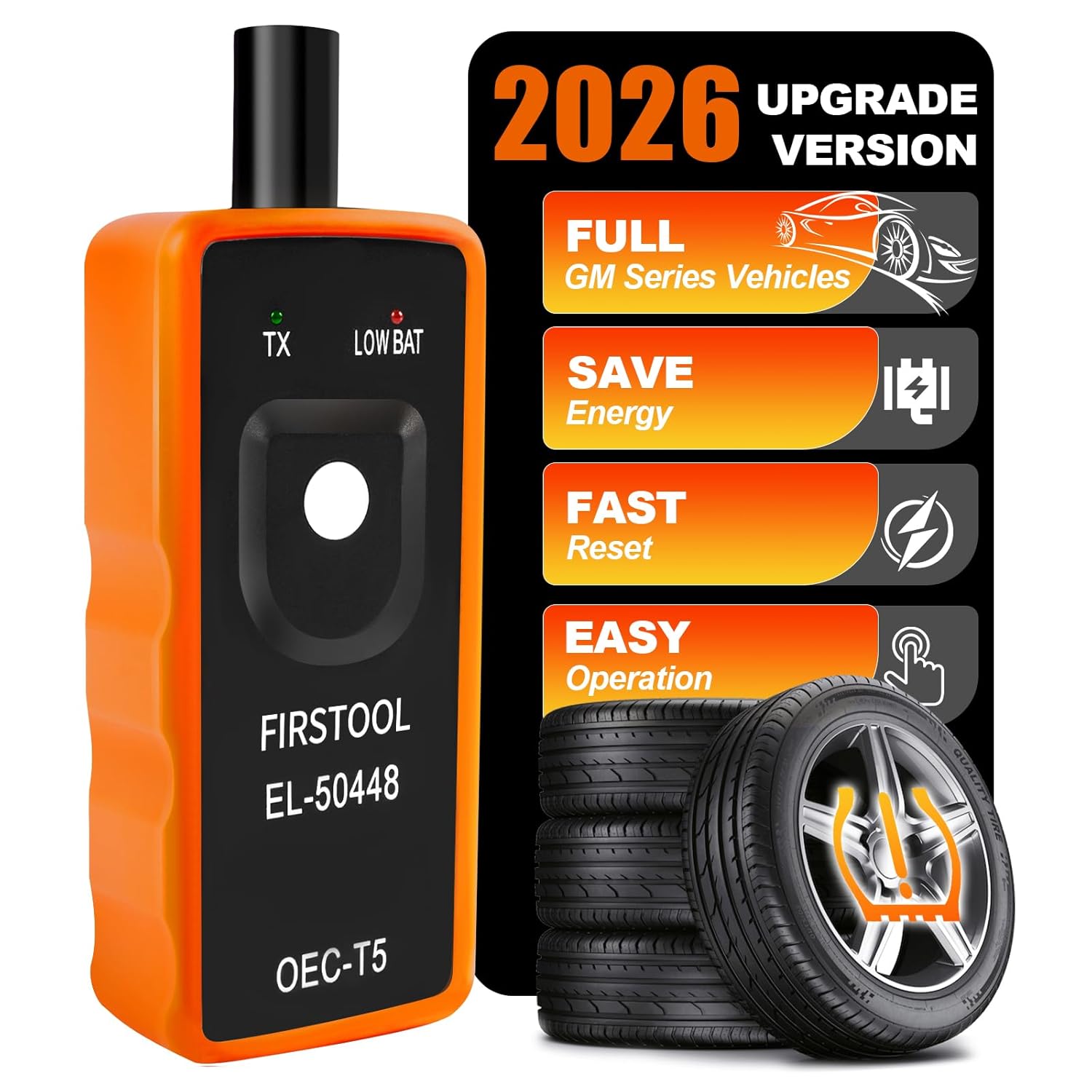
This EL-50448 TPMS relearn tool helps quickly activate and reset tire pressure sensors so your vehicle’s monitoring system stays accurate after tire rotations, sensor replacement, or seasonal tire changes. Designed for many GM-related vehicles and compatible with common 315 and 433 MHz TPMS systems, it offers simple one-button operation and reliable performance for clearing warning lights and relearning sensor positions.
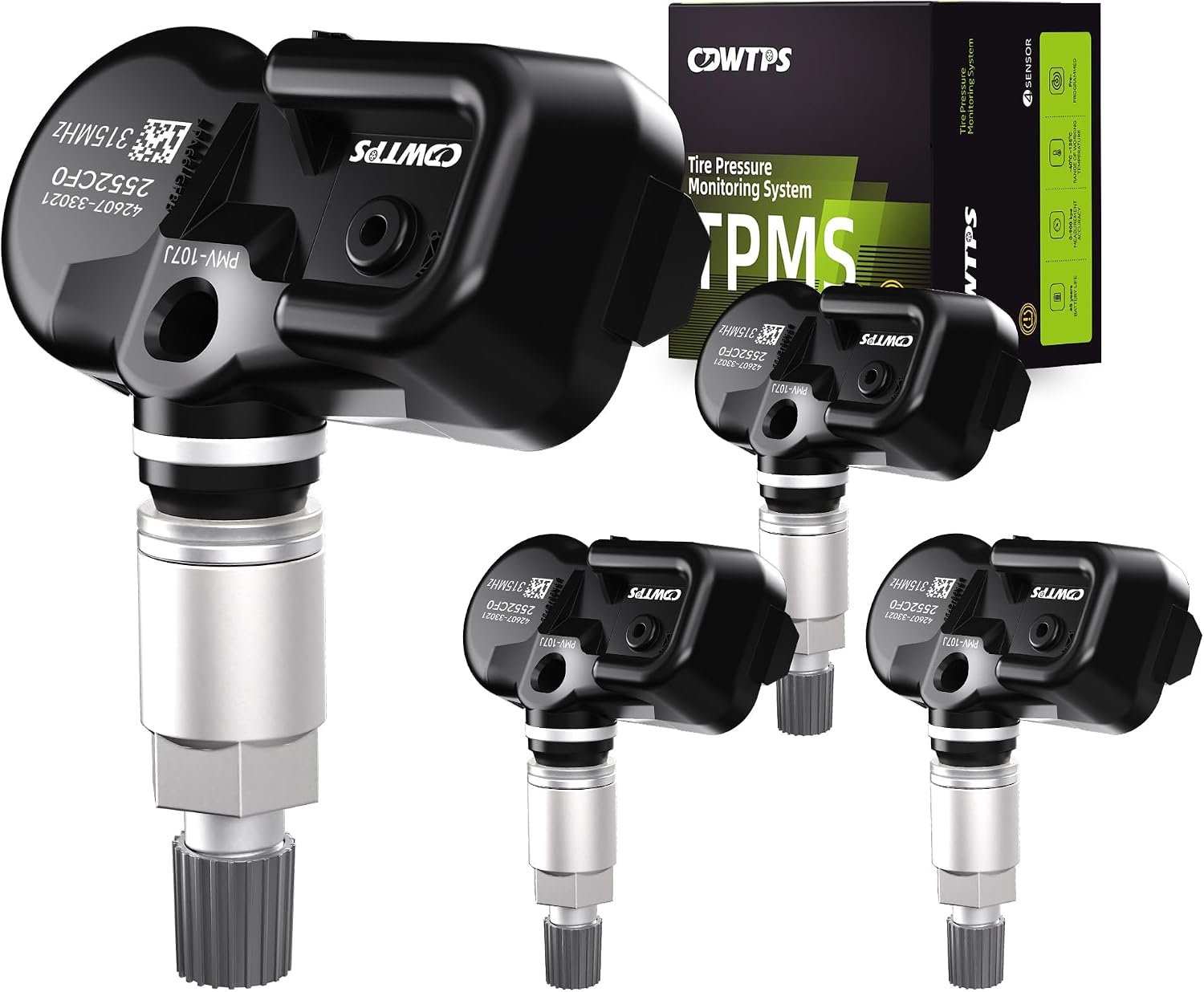
This set of four pre-programmed TPMS sensors is designed as a direct-fit replacement for compatible Toyota, Lexus, and Scion vehicles. It helps restore accurate tire pressure monitoring without sensor programming, and each unit is factory-tested for dependable performance. Built for long service life, these sensors offer a convenient solution for replacing worn or failed tire pressure monitors.
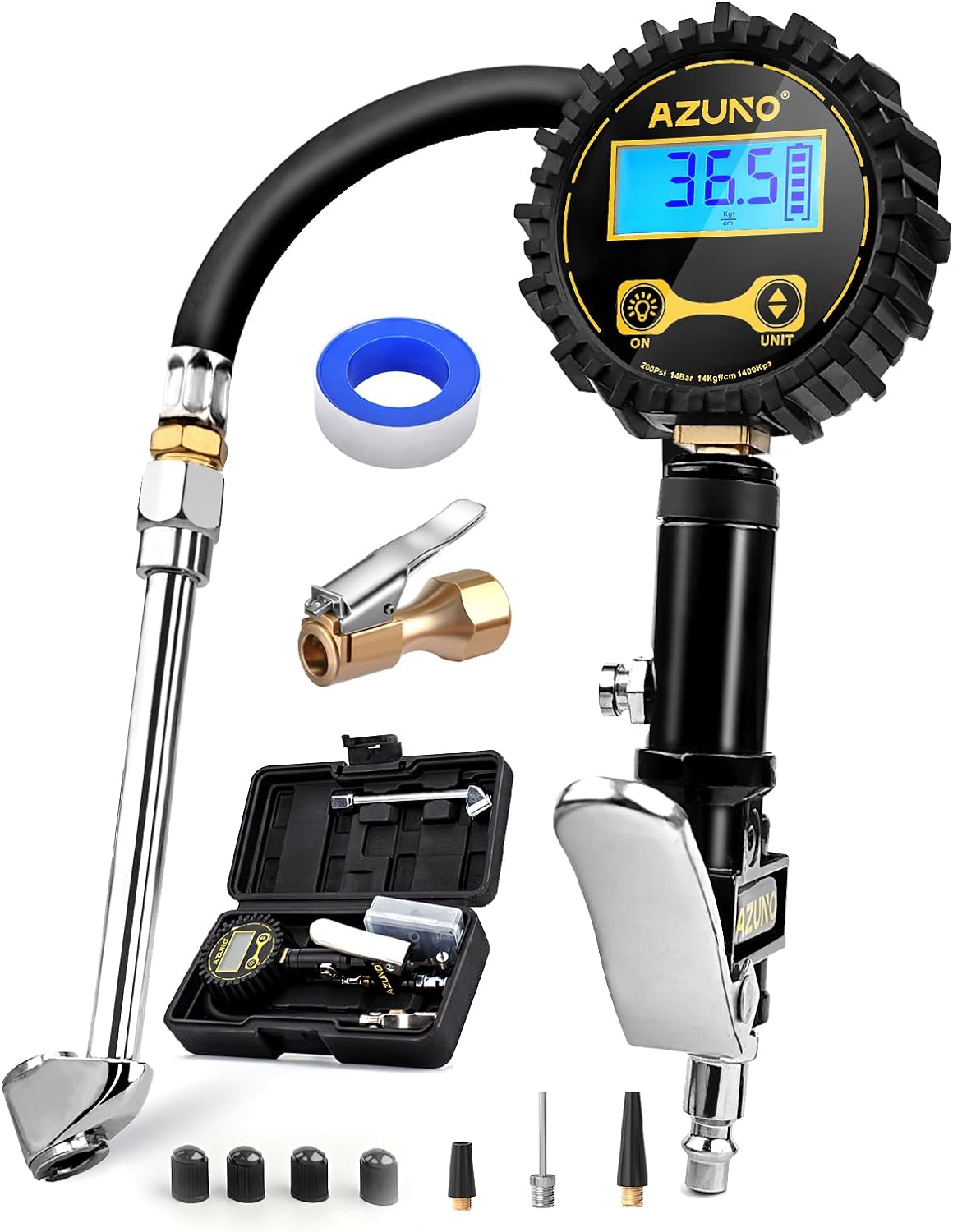
This digital tire inflator delivers accurate, easy-to-read pressure measurements with a bright backlit LCD and precise 0.1 resolution for confident inflation. Designed for single-handed use, it makes it simple to inflate or deflate tires while staying organized in the included portable carrying box. Built for a wide range of vehicles, it is a practical air compressor accessory for cars, trucks, SUVs, motorcycles, and more.
Essential Tools List
Use these basic items to make the job faster and more accurate:
- A reliable tire pressure gauge that gives repeatable readings.
- An air compressor or portable inflator with a pressure display or regulator.
- Spare valve caps to replace missing or cracked caps.
- Safety gloves and a flashlight for inspecting the tread and valve area.
- Your Tundra’s owner’s manual or driver-door placard for the correct cold pressure.
Keep a gauge and inflator in the truck if you tow, haul, or travel far from service areas. These tools help you correct a low reading, but they cannot make a punctured or damaged tire safe.
Pre-Check Vehicle Prep
Park your Tundra on level ground, shift into Park, and set the parking brake. Confirm that the tires are cold. Inspect each tread and sidewall for cuts, bulges, exposed cords, uneven wear, or objects lodged in the rubber. Check the placard for separate front and rear pressures before attaching the gauge.
If you see sidewall damage, exposed cords, a deep puncture, or rapid pressure loss, do not rely on a TPMS reset. Install the spare if it is safe to do so or arrange professional tire service.
Measure Cold Tire Pressure: Step-by-Step for Your Tundra
Check each cold tire with a reliable pressure gauge after your Tundra has been parked for at least three hours. Work in the same order each time so you do not miss a wheel.
- Remove the valve cap from the first tire.
- Press the gauge squarely onto the valve stem until the hissing stops.
- Read the PSI and write it down.
- Compare the reading with the correct front or rear pressure on the placard.
- Repeat the process for the other tires and check the spare as directed by the owner’s manual.
| Tire Position | Measured PSI | Action Required |
|---|---|---|
| Front Left | Record reading | Inflate, release air, or leave as-is |
| Front Right | Record reading | Inflate, release air, or leave as-is |
| Rear Left | Record reading | Inflate, release air, or leave as-is |
| Rear Right | Record reading | Inflate, release air, or leave as-is |
If a tire reads low, add air in short bursts and recheck it. If it reads high while cold, use the gauge’s bleed feature or gently press the valve core with the gauge tip, then measure again. Reinstall each valve cap after the tire reaches the specified pressure.
Set Tire Pressure to Recommended Cold PSI
Set the tires to the cold PSI shown on your Tundra’s Tire and Loading Information label. The correct pressure can differ between the front and rear axles and can change with the original tire specification. Do not substitute a generic Tundra pressure or the sidewall maximum.
Recheck each tire after adding or releasing air. Correct pressure supports predictable steering, braking, load capacity, and tread wear. If one tire is several PSI lower than the others, inspect it for a leak instead of repeatedly adding air.
Where Do You Find the Recommended Cold PSI?
Open the driver’s door and find the Tire and Loading Information label on the door edge or doorjamb. It lists the original tire size and recommended cold pressures. The owner’s manual provides supporting instructions, but the placard is the fastest model-specific reference for the truck as built.
| Step | Action | Reason |
|---|---|---|
| 1 | Read the door placard | Confirms the model-specific cold PSI |
| 2 | Check with an accurate gauge | TPMS is not a precision inflation tool |
| 3 | Adjust front and rear tires as listed | The axle targets may differ |
| 4 | Recheck when cold | Confirms the final pressure accurately |
Do You Need to Reset TPMS After Adding Air?
Often, no. A steady low-pressure warning should turn off after every affected tire is restored to the proper cold pressure and the system receives updated sensor data. Drive only after checking that the tires are safe. If the warning remains, recheck all tires cold and follow the model-specific initialization procedure only if Toyota’s manual calls for it.
- Check every road tire and inspect the spare as directed by the manual.
- Look for a nail, bead leak, cracked valve stem, or wheel damage.
- Do not initialize the system while a tire is intentionally underinflated.
If one tire keeps losing pressure, stop resetting the warning light. Have the tire, wheel, and valve assembly inspected and repaired.
Adjusting Pressure Without Creating a False Baseline
Work one tire at a time and match the placard pressure before touching the reset control. Add air in short bursts, recheck the reading, and allow the gauge to settle. If the pressure is high while the tire is cold, release air slowly and measure again.
Do not initialize TPMS after setting the tires to an arbitrary pressure for ride comfort or appearance. Initialization can store the current pressure as the warning reference on systems that support that function, so an incorrect baseline can delay a useful warning.
Reset TPMS on Tundra Models With a Physical Reset Switch
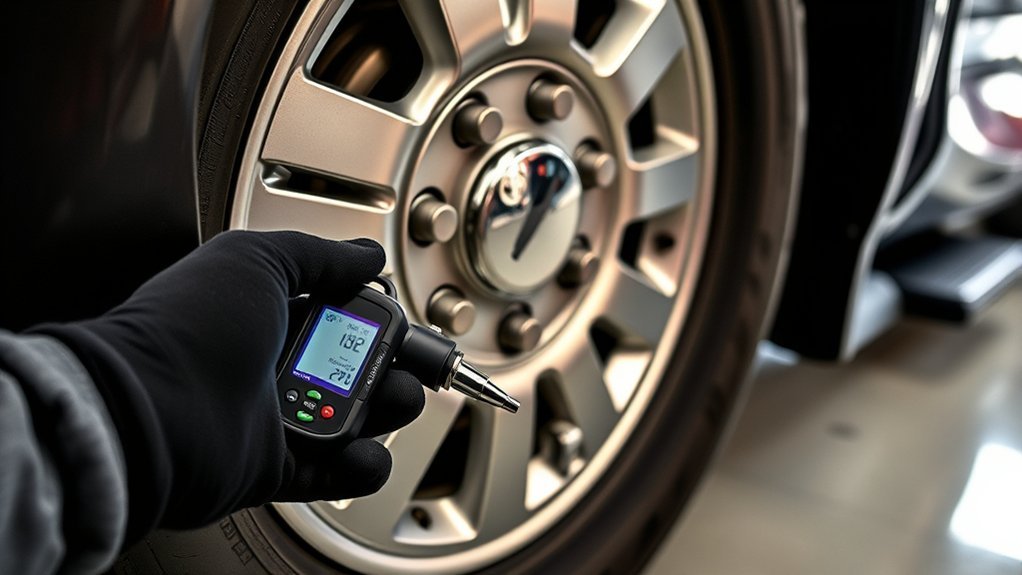
If your Tundra has a physical tire-pressure warning reset switch, inflate the tires to the placard values first. The switch is commonly located low on the driver’s side of the instrument panel, but the exact location varies. Confirm the location and ignition procedure in the owner’s manual before starting.
- Inflate all tires to the recommended cold pressure.
- Park the truck and apply the parking brake.
- Turn the ignition to ON without starting the engine, following the manual for keyed or push-button ignition.
- Press and hold the tire-pressure warning reset switch until the TPMS light blinks three times.
- Release the switch and allow the system time to record the tire-pressure signals.
If you installed new sensors or a second wheel set, initialization may not be enough. The truck may require sensor-ID registration or a relearn procedure with a TPMS-capable scan tool. A basic engine-code reader may not communicate with the tire-pressure warning ECU.
[Products Worth Considering]

This TPMS sensor training tool is designed for Ford, Lincoln, and Mercury vehicles with compatible tire pressure sensors, helping activate sensors after tire rotations or sensor replacement. It supports relearning and warning light reset workflows with a simple one-button operation, making tire pressure maintenance easier and faster. Built for reliable use and broad vehicle compatibility, it is a practical accessory for TPMS service and sensor activation.

This tire inflator attachment combines accurate pressure reading and easy inflation in one heavy-duty tool for maintaining tire pressure with less hassle. A longer hose and 360-degree swivel air chuck help create a secure seal while giving you better control during use. Designed for universal compressor compatibility, it measures, inflates, and deflates without batteries.

This CARORAV TPMS sensor set provides reliable tire pressure monitoring for a wide range of Toyota and Lexus vehicles with 315MHz compatibility. It is pre-programmed for easier setup, but still requires relearning or reset procedures after installation. Designed for accurate real-time pressure tracking, these sensors help support safer driving and long-lasting performance across many model years.
Reset TPMS on 2022 and Newer Toyota Tundra Models
Many 2022 and newer Tundra models place tire-pressure functions in the multi-information display. Inflate the tires to the placard values, start the truck, keep it in Park, and use the steering-wheel controls to open Vehicle Settings. Look for a TPWS, tire-pressure, or pressure-setting option.
- Confirm every tire matches the recommended cold PSI.
- Start the truck and keep the transmission in Park.
- Open Vehicle Settings with the steering-wheel controls.
- Select the TPWS or tire-pressure menu, then choose the pressure-setting option.
- Press and hold OK as directed until the display confirms initialization or the warning light flashes.
Do not assume the system has failed if the displayed pressures do not update immediately. Direct TPMS sensors may need wheel movement before sending fresh data. Follow the drive conditions in your model-year manual. If the warning flashes and then remains on, treat it as a malfunction rather than repeating the reset.
Note: Toyota may use “TPWS” for Tire Pressure Warning System in the display. Menu wording can vary by model year, software version, and equipment.
[Products Worth Considering]

The AICEL TPMS Relearn Tool helps quickly reset and relearn tire pressure sensors on compatible GM vehicles after tire rotation, sensor replacement, or warning light issues. Designed for easy handheld use, it works with most cars, SUVs, and pickup trucks and can save time by eliminating unnecessary trips to the auto store. Its durable ABS housing and simple activation process make it a practical tool for keeping the tire pressure monitoring system operating properly.

This GM TPMS relearn tool helps reset tire sensors, clear warning lights, and match tire positions after rotation quickly at home. Designed for Chevrolet, GMC, Cadillac, and Buick vehicles, it offers one-button operation, fast activation, and broad compatibility with many GM models. It is best suited for OE/OEM sensors and includes paper instructions plus video guidance for easier DIY use.

The Masoll M13 Tire Pressure Monitoring System helps monitor tire pressure for sedans, SUVs, pickup trucks, RVs, and travel trailers with four tires. It features automatic reference pressure calibration, alerting you when pressure changes fall outside the set range, while solar charging and auto wake-up support convenient everyday use. With precise pressure detection, an easy-to-read color LCD, and adaptive backlighting, it is designed to improve driving safety and help protect tire life.
Troubleshooting TPMS: Why the Light Won’t Reset
If the TPMS light remains on, first check every tire with an accurate gauge after the truck has been parked for at least three hours. A slow puncture, leaking bead, damaged valve stem, temperature drop, or incorrect baseline can keep the warning active. Check the spare according to the owner’s manual, but do not assume every Tundra monitors it.
A steady TPMS light usually calls for a pressure and tire inspection. A light that flashes for 60 to 90 seconds and then stays on calls for system diagnostics.
| Warning Behavior | Likely Meaning | Next Step |
|---|---|---|
| Steady light | One or more tires may be significantly underinflated | Check cold pressure and inspect for damage |
| Light comes on during cold weather, then turns off | Pressure may be near the warning threshold | Check and correct pressure while cold |
| Flashes, then stays on | TPMS malfunction | Use a TPMS-capable scan tool or qualified service |
| Returns after repeated inflation | Possible slow leak or damaged component | Leak-test the tire, valve, and wheel |
- Inspect each tire for punctures, cracks, bulges, or bead leaks.
- Check valve stems for corrosion, looseness, or leakage.
- Confirm replacement sensors are compatible and their IDs are registered.
- Have the system scanned if the malfunction sequence returns at startup.
A flashing warning can result from an unregistered or damaged sensor, a depleted sensor battery, an incompatible wheel sensor, or a communication fault. Diagnose the system before replacing parts. A scan can identify which sensor is missing or reporting incorrectly.
Inspect Tires and Routine Maintenance to Avoid TPMS Alerts
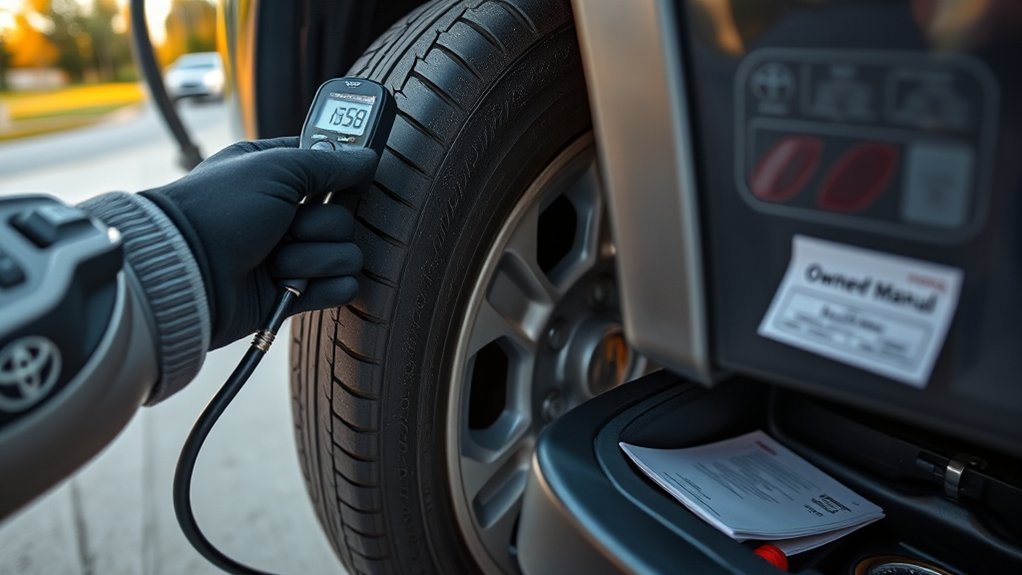
Check tire pressure at least monthly and before towing, hauling, or a long trip. Measure it while the tires are cold and compare each reading with the driver-door label. Inspect the tread and sidewalls at the same time so you can catch damage before the pressure warning appears.
| Task | Frequency |
|---|---|
| Cold tire-pressure check | At least monthly and before long trips |
| Tread and sidewall inspection | During each monthly pressure check |
| Tire rotation | Follow the model-year maintenance schedule |
| Valve and TPMS service | When a leak, fault, or tire replacement requires it |
Rotate tires according to Toyota’s maintenance schedule and tire configuration. Replace tires with bulges, exposed cords, severe cracks, or tread worn to the legal or manufacturer limit. Repair leaking valve components before they create repeated pressure loss.
Keep a simple tire log with dates, cold pressure readings, rotations, repairs, and sensor replacements. A pattern of repeated loss at one wheel helps a technician focus on the tire, bead, rim, or valve assembly.
Frequently Asked Questions
How Do You Check the Tire Pressure on a Toyota Tundra?
Park the truck for at least three hours, read the recommended front and rear PSI on the driver-door placard, and measure each tire with an accurate gauge. Add or release air until each cold tire matches its listed pressure.
What PSI Should My Toyota Tundra Tires Be At?
Use the cold PSI on your Tundra’s Tire and Loading Information label. Do not rely on a universal Tundra number or the maximum PSI on the tire sidewall because the correct pressure depends on the truck’s original tire and load specification.
Why Is My Tundra TPMS Light Still On After Resetting?
One tire may still be low, a leak may be present, the initialization may not have completed, or a sensor may have failed. Recheck all tires cold. If the light flashes before staying on, arrange TPMS diagnostics.
Do I Need to Reset TPMS After Adding Air?
Not always. The steady warning may turn off after you restore the correct pressure and the sensors update. Initialize the system only when your model-year owner’s manual instructs you to do so.
Can a Spare Tire Trigger a Tundra TPMS Light?
It depends on the model year and system configuration. Check the spare’s pressure during routine maintenance and use your owner’s manual to confirm whether its sensor is monitored.
What Does a Flashing TPMS Light Mean on a Toyota Tundra?
A light that flashes for roughly 60 to 90 seconds and then remains on indicates a TPMS malfunction. Possible causes include a failed or unregistered sensor, an incompatible sensor, or a communication fault.
Does a New TPMS Sensor Need to Be Programmed on a Tundra?
A replacement sensor may need its unique ID registered to the truck, followed by the model-specific relearn or initialization process. A pressure reset alone may not register a new sensor.
Safety Disclaimer: This article provides general maintenance information. Follow the Toyota owner’s manual for your exact model year. If a tire has visible damage, loses pressure repeatedly, or the TPMS malfunction sequence returns, have the truck inspected before towing, hauling, or highway driving.
Conclusion
Correct cold pressure comes before any Toyota Tundra TPMS reset. Read the driver-door placard, measure every tire with a gauge, repair leaks, and then use the reset switch or TPWS menu only when your owner’s manual requires initialization. A steady light calls for a pressure check. A flashing light followed by a steady warning calls for TPMS diagnostics. Check pressure monthly so the warning system remains a backup, not your only tire-safety check.
References
- Tire Safety Ratings and Awareness, TireWise, National Highway Traffic Safety Administration
- How Does the Tire Pressure Monitoring System Work in My Toyota?, Toyota Customer Service
- 2021 Toyota Tundra Manuals and Warranties, Toyota Owners
- 2022 Toyota Tundra Manuals and Warranties, Toyota Owners
- 2026 Toyota Tundra Manuals and Warranties, Toyota Owners

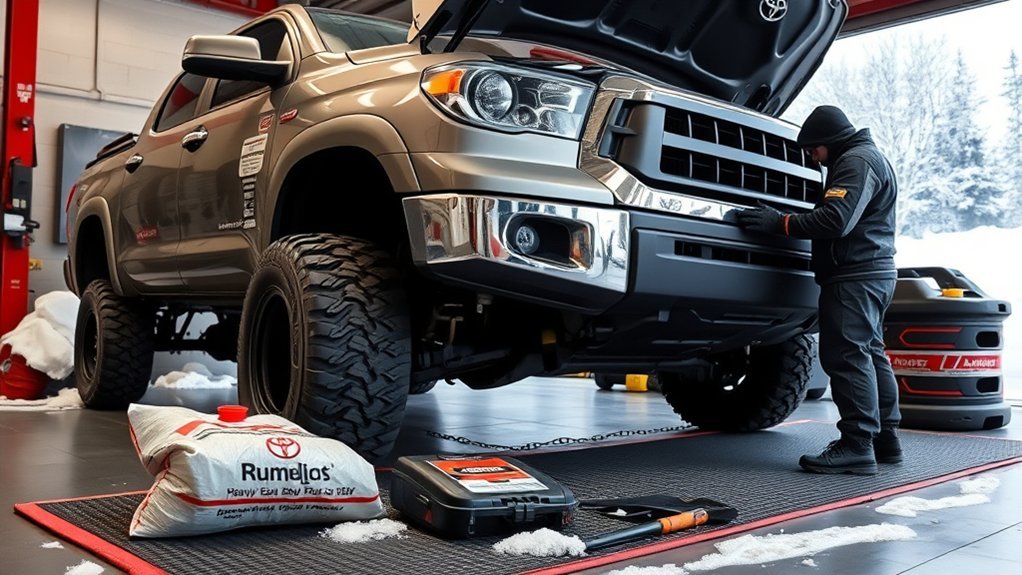
[…] jack, jack handle extensions, lug wrench, wheel chocks, tire-pressure gauge, gloves, flashlight, reflective triangle or vest, torque wrench, and wheel-lock key if […]