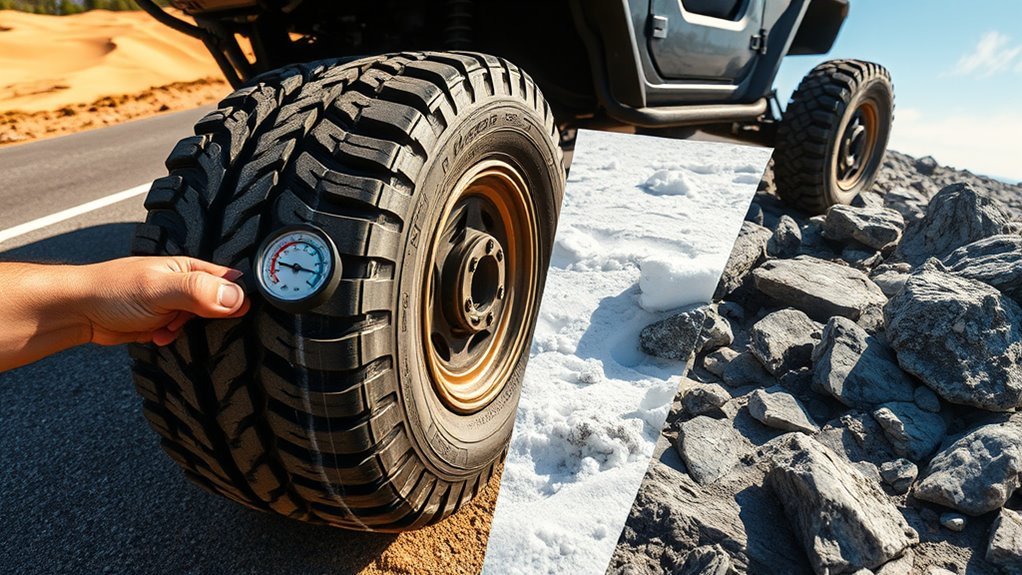
Adjusting tire pressure for different terrains is one of the quickest ways to improve traction, ride comfort, and control off-road. The safest approach is simple: use your vehicle’s door-jamb placard for normal street driving, air down only for low-speed off-road conditions, and reinflate before returning to pavement.
Quick Answer
For street driving, use the vehicle manufacturer’s cold tire pressure on the door-jamb placard. Off-road, use lower PSI only as a temporary starting point: about 16–22 PSI for gravel, 12–18 PSI for sand, 10–16 PSI for rocks, and 8–15 PSI for snow, then adjust for weight, tire size, and wheel type.
Key Takeaways
- Your street PSI is not a guess. Use the cold inflation pressure on the vehicle placard or owner’s manual.
- Lower PSI increases the tire’s footprint, which can improve flotation in sand and snow and help the tire conform to rocks.
- The best off-road PSI depends on vehicle weight, tire size, load range, wheel width, beadlock status, speed, and terrain firmness.
- Never drive highway speeds on aired-down tires. Reinflate before returning to pavement.
At a Glance
| Time Required | 10–20 minutes to air down; 10–30 minutes to reinflate, depending on compressor size and tire volume |
| Difficulty | Easy, but it requires careful pressure checks and conservative driving speeds |
| Tools Needed | Tire pressure gauge, tire deflators, valve-core tool, portable air compressor or CO₂ system, and tire repair kit |
| Cost | Usually $15–$150+ depending on gauge, deflator, and compressor quality |
Understanding the Importance of Tire Pressure
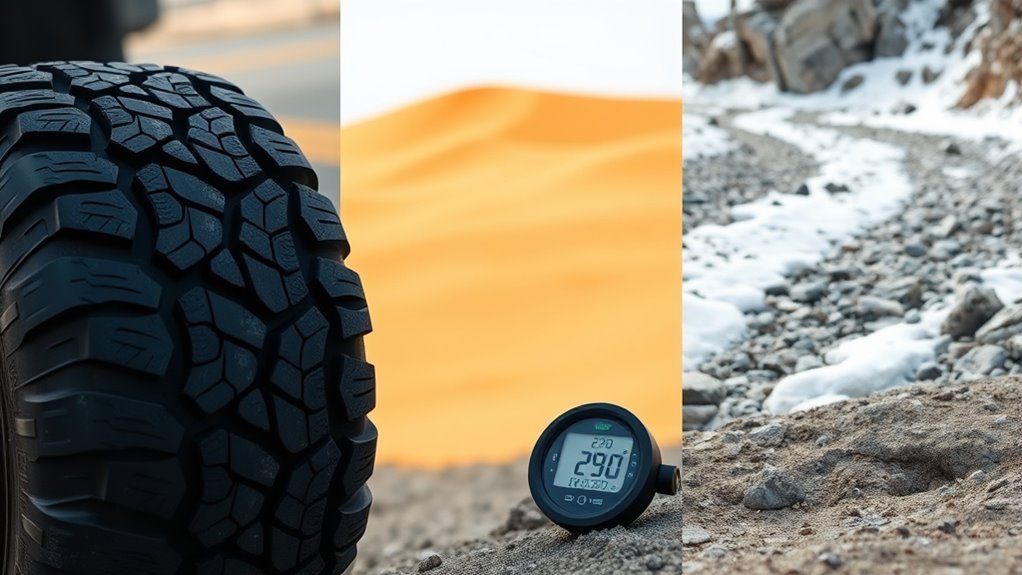
When you venture off-road, tire pressure changes how your tires meet the ground. Lowering pressure lets the tire flex more and increases the contact patch, which can improve flotation on loose surfaces and help the tire wrap around rocks instead of bouncing across them. Offroad Ed explains that airing down expands the tire footprint for greater flotation and traction when driving over rocks or sand.
That extra grip comes with tradeoffs. Lower pressure also reduces sidewall support, increases heat at speed, and raises the chance of bead unseating on standard wheels. That is why off-road PSI should be treated as a low-speed, temporary setting—not a replacement for your normal road pressure.
Warning: Do not drive highway speeds on aired-down tires. Reinflating before pavement is essential for safe handling, normal treadwear, and heat control.
Optimal Tire Pressure for Street Driving
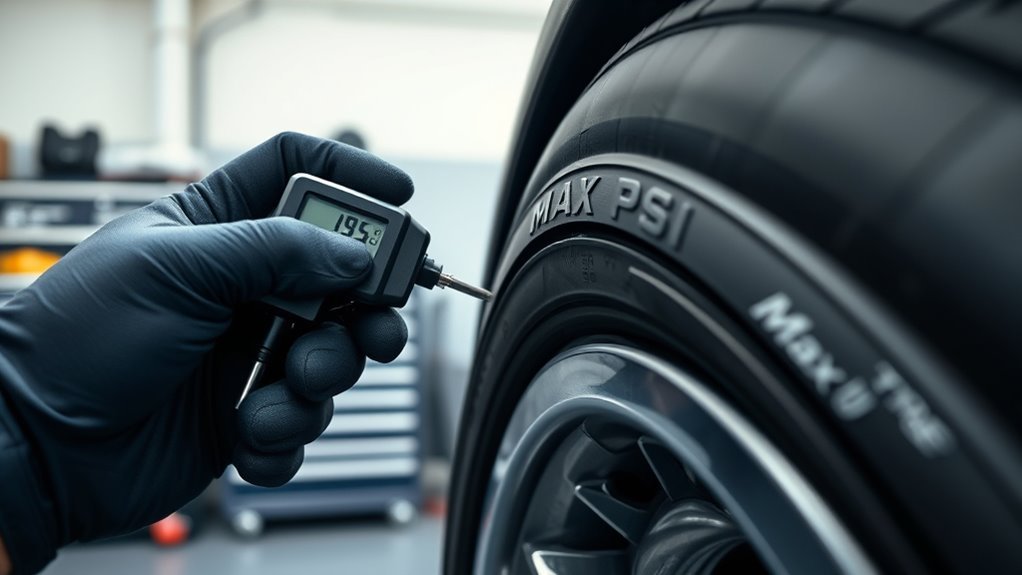
For street driving, the correct tire pressure is the vehicle manufacturer’s recommended cold inflation pressure. You will usually find it on the tire information placard inside the driver-side door jamb or in the owner’s manual. The PSI molded on the tire sidewall is normally a maximum pressure at a maximum load, not the everyday recommended pressure for your vehicle.
The National Highway Traffic Safety Administration says tire pressure should be measured when tires are cold, meaning they have not been driven on for at least three hours. Toyo Tires also directs drivers to the tire information placard or owner’s manual for original-equipment tire pressure recommendations.
For many passenger vehicles and light trucks, placard pressures often fall somewhere around the upper 20s to mid-30s PSI, but the right number can be higher or lower. Always use your specific vehicle’s placard instead of copying a generic PSI range.
Tire Pressure Starting Points by Terrain
The table below gives conservative starting points for many 4x4s and light trucks with off-road-capable tires. These are not universal specs. Start higher if your vehicle is heavy, loaded for overlanding, towing, running stiff LT tires, or using standard non-beadlock wheels.
| Terrain | Starting PSI | Best Use |
| Pavement | Use placard PSI | Normal road handling, fuel economy, tire life, and safety |
| Gravel / washboard roads | 16–22 PSI | Smoother ride and better control at low to moderate trail speeds |
| Sand | 12–18 PSI; 6–10 PSI only with beadlocks and experience | Flotation, momentum, and reduced digging |
| Snow | 8–15 PSI depending on depth and tire setup | Flotation in soft snow and better grip at low speed |
| Rocks | 10–16 PSI; 6–10 PSI only with beadlocks and careful driving | Tire flex, grip, and smoother crawling over uneven surfaces |
| Mud / mixed trail | 14–20 PSI | More footprint while keeping enough tire shape for steering response |
Note: If the tire sidewall looks badly folded, the steering feels vague, or you hear air leaking around the bead, stop and add pressure.
[Products Worth Considering]
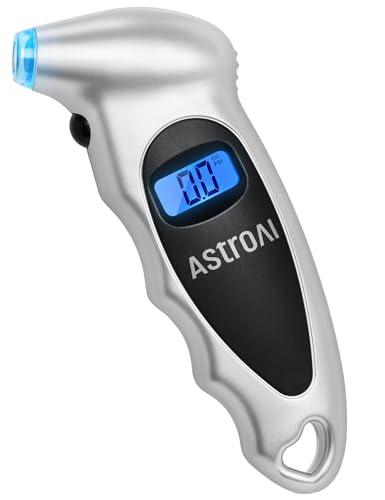
Accurate, Dependable Readings: Factory‑calibrated to ±1 PSI, so you can confidently match your vehicle’s recommended PSI (check the door jamb sticker). Ideal for monthly checks and road trips — consistent results every time, cold or warm.

PROCESS LEVEL ACCURACY: This heavy duty tire pressure gauge is calibrated manually to ANSI B40.1 Grade A (±1% of span)

HEAVY DUTY TYRE GAUGE (0-75 PSI) - Certified ANSI b40.1 accurate, large 5 cm easy-read glow dial, premium braided hose, solid brass hardware, best for any car, truck, motorbike
Adjusting Tire Pressure for Sand
Sand usually needs one of the lowest off-road pressures because the goal is flotation. A larger footprint helps the vehicle stay on top of the sand instead of digging down into it. For many non-beadlock 4×4 setups, 12–18 PSI is a sensible starting point. Beadlock wheels can allow lower pressures, often around 6–10 PSI, but that range is for low-speed use and experienced drivers.
Pressure is only one part of sand driving. BFGoodrich notes that sand success depends on air pressure, throttle control, and momentum. Avoid sudden throttle inputs that cause wheelspin, because spinning tires dig holes quickly.
Pro Tip: If you are still sinking in sand at 16–18 PSI, drop 2 PSI at a time, test again, and stop lowering once the vehicle floats and moves smoothly.
Adjusting Tire Pressure for Snow
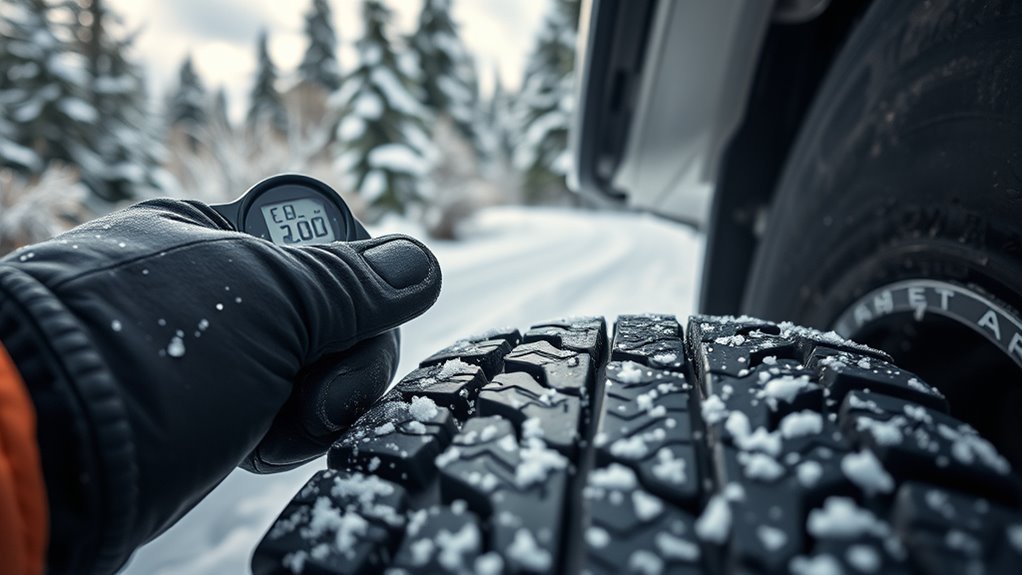
Snow pressure depends heavily on depth and snow type. Packed snow may need more stability, while deep soft snow often benefits from lower pressure and a wider footprint. A practical starting range is about 8–15 PSI for many off-road tire setups, with the lower end reserved for deep snow, low speed, and careful driving.
Do not assume lower is always better. If the tire squats too much, the sidewall becomes vulnerable, steering can feel delayed, and the bead can unseat on standard wheels. Without beadlocks, be cautious below about 10 PSI.
Ideal PSI Range
For light snow or packed snow, start closer to 12–15 PSI. For deep snow where flotation matters more, you may try 8–12 PSI if your wheels, tires, and load allow it. Test in small changes instead of dropping straight to the lowest number.
Tire Type Considerations
Tread pattern, tire size, sidewall stiffness, and load range all affect the right PSI. A heavy truck on stiff LT tires may need more pressure than a lighter vehicle on larger-volume tires. Your tires must still support the vehicle’s weight, so do not choose a tire pressure that sacrifices load capacity or sidewall control.
Safety Precautions Needed
Check pressure often in winter because temperature changes affect readings. Set your road pressure when tires are cold, then air down only when you are ready for the trail. If you transition from snow back to pavement, reinflate before driving at road speed.
Tire Pressure Guidelines for Rocky Terrain
Rocky terrain rewards tire flex, but it also punishes sidewalls. Lowering pressure helps the tire conform to uneven surfaces, improving grip and reducing harsh impacts. For many non-beadlock setups, 10–16 PSI is a safer starting range. Beadlock wheels may allow 6–10 PSI for slow rock crawling, but that range should be used carefully.
On rocks, watch the sidewall as much as the tread. If the tire bulges enough to pinch between the rim and the rock, add pressure. If the vehicle bounces and loses grip, remove 1–2 PSI and try again at a slower speed.
The best off-road PSI is not the lowest PSI. It is the lowest pressure that improves traction while still keeping the tire stable, seated, and protected.
Identifying When to Adjust Tire Pressure Based on Terrain Types
Adjust tire pressure when the terrain changes enough to affect traction, comfort, or control. Stay at placard pressure on pavement. Air down slightly for washboard roads, more for sand or snow, and carefully for rocks. Then air back up when the trail ends.
Use these signs to decide whether you need an adjustment:
- Too much wheelspin: Lower pressure slightly to increase footprint and grip.
- Vehicle digs into sand or snow: Lower pressure 2 PSI at a time to improve flotation.
- Harsh ride over rocks or washboard: Lower pressure slightly for more flex and cushioning.
- Vague steering or excessive sidewall bulge: Add pressure.
- Air leaking at the bead: Stop and add pressure immediately.
How to Adjust Tire Pressure Step by Step
- Start with your road pressure. Check the placard or owner’s manual and confirm your tires are safe for the vehicle load.
- Measure cold pressure before the trip. Cold readings are more accurate than readings taken after driving.
- Choose a conservative starting PSI. Use the terrain table above and start higher if your vehicle is heavy or your tires have stiff sidewalls.
- Air down evenly. Use a gauge and deflators so all four tires are close to the same pressure unless your vehicle setup requires a front/rear split.
- Drive a short test section slowly. Watch traction, sidewall shape, steering feel, and ride comfort.
- Adjust in small steps. Add or remove 1–2 PSI at a time rather than making large changes.
- Recheck during the trail. Temperature, altitude, small leaks, and terrain changes can alter pressure.
- Reinflate before pavement. Use a compressor or CO₂ system and return to the vehicle’s recommended road pressure.
[Products Worth Considering]

4X4 AIR DOWN TOOL: Quickly and accurately air down tires for superior off road traction on any terrain - rock, sand, snow, or mud.

ABOUT ARB505: Keeping accurate tire pressure is a necessity for good fuel economy, prolonged tire life and maximum traction off-road. This distinctive patented design of the ARB E-Z Deflator permits the valve core to be removed to deflate the tire at an amplified speed. An incorporated sliding valve provides a precise reading of the tire pressure while deflation is in process certifying the desired psi is accomplished.

【CREATIVE】 This kit allows you to Air Down tires in a short period and you do not have to wait and keep an eye on tire pressure. The Deflator Valve will automatically stop at your pre-set PSI value.
Essential Tools for Adjusting Tire Pressure
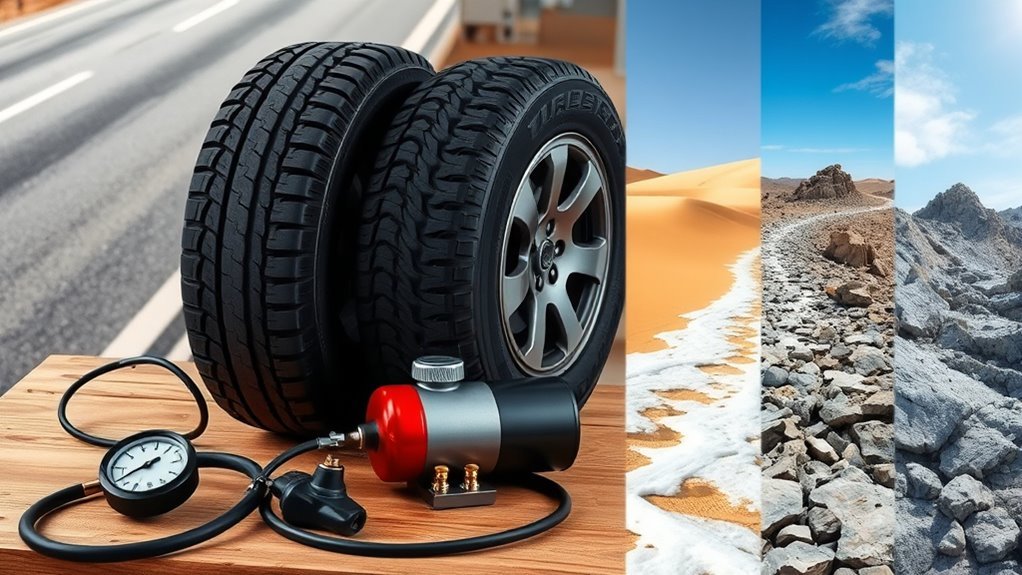
To adjust tire pressure safely, carry tools that let you air down accurately and air back up before the road. At minimum, you need a quality pressure gauge and a reliable way to reinflate.
- Tire pressure gauge: Use this before and after every pressure change. A gauge is more reliable than guessing from tire shape.
- Tire deflators: Preset or quick-release deflators make airing down faster and more consistent.
- Portable air compressor or CO₂ system: This is essential. Do not air down if you have no way to air back up.
- Valve-core tool and spare valve cores: Helpful for faster deflation and basic trail repairs.
- Tire repair kit: Carry plugs, reamer, insertion tool, and pliers for small punctures.
[Products Worth Considering]

RAPID INFLATION & ROAD-READY PORTABILITY: Powerful 120W motor delivers up to 35L/min airflow—inflates a standard car tire (195/65 R15) from 30 to 36 PSI in under 1 minute under ideal operating conditions. Weighs only 2.2 lbs and fits glove compartments or trunks for daily commutes, road trips, and emergencies. Plugs into standard 12V DC car outlet with 15A fuse protection. AIRUN H features its cordless counterpart H2 Pro.

[Fast & Efficient Inflation] The OlarHike tire inflator features a high-performance motor that delivers rapid airflow—inflate a standard car tire (195/65 R15) from 30 to 35 PSI (+5 PSI) in just 55 seconds, or a larger SUV tire (235/65 R17) from 30 to 35 PSI (+5 PSI) in only 2.2 minutes. Ideal for cars, SUVs, light Pickup(Within 51 PSI), motorcycles, bicycles, and sports balls. Its practical everyday usefulness also makes it a thoughtful car gift for men who value reliable tools for their vehicles. Important Note: The unit can only inflate car and pickup truck tires up to 51 PSI and is not compatible with heavy-duty pickup trucks or RVs.

【Accurate Digital Tire Gauge】The digital pressure gauge always returns a stable reading within 1% of the exact pressure of your tire by incredible 0.1 display resolution. No more guessing!
Factors That Change Your Best Off-Road PSI
Two vehicles can run the same trail and need different pressures. Before copying another driver’s PSI, compare these factors:
- Vehicle weight: Heavier vehicles usually need more PSI to protect the tire and support the load.
- Tire size and air volume: Larger tires often tolerate lower pressure better than smaller tires.
- Load range and sidewall stiffness: Stiffer LT tires may need more pressure to flex properly but still support weight.
- Wheel type: Beadlock wheels help hold the bead at lower pressures; standard wheels are more likely to de-bead.
- Wheel width: A very wide wheel can make the bead less secure at low PSI.
- Speed: The faster you drive, the more heat and sidewall stress low pressure creates.
- Temperature: Tire pressure changes with heat and cold, so recheck when conditions change.
What Happens If You Don’t Get Tire Pressure Right?
Incorrect tire pressure can reduce traction, damage tires, and make the vehicle harder to control. Under-inflation can overheat tires at speed, increase sidewall flex, cause uneven wear, and raise the risk of tire failure. Over-inflation can reduce the contact patch and make the vehicle bounce or skate across rough terrain.
Increased Risk Of Flats
When tire pressure is too low for the terrain, speed, or wheel setup, the tire becomes more vulnerable to damage. Common problems include:
- De-beading: The tire can lose its seal from the rim, especially during sharp turns or side loads.
- Sidewall cuts: Excessive bulge exposes more sidewall to rocks and debris.
- Pinch damage: The tire can compress between the wheel and an obstacle.
- Heat buildup: Aired-down tires can run hot if driven too fast or too long on hard surfaces.
Poor Vehicle Handling
Too little pressure can make steering feel delayed, especially during turns or side-hill driving. Too much pressure can reduce grip and make the ride harsh. The goal is to find the balance where the tire flexes enough for traction but still feels controlled and stable.
Frequently Asked Questions
How do you air down tires for sand?
Use a tire gauge and deflators to lower pressure evenly, usually starting around 12–18 PSI on standard wheels. Drive a short distance, check whether the vehicle floats instead of digs, and adjust in 1–2 PSI steps. Use lower pressures only with the right wheel setup and low-speed driving.
What PSI should your tires be at to drive on sand?
A common sand starting point is about 12–18 PSI for many 4x4s on non-beadlock wheels. Beadlock setups can sometimes go lower, such as 6–10 PSI, but only for low-speed use and with careful monitoring. Vehicle weight, tire size, and sand firmness all matter.
What PSI should all-terrain tires be at?
On pavement, all-terrain tires should be set to the vehicle manufacturer’s recommended cold pressure unless your tire size or load has changed and a qualified tire professional has recalculated it. Off-road, many drivers start around 16–22 PSI for gravel, 12–18 PSI for sand, and 10–16 PSI for rocks.
What is the best drive mode for sand driving?
Use your vehicle’s sand, off-road, or 4-high mode if equipped. The best mode reduces unnecessary traction-control intervention and helps maintain momentum. Pair the correct drive mode with lowered tire pressure, gentle throttle, and smooth steering.
Can you drive on the road after airing down?
No. Aired-down tires are for low-speed off-road use. Before returning to pavement, reinflate to the vehicle’s recommended road pressure. Driving fast on underinflated tires can cause poor handling, heat buildup, tire damage, and blowout risk.
How low can you go without beadlock wheels?
For many standard wheels, staying above about 10–12 PSI is a safer rule of thumb, especially on heavy vehicles or during turns. Some setups can go lower, but the chance of bead unseating rises as pressure drops. When in doubt, use more pressure.
Conclusion
Adjusting tire pressure for different terrains can make your vehicle more capable, comfortable, and controlled, but only when you do it safely. Use the placard pressure for street driving, air down conservatively for off-road traction, monitor the tire’s shape and handling, and always reinflate before returning to pavement. The best PSI is not a fixed number—it is the pressure that gives you traction without sacrificing tire stability, load support, or safety.
Sources
- NHTSA TireWise — cold tire pressure, vehicle placard guidance, and tire safety.
- Toyo Tires Load & Inflation Tables — placard and owner’s manual guidance for original-equipment tire pressure.
- Offroad Ed: Tires and Tire Pressure — airing down to expand tire footprint for flotation and traction.
- BFGoodrich Off-Road Terrain Techniques — sand driving and the role of air pressure, throttle control, and momentum.
- BFGoodrich Tire Selection Guide — reinflating aired-down tires before returning to paved roads.
- Tire Rack: How Do I Set My Tire Air Pressure? — cold-pressure checks and setting tire pressure before heat affects readings.