A good tire inflator can remain useful for years, but there is no universal lifespan that applies to every model. The biggest difference comes from how hard the inflator works, how hot it gets, whether you follow the duty cycle, how well the hose and electrical parts hold up, and whether a cordless model’s battery still holds a useful charge.
Quick Answer
A consumer tire inflator can often stay useful for years with occasional tire top-ups, but its real lifespan depends on model quality, heat control, duty cycle, hose condition, storage, and battery health. The safest answer is to follow your exact manual and replace the unit if it overheats, leaks, smokes, or gives unreliable pressure readings.
Key Takeaways
- A tire inflator’s lifespan depends more on heat, use pattern, duty cycle, storage, and parts quality than on a fixed number of years.
- The fastest way to damage a small inflator is to run it past its rated runtime without a cooldown break.
- Cordless inflators have an extra wear item: the rechargeable battery pack.
- Longer inflation times, air leaks, burning smells, smoke, unusual noises, damaged cords, or inaccurate pressure readings are warning signs.
- Use the cold tire pressure on the vehicle placard or owner’s manual, not the maximum PSI printed on the tire sidewall.
At a Glance
| Time Required | About 5 minutes for a post-use wipe-down; 10–15 minutes for monthly inspection. Cooldown time depends on your manual. |
| Difficulty | Easy |
| Tools Needed | Soft cloth, mild soap, tire pressure gauge, owner’s manual, and the inflator’s manual |
| Cost | Usually free, unless a fuse, hose, valve chuck, adapter, or battery needs replacement |
Understanding Tire Inflator Lifespan: What to Expect

A tire inflator usually fails from heat, worn hoses, weak electrical connections, a tired battery, inaccurate gauge readings, or internal compressor wear. A lightly used inflator that is stored well and allowed to cool between runs can last much longer than one used hard on large tires, air mattresses, inflatable toys, or several vehicles in a row.
The most important point is this: small tire inflators are not built like shop compressors. Many are designed for topping up tires, not for continuous heavy-duty inflation. Always check your specific model’s manual for its maximum pressure, duty cycle, power requirements, fuse rating, and cooldown time.
A tire inflator lasts longest when you treat heat as the main enemy: run it only within its duty cycle, keep vents clear, and let it cool before storing it.
Think of lifespan in parts, not just years. The compressor motor may still work while the hose leaks, the fuse fails, the gauge drifts, or a cordless battery no longer holds a charge.
| Part | Common Wear Pattern | What Helps It Last |
|---|---|---|
| Motor and compressor | Heat, long runtime, blocked vents, and heavy loads cause wear. | Follow the duty cycle, allow cooldown breaks, and avoid using a light-duty inflator like a shop compressor. |
| Hose, chuck, and seals | Cracks, leaks, worn threads, and loose fittings make the motor run longer. | Store the hose loosely, avoid sharp bends, and inspect the chuck before each use. |
| Gauge or digital display | Readings may drift or become hard to trust. | Compare it with a separate tire pressure gauge from time to time. |
| Fuse, plug, cord, or charger | Poor connections, wrong power source, or damaged cords can stop the inflator. | Use only the rated outlet, cord, charger, battery, and replacement fuse. |
| Cordless battery | Lithium-ion batteries age with heat, deep discharge, full-charge storage, and repeated cycles. | Store batteries cool, dry, and partly charged unless the battery manual says otherwise. |
What Shortens a Tire Inflator’s Life?
The biggest lifespan killers are repeated overheating, blocked vents, damaged hoses, moisture, poor battery care, and using the inflator beyond what it was designed to do.
| Problem | How It Damages the Inflator | Best Prevention |
|---|---|---|
| Running too long | Overheats the motor and compressor head. | Follow the manual’s duty cycle and cooldown time. |
| Weak or leaking hose | Makes the motor run longer for the same pressure gain. | Inspect the hose, chuck, and seals before use. |
| Moisture | Can corrode metal parts and electrical contacts. | Store indoors in a dry place and avoid wet or damp operation. |
| Battery neglect | Reduces runtime and may prevent charging. | Store lithium-ion batteries cool, dry, disconnected from the tool, and partly charged for long storage. |
| Wrong power source | Can blow fuses, reduce output, overheat cords, or damage the unit. | Use only the rated outlet, cord, charger, fuse, or battery pack. |
Essential Maintenance Tips to Extend Your Tire Inflator’s Life
Good maintenance is simple. Keep the inflator clean, inspect the hose and valve connector, protect it from moisture, and avoid pushing it past its rated runtime.
Regular Cleaning Procedures
After use, let the inflator cool. Then wipe the body, hose, and chuck with a soft cloth. If needed, use mild soap and a lightly damp cloth, but do not soak the unit or let water enter vents, switches, ports, plugs, or the battery area.
Dust around the vents can trap heat. Keep air intake and exhaust areas clear so the motor can cool properly during operation.
Inspect Hoses Periodically
Check the hose, valve connector, and seals before use. Look for cracks, loose fittings, cross-threading, stuck valves, or air hissing from the chuck. A small leak can make the inflator run much longer, which creates more heat and wear.
| Inspection Focus | Action Required | Frequency |
|---|---|---|
| Cracks and leaks | Examine the hose, chuck, and seals for visible damage or air leaks. | Monthly and before long trips |
| Connections | Tighten and secure the valve connector, plug, battery, or charger connection. | Before each use |
| Cleaning | Wipe the case, hose, chuck, and vents with a soft cloth. | Every few uses |
Proper Storage Practices
Store the inflator in a cool, dry place away from direct sunlight, standing water, road salt, and extreme heat. Detach or neatly coil the hose if your model allows it, and avoid sharp bends that can weaken the hose over time.
For battery-powered inflators, follow the battery manual. As a general lithium-ion care practice, avoid long-term storage when the battery is completely empty or fully charged. DEWALT battery safety guidance recommends cool, dry storage and avoiding liquids or extreme temperatures, while the Atlas Copco Li-Ion Battery Management guide recommends storing lithium-ion batteries below 80% state of charge, ideally around 30–40%, for long storage.
Pro Tip: Keep the inflator, hose adapters, spare fuse, charging cable, and a separate tire gauge in the same case. That prevents lost parts and makes monthly tire checks faster.
Simple Maintenance Schedule
| When | What to Check |
|---|---|
| Before each use | Power cord or battery, hose, chuck, vents, pressure target, and correct power source. |
| After each use | Let the unit cool, wipe dust off, coil the hose loosely, and store accessories safely. |
| Monthly | Check for cracked hoses, loose fittings, weak battery charge, dirty plugs, and gauge accuracy. |
| Before a road trip | Test that the inflator powers on, verify adapters are present, and compare its reading with a separate gauge. |
| Before long storage | Clean it, dry it, disconnect batteries if possible, and avoid leaving it in extreme heat. |
Duty Cycle: The Rule That Protects the Motor
A tire inflator’s duty cycle tells you how long it can run before it needs to cool down. This varies by model. For example, one Pittsburgh 12V portable inflator manual warns not to run the unit continuously for more than 10 minutes and to cool it for 25 minutes afterward. A Husky 120V inflator guide gives a different example: 15 minutes of cooldown after 5 minutes of continuous operation.
Do not guess. Read the manual for your exact inflator. If it says to stop after 3, 5, 10, or 15 minutes, stop and let the unit cool before continuing.
Warning: Stop using the inflator immediately if you smell burning, see smoke, hear grinding, notice sparks, or find the compressor head becoming dangerously hot. Unplug it, let it cool in a safe place, and do not use it again until the problem is identified.
What Happens If You Ignore Maintenance?
If you ignore maintenance, the inflator usually has to work harder. A clogged vent traps heat. A leaking hose increases runtime. A weak battery forces repeated charging. A dirty or loose valve connection can make the inflator seem slow even when the motor is fine.
Over time, these small problems can lead to blown fuses, inaccurate readings, damaged hoses, weak airflow, overheating, or complete failure.
How to Properly Store Your Tire Inflator

Proper storage protects the hose, wiring, seals, battery, display, gauge, and plastic housing. Before storing the inflator, let it cool completely, wipe off dirt, coil the cord or hose loosely, and place accessories where they will not be crushed.
Ideal Storage Conditions
The best storage spot is indoors, dry, and away from direct sunlight. Avoid leaving the inflator in a hot trunk for months if you can help it. Heat can age rubber hoses, weaken plastic, and reduce lithium-ion battery health.
If you keep an inflator in your vehicle for emergencies, inspect it at least monthly. Confirm the battery still has charge, the cord is not damaged, the hose is not cracked, and the pressure gauge or digital display still works.
Regular Maintenance Checks
- Check the hose and valve chuck for cracks, leaks, or loose fittings.
- Make sure vents are open and not packed with dust.
- Confirm the fuse, plug, charger, or battery connection is clean and undamaged.
- Run the inflator briefly to confirm it powers on before a long trip.
- Compare its pressure reading with a separate tire gauge from time to time.
Comparing Lifespan: Battery-Powered vs. Corded Tire Inflators
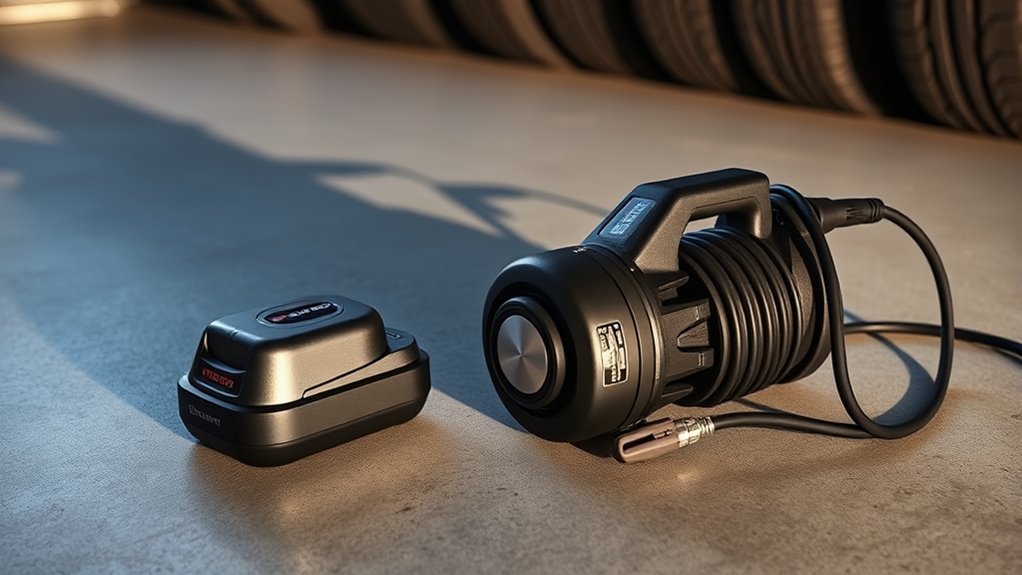
Battery-powered and corded tire inflators can both last a long time when used correctly, but they fail in different ways.
Battery-powered inflators are convenient because you do not need to park near an outlet or use a 12V socket. Their main weakness is the battery. Rechargeable batteries age with time, heat, deep discharge, full-charge storage, and repeated charging. Even if the compressor still works, a weak battery can make the inflator feel slow or unreliable.
Corded inflators avoid battery-pack aging, but they depend on a good power source. A 12V inflator may need a properly rated vehicle outlet. A 120V inflator may need the right extension cord. Weak power, undersized cords, or poor connections can reduce performance and create heat.
Note: Corded does not automatically mean “better,” and cordless does not automatically mean “short-lived.” Choose based on your use: emergency top-ups, home garage use, off-road tires, RV tires, or frequent multi-vehicle inflation.
[Products Worth Considering]
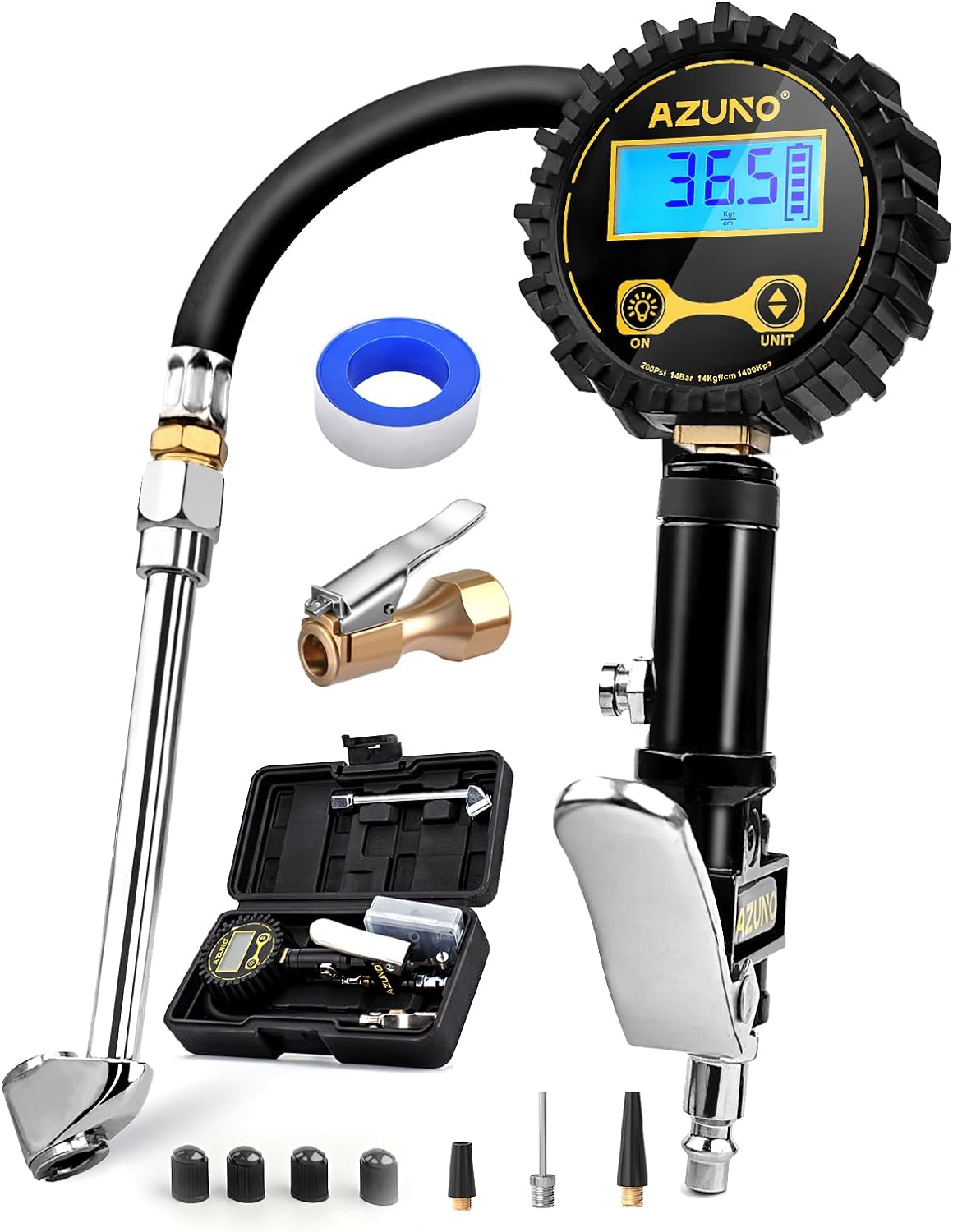
This digital tire inflator delivers accurate, easy-to-read pressure measurements with a bright backlit LCD and precise 0.1 resolution for confident inflation. Designed for single-handed use, it makes it simple to inflate or deflate tires while staying organized in the included portable carrying box. Built for a wide range of vehicles, it is a practical air compressor accessory for cars, trucks, SUVs, motorcycles, and more.

Febreze Car air freshener helps keep your vehicle smelling clean by fighting strong odors and releasing a fresh scent through your air vents. Its easy clip-on design provides continuous fragrance for up to 40 days per vent clip, with adjustable intensity for a customized experience. The crisp Unstopables Fresh aroma makes daily drives more enjoyable and also makes a practical gift for car owners.

This portable tire inflator delivers fast, convenient inflation for cars, bikes, motorcycles, and balls with dual power options from a rechargeable battery or a 12V car cord. Its digital LCD pressure gauge and automatic shutoff help prevent over-inflation, while multiple preset modes and a custom setting make it easy to use for different inflation tasks. Built-in flashlight and USB power ports add extra emergency utility on the road.
How to Use a Tire Inflator Without Shortening Its Life
Using the inflator correctly protects both the tool and your tires. Start by checking the recommended tire pressure on the driver’s door placard or in the owner’s manual. The NHTSA tire-safety guidance points drivers to the vehicle placard or certification label for the recommended cold inflation pressure, and federal owner-manual language says tires should be checked monthly when cold and inflated to the pressure recommended by the vehicle manufacturer.
- Check pressure when the tires are cold, ideally before driving or after the vehicle has been parked long enough for the tires to cool.
- Connect the valve chuck firmly so air does not leak.
- Set the target PSI if your inflator has an auto-stop feature.
- Run the inflator only within its rated duty cycle.
- Stop and recheck pressure with a separate gauge if the reading seems wrong.
- Let the inflator cool before packing it away.
Warning: If your 12V inflator requires the vehicle to be on, never run the engine inside a closed garage or other enclosed space. Move the vehicle outside or use accessory power mode if your vehicle and inflator allow it.
When Not to Use a Tire Inflator
A portable inflator is helpful for topping up a low tire, but it is not a fix for every tire problem. Do not rely on it if the tire has visible sidewall damage, a large puncture, a broken valve stem, a separated bead, or damage from being driven while flat. In those cases, install the spare if safe to do so, call roadside assistance, or have the tire inspected by a qualified repair shop.
Also stop if the inflator itself becomes unsafe. A burning smell, smoke, sparks, repeated fuse failure, melting plastic, damaged cord, damaged battery, or air hose that cannot seal properly means the tool needs service or replacement.
Common Questions About Tire Inflator Lifespan
The most common lifespan questions come down to power source, heat, duty cycle, and whether a problem is repairable.
- Does frequent use ruin it? Not if the inflator is designed for that use and you follow the cooldown time. Frequent use on large tires can shorten the life of a light-duty model.
- Can I inflate four tires at once? Sometimes, but check the manual. Many small inflators need rest breaks during multi-tire sessions.
- Is slow inflation always a bad sign? Not always. A loose chuck, leaking valve stem, low battery, cold weather, or large tire can slow inflation even when the motor still works.
- Should I repair it or replace it? Replace simple parts such as hoses, fuses, adapters, or valve chucks if correct parts are available. Replace the whole unit if the motor smokes, overheats repeatedly, sparks, or gives unsafe pressure readings.
Best Practices for Using and Caring for Your Tire Inflator
To get the most life from your tire inflator, build these habits into every use:
- Read the manual before the first use.
- Use the correct power source, charger, battery, fuse, cord, or outlet.
- Keep the unit dry and well ventilated.
- Do not leave it running unattended.
- Do not exceed the tire or inflatable item’s rated pressure.
- Let the inflator cool before touching hot parts or storing it.
- Inspect hoses and cords monthly.
- Store accessories in the original case or a small pouch.
- Use a separate tire gauge when accuracy matters.
- Wear eye protection if your manual requires it.
[Products Worth Considering]

This automotive circuit tester checks low-voltage DC systems from 3-65V, making it useful for diagnosing headlights, taillights, fuses, sockets, and other vehicle wiring issues. The digital backlit display provides clear voltage readings with fine accuracy, while the bidirectional polarity indicator helps you test from either ground or positive. Built with a durable probe, insulated tip, and extra-long spring wire, it is designed for dependable everyday use in automotive and household electrical work.

This portable 12V tire inflator delivers fast, convenient inflation for cars, SUVs, trucks, motorcycles, and other inflatables. It features a digital display, bright LED lighting, auto shutoff, and multiple nozzle adapters to help you inflate accurately and safely, even in low-light situations. The long power cord and air hose make it easy to reach all tires and handle roadside emergencies or routine maintenance.

TRUSTED BY OVER 3 MILLION USERS: Based in Garden Grove, California, AstroAI serves customers in more than 15 countries worldwide. Known for professional-grade accuracy and durable construction, this digital tire inflator with gauge is a trusted choice for drivers, mechanics, and DIYers who rely on dependable tools.
When a Larger Compressor Is the Better Tool
A small portable tire inflator is best for topping up passenger-car tires, emergency use, and light household inflatables. If you regularly inflate large truck tires, RV tires, off-road tires, trailer tires, or multiple vehicles in one session, a heavier-duty inflator or shop compressor may be a better fit. The right tool will run cooler, inflate faster, and avoid pushing a light-duty compressor beyond its intended use.
[Products Worth Considering]

High-pressure inflation mode with automatic shutoff

6X FASTER INFLATION: GSPSCN Heavy Duty Double cylinder design, maximum pressure 150PSI, air flow 70L/min, inflates standard vehicle tire in 1 minutes (200/70/R18, 0-35psi).

6X FASTER INFLATION: GSPSCN Heavy Duty Double cylinder design, maximum pressure 150PSI, air flow 70L/min, inflates standard vehicle tire in 1 minutes (200/70/R18, 0-35psi).
Troubleshooting: What the Symptoms Usually Mean
| Symptom | Possible Cause | What to Do |
|---|---|---|
| Runs but tire does not inflate | Loose chuck, leaking tire, damaged hose, broken seal, or separated tire bead. | Reconnect the chuck, listen for leaks, inspect the hose, and stop if the tire itself is damaged. |
| No power | Dead battery, blown fuse, bad outlet, loose plug, damaged cord, or incompatible charger. | Charge the battery, check the fuse, test the outlet, and use only rated replacement parts. |
| Inflates much slower than before | Leak, weak battery, clogged vent, worn compressor, cold weather, or oversized tire. | Check for leaks, cool the unit, recharge the battery, clean vents, and compare with past performance. |
| Gauge reading seems wrong | Gauge drift, poor connection, or reading while air is flowing. | Stop the inflator and confirm pressure with a separate tire gauge. |
| Burning smell or smoke | Overheating, internal damage, electrical fault, or blocked ventilation. | Stop immediately, unplug it, move it to a safe place, let it cool, and replace or service it. |
Signs Your Tire Inflator Needs Replacement
A tire inflator can show warning signs before it fails completely. Replace or service it if you notice:
- Repeated overheating even when you follow the duty cycle.
- Smoke, sparks, melting plastic, or a burning odor.
- Grinding, squealing, or rattling noises from inside the motor.
- Cracked hoses or fittings that cannot be replaced safely.
- Pressure readings that stay inaccurate after checking with a separate gauge.
- A cordless battery that will not hold a useful charge.
- Inflation times that become much longer with no tire or hose leak.
- Repeated blown fuses after the correct replacement fuse is installed.
If the problem is only a fuse, adapter, hose, or valve connector, repair may be possible. If the motor, internal compressor, wiring, battery pack, or pressure gauge is failing, replacement is usually safer and more practical for a small consumer inflator.
Frequently Asked Questions
Why did my tire inflator stop working?
Common causes include a dead battery, blown fuse, poor 12V outlet connection, overheated motor, loose valve chuck, damaged hose, clogged vent, or internal compressor failure. Let the unit cool, check the power source, inspect the hose, and read the troubleshooting section in your manual.
What is the 3% tire rule?
The 3% tire rule usually refers to tire-size changes, meaning a replacement tire’s overall diameter should stay close to the original size. It is not a rule for setting tire pressure. For PSI, use the vehicle placard or owner’s manual.
Is it worth buying a tire inflator?
Yes, a tire inflator is worth buying if you check tire pressure regularly, take road trips, tow, commute, or want an emergency tool in the car. It can save time and help you top up a low tire before driving to a safe repair location.
What is the life expectancy of an air compressor?
A small tire inflator and a shop air compressor are different tools. A tire inflator’s life depends on light-duty use, cooldown time, storage, battery care, and hose condition. Larger shop compressors may last longer in heavy use because they are built for repeated operation and often have more serviceable parts.
Can a tire inflator overheat?
Yes. Small inflators can overheat if they run longer than their duty cycle, inflate large tires, operate in hot weather, or have blocked vents. Stop if the unit smells hot, smokes, sparks, or makes unusual noises.
How often should I check tire pressure?
Check tire pressure at least once a month and before long trips. For the most accurate reading, check when the tires are cold and inflate to the pressure listed on the vehicle placard or owner’s manual.
Conclusion
A tire inflator can be a reliable tool for years when you use it within its limits. The key is to control heat, follow the duty cycle, keep hoses and connections in good shape, store it dry, and care for the battery if it is cordless. If the inflator becomes slow, noisy, inaccurate, leaky, smoky, or repeatedly overheats, repair the faulty part if safe parts are available or replace the unit.
Sources
- NHTSA TireWise — backs cold tire-pressure guidance and using vehicle tire information.
- eCFR 49 CFR 571.138 — backs monthly cold tire-pressure checks and vehicle-manufacturer recommended inflation pressure.
- Pittsburgh 12V Portable Tire Inflator Manual — backs duty-cycle, cooldown, ventilation, storage, fuse, and carbon monoxide warnings.
- Husky 120V Inflator Use and Care Guide — backs cooldown, indoor storage, wet-area, unattended-use, and ventilation warnings.
- DEWALT Lithium-Ion Battery Safety Tips — backs storing and charging lithium-ion tool batteries in a cool, dry location.
- Atlas Copco Li-Ion Battery Management Guide — backs lithium-ion storage charge guidance and avoiding full-charge long-term storage.