
By Vance Ashford · Last updated: July 31, 2026
How this guide was checked: This article was reviewed against Toyota’s recent Tacoma suspension descriptions, Monroe and KYB inspection guidance, and a current RepairPal cost estimate. It is a research-based guide and does not claim hands-on testing of every Tacoma generation, trim, or aftermarket shock.
Toyota does not publish one universal mileage at which every Tacoma shock must be replaced. A practical approach is to begin closer inspection around 50,000 miles, then replace the shocks when testing confirms weak damping, active leakage, physical damage, or poor ride control. Towing, constant payload, rough roads, and off-road use can make problems appear sooner. Also, most Tacomas use front coil-over shock absorbers in a double-wishbone suspension, not MacPherson struts, even though some parts catalogs use the word “strut.”
Quick Answer
Do not replace Tacoma shocks by mileage alone. Inspect them once they have about 50,000 miles of service and replace them when you find active oil leakage, a bent or damaged unit, repeated bouncing, cupped tires, excessive dive or sway, or poor control on rough roads. Replace both shocks on the affected axle so left-to-right damping stays balanced.
Key Takeaways
- Toyota does not give every Tacoma a fixed shock-replacement interval.
- Around 50,000 miles is an inspection point, not an automatic replacement deadline.
- Active leakage, damage, bounce, cupping, dive, sway, and unstable handling matter more than the odometer.
- A light oil film may be normal weepage; a wet, dripping shock is more concerning.
- Replace shocks in matched pairs on the same axle and verify fit by model year, trim, drivetrain, suspension, and ride height.
How Long Do Toyota Tacoma Shocks Typically Last?
There is no single verified lifespan that applies to every Tacoma. Monroe recommends asking whether a shock has been in service for at least 50,000 miles as part of an inspection, but that is not the same as a mandatory replacement interval. A smooth-road commuter may retain acceptable damping well past that point, while a loaded or off-road truck may need attention earlier.
Use mileage to schedule checks, not to diagnose the part. Record when the shocks were installed, inspect them during tire rotations, and compare how the truck behaves on the same familiar road. A gradual increase in bounce, float, dive, sway, or harsh bottoming is more useful than mileage alone.
For a professional inspection framework, see Monroe’s shock and strut inspection guidance.
Does Every Tacoma Use the Same Shock and Suspension Layout?
No. Tacoma suspension design and factory shock hardware vary by model year and trim. Toyota described the 2023 Tacoma as using a double-wishbone, coil-spring front suspension with a leaf-spring rear suspension and gas shocks. For 2024–2026, most grades use a multi-link rear suspension with coil springs, while selected work-oriented configurations retain rear leaf springs. Toyota also fits grade-specific dampers, including Bilstein, FOX, Old Man Emu, and Adaptive Variable Suspension hardware on certain trims.
| Tacoma Example | Suspension Detail | Replacement Implication |
|---|---|---|
| 2023 and similar recent-generation trucks | Double-wishbone coil-spring front; leaf-spring rear with separate gas shocks | Match front and rear shocks to the exact cab, drivetrain, trim, and ride height |
| 2024–2026, most grades | Double-wishbone front; multi-link rear with coil springs | Do not assume a rear shock listed for an older leaf-spring Tacoma will fit |
| 2024–2026 selected leaf-spring grades | Rear leaf springs remain on selected SR, SR5 XtraCab, and TRD PreRunner configurations | Confirm rear suspension type before ordering parts |
| TRD Pro, Trailhunter, TRD Off-Road, and Limited examples | Specialized or electronically controlled factory shock systems may be fitted | Preserve trim-specific tuning and electronic compatibility |
Toyota calls these components shock absorbers or absorbers in its recent Tacoma material. The front spring sits around the shock, so sellers may call the complete unit a coil-over or strut assembly. Mechanically, however, the Tacoma’s double-wishbone layout is different from a MacPherson-strut suspension.
See Toyota’s 2023 Tacoma suspension description and 2026 Tacoma suspension overview. For a related model-specific explanation, read the Tacoma PreRunner guide.
What Shortens Tacoma Shock Life?
Driving conditions affect shock wear more than mileage alone. Repeated piston movement creates heat inside the damper, while impacts and contamination can damage seals, shafts, mounts, and bushings. Monroe includes towing, off-road use, constant loading, commercial use, performance modifications, and frequent unpaved-road driving among the conditions that justify closer inspection.
| Use | Why It Matters | What to Watch |
|---|---|---|
| Smooth-road commuting | Lower heat and fewer hard impacts | Gradual float, bounce, or loss of control |
| Towing or constant payload | The suspension moves and controls more mass | Rear bounce, sway, bottoming, and heat-related fade |
| Rough roads and potholes | Sharp impacts stress the shaft, body, mounts, and bushings | Dents, bent parts, clunks, leaks, and alignment changes |
| Off-road or washboard driving | Rapid cycling builds heat and exposes parts to mud and debris | Fading control, seal leakage, damaged boots, and loose hardware |
| Lift, larger tires, armor, or camper weight | Added mass and changed travel can exceed stock tuning or shock length | Top-out, bottom-out, harshness, rubbing, and uneven ride height |
Pro tip: Choose shocks for the truck’s constant weight and actual terrain. A shock cannot correct an overloaded or sagging spring by itself.
What Are the Main Signs of Worn Tacoma Shocks?
One symptom is not enough to prove a shock has failed because tires, alignment, springs, ball joints, bushings, wheel bearings, and loose hardware can create similar complaints. Look for a pattern of symptoms and confirm it with a visual inspection and road test.
- Excessive bouncing or floating: The truck continues moving after a bump or feels hard to settle on undulating pavement.
- Active fluid leakage: The shock body is broadly wet, fluid runs down the unit, or oil drips from it.
- Physical damage: A bent or scored shaft, dented body, cracked bracket, broken mount, or severely damaged bushing requires prompt attention.
- Tire cupping: Evenly spaced scalloped tread can occur when the tire is not being controlled, but balance and other worn suspension parts must also be checked.
- Poor body control: Excessive nose dive, acceleration squat, rapid roll, sway, bottoming, or directional instability can indicate weak damping.
- Clunks or squeaks: Noise often comes from mounts, bushings, loose fasteners, springs, or other suspension joints rather than the shock’s internal valving.
A thin film near the shaft seal can be normal weepage. Monroe distinguishes that from leakage, where much of the body is wet or fluid drips from the unit. See its weepage-versus-leakage guide.
Warning: Avoid towing, heavy loads, or highway driving if a shock mount is broken, a unit is bent, fluid is actively dripping, a tire is bouncing, or the Tacoma feels difficult to control. Have the suspension inspected first.
[Products Worth Considering]

This steering clock spring is designed to restore reliable steering wheel controls across a wide range of Toyota models. It supports audio, cruise control, and other multifunction commands while matching OEM part numbers for confident replacement fitment. Built for dependable signal transfer and straightforward installation, it is an effective solution for repairing steering column control issues.
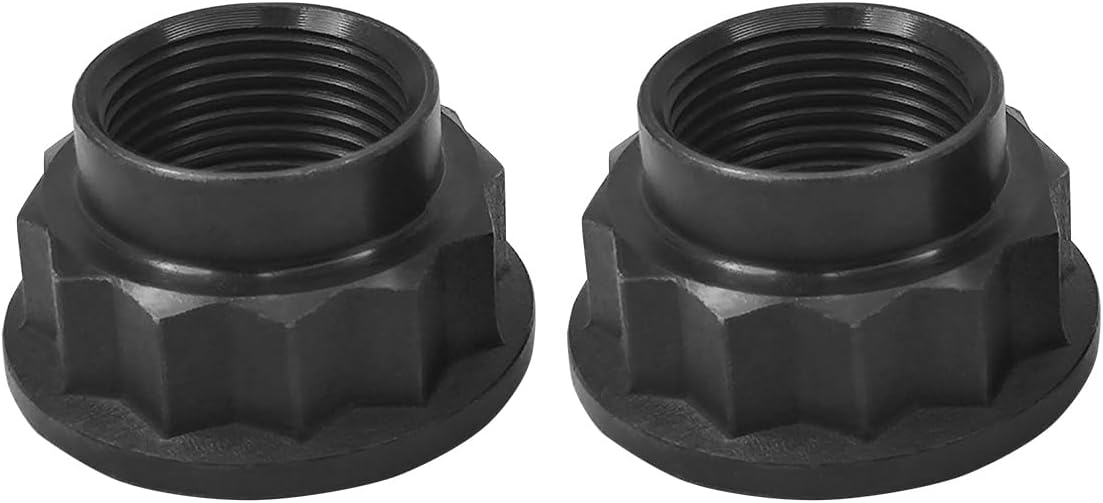
This pair of front axle shaft nuts is designed to secure CV joints and wheel bearings on compatible Toyota and Lexus front drive axles. Built from heat-treated carbon steel for durability and corrosion resistance, it helps maintain proper torque and reliable power transfer. It is a direct replacement for several factory part numbers and is recommended for paired replacement.

These heavy-duty running boards are designed to improve access to your 2024-2026 Toyota Tacoma while preserving off-road clearance. Built for Double Cab and Crew Cab models, they provide a sturdy step for daily entry, loading roof gear, and rugged trail use. With a no-drill installation and durable construction, they deliver dependable support and long-lasting convenience.
How Can You Check Tacoma Shocks at Home?
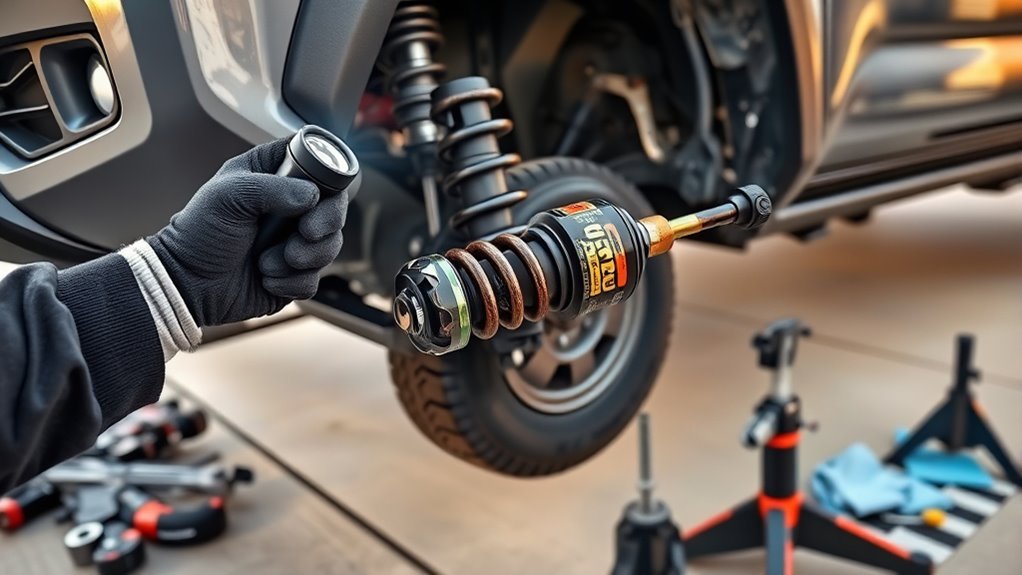
Use the bounce test only as a quick screen. Push down on a safe, solid point at one corner, release, and compare the response with the opposite side. Repeated oscillation is suspicious, but a truck can still have weak shocks even when the hand test looks acceptable.
Next, inspect each unit with a flashlight. Look for active leakage, dents, corrosion, a bent or damaged shaft, torn bushings, missing hardware, and polished contact marks. Compare left and right sides. Check the tires and note whether the problem changes with speed, braking, steering, payload, or road surface.
- Park on level ground, set the parking brake, and chock the wheels.
- Check cold tire pressure before judging ride quality.
- Inspect the shock body, shaft, mounts, bushings, and surrounding suspension parts.
- Look for cupping, feathering, one-sided wear, bulges, or separated tread.
- Listen for clunks over small bumps and driveway transitions.
- Do not crawl under a truck supported only by a jack. Follow the Tacoma jack-stand safety guide.
- Use the model-year service information for torque values and replacement procedures.
| Symptom | Possible Shock Connection | Also Check |
|---|---|---|
| Bounce after bumps | Weak damping | Spring condition, load, tire pressure |
| Cupped tire | Poor wheel control | Wheel balance, tire defect, bushings, ball joints, wheel bearing |
| Truck sits low on one side | Usually not caused by a conventional shock alone | Spring, leaf pack, spacer, overload, mount damage |
| Pull or crooked steering wheel | Shock damage may accompany an impact | Tire pressure, alignment, brakes, steering and suspension joints |
| Hum or growl with speed | Usually not an internal shock symptom | Tires and Tacoma wheel-bearing noise |
When Should You Replace Tacoma Shocks?
Replace the affected axle’s shock pair when inspection confirms active leakage, a bent shaft, a dented body that restricts movement, a broken bracket or mount, severe bushing damage, or damping weak enough to cause repeated bounce, sway, bottoming, or unstable handling. Do not wait for every symptom to appear.
Schedule diagnosis soon if the change is gradual or the cause is unclear. Tire cupping, clunks, harshness, and wandering can come from several faults, so replacing shocks without checking tires, alignment, springs, ball joints, bushings, and wheel bearings can waste money.
Monroe recommends replacing shocks in pairs across the same axle because a new unit and a worn unit can have different damping characteristics. See its matched-pair replacement guidance.
[Products Worth Considering]

These replacement support brackets are designed to secure the spring bars on a trailer frame for CURT TruTrack weight distribution hitches. Their adjustable mounting holes help achieve precise leveling while the rigid construction supports integrated sway control for a steadier towing experience. A durable powder coat finish adds long-lasting protection, and the package includes two replacement brackets.

These EZ running boards are designed to improve access to your Toyota Tacoma while maintaining the vehicle's off-road capability. Built for Double Cab and Xtra Cab front door applications, they offer a sturdy step up, simple installation, and dependable support for daily use or trail adventures.
Armor All Extreme Wheel and Tire Cleaner is a powerful spray designed to cut through stubborn dirt, grease, tar, and brake dust on wheels and tires. It is safe for use on factory and aftermarket finishes, including alloy, steel, chrome, and plastic wheel trims, while its fast-acting formula works in just seconds. The deep-cleansing action helps reach hard-to-clean areas and leaves wheels looking clean and shiny.
Which Tacoma Replacement Shocks Should You Choose?
Start with the exact model year, cab, drivetrain, trim, rear suspension type, and current ride height. Then match the shock to how the truck is used. A factory-height commuter needs a different tune from a Tacoma carrying permanent armor or running fast washboard roads.
| Option | Best For | Important Check |
|---|---|---|
| OEM or OEM-style replacement | Stock-height daily driving and factory-like behavior | Confirm trim-specific fit and whether springs or mounts are reused |
| Heavy-duty monotube shock | Regular towing, payload, rough roads, or larger tires | Match valving to constant weight; firmer is not always better when unloaded |
| Rebuildable performance shock | Frequent off-road use, heat control, and tunable performance | Budget for inspection, seal service, and rebuilding based on the maker’s schedule |
| Lift-compatible shock or coil-over | Trucks with changed ride height or added suspension travel | Verify extended and compressed length, spring rate, control-arm clearance, and alignment |
| Electronic or trim-specific replacement | Tacoma Limited AVS and other specialized factory systems | Preserve electronic control, warning-light behavior, and factory calibration |
As a current benchmark, RepairPal estimated Toyota Tacoma shock or strut replacement at $652–$891 on June 18, 2026, before taxes, fees, location differences, and related repairs. That estimate is not a guaranteed all-four-shock quote. Premium off-road hardware, complete front coil-over assemblies, damaged mounts, corrosion, and alignment can raise the total. See the current Tacoma repair estimate.
After replacement, road-test the truck at low speed first. Recheck for leaks, clunks, pulling, steering-wheel position, and uneven ride height. Rear shock replacement alone normally does not change alignment settings. Front work should be checked against the exact service procedure, and an alignment is appropriate when ride height changes, alignment fasteners are loosened, steering is off-center, the truck pulls, or tire wear is present. KYB notes that alignment need depends on vehicle design and the parts disturbed; see its alignment guidance and this Tacoma alignment guide.
Spring safety: A front coil-over contains a compressed coil spring. Replacing a bare front shock may require a suitable spring compressor and model-specific procedure. Do not disassemble the spring assembly without the correct equipment and training.
[Products Worth Considering]
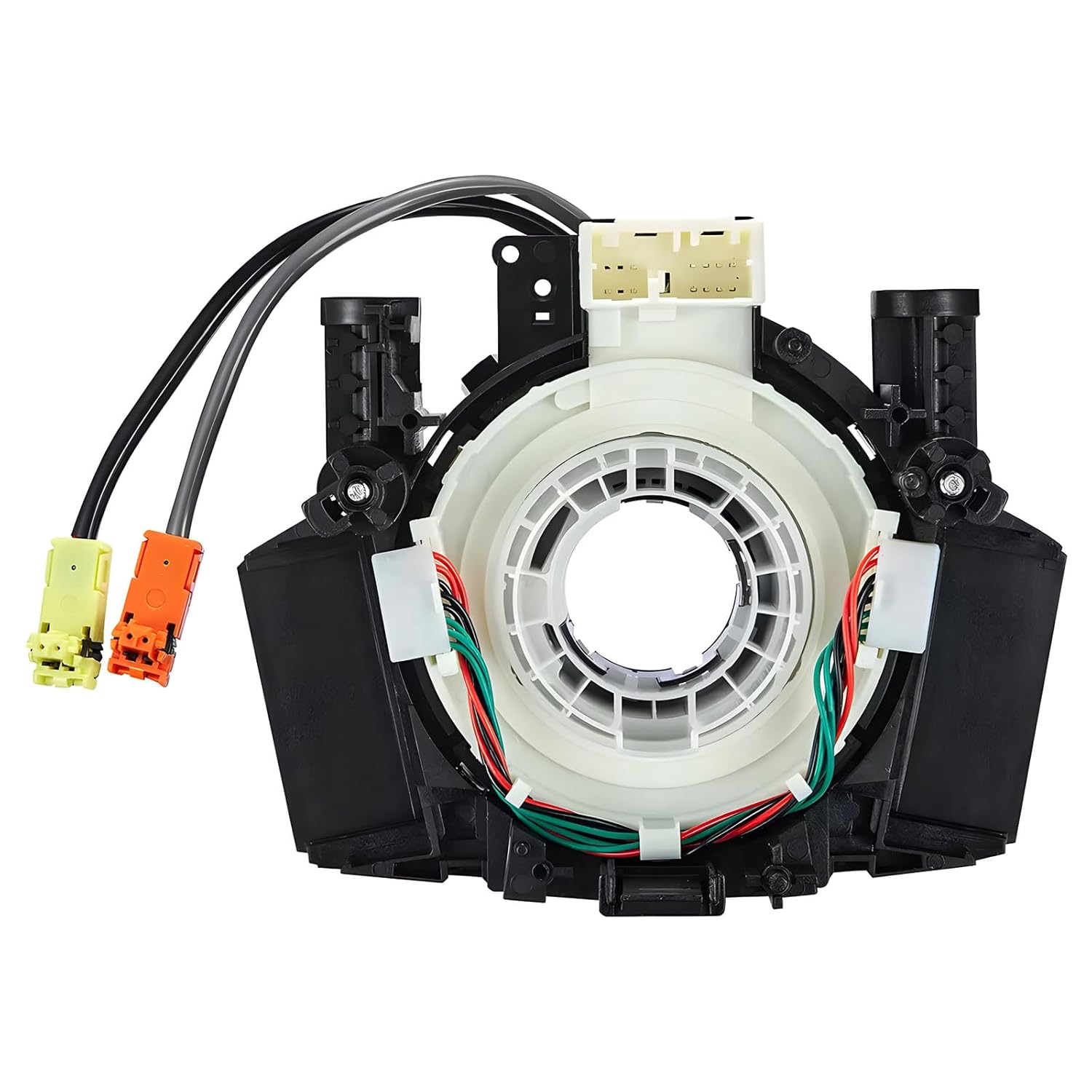
This steering clock spring assembly is an OEM-style replacement designed to restore steering wheel controls and related electronic functions in compatible Nissan vehicles. It supports audio, cruise control, and multi-function button operation while matching multiple factory part numbers for a reliable fit. Built for direct installation with vehicle-specific connectors, it helps return steering column electronics to proper working order.

This bearing press kit makes it easy to install bearing races and seals quickly without damaging the axle housing. It includes nine dual-sided adapters to fit a wide range of standard races and seals, plus a knurled handle for controlled, slip-resistant use. Built from durable aluminum alloy and stored in a compact case, it is a practical solution for automotive bearing installation jobs.

This dial type tire tread depth gauge helps you quickly check tread wear on motorcycles, cars, trucks, and buses with easy-to-read 1/32-inch increments. Its colorful zone markings make it simple to assess tire condition for safer driving in different weather, while the durable zinc cast body and legible dial provide dependable everyday use.
Frequently Asked Questions
Does Toyota Have a Fixed Tacoma Shock-Replacement Interval?
No universal Toyota interval applies to every Tacoma. Use mileage to trigger inspection, especially after about 50,000 miles of shock service, and replace the parts when condition and performance tests show wear or damage.
Should You Replace All Four Tacoma Shocks at Once?
Not always. Replace both shocks on the same axle. Replacing all four can make sense when they have similar age and mileage or when ride-control problems affect both axles, but one confirmed axle can be repaired without automatically replacing the other.
Can Bad Shocks Cause Uneven Tire Wear on a Tacoma?
Yes. Weak damping can let a tire move excessively and contribute to cupping or scalloped wear. Wheel balance, tire defects, alignment, bushings, ball joints, and wheel bearings can create similar wear, so inspect the full wheel and suspension system.
Can Bad Tacoma Shocks Cause the Truck to Sag?
Conventional shocks control motion but do not normally support the truck’s static weight. A Tacoma that sits low or leans usually needs its springs, leaf pack, spacers, mounts, load, and frame attachment points checked.
Are Bilstein or FOX Shocks Worth It for a Tacoma?
They can be worthwhile when the specific model, tune, and service needs match the truck. A stock-height commuter may be better served by an OEM-style shock, while frequent off-road use or added constant weight may justify a monotube, reservoir, or rebuildable setup. Brand name alone does not guarantee the right ride.
Do New Tacoma Shocks Need an Alignment?
Rear shock replacement alone usually does not require alignment. For front work, follow the model-year procedure and check alignment when ride height changes, alignment-related fasteners are loosened, or the truck pulls, has an off-center steering wheel, or shows uneven tire wear.
Conclusion
Tacoma shocks should be replaced by condition, not by a universal mileage rule. Begin closer inspections around 50,000 miles of shock service, then act on active leakage, damage, repeated bounce, cupping, dive, sway, or unstable handling. Confirm the truck’s model year, trim, suspension type, and ride height before ordering parts, replace shocks in axle pairs, and inspect tires, springs, mounts, bushings, and alignment at the same time.


[…] vibration is a U-joint. Tires, wheel balance, a bent driveshaft, a worn center support bearing, worn shocks, a loose transmission or transfer-case mount, pinion angle changes after a lift, or differential […]