Toyota Camry windshield Compatibility by Year and Trim
What’s in This Article
- Which Windshields Fit Your Toyota Camry by Year and Trim
- OEM, OEE, and Aftermarket Camry Windshield Options Compared
- Critical Features: ADAS Cameras, Rain Sensors, and HUD Compatibility
- How ADAS Calibration Works After Camry Windshield Replacement
- Camry Windshield Cost, Labor Time, and ADAS Recalibration Needs
- Fit and Optical Clarity: Common Installation Problems to Avoid
- How to Read Windshield Markings Before Installation
- How to Choose the Right Camry Windshield: A Decision Checklist
- Where to Buy a Camry Windshield and What to Ask Suppliers
- Frequently Asked Questions
- Conclusion
A Camry windshield can fit the opening and still fail your sensors. The right glass depends on your model year, trim, Vehicle Identification Number (VIN), camera bracket, rain sensor, head-up display (HUD), and calibration plan. This guide shows you how to verify compatibility before you order glass or schedule installation.
Quick Answer
Choose a Camry windshield by VIN, model year, trim, and factory features. Pick OEM glass for the most predictable fit on ADAS or HUD trims, choose certified OEE glass when it matches the original design, and use aftermarket glass only when the shop confirms DOT, AS1, FMVSS 205 markings, sensor brackets, and calibration support.
Key Takeaways
- Use your VIN and trim to match the exact windshield part number.
- Confirm ADAS, HUD, rain-sensor, acoustic, and heating features before ordering.
- Use AS1 windshield glass that carries the required DOT and FMVSS 205 markings.
- Plan for ADAS calibration when your Camry has a forward-facing camera behind the windshield.
- Get glass, labor, molding, adhesive, warranty, and calibration listed in writing.
Which Windshields Fit Your Toyota Camry by Year and Trim
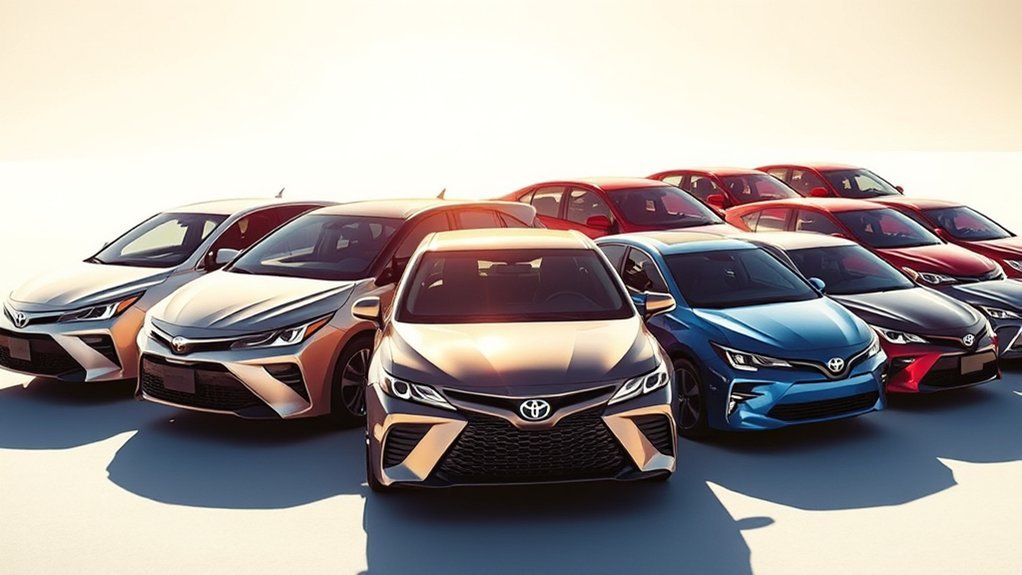
Windshield fit depends on your Camry year, body generation, trim, and factory options. Verify the VIN first, then match the glass to features such as Advanced Driver Assistance Systems (ADAS), HUD, rain-sensing wipers, acoustic glass, de-icing areas, and mirror-mounted camera clusters.
Many newer Camry trims use Toyota Safety Sense features that rely on a windshield-mounted camera. Toyota describes these systems as camera-based driver assistance features, so the replacement glass must match the camera window, bracket position, optical zone, and black frit pattern.
Older Camrys without ADAS or HUD may allow more glass choices, but you still need the correct shape, edge finish, and molding fit. A wrong windshield can cause wind noise, water leaks, distorted sightlines, and failed calibration.
Warning: Don’t approve installation until the shop confirms the part number, sensor cutouts, glass markings, adhesive system, and calibration plan.
OEM, OEE, and Aftermarket Camry Windshield Options Compared
You’ll usually compare three glass types: Original Equipment Manufacturer (OEM), Original Equipment Equivalent (OEE), and aftermarket. Each option can work in the right case, but ADAS and HUD features reduce your margin for error.
| Glass Type | Best For | Main Checks | Risk Level |
|---|---|---|---|
| OEM | ADAS, HUD, newer trims, and factory-level fit | Toyota part number, brackets, frit, HUD layer, and camera window | Lowest fit risk |
| OEE | Many non-HUD trims and older Camrys | DOT mark, AS1 mark, FMVSS 205 certification, and matching sensor hardware | Moderate fit risk |
| Aftermarket | Simple trims without ADAS or HUD | Optical zone, bracket accuracy, thickness, markings, and warranty | Highest fit risk |
OEM Fit and Features
Choose OEM glass when your Camry has ADAS, HUD, rain-sensing wipers, or trim-specific acoustic glass. OEM glass gives you the most predictable match for camera mounts, optical clarity, frit placement, and factory sealing surfaces.
Ask the dealer or installer to match the Toyota part number to your VIN. Then confirm the glass supports every feature on your current windshield.
- Match the forward-camera bracket and cover.
- Confirm the correct AS1 windshield marking.
- Check the HUD-compatible layer when your trim has HUD.
- Verify the rain-sensor pad and mirror mount.
- Use the adhesive system and cure time the repair information requires.
Aftermarket vs OEE
OEE glass often gives you a practical middle path when it matches the original design and carries the right markings. It can comply with Federal Motor Vehicle Safety Standard (FMVSS) 205, but you still need to confirm sensor brackets, camera windows, glass thickness, and optical quality.
Aftermarket glass may cost less up front, but the risk rises when your Camry uses a camera or HUD. If the glass curvature, bracket position, or coating differs from the original windshield, calibration may fail or your safety features may perform poorly.
Ask for documentation before you approve aftermarket glass. A clear warranty should cover leaks, wind noise, optical defects, and installation workmanship.
Critical Features: ADAS Cameras, Rain Sensors, and HUD Compatibility
Modern Camry safety systems rely on a clear optical path through the windshield. Toyota Safety Sense features can use a forward-facing camera to support lane alerts, pre-collision warnings, road sign recognition, and automatic high beams, depending on model year and trim.
The replacement windshield must match the camera cutout, mounting bracket, frit shape, and glass area in front of the camera. A small mismatch can shift what the camera sees.
Rain sensors also need the correct gel pad, surface finish, and location. HUD trims need glass built for HUD projection, because regular laminated glass can create double images or blurred readouts.
Match the Camry windshield to your VIN, camera mount, rain-sensor area, HUD layer, and optical zone before installation.
- Confirm the camera cutout lines up with the mirror mount.
- Check the rain-sensor pad and sensor window.
- Verify HUD-compatible glass when your trim has HUD.
- Match the factory curvature and mounting pads.
- Keep adhesive, primer, and glass surfaces clean before bonding.
How ADAS Calibration Works After Camry Windshield Replacement
ADAS calibration aligns the windshield camera and related sensors to the vehicle’s required aim points. Toyota repair guidance and industry repair resources show that ADAS systems often need post-repair calibration after glass work.
Your installer may use static calibration, dynamic calibration, or both. Static calibration uses targets in a controlled shop space, while dynamic calibration uses a road test under set driving conditions.
Ask for a printed or digital calibration report after the job. The report should show the vehicle details, system checked, calibration result, and date of service.
Note: A warning light may not appear right away, even when a camera needs calibration or verification.
Camry Windshield Cost, Labor Time, and ADAS Recalibration Needs
Camry windshield cost varies by location, model year, trim, glass type, mobile service, moldings, and calibration needs. Ask for an itemized quote instead of a single lump-sum price.
Most shops need time for removal, glass preparation, installation, urethane bonding, and cleanup. The Auto Glass Safety Council explains that minimum drive-away time depends on the adhesive, brand, weather, and other conditions during replacement.
ADAS calibration can add more time after the glass install. Safelite notes that windshield camera recalibration often takes an hour or more, depending on the vehicle and calibration method.
Check your comprehensive insurance or glass coverage before you approve the job. Some policies may cover OEM glass or calibration, while others may limit parts choice or apply a deductible.
Fit and Optical Clarity: Common Installation Problems to Avoid
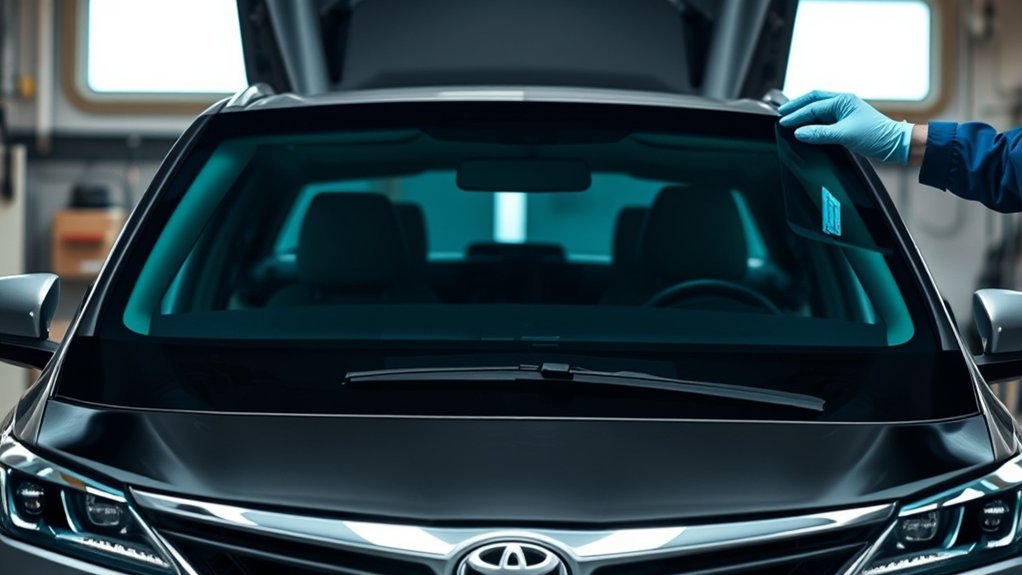
A replacement windshield must fit the Camry body opening, seal correctly, and give you clean sightlines. Small errors in curvature, bracket alignment, or adhesive application can create wind noise, leaks, weak bonding, and visual distortion.
Check the glass before the installer bonds it to the car. Look for distorted edges, wavy reflections, damaged brackets, incorrect moldings, or mismatched sensor windows.
The shop should use the correct urethane, primer, and safe drive-away time. It should also keep the bonding surfaces clean and dry before setting the glass.
Check fit, sealing, optical clarity, glass markings, adhesive cure time, and sensor sightlines before you drive away.
- Watch for uneven gaps around the molding.
- Listen for wind noise during the first drive.
- Check for water leaks after the adhesive cures.
- Look through the glass at straight lines to spot distortion.
- Confirm ADAS and rain-sensor checks after installation.
How to Read Windshield Markings Before Installation
Automotive glass markings help you verify that the windshield suits road use. In the United States, FMVSS 205 sets requirements for glazing materials used in motor vehicles and motor vehicle equipment.
Look for DOT markings, the manufacturer code, and an AS1 marking on windshield glass. A National Highway Traffic Safety Administration (NHTSA) interpretation states that laminated safety glass marked AS1 applies to windshields, while AS3 glass suits areas not needed for driving visibility.
Do not accept AS3 glass as a Camry windshield. If you can’t find or read the markings, ask the supplier to document them before installation.
How to Choose the Right Camry Windshield: A Decision Checklist
Start with your VIN, model year, trim, and current windshield features. Then match the glass type to your Camry’s safety and comfort systems.
Use OEM glass when you want the most predictable fit for ADAS, HUD, rain sensors, and acoustic features. Choose OEE glass when it matches the original design, carries proper markings, and the installer can calibrate the vehicle.
Treat aftermarket glass as a careful-use option. It must meet FMVSS 205, carry the correct markings, match your sensor hardware, and include warranty support.
- Confirm the VIN and exact trim.
- Match ADAS, HUD, rain-sensor, heater, acoustic, and tint features.
- Check DOT, AS1, and FMVSS 205 markings.
- Ask whether calibration uses static, dynamic, or combined methods.
- Get glass, labor, moldings, adhesive, and calibration listed separately.
- Request written warranty terms for leaks, defects, and workmanship.
Where to Buy a Camry Windshield and What to Ask Suppliers
You can buy or source a Camry windshield through a local auto glass shop, a dealer parts department, or an insurance-approved glass network. Each route gives you a different balance of price, speed, parts choice, and calibration support.
Ask whether the glass comes as OEM, OEE, or aftermarket. Then confirm AS1 markings, FMVSS 205 compliance, sensor fit, adhesive system, calibration capability, and warranty coverage.
Local Auto Glass Shops
Local auto glass shops can work well when you need fast inspection and installation. A good shop will ask for your VIN, inspect your current windshield, and explain whether your Camry needs calibration.
Ask about Auto Glass Safety Council (AGSC) training, technician experience, and the shop’s calibration process. Don’t accept vague answers about sensor fit or safe drive-away time.
- Do you match the windshield by VIN?
- Do you install OEM, OEE, and aftermarket glass?
- Do you perform ADAS calibration in-house?
- Will you provide a calibration report?
- What does your warranty cover?
Dealer Parts Departments
Dealer parts departments can help when your Camry uses trim-specific glass, HUD, or complex ADAS hardware. Ask the dealer to match the Toyota part number to your VIN.
You can request OEM glass for the closest factory match. If you need a lower-cost option, ask whether an OEE option suits your model and features.
Verify parts availability before scheduling installation. Then get warranty terms and any required calibration steps in writing.
Ask About Calibration
Confirm calibration before you buy the glass, not after installation. Your installer should explain whether your Camry needs static calibration, dynamic calibration, or both.
Ask how the shop sets targets, checks ride height, reads diagnostic codes, and documents final results. A proper quote should separate glass, labor, moldings, supplies, and calibration.
- Does my exact Camry trim require calibration?
- Which calibration method will you use?
- Can you show the final calibration report?
- Will insurance cover the glass and calibration together?
- What happens if calibration fails with the selected glass?
Frequently Asked Questions
What is the difference between AS1 and AS3 glass?
AS1 laminated safety glass suits windshields and areas needed for clear driving visibility. AS3 glass has lower light transmittance and does not suit a Camry windshield.
Does a Toyota Camry need calibration after windshield replacement?
Your Camry needs calibration or system verification when it has a forward-facing camera or related ADAS hardware behind the windshield. Ask the installer to follow Toyota repair information and provide a calibration report.
Can I use aftermarket glass on a Camry with ADAS?
You should use caution with aftermarket glass on ADAS-equipped Camrys. The glass must match the camera bracket, optical zone, thickness, curvature, and markings, and the shop must complete calibration successfully.
Is OEM glass always required for a Camry windshield?
OEM glass gives you the most predictable fit, but some OEE glass can work when it matches the original design and features. Your best choice depends on your VIN, trim, ADAS setup, HUD, and warranty needs.
How long should I wait before driving after windshield replacement?
Follow the adhesive maker’s minimum drive-away time and the installer’s written instructions. Cure time can change with adhesive type, temperature, humidity, and shop conditions.
Safety Disclaimer: This article gives general information only. Always follow Toyota repair information, the glass manufacturer’s instructions, the adhesive maker’s safe drive-away time, and a qualified technician’s calibration report before driving.
Conclusion
The right Camry windshield must match your VIN, trim, glass markings, and sensor package. Start with OEM glass when your Camry has ADAS or HUD, and consider OEE only when it matches the original features and supports calibration.
Ask the shop to document the part number, markings, adhesive system, safe drive-away time, warranty, and calibration result. That simple paper trail helps protect your visibility, safety systems, and repair budget.
Choose the glass with care now, and your Camry will give you clearer sightlines and safer daily driving.
References
- 49 CFR 571.205, Standard No. 205, Glazing Materials — Electronic Code of Federal Regulations, accessed 2026
- NHTSA Interpretation ID nht74-2.34 on AS1 and AS3 glazing — National Highway Traffic Safety Administration, accessed 2026
- NHTSA Interpretation ID 11-000697 on FMVSS 205 shade bands and visibility — National Highway Traffic Safety Administration, accessed 2026
- Toyota ADAS repair information overview — I-CAR Repairability Technical Support, accessed 2026
- Toyota/Lexus/Scion glass replacement requirements — I-CAR Repairability Technical Support, 2017
- Toyota Safety Sense feature information — Toyota Owners, accessed 2026
- Minimum drive-away times for auto glass replacement — Auto Glass Safety Council, accessed 2026
- Windshield camera recalibration information — Safelite, accessed 2026