Use 2WD on your Toyota Tundra for normal city driving, highway miles, dry pavement, predictable routes, and most light towing. Switch to 4WD before you reach snow, ice, mud, sand, rutted roads, steep grades, or remote campsites where extra traction matters. The best choice is not “2WD or 4WD forever” — it is using the right drive mode before conditions get difficult.
Quick Answer
Keep your Tundra in 2WD for daily paved driving because it is simpler, more efficient, and easier on the drivetrain. Use 4H for snowy, icy, muddy, sandy, or loose roads, and use 4L only for slow, difficult terrain such as steep climbs, deep mud, sand, or deep snow.
Key Takeaways
- 2WD is best for dry pavement, commuting, highway driving, light hauling, and saving fuel.
- 4WD is best for low-traction surfaces such as snow, ice, mud, sand, loose gravel, steep trails, and rutted campsite roads.
- Engage 4WD before you get stuck; waiting until the tires are already spinning can dig the truck deeper.
- 4WD helps you move, not stop faster; tires, speed, and following distance still matter most on ice and snow.
- Towing and payload vary by configuration, so always check the owner’s manual, tow label, and door-jamb payload sticker before loading up.
At a Glance
| Time Required | 30 seconds to choose a drive mode; 10–15 minutes for a pre-trip traction and recovery check |
| Difficulty | Easy for normal mode selection; moderate for off-road recovery planning |
| Tools Needed | Owner’s manual, tire-pressure gauge, recovery boards, shovel, tow strap, air compressor, basic tool kit |
| Cost | $0 to choose the right mode; recovery gear usually costs more depending on quality and kit size |
Quick Decision Rubric: Pick 2WD or 4WD for Your Tundra
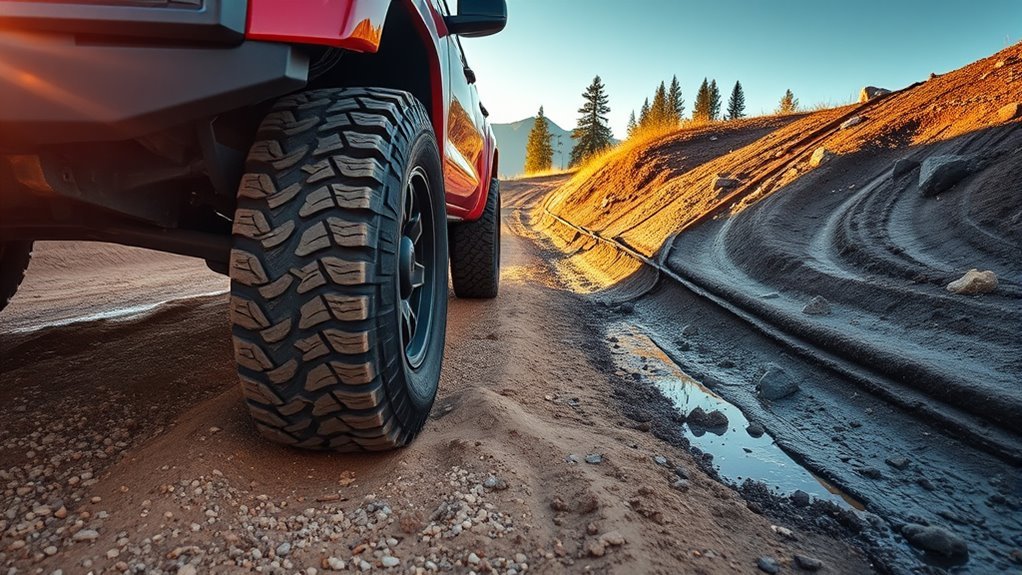
Need help choosing 2WD or 4WD for your Tundra? Start with the surface under the tires. If the road is dry, paved, and predictable, choose 2WD. If the surface is slippery, loose, soft, steep, or uneven, choose 4WD before traction becomes a problem.
| Driving Situation | Best Mode | Why It Fits |
|---|---|---|
| Dry city streets and highways | 2WD | Best for fuel economy, comfort, and lower drivetrain wear. |
| Rain on normal pavement | Usually 2WD | Good tires and smooth throttle matter more; use 4WD only if traction is poor and the manual allows it. |
| Snow-covered or icy roads | 4H | Adds traction for getting moving and maintaining control at normal low-to-moderate road speeds. |
| Mud, sand, loose gravel, rutted roads | 4H | Distributes torque to improve forward bite before the truck bogs down. |
| Steep off-road climbs, descents, deep mud, deep snow, hard pulling | 4L | Provides low-speed torque and control for severe terrain. |
| Light towing on dry pavement | 2WD | Usually enough for paved roads; use tow/haul features and follow your truck’s towing limits. |
Warning: Do not treat 4WD as a license to drive faster in bad weather. Four-wheel drive can help the truck accelerate on slippery surfaces, but it does not shorten braking distance on ice. Slow down, increase following distance, and keep all four tires in good condition.
How Tundra 2WD and 4WD Differ: Systems, Pros, Cons
When comparing Tundra 2WD and Tundra 4WD, focus on how each system changes real-world ownership. A 2WD Tundra sends power to the rear wheels and keeps the drivetrain simpler. A 4WD Tundra adds a transfer case and front driveline parts so the truck can send power to the front and rear axles when traction is limited.
On current Tundra 4WD models, the key modes are generally 2H, 4H, and 4L. Toyota’s owner guidance for the Tundra says 4H is for surfaces that allow tire slip, such as off-road, icy, or snow-covered roads, while 4L is for maximum power and traction on steep hills, off-road driving, sand, mud, or deep snow.
Choose 2WD for simple, efficient daily driving. Choose 4WD when traction is limited enough that the tires need help biting into the surface.
- 2WD benefits: simpler drivetrain, lower purchase price in many trims, fewer components to service, and better daily efficiency.
- 2WD tradeoff: less traction when the rear tires are on snow, mud, loose gravel, wet grass, or soft sand.
- 4WD benefits: better forward traction, more control on loose or slippery surfaces, and greater confidence on remote roads.
- 4WD tradeoff: added weight, higher complexity, more service items, and slightly lower fuel economy in many configurations.
Fuel economy is one of the clearest differences. For the 2026 Toyota Tundra, FuelEconomy.gov lists gas 2WD models at 20 mpg combined and gas 4WD models at 19 mpg combined; hybrid 2WD models are listed at 22 mpg combined, while many hybrid 4WD models are listed at 20 mpg combined. Real-world mileage still depends on tires, speed, terrain, payload, weather, and driving style.
Note: Trim, cab, bed length, tires, axle setup, packages, and model year can change pricing, payload, towing, and fuel economy. Use the numbers in this guide as decision help, then verify your exact truck on its window sticker, door-jamb label, owner’s manual, and Toyota build sheet.
[Products Worth Considering]
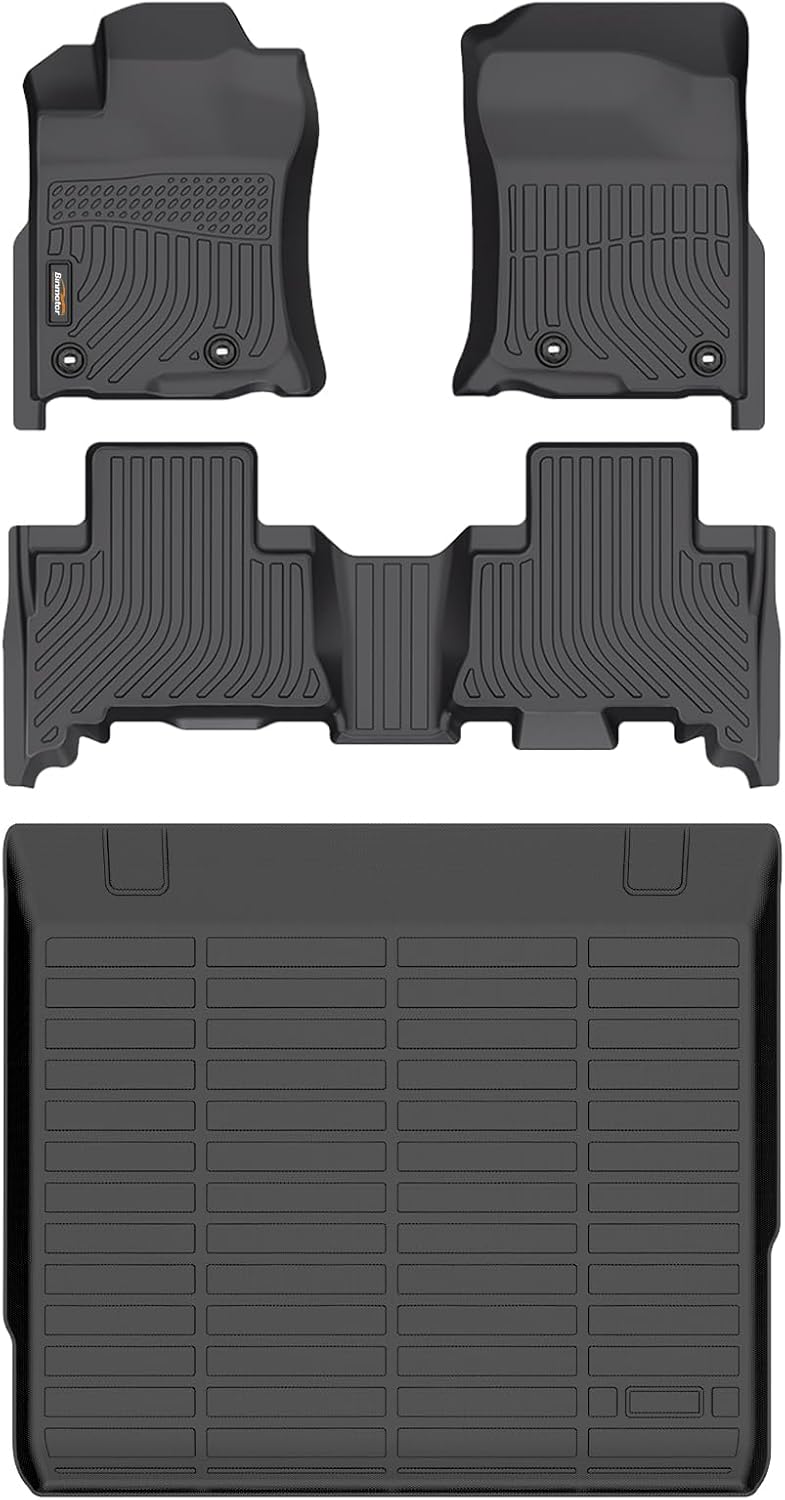
These custom-fit floor mats and cargo liner are designed for select Toyota 4Runner models and provide full-coverage protection for your interior. Made from durable TPE material with raised edges and non-slip buckles, they help contain dirt, spills, snow, and debris while staying securely in place. The waterproof design is easy to clean, making them a practical all-weather upgrade for everyday driving.

This portable 12V tire inflator delivers fast, convenient inflation for cars, SUVs, trucks, motorcycles, and other inflatables. It features a digital display, bright LED lighting, auto shutoff, and multiple nozzle adapters to help you inflate accurately and safely, even in low-light situations. The long power cord and air hose make it easy to reach all tires and handle roadside emergencies or routine maintenance.

Protect and refresh your Toyota RAV4 entry points with these carbon fiber leather door sill guards designed to cover existing scuffs and help prevent new scratches. The adhesive-backed trim offers a secure fit, easy installation, and durable everyday protection while adding a sporty, OEM-style look to your vehicle interior. Suitable for front and rear doors, this set is made to match the contours of the specified RAV4 model years.
When to Drive 2WD: Daily Driving, Fuel Economy, and Towing
Use 2WD when your driving is mostly in town, on highways, on dry pavement, or through mild weather. This is the mode that makes the most sense for commuting, errands, school runs, long interstate trips, and predictable work routes.
Choose 2WD when you want:
- Better fuel economy: 2WD avoids powering the extra front driveline parts during normal driving.
- Lower long-term complexity: fewer moving parts are involved compared with a 4WD system.
- Smoother everyday driving: paved-road driving is exactly where 2WD feels natural.
- Simple light towing: light trailers, small utility loads, and normal hauling on dry pavement usually do not require 4WD.
Price is another factor. Toyota’s 2026 Tundra lineup shows 4WD models costing more than comparable 2WD models, and EPA listing data shows many 4WD versions starting roughly $3,000 or more above similar 2WD versions. That gap can be worth it if you often need winter traction or trail access, but it is money wasted if your truck rarely leaves dry pavement.
Pro Tip: If you tow mostly on paved roads, focus first on payload, tongue weight, trailer brakes, tire pressure, and the Tundra’s tow/haul settings. Use 4WD for boat ramps, muddy campsites, snow-covered roads, or loose gravel starts where traction is the limiting factor.
When to Use 4WD on a Tundra: Snow, Mud, Steep Roads, and Camping
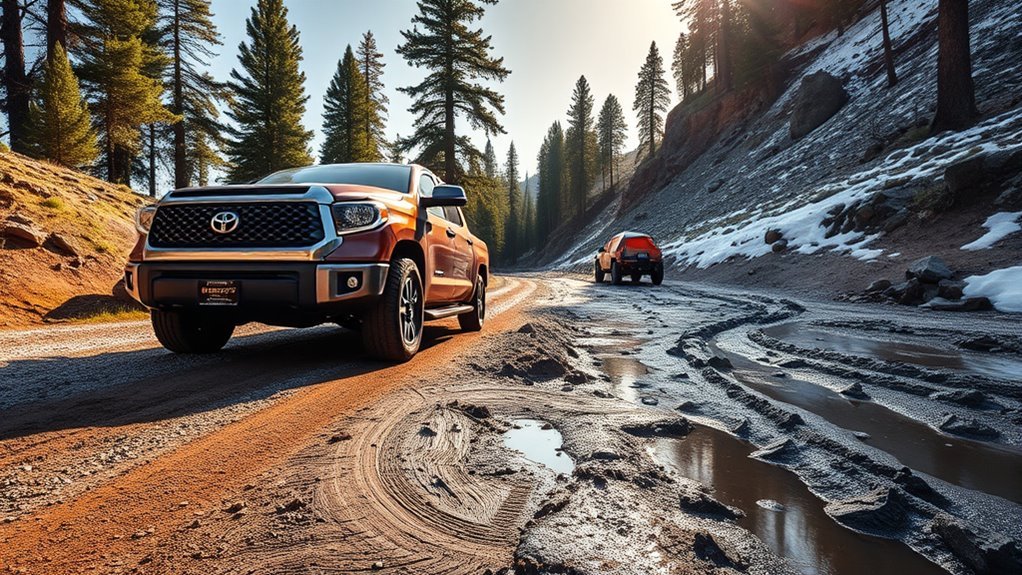
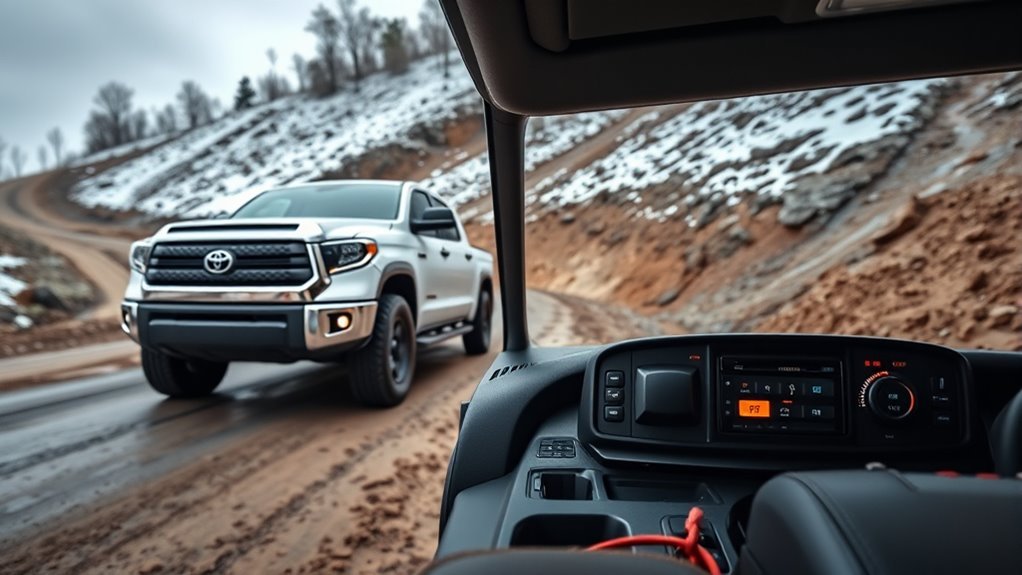
Although you will drive in 2WD most of the time, switch your Tundra into 4WD when the road surface becomes slippery, soft, loose, or steep. The key is timing: engage 4WD before the truck loses momentum, not after the tires are already spinning.
[Products Worth Considering]

This mud flaps kit helps protect your Toyota Camry’s lower body panels from snow, salt, sand, rocks, and road debris thrown up by the wheels. Designed for SE and XSE Sport models, it offers a direct-fit install with included mounting hardware for a cleaner, more finished look. Built from durable ABS thermoplastic, it is made to handle harsh driving conditions while helping keep your vehicle cleaner.

This soft TPU key fob cover is designed to fit select Hyundai smart keys and helps protect against scratches, dust, and everyday wear while preserving signal performance. Its full-coverage design, stylish gold-rimmed look, and included leather keychain make it a practical and attractive upgrade for compatible Hyundai models.

VEHICLE FITMENT: Compatible with select 2012-2020 Toyota 4Runner, 2005-2017 Toyota Tacoma and 2000-2006 Toyota Tundra 4WD models. Use as a Tacoma transfer case actuator or Tundra transfer case actuator only when the OE number, connector layout, housing shape and transfer case configuration match the original part.
Use 4H for Snow, Ice, Mud, Sand, and Loose Roads
Use 4H when you need extra traction but still need to keep moving at normal low-to-moderate speeds. Good examples include snow-covered roads, icy hills, muddy job sites, sandy access roads, loose gravel, wet grass, and rutted campsite approaches.
- Snow: engage 4H early to help the truck pull away smoothly and maintain control.
- Ice: use 4H cautiously, but remember that braking and turning still depend on tire grip.
- Mud: use 4H before the truck starts digging ruts.
- Sand: use 4H with smooth throttle and appropriate tire pressure for the terrain.
- Remote camping roads: use 4H when ruts, rocks, loose climbs, or wet ground threaten access.
Use 4L for Slow, Severe Terrain
Use 4L only when you need slow-speed power and control. This is the mode for steep off-road climbs, controlled descents, deep mud, deep snow, hard pulling, and difficult rocky or uneven terrain. Follow your owner’s manual for the exact shift procedure, because 4L engagement usually requires slowing or stopping and shifting the transmission as instructed.
Warning: Avoid using part-time 4WD on dry, high-traction pavement unless your owner’s manual specifically allows it. On surfaces where the tires cannot slip, drivetrain binding can occur and may cause unnecessary wear or damage.
What 4WD Does Not Fix: Tires, Braking, and Driver Control
Four-wheel drive is valuable, but it is not magic. It mainly helps the truck apply power through more wheels. It does not change the laws of friction, and it does not make a heavy pickup stop like it is on dry pavement.
The National Highway Traffic Safety Administration warns that slick or snow-covered surfaces make it harder to control or stop a vehicle. NHTSA also recommends checking tire pressure, tire condition, lights, wipers, and emergency supplies before winter trips. For tires, NHTSA notes that winter tires are more effective than all-season tires in deep snow.
For winter driving, the smarter priority list is:
- Slow down before the road gets slick.
- Use the right tires for your climate and terrain.
- Increase following distance so the truck has room to stop.
- Use smooth throttle and steering to avoid breaking traction.
- Engage 4WD early when the surface is loose or slippery.
Towing and Payload: What Changes Between 2WD and 4WD
The Toyota Tundra can be a strong tow vehicle, but the exact rating depends on model year, engine, cab, bed, drivetrain, trim, factory equipment, hitch setup, and payload. Toyota says the 2026 Tundra has an available maximum towing capacity of 12,000 pounds, but that does not mean every Tundra can tow 12,000 pounds.
In many trucks, 4WD hardware adds weight. Added weight can reduce available payload and sometimes reduce the trailer weight rating compared with a similar 2WD configuration. The difference is not the same across every trim, so avoid blanket assumptions.
Before towing, confirm:
- Trailer weight: loaded trailer weight, not empty brochure weight.
- Tongue weight: often around 10–15% of trailer weight for conventional trailers, but follow your trailer and hitch guidance.
- Payload: passengers, cargo, accessories, tongue weight, and gear all count against payload.
- GCWR and GVWR: do not exceed the combined or vehicle weight limits listed for your truck.
- Trailer brakes and lights: verify the 7-pin or 4-pin connection, brake controller setup, and trailer light operation.
Note: For towing, the sticker on your specific truck matters more than a general online number. Check the driver-side door-jamb payload label, owner’s manual, receiver hitch label, and trailer weight before you leave.
Trip Checklist & Recovery Gear: Prepare 2WD or 4WD for Off-Trail
Because terrain can change fast, assemble a trip checklist and recovery kit that matches where you are going. A 2WD Tundra can handle mild dirt roads when conditions are dry and firm, but 4WD is the better choice for remote routes, wet trails, steep grades, snow, sand, and mud.
[Products Worth Considering]

AMERICAN OWNED, FAMILY OPERATED - Join the Rhino Family & Support a USA based Father/Son Business!c

【4X4 Must Have】 ALL-TOP RECOVERY PACK is the real essential Recovery Kit that includes ALL fundamental gears for 4wd Vehicle Recovery. Packed all in a Water-Resist Zippered Bag for Easier Storage in Car & Easier Reach in Dark. Take 1 with you to make your adventure safer!
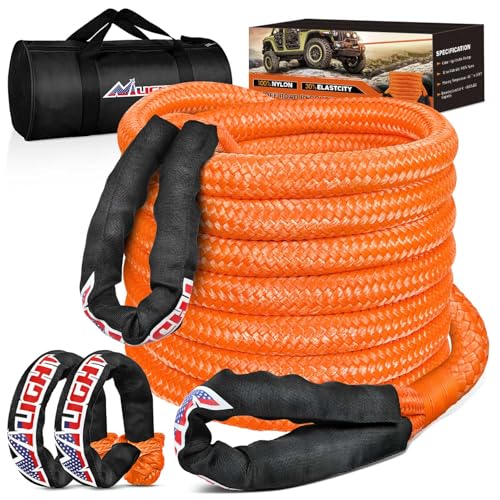
【Kinetic Recovery Rope】- Kinetic Recovery Rope with 2 Soft Shackles has undergone upgrades to enhance its strength and durability ( maximum breaking strength of 48,000lbs), ensuring reliable performance in even the most demanding recovery scenarios
Before You Leave
- Check the route: confirm road closures, trail rules, grade, surface, water crossings, and turn-around points.
- Check weather: rain or snow can turn an easy dirt road into a recovery problem.
- Check tires: inspect pressure, tread depth, sidewalls, spare tire, and lug tools.
- Check load: secure cargo and confirm trailer tongue weight if towing.
- Tell someone your plan: share your route and expected return time when traveling remotely.
Basic Recovery Gear for 2WD or 4WD
- Traction boards
- Shovel
- Rated recovery strap or tow strap
- Soft shackles or rated shackles
- Work gloves
- Portable air compressor
- Tire repair kit
- Full-size spare or properly inflated spare
- Flashlight or headlamp
- First-aid kit, water, food, blankets, and phone charger
Extra Gear for Remote 4WD Trips
- Winch or come-along matched to the vehicle and route
- Tree saver strap where legal and appropriate
- Snatch block or recovery ring
- Rated front and rear recovery points
- GPS device or offline maps
- Fire extinguisher
- Extra fuel where safe and legal
- Basic fluids and tools
Train with your gear before you need it. Recovery equipment is only useful if it is rated correctly, attached safely, and used with a clear plan. Confidence on the trail comes from deliberate preparation, not from guessing after the truck is already stuck.
Common Mistakes to Avoid
- Waiting too long to shift into 4WD: engage it before the climb, mud hole, snow drift, or soft sand section.
- Using 4WD on dry pavement: part-time 4WD needs a surface where tires can slip slightly.
- Driving too fast in snow because 4WD feels stable: braking distance is still limited by tire grip.
- Ignoring tire choice: worn all-season tires can make even a 4WD truck struggle.
- Assuming every Tundra has the same tow rating: configuration changes the number.
- Forgetting recovery points: never attach recovery straps to weak suspension parts, bumpers, or random frame holes.
Frequently Asked Questions
Is it better to keep a Tundra in 4WD or 2WD?
Keep your Tundra in 2WD for normal daily driving on dry pavement. Switch to 4WD only when traction is limited, such as on snow, ice, mud, sand, loose gravel, steep off-road grades, or remote unpaved roads.
Can I use 4WD on dry pavement?
In a part-time 4WD system, avoid using 4H or 4L on dry, high-traction pavement unless the owner’s manual specifically allows it. Part-time 4WD is meant for surfaces where the tires can slip, such as snow, ice, mud, sand, or loose off-road tracks.
Should I use 4H or 4L in snow?
Use 4H for most snow-covered roads because it provides extra traction at normal low-to-moderate driving speeds. Use 4L only for slow, difficult situations such as deep snow, steep off-road grades, or hard pulling where low-speed torque is needed.
Does 4WD improve towing?
4WD can improve traction while towing on boat ramps, gravel, snow, mud, and campsites, but it does not automatically increase towing capacity. Your actual towing limit depends on the truck’s configuration, payload, hitch setup, trailer brakes, and weight ratings.
Is a 2WD Tundra enough for camping?
A 2WD Tundra can be enough for camping if the route is paved, graded, dry, and not steep. Choose 4WD if your campsite requires muddy roads, snow, sand, ruts, loose climbs, remote trails, or travel where getting stuck would be a serious problem.
Conclusion
You have the tools: keep your Tundra in 2WD for smooth, economical daily driving, highway miles, dry pavement, and light towing. Shift to 4WD when the road gets temperamental — snow, ice, mud, sand, steep trails, loose gravel, or remote campsite approaches. Pack recovery gear, check tire pressure, respect your towing limits, and know your truck’s 2H, 4H, and 4L procedures before you wander off the beaten path. Sensible mode choice turns potential mishaps into manageable detours.
Sources
- Toyota Tundra official model page — current Tundra features, capability overview, and Toyota product information.
- Toyota USA Newsroom: 2026 Toyota Tundra — 2026 model updates, powertrain details, fuel tank change, towing capacity, and off-road features.
- Toyota Owners: Tundra four-wheel-drive system guidance — official guidance on 4H and 4L use for snow, ice, off-road driving, mud, sand, and steep terrain.
- FuelEconomy.gov: 2026 Toyota Tundra fuel economy — EPA fuel economy listings for 2WD, 4WD, gas, and hybrid Tundra configurations.
- NHTSA Winter Weather Driving Tips — winter driving safety, stopping-distance caution, tire pressure guidance, and emergency supplies.
- NHTSA TireWise — tire safety guidance, winter tire information, and tire condition checks.