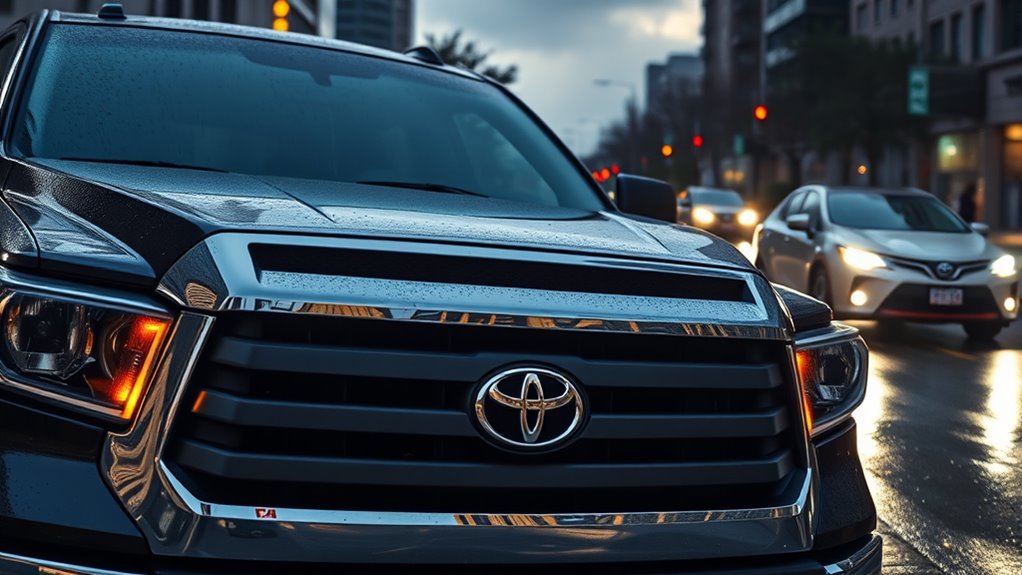
Toyota Safety Sense on the Tundra is an integrated driver‑assist suite that helps you avoid collisions, maintain lanes, and manage speed using cameras and radar. It includes Pre‑Collision with Pedestrian Detection, Dynamic Radar Cruise Control, Lane Departure Alert with Steering Assist, Road Sign Assist, and Automatic High Beams, plus parking and low‑speed braking aids. TSS augments the Star Safety stability systems but doesn’t replace attentive driving. Keep going to see specific features, limits, and setup tips.
What Toyota Safety Sense on the Tundra Is
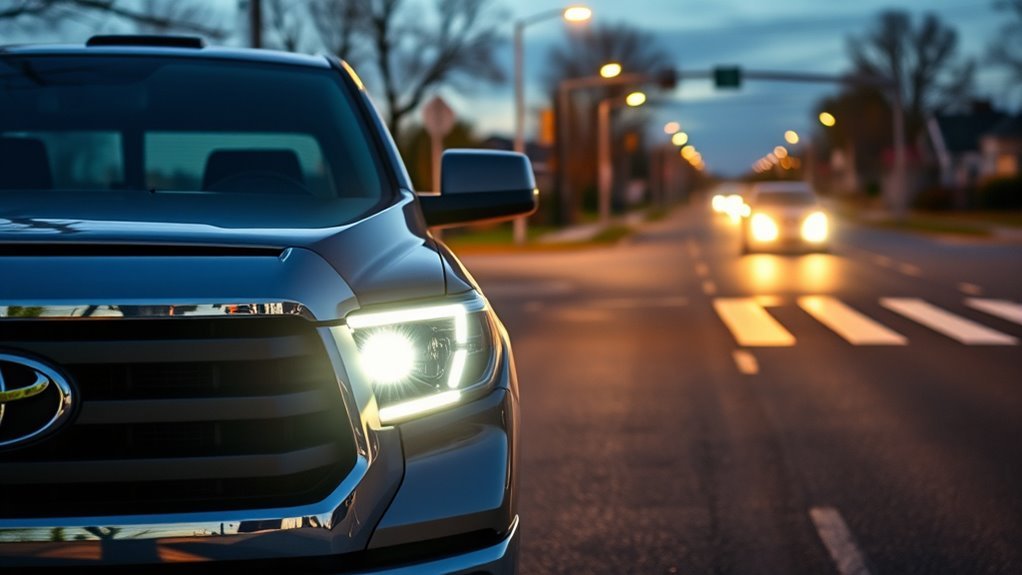
When you drive a Tundra equipped with Toyota Safety Sense (TSS), you get an integrated suite of active-safety systems—Lane Departure Alert with Steering Assist, Full‑Speed Range Dynamic Radar Cruise Control, Automatic High Beams and a Pre‑Collision System with Pedestrian Detection—that work together to reduce collision risk, manage speed and maintain lane position. You’ll rely on TSS features that monitor lanes, vehicles and vulnerable road users, issuing timely alerts and applying corrective steering or braking when necessary. The Full‑Speed Range Dynamic Radar Cruise Control preserves safe gaps automatically, easing long drives and supporting strategic autonomy. Automatic High Beams optimize illumination without manual input, extending your operational freedom at night. The Pre‑Collision System detects pedestrians and cyclists, warns you, and can initiate emergency braking to avert or mitigate impacts. Complementary systems like the Rear Seat Reminder promote occupant safety and accountability. Overall, TSS consolidates sensor fusion, decision logic and actuation to enhance safety, reduce cognitive load and increase your confidence behind the wheel.
How TSS 2.5 Differs From Earlier Versions
Although it builds on prior suites, TSS 2.5 brings targeted functional upgrades that change how the system intervenes at intersections, during evasive maneuvers, and in low‑light pedestrian encounters. You’ll notice TSS advancements that move beyond warning-only logic: intersection support alerts you to oncoming vehicles and pedestrians during left turns, and evasive steering assist helps you steer around obstacles while keeping lane control. Pedestrian detection now functions at night, delivering Enhanced safety where earlier versions were limited to daytime. Lane Tracing Assist refinement keeps you centered in tight traffic, reducing workload and increasing freedom to focus on route and intent. The TSS 2.5 vs. 2.5 Plus split adds overtake support in the Plus variant, adjusting speed during passes for smoother maneuvers.
| Feature | Effect |
|---|---|
| Intersection Support | Alerts oncoming traffic/pedestrians |
| Evasive Steering Assist | Maneuver aid with lane control |
| Night Pedestrian Detection | Expanded low‑light recognition |
Core Systems: Star Safety Vs. Toyota Safety Sense
You’ll first assess the Star Safety System, which provides foundational stability and control functions like VSC and ABS to keep the Tundra planted during slippery or emergency maneuvers. Then compare that baseline to Toyota Safety Sense, which actively assists with collision avoidance and lane-keeping through systems such as Pre-Collision with Pedestrian Detection and Lane Departure Alert with Steering Assist. Together they form an integrated safety architecture, with Star Safety handling vehicle control and TSS managing situational detection and intervention.
Star Safety System Overview
Think of the Star Safety System as the Tundra’s foundational stability suite: it combines Vehicle Stability Control (VSC), Traction Control (TRAC), Anti-lock Brake System (ABS), and Smart Stop Technology (SST) to maintain control and optimize brake response, while Toyota Safety Sense (TSS) layers on camera- and radar-based driver-assist functions—like Lane Departure Alert, Dynamic Radar Cruise Control, and Pre‑Collision System with Pedestrian Detection—to actively reduce collision risk rather than just manage vehicle dynamics. You rely on Star Safety for core assurance: Vehicle Stability algorithms counter oversteer/understeer, TRAC moderates wheelspin, ABS preserves steering during hard stops, and SST reduces unintended engine power during aggressive braking. These Core Features prioritize Brake Performance and handling fundamentals so you stay in command before advanced collision mitigation engages.
Toyota Safety Sense
When you compare Toyota Safety Sense (TSS) with the Star Safety System, the distinction is clear: TSS is a proactive sensor-driven suite that elevates driver awareness and supports accident prevention through interventions. You get Pre-Collision System with Pedestrian Detection, Lane Departure Alert, Lane Tracing Assist, and Dynamic Radar Cruise Control that anticipate and mitigate threats. The Star Safety System supplies foundational stability and braking — VSC and ABS — to preserve control when avoidance maneuvers occur. On the Tundra, TSS 2.5 adds intersection support for left turns, extending proactive protection in complex urban scenarios. You’ll rely on TSS for detection and corrective input, and on Star Safety as the robust fallback ensuring vehicle control during sudden events.
Pre‑Collision With Pedestrian Detection : When It Helps
You’ll see how PCS w/PD identifies pedestrians and bicyclists using coordinated sensor data to prioritize imminent threats. It operates day or night, maintaining detection in low‑light conditions. If you don’t respond to warnings, the system can initiate automatic emergency braking to mitigate or avoid impacts.
Detecting Pedestrians And Bicyclists
The Pre‑Collision System with Pedestrian Detection on the Tundra uses cameras and radar to detect pedestrians and bicyclists in daylight and pedestrians at night, alerting you with audible warnings and, if you don’t respond, automatically applying the brakes to prevent or reduce impact; it’s tuned for high-traffic urban scenarios to enhance situational awareness and lower collision risk. You’ll get prompt auditory cues when the sensors identify a potential strike, giving you a narrow window to steer or brake. If you don’t act, the system executes controlled braking to reduce speed and impact energy. This technical layer improves urban safety and supports collision prevention without removing driver agency. It’s a liberation‑focused aid: it augments your control, reduces harm, and increases confidence in dense environments.
Nighttime And Low‑Light Detection
Although low light reduces natural visibility, the Tundra’s Pre‑Collision System with Pedestrian Detection keeps monitoring for pedestrians and will warn you audibly if it detects a potential conflict at night. You’ll benefit from sensors and cameras tuned for nighttime safety and low light visibility, preserving your autonomy by extending perception beyond human limits. The system flags pedestrians and bicyclists in urban and dim environments, issuing clear alerts so you can intervene. If you don’t react, automated braking may engage to reduce impact risk. Rely on continuous monitoring to maintain control and avoid surprises during evening travel.
| Condition | Detection | Driver Action |
|---|---|---|
| Night urban | High | Respond to alert |
| Low light roads | Moderate | Prepare to brake |
Automatic Emergency Braking
When driving in dense, slow-moving traffic or through crowded crosswalks, the Tundra’s Pre‑Collision System with Pedestrian Detection actively monitors for pedestrians and bicyclists and will warn you audibly before engaging automatic emergency braking if you don’t respond. You get advanced sensors that classify humans and cyclists, providing an audible alert as the first layer of emergency response. If you fail to react, the system applies brakes automatically to mitigate or avoid impact; it detects pedestrians at all hours and bicyclists in daylight. These safety features are tuned for urban, high-traffic scenarios to reduce collisions and preserve mobility. You retain control, but the system intervenes when needed to protect vulnerable road users and support your autonomy.
Dynamic Radar Cruise Control (Full‑Speed) : Uses & Limits
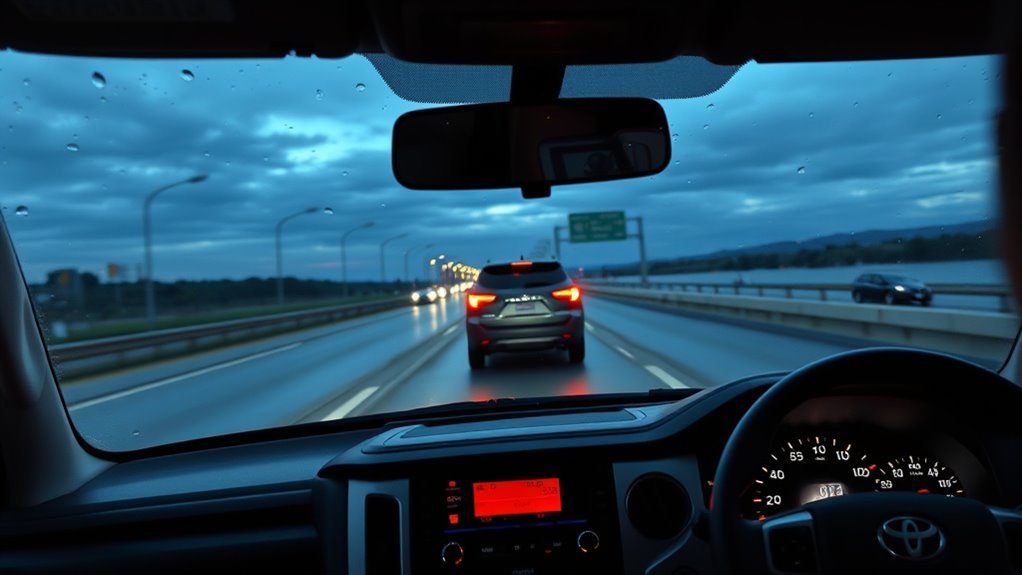
Because you set a speed and following gap, Dynamic Radar Cruise Control (Full‑Speed) automatically adjusts your Tundra’s throttle and brakes to maintain a preset distance from vehicles ahead. You get adaptive speed regulation and traffic response capabilities that reduce workload on long drives and highways. The system works from 25 to 110 mph, offering three selectable following distances to match your comfort and mission for freedom on the road. It senses slower vehicles and responds to lane changes ahead, providing smooth deceleration and reacceleration without constant input. Limits: it depends on radar/laser line‑of‑sight, poor weather or obstructed sensors can reduce effectiveness, and it won’t replace attentive control in complex scenarios. Use it as a liberation tool that augments your vigilance, not as autonomy. Regularly check sensor cleanliness and remain ready to brake or steer when conditions exceed system capabilities.
| Feature | Benefit |
|---|---|
| Speed range | 25–110 mph |
| Distance settings | Three levels |
| Sensing | Responds to slower vehicles |
| Limitations | Weather/sensor obstruction |
Lane Departure Alert, Steering Assist & Lane Tracing
You’ll get audible and visual lane departure warnings when the Tundra detects unintentional drift without a turn signal. Steering Assist will apply subtle corrective torque to help re-center the truck, reducing steering effort and yaw. With Lane Tracing Assist and TSS 2.5 improvements, these interventions are more accurate and responsive in tight traffic and at highway speeds.
Lane Departure Warnings
Lane Departure Warnings combine Lane Departure Alert, Steering Assist, and Lane Tracing to monitor lane markings and road edges in real time and warn you—or make small steering corrections—if the Tundra drifts from its lane. You’ll get audio and visual alerts from Lane Departure Alert to restore lane awareness and prompt driver engagement when the system detects unintended drift. Lane Tracing maintains lane position continuously, aiding you in dense traffic or where markings are faint, reducing micro-corrections and cognitive load. The system runs continuously, comparing vehicle trajectory to lane boundaries and road edges, and integrates with Toyota Safety Sense to lower accident risk from inattention or fatigue. You retain ultimate control; these features assist without replacing your responsibility to steer.
Steering Assist Corrections
While driving on highways or in dense traffic, the Tundra’s steering assist corrections monitor lane markings and road edges with cameras and sensors, issuing alerts and applying minor steering inputs to keep you centered. You get audio/visual warnings from Lane Departure Alert if you drift without signaling, then Steering Assist provides subtle steering adjustments to re-center the truck. Lane Tracing Assist augments this by actively interpreting vehicle position relative to surrounding traffic and making continuous micro-corrections to preserve lane stability. These systems work together to reduce unintentional departures and enhance situational awareness, freeing you to focus on purposeful travel.
- Continuous camera/sensor monitoring for real-time inputs
- Alerts before interventions
- Micro steering adjustments for control
- Cooperative lane-tracing logic for tight traffic
Road Sign Assist and Automatic High Beams : How They Read the Road
Because the Tundra’s camera and light-sensing systems work together in real time, Road Sign Assist detects and displays speed limits and stop signs on the Multi-Information Display while Automatic High Beams switches between high and low beams above 21 mph based on detected oncoming or preceding vehicles, reducing driver workload and enhancing visibility. You rely on sign recognition to receive immediate, clear cues about regulatory signs; the intelligent camera parses shapes and characters, filters false positives, and updates the MID so you can act without scanning roadside clutter. Simultaneously, AHB performs continuous beam adjustment using optical sensors that detect vehicle lights and ambient conditions, shifting within fractions of a second to preserve your night vision and prevent glare for others. Together these modules reduce cognitive load and extend your operational freedom on varied roads: RSA enforces legal awareness, AHB maintains ideal illumination, and both systems let you focus on control and routing rather than peripheral visual tasks.
Parking and Low‑Speed Safety: Panoramic View, Parking Assist, Auto‑Braking
When you’re squeezing into tight spots, the Tundra’s Panoramic View Monitor, front/rear Parking Assist sensors, and low‑speed Automatic Braking work together to give a clear overhead perspective, audible proximity warnings, and immediate brake intervention if an obstacle is detected. You’ll rely on integrated parking technology and safety features that simplify complex maneuvers and free you from anxiety in confined environments. The system translates sensor data into actionable cues so you can act decisively.
- Panoramic View Monitor: stitches multi‑camera feeds into an overhead image, increasing situational awareness for precise positioning.
- Front/Rear Parking Assist: ultrasonic sensors detect obstacles and emit graduated audio alerts, quantifying clearance.
- Low‑Speed Automatic Braking: monitors relative motion during low‑velocity maneuvers and applies brakes when imminent collision is detected.
- System integration: sensor fusion and driver alerts reduce cognitive load, improving maneuverability and confidence.
You stay in control; the Tundra’s parking assistance streamlines tasks, enhances safety, and supports your drive toward autonomy.
What TSS Can’t Do : Limitations, Failure Modes, and Safety Reminders
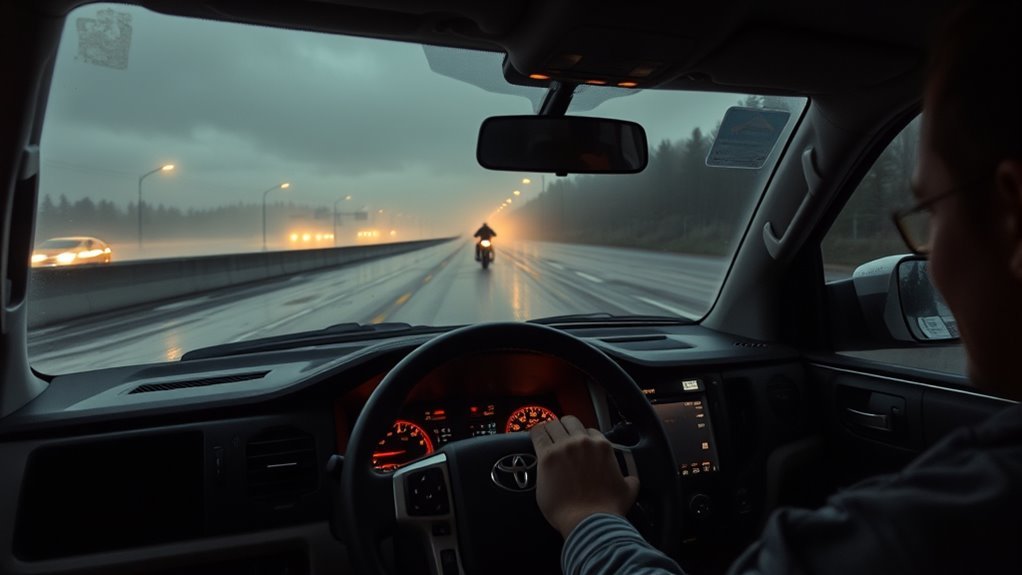
1 key point to remember is that Toyota Safety Sense (TSS) supplements — but does not replace — your responsibility to control the vehicle and make safe driving decisions at all times. Understand system limitations: TSS may miss obstacles or pedestrians, especially with visibility challenges or at high speeds. Environmental factors such as heavy rain, fog, glare, or faded lane markings degrade performance. Maintain technology awareness; alerts and braking may not trigger if sensors are obscured or misaligned. Sensor reliability can slip due to contamination, impact, or software faults. Maintenance importance is real—neglect or delayed updates can create failure modes where features underperform or disengage. You must accept driver responsibility to monitor conditions, verify system readiness, and be ready for manual intervention immediately. Use TSS as an empowered assist, not a crutch: stay vigilant, anticipate edge cases, and intervene decisively when the system shows reduced capability or inconsistent responses.
How to Use, Maintain, and Customize TSS on Your Tundra
If you want TSS to perform reliably, keep its sensors and camera optics clean, configure system sensitivity in the Multi‑Information Display, and verify settings against the Owner’s Manual before driving. You’ll use TSS customization options in the MID to set alert volume, sensitivity for Lane Departure Alert with Steering Assist, and follow distance for Dynamic Radar Cruise Control. Apply TSS maintenance tips: clear debris, avoid windshield coatings that impair cameras, and inspect mounts after impacts.
Keep TSS sensors and camera optics clean, set MID sensitivities, and consult the Owner’s Manual before driving.
- Check MID menus to enable/disable features and adjust Pre‑Collision System sensitivity; confirm changes visually and with brief test drives.
- Clean sensors and camera optics weekly or after off‑road use; use lint‑free cloth and recommended fluid.
- Verify software version at your dealership and install updates to maintain algorithm performance.
- Study the Owner’s Manual and Toyota how‑to videos to master controls and retain autonomy over safety decisions.
Frequently Asked Questions
How Does Toyota Safety Sense Work?
It detects hazards via radar and cameras, uses collision detection algorithms to warn and apply brakes, and employs adaptive cruise to maintain safe gaps; you’ll stay empowered by automated interventions that augment your situational control and freedom.
Do You Have to Pay for Toyota Safety Sense?
Like finding a free map, you don’t pay extra—TSS’s cost implications are zero for new Tundras. You get full feature availability standard, empowering you with advanced safety tech without added charge or compromise.
Conclusion
You’ve got a suite of sensors and systems watching the road like a co‑pilot—radar, cameras, and software tuned to detect cars, people, signs, and lane markings. Use TSS’s features deliberately: set adaptive cruise, keep hands on the wheel, and verify camera views. Maintain sensors and software so they don’t fog or misread. When you feel the truck respond—brake, steer, or warn—you’ll sense the tech buffering risk, not replacing your responsibility.