A tire pressure gauge is an essential tool for measuring the air pressure in your vehicle’s tires, helping guarantee safety and optimize performance. There are several types: analog, digital, and smart gauges, each with varying accuracy. Regular calibration is key to reliable readings, as environmental factors can affect performance. To use it effectively, check tire pressure when tires are cold and follow manufacturer recommendations. Continue on to discover tips for maintenance and the impact of proper tire pressure on your vehicle’s safety and efficiency.
What Is a Tire Pressure Gauge and Why Is It Important?

A tire pressure gauge is an important tool for any vehicle owner, guaranteeing your tires maintain the correct air pressure for peak performance and safety. It measures the air force within your tires, generally indicated in pounds per square inch (PSI). Accurate tire pressure is essential; underinflated tires can lead to increased fuel consumption, premature wear, and a higher risk of blowouts—contributing to around 250,000 accidents each year. Tire gauges come in various forms, including analog, digital, and smart types, each offering unique features. It’s important to check tire pressure when tires are cold to avoid miscalculations. Regular use and calibration guarantee your tire gauge’s accuracy, directly impacting your safety on the road and enhancing tire performance.
Understanding How Tire Pressure Gauges Work
When you check your tire pressure, it’s essential to understand the different systems at play. Tire pressure gauges operate through direct and indirect methods, using either mechanical components or electronic sensors to measure air pressure. Each method has its advantages, so knowing how they work can help you choose the right gauge for your needs.
Direct vs. Indirect Systems
Understanding the differences between direct and indirect tire pressure monitoring systems (TPMS) is vital for maintaining vehicle safety and performance.
- Direct Systems: These use built-in sensors for accurate pressure readings, giving you real-time data on tire conditions.
- Indirect Systems: These rely on anti-lock brake sensors to detect discrepancies in tire rotation but may struggle with uniform pressure loss across all tires.
- Accuracy: Regular calibration of both systems is important, as even minor inaccuracies in gauges can lead to performance issues.
Mechanical and Electronic Methods
Tire pressure gauges play an important role in ensuring safe driving and ideal vehicle performance, complementing the insights provided by direct and indirect tire pressure monitoring systems. You can choose between mechanical gauges and electronic gauges, each offering unique benefits. Mechanical gauges, like Bourdon tube and diaphragm types, measure the pressure inside a tire using a flexible tube or diaphragm, showing results on a dial. In contrast, electronic gauges utilize sensors to detect pressure changes, converting them into electrical signals displayed on a digital screen for clarity. Remember, regular calibration is essential for accuracy, as deviations can affect tire performance.
| Type | Mechanism | Display |
|---|---|---|
| Mechanical | Bourdon tube, diaphragm movement | Analog dial |
| Electronic | Sensors detecting pressure | Digital screen |
| Accuracy | Important for proper inflation | Requires calibration |
| Best Use | Cold tires for accurate reading | Easy interpretation |
| Maintenance | Check regularly for precision | Important for safety |
Evaluating the Accuracy of Tire Pressure Gauges for Optimal Performance?
To guarantee your tire pressure gauge delivers accurate readings, regular calibration is essential. Factors like mechanical wear in analog gauges can compromise accuracy over time, while digital models may offer automatic calibration for convenience. By understanding these elements, you can maintain ideal tire pressure and enhance your vehicle’s performance.
Importance of Calibration
While you might overlook the importance of calibrating your tire pressure gauge, doing so is essential for ensuring accurate readings and ideal vehicle performance. Regular calibration helps you avoid underinflated or overinflated tires, which can impact safety and fuel efficiency. Here’s why it matters:
- Accuracy: Gauges, whether digital or mechanical, can drift over time, leading to unreliable tire pressure readings.
- Safety: Inaccurate readings can contribute to tire wear and increase the risk of accidents, compromising your safety on the road.
- Performance: Properly calibrated gauges help optimize tire pressure, enhancing vehicle performance and efficiency.
Factors Affecting Accuracy
When evaluating the accuracy of tire pressure gauges, several factors come into play that can greatly influence the readings you receive. First, always check your tires when they’re cold; driving heats them up, temporarily raising pressure and skewing accuracy. Calibration is vital—analog gauges need regular recalibration, while digital models often calibrate automatically. Environmental factors like altitude and temperature can also affect pressure readings, as atmospheric pressure decreases at higher elevations. Additionally, keep your gauges clean and free of debris to guarantee precise measurements. Mechanical wear and battery issues in digital gauges can further compromise performance, so maintain your equipment for peak accuracy. By understanding these elements, you can achieve reliable readings and make sure your tires stay safe and efficient.
Different Types of Tire Pressure Gauges Explained
Tire pressure gauges come in a variety of types, each designed to help you maintain ideal tire pressure for safety and performance. Understanding these options can empower you to make informed choices:
- Analog Gauges: These mechanical gauges use components like Bourdon tubes for pressure measurement. They include dial gauges for easy reading and pen-type gauges for portability.
- Digital Gauges: Utilizing electronic sensors, these offer precise readings on a screen, often with user-friendly interfaces and additional features like backlit displays and memory storage.
- Smart Gauges: Equipped with Bluetooth technology, these allow real-time monitoring and syncing with smartphone apps for alerts and data tracking, enhancing your overall accuracy.
Choosing the right gauge enhances your driving experience and tire maintenance.
Master the Art of Using Your Tire Pressure Gauge
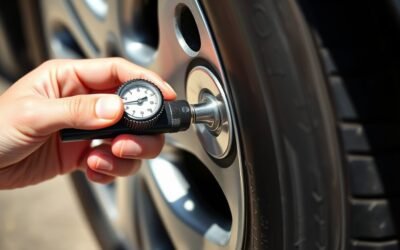
How can you guarantee your tires are always at their prime pressure? Start by checking tire pressure with your gauge when the tires are cold—this means they’ve been parked for at least three hours or driven less than a mile. Find the manufacturer’s recommended PSI, usually located on the driver’s side door jamb or in your owner’s manual. To measure, remove the valve cap and press the gauge onto the valve stem until you hear no hissing sound. Read the pressure displayed; this guarantees accuracy. If your tires are below the recommended PSI, use an air compressor to inflate them, and always recheck afterward. Regularly clean and calibrate your gauge to maintain its accuracy for peak tire performance.
Avoid These Common Mistakes for Accurate Tire Pressure Readings

Accurate tire pressure readings are essential for ideal vehicle performance and safety. To guarantee you’re getting the right measurements, avoid these common mistakes:
Accurate tire pressure is crucial for optimal vehicle performance and safety; avoid common mistakes to ensure correct readings.
- Check When Tires Are Cold: Always use tire pressure gauges when your tires are cold. Driving can raise pressure by up to 4 PSI, leading to inaccurate readings.
- Inspect the Valve Stem: Before placing the gauge, make sure the valve stem is clean and free from debris. Obstructions can skew your results.
- Follow Manufacturer’s Recommended PSI: Refer to the recommended PSI found in your owner’s manual or on the driver’s side door jamb. This helps prevent over or under-inflation.
How to Maintain and Calibrate Your Tire Pressure Gauge
Maintaining and calibrating your tire pressure gauge is essential for reliable performance, especially since even minor inaccuracies can lead to unsafe driving conditions. Regular calibration guarantees accuracy, particularly for analog gauges that might drift. Keep your gauge clean and free of debris to avoid affecting readings. Check digital gauges for battery life and replace as needed.
Here’s a quick reference table for maintaining your tire pressure gauge:
| Maintenance Task | Frequency | Notes |
|---|---|---|
| Clean the gauge | Monthly | Use a soft cloth |
| Check accuracy | Every 6 months | Use a known reference gauge |
| Inspect for wear | Annually | Look for mechanical issues |
| Calibrate analog gauges | As needed | Seek professional help if inaccurate |
| Replace digital batteries | As needed | Guarantee constant performance |
The Impact of Tire Pressure on Vehicle Safety and Performance
Tire pressure plays a vital role in your vehicle’s safety and performance. Maintaining ideal tire pressure is essential for vehicle safety, as underinflated tires contribute to around 250,000 accidents each year. Here are three key impacts of proper tire pressure:
- Safety: Properly inflated tires reduce the risk of blowouts and loss of control.
- Fuel Efficiency: Each 1 PSI drop in pressure can decrease fuel economy by up to 3%.
- Performance: Ideal tire pressure guarantees better handling and stability, enhancing your overall driving experience.
Keeping your tires inflated within the recommended 28 to 35 PSI range not only promotes even tire wear but also prolongs their lifespan, helping you enjoy a smoother, safer ride.
Frequently Asked Questions
Can I Still Drive My Car if the TPMS Light Is On?
Yes, you can drive with the TPMS light on, but prioritize checking tire pressure. Ignoring TPMS warning signs risks low pressure effects, jeopardizing driving safety. Timely tire maintenance is essential for ideal vehicle performance and preventing costly sensor replacements.
How Does a Pressure Gauge Work?
A pressure gauge works by measuring air pressure using digital or analog techniques. Regular calibration guarantees accuracy, while debunking common myths helps you maintain proper tire inflation. Understanding these factors enhances your driving experience and safety.
What Does a Tire Pressure Gauge Look Like?
Your tire pressure gauge’s a quirky companion—digital or analog, each flaunts their style. Accuracy’s their game, with brands vying for your trust. Just remember to store them properly; they hate humidity and neglect!
Is It Worth Replacing a TPMS Sensor?
Yes, it’s worth replacing a TPMS sensor. With a lifespan of 5-10 years, signs of malfunction can impact safety. Consider sensor replacement costs and benefits of DIY installation for ideal tire performance and safety.
Conclusion
To sum up, a tire pressure gauge is an essential tool for ensuring your vehicle’s safety and efficiency. By understanding its function and types, you can make informed choices to keep your tires in prime condition. Have you ever considered how a simple gauge can enhance your driving experience? Regular maintenance and proper usage not only boost performance but also extend tire life. So, make it a habit to check your tire pressure—your vehicle will thank you!