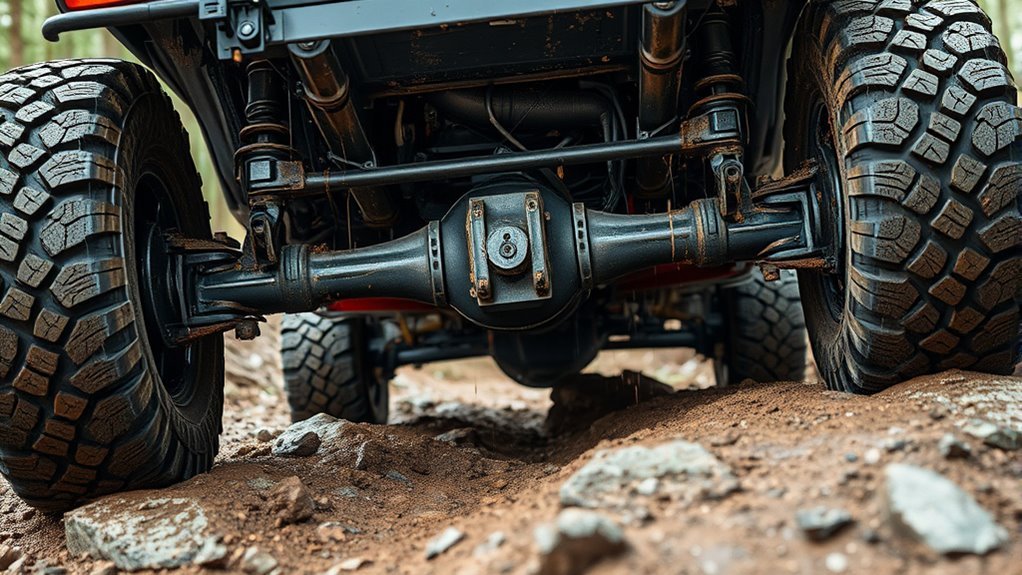
A rear differential lock is an off-road traction tool that connects the left and right rear axle shafts so both rear wheels keep turning together. It is most useful at low speed when one rear tire is spinning, hanging in the air, or sitting on a much slicker surface than the other. Used correctly, it can get a vehicle moving again in mud, rocks, snow, ruts, and steep climbs. Used at the wrong time, it can make steering worse and add stress to the drivetrain.
Quick Answer
A rear diff-lock forces both rear wheels to rotate together so the wheel with grip can keep pushing even when the other wheel slips. Engage it only for low-speed, low-traction off-road situations, then unlock it once you regain movement or need sharper steering.
Key Takeaways
- A rear diff-lock solves the common off-road problem where one rear wheel spins and the other rear wheel cannot help move the vehicle.
- Use it on mud, rocks, ruts, snow, loose climbs, and other low-speed terrain where wheel slip is stopping progress.
- Do not use it on dry pavement, tight high-grip turns, fast loose-surface driving, or side slopes where steering control matters more than straight-line traction.
- Selectable lockers give the most control for mixed street/off-road use; automatic lockers are simpler but can feel harsher on the road.
- Always follow your vehicle owner’s manual because some factory systems only work in 4WD Low and below a set speed.
Rear Diff-Lock at a Glance
| Best Use | Low-speed off-road traction recovery |
| Best Terrain | Mud, rocks, ruts, snow, loose climbs, and uneven trails |
| Avoid On | Dry pavement, tight high-grip turns, fast cornering, and side slopes |
| Common Types | Selectable, automatic, lunchbox, and full-case lockers |
| Typical Cost | Aftermarket parts can range from a few hundred dollars to well over $1,000, with labor and setup extra |
What Problem Does a Rear Diff-Lock Solve?
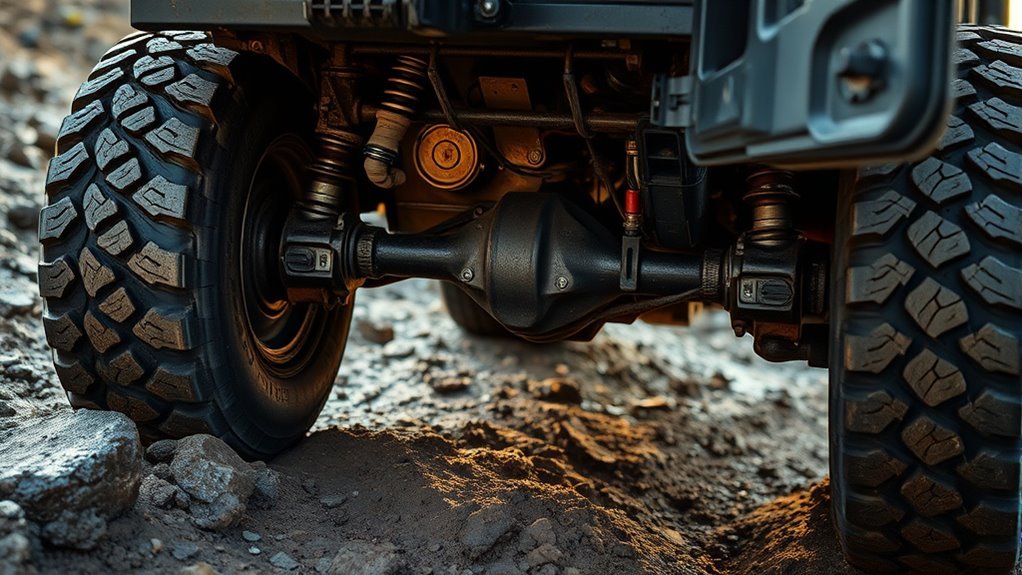
A rear diff-lock solves one of the biggest weaknesses of an open differential: when one rear wheel loses grip, the vehicle may stop moving even though the other rear wheel still has traction. In simple terms, the open differential allows the slipping wheel to spin easily, so the axle cannot use enough torque at the tire that still has grip.
When the rear differential is locked, both rear axle shafts are mechanically coupled. That means the rear wheels keep rotating together instead of letting one wheel spin freely. The result is better forward drive when one wheel is in the air, buried in mud, on ice, or unloaded in a deep rut.
This is why rear lockers are popular for rock crawling, muddy trails, steep loose climbs, and technical off-road driving. For example, ARB describes its selectable Air Locker as a system that sends equal drive to both wheels on an axle so the vehicle can use the wheel that still has traction during difficult off-road conditions.
Warning: A rear diff-lock is not a “more traction everywhere” button. On high-grip surfaces, both rear tires need to travel different distances in a turn. Locking them together can cause tire scrub, drivetrain wind-up, wider turning, and reduced control.
How a Rear Diff-Lock Works
A rear diff-lock removes normal differential action. Instead of allowing the left and right rear wheels to rotate at different speeds, it locks the axle side gears or axle shafts together so both wheels turn as a pair. The exact hardware varies by vehicle and locker design, but the goal is the same: keep both rear wheels driven when traction is uneven.
Mechanical Engagement Mechanism
Most rear lockers use a locking collar, dog clutch, cam-and-ramp mechanism, side gear, or similar internal part to connect both sides of the axle. Some factory systems use an electric actuator. Some aftermarket systems use air pressure, cable control, or internal automatic locking parts.
Selectable lockers leave the differential open during normal driving and lock only when the driver activates them. Eaton’s ELocker4, for example, is described as an electronic selectable differential that can switch from open to fully locked at the flip of a switch.
- Electric lockers: use an electric actuator or electromagnet to lock the differential.
- Air lockers: use compressed air to engage the locking mechanism.
- Mechanical automatic lockers: lock and unlock internally based on torque, coast, and wheel-speed differences.
- Cable lockers: use a cable or lever to move the locking mechanism directly.
Power Transfer Behavior
With an open differential, both wheels are free to rotate at different speeds. That is ideal for turning on pavement, but poor when one tire has almost no grip. A rear locker changes the axle from “let each wheel do its own thing” to “keep both wheels turning together.”
That does not mean every locked axle always splits torque in a perfectly equal mathematical way in every condition. It means the axle no longer lets one rear wheel spin independently while the other does nothing useful. Eaton notes that a fully locking differential can transmit up to 100% of driveline torque through a single axle shaft when conditions demand it because the axle is fully locked.
A rear locker is most valuable when traction is uneven side-to-side: one tire slips, lifts, or digs while the other tire still has enough grip to move the vehicle.
Activation and Release
Activation depends on the vehicle. Some factory rear lockers only work in 4WD Low and below a certain speed. Some aftermarket selectable lockers can be switched on by a dash button. Automatic lockers do not need a driver switch; they lock and unlock internally as driving forces change.
To release a selectable locker, use the same control that engaged it, then ease the vehicle forward or gently turn the steering wheel if the indicator keeps flashing. Some owner’s manuals, including Toyota’s rear differential lock instructions, advise unlocking the differential once the vehicle is free and back out of the difficult spot to restore normal operation.
Pro Tip: Engage a selectable locker before you are fully stuck, not after you have already buried the tires. Smooth throttle plus early locker use is easier on axles, tires, and recovery gear.
Types of Rear Lockers: Automatic vs Selectable
The two main categories are automatic lockers and selectable lockers. Both can improve traction, but they feel very different in daily driving and on technical trails.
Automatic Locker Behavior
An automatic rear locker locks without a driver switch. A classic example is the Detroit Locker. Eaton explains that it is normally locked during straight-line driving, then allows wheel-speed differentiation during turns before re-engaging when the vehicle returns to straight-line driving under normal operation.
The advantage is simplicity: there is no air line, no compressor, and no button to remember. The drawback is road behavior. Automatic lockers can clunk, ratchet, bind, or feel abrupt when transitioning between drive and coast. They can also increase tire wear or make wet-road throttle inputs feel sharper.
- Best for: dedicated trail rigs, budget builds, work trucks, and vehicles where automatic traction matters more than smooth street manners.
- Watch for: tire chirp, drivetrain noise, handling quirks, and a learning curve on slick roads.
Selectable Locker Control
A selectable locker gives the driver control. Unlocked, it behaves like an open differential for normal cornering. Locked, it acts like a solidly connected axle for maximum off-road traction. This is the best match for many mixed-use 4x4s because you can drive normally on pavement and lock the rear axle only when the trail requires it.
Common selectable systems include electric lockers, air lockers, cable lockers, and factory electronic lockers. Selectable lockers are usually more expensive and more complex than lunchbox-style automatic lockers, but they offer better control and fewer compromises on the road.
- Best for: daily-driven 4x4s, overland vehicles, technical trails, and drivers who want traction on demand.
- Watch for: wiring, air-line routing, compressor condition, switch placement, and proper installation.
Lunchbox vs Full-Case Lockers
A lunchbox locker replaces only part of the differential’s internal carrier assembly. It is usually cheaper and easier to install than a full-case locker, but it still behaves like an automatic locker and can affect street manners.
A full-case locker replaces the differential carrier itself. It is usually stronger and more suitable for larger tires, high torque, or severe trail use, but it often requires deeper differential setup work such as checking backlash, bearing preload, and gear contact pattern.
When to Engage a Rear Diff-Lock: Real-World Scenarios
Engage the rear diff-lock when low-speed traction is uneven and forward movement is at risk. The best time is before major wheelspin starts, while the vehicle is still controlled and the tires are not digging holes.
- Deep mud: lock the rear axle when one wheel starts spinning faster than the other and momentum is fading.
- Rutted climbs: use the locker before one rear wheel unloads or lifts in the rut.
- Rock crawling: lock the rear axle when one rear tire may hang in the air while the other stays planted.
- Snow and ice: use it carefully at low speed when one rear wheel is on a slick patch and the other has grip.
- Loose gravel climbs: lock it when the vehicle needs straight-line drive more than tight steering.
- Low-speed straight descents: a rear locker can help keep rear wheel behavior predictable, but it should be used carefully and unlocked before tight or off-camber turns.
Note: Many factory lockers are designed for low-speed off-road use only. Check your owner’s manual for the required transfer-case range, maximum engagement speed, and dashboard indicator behavior.
When Not to Use a Rear Diff-Lock
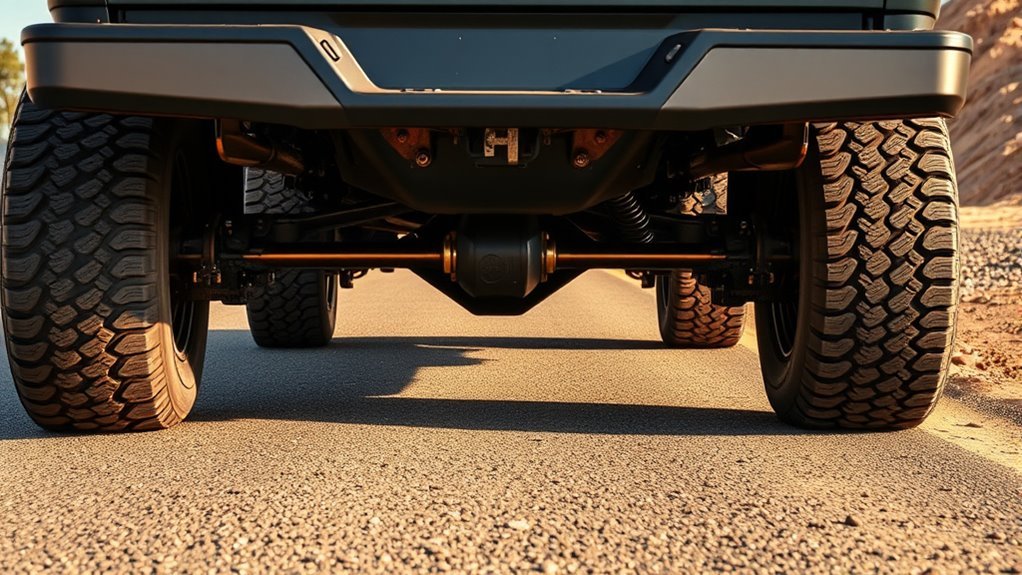
Do not use a rear diff-lock when steering precision matters more than straight-line traction. A locked rear axle pushes both rear wheels at the same speed, which can make the vehicle resist turning. On high-grip surfaces, that resistance becomes tire scrub and drivetrain stress.
Avoid using a rear diff-lock in these situations:
- Dry pavement: the tires cannot slip enough to release driveline wind-up.
- Tight switchbacks: the locked rear axle can widen the turning radius.
- Fast gravel or sand driving: the vehicle may be harder to correct if it starts sliding.
- Side slopes: uneven side-to-side grip can make the rear of the vehicle step sideways.
- Parking lots and sharp paved turns: tire scrub, hopping, and axle stress are likely.
- Normal rain driving: a locker can make throttle inputs feel abrupt, especially with automatic lockers.
Warning: Never assume a locked rear axle will improve safety on the road. On pavement, the safest setting is usually unlocked because the rear wheels need to rotate at different speeds while turning.
How a Rear Locker Affects Handling and Steering
A rear locker improves traction but changes how the vehicle turns. Because both rear wheels are forced to rotate together, the inside rear tire cannot slow down naturally in a corner. That can make the vehicle push wide, hop, scrub tires, or slide if the surface is loose.
Expect these handling changes when the rear locker is engaged:
- Wider turning radius: the vehicle may resist tight turns.
- More understeer at low speed: the front tires may push instead of following the line you want.
- Possible oversteer with throttle: too much power can make the rear step out on loose terrain.
- More tire scrub: especially on rock, hard dirt, concrete, or asphalt.
- More drivetrain load: axle shafts, gears, U-joints, and tires take more stress when traction is high.
The fix is simple: use smooth throttle, make gentle steering inputs, and unlock the differential as soon as the difficult obstacle is behind you.
Rear Locker vs Limited-Slip vs Traction Control
A rear locker is not the only traction aid. Limited-slip differentials and electronic traction control can also help, but they work differently.
| System | How It Works | Best For | Main Limitation |
|---|---|---|---|
| Open Differential | Allows both wheels to rotate at different speeds | Normal road driving and smooth turning | Poor when one wheel has very low grip |
| Limited-Slip Differential | Transfers some torque across the axle using clutches, cones, gears, or preload | Street driving, towing, snow, light trails | Can still allow the low-grip wheel to spin |
| Rear Locker | Mechanically locks both rear wheels together | Technical off-road traction | Reduces steering finesse when locked |
| Traction Control | Uses brakes and sensors to slow a spinning wheel | Modern daily driving and moderate trails | May cut power or heat brakes during prolonged wheelspin |
A limited-slip differential is smoother for daily driving, but it is not the same as a true locker. Auburn Gear notes that a limited-slip can still allow the low-traction wheel to spin because the amount of torque it can transfer is limited by design.
[Products Worth Considering]

This frameless convex blind spot mirror helps expand your field of view for safer lane changes, passing, and merging. The HD glass design offers a clear, wide-angle rear view, while the swivel mount supports flexible positioning for cars, SUVs, trucks, vans, and RVs. Easy to install and built for all-weather use, it is a practical upgrade for everyday driving confidence.
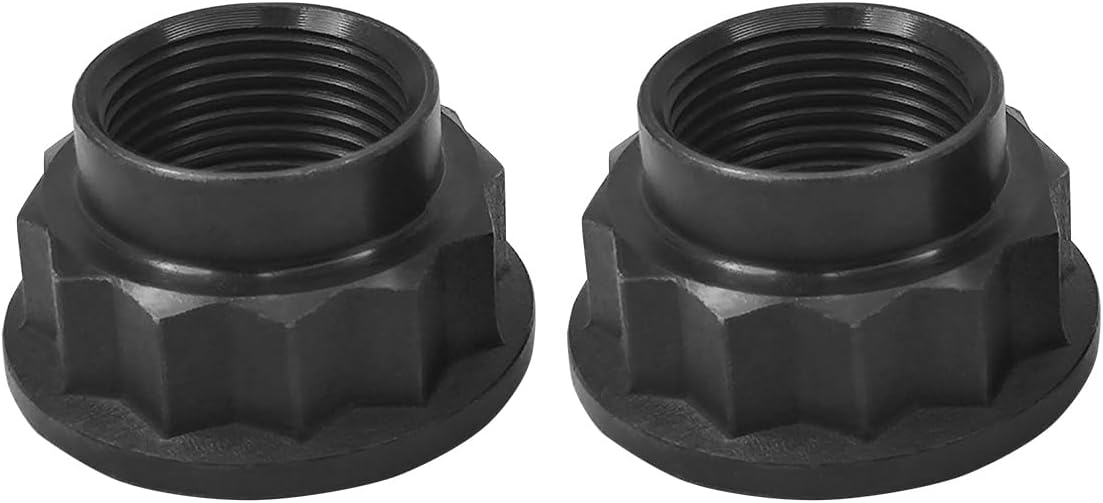
This pair of front axle shaft nuts is designed to secure CV joints and wheel bearings on compatible Toyota and Lexus front drive axles. Built from heat-treated carbon steel for durability and corrosion resistance, it helps maintain proper torque and reliable power transfer. It is a direct replacement for several factory part numbers and is recommended for paired replacement.

This all-in-one car emergency kit helps drivers stay prepared for roadside breakdowns, flat tires, and dead batteries with essential tools in one compact package. It includes a portable air compressor, heavy-duty jumper cables, a first aid kit, and other safety items designed for year-round peace of mind. Compact enough for easy trunk storage, it makes a practical safety solution and thoughtful gift for drivers of all ages.
Which Type Should You Choose? Off-Road, Street, and Budget
The best rear locker depends on how you actually use the vehicle. A daily driver that sees occasional trails has different needs than a rock crawler on oversized tires.
- Mostly street with light trails: consider a limited-slip differential, factory traction control, or a selectable locker if you want real off-road capability without daily compromises.
- Mixed street and serious off-road: choose a selectable locker. It gives normal road manners when unlocked and full traction when needed.
- Dedicated trail rig: a full-case automatic locker or selectable locker can work well, depending on how much control you want.
- Budget build: a lunchbox locker can add major traction for less money, but expect more noise and on-road quirks.
- Heavy towing or large tires: prioritize axle strength, gear setup quality, and locker load rating rather than choosing only by price.
For most drivers who use the same vehicle on pavement and trails, a selectable rear locker is the most balanced choice. It gives you traction when you need it without forcing locked-axle behavior during normal driving.
[Products Worth Considering]

This front left door lock actuator assembly is a direct replacement for select Toyota and Lexus models, helping restore reliable power door locking and latch operation. Built as an OEM-quality aftermarket part, it includes the latch assembly and is factory tested for dependable performance. It is designed for driver-side front door fitment across a wide range of compatible vehicles and comes with replacement support for added peace of mind.

Bendix Premium Ceramic Front Brake Pads are engineered to match original equipment fit, form, and function for a straightforward replacement. Built with durable materials to help resist wear and corrosion, they support consistent braking performance and reduced brake fade for everyday driving. These pads are a dependable choice for compatible Pontiac, Scion, Toyota, and related vehicles.

This windshield wiper blade set is designed as a direct replacement for Toyota Rav4 models from 2013 to 2018, offering an exact fit for dependable performance. The precision-tensioned springs and aerodynamic spoiler help deliver even pressure across the windshield for clearer wiping, while the rubber compound and graphite coating promote quiet, smooth operation. Built for easy installation and all-season use, it provides a practical upgrade for maintaining visibility in changing weather.
Aftermarket Rear Lockers: Cost, Installation, and Priorities
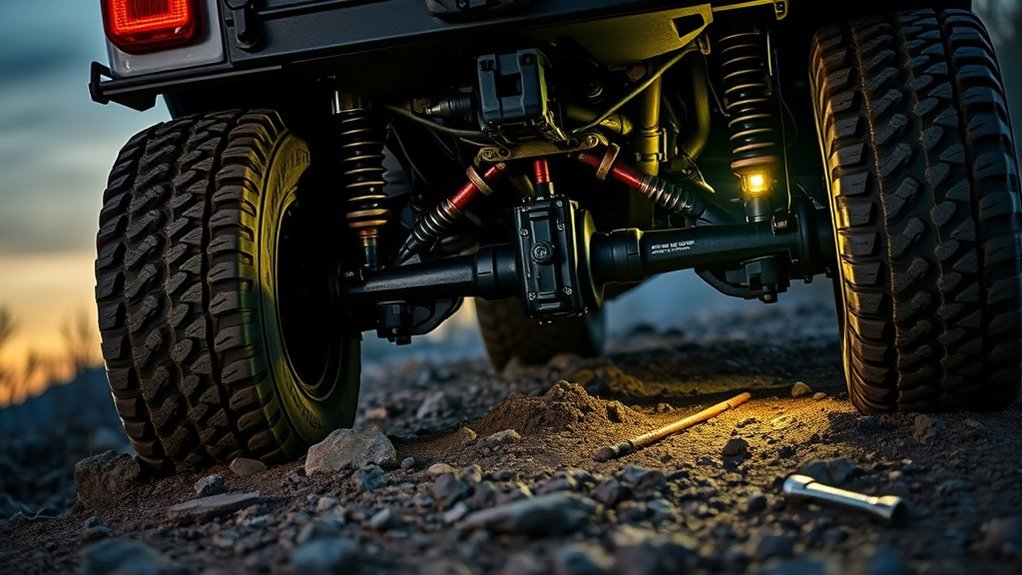
Aftermarket locker cost depends on the axle, locker type, brand, compressor or wiring needs, and labor rate. Lunchbox lockers are typically the lowest-cost option. Selectable electric and air lockers usually cost more because they require more parts and installation work. Full-case lockers often need more precise differential setup.
Professional installation is strongly recommended unless you already know how to set up differential gears. A correct install may involve checking backlash, carrier bearing preload, ring gear fitment, axle spline count, gear oil requirements, air-line routing, wiring, seals, and torque specs. Yukon Gear & Axle maintains installation manuals for its drivetrain products, which shows how specialized differential setup can be for many axle applications.
[Products Worth Considering]

This flexible oil funnel is designed to make fluid changes cleaner and easier by guiding oil around obstacles like skid plates and crossmembers. Its shape-retaining core and silicone body can be molded for custom positioning, while the heat-resistant, leak-proof design helps prevent spills during draining and filter removal. Reusable and easy to clean, it works well for cars, trucks, motorcycles, and other hard-to-reach fluid fill or drain applications.
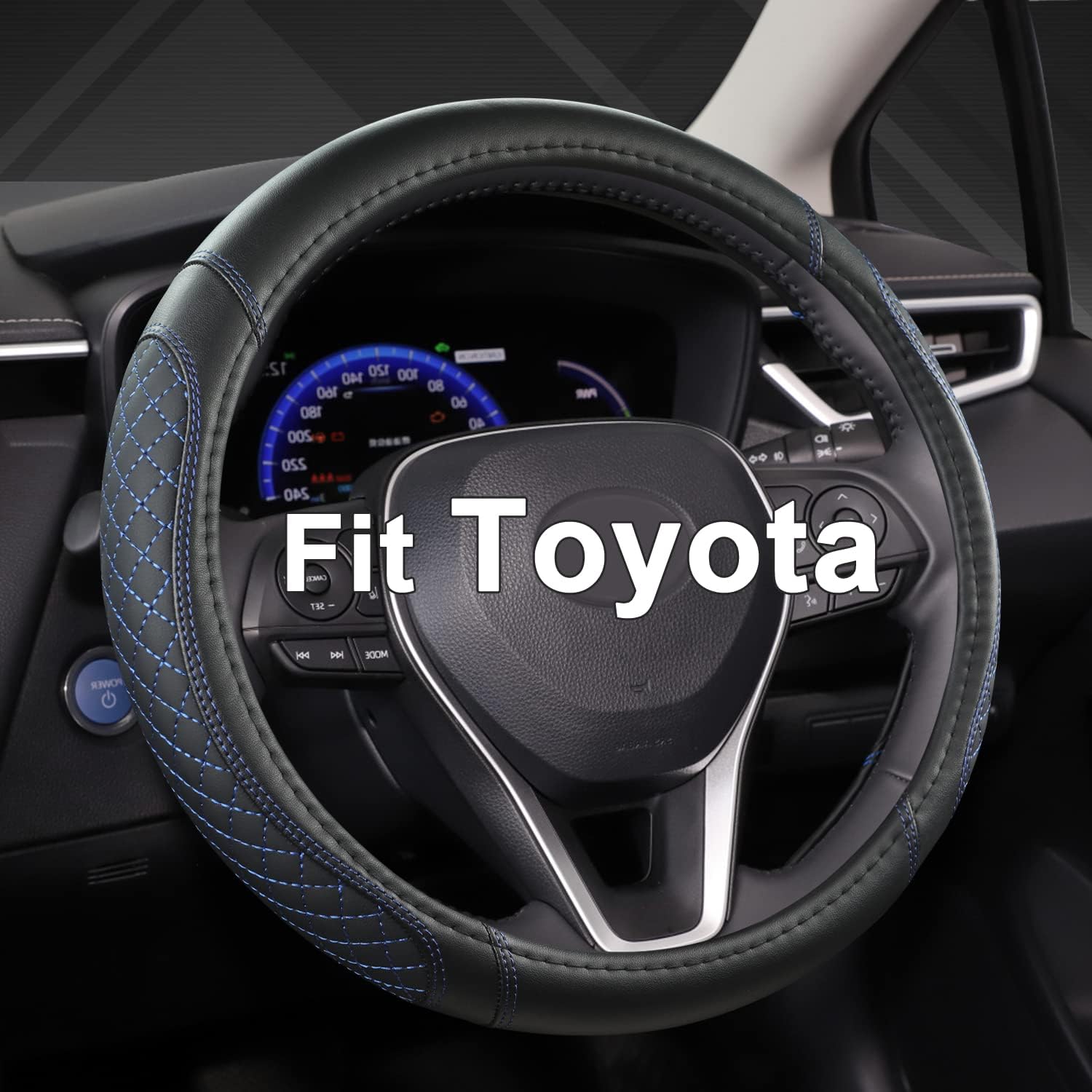
This custom-fit steering wheel cover is designed for select Toyota models and sized for standard steering wheels to help improve grip and comfort while driving. Made with soft microfiber leather and a non-slip rubber inner ring, it adds control, protects your wheel, and brings a stylish diamond-quilted look to your car interior. Installation is simple and tool-free, making it an easy upgrade for everyday driving.

This oil filter housing cap assembly is designed as a direct replacement for a wide range of Toyota and Lexus vehicles, helping restore a secure seal for proper oil filtration. It is made for easy installation and tested for compatibility with multiple part numbers and model years. The package includes the cap, plug, and gasket for a complete replacement solution.
Installation Priorities Before You Buy
- Confirm axle model: do not buy by vehicle name alone; verify axle, spline count, gear ratio, and carrier break.
- Match the locker to tire size and torque: larger tires and hard throttle increase axle stress.
- Plan for supporting parts: oil, seals, bearings, shims, wiring, compressor, switches, and differential cover clearance may matter.
- Check warranty terms: some products have strict installation and fluid requirements.
- Recheck after break-in: inspect for leaks, loose wiring, air-line rubbing, abnormal noise, and metal contamination in the oil.
Common Mistakes, Troubleshooting, and Alternatives
The biggest mistake is leaving the rear locker engaged after the obstacle is over. The second biggest is waiting until the vehicle is already stuck and the tires are spinning aggressively. A locker works best with planning, low speed, and smooth inputs.
Common Mistakes
- Using a rear diff-lock on dry pavement.
- Turning sharply with the locker engaged on high-grip ground.
- Applying too much throttle and shocking the axle.
- Forgetting to unlock before speed increases.
- Assuming a rear locker replaces tire pressure, tire choice, line choice, or recovery gear.
- Installing a locker without confirming axle compatibility.
Troubleshooting a Rear Diff-Lock
- Locker will not engage: check switch position, fuse, wiring, actuator, compressor, air pressure, or vehicle speed/range requirements.
- Indicator keeps flashing: drive slowly, ease off throttle, and gently turn the steering wheel to help the locking teeth align or release.
- Locker will not disengage: remove drivetrain bind by rolling slowly on a loose surface and steering gently.
- Air locker leaks: inspect the air line, fittings, solenoid, seal housing, and compressor cycle frequency.
- New noise after installation: stop using the vehicle hard until backlash, bearing preload, gear oil, and fastener torque are checked.
- Automatic locker clunks: some clunking can be normal, but sudden harsh noise or vibration should be inspected.
Safer Alternatives for Some Drivers
If your vehicle is mainly a daily driver, a limited-slip differential or modern traction control may be a better fit than a full locker. These systems are smoother during cornering and less likely to surprise you on wet pavement. If you only tackle mild trails, better tires, lower tire pressure, careful throttle control, and proper recovery gear may give you more practical benefit than a locker alone.
Frequently Asked Questions
When should I lock my rear differential?
Lock your rear differential at low speed when one rear wheel is slipping, unloaded, or lifting and you need straight-line traction. Good examples include mud, rocks, ruts, snow, loose climbs, and slow technical trails. Unlock it once the vehicle is moving again or when you need sharper steering.
What are the benefits of a rear diff-lock?
A rear diff-lock improves off-road traction by keeping both rear wheels driven together. It can reduce one-wheel spin, help maintain momentum, improve climbing ability, and make the vehicle more capable when traction is uneven from side to side.
Is a locking rear differential worth it?
Yes, a locking rear differential is worth it if you regularly drive difficult off-road terrain where one wheel loses traction. It may not be worth the cost or handling tradeoff if your vehicle stays mostly on pavement or only sees easy gravel roads.
Can I drive on the road with the rear diff-lock on?
You should not drive on dry pavement with a selectable rear diff-lock engaged. The rear tires need to rotate at different speeds in turns, and locking them together can cause tire scrub, drivetrain stress, poor steering, and loss of control.
Is a rear locker better than traction control?
A rear locker is usually better for severe off-road traction because it mechanically locks the axle. Traction control is smoother for daily driving and mild trails because it uses the brakes and sensors to manage wheelspin without fully locking the axle.
Should I lock the front or rear differential first?
In most situations, lock the rear differential first. A rear locker adds traction with less steering penalty than a front locker. A front locker can make steering much heavier and is usually saved for slower, more technical obstacles.
Conclusion
A rear diff-lock is one of the most effective traction upgrades for a 4×4, but it works best when used selectively. Lock it for low-speed off-road situations where one rear wheel is spinning or lifting and the other still has grip. Unlock it for pavement, tight turns, side slopes, and faster driving where steering control matters most.
If you drive a mix of road and trail, a selectable locker usually offers the best balance. If you drive mostly technical trails or want a lower-cost traction upgrade, an automatic or lunchbox locker may make sense. Whatever you choose, install it correctly, learn how it changes handling, and use it before wheelspin turns a simple obstacle into a recovery job.
Sources
- ARB Air Locker — selectable locker operation, equal drive to both wheels on an axle, and air-locker design details.
- Eaton ELocker4 — electronic selectable locker operation and open-to-locked functionality.
- Eaton Detroit Locker FAQ — automatic locker behavior, street-use notes, and fully locked torque considerations.
- Toyota Owners: Rear Differential Lock System — factory rear diff-lock operation and unlocking guidance.
- Auburn Gear FAQs — limited-slip differential limitations and locker-vs-LSD context.
- Yukon Gear & Axle Install Manuals — differential installation resources and setup complexity.