Tire inflator speed hinges on several critical factors. A higher CFM (Cubic Feet per Minute) rating leads to quicker inflation, making larger inflators more efficient. Voltage also plays a role; 110V AC models inflate faster than 12V DC alternatives. Additionally, the hose length and diameter affect airflow resistance—the shorter and thicker, the better. Finally, excessive heat can degrade performance and accuracy. Understanding these elements can enhance your inflator’s efficiency and effectiveness for peak tire maintenance.
What Is CFM and Why It Matters for Tire Inflators
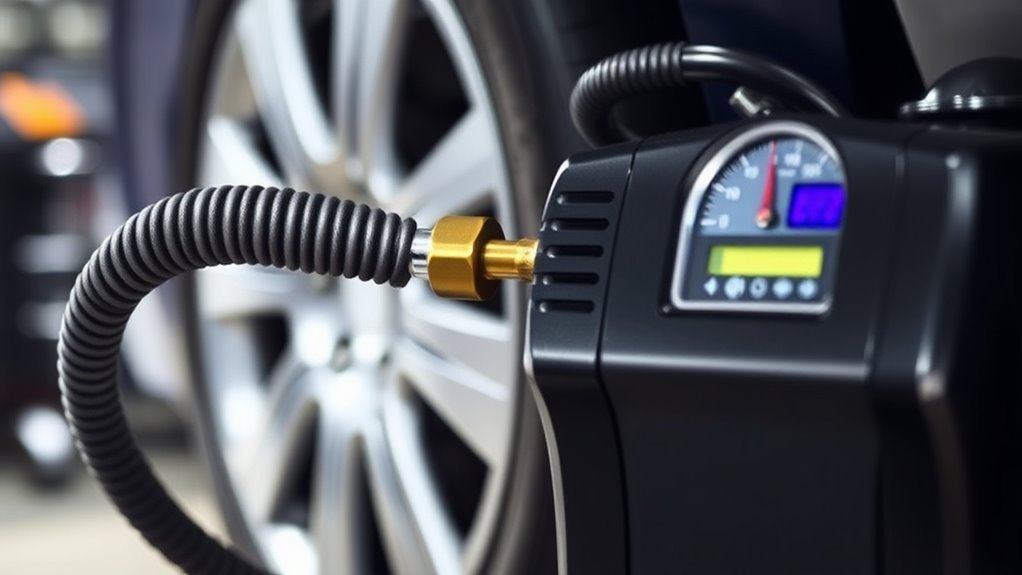
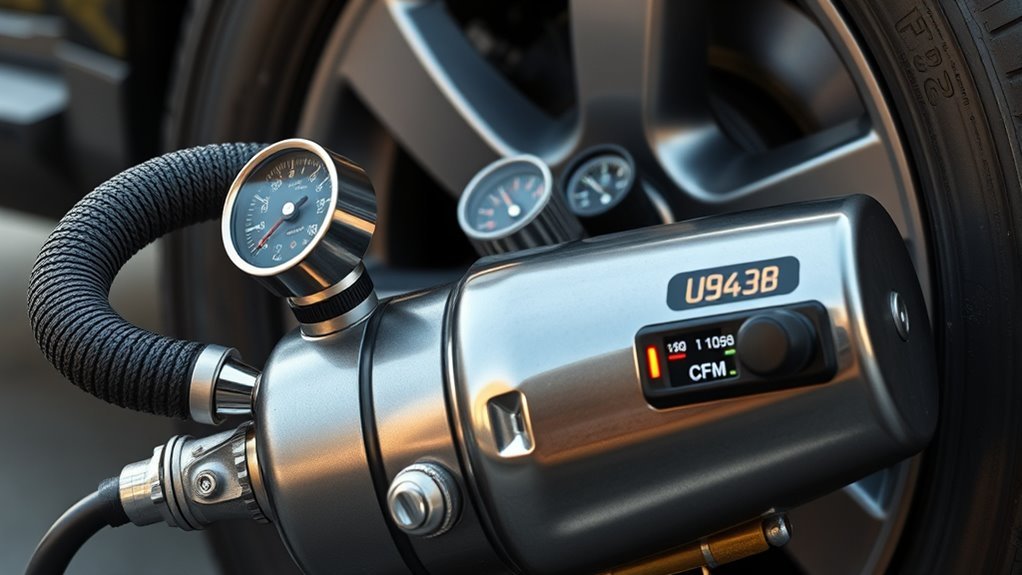
CFM, or cubic feet per minute, is an essential metric that measures the volume of air a tire inflator can deliver, directly impacting how quickly and efficiently you can inflate your tires. A higher CFM rating indicates superior inflation speed, allowing larger inflators, like those rated at 3 CFM, to complete tire inflation considerably faster than smaller models, such as 1 CFM. When dealing with larger tires requiring more air volume, choosing an inflator with a higher CFM is important for efficient inflation within a reasonable timeframe. Additionally, if you’re inflating to higher pressures, low CFM inflators struggle to meet required air volume quickly. Understanding CFM helps you select the right tool for effective tire maintenance.
How Voltage Influences Tire Inflator Speed
When selecting a tire inflator, voltage plays a significant role in determining how quickly and effectively your tires get inflated. Higher voltage models, like 110V AC, typically inflate tires faster than lower voltage options, such as 12V DC.
| Voltage Type | Average Inflation Time (minutes) |
|---|---|
| 110V AC | < 5 |
| 12V DC | 8-10 |
| Battery (low voltage) | 10-15 |
The efficiency of the motor, influenced by voltage, affects the cubic feet per minute (CFM) rating, enabling quicker air movement. Consistent voltage from your power source guarantees ideal motor performance, reducing inflation time and enhancing the overall effectiveness of tire inflators.
The Role of Hose Length and Diameter in Inflation Speed
While many factors influence tire inflator speed, hose length and diameter greatly impact the efficiency of air delivery. Longer hoses increase air flow resistance, slowing inflation speed considerably. For instance, a 1-meter long, 1/4-inch diameter hose inflates tires much slower than a 0.5-meter long, 3/8-inch diameter hose, even if both are functioning at the same capacity. Thinner hoses create more resistance, emphasizing the importance of ideal hose design. To minimize resistance and enhance inflation speed, reducing hose length and increasing diameter is essential. By focusing on these parameters, you can achieve faster tire inflation times, facilitating a more efficient and liberating experience during tire maintenance.
Why Heat Matters When Inflating Tires
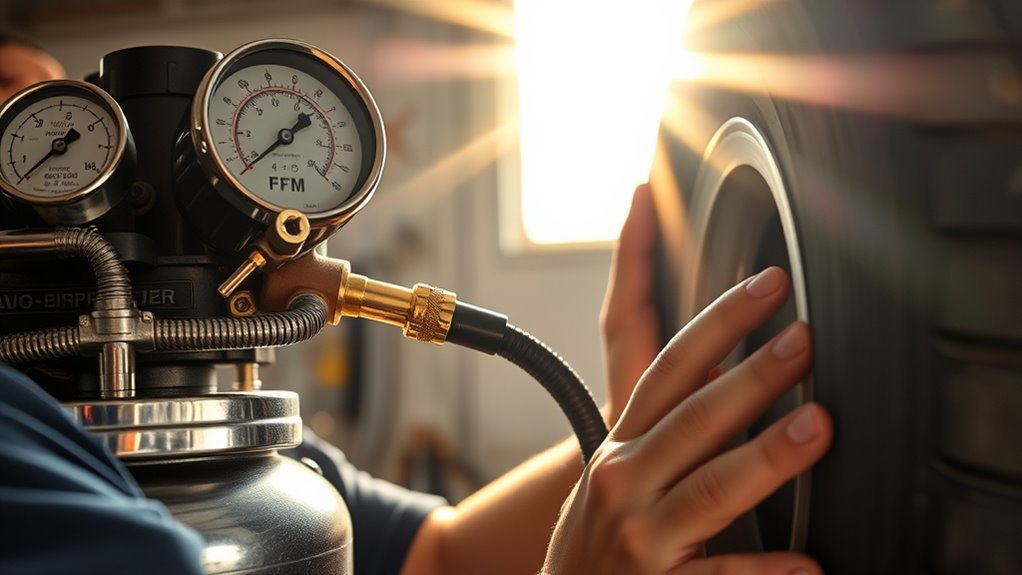
When inflating tires, heat generation plays a critical role in both inflator efficiency and tire pressure accuracy. Excessive heat can reduce air volume output and lead to over-inflation due to expanding air within the tire. To maintain peak performance, you must monitor the inflator’s temperature and allow for cooling periods to prevent damage to internal components.
Heat Generation During Inflation
Heat generation during tire inflation is a critical factor that can greatly impact tire performance and safety. When you use tire inflators, air compression generates heat, which can cause increased tire pressure if not monitored. Here are key considerations:
- Material Integrity: Excessive heat degrades tire materials, leading to premature wear.
- CFM Ratings: Higher CFM ratings may result in faster air compression, producing more heat and requiring vigilant pressure monitoring.
- Cool Down Period: Allow your inflator to cool after prolonged use to prevent overheating and guarantee accurate pressure readings.
Regular pressure checks during inflation are essential. If you ignore heat generation, it could lead to inflated tires heating up quickly, compromising their safety and performance.
Effects of Overheating Components
Excessive heat generated during tire inflation can greatly affect the performance of inflators and the inflation process itself. Overheating can reduce efficiency, causing the motor to work harder, which ultimately slows down air output and inflation speed. Continuous operation without sufficient cooling may lead to thermal shutdown, prolonging your inflation process. High temperatures can also degrade internal components like seals and hoses, resulting in air leaks that further hinder performance. Inflators with higher CFM ratings are particularly susceptible to overheating, making it essential to monitor their duty cycle. To maintain peak performance, guarantee proper ventilation and design in your tire inflator, allowing for sustained operation without compromising inflation speed or efficiency.
Manual vs. Automatic Inflators: Speed Showdown?
How do manual and automatic tire inflators stack up regarding speed? When it comes to inflation times, automatic inflators clearly outperform manual inflators, making them the better choice for efficiency. Here are three critical points to evaluate:
- Inflation Time: Manual inflators typically take 10-20 minutes, while automatic inflators can achieve the desired pressure in just 3-7 minutes.
- CFM Ratings: Higher CFM in automatic inflators allows for quicker air movement compared to manual options.
- Pressure Gauges: Automatic models often feature digital pressure gauges and automatic shut-off for accurate, efficient operation, minimizing the risk of over-inflation.
Essential Features for Quick Tire Inflation
To achieve quick tire inflation, you need to contemplate several essential features. The power source greatly influences how fast your inflator can work, while the compressor’s capacity determines the airflow rate. Additionally, an efficient hose design—shorter and wider—can drastically reduce inflation time by minimizing air flow resistance.
Power Source Impact
The power source of a tire inflator greatly influences its inflation speed and efficiency. Understanding the differences between inflator types helps you make informed choices for quick tire inflation:
- AC-powered inflators: Boasting high-wattage motors, they can inflate a standard car tire from 0 to 35 psi in under 5 minutes, offering the fastest option.
- DC-powered inflators: Typically found in vehicles, they require about 8-10 minutes for the same inflation, due to lower power output.
- Battery-operated inflators: These take 10-15 minutes, with speed dependent on battery capacity and charge level.
Choosing the right power source affects both the efficiency and speed of your tire inflation process, making it essential for those who value promptness.
Compressor Capacity Importance
Compressor capacity plays a crucial role in determining how quickly you can inflate your tires. Measured in CFM (cubic feet per minute), a higher CFM rating translates to faster air movement and efficient inflation. For instance, a compressor with a capacity of 3 CFM will inflate tires considerably quicker than one with only 1 CFM. This is especially critical for larger tires found on trucks or SUVs, which require more air volume. A well-designed compressor guarantees consistent airflow, minimizing the time to reach the desired tire pressure. As a result, opting for an inflator with higher CFM ratings is essential for anyone prioritizing timely tire maintenance.
| CFM Rating | Inflation Time | Tire Type |
|---|---|---|
| 1 CFM | Longer | Standard |
| 3 CFM | Faster | Large |
| 5+ CFM | Quickest | SUV/Truck |
Hose Design Efficiency
When considering tire inflation speed, hose design plays an essential role in optimizing performance. To achieve faster tire inflation, focus on these key aspects of hose design efficiency:
- Length: Shorter hoses minimize airflow resistance, enhancing inflation speed.
- Diameter: Wider hoses allow for greater air volume, reducing strain on the tire inflator.
- Streamlining: Opt for streamlined hoses that promote smooth airflow and reduce turbulence.
How to Optimize Your Tire Inflator for Maximum Efficiency
To achieve maximum efficiency with your tire inflator, you should focus on several key factors that directly impact inflation speed and effectiveness. Start by selecting an inflator with a higher CFM rating, as it enables faster inflation. Whenever possible, use an AC power source for quicker results—typically under 5 minutes—compared to DC models. Shorter, wider hoses reduce airflow resistance, enhancing performance. Confirm a tight seal with optimized nozzle designs to minimize air leakage. Utilize a pressure gauge for accurate readings and consider inflators with an automatic shut-off feature to prevent over-inflation. Finally, regularly maintain the inflator’s components, including the motor and hoses, to avoid overheating and guarantee consistent, reliable operation during use.
Common Mistakes That Slow Down Tire Inflation
Many people unknowingly make common mistakes that can greatly slow down tire inflation, impeding both efficiency and effectiveness. To guarantee a quicker inflation process, avoid these pitfalls:
- Using manual inflators: These can take 10 to 20 minutes to inflate a tire, considerably longer than powered options.
- Choosing low CFM models: Inflators with lower CFM ratings move air slower, prolonging the inflation time compared to higher CFM options.
- Improper hose selection: Longer and thinner hoses create air flow resistance, while shorter, wider hoses enhance speed.
Additionally, verify your cordless inflators are fully charged and check for air leakage around the valve to maintain ideal pressure levels. These adjustments can drastically improve your tire inflation experience.
Why Regular Maintenance Keeps Your Tire Inflator Efficient
Avoiding common mistakes during tire inflation is just the first step; regular maintenance of your tire inflator plays an essential role in ensuring its efficiency. By checking for air leaks and cleaning the nozzle, you enhance airflow and prevent unnecessary motor strain. A clogged filter restricts airflow, slowing down inflation speed. Inspecting the power cord and connections can help avoid electrical issues that reduce voltage. Monitor the inflator’s temperature to prevent overheating, which can lead to decreased performance. Regular checks of the hose for kinks or blockages directly impact air flow efficiency.
| Maintenance Task | Impact on Performance | Frequency |
|---|---|---|
| Check for air leaks | Enhances airflow | Monthly |
| Clean the nozzle | Prevents strain | Monthly |
| Inspect power cord | Prevents electrical issues | Monthly |
| Monitor temperature | Maintains efficiency | During use |
| Check hose conditions | Improves inflation speed | Monthly |
Frequently Asked Questions
Why Is My Tire PSI Going Down so Fast?
Your tire PSI’s dropping quickly due to possible tire leakage causes like valve stem issues, temperature effects, or aging. Check for puncture repairs, rim damage, and bead seating to maintain ideal pressure and performance.
Which Is Better, 150 PSI or 300 PSI?
When it comes to tire inflators, it’s clear as day—300 PSI’s benefits shine in inflation speed and versatility. Consider your usage scenarios, safety concerns, and maintenance tips to choose the right compressor type for you.
What Is the 5 PSI Rule?
The 5 PSI rule recommends inflating your tires to 5 PSI above the recommended pressure, accounting for temperature effects and inflation rate. Regular maintenance reduces air leaks, ensuring ideal tire performance and safety.
What Makes a Good Tire Inflator?
A good tire inflator combines essential features like efficient air compressor types, diverse power sources, portability options, low noise levels, and user reviews highlighting inflation speed. Prioritize these aspects for ideal performance and user satisfaction.
Conclusion
In summary, if you think your tire inflator’s speed is just a matter of luck, think again! CFM, voltage, hose specs, and even heat play vital roles in how quickly you can get back on the road. So, unless you enjoy the thrill of watching paint dry, take a moment to optimize your inflator. After all, no one wants to be that person stuck on the side of the road, contemplating life while waiting for their tires to inflate!