You’ll need to match your Tundra’s bolt pattern, hub bore, and offset to avoid fitment issues: 1999–2006 and 2022–2026 use 6×139.7 mm, while 2007–2021 use 5×150 mm. Count lugs, measure PCD across opposite holes, and check hub bore (often 110.1 mm older, 95.2 mm newer) and offset/backspacing to prevent rubbing and vibration. Use hub‑centric rings and 60° conical lug nuts for aftermarket wheels, and keep going to learn which wheels and fixes fit each generation.
Tundra Bolt Pattern by Year: 5×150 Vs 6×139.7
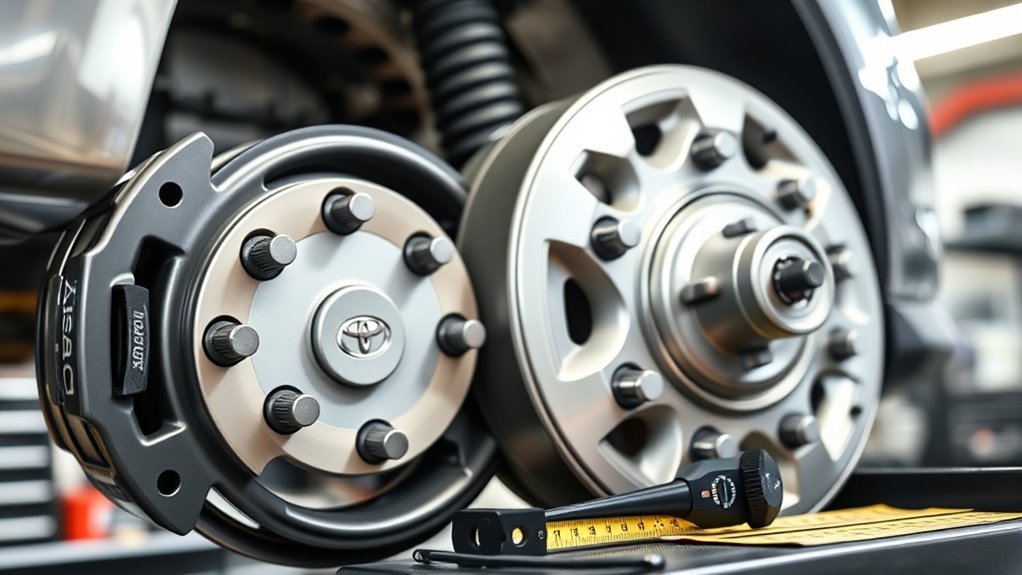
Wheel fitment on the Tundra changed by generation, so you’ll want to confirm the bolt pattern before buying wheels: You’ll find two primary standards. First‑generation Tundras (1999–2006) use a 6×139.7 mm pattern. Second‑generation models (2007–2021) switch to 5×150 mm exclusively. The third generation (2022–2026) returns to 6×139.7 mm. That timeline directly affects Tundra wheel compatibility and the Aftermarket wheel options you can pursue. When you shop, match the year to its pattern to avoid forced adapters or returns. The 5×150 era narrows choices to wheels made for that spacing, while 6×139.7 opens access to a broader range, including many light‑truck and off‑road designs. You’ll gain freedom by knowing this: pick wheels that align with your Tundra’s generation, and you’ll keep upgrades straightforward, safe, and reversible—essential when you’re aiming to liberate your truck’s stance and capability without compromise.
Measure Your Truck: Bolt Pattern, Hub Bore, and Wheel Offset (Step‑by‑Step)
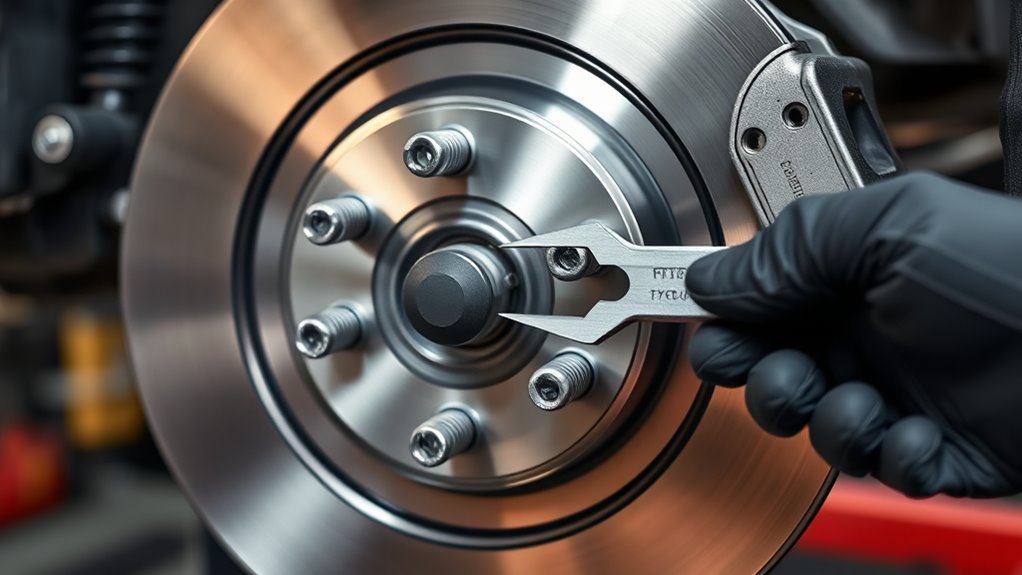
Now that you know which years use 5×150 and which use 6×139.7, you’ll want to measure your truck to confirm bolt pattern, hub bore, and offset before buying wheels. Start by counting lugs: five indicates 5×150 (2007–2021), six means 6×139.7 (2022–2026). Measure PCD by recording the diameter across the center of opposite lug holes; that gives you the correct pitch circle diameter.
Next, measure hub bore: remove a wheel or center cap and use calipers to record the hole diameter—older Tundras are typically 110.1 mm, newer ones 95.2 mm. For offset, measure the wheel’s centerline and mounting face distance; positive offset moves the wheel inward, negative moves it outward. Accurate bolt pattern, hub bore, and offset prevent rubbing, preserve wheel alignment, and keep handling stable so you can drive freely. Check tire pressure and alignment after installation to finish the safe, liberated fitment process.
Which Toyota and Other Truck Wheels Will Fit Each Tundra Generation?
Start by matching bolt patterns: if your Tundra is a 1999–2006 or 2022–2026 model (6×139.7), you can consider wheels from those two generations and many trucks that share 6×139.7—like older Ford F-150s and Chevy Silverados—while 2007–2021 Tundras (5×150) will generally only accept wheels made for 5×150 or aftermarket wheels drilled for that PCD; always verify hub bore, offset, and backspacing before fitting to prevent clearance, steering, or load issues.
With that foundation, you’ll find wheel compatibility splits cleanly: 1st and 3rd gen interchange opens many truck models and aftermarket options, enabling both aesthetic upgrades and performance enhancements. The 2nd gen’s 5×150 limits direct swaps to its generation or specialty aftermarket wheels produced for 5×150. When choosing wheels, prioritize design considerations—load rating, center bore, and structural fit—so your aesthetic upgrades don’t compromise safety or capability. Use aftermarket options thoughtfully to expand choices while preserving performance and liberation through intentional, informed customization.
Common Fitment Problems (Offset, Backspacing, Hub‑Centricity, Lug Nuts) and Fixes
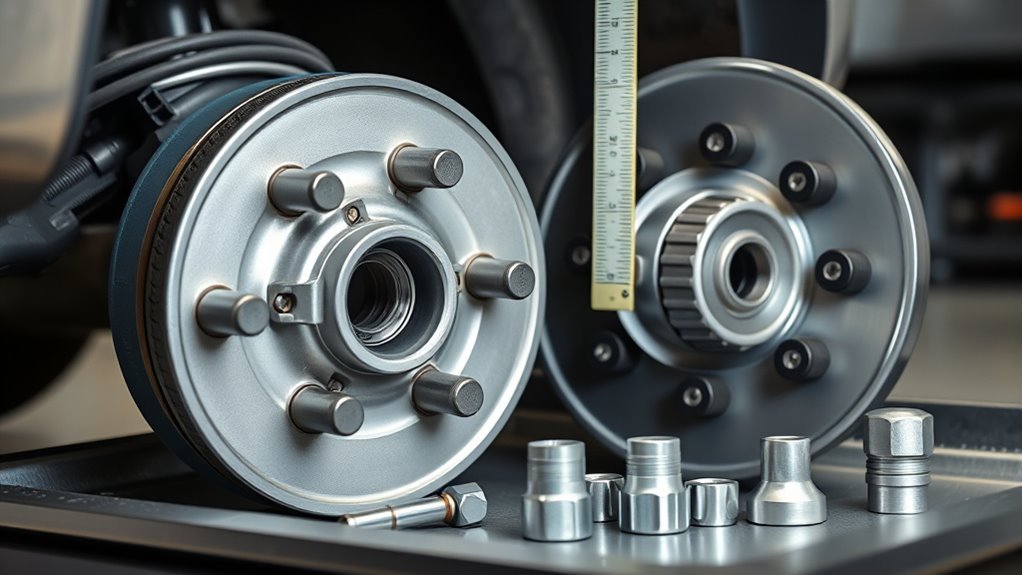
Because fitment issues can create vibration, rubbing, or unsafe load paths, you should check offset, backspacing, hub‑centricity, and lug seat type before buying wheels for your Tundra. You’ll prevent common problems by understanding how offset adjustments move the tire in or out, and how backspacing issues can cause inner fender or caliper contact. Use hub centric solutions—rings—to center aftermarket wheels and eliminate vibration. Swap flat‑seat stock lug nuts for 60° conical seat nuts to guarantee lug nut compatibility.
| Problem | Cause | Fix |
|---|---|---|
| Vibration | Wheel not centered | Hub‑centric rings |
| Rubbing | Excessive backspacing | Choose lower backspacing or correct offset |
| Brake clearance | Wrong offset | Offset adjustments or wheel change |
| Loose fit | Wrong lug seat | 60° conical lug nuts |
| Wheel poke | Negative offset | Move to more positive offset |
Act deliberately: measure, match specs, and insist on parts that restore safe, liberated control of your Tundra.
Buying Checklist: Spacers, Adapters, Lug Hardware, and Tire Sizes to Avoid Rubbing
One clear checklist will save you costly mistakes when buying spacers, adapters, lug hardware, and tires for a Tundra: confirm the spacer/adapters match the 6×139.7 bolt pattern and 95.2 mm hub bore, swap to 60° conical lug nuts for any aftermarket wheels, and pick wheel offset/backspacing and tire diameter based on your suspension (stock fits up to 33″ tires; 2–3″ of lift lets you run 33–35″). Use hub-centric spacers when possible; avoid universal adapters that alter centering. Choose spacer types rated for load and use OEM-style mating faces. Replace flat-seat stock lug nuts with 60° conical lug nut styles to secure aftermarket wheels. Verify wheel offset (+47.5 to +60 recommended) and backspacing (4.5–5.5″) to minimize rub against fenders and control arms. Finally, match tire diameter to lift and wheel width; oversized tires without proper lift or offset cause rubbing. Inspect thread pitch and torque specs, and install with a calibrated torque wrench for safe, liberated driving.
Confirm 6×139.7/95.2 hub fit, use hub-centric spacers and 60° conical lugs, match offset/backspacing and tire size to lift.
- Confirm bolt pattern/hub bore
- Choose spacer types and lug nut styles
- Verify offset/backspacing and tire size
Frequently Asked Questions
When Did Tundra Change Bolt Pattern?
You changed bolt pattern in 2007 from 6×139.7 to 5×150, then again in 2022 back to 6×139.7; study bolt pattern history and Tundra specifications so you’ll confidently choose compatible wheels.
Conclusion
Think of your Tundra like a puzzle: bolts, bore, and offset are the edge pieces that must lock perfectly. I once swapped wheels after measuring and avoided rubbing by 2 mm—small, but critical. With correct bolt pattern, hub‑centric rings, proper lug nuts, and matching offset/backspacing, your ride stays safe and smooth. Double‑check sizes, use quality spacers/adapters if needed, and don’t guess—measure, compare, and fit with precision each time.