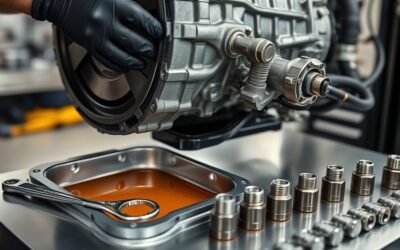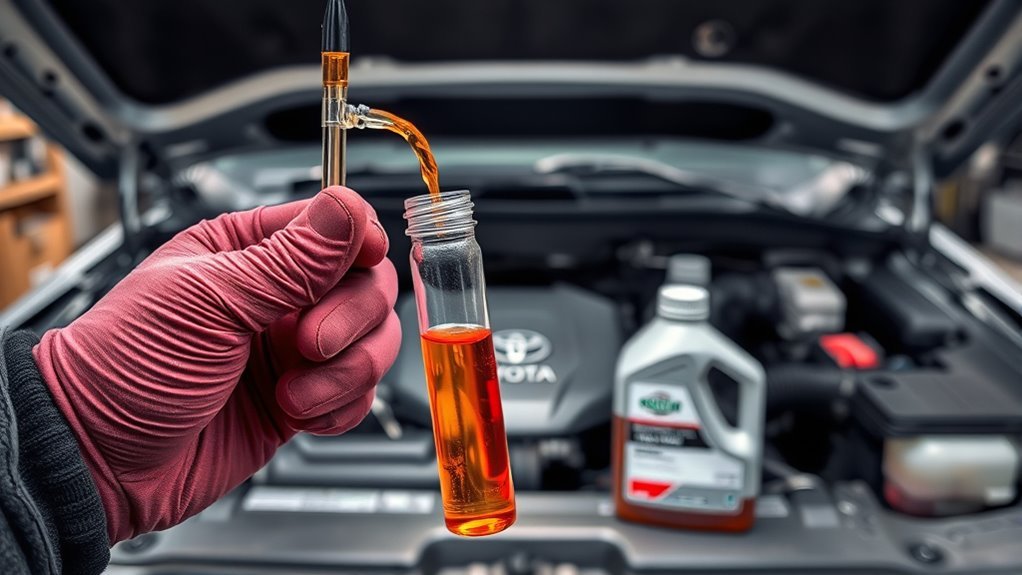
Your Tundra needs the correct ATF: older 2000–2006 models use Toyota T‑IV, while newer trucks require Toyota ATF WS (full‑synthetic). Using the wrong fluid will cause noisy shifts, clutch wear, overheating and can void warranties. Stick to Toyota Genuine ATF WS or Aisin/Idemitsu/Eneos equivalents that meet WS specs, avoid generic fluids, and perform scheduled drain‑and‑fills. Follow proper warm‑up, selector cycling and fill‑plug procedures to get accurate levels — continue for step‑by‑step service and troubleshooting.
What Transmission Fluid Does a Toyota Tundra Need?
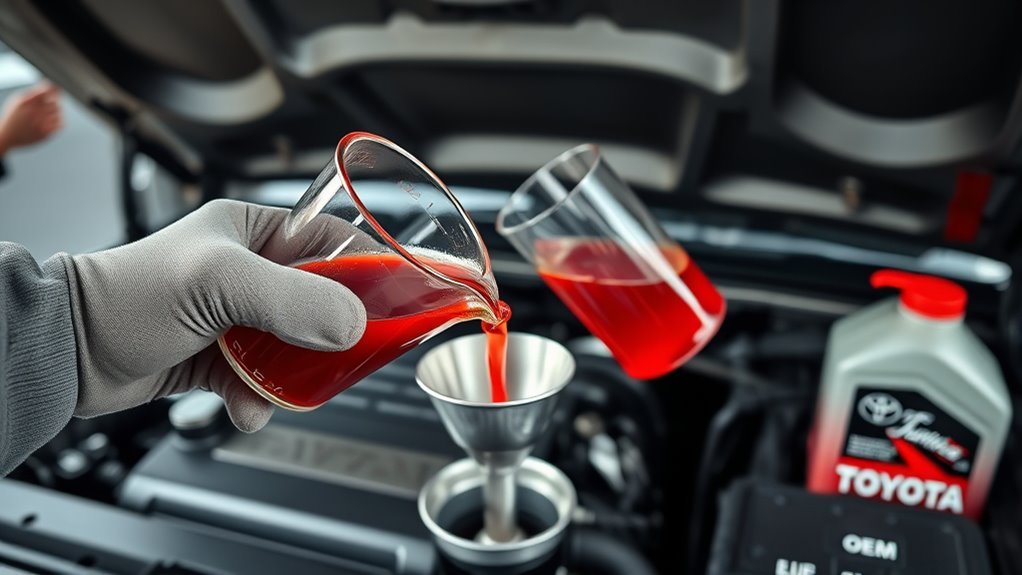
Which transmission fluid your Toyota Tundra needs depends on the model year and transmission type: older Tundras like the 2003 model call for Toyota T-IV, while later models with updated transmissions require Toyota WS (a full-synthetic, OEM-specified ATF); using generic ATF or the wrong spec can cause abnormal noise, damage, and warranty issues, so always confirm the correct spec in the owner’s manual or with a dealer and change the fluid at recommended intervals. You’ll choose fluid based on published fluid specifications and your transmission’s designation. If you own a 2003 Tundra, use T-IV to preserve friction characteristics and valve body function. If your Tundra has the newer transmission, use Toyota WS for compatibility and thermal stability. Don’t improvise with generic ATF: mismatched chemistry alters clutch engagement and hydraulic control. For liberation from breakdowns, follow scheduled transmission maintenance, verify part numbers, and document service. That discipline protects performance, reduces failure risk, and preserves your warranty rights.
Why ATF WS Matters for Your Tundra (Performance & Warranty)
Now that you know which ATF matches your Tundra, you should understand why Toyota specifies Genuine ATF WS: it’s a full-synthetic, OEM-formulated fluid that preserves intended friction characteristics, hydraulic control and thermal stability across operating conditions. You rely on that engineered balance to maintain predictable shift timing, minimize clutch wear, and sustain hydraulic modulation under load—critical for towing and heavy use.
Choosing the specified ATF WS directly supports transmission longevity by reducing abrasive wear and preventing thermal breakdown. OEM formulation guarantees fluid compatibility with seals, friction materials and valve bodies; mismatched chemistries can produce abnormal noise, vibration and accelerated component failure. You’ll also protect warranty coverage, since using non-specified fluids can invite disputes or denial of claims tied to transmission damage. Use ATF WS as Toyota recommends to preserve performance, reliability and your freedom to push the Tundra hard without compromising its engineered durability.
Compatible Aftermarket ATFs (Safe Alternatives & When to Use)
Although Toyota’s Genuine ATF WS is the benchmark, several aftermarket fluids meet WS specifications and provide safe alternatives for the Tundra when OEM product isn’t available. You can choose Valvoline MaxLife for strong fluid performance; its advanced additives help prevent leaks and sustain smooth shifting, offering aftermarket reliability without guessing. Aisin ATF WS aligns closely with Toyota OEM intent, so you get peace of mind and consistent performance when you want minimal risk. Idemitsu TLS-LV delivers quality compatibility and predictable thermal stability, a solid option if you prioritize transmission longevity. Eneos T-W gives you a cost-effective path to spec compliance while maintaining acceptable shift quality and wear protection. Don’t substitute generic, non‑specified fluids: they can cause abnormal noise, erratic shifts, and damage. Use these WS‑meeting aftermarket options when Genuine WS is unavailable or cost‑prohibitive, ensuring you maintain warranty‑sensitive standards and retain control over your vehicle’s drivability and long‑term health.
Check, Top‑Off, and Change Tundra ATF (Step‑By‑Step)
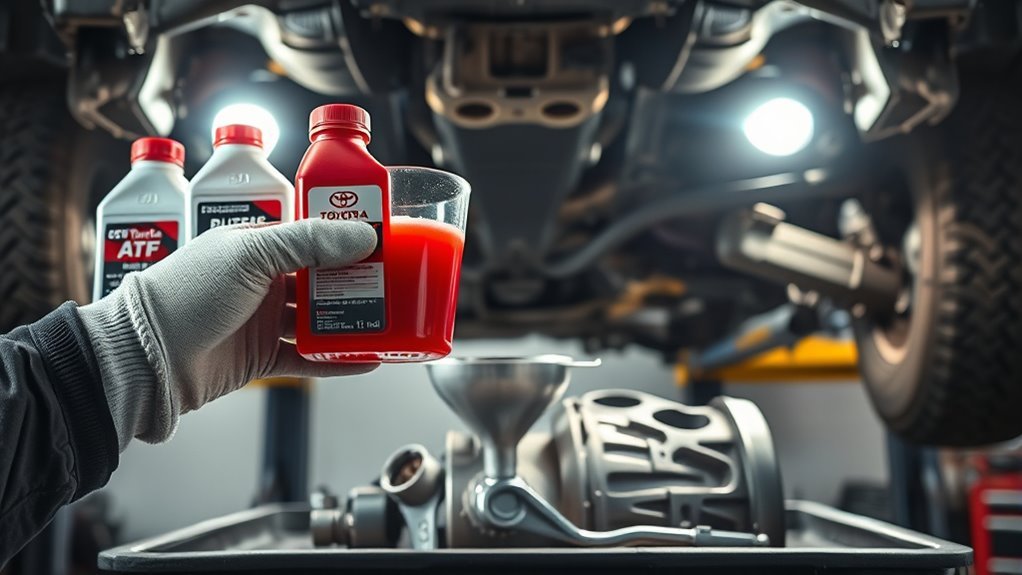
Start by warming up the truck and cycling the gear selector through all positions to bring the transmission to operating temperature and stabilize fluid level readings. To check level, use a 24 mm socket to access the fill plug marked “WS”; remove it and confirm fluid reaches the fill hole. For a top‑off, add Toyota Genuine ATF WS (or Aisin ATF WS equivalent) only — avoid cross‑contamination that causes noise and damage. Drain‑and‑fill capacity is about 4.5 qt; a full flush needs ~12 qt.
For a drain‑and‑fill: safely lift the vehicle, remove drain plug torqued to 15 ft‑lbs, drain, reinstall plug, and refill via the fill plug until level is correct. If removing the pan, follow a star pattern and torque pan bolts to 62 in‑lbs after hand‑snugging. Adhere to fluid maintenance schedules and service intervals — typically ~60,000 miles — to preserve performance and freedom from preventable failures.
Common ATF Problems and Troubleshooting for Tundra
A handful of recurring ATF issues cause most drivability complaints on the Tundra: overheating (often from using non‑OEM fluids), low or leaking fluid, contamination or degradation, and shuddering or slipping during engagement.
You should diagnose overheating issues first—check cooler lines, radiator capacity, and verify OEM Toyota WS fluid or approved equivalent. Non‑OEM fluids accelerate fluid degradation and raise operating temperature, producing abnormal noise and hard shifts. Inspect dipstick with the transmission at operating temperature to get an accurate level; low fluid after towing signals a leak or overload. Contamination shows as dark, burnt fluid and triggers slipping or delayed engagement; schedule a fluid and filter change every 30,000–60,000 miles based on duty cycle. If you experience shuddering, confirm fluid spec and rule out torque converter or mount faults; many shudders trace to improper ATF chemistry. Use targeted repairs: replace degraded fluid, repair leaks, flush cooler if needed. Maintain OEM specs to keep the transmission free and responsive.
Frequently Asked Questions
What Kind of Transmission Fluid Does a Toyota Tundra Take?
You should use Toyota T-IV automatic transmission fluid for a 2003 Tundra; during transmission maintenance, you’ll perform a fluid change with OEM T-IV to protect gears, guarantee longevity, and keep your driving freedom uncompromised.
What Type of Transmission Fluid for a Toyota Tundra?
Use Toyota Genuine ATF WS (Aisin ATF WS compatible); 2003 models require T-IV. You’ll follow transmission maintenance tips, schedule fluid change frequency around every 60,000 miles, and avoid generic ATFs to protect performance and freedom.
What Is the Difference Between Toyota ATF TC and FE?
You might worry switching harms performance, but ATF TC is higher-viscosity Transmission fluid for older conventional gearsets, while ATF FE is low-viscosity, friction‑modified for modern designs—so verify Fluid compatibility to avoid premature wear.
Conclusion
Now you know your Tundra needs Toyota ATF WS and why it matters for performance and warranty. You can choose compatible aftermarket fluids cautiously, and you’ve got clear steps to check, top off, or change the fluid. If you spot slipping, hard shifts, or leaks, troubleshoot promptly to avoid costly damage. So, are you going to let a preventable fluid issue sideline your truck when you could act now to keep it reliable?