The wrong spark plug material can cause rough starts, weak fuel economy, and misfires in your Tacoma. The right plug depends on your model year, engine code, and factory part number, not just the brand name on the box. This guide explains the main plug types, service intervals, gap checks, torque care, and buying tips so you can choose the right set with more confidence.
What’s in This Article
- Quick Answer: The Right Spark Plugs for Your Tacoma
- Spark Plug Types Used in Tacomas
- Which Plugs for Your Tacoma: Year, Engine Code, and OEM Part Numbers
- Plug Materials: Lifespan, Heat Range, and Real-World Performance
- Tacoma OEM Plugs: Denso vs NGK
- Should You Stick With OEM Plugs or Upgrade?
- Buying & DIY Spark Plug Tips
- Frequently Asked Questions
Quick Answer: The Right Spark Plugs for Your Tacoma
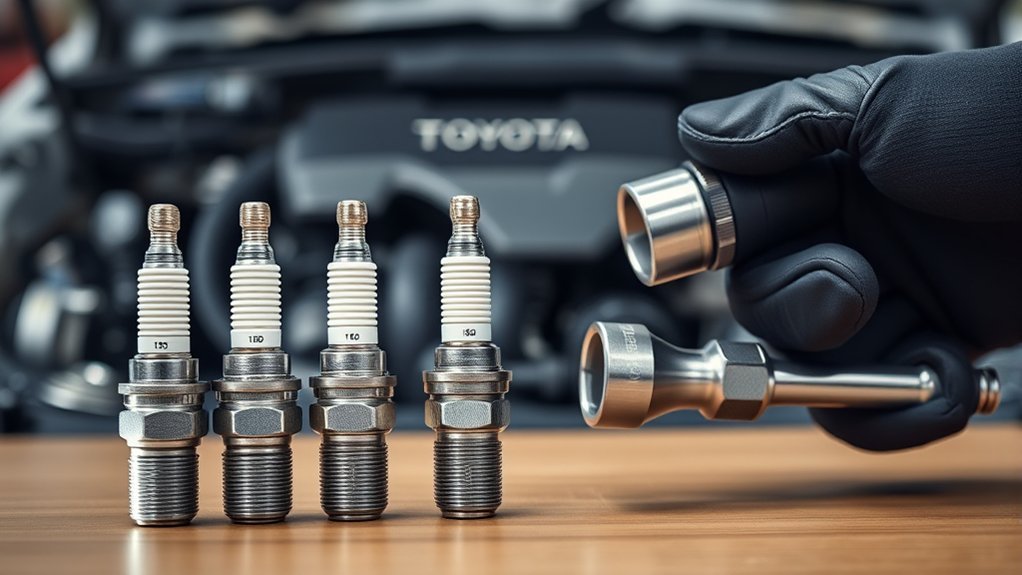
For most 2005-and-newer Toyota Tacoma models, you should use long-life iridium plugs that match the factory part number. Many older Tacoma engines used copper-core plugs, and some four-cylinder models used platinum plugs. Always match the plug to your engine code, check the factory gap, and use the correct torque. A wrong plug can cause poor idle, reduced power, or misfire codes.
Key Takeaways
- Match Tacoma spark plugs by model year, engine code, and OEM part number.
- Use iridium plugs for most 2005-and-newer Tacomas when factory specs call for them.
- Use copper or platinum only when your older engine requires that material.
- Check plug gap and torque before installation to protect performance and threads.
- Buy genuine Denso or NGK plugs from trusted sellers to reduce counterfeit risk.
One clear rule helps most owners: 2005-and-newer Tacomas usually need iridium plugs for long service life, while many pre-2005 models use copper-core plugs with a shorter service interval. You’ll choose iridium for longevity and stable ignition. You’ll choose copper only when older OEM fitment calls for it.
Use Denso or NGK plugs that match the factory specification. For example, many 2016 to 2023 3.5L V6 Tacoma models use Toyota/Denso part #90919-01263, also sold as FK20HBR8. Always confirm the number against your VIN or engine code before you buy.
Check the factory pre-gapped gap before installation. Incorrect spacing can hurt fuel economy and hide ignition faults. During spark plug maintenance, inspect the electrodes, ceramic, coil boots, and plug wells before you reinstall everything.
Spark Plug Types Used in Tacomas (Copper, Platinum, Iridium, Ruthenium)
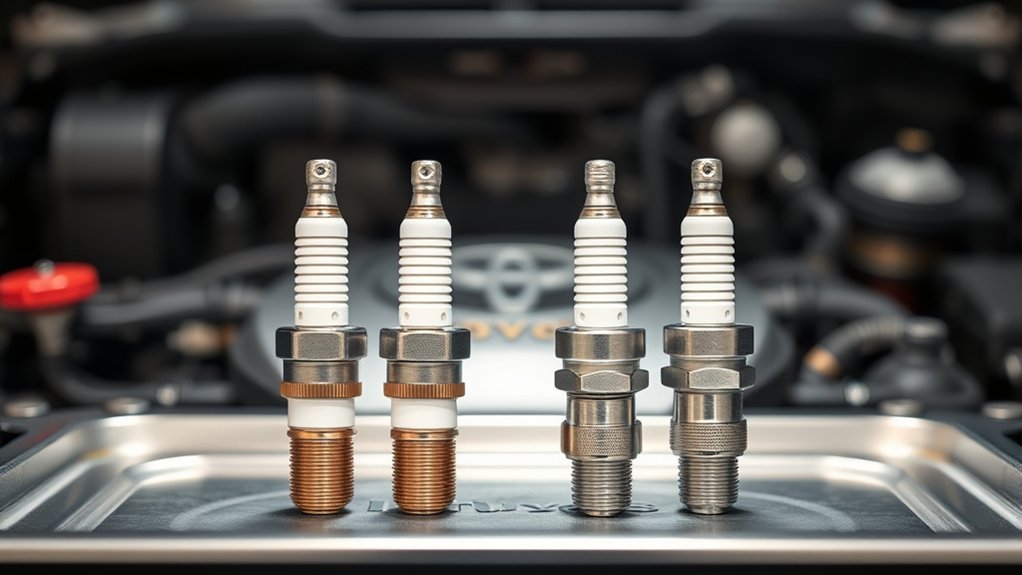
Four main electrode materials appear in Tacoma factory and aftermarket spark plugs: copper, platinum, iridium, and ruthenium. Each material gives you a different mix of cost, longevity, and ignition performance. Your best choice depends on the engine, not on the most expensive option.
- Copper: Works well in many older engines and costs less, but it usually needs more frequent replacement.
- Platinum: Lasts longer than copper and appears in some older four-cylinder applications.
- Iridium: Fits many newer Tacomas and offers long life, stable spark, and strong wear resistance.
- Ruthenium: Offers long life and strong ignition, but it is less common as a Tacoma factory-style choice.
Stick to one correct plug type for the full set. Mixing materials, gaps, or brands can create uneven ignition behavior and make troubleshooting harder.
Which Plugs for Your Tacoma: Year, Engine Code, and OEM Part Numbers
Check your Tacoma’s model year and engine code before you order plugs. This step helps you match the correct heat range, thread design, electrode style, and OEM part number. Don’t rely only on online fitment tools, because trim, engine, and production differences can affect the correct plug.
For many 2016 to 2023 Tacoma 3.5L V6 models, Toyota/Denso #90919-01263, also known as FK20HBR8, fits the factory iridium specification. Older pre-2005 trucks often use copper-core plugs, while some four-cylinder models use platinum plugs. Always confirm your exact fitment with a dealer catalog, owner’s manual, or trusted parts database.
[Products Worth Considering]

NGK Iridium IX spark plugs are designed to deliver a stable spark, reliable ignition, and long-lasting performance for compatible Toyota Camry 2.5L engines. The fine-wire iridium center electrode helps improve durability and efficient combustion, making these plugs a smart replacement choice for maintaining smooth engine operation. Sold in a convenient four-pack, they are built for consistent performance and dependable fitment.
This custom-fit floor mat and cargo liner set is designed for select Kia K5 and Hyundai Sonata models to help protect your interior from dirt, spills, snow, and everyday messes. Made with durable TPE and shaped with raised edges and precise channeling, it offers secure coverage, easy cleanup, and reliable all-weather performance. The set includes front, rear, and cargo protection for a cleaner, safer driving experience.

This ignition coil and spark plug kit is designed to help restore smooth starting, consistent ignition performance, and efficient combustion for compatible Toyota and Lexus V6 3.5L vehicles. It includes high-quality ignition coils with durable construction plus double iridium spark plugs for improved stability, longer service life, and better engine response. Built to meet or exceed OE performance, this set supports reliable operation and easy replacement for a complete tune-up.
Year And Engine Match
Start with your model year and engine code. A 3.5L V6 with the 2GR-FKS engine uses different plugs than an older 2.7L or 4.0L engine. That one check can prevent poor starts, misfires, and wasted money.
- Pre-2005 models: Many use copper-core plugs with shorter service intervals.
- Some 2000s four-cylinder models: Some use platinum plugs for better durability.
- Many 2005-and-newer models: Many use iridium plugs with longer service intervals.
- Brand consistency: Use a matched set from Denso, NGK, or the correct OEM equivalent.
OEM Part Number Guide
Use the OEM part number as your main guide. A correct part number helps you match heat range, reach, seat type, and gap. It also lowers the risk of buying a plug that threads in but performs poorly.
Some Tacoma applications can use different supplier numbers from Denso or NGK. You may also see older discussions about different plugs by bank on certain Toyota engines. Treat those details as fitment notes, not universal rules, and confirm the exact bank and engine before ordering.
Gap And Heat Range
Gap and heat range matter as much as material. A plug with the wrong heat range can foul, run too hot, or raise the risk of pre-ignition. A wrong gap can stress coils and reduce spark quality.
- Remove the old plug and inspect the electrode, insulator, and deposits.
- Measure the new plug gap with a feeler gauge before installation.
- Confirm the heat range matches the factory spec for your year and engine.
- Install the plug with the correct torque and avoid cross-threading.
Warning: Never force a spark plug into an aluminum cylinder head, because cross-threading can create an expensive repair.
Plug Materials: Lifespan, Heat Range, and Real-World Performance
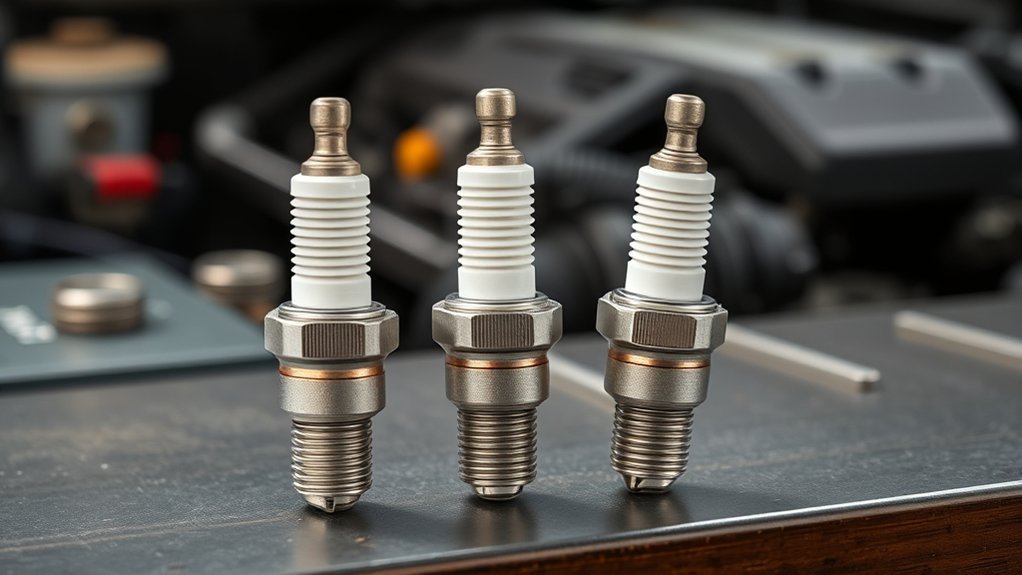
Spark plug material affects service interval, wear resistance, and spark stability. Copper plugs cost less and can work well in older engines, but they need more frequent replacement. Platinum plugs sit in the middle, with better wear life than copper.
Iridium plugs last longer and handle modern ignition demands well. That’s why many newer Tacoma engines use iridium plugs from the factory. Ruthenium plugs can also offer strong wear life, but they should still match the required heat range and dimensions.
Heat range compatibility remains critical. Stay within factory specs to avoid pre-ignition or fouling. For real-world driving, the correct OEM-style plug usually gives you the best mix of smooth idle, reliable starts, and low maintenance.
Tacoma OEM Plugs: Denso vs NGK – Fit, Gaps, and Counterfeit Warnings
When you choose OEM spark plugs for a Tacoma, Denso and NGK are the main names to check. Match the exact part number, thread reach, seat type, heat range, and gap before installation. Don’t install a plug just because it looks similar.
Use a matched set of correct Denso or NGK plugs, then verify fitment, gap, markings, and seller quality before installation.
- Visual check: Look for crisp lettering, clean threads, and the correct part code.
- Fit check: Confirm thread length, seat type, and plug reach match your engine.
- Gap check: Measure each plug with a proper gauge before installation.
- Source check: Buy from authorized dealers or trusted sellers to reduce counterfeit risk.
Counterfeit spark plugs can look close to real parts. Compare packaging, stamping, electrode shape, and seller reputation before you install them. If the price looks unusually low, treat the listing with caution.
Pro tip: Keep one old plug from each bank labeled by cylinder, because deposits can help you spot fuel, oil, or ignition issues.
[Products Worth Considering]

NGK Iridium Spark Plugs are designed to deliver reliable ignition performance across a wider heat range than ordinary plugs. They help resist carbon buildup and pre-ignition while the patented triple gasket sealing process reduces the chance of combustion gas leakage. Sold as a six-pack, they are a strong choice for routine maintenance and improved engine operation.

This 6 pack DENSO Standard Spark Plug is compatible with Toyota Tacoma 2004, 2003, 2002, 2001, 2000, 1999, 1998, 1997, 1996, 1995 3.4L V6

Should You Stick With OEM Plugs or Upgrade? A Decision Flow
If you drive your Tacoma daily under normal conditions, stick with OEM plugs or exact OEM equivalents. Factory-style Denso or NGK plugs already match the engine’s ignition system, heat range, and service interval. They also reduce the risk of rough idle after installation.
Consider an upgrade only when your use case requires it. Racing, forced induction, tuning changes, or nonstandard fuel may need a different heat range or plug design. In those cases, follow the tuner’s spec and confirm the plug with your engine setup.
For older Tacomas, copper plugs can still make sense when the engine calls for them. For newer Tacomas, iridium often gives you the best long-term value. Don’t chase a “performance” label unless the plug matches your engine’s real needs.
Buying & DIY: Pricing, Gap Check, Torque, Coil Care, and Rear-Plug Tips
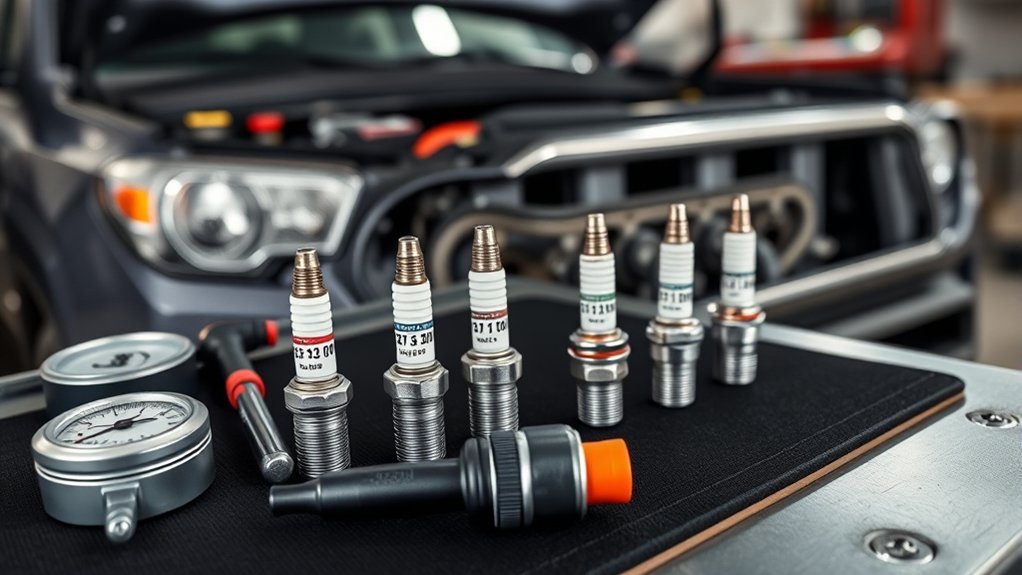
Spark plug prices vary by brand, material, and seller. Buy a matched set instead of mixing old and new plugs across the engine. A full set also helps you keep service records simple.
Always check the gap and use a calibrated torque wrench. Tacoma cylinder heads use aluminum, so overtightening can damage threads. Inspect ignition coils, boots, and plug wells while everything is apart.
Rear plugs on some V6 Tacoma engines can take more time because access is tight. Some jobs may require moving intake parts or other components. Plan extra time, and replace any disturbed gaskets when the repair process requires it.
[Products Worth Considering]


This 6 pack Champion Iridium Spark Plug is compatible with Toyota Tacoma 2020, 2019, 2018, 2017, 2016 3.5L V6

[Application1] Ignition Coil Pack Compatible with Toyota: 2003-2009 4Runner Limited/SR5/Sport 4.0L, 2007-2009 FJ Cruiser Base 4.0L, 2007 FJ Cruiser TRD Special Edition 4.0L, 2008 FJ Cruiser Trail Teams Special Edition 4.0L, 2005-2015 Tacoma Base/Pre Runner 4.0L, 2015 Tacoma TRD Pro 4.0L, 2005-2013 Tacoma X-Runner 4.0L, 2005-2010 Tundra Base/SR5 4.0L
Pricing And Availability
Individual Tacoma spark plugs often range from budget copper plugs to higher-cost iridium or ruthenium plugs. The total cost depends on cylinder count, plug material, and whether you buy OEM or aftermarket parts. Don’t use price alone as your deciding factor.
- Plan for tools, including a torque wrench, spark plug socket, extension, and gap gauge.
- Inspect coils during the swap to avoid doing the same labor twice.
- Expect tight access on some rear V6 plugs and plan extra time.
- Keep one spare plug and the correct tools if you drive far from repair shops.
Gap, Torque & Coils
Set the gap to the specification for your model and plug type. Many Tacoma plugs fall within a narrow factory gap range, but you should verify your exact spec before installation. Don’t pry hard on fine-wire iridium electrodes.
Use a torque wrench to tighten each plug to the manufacturer’s spec. If you don’t have the spec, check a factory service source before you install the plugs. Guessing can lead to loose plugs, damaged threads, or poor sealing.
Inspect the ignition coils during the same job. Cracked boots, oil contamination, and corrosion can cause misfires even when the plugs are new. Replace worn parts before they send you back under the hood.
How to Avoid Common Spark Plug Installation Mistakes
Most spark plug problems start with simple mistakes. You can avoid many of them by working on a cool engine, cleaning around each plug well, and starting each plug by hand. This helps prevent dirt entry and thread damage.
- Don’t install plugs with the wrong reach, seat type, or heat range.
- Don’t use anti-seize unless the plug maker or service information calls for it.
- Don’t overtighten plugs in an aluminum head.
- Don’t ignore coil boots, oil leaks, or cracked connectors.
Note: Many modern spark plugs come with special plating, so extra anti-seize can change torque readings.
Frequently Asked Questions
What Kind of Spark Plugs Do Toyotas Use?
Toyota commonly uses Denso or NGK spark plugs. Depending on the engine and model year, the plug may use copper, platinum, or iridium material. For a Tacoma, always match the plug to the factory part number and engine code.
How long do Tacoma spark plugs last?
Service life depends on the plug material and engine application. Copper plugs need more frequent replacement, while many factory iridium plugs can last much longer. Check your owner’s manual or service schedule for the correct interval.
Can wrong spark plugs cause a Tacoma misfire?
Yes, the wrong spark plugs can cause misfires, rough idle, hard starts, or weak acceleration. A wrong gap, heat range, reach, or seat type can all create problems. Bad coils or coil boots can cause the same symptoms, so inspect them too.
Should you replace coils with spark plugs?
You don’t need to replace good coils during every spark plug service. Inspect the boots, connectors, and coil bodies for cracks, oil, corrosion, or burn marks. Replace coils that show damage or trigger confirmed misfire codes.
Do you need to gap iridium spark plugs?
You should check the gap, even when the plug comes pre-gapped. Avoid rough adjustment on fine-wire iridium electrodes because they can bend or break. If the gap is far from spec, replace the plug or confirm the correct part number.
Conclusion
The best spark plug for your Tacoma is the one that matches the factory spec for your year and engine. Use the correct Denso, NGK, or OEM-equivalent plug, then verify the gap, heat range, and torque before installation. Inspect the coils while you’re there so a weak boot or connector doesn’t mimic a bad plug. Choose the right set once, install it with care, and your Tacoma will reward you with smoother starts and steadier performance.