You should service your Tundra’s transfer case fluid on a predictable schedule: every 75,000–100,000 miles for normal use, 30,000 miles for regular towing or off‑road duty, and as often as 15,000 miles for heavy loads. Inspect fluid condition by 25,000 miles and watch for leaks, grinding, or 4WD engagement issues. Use Toyota‑specified 75W fluid or equivalent, torque fill/drain plugs to 15 ft‑lb, and log each service—more specifics follow if you want them.
How Often to Change the Tundra Transfer Case Fluid?
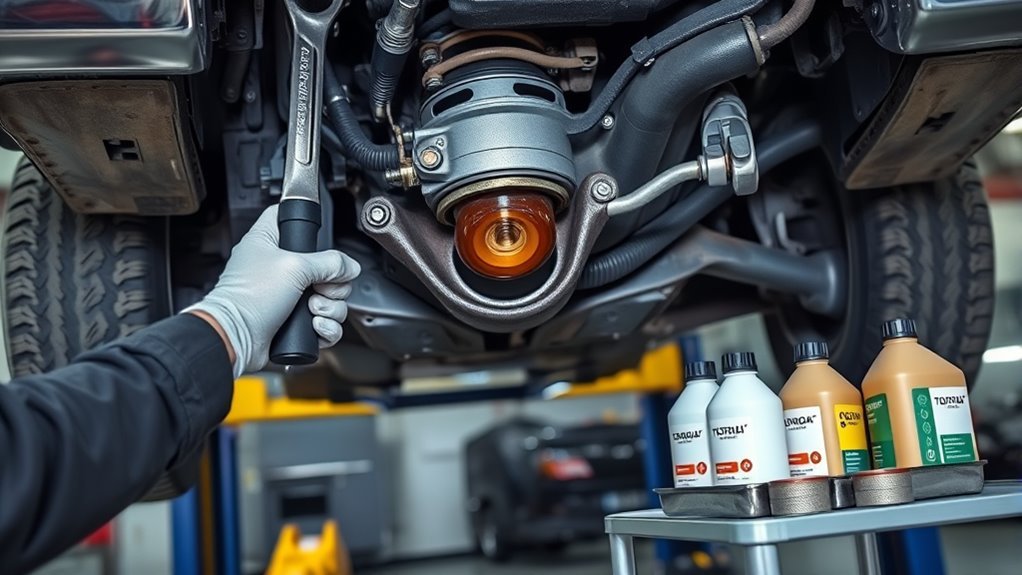
While Toyota’s general recommendation places transfer case fluid changes for the Tundra between 75,000 and 100,000 miles under normal use, you should shorten that interval to about 30,000 miles if you operate in severe conditions; routinely inspect fluid condition between services because debris can accumulate—and has been found on differential magnets as early as 25,000 miles. You’ll adopt a methodical schedule: baseline service at the factory interval if you’re urban and gentle, or trim to 30,000 miles for towing, off‑road, or heavy loads. Between changes, check fluid condition visually and magnetically—look for discoloration, metallic particles, and tactile grit. If you detect early debris accumulation or burning odor, change fluid immediately and inspect seals and synchronizers. Use compatible fluids (OEM or approved aftermarket like Synchromax) to preserve gear protection and free yourself from unnecessary repairs. Record each service and inspection to guarantee predictable longevity and operational freedom.
Intervals by Model Year and Drivetrain (Including Towing/Off‑Road)
You should follow different service intervals depending on model year and drivetrain: 2013–2021 Tundras typically call for transfer case fluid changes every 75,000–100,000 miles under normal use, while 2007–2012 models may require different intervals per the owner’s manual. If you tow frequently or use the truck off‑road, shorten those intervals and inspect for debris—users have found magnet buildup as early as 25,000 miles. Always warm the transfer case, level the vehicle for a full drain, and use the specified 75W fluid (OEM or compatible) when servicing.
Model Year Interval Differences
Because transfer case design and service recommendations changed across generations, you should treat model years 2007–2012 and 2013–2021 differently when planning fluid changes. For 2013–2021 Tundras you’ll typically schedule transfer case maintenance every 75,000–100,000 miles under normal use; heavy-duty duty cycles justify shorter intervals. For 2007–2012 units consult the owner’s manual because recommended intervals differ and may be shorter.
Monitor fluid condition routinely—light-duty operators may extend to ~60,000 miles or five years but must inspect for fluid contamination and debris on magnets. Some users find particles as early as 25,000 miles, prompting preventive changes. Verify fluid compatibility: OEM is costlier, but qualifying aftermarket fluids can meet performance criteria. Act proactively to preserve drivetrain reliability and retain operational freedom.
Towing And Off‑Road Adjustments
When you tow or take a 2013–2021 Tundra off‑road, plan on changing the transfer case fluid every 30,000 miles to offset the higher thermal and contamination stresses these duty cycles introduce; light‑duty operators can extend service to about 60,000 miles only if they perform regular inspections of fluid condition and magnetic debris. You’ll also change differential oil at 30,000 miles when frequently towing or using off road essentials. Follow specified intervals by drivetrain and model year in the owner’s manual, and adapt towing techniques to reduce sustained loads and heat buildup. Log every service action to preserve resale value and streamline future maintenance. This disciplined, liberated approach minimizes component wear and keeps drivetrain performance predictable under severe use.
5 Signs Your Tundra Transfer Case Needs Service Now
If your Tundra starts making grinding or clunking noises while shifting, shows difficulty switching between 2WD and 4WD, leaks fluid near the transfer case, vibrates excessively, or displays drivetrain warning lights, you should have the transfer case inspected immediately. Those transfer case symptoms are diagnostic triggers: audible metal-on-metal sounds indicate gear or bearing distress; failed engagement between 2WD and 4WD points to actuator, shift fork, or mode motor faults; visible leaks imply degraded seals or gaskets; sustained vibration correlates with imbalance, worn splines, or mounting deterioration; dashboard warnings reflect electronic or mechanical fault codes. You should act decisively to preserve mobility and avoid cascading damage. A methodical inspection will include fluid level and contamination checks, pressure and leak testing, actuator function verification, and end-play and backlash measurement. Addressing issues promptly lets you pursue common repairs—seal replacement, bearing or gear refurbishment, actuator replacement—on your terms, minimizing downtime and retaining control of your vehicle’s capability.
Best Fluids for Tundra Transfer Cases (OEM & Aftermarket)
You should choose fluids that meet Toyota’s 75W specification, weighing OEM options against cost and documented compatibility. Consider synthetic aftermarket fluids like Royal Purple Synchromax, Ravenol, and Red Line for improved shear stability and cost-effectiveness, but verify they meet the required viscosity and additive profile. Regularly inspect fluid condition and contaminants, and follow mileage-based change intervals (commonly 75k–100k miles) or earlier if degradation is observed.
OEM Fluid Options
Because transfer case performance hinges on fluid viscosity and additive chemistry, you should prioritize fluids that meet Toyota’s 75W specification or approved equivalents when servicing a Tundra. OEM fluid benefits include formulation tuned to Toyota seals, gear metallurgy, and shift characteristics, reducing wear and preserving factory calibration. You’ll accept higher cost for predictable compatibility and simpler service traceability. Consider fluid warranty considerations: using OEM or Toyota-approved fluids helps maintain warranty coverage and documents adherence to manufacturer recommendations. When replacing fluid, verify part numbers, batch codes, and disposal procedures. Check compatibility before installation; wrong viscosity or additives can cause noise, slip, or damage. Change intervals remain 75K–100K miles under normal use to prevent debris accumulation and extend transfer case life.
Synthetic Aftermarket Choices
When selecting a synthetic aftermarket fluid for a Tundra transfer case, prioritize products that explicitly list compatibility with Toyota 75W specifications and demonstrate proven shear stability and additive package compatibility with common Toyota seal materials. You’ll find Royal Purple Synchromax recommended for its blend of shear-stable base stocks and tailored additives, delivering measurable friction control and longevity. For aftermarket benefits, Ravenol and Red Line present cost-effective, well-formulated alternatives that many users report satisfactions with, balancing price and performance. You should weigh synthetic comparisons by documented lab data, field reports, and seal compatibility rather than marketing claims. Maintain disciplined inspection and earlier-change intervals if you push operating limits; degraded fluid degrades transfer case function. Verify fitment before installation to protect vehicle integrity.
Compatibility And Specs
Having narrowed aftermarket candidates by shear stability and seal compatibility, focus next on exact fluid specifications and fitment to guarantee the Tundra’s transfer case performs as intended. You should use 75W-rated fluid as the baseline; that viscosity aligns with Toyota’s thermal and hydrodynamic design targets. OEM fluids cost more but match factory chemistry; reputable aftermarket brands (Royal Purple Synchromax, Ravenol, Red Line) offer lower cost alternatives that meet performance requirements. Verify fluid types against Toyota part specs and watch for compatibility issues—additives, friction modifiers, or base oil blends can alter shift quality and wear. Inspect fluid for debris at 25k intervals under severe use and otherwise plan changes 75k–100k miles. Prioritize exact spec match to preserve freedom from failure.
DIY Transfer Case Fluid Change: Tools, Steps, Torque Specs
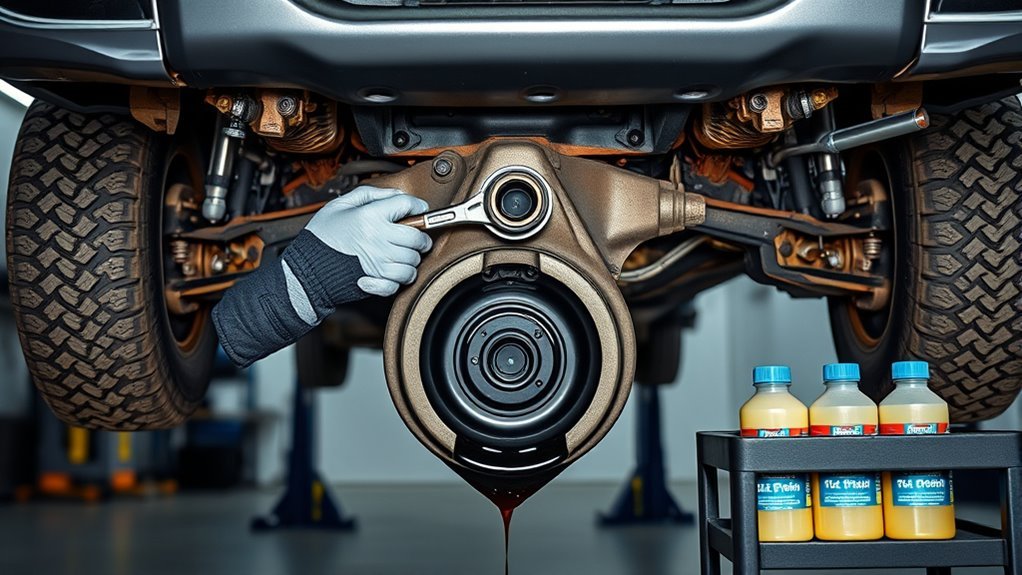
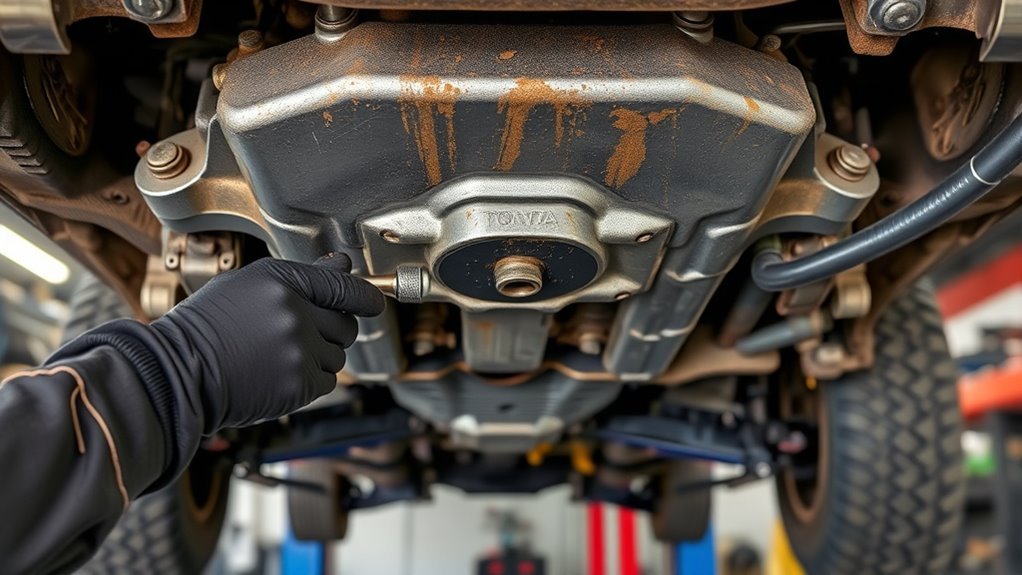
Start by warming the transfer case and parking the Tundra on a level surface so the fluid drains fully and accurately; you’ll need a 3/8″ square bit to remove the fill plug (rear side) and drain plug (lower left), a drain pan, clean rags, automotive-grade thread sealant, and fresh 75W transfer case fluid. Drain the old fluid into the pan, inspect for metal or contamination, and wipe mating surfaces clean. Apply thread sealant to both plugs before reinstalling. Torque both drain and fill plugs to 15 ft-lb; use a calibrated torque wrench to guarantee accuracy.
Refill through the fill hole until fluid overflows, confirming you used the correct fluid types (75W per specification). After reinstalling the fill plug and torquing, check for leaks at both plugs. Complete a short road test, re-inspect for leaks, and record the service with date, mileage, and maintenance tips noted for future autonomy.
Dealer vs. DIY vs. Independent Shops: How to Decide
Although cost, expertise, and warranty implications all matter, your choice between dealer, DIY, or independent shop should hinge on which variables you can control reliably: budget, access to proper tools/equipment, and the importance of maintaining factory warranty coverage. Assess dealer advantages first: trained technicians, specialized tools, OEM fluids/parts, and documented service records that protect warranty claims. Expect higher labor rates but predictable scheduling and guaranteed compatibility.
If you seek autonomy and savings, weigh DIY pitfalls carefully: you’ll need an automotive lift or safe jack stands, correct fluid type, torque specs, and time; mistakes can be costly and may jeopardize warranty. Independent shops sit between extremes—lower labor rates and faster turnaround, but verify parts sources and technician credentials to avoid aftermarket mismatches.
Decide by mapping risk tolerance to control: if you can’t guarantee tools and technique, use dealer or certified shop; if you value independence and have competence, DIY liberates you while saving money.
Shortened Schedules for Towing, Off‑Road, and Heavy Use
If you tow frequently or drive off‑road, shorten the transfer case service interval and inspect fluid condition more often—recommended change intervals drop from the standard 75,000 miles to roughly 15,000–30,000 miles depending on severity. You’ll adopt a deliberate maintenance cadence: evaluate fluid color, odor, and particulate load after demanding trips and after applying aggressive towing techniques or off road preparation.
Follow a clear action checklist to protect components and preserve mobility:
- Change fluid every ~30,000 miles for regular towing; escalate to 15,000 miles for sustained heavy loads.
- After serious off‑road use, inspect and change fluid sooner if contamination or metal particles appear.
- Perform a debris and seal inspection post‑trail; flush if water or grit entered the case.
- Record service events and operating conditions to refine your interval based on real-world wear.
This methodical regime prevents failures, extends service life, and supports your autonomy on and off the road.
Track Service, Find Parts, and Estimate Costs
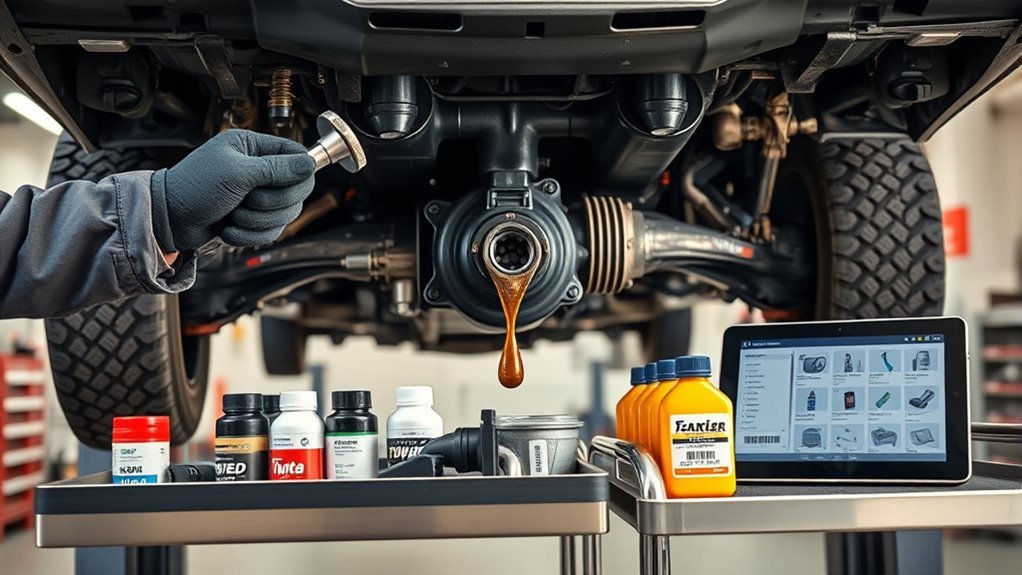
1 clear maintenance log will make tracking your Tundra’s transfer case service straightforward: record mileage, date, fluid type (OEM or aftermarket like Royal Purple Synchromax), and operating conditions (towing, off‑road, heavy use) so you can schedule changes at the recommended 75,000–100,000 miles for normal use or shorten to 15,000–30,000 miles when under sustained stress. You’ll use that log for precise service tracking: note drain/fill volumes, torque values for pan bolts, gasket changes, and any diagnostics. For parts sourcing, contact the parts department (Mon–Sat 7 AM–7 PM, Sun 8 AM–3 PM) for OEM seals, gaskets, and hardware; compare pricing with vetted aftermarket suppliers for fluids and filters. Estimate costs by summing parts, fluid, and labor; DIY limits labor to your time and tools. Use online maintenance guides and parts catalogs to validate part numbers and compatibility. Maintain a simple, auditable record so you control maintenance decisions and extend your Tundra’s service life.
Frequently Asked Questions
How Often Should I Change the Transfer Case Fluid in Tundra?
You should change it every 75,000–100,000 miles under normal use, sooner if you tow or off-road; you’ll perform transfer case maintenance by scheduling fluid inspection around 30,000 miles for severe duty and replacing as needed.
How Often Does Transfer Case Oil Change on a Toyota?
You should change transfer case oil every 75,000–100,000 miles under normal use, or about 30,000 miles for severe duty; prioritize transfer case maintenance and scheduled fluid replacement to protect components and preserve your driving freedom.
How Often Should a Transfer Case Service Be Done?
Want clarity on schedule? You should perform transfer case maintenance every 75,000–100,000 miles under normal use, or about 30,000 miles for severe duty; prioritize fluid change frequency, inspections, and compatible 75W fluid.
What Is the 100000 Mile Service on a Toyota Tundra?
The 100,000-mile service is an extensive inspection and engine maintenance procedure where you’ll get fluid replacement for the transfer case, differentials, coolant and oil, plus brakes, belts, suspension checks to preserve performance and resale freedom.
Conclusion
Keep a strict service cadence for your Tundra’s transfer case: follow model‑year and drivetrain intervals, shorten them for towing/off‑road, and act on progressive symptoms (noise, leaks, shifting hesitation, fluid contamination, overheating). Use OEM or equivalent fluids, correct torque specs, and the right tools when you DIY; otherwise choose a qualified shop. Stay proactive—an ounce of prevention saves a pound of cure—to avoid costly repairs, track service, and document parts and costs methodically.