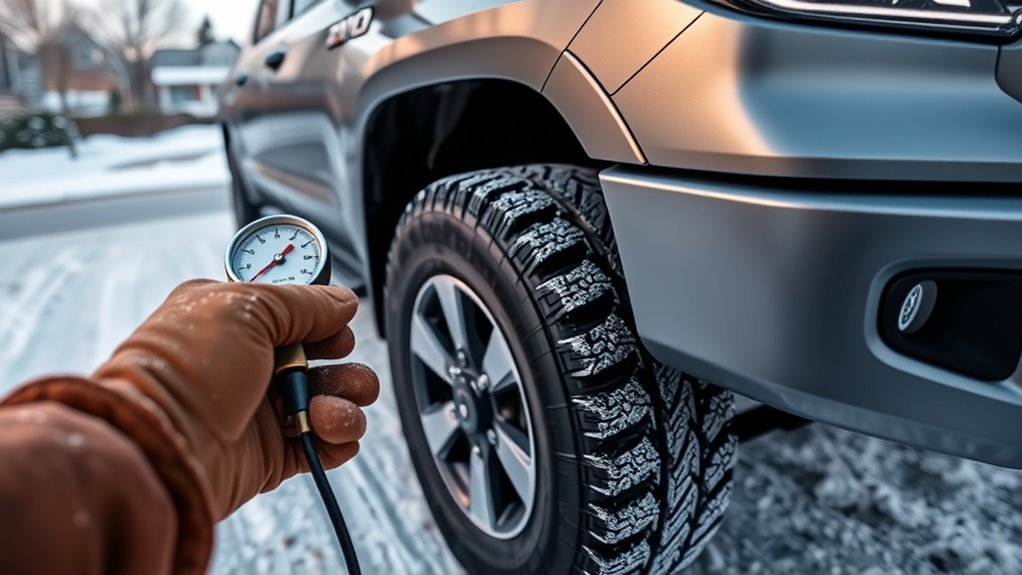
A cold morning can make your Tundra’s tires look fine while the pressure sits below the safe target. Use the driver’s door placard as your baseline, check pressures when the tires are cold, and adjust for load before you drive. Many Tundra setups list about 30 PSI front and 33 PSI rear, but your exact model, tire size, and load rating can change that number. Keep a calibrated gauge, valve caps, and a portable compressor ready so you can correct small pressure changes before they affect traction.
Quick Answer
Use the tire pressure shown on your Toyota Tundra’s driver-side door placard or owner’s manual. Check pressure cold, before driving or after the truck has parked for at least three hours. Cold weather can lower PSI, so check more often when the temperature drops and before towing or hauling.
Key Takeaways
- Use your door placard as the main PSI target, not the number molded into the tire sidewall.
- Check pressure when the tires are cold because driving heat raises the reading.
- Increase rear PSI only when your manual, load table, tire rating, and wheel rating allow it.
- Use the same PSI across each axle unless Toyota lists different front and rear values.
- Fix repeated vibration with pressure checks, balancing, road-force balancing, and alignment inspection.
What’s in This Article
- What cold-weather tire pressure should my Toyota Tundra use?
- How temperature changes affect PSI and cold checks
- Daily driving vs. towing PSI adjustments
- When rear PSI should be higher than front PSI
- How tire type and load range affect PSI
- How to fix vibration and shimmy
- Tundra tire-pressure checklist
- Frequently asked questions
What Cold-Weather Tire Pressure Should My Toyota Tundra Use?
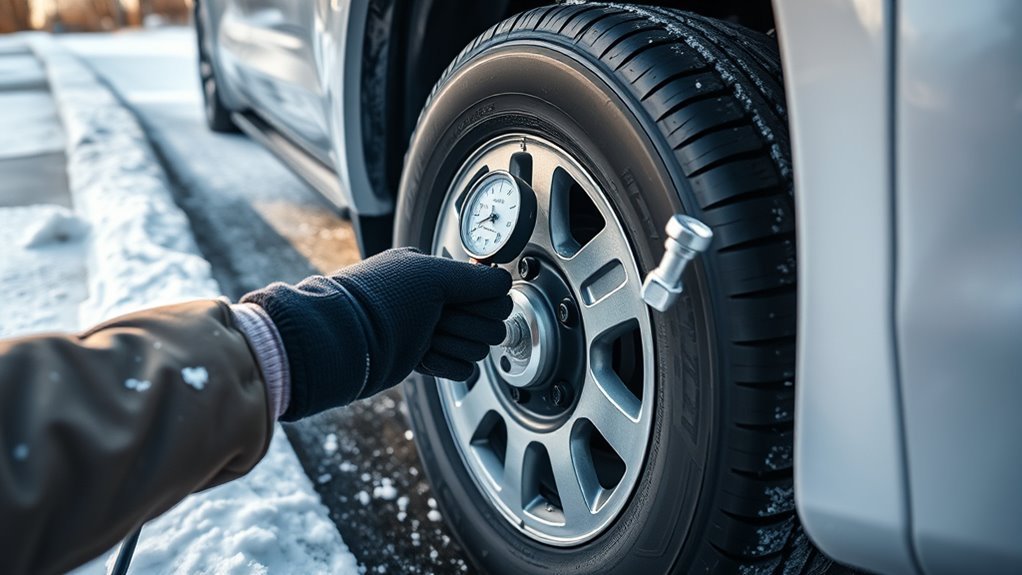
Start with the pressure printed on your Tundra’s Tire and Loading Information Label. Toyota says you can find the correct tire pressure on the driver’s door jamb sticker, in the owner’s manual, or in Toyota’s online manuals. Many Tundra guides list about 30 PSI front and 33 PSI rear, but you should treat that as a common example, not a universal rule.
Cold weather does not create a special Toyota-only PSI number. It lowers the air pressure inside the tire, so the same placard target can require more air in the morning than it did on a warm day. Continental notes that tire pressure can drop about 1 to 2 PSI for every 10°C temperature decrease.
If you tow, haul, or run non-original LT tires, don’t guess from another owner’s setup. Use Toyota’s manual, the tire maker’s load table, and a qualified tire shop when your tire size or load range differs from the original equipment. That approach protects handling, braking, tread wear, and tire life.
How Temperature Changes Affect PSI and How to Check Cold Pressure
Air contracts as temperature falls, so your Tundra’s tire pressure drops in cold weather. The National Highway Traffic Safety Administration (NHTSA) recommends checking all tires, including the spare, at least once a month when cold. NHTSA defines cold tires as tires that have not been driven for at least three hours.
Check pressure before you drive, preferably in the morning. Remove the valve cap, press a calibrated gauge firmly on the valve stem, and compare the reading with the door placard. Add or release air until each tire matches the correct cold pressure for that axle.
Warning: Do not bleed air from a hot tire just because the reading looks higher after driving.
Heat from driving raises PSI and can hide a low cold-pressure problem. If you must add air at a station after driving, note the cold reading first and add only the missing amount. Recheck the tires cold at home so you can confirm the final pressure.
Daily Driving vs. Towing: PSI Adjustments for Your Tundra
For everyday driving, set your Tundra to the pressure shown on the placard. Toyota’s Tundra brochure also tells drivers to check pressure regularly with a gauge and not rely only on the Tire Pressure Monitor System (TPMS). A low-pressure warning can help, but it should not replace your manual checks.
When you tow or carry heavy cargo, confirm the correct pressure before the trip. Toyota tells drivers not to exceed published towing capacities and to follow the owner’s manual before towing. You should also check the combined weight of passengers, cargo, hitch load, and accessories.
[Products Worth Considering]

The JACO ElitePro Digital Tire Pressure Gauge delivers shop-grade accuracy with a clear digital readout, making it easy to maintain proper tire pressure for safer driving and better performance. Built with rugged brass and steel components, a protective guard, and a flexible air hose, it is designed for reliable use across cars, trucks, motorcycles, bikes, RVs, and trailers. The lock-on display, built-in bleeder valve, and bright backlit screen add convenience in any lighting condition.

The GOOLOO A3 combines a powerful portable jump starter with a cordless air compressor for convenient roadside emergencies and everyday inflation needs. It can restart 12V vehicles, inflate tires and sports gear, and serve as a portable power source for USB devices, all while adding smart protections, an easy-to-read display, and automatic shut-off for safer use.
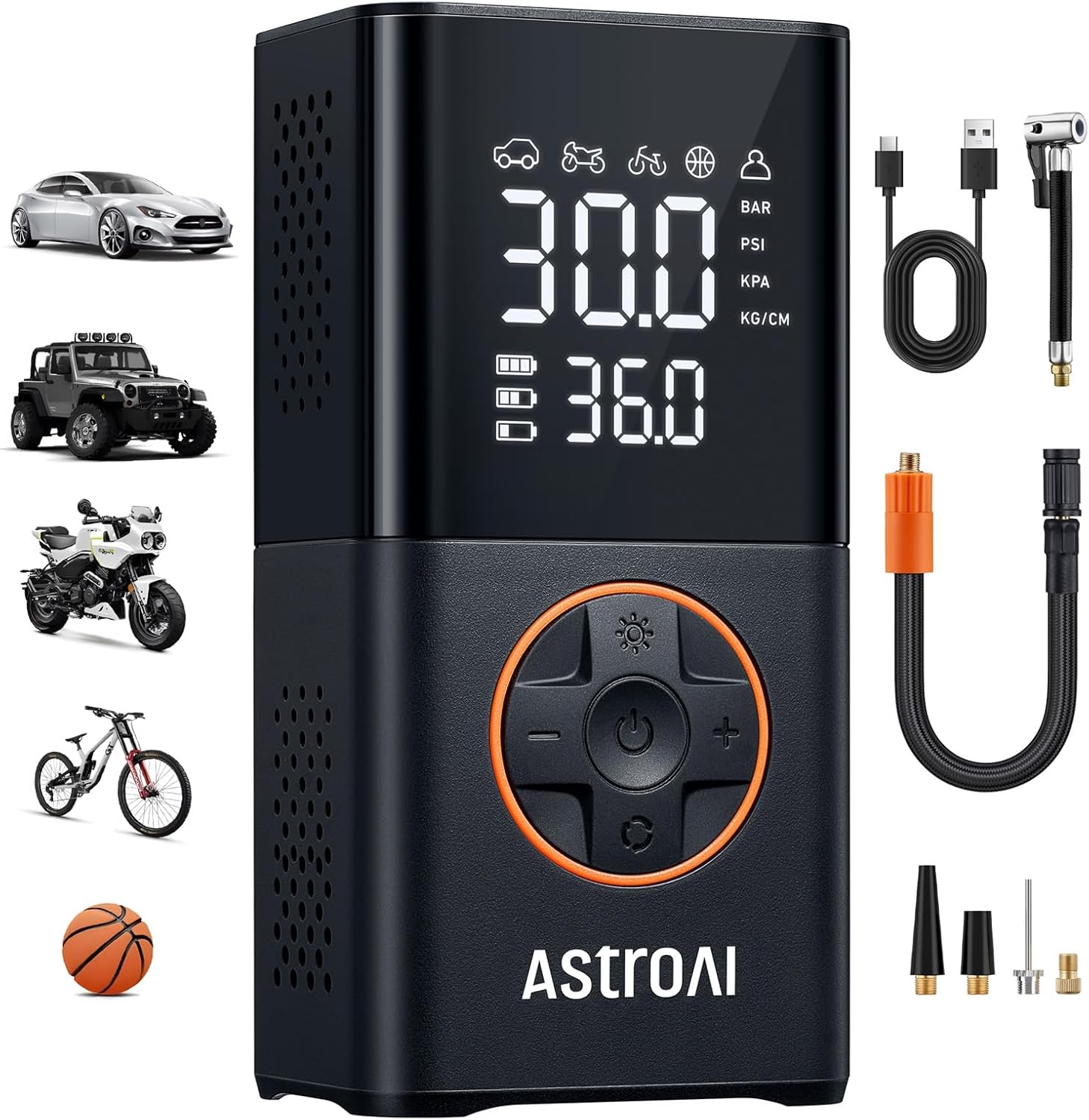
The AstroAI L7 portable tire inflator delivers fast, accurate inflation with a bright digital display and real-time pressure monitoring for easy use day or night. Its cordless design, preset modes, and wide pressure range make it a versatile solution for car tires, bikes, balls, and other small inflatables. A built-in battery, auto-stop function, LED emergency light, and power bank capability add convenience for routine maintenance and roadside use.
Daily Driving Pressures
For daily driving, use the placard values when you run the original tire size and load rating. A common Tundra example uses about 30 PSI in the front and 33 PSI in the rear, but your door label has the final say. Check pressures monthly and before long trips, heavy loads, or sharp temperature changes.
Set both tires on the same axle to the same PSI unless Toyota specifies otherwise. Uneven pressure across one axle can pull the truck, reduce stability, and create uneven wear. Keep a simple pressure log so you can spot a slow leak before the TPMS light turns on.
Towing Pressure Increases
Towing adds load to the rear axle, so your rear tires may need more pressure than they use during unloaded driving. Do not use a fixed 40 to 45 PSI target for every Tundra. Instead, match the pressure to your actual load, tire size, load range, and the limits shown on the tire and wheel.
Goodyear advises drivers to follow the vehicle manufacturer’s pressure recommendations on the door placard or in the owner’s manual. Toyo Tires gives similar guidance for original equipment tires and points drivers to load and inflation tables for optional tire sizes. Use those sources when you change tire size or move from passenger tires to LT tires.
When Should Rear PSI Be Higher Than Front, and Why?
Rear PSI should run higher than front PSI when the rear axle carries more weight and Toyota or a load table supports the increase. This usually happens when you tow, carry tools, load the bed, or add accessories that sit behind the cab. The higher pressure helps the tire carry load with less sidewall flex.
Do not raise rear PSI only to make the truck feel firmer. Too much pressure can reduce ride comfort, shrink the contact patch, and increase irregular center wear. Too little pressure can create heat, sidewall flex, poor handling, and faster shoulder wear.
Towing and Load Compensation
If you haul heavy loads, check the rear tires cold after you load the truck. A safe target depends on the rear axle load, the tire’s load range, and the maximum cold pressure printed on the tire sidewall. Never exceed the tire rating, wheel rating, gross axle weight rating, or Toyota’s towing limits.
Use light truck (LT) or E-rated tires only when they fit your truck, wheels, and load needs. Higher load range does not mean you should inflate every tire to its maximum pressure for daily driving. It means the tire can carry more load when you inflate it according to the correct table.
Rear Load Carrying
Rear cargo shifts weight onto the back axle and changes how your Tundra steers, brakes, and tracks. Raise rear PSI only enough to support the added load while staying inside Toyota’s and the tire maker’s limits. Recheck pressure after a short stop if the truck feels loose, bouncy, or unstable.
Note: The sidewall number shows maximum cold pressure, not the normal pressure you should use every day.
| Condition | Rear PSI Guidance |
|---|---|
| Light or no load | Use the door placard, often about 33 PSI rear on common Tundra setups |
| Moderate bed cargo | Use Toyota’s manual or a tire load table for your actual load |
| Heavy load or towing | Set pressure from axle weight, tire load range, and published limits |
Picking PSI by Tire Type and Load Range (LT vs. E-Rated)
Light truck (LT) tires and E-rated tires can support heavier loads than many passenger-rated tires when you inflate them correctly. That does not mean they automatically need the highest PSI on the sidewall. You need a pressure that supports your load and still keeps the tread in proper contact with the road.
If your Tundra still has original equipment size and type, use the placard and owner’s manual. If you changed size, load index, or load range, use a recognized load and inflation table. Ask a tire professional to calculate the new cold PSI when you move to larger, heavier, or more aggressive tires.
- Match tire size, load index, and load range across each axle.
- Use the door placard for original equipment tires.
- Use load tables when you install optional tire sizes or LT tires.
- Stay below the tire and wheel maximum cold-pressure limits.
- Recheck pressure after major temperature swings or load changes.
[Products Worth Considering]
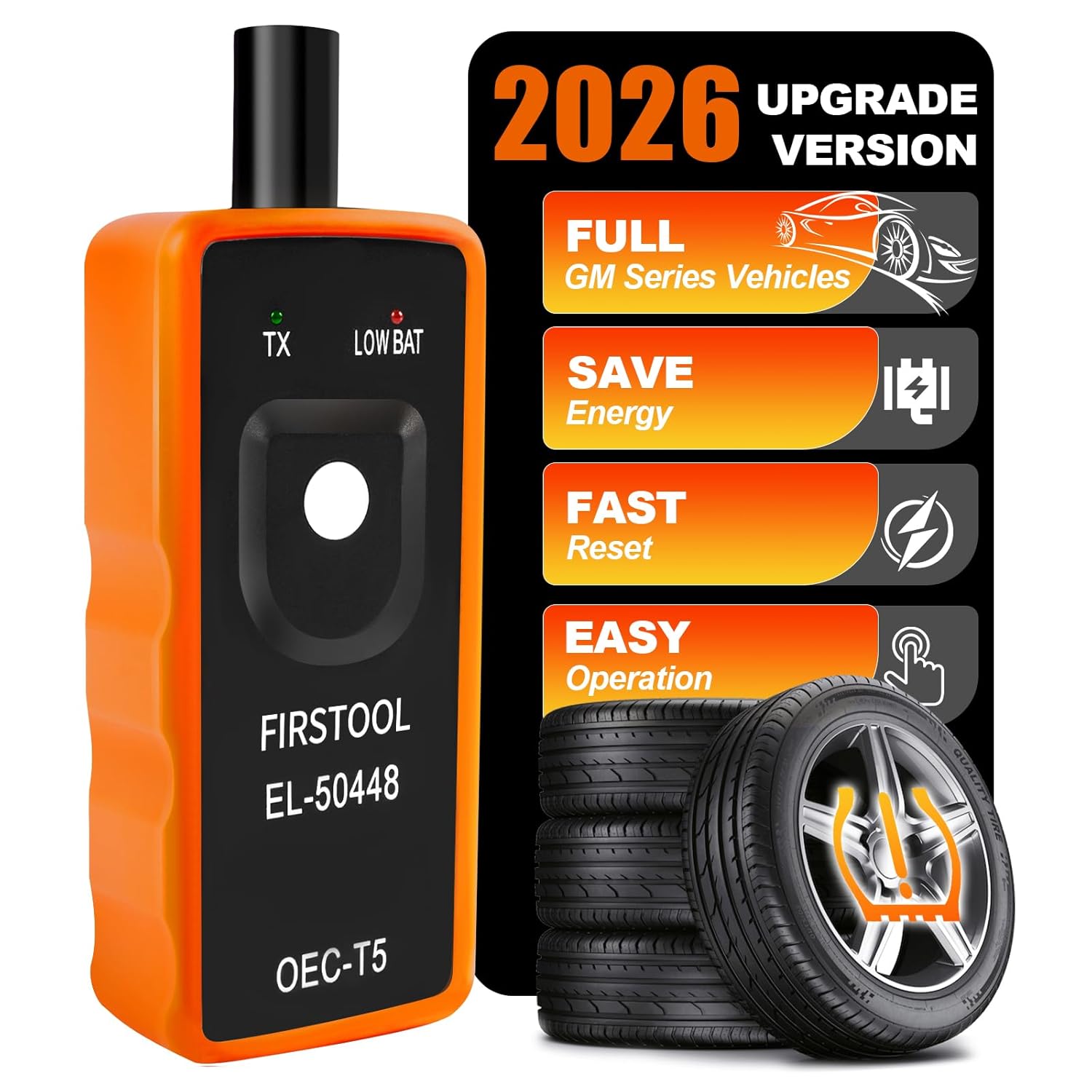
This EL-50448 TPMS relearn tool helps quickly activate and reset tire pressure sensors so your vehicle’s monitoring system stays accurate after tire rotations, sensor replacement, or seasonal tire changes. Designed for many GM-related vehicles and compatible with common 315 and 433 MHz TPMS systems, it offers simple one-button operation and reliable performance for clearing warning lights and relearning sensor positions.
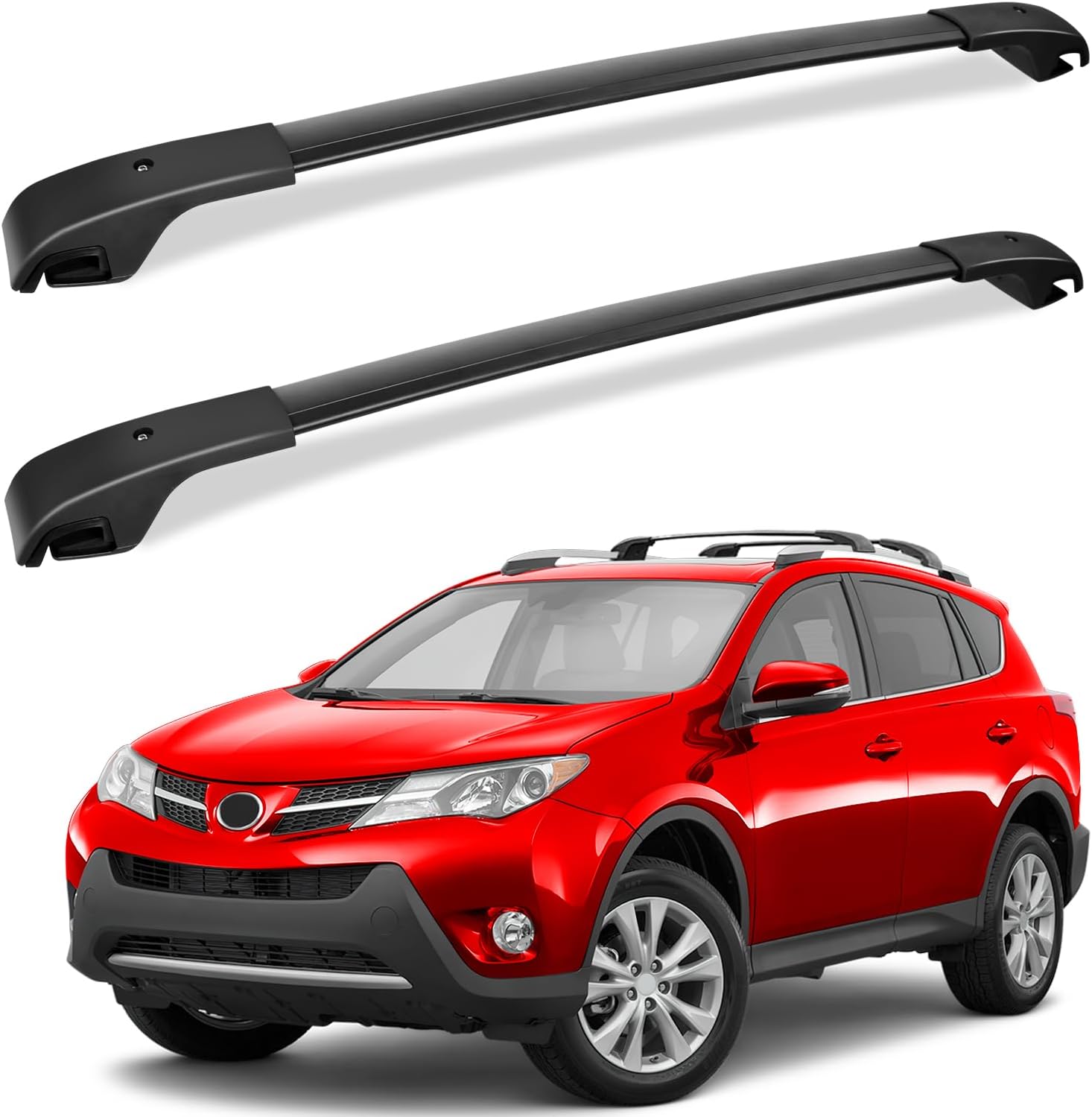
These roof rack cross bars are designed specifically for Toyota RAV4 models from 2013 to 2018 with side rails, offering a secure fit across multiple trims. Built with thickened aluminum, durable clamps, rubber padding, and stainless steel hardware, they provide dependable cargo support for travel and daily hauling. The easy-install design and high load capacity make them a practical upgrade for carrying luggage and other gear.

PROCESS LEVEL ACCURACY: Each ETENWOLF’s digital tire pressure gauge is calibrated manually to ANSI B40.7 Grade 2A(plus-minus 1 PSI).Presta valve adapter not included, if used for bicycles, it must be purchased separately
Fixing Vibrations and Shimmy: Balancing, Road-Force Checks, Quick Tests
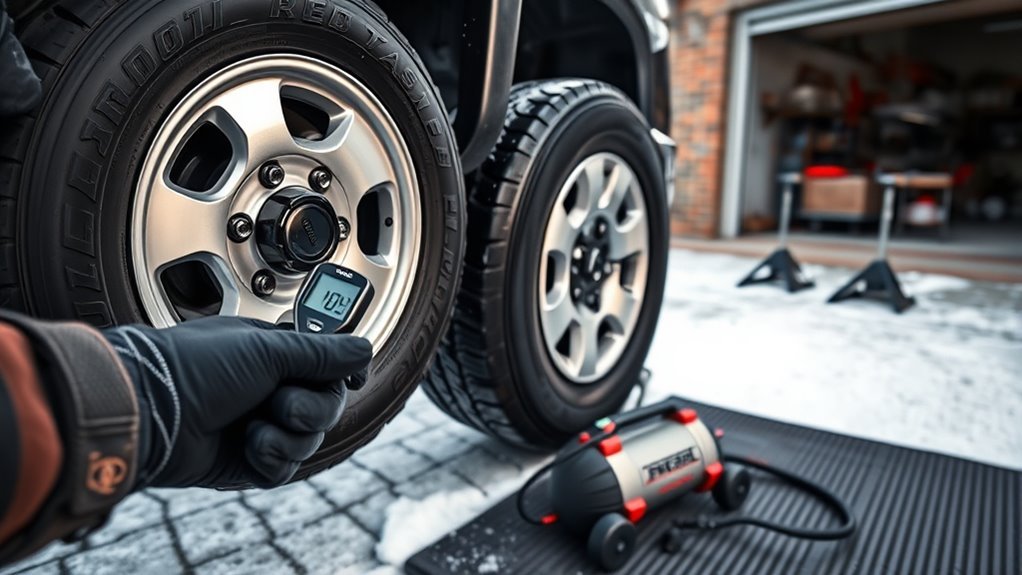
A steering shimmy at highway speed often starts with tire pressure, wheel balance, tread wear, or wheel runout. Check cold PSI first, then inspect the tread for cupping, uneven wear, cuts, bulges, or missing wheel weights. If the tires look safe, schedule a balance check with a qualified shop.
NHTSA lists tire balancing and wheel alignment as key maintenance steps for safety and tire life. Discount Tire explains that road-force balancing can find vibration issues that a normal spin balance may miss. Ask for a road-force check when a standard balance does not remove the shake.
You can also rotate tires or swap front tires side to side if your manual allows that pattern. If the vibration follows a tire, the tire or wheel likely needs closer inspection. If the vibration stays in the same place, ask the shop to inspect alignment, suspension, steering parts, wheel bearings, and brakes.
Tools, Where to Pump, and a Tundra Tire-Pressure Maintenance Checklist
Keep a quality digital or dial tire-pressure gauge in your truck. NHTSA recommends that drivers keep a pressure gauge in the vehicle because tires can lose pressure after pothole hits or curb impacts. A portable air compressor also helps when station pumps sit far away or read poorly.
Check your tires where the truck can sit safely on level ground. If you use a station pump, choose one near your home so the tires don’t heat up much before you fill them. Use short air bursts, check with your own gauge, and reinstall every valve cap.
Pro tip: Write the cold PSI on your phone after each check so a slow leak stands out quickly.
- Check all four tires and the spare at least once a month.
- Measure pressure cold, before driving or after a three-hour park.
- Compare each tire with the placard pressure for that axle.
- Inspect valve stems, caps, tread, and sidewalls during each check.
- Add air in small bursts and confirm the final reading with your own gauge.
- Recheck pressure before towing, hauling, off-roading, or long highway trips.
This habit takes only a few minutes, but it protects traction, braking, fuel economy, and tire life.
[Products Worth Considering]
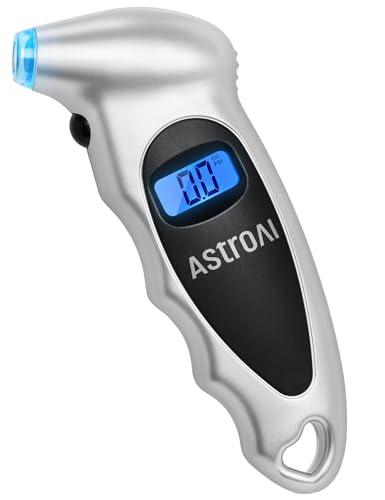
Accurate, Dependable Readings: Factory‑calibrated to ±1 PSI, so you can confidently match your vehicle’s recommended PSI (check the door jamb sticker). Ideal for monthly checks and road trips — consistent results every time, cold or warm.

HIGH ACCURACY: Every ETENWOLF's pencil tire gauge is calibrated to ANSI B40.1 Grade B, it is accurate to 2% of span in the middle 50% of range and 3% of span in the lower and upper 25% of range. Each ETENWOLF pencil tire pressure gauge is manually calibrated and has its unique calibration number printed on the pencil

RUGGED DESIGN: The stainless steel components prevent rust and corrosion while the precision-crafted nozzle seamlessly seals onto the valve stems for highly accurate readings (±2% span). We also provide 4 valve stem caps for convenient replacement.
Frequently Asked Questions
What PSI Should Toyota Tundra Tires Be At?
Use the PSI on your Tundra’s driver’s door placard or owner’s manual. Many Tundra examples list about 30 PSI front and 33 PSI rear, but your exact model and tires can vary.
Is 40 PSI Good Tire Pressure for a Toyota?
Forty PSI can work for some Toyota trucks and some LT tire setups, but it can also overinflate other setups. Check your placard, tire size, load range, and wheel rating before you use that number.
Should You Inflate Tundra Tires Before or After Driving?
Inflate and check your Tundra tires before driving whenever possible. Driving heats the tires and raises pressure, so a hot reading may not show the true cold PSI.
Why Does My Tundra TPMS Light Turn On in Cold Weather?
Cold air can lower tire pressure enough to trigger the TPMS warning, especially in the morning. Check each tire cold with a gauge, adjust to the placard value, and inspect for leaks if the light returns.
Do LT or E-Rated Tires Need More PSI on a Tundra?
LT and E-rated tires may need more PSI than original equipment tires for the same load, but the correct number depends on a load table. Ask a tire shop to calculate the pressure if you changed size, type, or load range.
Safety Disclaimer: This article gives general tire-pressure information only. Always follow your Toyota owner’s manual, tire placard, tire manufacturer guidance, and a qualified technician’s advice before towing, hauling, or changing tire size.
Conclusion
Your safest cold-weather Tundra PSI starts with the door placard, not a guess from another truck. Check every tire cold, adjust for temperature and load, and use load tables when you change tire type or size. Keep a gauge and compressor ready so you can fix pressure before it becomes a handling problem. When vibration, uneven wear, or repeated pressure loss appears, schedule a tire and alignment inspection right away.
References
- How To Check Tire Pressure – Toyota, 2026
- Tire Safety Ratings and Awareness – National Highway Traffic Safety Administration, 2026
- 2025 Toyota Tundra eBrochure – Toyota, 2025
- Tire Pressure in Winter – Continental Tires, 2026
- Tire Air Pressure – Goodyear, 2026
- Find the Correct Tire Inflation Pressure – Toyo Tires, 2026
- Road Force Balancing vs Tire Balancing – Discount Tire, 2026