Water crossings look simple until depth, current, mud, and hidden rocks start working against your truck. A Toyota Tacoma can handle shallow, slow trail water when you prepare properly, but Toyota does not publish one universal “safe fording depth” for every model, year, trim, tire size, load, and modification. Treat any depth number as a limit to verify, not a promise.
Quick Answer
For a stock Tacoma, keep water crossings shallow, slow, and below vulnerable points such as the lower door openings, axle breathers, and air intake. Avoid fast-moving or flood water entirely. Toyota’s owner guidance is to check depth and bottom firmness first, drive slowly, and avoid deep water.
Key Takeaways
- Do not rely on a single internet fording-depth number. Check your exact Tacoma year, trim, tire size, load, and modifications.
- Never enter flood water or fast-moving water. The National Weather Service warns that moving water can sweep vehicles away.
- Walk the crossing first only when it is safe to do so. Confirm depth, current, bottom firmness, entry angle, and exit traction.
- Use 4WD low before entering rough or slippery crossings, maintain steady momentum, and avoid sudden throttle, braking, or steering.
- After crossing, inspect the airbox, engine oil, transmission, transfer case, differentials, brakes, and electrical connectors for water or mud.
At a Glance
| Time Required | 15–30 minutes for assessment, crossing, and basic inspection |
| Difficulty | Moderate to high; skip the crossing if conditions are uncertain |
| Tools Needed | Marked stick or pole, gloves, recovery strap, rated shackles, tire gauge, flashlight, basic tools, towels |
| Cost | $0 for planning; $100–$500+ for basic recovery gear; more for breathers, skid plates, or intake upgrades |
How Deep Can My Toyota Tacoma Safely Ford Water?
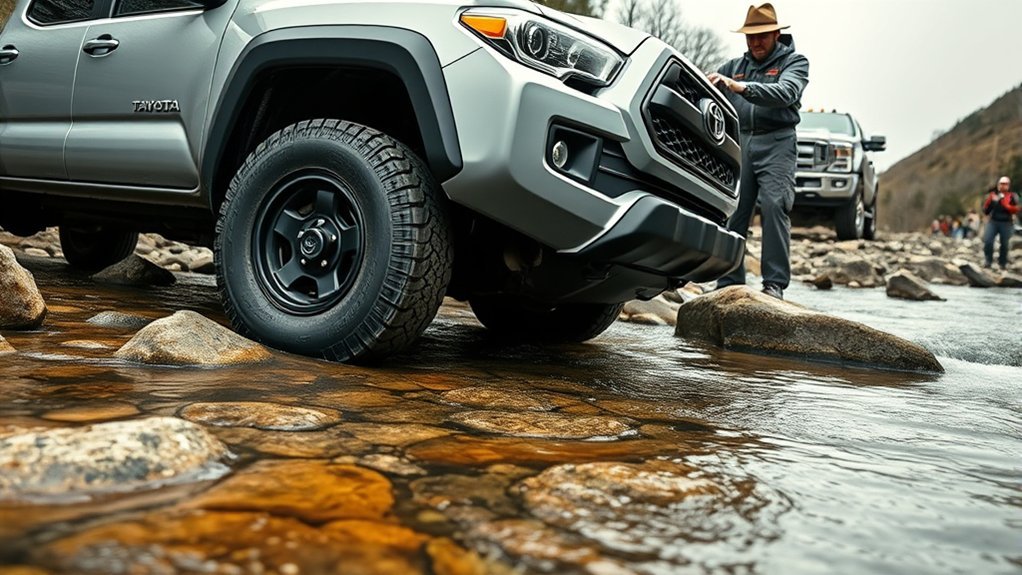
The safest answer is this: your Tacoma can cross only water that you have verified as shallow, slow, firm-bottomed, and below the truck’s vulnerable components. A stock Tacoma should not be treated like a purpose-built deep-water rig. Even if the air intake is high, water can still reach axle breathers, seals, starter components, electrical connectors, brakes, and cabin openings.
Toyota’s current Tacoma owner guidance does not give every driver one blanket fording-depth number. Instead, it tells drivers to check the water depth and riverbed firmness, drive slowly, and avoid deep water during shallow stream crossings. You can review Toyota’s owner guidance through the Toyota Owners manual portal and the Tacoma off-road precautions section.
Warning: Do not drive into flood water, water covering a public road, or water with a visible current. A trail ford that you have walked and inspected is not the same as a flooded roadway with unknown depth, missing pavement, debris, or rising flow.
For real-world trail decisions, use a conservative rule: if the water is approaching the lower door openings, pushing hard against your legs, hiding the bottom, or reaching components you have not protected with breather extensions, turn around. A snorkel or factory high-mount intake may help the engine draw cleaner, higher air, but it does not waterproof the truck.
[Products Worth Considering]

This recovery combo kit gives off-road drivers a dependable towing and extraction solution for unexpected trail situations. It includes a static tow strap and D-ring shackles designed for strong recovery performance and confident use when a vehicle needs assistance. Ideal for basic off-road recovery, it offers a compact setup that helps you stay prepared on the trail.

This Rhino USA recovery tow strap is built for reliable vehicle pulling and towing in flat recovery situations. Made from durable polyester with reinforced loop ends, it is designed to help secure safe connection points while resisting wear, abrasion, and stress during recovery use. It is a practical choice for off-road recovery, roadside assistance, and general towing needs.
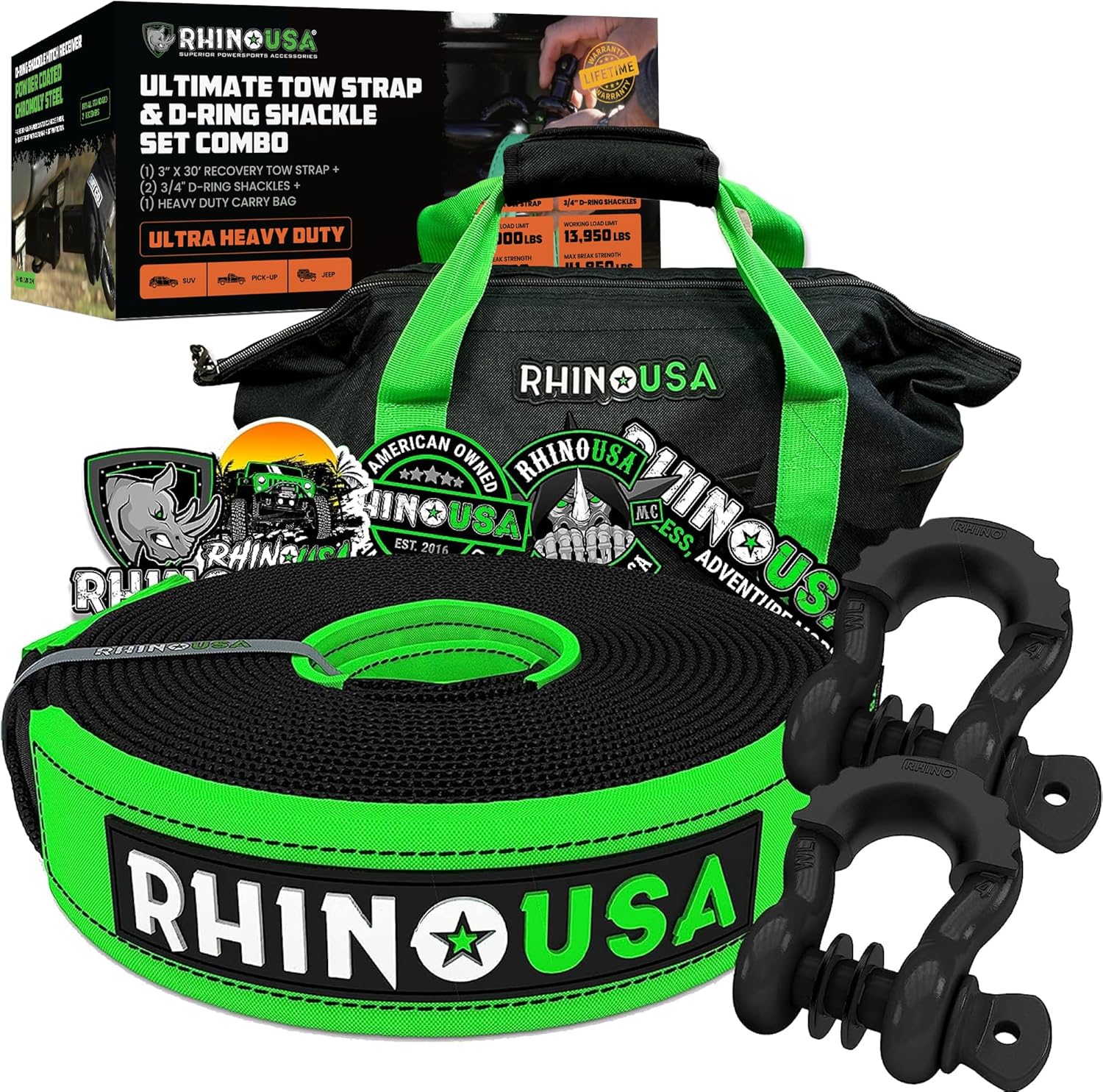
The Rhino USA Recovery Combo Kit is a compact off-road recovery solution designed to help drivers handle basic trail emergencies with confidence. It includes a static tow strap and anchor points with D-ring shackles, giving you essential gear for vehicle recovery when you need it most. Built for peace of mind on the trail, this kit is ideal for off-road enthusiasts looking for a dependable starter recovery setup.
Quick Pre-Departure Checklist for Your Tacoma
Do the boring checks before you reach the water. Most water-crossing failures happen because the driver did not know the truck’s condition, did not have recovery gear ready, or entered a crossing that should have been skipped.
Vehicle Fluids and Levels
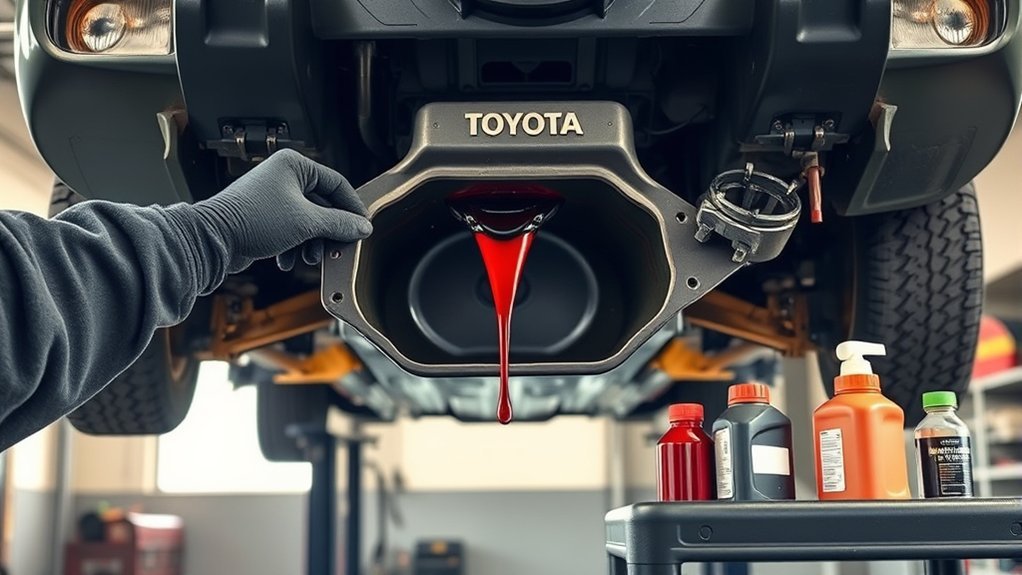
Check engine oil, coolant, brake fluid, transmission fluid, transfer case fluid, and differential fluid according to your owner’s manual. Look for low levels, leaks, loose caps, missing plugs, and cloudy or milky fluid. If the truck already has a leak, a water crossing can force contamination into that system.
Also inspect the air filter and airbox. A dirty, wet, loose, or poorly sealed filter is a major risk because water ingestion can cause severe engine damage. Make sure the intake tract is properly clipped and sealed before you get near the crossing.
Recovery Gear Check
Gather recovery gear and put it where you can reach it before the crossing. Do not bury straps and shackles under camping gear. Confirm that all gear is rated for vehicle recovery and that your Tacoma has proper recovery points, not just tie-down loops.
- Inspect the winch, cable or synthetic line, hook, and remote if equipped.
- Check recovery straps for cuts, UV damage, frays, or chemical damage.
- Inspect shackles or soft shackles for cracks, deformation, corrosion, or worn fibers.
- Pack gloves, a flashlight, a shovel, a basic tool kit, and a first-aid kit.
- Set a plan with another vehicle before anyone enters the water.
Pro Tip: Attach recovery gear only to rated recovery points. Bumpers, trailer balls, suspension arms, and random frame holes can fail violently under load.
Tire Pressure and Condition
Use the tire pressure listed for your Tacoma and tire setup unless you are intentionally airing down for off-road traction. If you air down, carry an air compressor and reinflate before returning to highway speed. Inspect tread depth, sidewalls, valve stems, and bead areas. Worn tires, street tires, or damaged sidewalls reduce steering control on wet rock, silt, mud, and gravel.
Do not treat mud-terrain or all-terrain tires as a guarantee. They may improve grip on some surfaces, but they cannot overcome deep silt, hidden holes, strong current, or driver error.
Essential Gear to Install: Intake, Breather Risers, and Skid Plates
The best water-crossing upgrades protect the systems most likely to take in water or strike hidden debris. For a Tacoma, focus on intake height and sealing, breather routing, and underbody protection.
A high-mount intake or snorkel raises the air pickup point, but it only helps if the entire intake path is sealed correctly. Toyota’s Trailhunter grade, for example, is promoted with a low-profile high-mount air intake, skid protection, and overlanding equipment, but Toyota still frames off-roading as an activity that requires driver judgment and proper care.
Breather risers are just as important. Axles, transmissions, and transfer cases heat up while driving. When hot parts are suddenly cooled by water, pressure changes can pull water past low breathers or tired seals. Extending breathers to higher protected points helps reduce that risk.
A snorkel helps the engine breathe higher; it does not waterproof the Tacoma’s electronics, bearings, seals, cabin, or drivetrain fluids.
- High-mount intake or snorkel: Helps keep the air pickup above splash and bow-wave turbulence when properly sealed.
- Differential, transmission, and transfer case breather extensions: Reduce the chance of water being drawn into lubricated components.
- Skid plates: Protect the oil pan, transfer case, fuel tank area, steering parts, and differential housings from submerged rocks or logs.
- Rock rails and recovery points: Add protection and give you safer options if the truck gets stuck.
Note: Aftermarket parts can affect warranty coverage if they cause or contribute to a failure. Keep receipts, follow installation instructions, and use quality parts installed correctly.
[Products Worth Considering]

This custom-fit Toyota Tacoma truck cover is designed to protect Access and Double Cab short bed models from rain, wind, sun, dust, snow, and everyday outdoor damage. Its multi-layer composite fabric offers waterproof, UV-resistant, breathable coverage, while practical details like a side zipper, wind straps, and reflective strips improve convenience and security. A storage bag and cleaning towel are included for easy care and transport.

This tire repair rubber nail kit offers a simple self-service solution for punctures in cars, motorcycles, trucks, and more. The spiral rubber design helps create a firm seal that supports quick repairs without removing the tire, while the two included sizes make it easier to match different puncture types. Built for broad vehicle compatibility, it is a practical emergency repair option for roadside and garage use.
Assess Depth, Current, and Substrate On Site
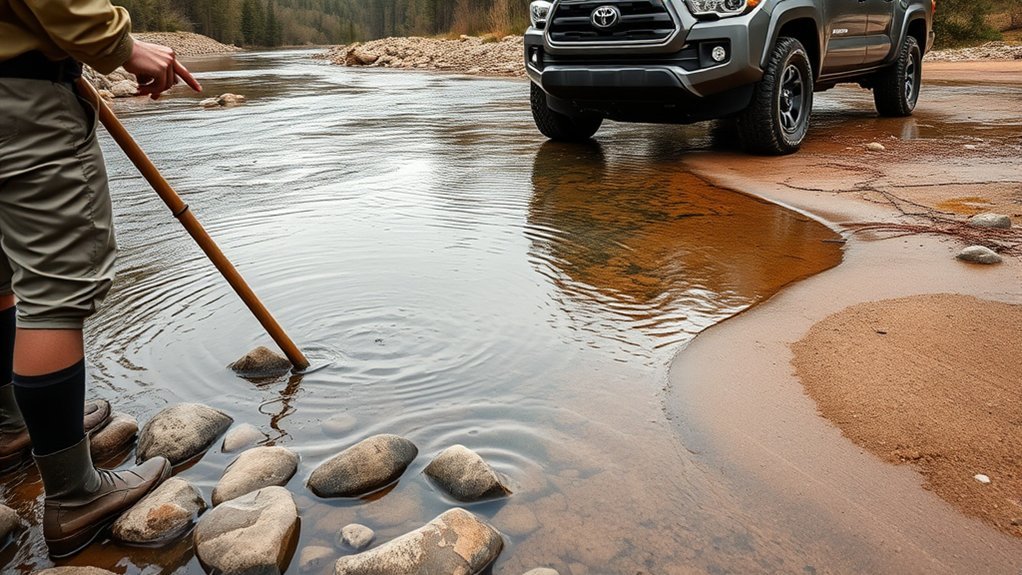
Stop before the crossing and study it from both banks. Look for a safe entry, a firm path, a predictable exit, and enough room on the far side to stop and inspect the truck. If the exit is steep, muddy, icy, or blocked, the crossing is not ready.
Check Water Depth
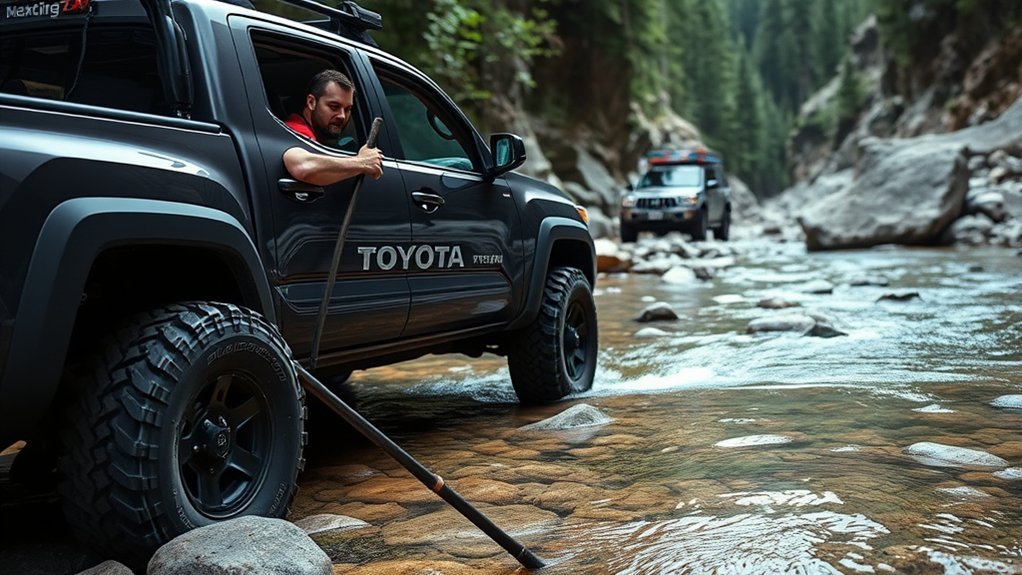
Use a marked stick, pole, or safe wading method to measure the entire line you plan to drive. Measure the deepest section, not just the entry. Water often cuts a trench near the middle or near the far bank. Check depth against your tire height, lower door openings, axle housings, breather locations, intake path, and bumper height.
Abort the crossing if you cannot verify depth, if the water is muddy enough to hide hazards, or if recent rain may have changed the channel. A crossing that was safe last month can be unsafe today.
Test Current and Substrate
Current matters more than many drivers realize. The National Weather Service warns that 12 inches of rushing water can carry away most cars and 2 feet of rushing water can carry away SUVs and trucks. A Tacoma is not immune just because it has ground clearance and four-wheel drive.
Use a pole to probe the bottom. You are looking for firm gravel, rock, or packed dirt—not deep silt, slick clay, loose round stones, hidden ledges, logs, or holes. If you cannot stand confidently in the water, do not assume your truck will stay planted.
- Good sign: Clear water, visible bottom, slow flow, firm substrate, easy entry, easy exit.
- Bad sign: Brown water, foam, floating debris, strong push on your legs, soft mud, deep ruts, blind holes, or water rising.
- Immediate no-go: Flooded road, barricade, damaged bridge, strong current, or any uncertainty about what is under the water.
Step-by-Step Crossing: Still Water Technique
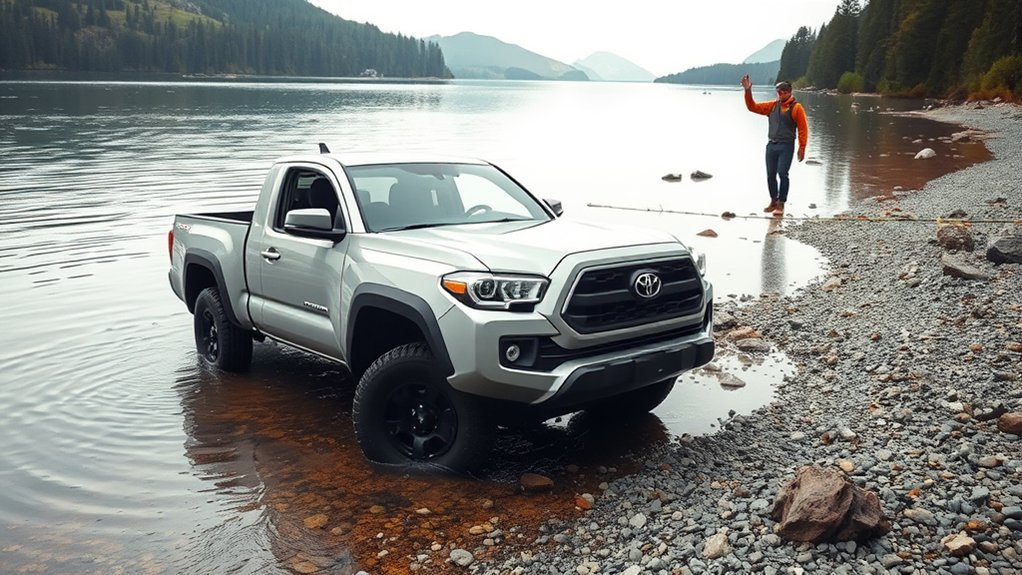
Use this method only for a shallow, inspected trail crossing with little to no current. Do not use it for flood water or an unknown road washout.
- Walk and measure first. Confirm depth, bottom firmness, entry angle, and exit traction.
- Plan one straight line. Avoid unnecessary turns in the water because steering changes can create drag and push water into vulnerable areas.
- Select the right drive mode before entering. Use 4WD low for slow, controlled crossings when your Tacoma’s drivetrain allows it. Follow your owner’s manual for exact shifting steps.
- Enter slowly. Ease in instead of splashing hard. A violent splash can send water into the grille, intake area, and electrical connectors.
- Hold steady throttle. Keep a slow, consistent pace that creates a small bow wave without outrunning it.
- Do not stop midstream. Stopping can let the bow wave collapse back into the engine bay.
- Exit gently. Climb out without spinning the tires, then stop on safe ground for inspection.
- Dry the brakes. Drive slowly and apply light brake pressure for a short distance once clear, if conditions allow.
Warning: Never restart a stalled engine in water. If water entered the intake, restarting can turn a recoverable situation into major engine damage.
Handling Crossings With Current: Angle, Throttle, and Steering
The safest choice with moving water is usually to wait, find another route, or turn around. If you are on a known off-road trail with mild, inspected flow and a firm bottom, move only after the spotter and recovery plan are ready.
Angle Into the Current Carefully
In mild current, point the Tacoma slightly upstream to counter the sideways push, then drive toward the planned exit without abrupt steering. Do not let the truck turn broadside to the current. Broadside exposure increases the chance of the vehicle sliding, floating, or being pinned against debris.
Use Steady Throttle Control
Maintain enough momentum to keep moving without digging holes or throwing a large splash. Sudden acceleration can break traction and stir silt into the path. Sudden braking can collapse the bow wave and load the front end with water.
Make small steering corrections only. If the current starts pushing the Tacoma off line, do not fight it with panic inputs. Stop the attempt if you can safely reverse or be recovered. A missed crossing is cheaper than a damaged truck or an unsafe recovery.
If Your Tacoma Stalls or Ingests Water: Immediate Steps
If your Tacoma stalls in water, do not restart it. Your first job is personal safety, then vehicle recovery. Toyota’s submerged-vehicle guidance warns drivers not to remain in a vehicle that may be flooded or set adrift and to exit when it is safe to do so.
- Stay calm and assess danger. Look at water depth, current, rising water, and nearby safe ground.
- Exit if staying is unsafe. If water is rising or the vehicle may move, prioritize people over the truck.
- Do not restart the engine. Water in the intake or cylinders can cause severe mechanical damage.
- Recover the vehicle safely. Use rated points, a second vehicle, and clear hand or radio signals.
- Inspect before starting. Check the airbox, intake tube, engine oil, transmission fluid, transfer case, differentials, and electrical connectors.
- Tow it if unsure. A tow and inspection are cheaper than hydrolock, contaminated bearings, or electrical failure.
The National Highway Traffic Safety Administration also advises a thorough assessment before starting a flood-damaged vehicle because hidden damage may not be visible right away.
Set a Buddy Plan and Pack Recovery Gear Before You Cross
Solo water crossings are a bad idea. Travel with another capable vehicle whenever possible, especially on remote trails. Before anyone enters the water, decide who spots, who drives, who handles the recovery line, and where each person stands.
Keep bystanders away from loaded straps, winch lines, and the downhill side of the vehicle. Establish simple radio commands or hand signals. If you cannot communicate clearly, do not start the crossing.
- Lead vehicle: Crosses only after the line is walked, measured, and approved.
- Spotter: Watches tire placement, water behavior, and exit traction from a safe position.
- Recovery vehicle: Stays on firm ground with recovery gear ready.
- Driver: Keeps windows usable, seatbelt decisions appropriate for the risk, and escape options in mind.
Note: In deep or risky water, some off-road drivers lower windows before entering so an escape route remains available if electronics fail. Use judgment and prioritize people over property.
Post-Crossing Inspection: Engine, Drivetrain, and Electronics Checklist
Once you reach dry, safe ground, stop and inspect the Tacoma. Water damage often starts small. A few minutes of inspection can prevent ruined bearings, contaminated oil, brake problems, or corrosion.
- Air intake and airbox: Open the airbox and check for water, mud, wet filter media, or loose clips.
- Engine oil: Look for milky discoloration, rising oil level, or foam on the dipstick.
- Transmission and transfer case: Check for water contamination if the crossing reached those components.
- Differentials: Inspect fluid if axles were submerged, especially if breathers are still stock.
- Brakes: Check pedal feel and dry the brakes with gentle applications after leaving the crossing.
- Electrical connectors: Look for trapped water, mud, corrosion, warning lights, or sensor faults.
- Wheel bearings and joints: Listen for grinding, clicking, vibration, or new play after the trip.
- Cabin and carpets: Dry any water intrusion quickly to reduce odor, mold, and electrical issues under the floor.
If fluid looks milky, foamy, or overfilled, do not keep driving as if nothing happened. Change contaminated fluid promptly and inspect the affected system again after a short interval.
Mods, Maintenance, and Driving Habits to Prevent Long-Term Water Damage
Long-term water damage usually comes from repeated small mistakes: rushing crossings, skipping inspections, ignoring milky fluid, or assuming a snorkel solved everything. Build your Tacoma for the kind of trails you actually drive, then maintain it like water contact matters.
Best Mods for Frequent Water Crossings
- Breather extensions: Raise axle, transmission, and transfer case vents to protected high points.
- Sealed intake system: Check every clamp, joint, drain, and airbox seal after installation.
- Skid plates: Protect vulnerable components from submerged rocks, roots, and ledges.
- Quality recovery points: Make recovery safer and faster if the truck gets stuck.
- All-terrain or mud-terrain tires: Match tire choice to your terrain, not just appearance.
- Onboard air: Lets you air down for traction and air back up before highway driving.
Habits That Protect Your Tacoma
- Cross only known, inspected, shallow water.
- Avoid crossings immediately after heavy rain.
- Enter slowly and avoid creating a large splash.
- Keep a steady speed instead of surging or stopping.
- Inspect fluids after axle or drivetrain submersion.
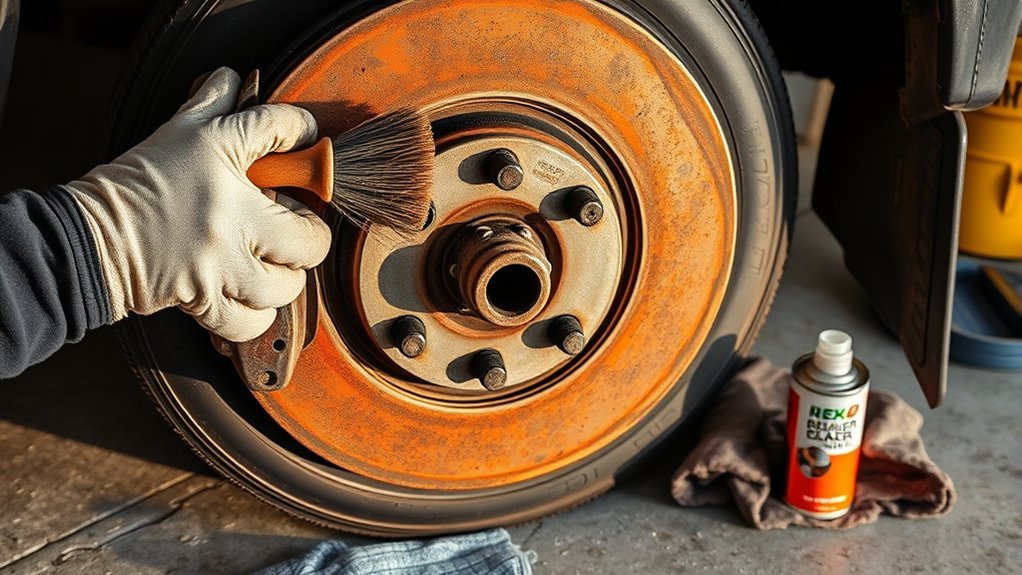
- Wash mud and silt from the underbody, brakes, and radiator area after the trip.
- Log any water crossings and follow up on noises, leaks, warning lights, or vibration.
Frequently Asked Questions
How deep of water can a Toyota Tacoma drive through?
There is no single safe depth for every Tacoma. A safe crossing depends on model year, trim, tire size, lift, load, breather height, intake sealing, current, and bottom firmness. For a stock Tacoma, keep crossings shallow and below vulnerable points such as lower door openings, breathers, and intake paths. Avoid deep or moving water.
Is 20 inches of water safe for a Tacoma?
Twenty inches may be too deep if the bottom is soft, the current is moving, the truck is heavily loaded, the water is muddy, or the vehicle has low breathers or unsealed components. Measure first and turn around if the water is near door openings, pushing the truck, or hiding the bottom.
Do you need a snorkel for Tacoma water crossings?
You do not need a snorkel for shallow, well-inspected crossings, but a properly sealed high-mount intake can reduce intake splash risk. A snorkel does not protect electronics, bearings, brakes, cabin seals, or drivetrain fluids. Breather extensions and post-crossing inspections are still important.
Should I use 4WD low when crossing water?
Use 4WD low for slow, controlled off-road crossings when traction is poor or the bottom is uneven. Shift before entering the water and follow the exact procedure in your Tacoma owner’s manual. Do not try to figure out 4WD settings in the middle of the crossing.
What should I do if my Tacoma stalls in water?
Do not restart it. Get people to safety, recover the truck with rated gear, and inspect the airbox, engine oil, transmission, transfer case, differentials, and electrical connectors. Tow the vehicle for service if water may have entered the intake or drivetrain.
Can a Tacoma drive through flooded roads?
No. Do not drive through flooded roads. Flood water can hide washed-out pavement, debris, open manholes, and strong current. Public safety agencies advise drivers to turn around instead of entering flood water.
Conclusion
A Tacoma is a capable truck, but water crossings punish guessing. Verify the depth, current, and bottom before committing. Keep the crossing shallow, use the right drive mode, maintain steady momentum, and never restart a stalled engine in water. Afterward, inspect the air intake, fluids, brakes, bearings, and electronics before regular driving.
The best decision is often to turn around. If the water is moving fast, rising, hiding the bottom, or reaching vulnerable components, skip it. A delayed trip is better than a hydrolocked engine, contaminated differentials, electrical damage, or an unsafe recovery.
Sources
- Toyota Owners Manuals and Warranties — official source for Tacoma owner manual guidance by model year.
- Toyota Tacoma Off-Road Precautions — backs up checking water depth, checking riverbed firmness, driving slowly, and avoiding deep water.
- Toyota Tacoma Submerged Vehicle Guidance — backs up escape and safety guidance if water is rising or the vehicle may be flooded.
- National Weather Service: Turn Around Don’t Drown — backs up warnings about moving water carrying away vehicles.
- NHTSA: Hurricane- and Flood-Damaged Vehicles — backs up inspection concerns before starting or using a flood-damaged vehicle.
- Toyota Newsroom: Trailhunter Grade Features — backs up factory high-mount intake, skid plates, and overlanding equipment details.