
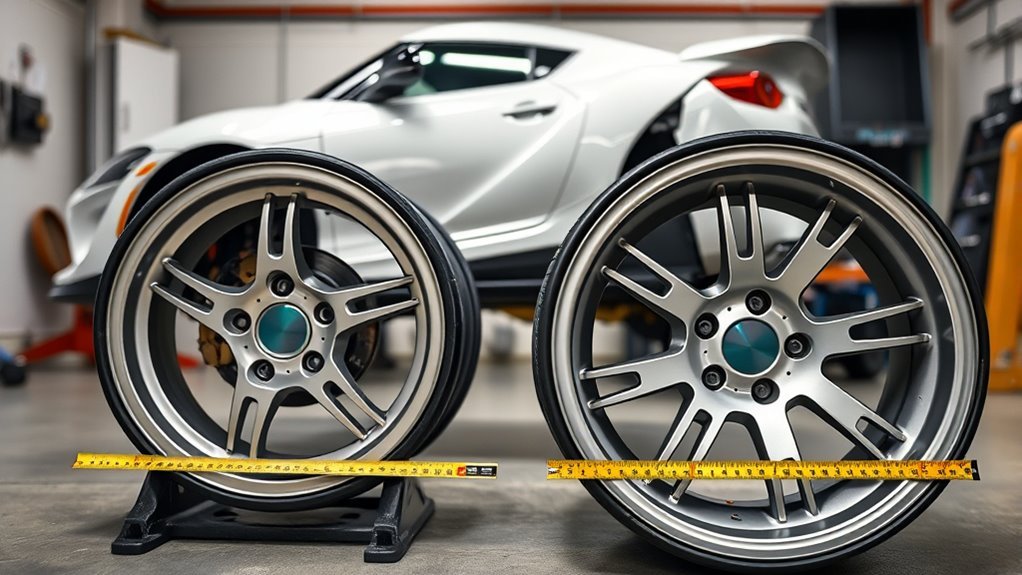
Supra wheel offset and backspacing determine how far a wheel sits inward or outward, whether it clears the brakes and suspension, and whether the tire can contact the fender. For a common US-market MK5 GR Supra 3.0 comparison baseline, use 19×9 ET32 front and 19×10 ET40 rear. Toyota’s current 2026 product summary confirms the 19-inch wheel package with 255/35ZR19 front and 275/35ZR19 rear tires, although you should confirm the exact offset from the wheel stamping or Toyota parts data. Tire construction, ride height, alignment, brake package, and spoke shape can still change the final result.
Last updated: July 22, 2026 — Toyota wheel and tire equipment, NHTSA data, fitment formulas, and current wheel-manufacturer guidance were rechecked.
Quick Answer
For a stock-bodied MK5 GR Supra, compare proposed wheels against the commonly documented 19×9 ET32 front and 19×10 ET40 rear baseline. Mild street fitments often use 19×9 ET25–28 front with 19×10 ET38 rear, while a wider performance-street setup may use 19×9.5 ET25 front and 19×10.5 ET35 rear. These are starting points, not universal guarantees. Confirm brake-template clearance, real tire width, suspension clearance, alignment, and full steering and suspension travel before driving.
Key Takeaways
- Lower offset pushes the wheel outward. That creates more poke and usually increases inner clearance, but it can cause fender or liner contact.
- Higher positive offset moves the wheel inward. That helps outer-fender clearance but can reduce space near the strut, spring perch, control arm, or inner liner.
- Backspacing changes with both width and offset. Use: backspacing = (advertised wheel width + 1) ÷ 2 + offset ÷ 25.4.
- Width changes both sides of the wheel. Half of any added width moves toward the suspension and half moves toward the fender before the offset difference is applied.
- MK5, MK4, and MK3 Supras do not share all fitment specifications. MK5 uses a 5×112 bolt pattern and lug bolts, while A70 and A80 Supras commonly use 5×114.3 and lug nuts.
- Always mock-fit. Check steering lock, brake-caliper clearance, suspension travel, tire load rating, center bore, and lug or bolt engagement before regular driving.
At a Glance
| Time Required | 30–60 minutes for measuring and a basic mock-fit check |
| Difficulty | Moderate; the math is simple, but safe clearance testing matters |
| Tools Needed | Straight edge, tape measure or caliper, wheel chocks, jack, rated jack stands, torque wrench, and brake template or test wheel |
| Cost | Free for calculations; a professional test fit or alignment may add shop labor |
Recommended Supra Offsets and Backspacing by Setup
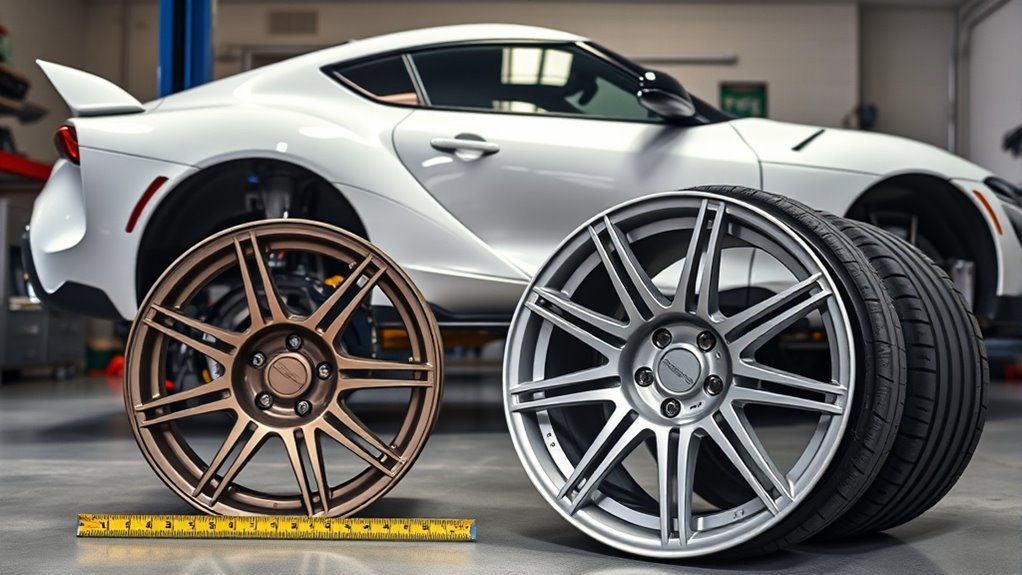
If you’re fitting aftermarket wheels on a Toyota Supra, compare the proposed setup with the wheel already on the car. Toyota’s 2026 GR Supra product summary confirms 19-inch forged-aluminum wheels with 255/35ZR19 front and 275/35ZR19 rear Michelin Pilot Super Sport tires. Toyota does not publish the offset in that summary, so confirm the offset from the wheel stamping or reliable parts data.
Current wheel-manufacturer guidance provides several useful MK5 starting points. The table below compares them with the commonly documented 19×9 ET32 front and 19×10 ET40 rear baseline.
| Setup | Wheel and Tire Reference | Position Change | Main Check |
|---|---|---|---|
| OE-style baseline | Front: 19×9 ET32 with 255/35R19 Rear: 19×10 ET40 with 275/35R19 |
Reference position | Confirm the wheel stamping and exact model-year brake package |
| Mild street fitment | Front: 19×9 ET25–28 Rear: 19×10 ET38 Often paired with OE-size tires |
Front moves about 4–7 mm outward; rear moves about 2 mm outward | Front fender and liner clearance at full lock |
| Wider performance street | Front: 19×9.5 ET25 with 265/35R19 Rear: 19×10.5 ET35 with 295/30R19 |
Front outer lip moves about 13.4 mm outward; rear outer lip moves about 11.4 mm outward | Real tire width, ride height, camber, front liner, and rear-quarter clearance |
The mild and wider examples above align with fitments published in the APEX GR Supra wheel and tire fitment guide. They are not guarantees for every wheel design or tire. A concave wheel can fail caliper clearance even when its width and offset look correct, and one brand’s 265 tire may measure wider than another brand’s 275.
Note: The size stamped on the rear of the wheel, such as 19x10J ET40, is more reliable than a generic seller listing. “ET” identifies the offset in millimeters.
[Products Worth Considering]

This 3M headlight restoration kit helps remove cloudy yellow haze from plastic automotive lenses to improve appearance and visibility. It includes Trizact refining discs, clear coat wipes, a foam pad, and a glove for a straightforward restoration process on headlights, taillights, fog lights, and more. Designed for easy use, it offers a cost-effective way to refresh worn lenses without replacing them.

This click torque wrench delivers accurate, repeatable tightening for automotive and home repair tasks, helping prevent over-tightening and fastener damage. Its dual-range scale, knurled non-slip grip, and durable ratchet head make it easy to use, while the included extension bar and storage case add extra convenience.

This anti-theft license plate screw kit helps secure your plate with tamper-resistant hardware designed for cars, trucks, motorcycles, and SUVs. Made from corrosion-resistant stainless steel, it also includes foam pads, washers, covers, nylon inserts, and tools for a cleaner, quieter, more secure installation.
What Is the Difference Between Wheel Offset and Backspacing?
Offset measures the mounting face relative to the wheel’s centerline and is normally stated in millimeters. A positive offset places the mounting face toward the outside face of the wheel. On two wheels with the same width, a higher positive offset moves the wheel inward, while a lower offset moves it outward.
Backspacing measures from the rear outer wheel lip to the mounting face and is normally stated in inches. It shows how far the rear of the wheel reaches toward the strut, spring perch, control arm, brake hardware, and inner liner. Because the measurement begins at the outer lip, backspacing changes when either the wheel width or offset changes.
| Measurement | Reference Points | Most Useful For |
|---|---|---|
| Offset | Wheel centerline to hub mounting face | Comparing stance, poke, and wheel-position changes |
| Backspacing | Rear outer lip to hub mounting face | Checking inner suspension and barrel clearance |
| Spoke profile | Mounting pad and spoke face relative to the caliper | Confirming brake-caliper clearance |
To measure backspacing, lay the wheel face down on a protected surface, place a straight edge across the rear lip, and measure down to the mounting pad. Wheel Pros describes the same straight-edge method in its offset and backspacing guidance.
For a complete physical measuring procedure, including center-bore, brake-template, and mounted-wheel checks, use the site’s Supra wheel offset measurement guide.
Pro Tip: Do not rely on offset alone. Two wheels with the same offset have different inner and outer positions when their widths differ. Two wheels with identical width and offset can also clear the brakes differently because mounting-pad thickness and spoke shape vary.
Factory Supra Specs: Common Starting Points by Generation
Supra wheel specifications vary by market, trim, brake package, and model year. Treat the legacy-generation figures below as commonly cited references rather than universal specifications. Confirm the door label, owner’s manual, wheel stamping, Toyota parts information, and brake package before ordering.
| Generation | Common Reference | Approx. Backspacing | Fitment Note |
|---|---|---|---|
| MK3 / A70 | 16×7 ET37 is a commonly cited late-model reference | About 5.46 in. | Commonly 5×114.3 with lug nuts. Verify the exact market, model year, wheel stamping, and brake package. |
| MK4 / A80 Turbo | 17×8 ET50 front and 17×9.5 ET50 rear are commonly cited OE references | About 6.47 in. front and 7.22 in. rear | Commonly 5×114.3 with lug nuts. Confirm market-specific brakes, wheel stamping, center bore, and tire size. |
| MK5 / A90-A91 GR Supra | 19×9 ET32 front and 19×10 ET40 rear are common US-market 3.0 references | About 6.26 in. front and 7.07 in. rear | Commonly 5×112, 66.6 mm center bore, and M14x1.25 lug bolts. Confirm the exact wheel and vehicle specification. |
Use the verified wheel already on the car as your zero point. Changing from a 19×10 ET40 rear wheel to a 19×10 ET30 wheel moves the complete wheel about 10 mm outward because the width stays the same. If you change width at the same time, part of the added width moves inward and part moves outward.
How Do Offset and Backspacing Affect Supra Clearance, Stance, and Brakes?
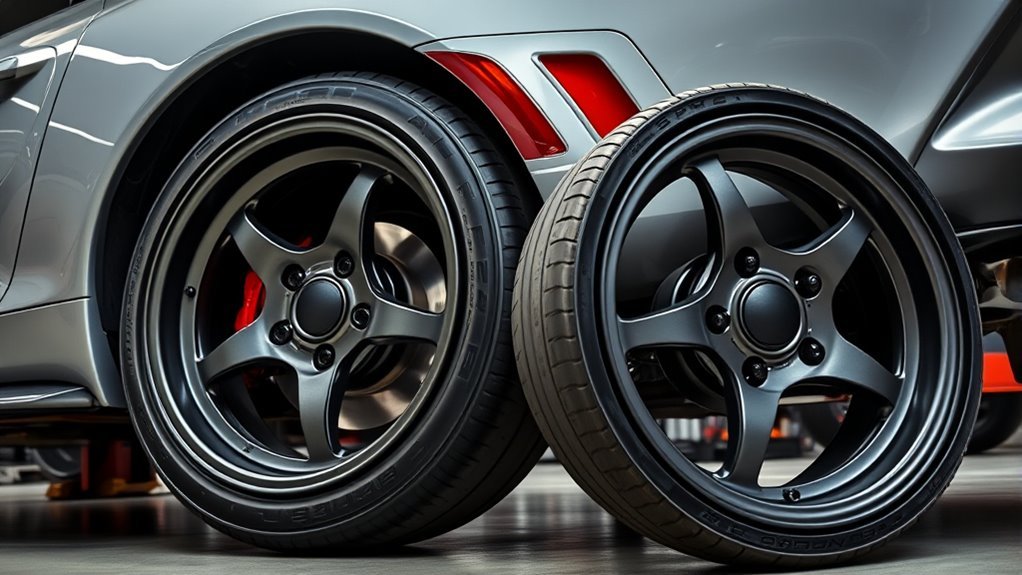
Offset is the quickest way to compare wheel position and visible poke. Backspacing is useful for estimating how far the rear barrel reaches toward the suspension. Neither measurement confirms brake clearance because spoke shape and mounting-pad design can change the space in front of the caliper.
| Change | What Happens | Main Risk |
|---|---|---|
| Lower offset | Wheel moves outward when width stays the same | Fender, bumper-tab, or liner contact |
| Higher positive offset | Wheel moves inward when width stays the same | Strut, spring, control-arm, or inner-liner contact |
| Wider wheel, same offset | Half the added width moves inward and half outward | Both inner and outer clearance become tighter |
| Different spoke design | Caliper space can change without a width or offset change | Caliper-to-spoke contact |
| Large offset departure | Changes scrub radius and leverage on the hub and suspension | Altered steering feel, kickback, and component loading |
A setup that clears while parked is not automatically safe through steering and suspension travel. The tire can move toward the liner at full lock, toward the fender during compression, or laterally as suspension geometry changes.
Warning: Do not drive on a wheel-and-tire setup that contacts a brake caliper, suspension part, fender liner, or body panel. Even light rubbing can damage a tire sidewall, brake component, wheel, or bodywork.
NHTSA recorded 511 deaths in tire-related traffic crashes during 2024. Wheel and tire changes should therefore be checked for suitable size, pressure, load rating, speed rating, hardware, and clearance before regular driving.
[Products Worth Considering]

This VANMASS car phone holder delivers secure, versatile mounting for dashboard, windshield, and air vent use. Its upgraded suction cup and reinforced hook clip are designed to keep phones stable on rough roads, while the adjustable arm and 360-degree ball joint help you find a comfortable viewing angle. Built with durable materials and broad phone compatibility, it offers one-handed operation and reliable everyday driving convenience.

These black license plate screws are designed to securely fasten rear metal plates on compatible Lexus, Toyota, and Honda vehicles. Made from rust-resistant 18-8 stainless steel with a black oxidized finish, they offer durable protection against corrosion while maintaining a clean, low-profile look. The M6-1.0 x 16 mm pan-head design fits many vehicles with a metal threaded screw retainer and comes in a convenient pack for easy installation.

Quality of material:The steering wheel is made of real carbon fiber 3K high-gloss carbon fiber with epoxy resin coating, carbon fiber, ultra-light and strong, with high heat and corrosion resistance. Uniform material and symmetrical shape. Nappa perforated leather parts on the steering wheel are expertly hand-stitched to absorb perspiration quickly and prevent slippage when steering,. Reduces vibration and pressure on your hands, making your driving experience more relaxing and enjoyable. Bring you a better driving experience
Should You Choose a Staggered or Square Supra Wheel Setup?
A staggered setup uses wider rear wheels or tires than the front. It matches the factory layout of many Supras and supports rear traction, but it normally prevents front-to-rear tire rotation. A square setup uses the same wheel and tire size at all four corners, which can simplify rotation and suit some track goals, but the wider front fitment needs careful suspension, liner, brake, and steering-lock checks.
Common MK5 starting points include:
- OE-style staggered: 19×9 ET32 front with 255/35R19 and 19×10 ET40 rear with 275/35R19.
- Mild street staggered: 19×9 ET25–28 front and 19×10 ET38 rear, often with the factory-size tires.
- Wider performance staggered: 19×9.5 ET25 front with 265/35R19 and 19×10.5 ET35 rear with 295/30R19, subject to tire model, alignment, ride height, and brake clearance.
- Track-oriented square: 18×10 or wider square configurations can work on selected MK5 builds, but may require specific offsets, added front negative camber, spacers, slimmer suspension hardware, or steering-lock compromises.
Lowering the car narrows the margin for error. It reduces static fender gap and changes where the tire travels relative to the liner and body. Added negative camber may improve outer clearance at the top of the tire but does not guarantee clearance at the bumper tab, inner liner, suspension, or full steering lock.
2026 Final Edition note: Toyota lists upgraded front brake hardware for the MkV Final Edition. Use a brake-clearance template supplied for the exact wheel and brake package rather than assuming that a wheel clearing another MK5 Supra will also clear the Final Edition.
Tire note: When changing wheel width or tire size, confirm load index, speed rating, inflation requirements, overall diameter, and permitted rim-width range. A nominal tire size does not reveal its exact mounted section width or shoulder shape.
[Products Worth Considering]

Compatible Models:This steering wheel is primarily for Toyota GR Supra/A90/A91 MKV 2020+.Compatible with all trims including 2.0, 3.0, 3.0 Premium, A91 Edition, and the new Manual Transmission (MT) models.It does not support heating .If you have any questions about compatibility, please feel free to contact us at any time.
✅ ENHANCE YOUR RIDE: Iconic Supra 'S' logo pops with vibrant red and silver colours against sleek carbon fiber and polished chrome

【Precision Fit for GR Supra A90/A91】Specially designed for 2019-2025 GR Supra A90/A91, this carbon fiber steering wheel offers a direct OEM replacement for your factory unit. It retains full compatibility with your vehicle’s original airbag, buttons, and paddle shifters, delivering a seamless factory integration with a premium upgrade feel.
How Do You Convert Offset to Backspacing?
Advertised wheel width is measured between the bead seats, while backspacing is measured from the rear outer lip. For a practical estimate, add about 1 inch to the advertised width before locating the centerline.
Backspacing in inches = (advertised wheel width + 1) ÷ 2 + offset ÷ 25.4
Offset in millimeters = (backspacing − ((advertised wheel width + 1) ÷ 2)) × 25.4
| Wheel | Offset | Approx. Backspacing | What It Means |
|---|---|---|---|
| 19×9 | +32 mm | 6.26 in. | Common MK5 front comparison baseline |
| 19×9.5 | +30 mm | 6.43 in. | Wider front wheel with greater backspacing than the 19×9 ET32 baseline |
| 19×9.5 | +25 mm | 6.23 in. | Common wider performance-street front reference |
| 19×10 | +40 mm | 7.07 in. | Common MK5 rear comparison baseline |
| 19×10.5 | +35 mm | 7.13 in. | Wider performance-street rear reference |
The “+1 inch” is an estimate because flange thickness and lip design vary. Measure the actual wheel when small clearance margins matter.
How Do You Calculate Inner and Outer Wheel Movement?
To compare a new wheel with the current wheel, convert the width difference to millimeters and divide it by two. Then apply the offset change. In the formulas below, offset change means the new offset minus the old offset.
Outer movement in millimeters = half the width increase − offset change
Inner movement in millimeters = half the width increase + offset change
A positive outer result means the new outer lip moves farther toward the fender. A positive inner result means the new inner lip moves closer to the suspension. A negative inner result means the new wheel gains inner clearance.
Worked Example: 19×9 ET32 to 19×9.5 ET25
- The wheel becomes 0.5 inch wider: 0.5 × 25.4 = 12.7 mm.
- Half the width increase is 6.35 mm.
- The offset change is 25 − 32 = −7 mm.
- Outer movement = 6.35 − (−7) = 13.35 mm farther outward.
- Inner movement = 6.35 + (−7) = −0.65 mm, so the wheel gains about 0.65 mm of inner clearance.
This explains why a 19×9.5 ET25 front wheel can look much more flush than a 19×9 ET32 wheel without necessarily moving closer to the strut. The mounted tire can still be wider, however, so wheel-lip calculations do not replace tire-clearance checks.
Worked Example: 19×10 ET40 to 19×10.5 ET35
- The added width is again 12.7 mm, or 6.35 mm per side.
- The offset change is 35 − 40 = −5 mm.
- Outer movement = 6.35 − (−5) = 11.35 mm farther outward.
- Inner movement = 6.35 + (−5) = 1.35 mm closer to the suspension.
The rear wheel therefore gains substantial outward width while using about 1.35 mm more inner space. Tire section width and suspension travel may create a larger practical change than the bare-wheel calculation.
Practical Fitment Checklist and When to Consult a Pro
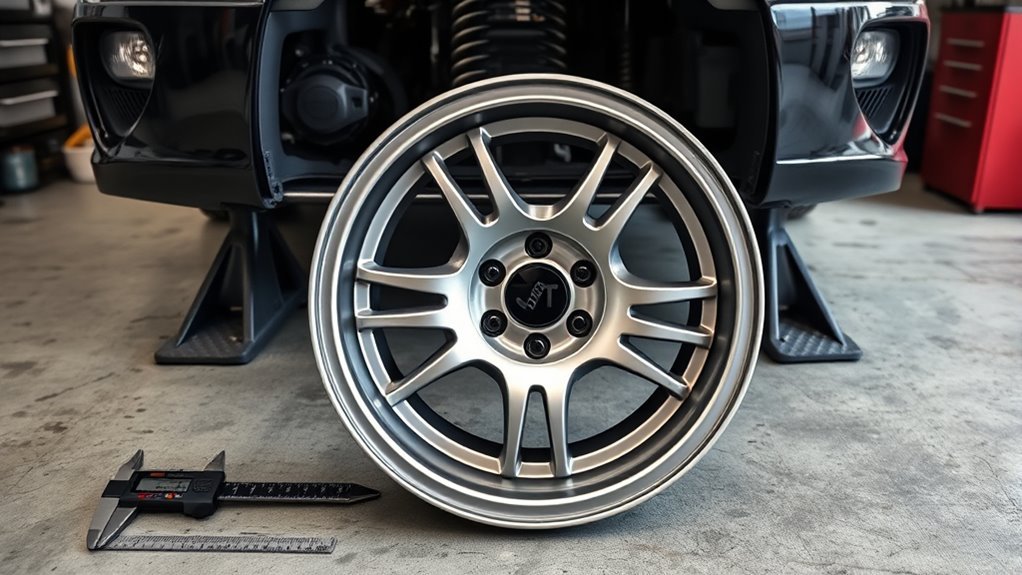
Before finalizing a Supra wheel choice, complete the following checks. They catch problems that a width-and-offset calculator cannot see.
- Vehicle identity: Confirm the Supra generation, exact model year, trim, brake package, suspension, and any prior modifications.
- Bolt pattern: MK5 GR Supras commonly use 5×112, while A70 and A80 Supras commonly use 5×114.3. Do not treat them as interchangeable.
- Center bore: Confirm that the wheel seats correctly on the hub or uses the correct application-specific hub-centric ring.
- Hardware: Match the thread, seat type, length, and required engagement. MK5 cars use lug bolts; A70 and A80 cars commonly use lug nuts.
- Brake clearance: Use the wheel manufacturer’s template for the exact wheel diameter, width, offset, and brake package. Check spoke and inner-barrel clearance.
- Inner clearance: Inspect the strut, spring perch, control arm, brake hose, wheel-speed wiring, and inner liner.
- Outer clearance: Inspect the fender lip, bumper tab, side-skirt area, liner fasteners, and rear quarter panel.
- Steering lock: Turn the front wheels fully in both directions and inspect the tire and wheel through the complete range.
- Suspension travel: Check loaded clearance through the expected range of motion. Static ride-height clearance alone is insufficient.
- Tire specification: Confirm the permitted rim-width range, load index, speed rating, overall diameter, real section width, and inflation requirements.
- Alignment: Check camber and toe after significant wheel, tire, ride-height, or suspension changes. Incorrect alignment changes clearance, handling, and tire wear.
- Final torque check: Use the correct torque specification and tightening sequence for the vehicle and hardware. Recheck as directed by the wheel or hardware manufacturer.
Lifting safety: Use Toyota-approved lifting points, wheel chocks, and correctly rated jack stands on a stable surface. Never work beneath a vehicle supported only by a jack. Have a qualified shop perform loaded-suspension checks if you do not have the equipment or experience to complete them safely.
Consult a qualified wheel, tire, or alignment professional if you are changing brake kits, using spacers, running offsets far from the verified baseline, lowering the car substantially, fitting a square track setup, or selecting tires outside the manufacturer’s listed sizes. A professional should also inspect any setup with minimal clearance or unexplained vibration.
Spacer warning: A spacer reduces effective offset by its thickness. A 10 mm spacer on an ET40 wheel creates an effective ET30 position. Use only application-correct, hub-centric components with suitable hardware, centering, and thread engagement. A spacer does not fix an incompatible spoke profile or incorrect wheel load rating.
How These Fitment Figures Were Checked
This guide combines current Toyota wheel-and-tire equipment information, published wheel-manufacturer fitment guidance, standard offset and backspacing formulas, and comparison calculations. It does not claim that every listed wheel design, tire model, brake package, or suspension combination was physically tested on every Supra.
Published fitments establish a useful starting point, but the final installation must be checked on the actual vehicle. Tire casing width, wheel-spoke shape, casting tolerances, alignment, ride height, brake hardware, and suspension modifications can all change clearance.
Frequently Asked Questions
What is the offset on GR Supra wheels?
A commonly documented US-market MK5 GR Supra 3.0 reference is 19×9 ET32 front and 19×10 ET40 rear. Toyota’s current product summary confirms the matching 19-inch wheel and 255/35ZR19 front and 275/35ZR19 rear tire package, but you should confirm offset from the wheel stamping or Toyota parts data for your exact car.
What offset works for 19×9.5 wheels on a MK5 Supra?
A 19×9.5 ET25 front wheel is a published performance-street reference for the MK5 Supra. Other offsets may fit, but the result depends on tire width, ride height, camber, suspension, brake package, and wheel-spoke shape. Use the exact wheel manufacturer’s fitment and brake-template data.
Does a lower offset make the wheel stick out more?
Yes, when wheel width stays the same. A 19×10 ET30 wheel sits about 10 mm farther outward than a 19×10 ET40 wheel. When width also changes, calculate the added half-width and the offset difference together.
How do I convert offset to backspacing?
Use this practical estimate: backspacing = (advertised wheel width + 1) ÷ 2 + offset ÷ 25.4. The added inch accounts approximately for the outer lips because advertised wheel width is measured between the bead seats.
How much farther out does a 19×9.5 ET25 wheel sit than a 19×9 ET32 wheel?
The outer wheel lip moves about 13.35 mm farther outward. The wider wheel adds 6.35 mm per side, and the 7 mm lower offset adds another 7 mm of outward movement. The inner lip gains about 0.65 mm of clearance, although the mounted tire may still sit closer to the suspension.
How do wheel spacers change effective offset?
A spacer lowers effective offset by the spacer thickness. For example, a 10 mm spacer changes an ET40 wheel to an effective ET30 position and moves the wheel about 10 mm outward. Confirm centering, hardware length, engagement, load suitability, and remaining fender clearance.
Do I need fender rolling for 19×10 or 19×10.5 Supra wheels?
Not necessarily. The answer depends on generation, axle, offset, tire width, tire shoulder shape, ride height, camber, liner position, and suspension travel. A conservative wheel may clear without body changes, while a lower-offset wheel or wider tire may require additional clearance work.
Are MK4 Supra wheels and MK5 Supra wheels interchangeable?
They are not direct bolt-ons. MK4 Supra wheels commonly use a 5×114.3 bolt pattern with lug nuts, while MK5 GR Supra wheels commonly use 5×112 with lug bolts. Center bore, offset, brake clearance, wheel load rating, and hardware seat type must also match.
Conclusion
You can choose Supra wheels more confidently when you use offset and backspacing as clearance measurements rather than appearance numbers. Begin with the verified wheel already on your car, calculate how the proposed width and offset change both the inner and outer positions, and then check the actual wheel, tire, brakes, suspension, and body through steering and suspension travel.
For many stock-bodied MK5 street cars, the commonly documented 19×9 ET32 front and 19×10 ET40 rear setup is a useful baseline. Mild and wider configurations can work, but no offset number guarantees fitment across every tire, wheel-spoke design, ride height, alignment, or brake package. Calculate first, use the manufacturer’s brake template, mock-fit the actual hardware, and involve a qualified shop whenever clearance is close.
Sources
- Toyota GR Supra official product page — current US model and equipment context.
- Toyota Canada 2026 GR Supra product summary — current 19-inch wheel package, tire sizes, and Final Edition equipment.
- NHTSA TireWise — tire selection and maintenance guidance and the 2024 tire-related fatality figure.
- Wheel Pros fitment help center — offset direction and straight-edge backspacing measurement.
- APEX GR Supra wheel and tire fitment guide — published MK5 street and performance wheel-and-tire configurations and modification notes.



[…] while excessive toe or tire damage can still make the car wander or tramline. Review the separate Supra wheel offset and backspacing guide before combining geometry changes with wider wheels or […]