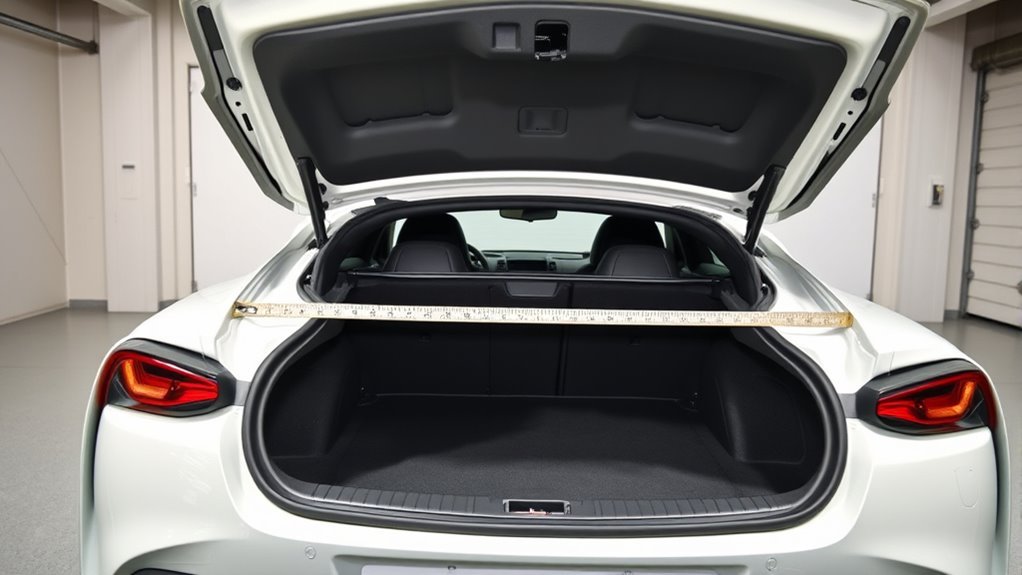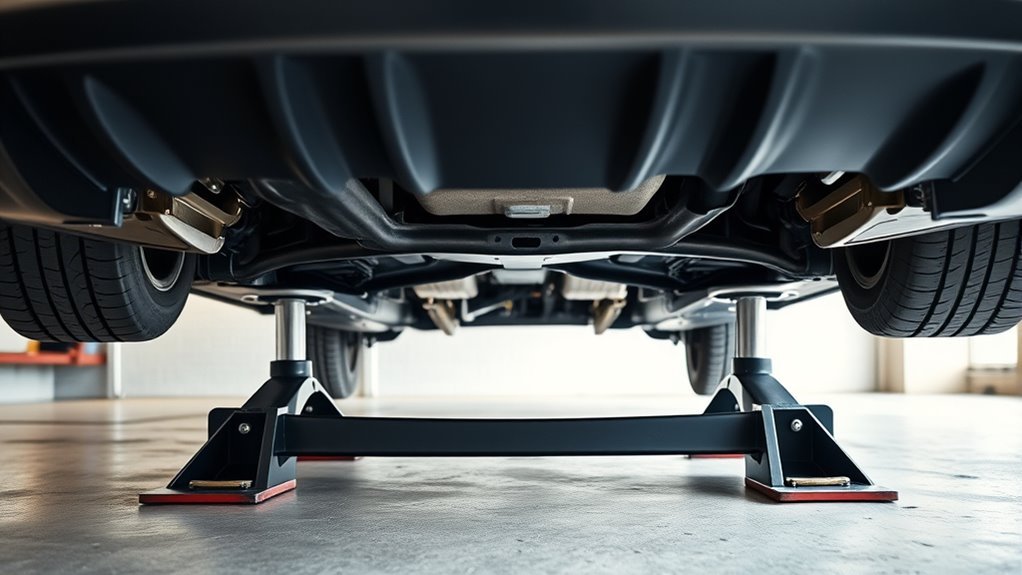
Use the Toyota Supra jack points only where the car is designed to carry load. On a GR Supra/MKV Supra, that means the front center lift point, the solid rear differential housing area specified in repair guidance, or the side factory lift pads. The goal is simple: lift from a reinforced point, support the car on rated stands, and never trust a hydraulic jack by itself.
By [VERIFY: add real author name/credentials] · Last updated: August 19, 2026
Quick Answer
Jack a Toyota GR Supra from the reinforced front center jacking point, the solid black rear differential housing area behind the fins, or the factory side lift pads. Avoid the oil pan, plastic undertrays, rocker panels, differential fins, seams, and gasket areas. Always lower the car onto rated jack stands before working underneath.
Key Takeaways
- Use only reinforced OEM-style lift points: the front center point, the rear differential housing lift area, and the side plastic lift pads.
- Never jack on the oil pan, silver differential cooling fins, plastic covers, side skirts, thin floor panels, or suspension arms unless the service manual specifically calls for it.
- Use a low-profile floor jack, a rubber saddle pad, and BMW-style side-pad adapters to protect the Supra’s low body and plastic lift blocks.
- Before working under the car, set rated jack stands at the factory side lift pads and confirm the vehicle is stable on flat, solid ground.
At a Glance
| Time Required | 10–20 minutes to lift and secure the car |
| Difficulty | Moderate, mainly because of low clearance |
| Tools Needed | Low-profile floor jack, rated jack stands, wheel chocks, rubber pad or BMW-style lift-pad adapters, torque wrench |
| Cost | Usually $150–$400 if buying basic lifting tools |
Quick Answer: Where to Jack the Toyota Supra Front, Rear, and Sides
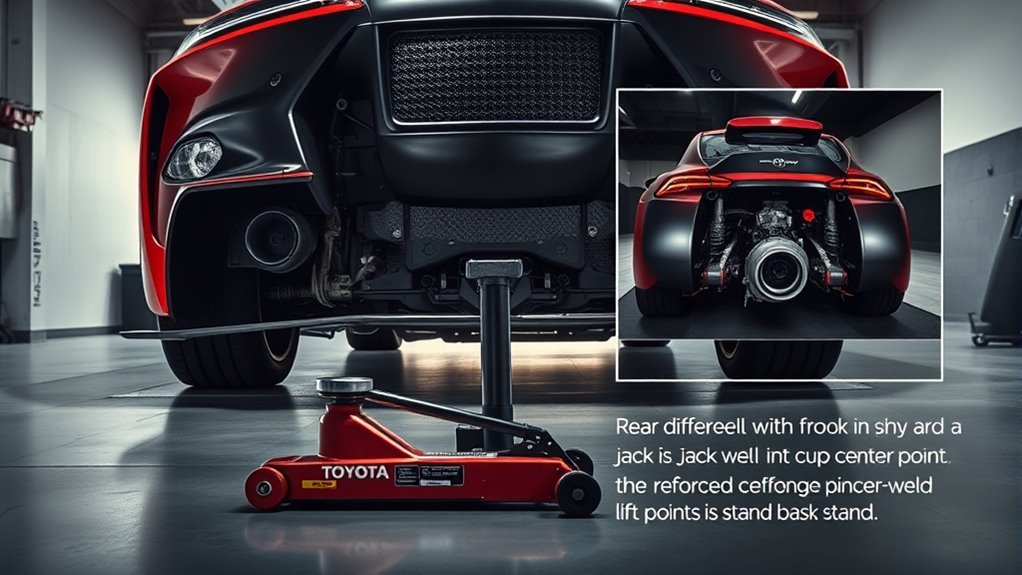
For the 2020+ Toyota GR Supra, the usual safe lifting points are the front center jacking point, the solid rear differential housing lift area, and the factory side lift pads under the rocker area. Those side pads are the same style of rectangular plastic lift blocks used on many BMW-based platforms, so a BMW-style jack pad adapter helps prevent chewing up the plastic.
Toyota Gazoo Racing ended GR Supra production in March 2026, but these jacking and support points apply across the full 2020–2026 (A90/MKV) production run unless your own service documentation says otherwise. [VERIFY: confirm no mid-cycle chassis revision changed lift-point locations for your specific model year]
Warning: A hydraulic floor jack is for lifting, not for supporting the vehicle while you work. Lift the Supra, place rated jack stands at the correct support points, lower the car onto the stands, and only then work underneath.
Where to Jack the Supra: Exact OEM Points and Photos
Use the front center point to lift the front, the solid rear differential housing area to lift the rear, and the side lift pads for side lifting or jack stand support. Toyota’s owner resources point owners to official manuals, while detailed lift and service information is available through Toyota’s Technical Information System. Because lift-point damage can be expensive, verify the diagrams for your exact model year before doing heavy underbody work.
Where Is the Front Jack Point on a GR Supra?
At the front, place the floor jack under the reinforced circular jacking area on the front crossmember/subframe area. Keep the jack saddle centered, and do not let it touch the oil pan, plastic undertray, or unsupported panels. A rubber saddle pad helps spread load and reduces the chance of metal-on-metal slipping.
| Item | Action | Why It Matters |
|---|---|---|
| Front lift point | Center the jack on the reinforced circular front point | Loads the structural crossmember area |
| Oil pan and covers | Keep the saddle clear | Prevents cracking, bending, and leaks |
| Jack type | Use a low-profile floor jack | Fits under the low nose without scraping |
| Support | Move jack stands to the side lift pads | Keeps the vehicle supported on reinforced locations |
| Stability | Shake-check gently before going underneath | Confirms the stands are seated evenly |
Can You Jack a Supra From the Rear Differential?
At the rear, place the jack under the solid black differential housing area, not on the silver cooling fins, finned cover, gasket seam, or drain/fill plug area. Raise the car slowly and watch the saddle as load comes on. If the pad starts to slide or contact the fins, lower the car and reposition before lifting higher.
Note: Many Supra owners describe the rear lift point as “the diff,” but that does not mean any part of the differential is safe. The reinforced housing area is the target; the fins, seams, and gasket surfaces are not.
Side Lift Pads and Jack Stand Points
The side support points are the rectangular plastic lift pads under the rocker area. Use these for a two-post lift, side lifting, or jack stand placement after raising the vehicle from the front or rear center points. A slotted BMW-style adapter helps the stand or jack saddle engage the pad instead of crushing its edges.
How to Jack the Supra: Front and Rear Step-by-Step
Work on flat, solid ground with the transmission in Park or in gear, the parking brake set, and the opposite wheels chocked. Keep people, pets, and loose tools away from the car while lifting.
[Products Worth Considering]

This low-profile hydraulic floor jack is designed for vehicles with limited ground clearance, making it ideal for sports cars, lowered cars, and workshop maintenance. Dual pistons and rapid pump technology help lift vehicles faster with fewer strokes, while the durable steel construction and safety-focused saddle provide dependable support during repairs and routine service.

This low profile hydraulic trolley jack is built for fast, reliable lifting in garage and service environments. With a 2 ton capacity, it helps raise most cars with a compact profile that fits lower-clearance vehicles, while the swivel casters and large saddle support smooth positioning and added stability. A built-in overload protection valve adds an extra layer of safety during use.

These low profile jack stands provide secure vehicle support for routine garage and repair work on most cars and small vehicles. Built with a welded steel frame, adjustable ratchet design, and wide base for stability, they offer dependable lifting support with a concave saddle for safer contact. The low minimum height and compact design make them a practical choice for many automotive maintenance tasks.
Before You Lift
- Check the floor jack and jack stands for visible damage, leaks, missing pins, or bent parts.
- Confirm the jack and stands are rated for the load. OSHA jack guidance says rated capacity must be marked and must not be exceeded.
- Place the car on level concrete or another firm surface. Do not lift on soft asphalt, dirt, gravel, or a slope.
- Chock the wheels that will stay on the ground.
- Remove or loosen underbody access panels only if needed to reach the correct lift point.
Lifting the Front
- Slide the low-profile jack under the nose from the front.
- Line the saddle up with the front center reinforced jacking point.
- Pump slowly until the saddle makes full contact.
- Pause and verify the jack is centered, straight, and clear of plastic panels and the oil pan.
- Lift only as high as needed to place jack stands at the side lift pads.
- Lower the car gently until both stands carry the weight evenly.
Lifting the Rear
- Approach the rear differential housing with the jack centered under the vehicle.
- Place a rubber pad on the saddle if your jack has a hard metal cup.
- Position the saddle on the solid housing area behind the cooling fins, away from the cover seam and gasket.
- Raise the vehicle in small pumps and watch for pad movement.
- Place jack stands at the left and right side lift pads.
- Lower the vehicle onto the stands and confirm both sides are level.
The safest lift is boring: correct point, centered saddle, slow pumps, rated stands, and one final stability check before you crawl under the car.
Where to Place Jack Stands and Secure the Car
Place jack stands under the Supra’s factory side lift pads. Do not put stands under the oil pan, transmission pan, plastic panels, exhaust, rear diffuser, side skirts, floor pan, or differential fins. Avoid using suspension arms as stand points unless a Toyota repair procedure for your exact job says to do so.
- Front supported work: lift at the front center point, then place stands at the front side lift pads.
- Rear supported work: lift at the rear differential housing lift area, then place stands at the rear side lift pads.
- Four-corner support: lift one end, place stands, then lift the other end and place the remaining stands. Keep the car level and controlled.
Pro Tip: After the car is on stands, keep the floor jack lightly touching the original lift point as a backup without lifting the car off the stands. It should not replace properly placed stands, but it adds a margin while you work.
[Products Worth Considering]
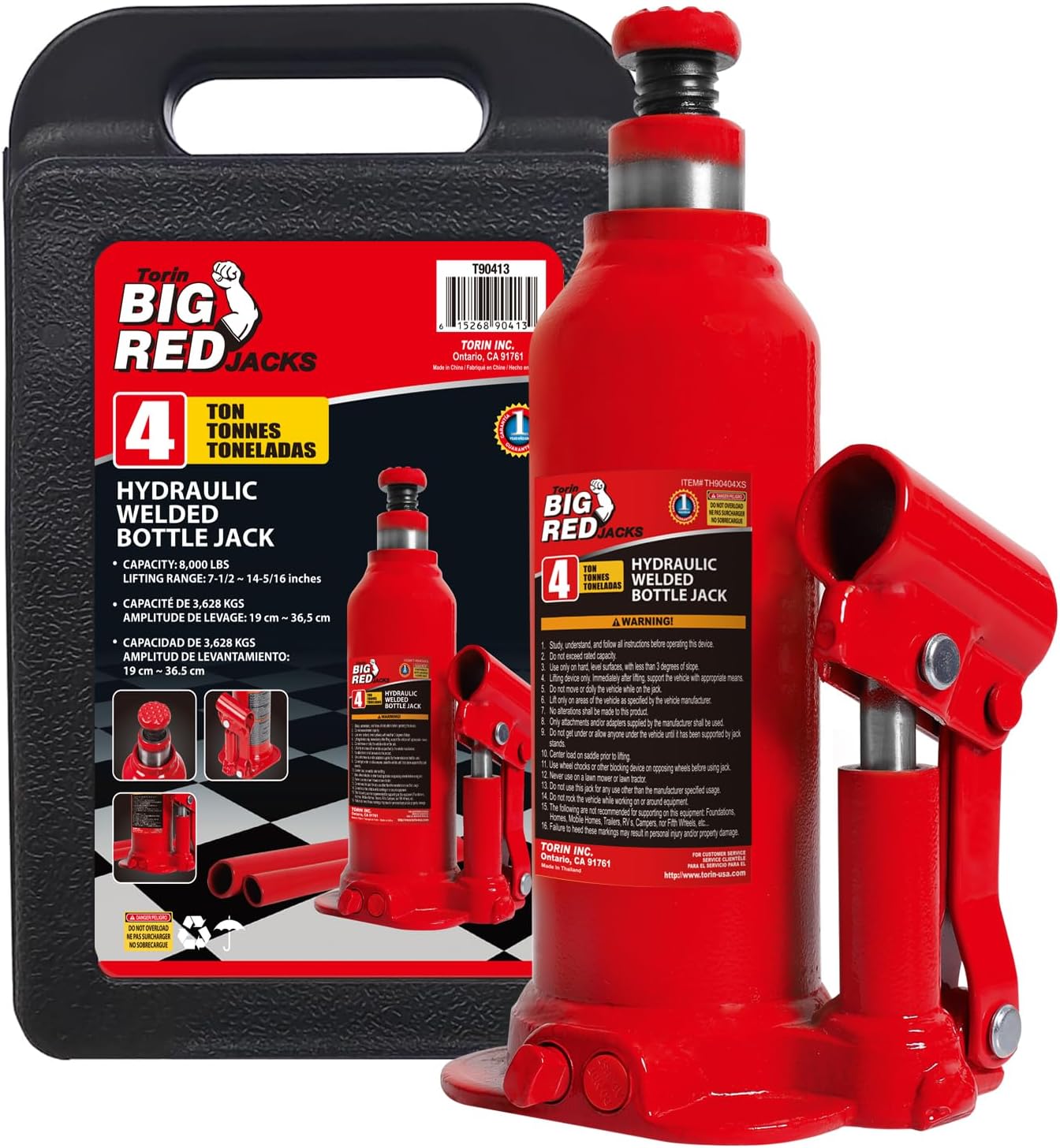
The Torin Big Red hydraulic bottle jack is built for residential and commercial lifting tasks, offering a stable wide base and rugged steel construction for dependable performance. Its smooth pressure pump, adjustable screw top extension, and serrated saddle make lifting easier and more secure, while the included carrying case simplifies storage and transport. Designed to meet ASME safety standards, it is ideal for vehicles, machinery, and other heavy-duty applications.

This 9-piece torque wrench set gives DIYers and professionals a versatile way to tighten fasteners with confidence across bikes, motorcycles, cars, trucks, and industrial equipment. It includes three click torque wrenches, multiple adapters, dual-scale measurement, and clear audible feedback to help prevent overtightening. Built with durable materials and stored in a portable case, it is designed for precise, organized, and reliable use.
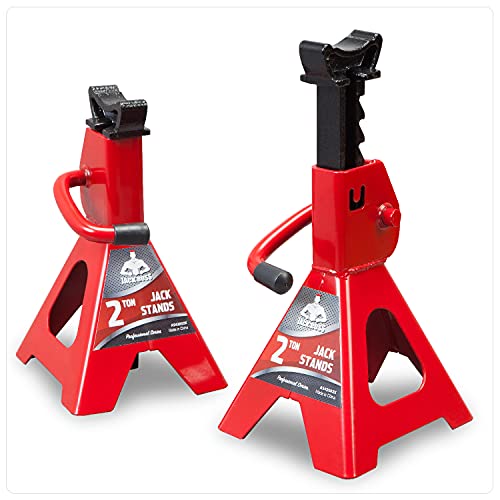
Specifications:2 ton (4,000 lb) capacity for single jack stand; Lifting range from min 9.8 " to max 15"; Net weight: 10.5 lb, which suitable for most 2 Ton Low profile autos, not recommendable for Pick-Up, Truck, too big SUVs etc. whose automobile chassis higher than 15".
Choose the Right Jack & Adapter for Low-Clearance Supras
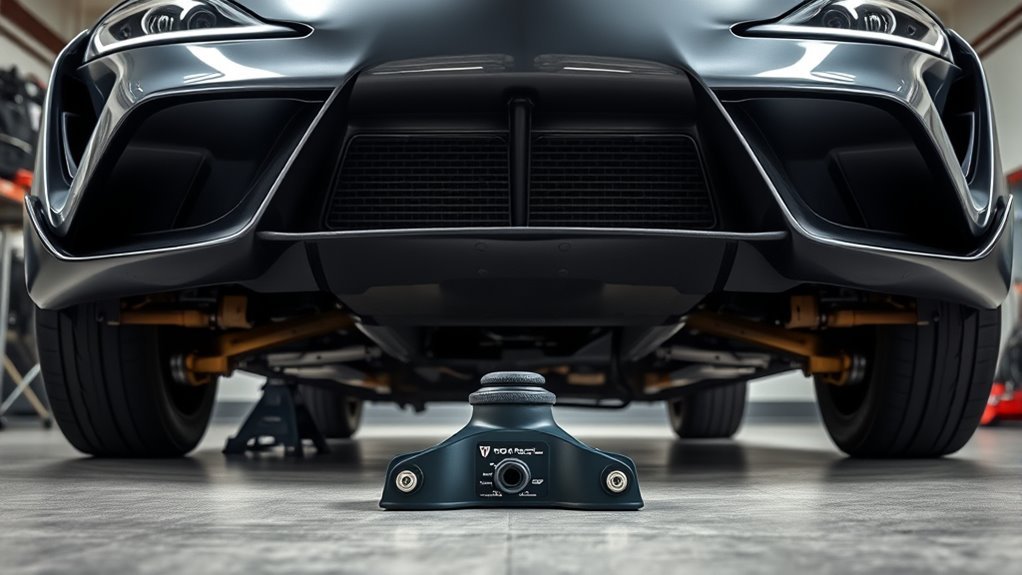
The GR Supra sits low, so the tool choice matters almost as much as the lift point. A tall jack can hit the bumper or undertray before it reaches the center point. A narrow metal saddle can also damage a plastic side pad if you lift without an adapter.
[Products Worth Considering]
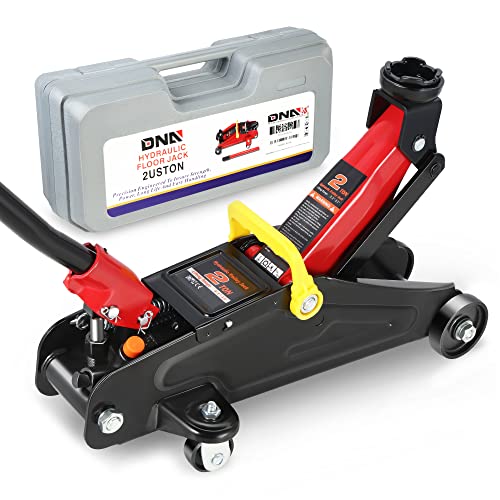
SPEEDY LIFT GARAGE JACK - This Hydraulic Trolley Jack features a 2 ton (4,000 lb) capacity with a min lifting height of 5.1" and a max height of 13". Allows you to easily lift the jack up to desired height, Great for garage service and heavy-duty industrial use. Suitable for vehicles up to 2TON/4000 lbs. Providing you with the essentials to lift and support most cars, Not recommendable for Pick-Up, truck, too big SUVs etc.

1.5x Overload Tested for Ultimate Safety: Every unit is rigorously tested to 4.5 tons (9,900 lb)—1.5x its rated capacity—before leaving the factory. This exceeds ANSI/ASME safety requirements, ensuring exceptional reliability for heavy-duty professional and home use.
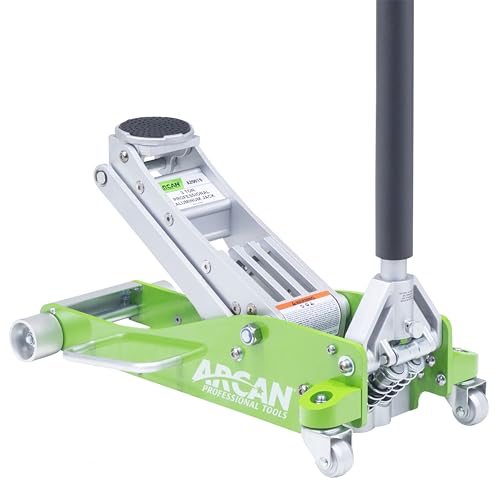
Capacity: Supports 3 Ton (6,000 lb.) for a wide range of passenger vehicles, SUVs, and light trucks
Low-Profile Floor Jacks
Choose a low-profile floor jack with enough reach to get to the front center point without pressing against the bumper cover. Many suitable jacks have a minimum saddle height around 3 to 4 inches, but measure your own car because lowering springs, splitters, and tire sizes change clearance.
BMW Pad Adapters
Use BMW-style rectangular pad adapters at the side lift pads. These adapters fit into the factory plastic blocks and spread the load. For the front center point and rear differential housing, a flat rubber pad or puck is usually more appropriate than a slotted side-pad adapter.
- Use side-pad adapters for the rectangular side lift pads.
- Use a rubber saddle pad or puck on broad metal lift areas.
- Do not stack random wood blocks between the jack and the car. If extra height is needed, use ramps or purpose-made cribbing on the ground side.
Measuring Clearance Needs
Before buying a jack, measure from the ground to the lowest front bodywork and from the front edge of the bumper to the front center lift point. The jack must be low enough to slide under the car and long enough to reach the lift point while the handle still has room to pump.
Owners commonly report needing roughly 24–36 inches of jack reach to bridge from the front bumper edge to the recessed jacking point, with a saddle that clears around 3 to 3.5 inches at rest — though this varies with lowering springs, splitters, and model year. [VERIFY: confirm exact clearance figures for your specific trim/year before buying a jack]
If Your Jack Won’t Reach the Point
Some stock low-profile jacks can’t bridge the distance to the recessed front point without extra clearance. If yours comes up short, drive the front wheels up onto a set of low-rise ramps or purpose-built maintenance blocks first, then slide the jack in from the added height. Don’t stack loose wood to gain reach — use ramps or cribbing rated for the job.
Common Mistakes & How to Avoid Lift-Related Damage
Most lift damage happens when the jack is close to the right area but not actually on the reinforced point. Slow down, use a flashlight, and check contact before the vehicle’s weight comes fully onto the jack.
- Jacking on the oil pan: can dent the pan, damage sealing surfaces, or cause leaks.
- Jacking on differential fins: can crack fins or stress the cover and gasket area.
- Using stands without adapters: can chew or split the plastic side pads.
- Lifting on soft ground: can let the jack or stands sink and tilt.
- Rushing the stability check: can leave the car balanced unevenly before you go underneath.
- A jack that won’t roll freely: one frequently reported owner mistake is a floor jack with a stuck caster wheel walking sideways mid-lift, letting the car’s weight shift off the crossmember and onto the oil pan. Roll the jack a few inches on the ground first to confirm every caster spins freely before you start pumping.
Warning: Never crawl under a Supra that is supported only by a floor jack. Hydraulic jacks can lose pressure or shift. Use properly rated jack stands on the factory support points every time.
Supra-Specific Manuals, Diagrams, and Adapter References
For exact lift diagrams, use Toyota’s official owner resources and repair information for your model year. The owner’s manual is useful for general safety and vehicle information, while Toyota’s Technical Information System is the official source for service procedures, body repair information, and lift/support diagrams.
If you use 3D-printed jack pad adapters, treat them as light-duty positioning aids, not certified lifting equipment. Print orientation, infill, material, heat exposure, and layer quality all affect strength. For serious under-car work, a commercial rubber or metal-reinforced adapter is the safer choice.
Frequently Asked Questions
Can I jack a Toyota GR Supra from the rear differential?
Yes, but only from the solid reinforced housing area specified in lift guidance. Do not put the jack on the silver cooling fins, gasket seam, cover edge, drain plug, or any thin cast feature.
Where do jack stands go on a Supra?
Put jack stands at the factory side lift pads under the rocker area. Use a pad adapter that matches the rectangular plastic lift block so the stand supports the pad cleanly instead of crushing its edges.
Can I use the pinch welds on a MKV Supra?
Use the factory side lift pads rather than bare pinch welds. The GR Supra uses plastic lift blocks at the side points, and the correct adapter helps protect them during lifting or support.
What floor jack is best for a lowered Supra?
Use a long-reach, low-profile floor jack with a low minimum saddle height and enough capacity for the vehicle. Measure your car first, especially if it has lowering springs, coilovers, a front splitter, or taller aftermarket tires.
How many foot-pounds should I torque my Supra wheels?
For the 2020+ GR Supra/MKV Supra, common service references list the wheel bolt torque at 140 Nm, which is about 103 lb-ft. Always confirm the specification for your exact model year and wheel setup, especially if you use aftermarket wheels or hardware.
Conclusion
The right Supra jack point depends on what you are trying to lift: front center point for the front, solid rear differential housing area for the rear, and factory side lift pads for side lifting and jack stand support. Keep the jack centered, protect the lift pads with the right adapter, avoid fragile parts, and never work under the car until it is sitting securely on rated stands.
Sources
- Toyota Owners Manuals and Warranties — official Toyota owner manual access for the GR Supra.
- Toyota Technical Information System — official Toyota repair information source for service procedures and lift/support diagrams.
- OSHA 29 CFR 1910.244: Jacks — jack capacity, marking, operation, and maintenance requirements.
- OSHA 29 CFR 1926.305: Hydraulic and Mechanical Jacks — rated capacity and firm-foundation guidance for jack use.
- NHTSA Tire Safety — tire and wheel safety context for maintenance after lifting.