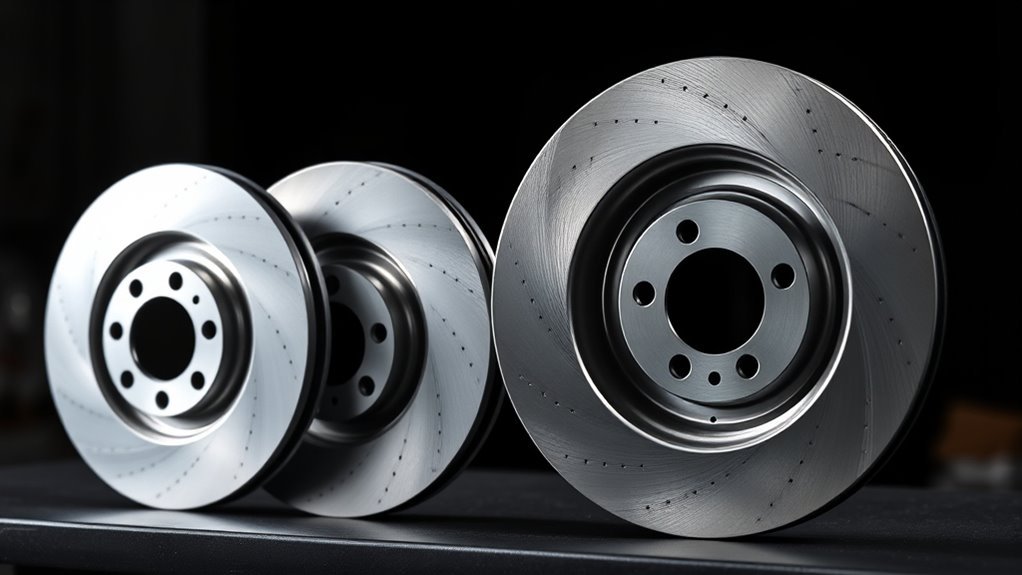
Toyota Supra brake rotor size varies by generation, axle, market, trim, and brake package. Common references include 302 × 22 mm front and 291 × 18 mm rear for the Brembo-listed A70/MA70 3.0 application, 296 mm or 323 mm front packages on the A80, and 330 × 24 mm or 348 × 36 mm front packages on U.S.-market GR Supras. Toyota’s 2024 U.S. specifications pair those GR front sizes with 330 × 20 mm or 345 × 24 mm rear rotors. Older A60 and A80 rear values below are replacement-catalog references, not universal factory specifications. Confirm the axle, VIN/build data, caliper, installed rotor number, diameter, thickness, hat height, and minimum thickness before ordering.
By Ryker Calloway · [VERIFY: add factual brake-service or automotive credentials if applicable] · Last updated: July 31, 2026
Specifications rechecked July 31, 2026 against Toyota U.S. brochures and newsroom material, Brembo catalog data, and current replacement-manufacturer references. Modified vehicles still require direct inspection and measurement.
Quick Answer
For a fast reference, many A70/MA70 3.0 listings use 302 × 22 mm front and 291 × 18 mm rear rotors. A80/MK4 cars commonly appear with 296 mm or 323 mm front packages. U.S. GR Supra 2.0 models use a 330 × 24 mm front package, while 3.0 models use 348 × 36 mm front rotors; rear packages are 330 × 20 mm or 345 × 24 mm by trim and model year. Independent U.S. tests report a 14.7-inch front rotor on the 2026 MkV Final Edition. Confirm the axle, brake package, part number, and measured dimensions before buying.
Key Takeaways
- The A60, A70, A80, and GR Supra use different brake packages, so generation alone is not enough to confirm fitment.
- A80/MK4 cars may use a smaller 296 mm front package or a larger 323 mm front package, with matching differences in calipers, pads, and rear rotors.
- U.S.-market GR Supra factory specifications include 330 × 24 mm and 348 × 36 mm front rotors, plus 330 × 20 mm and 345 × 24 mm rear packages; independent tests report a 14.7-inch front rotor for the 2026 MkV Final Edition.
- Minimum thickness matters as much as diameter. Use the discard limit stamped on the rotor or published for the exact part number.
- Once calipers, brackets, hubs, or knuckles have been changed, the installed hardware can override the car’s original VIN-based fitment.
- Treat “Toyota specification,” “Brembo catalog,” and “replacement-catalog reference” as different confidence levels; only the exact VIN or installed part confirms the car in front of you.
At a Glance
| Time Required | 15–30 minutes for diameter and thickness; 45–90 minutes if rotor removal or runout measurement is required |
| Difficulty | Beginner for basic measurement; intermediate for rotor removal and runout checks |
| Tools Needed | Jack, jack stands, wheel chocks, micrometer, ruler or tape measure, straightedge, dial indicator for runout, and torque wrench |
| Cost | No parts are required for identification; tool cost varies by micrometer and dial-indicator quality |
Six Checks Before You Order
Match all six: axle position, nominal diameter, nominal thickness, hat height/offset, center bore and bolt pattern, and rear parking-brake drum dimensions where used. Then verify the caliper and rotor part number. A match on diameter alone is not enough.
Toyota Supra Rotor Sizes at a Glance (By Generation and Brake Package)
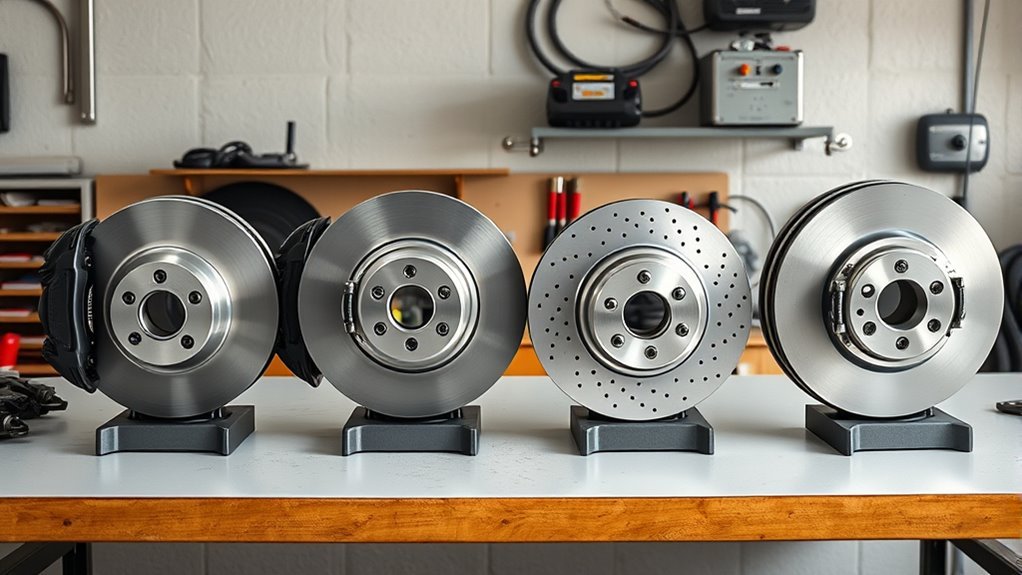
Supra brake rotors grew as vehicle weight, tire grip, speed, and heat-management needs changed. The table below separates the most common factory and replacement-catalog packages. It is a buying reference, not a substitute for inspecting the car. Market differences, production changes, and decades of brake conversions make direct confirmation essential.
| Generation / package | U.S. model years or application | Front rotor | Rear rotor | Fitment notes |
|---|---|---|---|---|
| A60 / Celica Supra | 1982–1985 | Common MA61 replacement-catalog reference: 258 × 20 mm; 19 mm minimum | Common MA61 replacement-catalog reference: 266 × 18 mm; 17 mm minimum | Typically 4-lug. Confirm production date, center bore, height, and the dimensions of the installed rotor. |
| A70 / MK3 3.0 MA70 | 1986.5–1992; exact application varies | Brembo catalog: 302 × 22 mm; 21 mm minimum | Brembo catalog: 291 × 18 mm; 17 mm minimum | Do not apply the MA70 specification automatically to GA70, JZA70, or converted cars. |
| A80 / MK4 smaller package | 1993–1998 U.S. model years | Brembo listing: 296 × 32 mm; 30 mm minimum | Common 16-inch / one-piston replacement reference: 307 × 16 mm; 15 mm minimum | Check caliper type, pad shape, wheel size, and the installed rear parking-brake drum dimensions. |
| A80 / MK4 larger turbo-style package | 1993–1998 U.S. model years; other markets vary | Common replacement listing: 323 × 30 mm; many listings use a 28 mm discard limit | Common 17-inch / two-piston replacement reference: 324 × 16 mm | Fixed multi-piston calipers and sufficient wheel clearance are required. Use the exact rotor marking for minimum thickness. |
| GR Supra 2.0 | 2021–2024 U.S. model years | Toyota specification: 330 × 24 mm | Toyota specification: 330 × 20 mm | Uses a smaller front package than the 3.0 Brembo setup. Do not order from “A90/A91” alone. |
| GR Supra 3.0 | 2020–2025 U.S. specifications shown; exact rear package varies | Toyota specification: 348 × 36 mm | 330 × 20 mm on smaller rear package; 345 × 24 mm on larger rear package | Rear package varies by trim and model year. Match the caliper, pad, rotor, and OEM part number. |
| GR Supra 3.0 Premium / selected A91 packages | Package and model year dependent | Toyota specification: 348 × 36 mm | Toyota specification on applicable packages: 345 × 24 mm | The 345 mm rotor is a rear application in these Toyota specifications, not a rounded 348 mm front rotor. |
| 2026 GR Supra MkV Final Edition | 2026 U.S. model year | Independent U.S. tests: 14.7 in (about 373 mm); Toyota confirms a larger Brembo front package | Independent test reports: 13.6 in rear; confirm thickness and OEM part number by VIN | Treat the Final Edition as a separate fitment. Do not assume a standard 348 × 36 mm front rotor fits. |
Note: Rotor diameter is only one fitment dimension. A rotor can have the correct diameter and still be wrong if its thickness, overall height, center bore, bolt pattern, parking-brake drum, vane direction, or caliper offset does not match. Toyota VIN/build data has the highest authority for an unmodified U.S. car; an installed part number and direct measurement have the highest authority once the brake system has been changed.
How Do You Identify Which Supra Brake Package You Have?
Use a verification hierarchy instead of relying on the model name alone. The lower you move down this list, the closer you get to the hardware that is actually installed on the car.
- Identify the exact car. Record the VIN, model code, production month, market, trim, and axle position.
- Check factory build and parts data. Use a Toyota dealer or VIN-specific OEM catalog to identify the brake package supplied when the car was built.
- Inspect the caliper and pad. Record whether the caliper is fixed or sliding, the piston count, casting marks, bracket design, and pad shape.
- Find the installed rotor number. Look for a Toyota, Brembo, DBA, Centric, StopTech, or other identifying number on the hat or outer edge.
- Measure the current assembly. Record diameter, thickness, height, center bore, bolt pattern, and parking-brake drum dimensions.
If the caliper, bracket, knuckle, hub, or parking-brake assembly has been changed, the car’s original VIN may no longer identify the installed rotor. In that case, the conversion parts and physical measurements control fitment.
A60 and A70 Rotor Specs (1982–1992) and Fitment Tips
The A60/Celica Supra and A70/MK3 Supra do not share one brake package. MA61 replacement catalogs commonly list a 258 × 20 mm front rotor with a 19 mm minimum and a 266 × 18 mm rear rotor with a 17 mm minimum. Brembo’s MA70 3.0 Turbo catalog lists a 302 × 22 mm ventilated front rotor with a 21 mm minimum, plus a 291 × 18 mm ventilated rear rotor with a 17 mm minimum.
Those A70 figures are application-specific. A GA70, MA70, JZA70, imported model, or modified build may use different parts. Measure before ordering and identify any caliper, bracket, hub, or wheel conversion already installed.
- Confirm the VIN, model code, production month, and original sales market.
- Measure the rotor across its full outside diameter.
- Measure thickness at several positions on the friction ring, away from the outer lip.
- Match the center bore, bolt pattern, overall height, and vented or solid construction.
- Check wheel clearance whenever larger calipers or non-factory wheels are installed.
Pro Tip: Before removing the old parts, photograph the caliper casting marks, bracket, pad shape, rotor markings, brake hose routing, and wheel clearance. Those records help identify an undocumented conversion.
A80 Rotor Specs & Common Aftermarket Upgrades (1993–1998)
The A80/MK4 Supra has two commonly encountered brake groups in U.S. replacement catalogs. A smaller front listing is Brembo 09.7931.20 at 296 × 32 mm with a 30 mm minimum thickness. Smaller-package 16-inch / one-piston rear listings commonly use 307 × 16 mm with a 15 mm minimum.
The larger 17-inch / two-piston package is commonly listed at 323 × 30 mm in front and 324 × 16 mm in the rear. These dimensions must be paired with the correct fixed multi-piston calipers, pads, brackets, rear parking-brake arrangement, and wheels. Use the discard limit published for the exact rotor part number rather than applying one generic minimum to every 324 mm rear rotor.
A 296 mm rotor cannot replace a 323 mm rotor in the larger package. A 323 mm rotor also does not convert a smaller-brake car by itself. The caliper must be positioned at the correct radius and centered over the friction ring, while the wheel must clear the larger caliper body. See the Supra wheel and brake-clearance guide when checking wheel fitment.
Manufacturers such as DBA and TAROX offer slotted or grooved rotor designs for selected applications. Slot pattern does not correct an incorrect diameter, height, thickness, or caliper offset. Choose the rotor by verified fitment first and surface design second.
Warning: Do not buy A80 rotors by “MK4 Supra” alone. Confirm whether the car has the smaller or larger brake package and whether any conversion parts have been installed.
[Products Worth Considering]

Bendix Premium Ceramic Front Brake Pads are engineered to match original equipment fit, form, and function for a straightforward replacement. Built with durable materials to help resist wear and corrosion, they support consistent braking performance and reduced brake fade for everyday driving. These pads are a dependable choice for compatible Pontiac, Scion, Toyota, and related vehicles.

TOVASTY rear brake pads are designed for a wide range of Toyota and Lexus models, delivering dependable braking performance with a carbon ceramic formula. They help reduce brake dust, promote quieter operation, and support consistent stopping power with improved heat resistance for everyday driving confidence.

Armor All Extreme Wheel and Tire Cleaner is a powerful spray designed to cut through stubborn dirt, grease, tar, and brake dust on wheels and tires. It is safe for use on factory and aftermarket finishes, including alloy, steel, chrome, and plastic wheel trims, while its fast-acting formula works in just seconds. The deep-cleansing action helps reach hard-to-clean areas and leaves wheels looking clean and shiny.
GR Supra Rotor Dimensions, Variants, and Trim Differences (2020–Present)
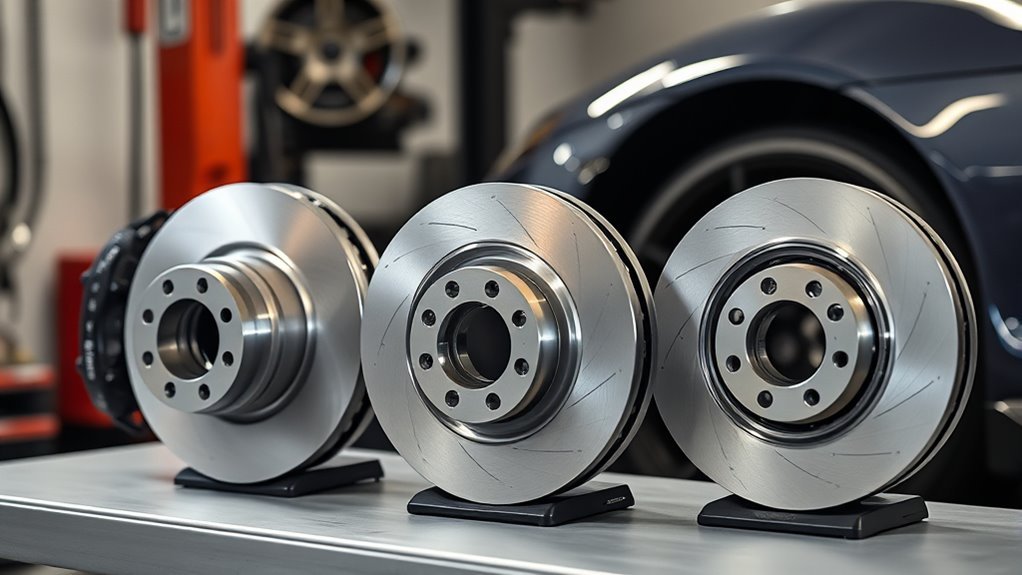
The modern GR Supra arrived for the 2020 U.S. model year. Toyota’s 2020 product information lists a 13.7-inch front ventilated disc with a Brembo four-piston fixed caliper and rear ventilated discs of 13.6 or 13.0 inches, depending on configuration. Later U.S. brochures provide the dimensions in millimeters and include rotor thickness. For 2026, Toyota confirms larger Brembo front discs on the MkV Final Edition, while independent U.S. testing reports 14.7-inch front rotors.
| GR Supra package | Front rotor | Rear rotor | Caliper notes |
|---|---|---|---|
| 2.0 | 330 × 24 mm | 330 × 20 mm | Smaller front package than the 3.0 Brembo system |
| 3.0 with smaller rear package | 348 × 36 mm | 330 × 20 mm | Four-piston fixed front caliper; single-piston floating rear caliper |
| 3.0 Premium / applicable A91 package | 348 × 36 mm | 345 × 24 mm | Larger rear package; confirm model year and caliper |
| 2026 MkV Final Edition | 14.7 in (about 373 mm) reported by independent U.S. tests; confirm OEM part number | 13.6 in reported; confirm thickness and part number by VIN | Toyota confirms larger Brembo front discs; do not substitute a standard 348 × 36 mm rotor without VIN-specific confirmation |
[Products Worth Considering]
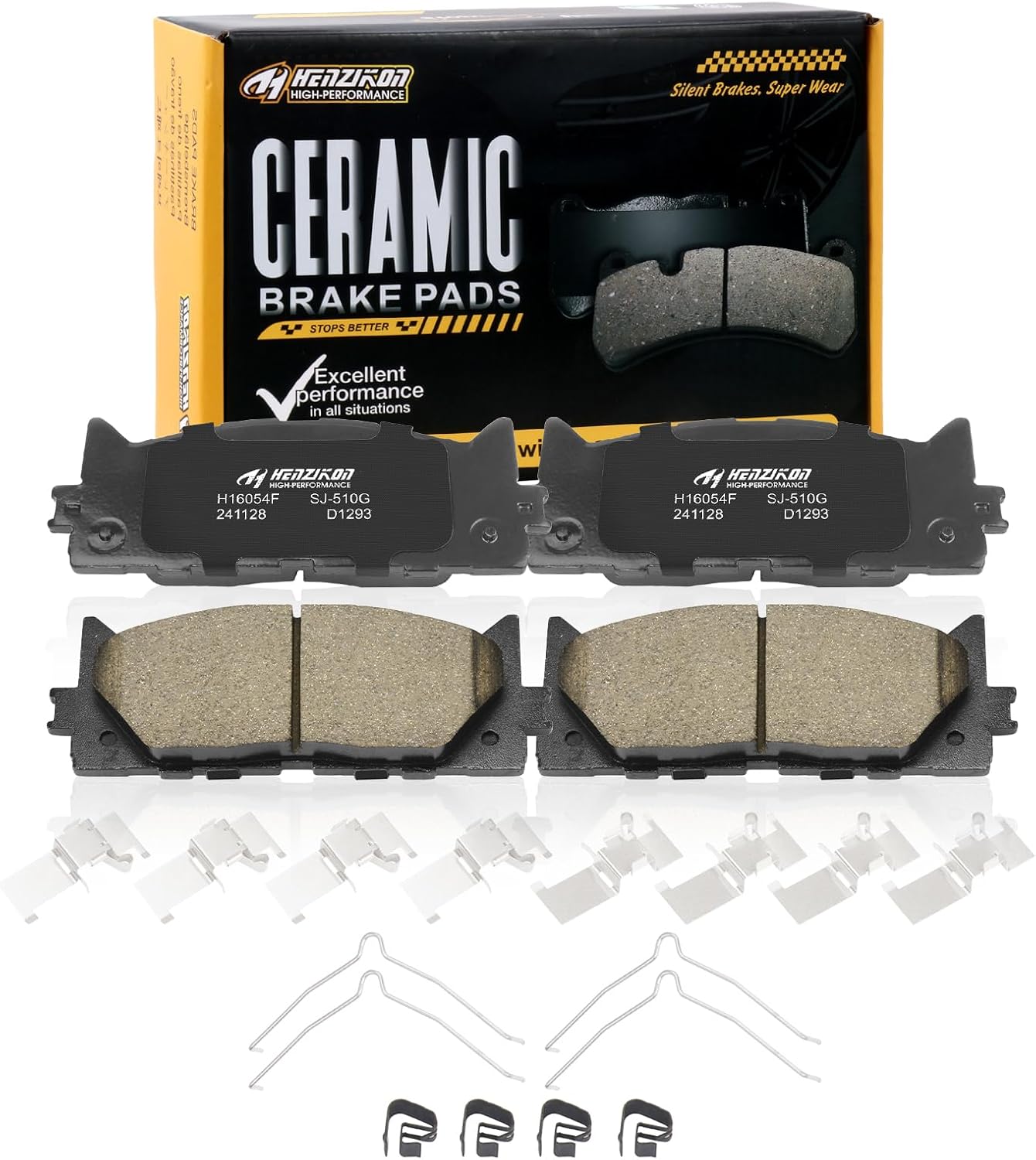
These ceramic front brake pads are designed for compatible Toyota Avalon, Camry, and Lexus ES-series vehicles, offering dependable stopping power and smooth, consistent braking performance. Built with included hardware for easier installation, they help reduce squealing and brake dust while supporting long-term durability for everyday driving.

This brake bleeder hose kit helps remove old brake fluid and air from motorcycle brake and clutch systems quickly and efficiently. Its one-way check valve prevents air from being drawn back into the system, while the easy-to-connect clips make bleeding simple for routine maintenance. Built for reliable use, it is a practical tool for keeping motorcycle braking performance responsive.

PowerStop Z17 Evolution Ceramic Brake Pad Set is an OE replacement solution built for dependable everyday braking and consistent value. Designed with chamfered, slotted surfaces and rubberized shims, it helps deliver quiet stopping performance with reduced brake dust and cleaner wheels. The kit includes stainless steel installation hardware for an easy bolt-on install and comes backed by a limited warranty.
Which GR Supra Trims Use 330 mm or 348 mm Front Rotors?
Toyota’s U.S. 2021 specifications list a 330 × 24 mm front rotor on the GR Supra 2.0 and a 348 × 36 mm front rotor on the 3.0, 3.0 Premium, and A91 Edition. Later brochures continue to distinguish the smaller 2.0 package from the 348 mm Brembo front package where those trims are offered.
Check these details together before ordering:
- Front or rear axle position
- Model year and production date
- 2.0, 3.0, 3.0 Premium, A91, other special edition, or MkV Final Edition
- Caliper construction, piston count, and casting number
- Rotor diameter, nominal thickness, and minimum thickness
- OEM or replacement part number
Is a 345 mm GR Supra Rotor the Same as the 348 mm Front Rotor?
No. In Toyota’s U.S. specifications, the 348 × 36 mm rotor is a front application for 3.0 models, while 345 × 24 mm is a larger rear package used on certain Premium and special-edition configurations. A 345 mm rear rotor should not be treated as a rounded or alternate measurement of the 348 mm front rotor.
Aftermarket options include slotted or grooved designs such as TAROX F2000 and application-specific TAROX GR Supra brake rotors. Verify the axle, diameter, thickness, overall height, caliper, and part number before comparing slot patterns or materials.
How Can You Tell Whether a GR Supra Has 330 mm or 345 mm Rear Rotors?
Start with the model year and trim, then verify the hardware. Toyota’s 2024 U.S. brochure lists 330 × 20 mm rear rotors for the 2.0 and 3.0, and 345 × 24 mm rear rotors for the 3.0 Premium and 45th Anniversary Edition. Toyota’s 2025 brochure lists 330 × 20 mm on the 3.0 and 345 × 24 mm on the 3.0 Premium. Because production changes, market differences, and conversions are possible, confirm the rear caliper, rotor part number, outside diameter, nominal thickness, and electronic parking-brake compatibility.
For a broader explanation of model-year and trim differences, see the GR Supra trim guide. For hydraulic layout, electronic parking-brake service, brake bias, and big-brake-kit planning, use the separate Supra brake-system guide; this page remains focused on rotor dimensions and fitment.
How to Measure Supra Rotors: Diameter, Thickness, Offset
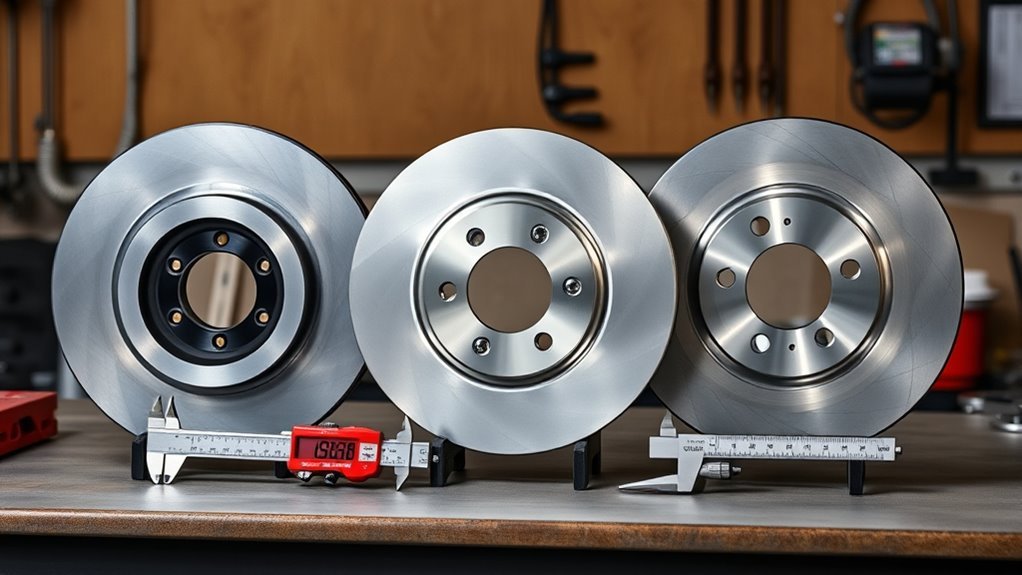
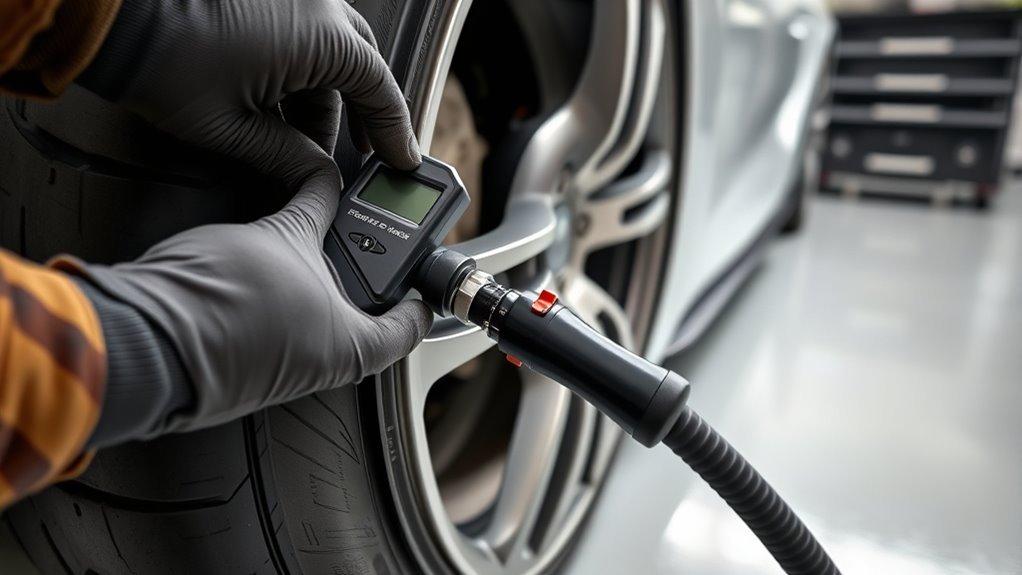
Measuring the installed rotor is the best way to identify a modified or uncertain brake setup. Use a ruler or tape measure for diameter, a disc-brake micrometer for friction-ring thickness, and a dial indicator for runout. A standard digital caliper can bridge the outer wear lip and overstate the usable thickness, so use it only for general identification unless its jaws can reach the worn friction surface correctly.
- Secure the car safely. Park on level ground, chock the wheels, loosen the lug hardware, lift the car, and support it with jack stands before removing the wheel.
- Measure rotor diameter. Measure across the full outside edge of the disc. Do not measure only the area swept by the pad.
- Measure rotor thickness. Use a micrometer on the friction ring, away from the outer ridge and any deep groove. Measure at six to eight equally spaced positions.
- Find the controlling minimum thickness. Look for “MIN TH” or a similar marking on the rotor. When no marking is readable, use the specification for the exact rotor part number.
- Measure overall or hat height. This normally requires rotor removal. Place the rotor on a flat surface and measure from the surface to the hub-mounting face according to the replacement manufacturer’s diagram.
- Confirm the center bore and bolt pattern. Match the center hole, number of mounting holes, and bolt circle. Also check any retaining-screw holes.
- Check the rear parking-brake drum. On drum-in-hat applications, match the internal drum diameter and hat depth as well as the outer disc dimensions.
- Check runout correctly. Clean the hub face, secure the rotor against the hub, and use a dial indicator. A straightedge cannot provide an accurate runout measurement.
- Record the complete specification. Write down axle position, diameter, thickness, minimum thickness, overall height, center bore, bolt pattern, and installed part number.
A rotor at or below its specified minimum thickness has less thermal capacity and structural margin. Replace it rather than extending it through another pad cycle.
Warning: Never work under a car supported only by a jack. Use jack stands on solid ground, follow the factory lifting points, avoid inhaling brake dust, and torque all wheel and brake hardware to the correct service specification.
Buying Guide: Matching Rotors, Pads, Track Use, Part-Number Checklist
Match the rotor to the installed caliper, pad shape, axle position, wheel clearance, parking-brake arrangement, and intended use. A street car usually benefits from an OE-style coated rotor and a pad selected for low-temperature response, noise, and dust. A track car needs adequate thermal capacity, a compatible pad compound, fresh fluid, and more frequent inspection.
- Match the axle: Front and rear rotors are not interchangeable.
- Match diameter and thickness: Use both nominal dimensions and the exact discard limit.
- Match the brake package: This is essential on A80 and GR Supra models with multiple factory packages.
- Check the rotor hat: Overall height and offset position the friction ring inside the caliper.
- Confirm center bore and bolt pattern: A correct outside diameter does not guarantee hub fitment.
- Confirm the parking brake: Rear drum-in-hat dimensions must match the parking-brake shoes.
- Choose compatible pads: Match the caliper, pad shape, rotor material, and operating-temperature range.
- Follow the bedding procedure: Use the pad and rotor manufacturer’s instructions.
- Inspect after hard use: Check for edge cracks, heavy heat checking, severe scoring, uneven deposits, and thickness loss.
| Use case | Rotor priority | Pad/fluid priority | Inspection focus |
|---|---|---|---|
| Daily street | Correct OE dimensions, corrosion protection, low noise | Cold response, dust and noise control | Thickness, scoring, vibration, pad wear |
| Fast road / occasional autocross | Thermal mass and verified fitment before slot pattern | Wider temperature range and fresh high-quality fluid | Heat checking, deposits, runout, pedal change |
| Track use | Thermal capacity, crack tolerance, repeatable replacement data | Track-temperature compound and event-appropriate fluid | Before/after-event thickness, cracks, heat damage, pad taper |
[Products Worth Considering]

Designed for Toyota Avalon models from 1995 to 1997, this front ceramic brake pads kit delivers dependable stopping power with a quiet, smooth braking feel. The ceramic construction helps reduce brake dust for cleaner wheels while supporting consistent performance and easier maintenance. Built to fit properly with compatible rotors, it offers a practical replacement solution for everyday driving.

Bosch QuietCast premium ceramic rear brake pads are engineered for quiet, reliable stopping power with low dust performance. Featuring pre-attached multilayer shims, corrosion-resistant backing plates, and OE-style slots and chamfers, this set is designed for smooth fitment and long-lasting durability. It includes pads for one axle, plus hardware and lubricant where available, making installation easier for compatible Lexus, Pontiac, and Toyota vehicles.

This coolant thermostat is a direct replacement designed for a wide range of Toyota, Lexus, and Scion vehicles. It helps maintain proper engine temperature, supports reliable cooling system performance, and installs easily without special tools or programming. Built to meet OEM standards, it offers durable, stable operation and dependable fitment for compatible models.
How Do You Match Supra Rotors and Brake Pads?
The pad should sweep the intended friction ring without hanging over the outer edge or contacting the rotor hat. If a larger rotor is paired with the wrong caliper bracket, the pad may contact only part of the disc. That creates uneven wear and reduces the usable friction area.
New pads are normally the most predictable match for new rotors because the fresh surfaces can bed together. Nearly new pads may sometimes be reused if the pad manufacturer permits it and the pads are flat, compatible, and uncontaminated. Replace pads that are tapered, cracked, glazed, oil-soaked, or worn unevenly.
How Often Should Track-Driven Supra Rotors Be Inspected?
Inspect track-used rotors and pads before and after each event. Repeated high-speed braking, aggressive compounds, and heat cycling can consume thickness much faster than street driving. Retire a rotor when it reaches its discard limit or develops a crack that reaches an edge, mounting hole, slot, or other termination point.
Select pads for the temperatures the car actually reaches. A street pad may fade when overheated, while a race pad may produce poor cold response, noise, and heavy dust on the road. Slotted rotors may help refresh the pad surface, but they do not replace correct cooling, brake fluid, bedding, and rotor mass.
Pro Tip: Keep a brake log for track use. Record the rotor part number, rotor thickness, pad thickness, event date, tire setup, and any vibration, fade, or pedal change.
Frequently Asked Questions
What size rotors are on a Toyota Supra?
It depends on the generation and brake package. Common examples include 302 × 22 mm front and 291 × 18 mm rear on an A70/MA70 3.0, 296 mm or 323 mm front packages on an A80, and 330 × 24 mm or 348 × 36 mm front packages on modern U.S.-market GR Supras. Confirm the exact car and installed hardware before ordering.
What is the rotor-size difference between a GR Supra 2.0 and 3.0?
Toyota’s U.S. specifications list a 330 × 24 mm front rotor on the 2.0 and a 348 × 36 mm front rotor on 3.0 models. Rear packages can be 330 × 20 mm or 345 × 24 mm depending on trim and model year.
Is a 345 mm GR Supra rotor the same as the 348 mm front rotor?
No. In Toyota’s U.S. specifications, 348 × 36 mm is a front rotor used on 3.0 models, while 345 × 24 mm is a larger rear package used on certain Premium and special-edition configurations.
Are MK3 and MK4 Supra rotors interchangeable?
No, not as direct replacements. MK3 and MK4 rotor diameters, thicknesses, heights, calipers, brackets, and parking-brake arrangements differ. A custom conversion requires all related parts to be matched and measured.
Do I need to replace the pads when replacing Supra rotors?
New pads are normally recommended because they bed into the new rotor surface predictably. Nearly new pads may sometimes be reused if they are compatible, flat, clean, and approved for reuse by the pad or rotor manufacturer.
Can I fit larger Supra rotors without changing calipers?
Usually not. A larger rotor generally requires a compatible caliper or relocation bracket, the correct pad shape, suitable wheel clearance, and confirmation that the rotor sits centrally in the caliper.
What does minimum rotor thickness mean?
Minimum rotor thickness is the manufacturer’s discard limit for that rotor. Replace the rotor when it reaches or falls below that value. Use the marking on the rotor or the specification for its exact part number.
How do I tell whether a GR Supra has 330 mm or 345 mm rear rotors?
Check the model year and trim first, then confirm the rear caliper, installed rotor number, outside diameter, nominal thickness, and electronic parking-brake compatibility. Toyota’s 2024 U.S. specifications list 330 × 20 mm on the 2.0 and 3.0, and 345 × 24 mm on the 3.0 Premium and 45th Anniversary Edition.
What size front rotors are on the 2026 GR Supra MkV Final Edition?
Toyota confirms larger Brembo front discs for the U.S. MkV Final Edition, and independent U.S. tests report a 14.7-inch front rotor, about 373 mm. Confirm the exact OEM part number by VIN before ordering because the standard 348 × 36 mm 3.0 rotor should not be assumed to fit.
Conclusion
Supra rotor sizing becomes manageable once you identify the exact axle and brake package. A60, A70, A80, and modern GR Supra models use different dimensions, and several generations have more than one factory or commonly installed setup. Start with the VIN and factory parts data, identify the caliper and installed rotor number, then confirm diameter, thickness, hat height, center bore, bolt pattern, rear parking-brake dimensions, and minimum thickness. Write those values down before you shop. That process is more reliable than ordering by “MK3,” “MK4,” or “GR Supra” alone.
Sources
- Toyota 2020 Supra Product Information — GR Supra front and rear brake diameters and caliper types.
- Toyota 2021 GR Supra eBrochure — 2.0, 3.0, 3.0 Premium, and A91 front and rear rotor dimensions.
- Toyota 2024 GR Supra eBrochure — 330 mm and 348 mm front packages plus 330 mm and 345 mm rear packages.
- Toyota 2025 GR Supra eBrochure — 348 × 36 mm front rotors and trim-specific 330 × 20 mm or 345 × 24 mm rear rotors.
- Toyota GR Supra MkV Final Edition Newsroom Release — confirmation of the Final Edition’s larger Brembo front brake discs.
- Car and Driver 2026 GR Supra MkV Final Edition Drive — independent report of 14.7-inch front rotors.
- Autoweek 2026 GR Supra MkV Final Edition Drive — independent report of 14.7-inch front and 13.6-inch rear discs.
- TAROX MA61 Front Rotor Catalog — A60/MA61 258 × 20 mm front replacement dimensions.
- Protex MA61 Front and Rear Rotor Listing — 258 × 20 mm front and 266 × 18 mm rear replacement dimensions and minimum thicknesses.
- Endless JZA80 Basic Rotor Catalog — 296/307 mm smaller and 323/324 mm larger A80 replacement packages.
- Brembo MA70 3.0 Catalog — A70 front and rear dimensions and minimum thicknesses.
- Brembo 09.7931.20 Rotor Catalog — A80 smaller-package front dimensions and minimum thickness.
- DBA 4000 Series Brake Rotors — example of an aftermarket slotted rotor design.
- Brembo Minimum Brake Rotor Thickness Guide — measurement method and replacement guidance at or below MIN TH.