

Maintaining the ignition coil in your Toyota Supra helps the engine start cleanly, idle smoothly, and pull hard under acceleration. A weak coil can feel like a bad spark plug, fuel problem, vacuum leak, or sensor fault, so the best approach is to check symptoms, scan for codes, inspect the plug and coil area, and test before replacing parts.
Quick Answer
A Toyota Supra ignition coil may be failing if the engine misfires, shakes at idle, hesitates under boost, loses power, smells rich, or shows a check engine light with misfire-related codes. Confirm the fault with an OBD-II scan, visual inspection, and a coil swap test before replacing the coil.
Key Takeaways
- Misfires, rough idle, hesitation, hard starts, poor fuel economy, and a flashing check engine light are common warning signs.
- Do not replace coils blindly. Scan the vehicle, inspect the spark plug well, and see whether the misfire follows the coil when moved to another cylinder.
- Toyota schedules spark plug replacement at specified intervals, but ignition coils are normally replaced when testing shows a fault.
- Use a VIN-matched coil and follow the correct model-year repair information because access, connectors, and service steps vary by Supra generation.
At a Glance
| Time Required | 30–90 minutes for one coil once the engine is cool and accessible |
| Difficulty | Easy to moderate for experienced DIY owners; professional diagnosis is best for wiring or repeated misfires |
| Tools Needed | OBD-II scanner, basic socket set, trim tools if needed, flashlight, multimeter for power/ground checks, and model-year repair information |
| Cost | One VIN-matched ignition coil, optional spark plug or boot, and shop diagnostic/labor time if you do not test it yourself |
Identifying Common Signs of Ignition Coil Failure
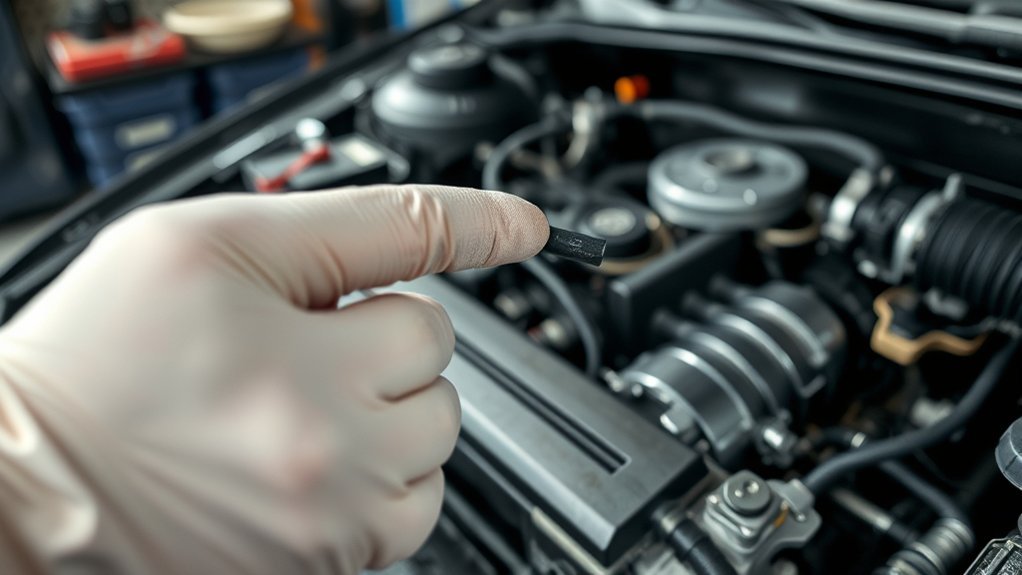
Identifying the signs of ignition coil failure is essential for maintaining your Toyota Supra’s performance. The ignition coil creates the high voltage the spark plug needs to ignite the air-fuel mixture. When a coil becomes weak, cracked, oil-contaminated, heat-damaged, or electrically faulty, combustion can become uneven.
The most common symptoms include:
- Engine misfiring: The car may jerk, shake, or stumble, especially at idle or under acceleration.
- Loss of power: A weak spark can show up as hesitation, flat throttle response, or poor pull under boost.
- Hard starting or stalling: A failing coil can make cold starts rough or cause the engine to stall at low speed.
- Sputtering or popping sounds: Incomplete combustion can cause rough running, exhaust popping, or a raw fuel smell.
- Drop in fuel efficiency: A misfiring cylinder wastes fuel because the mixture is not burning cleanly.
- Check engine light: The ECU may store misfire or ignition-circuit diagnostic trouble codes.
Warning: If the check engine light is flashing, avoid hard driving and stop as soon as it is safe. A severe misfire can overheat and damage the catalytic converter.
Common OBD Codes Linked to Supra Ignition Coil Problems
An OBD-II system monitors emissions-related engine faults and stores diagnostic trouble codes when it detects a problem. Codes do not prove the ignition coil is bad by themselves, but they give you a starting point.
| Code Type | What It Usually Means | What to Check Next |
|---|---|---|
| P0300 | Random or multiple-cylinder misfire | Spark plugs, multiple coils, fuel delivery, vacuum leaks, compression, and sensor data |
| P0301–P0306 | Misfire on a specific cylinder | Move that cylinder’s coil to another cylinder and see whether the misfire follows |
| P0351–P0356 | Possible ignition coil primary/secondary circuit fault | Connector lock, wiring, power supply, ground, ECU driver signal, and the coil itself |
Before clearing codes, save freeze-frame data. It can show whether the misfire happened during cold start, idle, boost, cruise, or high engine load.
How to Test Your Ignition Coil?
When you notice symptoms like engine misfiring or a loss of power, test the ignition coil before buying parts. A modern coil-on-plug ignition coil can fail electrically, but a misfire can also come from worn spark plugs, oil in the plug well, a loose connector, a vacuum leak, injector trouble, low compression, or incorrect parts.
- Scan for codes: Use an OBD-II scanner and note all stored, pending, and permanent codes. Diagnose cylinder-specific misfire codes before random misfire codes.
- Inspect the coil and plug well: Look for cracked plastic, torn boots, corrosion, carbon tracking, oil, coolant, water, or a loose connector.
- Check the spark plug: A worn, fouled, cracked, or incorrectly gapped plug can overload a coil and mimic coil failure.
- Perform a coil swap test: Move the suspected coil to another cylinder, clear the codes, and road test carefully. If the misfire moves with the coil, the coil is likely faulty.
- Check wiring and power: Use a wiring diagram from Toyota Technical Information System or the correct repair manual. A multimeter is useful for checking supply voltage, ground, and continuity, but resistance readings alone are not a complete test for many modern coils.
- Use advanced testing when needed: A technician can use an oscilloscope or scan-tool data to check coil dwell, firing pattern, misfire counters, and ECU command signals.
Note: Avoid pulling ignition coils or plug wires while the engine is running. Modern ignition systems can produce high voltage, and forcing a spark outside the system can damage components or cause injury.
[Products Worth Considering]

This ignition coil pack and pre-gapped spark plug set is designed for select 3.5L V6 Toyota and Lexus models, helping restore smooth engine performance and reliable starting. Built to meet or exceed OEM specifications, it can help fix common issues like misfires, rough idle, poor fuel economy, and reduced power. The complete 6-piece set offers a convenient replacement solution for compatible vehicles.

This complete ignition kit includes six direct replacement coil packs and six pre-gapped iridium spark plugs designed for select Toyota and Lexus 3.5L V6 vehicles. It can help address misfires, rough idle, hard starting, hesitation, and check engine light issues caused by worn ignition components while supporting smooth, reliable engine performance. Built for easy installation and backed by testing, warranty coverage, and technical support, it is a convenient tune-up solution.

This ignition coil pack and double iridium spark plug set is designed to restore reliable ignition performance for compatible Toyota, Scion, and Lexus 2.5L and 2.7L L4 gas models. It helps improve starting, fuel efficiency, and smooth engine operation while reducing misfires and emissions. Built for direct plug-and-play installation, this kit is a practical replacement for worn ignition components.
How to Replace Your Faulty Ignition Coil?
Replacing a faulty ignition coil can restore smooth operation and prevent continued misfires, but the exact steps vary by Supra generation, engine, and market. Use the correct model-year repair information and a VIN-matched coil from an official Toyota source or a trusted OEM-quality supplier.
- Park safely and let the engine cool: Work on a cool engine to avoid burns and to reduce the chance of damaging plastic connectors.
- Disconnect the battery: Turn the vehicle fully off, then disconnect the negative battery terminal if the repair procedure calls for it.
- Remove covers or access panels: Remove the engine cover and any components blocking access to the ignition coils. Keep bolts and clips organized.
- Label the connector if needed: This helps prevent mixing up connectors, especially if you are working on more than one coil.
- Disconnect the electrical connector: Release the lock tab carefully. Do not pull on the wiring harness.
- Remove the old coil: Remove any retaining fastener, then twist the coil gently and pull straight upward from the spark plug.
- Inspect the area: Check for oil, moisture, carbon tracking, or a damaged spark plug. Fix leaks or plug problems before installing a new coil.
- Install the new coil: Seat the coil fully on the spark plug. Use only a small amount of dielectric grease inside the boot if the product instructions allow it; do not coat electrical terminals.
- Reconnect everything: Reattach the connector, reinstall covers, reconnect the battery, and verify that no tools are left in the engine bay.
- Confirm the repair: Clear codes, start the engine, check for smooth idle, and take a careful test drive while monitoring for returning misfire codes.
Pro Tip: If one coil failed because of oil or water inside the plug well, replacing only the coil may not solve the problem for long. Fix the leak or moisture source first.
[Products Worth Considering]

This ignition coil and iridium spark plug kit is designed to restore smooth engine performance, reliable starts, and efficient combustion for compatible Toyota models. Built for a precise fit across select Camry, RAV4, Sienna, Highlander, and Venza applications, it helps improve idle stability, fuel economy, and emissions. The kit includes durable replacement parts backed by a one-year unlimited-mileage guarantee for added confidence on the road.

This ignition coil and spark plug set is designed to restore reliable starting, smooth engine performance, and efficient combustion for compatible Toyota, Lexus, Scion, and Pontiac models. Built with durable materials and engineered to meet or exceed OE design standards, it offers dependable fitment and long-lasting operation. The package includes four ignition coils and four double iridium spark plugs for a complete tune-up solution.

This set of four ignition coils is designed to restore smooth engine performance and reliable starting for compatible Toyota, Scion, and Lexus applications. Built to meet or exceed OE specifications, these coil packs help reduce misfires, hesitation, and check engine light issues while supporting stronger ignition output. The direct-fit design makes installation straightforward, and the package includes a warranty for added peace of mind.
Why Ignition Coil Maintenance Is Important
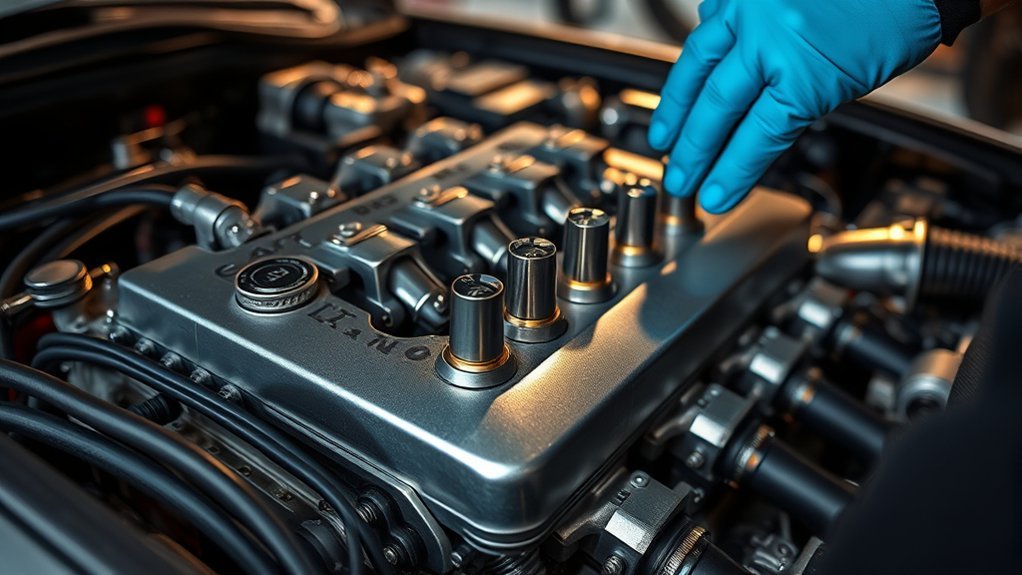
Maintaining your ignition coils is essential for ideal engine performance, because the coil supplies the voltage that lets each spark plug ignite the air-fuel mixture. A weak or intermittent coil can cause rough running, higher fuel use, poor throttle response, and increased emissions.
One important correction: ignition coils are not usually a routine mileage replacement item in the same way spark plugs are. Toyota’s latest GR Supra maintenance information lists scheduled service for spark plugs at specified mileage intervals, while coils are normally replaced when symptoms, scan data, or testing show a failure. For many late-model GR Supra maintenance charts, spark plug service appears at 40,000-mile intervals, but you should always follow the guide for your exact year and engine.
A strong ignition coil depends on more than the coil itself: clean connectors, healthy spark plugs, dry plug wells, correct parts, and a stable charging system all help prevent repeat misfires.
Tips for Long-Term Ignition System Care
To guarantee your Toyota Supra’s ignition system operates efficiently over the long term, regularly inspect the ignition coils and related components. These preventive steps help reduce misfires and unnecessary parts replacement:
- Inspect ignition coils during spark plug service: Look for cracks, swollen boots, corrosion, heat damage, and carbon tracking.
- Replace spark plugs on schedule: Follow your Toyota maintenance guide and install plugs of the same type as originally equipped unless a qualified tuner or technician specifies otherwise.
- Keep plug wells dry and clean: Oil or water around the spark plug can damage the boot and create an easier path for the spark to escape.
- Use VIN-matched parts: Toyota recommends parts designed for your vehicle’s exact specifications, and the official Toyota Genuine Parts catalog can help confirm fitment.
- Watch fuel efficiency and drivability: A sudden drop in mileage, hesitation, or rough idle should be checked before it becomes a larger repair.
- Do not pressure-wash the engine bay carelessly: Water intrusion around coil connectors and plug wells can cause misfires.
- Check for recalls or campaigns: Use your VIN on NHTSA’s recall lookup or ask a Toyota dealer if there are open service campaigns.
- Keep maintenance records: Toyota notes that records should include service date, mileage, and parts installed, which is helpful for warranty and resale history.
When to Replace One Coil vs. All Coils
If testing points to one bad coil, replacing only that coil is usually reasonable on a stock street car. Replacing all coils can make sense when several coils are the same age and showing heat damage, the engine has high mileage, you are already replacing all spark plugs, or the car is modified and repeated misfires have been confirmed.
For tuned or heavily driven Supras, ignition stress can be higher under boost. In that case, do not simply install random “high performance” coils. Confirm the tune, plug type, plug gap, fuel quality, and coil compatibility with a qualified Toyota/BMW-platform technician or tuner.
[Products Worth Considering]

This ignition coil pack and iridium spark plug set is designed to restore smooth starting, strong acceleration, and dependable engine performance for a wide range of compatible Toyota, Lexus, Scion, and Pontiac vehicles. Built as a direct OEM replacement, it offers plug-and-play installation and helps reduce misfires while improving fuel economy and overall drivability. The premium iridium plugs and matched coils deliver consistent spark output and long-lasting durability for everyday driving.

This complete automotive disconnect pliers kit helps you remove electrical connectors, clips, and related components quickly and safely in tight engine bay spaces. Built for cars, trucks, SUVs, and Jeeps, it includes multiple specialty tools, mechanic gloves, and a storage bag for organized portability. The high-carbon steel construction and ergonomic grips make it a dependable choice for wiring, sensors, injectors, ignition coils, and other repairs.

This ignition coil pack and spark plug set is designed to restore strong spark, smoother starts, and reliable engine performance for a wide range of Toyota, Lexus, Pontiac, and Scion vehicles. Built with durable materials and engineered to meet or exceed OE standards, it helps improve combustion efficiency and long-term dependability. The kit includes four ignition coils and four spark plugs for a convenient all-in-one replacement solution.
Troubleshooting After a New Ignition Coil
If the Supra still misfires after replacing an ignition coil, the original coil may not have been the root cause. Recheck the basics before replacing more parts:
- Misfire stayed on the same cylinder: Inspect the spark plug, injector, wiring, compression, and intake leak near that cylinder.
- Misfire moved to another cylinder: Recheck whether the new or moved coil is seated correctly and whether the connector is locked.
- Misfire appears only under boost: Check spark plug condition, plug gap, fuel quality, boost leaks, and tune-related settings.
- Multiple cylinders misfire: Look for low battery voltage, charging issues, bad grounds, vacuum leaks, fuel pressure problems, or a common wiring fault.
- Code returns immediately: Inspect connector pins, coil power supply, ground, and ECU driver circuit using the correct wiring diagram.
Frequently Asked Questions
How do you maintain an ignition coil on a Toyota Supra?
Maintain an ignition coil by keeping the plug well dry, replacing spark plugs on schedule, inspecting coil boots and connectors during service, using correct parts, and scanning misfire symptoms early. Ignition coils are usually replaced when testing confirms a fault, not automatically at a fixed mileage.
How do I know if my Toyota ignition coil is bad?
A bad Toyota ignition coil can cause rough idle, misfires, hesitation, hard starting, poor fuel economy, or a check engine light. The best confirmation is a scan for misfire codes followed by inspection and a coil swap test to see whether the misfire follows the coil.
Can I drive my Supra with a bad ignition coil?
You should avoid driving with a confirmed bad ignition coil, especially if the engine is shaking or the check engine light is flashing. Continued misfiring can reduce power, waste fuel, foul the spark plug, and damage emissions components.
Should I replace all Supra ignition coils at once?
Not always. If one coil fails and the others test well, replacing one coil is usually acceptable. Replacing all coils may be worthwhile on a high-mileage engine, a tuned car, or a vehicle with several aged coils showing cracks, heat damage, or repeat misfires.
What are common problems with Supras that can feel like coil failure?
Common coil-like problems include worn spark plugs, oil or water in the plug wells, loose connectors, weak battery voltage, boost leaks, vacuum leaks, injector problems, poor fuel quality, and tune-related misfires. That is why testing matters before replacing parts.
Conclusion
In maintaining your Toyota Supra’s ignition coil, you’re not just preventing breakdowns; you’re protecting smooth idle, strong acceleration, clean combustion, and long-term reliability. Watch for signs of failure, scan codes before replacing parts, keep spark plugs on schedule, and use the correct VIN-matched components. A well-tested ignition system is the spark that keeps your Supra performing the way it should.
Sources
- Toyota 2026 GR Supra Warranty & Maintenance Guide — Toyota maintenance schedule, spark plug service intervals, maintenance records, and replacement parts guidance.
- Toyota Technical Information System — official Toyota service information, repair procedures, wiring diagrams, and torque specifications.
- Toyota Genuine Parts — official Toyota parts fitment and genuine maintenance parts guidance.
- U.S. EPA OBD Systems Fact Sheet — background on on-board diagnostics monitoring engine and ignition-related faults.
- eCFR 40 CFR § 86.1806-27 — current federal onboard diagnostics requirements for storing trouble codes and alerting operators to emissions-related malfunctions.
- NHTSA Recalls Lookup — VIN-based recall and safety campaign checks.




[…] Tip: Spend money on maintenance before horsepower. Timing belt service, fresh fluids, ignition health, fuel pressure verification, […]